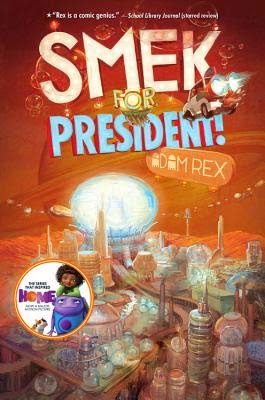
Audiobook: Smek for President

by Adam Rex
Read by Bahni Turpin
Support your local independent bookstore: buy it there!
Content: Nothing. Nada. Some fake swearing (“pardon my language”). The audio version is probably good for kids who have an attention span longer than 20 seconds; the book is in the middle grade (grades 3-5) section of the bookstore.

I loved the audiobook of The True Meaning of Smekday, so when I heard that Bahni Turpin was doing the sequel, I KNEW that was how I needed to experience this book. And I was right. Turpin is perfect for this. Seriously.

The story picks up a year and a half after Gratuity “Tip” Tucci and J. Lo save the world. The Boov have moved to New Boovworld, on one of Saturn’s moons. J. Lo and Tip are hanging on Earth, trying to get used to having Tip’s mom around. And, for J. Lo, trying to to fit in. They need a break, and so J. Lo soups up their car, Slushious, and they head off-world to check out the new Boov homeland. Since they saved the world, they’ll be welcomed as heroes, right?

Well, no.

Things don’t go quite like they planned. J. Lo is named Public Enemy Number One, and thrown into jail. Tip repeatedly avoids being captured, but only just barely. Which sends her on an adventure through New Boovworld. She meets and befriends a delightful flying billboard, whom she names Bill (of course), as well as several other Boov (and one human; Dan Landry’s son), in her attempts to free J. Lo and set everything right. There’s a lot of action, tons of humor, and a bit of time travel in the mix.

But what really made the book was Turpin. I adore her reading style, and it’s perfect for Adam Rex’s humor. I was chortling, guffawing on occasion, and I was thoroughly charmed by all the Boov voices (with their distinctive quirks). I was pleased to see that the Chief was back (if only in Tip’s imagination), as well as other favorite characters from the first book. I loved how Rex imagined New Boovworld. And it was satisfying (as a parent) to see that there were real consequences for Tip’s actions.

In short: I adored it.
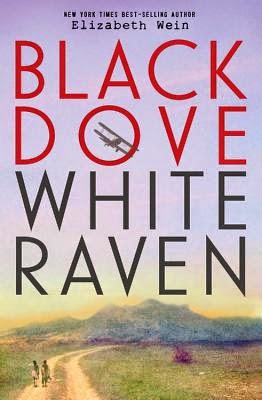
Black Dove, White Raven

by Elizabeth Wein
First sentence: “Sinidu told me I should aim for the sun.”
Support your local independent bookstore: buy it there!
Content: There’s a smattering of violence, and some insinuations, but it’s not nearly as intense as Wein’s other books we have in the store. I’m torn between leaving it where it is (in Teen, grades 9+) and moving it to YA (grades 6-8), where it really fits better, subject and content-wise. Thoughts?

I know Wein has written other books about Ethiopia, but I didn’t know they existed, really, until this one came out and I started hearing the buzz. And so I really didn’t know what to expect with this one.

Many of the elements I have enjoyed about Wein are there: women pilots, in this case two: a white woman, Rhoda, and her black friend, Delia,  learned to fly in France and go around the States in the late 1920s/early 1930s with their barnstorming act. There is also World War II: after Delia’s accidental death, Rhoda takes their two children, her daughter Emelia and Delia’s son Teo (whom Rhoda has taken as her own) to live in Ethiopia, which was Delia’s dream.

The book is a long letter written to the emperor of Ethiopa by Emelia. It’s in the middle of World War II, and the Italians have invaded Ethiopia. Because of their precarious legal situation: Teo is not legally Rhoda’s son, they’re not really legally in the country, and because Teo’s father was Ethiopian, it means that their position in the country, especially with the Italians there, is a precarious one.

Emelia recounts history and how their little family ended up where they are. Teo contributes some, writing journal entries and flight logs — Rhoda eventually teaches both children to fly — and so you hear his voice as well as Emelia’s.

There’s a lot going on in this book, and yet, I felt like the conflict didn’t really pick up until the last third. It’s a quieter book than her previous two WWII books, one that felt more vignette-driven as well. (Though typing that, and thinking back to Code Name Verity and Rose Under Fire, I’m not sure that’s true.) The characters were definitely younger in this one, and perhaps that’s what I’m feeling. I did like how Wein rounded out most of the characters in the book, but especially the female ones (the male ones, aside from Teo, were basically set dressing, there to move the plot along). Wein also touched on a lot of cultural issues for the time: segregation in the US, slavery in Ethiopia, the war, the limitations of women at the time. Even though it didn’t feel like much, plot-wise, there was enough to hold my interest and carry the book.

I’m not sure I love it as much as I do the other books I’ve read by Wein, but I did thoroughly enjoy it.

Bayou Magic

by Jewell Parker Rhodes
First sentence: “My name is Madison Isabelle Lavalier Johnson.”
Support your local independent bookstore: buy it there!
Review copy provided by the publisher in conjunction with the ABA Children’s Institute.
Content: It’s a pretty basic story, and aside from some French scattered through, it’s pretty basic in its vocabulary. I’d give it to anyone 2nd grade and up. It’s in the middle grade (grades 3-5) section of the bookstore.

Not-quite-ten-year-old Maddy is the youngest of five sisters in New Orleans. She’s the one that is always the tag-along, never quite fitting in with her sisters. She is often teased, and the only time she feels comfortable is when she’s cooking with her mom. Then, her turn to spend the summer in Bon Temps, in the Louisiana bayou, with Grandmère comes around. At first, Maddy doesn’t know what to expect: her sisters all spent summers with Grandmère and came back with horror stories. But Maddy is different: she likes the quiet, earthy nature of Grandmère and the bayou. She wants to learn the old ways. And she finds friends and adventure there. And magic.

Rhodes simple, lyrical style was really well suited to this story. I loved the earthy feel of the book, and the connection to old stories and family roots. I loved the mix of African and French, of Creole and magic and modern. The environmental crisis aspect of it wasn’t as important as the back blurb led me to believe — it was really just tacked on at the end — but the theme of caring for and connecting to the earth was prominent and important for the story. At first, I thought that this could pass for “realistic” fiction, that maybe the mermaids Maddy saw were just dreams and imagination, but no: this is speculative. And it worked for me. I loved seeing Maddy grow and learn and develop, and yet she was still a 10-year-old girl with all the concerns and abilities of that.

I haven’t ever read Ninth Ward, but I think I need to, now. I’ve come to really love Rhodes simple style.  

Momo

by Michael Ende
First sentence: “Long, long ago, when people spoke languages quite different from our own, many fine, big cities already existed in the sunny lands of the world.”
Support your local independent bookstore: buy it there!
Content: If you can read The Phantom Tollbooth, then this one is for you. It’d be in the Middle Grade (grades 3-5) section of the bookstore.

This book is one of the reasons why, busy as I am, I won’t give up an in-person book group. (I’ve been a slacker with my on-line one lately…) While I read The Neverending Story by Ende as a child (when the movie came out…), I had no idea (and no inclination to find out, for some reason) that he’d written any other books. But, because it’s probably been 30 years since I’d read Neverending Story (or seen it for that matter; we may have tried showing it to the kids), I had no idea what to expect.

What I got was a sweet little fable. Momo is a little orphan girl that shows up in this town and moves into the old amphitheater. What endears her to the people in this town to Momo is twofold: she has a remarkable imagination, and she truly listens to them. Then one day, the grey men show up and infiltrate the town, stealing time from people. Suddenly, no one has enough time for Momo to listen to them, and everyone except the children stay away. And even the children are different. Momo happens to find out the grey men’s plan, and then sets out on an adventure to get her friends back.

It reminded me most of The Phantom Tollbooth: it was a bit on the preachy end — YEAH I get it, unplug from being busy and actually CONNECT with people — but it was also sweet and tender and had that late-60s/early-70s feel to it. It’s nothing earth-shattering, but it is very sweet.

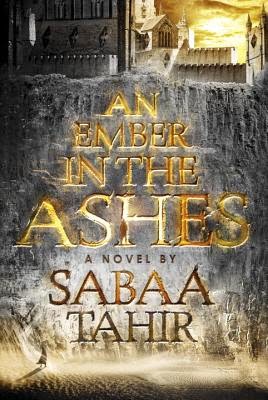
An Ember in the Ashes

by Sabaa Tahir
First sentence: “My big brother reaches home in the dark hours before daown, when even ghosts take their rest.”
Support your local independent bookstore: buy it there!
Review copy provided by the publisher.
Content: It’s dark and it’s brutal. Seriously. More so than Hunger Games. And because of that, it’s in the Teen section (grades 9+) of the bookstore.

Laia has grown up in a world where her people, the Scholars, are a captive people. Their great enemy, the Martials, conquered them and have shown no mercy. They imprison the Scholars, they rape the women, they torture and kill those that they catch. Laia’s parents were part of the resistance, and they were betrayed and killed, along with her older sister. She and her brother Darin lived with their grandparents, trying to fly under the radar of the Martials. Until one day, when they don’t. And the Masks come for them, kill her grandparents, take Darin. Laia barely gets away.

Elias has grown up at Blackcliff, the military school that trains the Martial Masks. An unwanted bastard son of Blackcliff’s Commander, he spent the years before he turned six with the Tribal people in the desert. Then the Augurs — the mystic, magical, immortal Martial prophets — came for him and thrust him into a kill-or-be-killed world. The only way he survived was because of Helene, his fellow student and best friend. Now, just as he was graduating and dreaming of freedom, the Augurs decide that it’s time for a new emperor, and pit Elias and Helene against each other and two other students in a bid to be emperor (or die).

I think the most logical comparison read for this book is Game of Thrones. This is brutal, unflinching, dark, violent, harsh… there’s magic, but it takes a back seat to the exploration of Martial culture. And yet, underneath all of that dark is a hope, a light. Elias, for all the terrible things he’s done (and that have been done to him), turned out to be a decent human being. Laia, even though she thinks of herself as weak, has a quiet strength and bravery to her that isn’t readily seen or valued. It’s a very human book, as well: the characters are complex and messy, there’s depth even to the most hateful of characters (Marcus and the Commander, I’m looking at you), that makes them understandable, even if they aren’t likable.

In fact, the only thing I didn’t like about this book was that there are many unresolved issues, and many unanswered questions at the end. Then again, if this is the quality of writing that Tahir gives us with her first book, I only have high hopes for where this story is going to go.

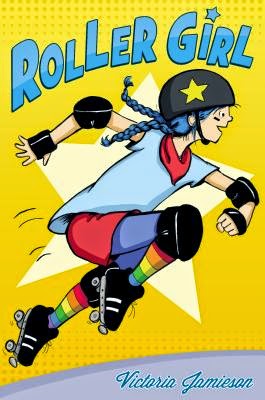
Roller Girl

by Victoria Jamieson
Support your local independent bookstore: buy it there!
Content: It’s in the middle grade graphic novel section.

It’s the summer before sixth grade — middle school (gulp!) — and Astrid has things all Planned Out. She and her BFF, Nicole are going to hang out, go to derby camp, and have tons of fun!

Except. That’s not the way things happen. Nicole is off to dance camp, and is becoming someone Astrid can’t even relate to. And derby camp, well, let’s just say it’s a LOT harder than Astrid ever figured it’d be.

I picked this one up for K a while back, who really enjoyed it. But had some issues with it, especially with the friendship element. Why do things this happen, she wondered. It spawned a discussion about friends and change, and trying new things. So, I needed to see what it all was about.

And I loved it. I loved that Astrid was who she was, and while she changed — she realized that she was being a bit self-centered and not a very good friend — she still remained the same person she always was. I liked that it showed that things can pay off when you work hard at something. And that sometimes, it’s okay when other people take the spotlight. The drawing’s fun and colorful, and I love that Astrid is (at least) half-Puetro Rican.

It’s a sold graphic novel, and one that I know kids will love. (K did!)

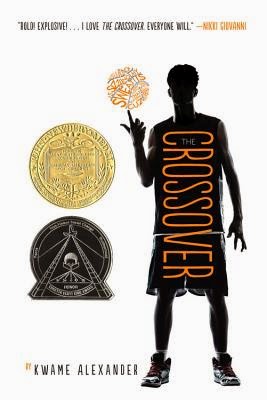
Crossover

by Kwame Alexander
First sentence: “At the top of the key, I’m MOOVING & GROOVING, POPping and ROCKING — “
Support your local independent bookstore: buy it there!
Content: It’s poetry, which is a plus and a minus: plus, because it means it’s a quick read. Minus, because you have to convince kids that it’s okay to read poetry. There’s some kissing, but I’d give this to kids ages 10+. It’ll be in the Newbery section of the bookstore (yes, we do have one!).

I really didn’t know what to expect going into this. I’m sure it would be good — it won the Newbery, after all — but is it one of those good books that are just all style and no substance?

Because this book does have style. You can tell that right from the first page. Alexander’s not only writing a novel in verse, he’s playing with form. There’s style to these poems, it’s not just words on a page; they sometimes (like in the opening poem) leap right off the page. (There’s one poem, about 2/3 of the way though, that can be read in two different directions. I love that!) But, there’s also substance as well.

Twins Josh and Jordan Bell are inseparable, both in life and on the basketball court. Sons of a retired (due to injury) Euroleague player, basketball is their Sport. Their Religion. Their Life. But, during their 8th-grade year, things change. They drift apart, mostly because Jordan — JB as he wants to be known — starts going out with a girl. And their dad has serious heart problems. All of this weighs on Josh, and he lets it interrupt his game.

It’s a simple story, but one with tremendous amounts of heart. Josh is a complex character, who worries about his parents, misses the connection with his brother, and wants to be the top of his game. And yet, he has a temper, one that gets in the way of his wants and desires sometimes. There’s a depth to him that makes him real, which I appreciated it.

I did have a couple of complaints… I didn’t like the portrayal of the girlfriend, but I do understand it’s from Josh’s point of view, and he didn’t really like her intrusion into the relationship with his brother. So, I can understand why she was a bit of a caricature.) The other thing I didn’t really care for — and this is a spoiler — was the dad dying in the end. I did like that there wasn’t a “neat and tidy” ending, but it was a bit, well, Dramatic.

But aside from those two little complaints, I loved this one. I loved the style and the characters and just immersing myself in this world. For the Bells, the highest compliment is that they are Da Man. And this book is definitely that.

Eddie Red Undercover: Mystery in Mayan Mexico

by Marcia Wells
First sentence: “I’m back.”
Support your local independent bookstore: buy it there!
Review copy provided by the publisher.
Content: There’s some mild violence and some mild romance (it’s not a kissing book), but the language/chapter length level works for the younger readers as well as the older ones in the age range. It’s in the middle grade (grades 3-5) section of the bookstore.

I had a woman in the store the other day, looking for a Harriet the Spy-type mystery for a 10-year-old boy, who wanted something with intrigue and adventure. (They’d already read Harriet the Spy, or I would have given them that.)  Thankfully, I had just finished this one, so I had a great, middle grade mystery with intrigue and adventure to hand to the customer. (Bonus: this is the second, but you don’t need to read the first at all!)

Edmund (call him Eddie, please!) and his family are in need of a vacation. He’d just gotten done being grounded (for events in the previous book), and his mother was given a vacation/opportunity to go to a conference. In Mexico. Sounds delightful, no? Especially since Eddie’s best friend, Jonah, was along for the ride. But once there, an ancient mask that’s on display at the hotel is stolen and Eddie’s father is blamed for the theft. So, it’s up to Eddie, Jonah and their new friend, Julia, to solve the crime and find the real thief.

I really did thoroughly enjoy this one. It’s well-paced, with intrigue, suspense, and action, as Eddie and Jonah follow the twists and turns through this mystery. I liked that they were reasonable kids, doing reasonable things, and that aside from Eddie’s photographic memory and artistic skillz, they’re pretty normal kids.

But what I really liked is that Eddie is an African American kid, and its not an issue. At all. In fact, it’s not something I even realized (shame on me?) until I was about a third of the way through. It’s a diverse cast, being set in Mexico, and it’s not something that’s pointed out. It just is. Which is always nice.

A good, refreshingly solid, middle grade book.

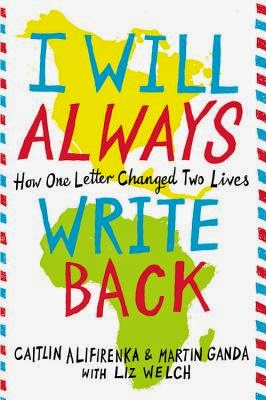
I Will Always Write Back

by Caitlin Alifirenka, Martin Ganda, and Liz Welch
First sentence: “I’d never heard of Zimbawe.”
Support your local independent bookstore: buy it there!
Content: It’s a non-fiction book that deals with teens, and so there’s some mention of teen drinking and pot smoking, but for the most part it’s pretty harmless. It’ll be in the middle readers biography section, though I’d hesitate giving it to the younger end of the readers. I think it’ll be best for grades 5 and up.

In the fall of 1997, Caitlin Stoicsitz made an impromptu decision that changed multiple lives. She raised her hand to get a pen pal, and her letter was sent to Martin Ganda in Zimbabwe. You wouldn’t think something as simple as that would be life-changing, but it was. Caitlin’s letter got sent to a small, rural school in Mutare, and by chance Martin, who was one of the best students in class, was on the receiving end. He wrote back, and that was the beginning of what became a deep friendship for them. And because of that friendship, Caitlin was able to change Martin’s life, to give him the opportunities — especially educational — that he wouldn’t have had otherwise. For what seems like mere pittance, Caitlin (and eventually her whole family) was able to pay Martin’s fees for school (especially since his father was out of work) and help him get into a U. S. College. That doesn’t sound like a whole lot, but as you get to know both Caitlin and Martin over the course of the book, you realize that it IS.

In return, Martin gave Caitlin something that many Americans desperately need: a view of how everyone else lives. Compassion for the downtrodden, and a knowledge that we really, truly are privileged in America.

Like many memoirs, this one is uneven. It’s chatty, and sometimes Caitlin’s narrative borders on whiny, neither of which might bother the intended audience, but kind of grated on me. I also felt like there was a bit of the “American savior swoops in to save the day” which also kind of grated.

But I do honestly believe that Caitlin and Martin have a bond, and I do believe that writing and responding to the letters, when one truly cares and when one is open to other ideas, can change lives.

And this book is a good reminder of that.

The Trap

by Steven Arntson
First sentence: “The last day of summer break before the start of my seventh grade year was the first time I ever got punched in the face.”
Support your local independent bookstore: buy it there!
Review copy provided by the publisher.
Content: It’s some pretty dark subject matter — kidnapping and out-of-body experiences. Plus there’s romance, but nothing too mature. It’s in the middle grade (grades 3-5) section of the bookstore, though it’ll probably be of interest to the older end (and maybe into the 6th grade).

It’s the summer of 1963, right before seventh grade, and Henry Nilsson is pretty sure nothing exciting is going to happen. His dad is being laid off at the railroad and they’re having to tighten their belts at home (they even sold the TV!). Henry like-likes his twin sister’s best friend, Nikki, but has no idea what to tell him. And his best friend, Alan’s, brother bullying has increased.

Then, two things happen to change the trajectory of Henry’s summer: Alan’s brother goes missing. And they discover a book to teach them how to have an out-of-body experience, called “subtle” travel. Once they figure out how, they enter the subtle world, where things aren’t as nice as they seem. And where there’s some pretty scary things going on in them thar woods.

On the one hand, I enjoyed this one. I liked the historical detail, which was never the point of the book, but rather just background to give it some weight. I liked the friendship between Henry and the rest, including his sister. I liked that both Nikki and Alan were people of color — Nikki is Asian; Alan, Latino — but that it was never really an issue. (Well, it is, once.) I liked the mystery, the discovery of what was going on with Alan’s brother, and the realization that even though he’s often mean, he has some good in him.

What I didn’t like was the whole speculative fiction part of it. The subtle travel was weird (Seriously.) and I was never really able to suspend my disbelief enough to make it work for me. There was just too much left underdeveloped, that was just plain weird.

But, perhaps, those are adult concerns creeping into a middle grade book. It is a dark book, one that’s kind of creepy, and for those who like a slight creep factor to their book, it’s a good one. And perhaps, the positives outweigh the negatives.