Once More to the Rodeo

by Calvin Hennick
First sentence: “I can’t even get us out the door right.”
Support your local independent bookstore: buy it there!
Review copy provided by the publisher.
Release date: December 10, 2019
Content: There is some swearing, including multiple f-bombs, and some talk of emotional and physical abuse. It will be in the Biography section of the bookstore.

Calvin Hennick is a white man who grew up in the Midwest. For him, that meant a hot mess of a family, a father that didn’t care and wasn’t there, and not looking back after he graduated college. He met his wife Belzie, who happens to be black, in New York, and they’ve made a life for themselves in Boston with their two children. As their oldest, Nile, turns five and is about to start kindergarten, Hennick gets this brilliant (maybe) idea: take Nile on a road trip, just the two of them, to Iowa to see the rodeo. On the way, maybe Hennick can teach Nile a bit about being a black man in American (though that’s probably not something Hennick, who is white, can do well) and maybe he can figure out this whole fatherhood business once and for all.

Lofty goals for a road trip, and Hennick really doesn’t achieve them. However, the joy really is in the journey in this book. Hennick weaves his experiences on the road with Nile — who really is a sweet and precocious little kid — with reflections on his situation growing up, and the lack of love and support he felt from the adults in his life. Honestly: I’m surprised Hennick didn’t end up staying in small-town Iowa, knocking some girl up at 15, and just becoming bitter. It’s a sterotype, but that’s where his life was pointing. He didn’t, though, and he is a moderately successful (and a very good) writer. He’s making life work. And if he has doubts and questions about his ability to be a good parent… well, we all do.

Still, it was enjoyable spending time with Hennick and Nile and going on a road trip from Boston to Iowa. And maybe I learned a little about being a decent parent along the way, too.

Monthly Round-Up: November 2019

Can you believe that 2019 — that the 2010s! — are almost over? I really can’t. This year has been so crazy, in a much different way than the past few years, but it’s gone by so incredibly quickly!

I was super heavy on the YA this month, but my favorite was this one:

Are you surprised? No, you are not. It really is a great book. As for the rest:

YA:

10 Blind Dates
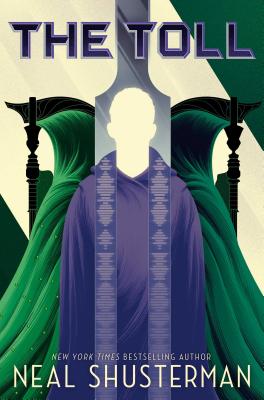
The Toll
American Street
The Queen of Nothing
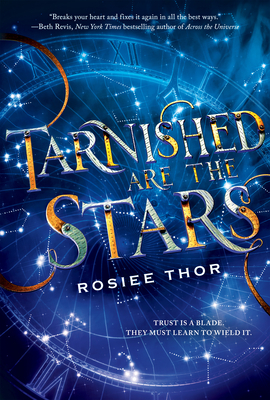
Tarnished Are the Stars

Non-Fiction:

Nine Pints
Lab Girl
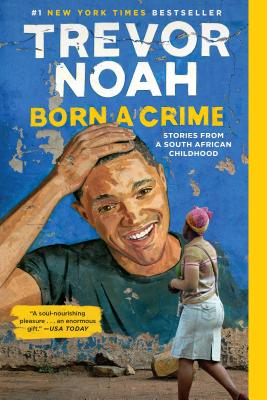
Born a Crime

Adult Fiction:

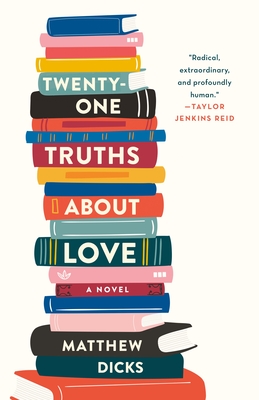
Twenty-One Truths About Love

Middle Grade:

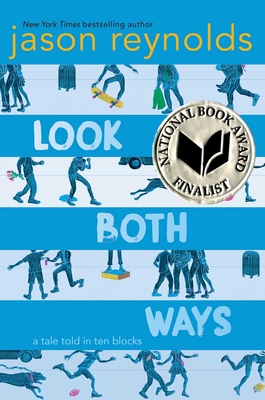
Look Both Ways

Born a Crime

by Trevor Noah
First sentence: “The genius of apartheid was convincing people who were the overwhelming majority to turn on each other.”
Support your local independent bookstore: buy it there!
Content: There is violence and swearing, including multiple f-bombs. It’s in the biography section of the bookstore.

I am a sucker for celebrity memoirs (especially on audio, and I’ve heard this one is great), but it seems like I’m the last person to read this one. I don’t know why I put it off, but I was really glad that my in-person book group picked it.

It’s basically the story of Trevor Noah’s (host of the Daily Show) upbringing in South Africa. He was born under apartheid to a black mother and a white father (who were not married), and his mother raised him. To be honest, it’s more a love story to his mother; you can tell, reading this, that Noah loves and admires his mother and the sacrifices she made for him. It’s a very funny book: Noah was not a “good” child, and was constantly in trouble. But, it’s also a reflective book: Noah breaks down apartheid and racism and why South Africa is so messed up. It’s thoughtful and funny and sweet and interesting, which is actually very remarkable for a celebrity memoir.

And I’m really glad I read it.

Tarnished Are the Stars

by Rosiee Thor
First sentence: “There was nothing quite like the first tick of a new heart.”
Support your local independent bookstore: buy it there!
Content: There’s some death — but not violent death — and some romance. It’s in the YA section (grades 6-8) of the bookstore.

It’s the future, and Earth has become inhabitable for reasons unnamed. A group of settlers have made it to a new world — Earth Adjacent — and have put up a settlement there. The Queen is still orbiting the world in the “Tower”, but the ruler of the earth is the Commissioner, who has issues with technology. So a splinter group of settlers have moved out to a hidden city, determined to use tech, mostly because they need it to survive. Something is making hearts stop working.

Enter Anna, the settlement’s most wanted criminal: The Technician. She defies the Commissioner’s edicts, in order to help people survive. And then one day, she runs across the Commissioner’s son, Nathaniel, who has a TICCER — an artificial heart — just like she does. That opens up a whole world of questions. Which only get more complicated when Emma, the Queen’s personal spy — arrives from the Tower, in order to marry Nathaniel and carry out the Queen’s will.

I started listening to this one on audio, and it was a complete fail. I just didn’t like the narrator, and there were enough moving parts that I couldn’t keep it in my head. Note to self: I don’t do fantasy on audio well (this isn’t my first fantasy audio fail). That said, I was interested enough in the story to pick up the physical book and finish it. And… it’s not bad. I liked that there wasn’t a lot of romance, and that the focus of the relationships were friendship and family. I thought the ending was a bit rushed, but it didn’t take away from the clever premise of a new world and what it takes to settle and populate one. And hooray — it was a stand-alone! I appreciate that Thor was able to wrap the story up in one book.

I solid debut, I think.

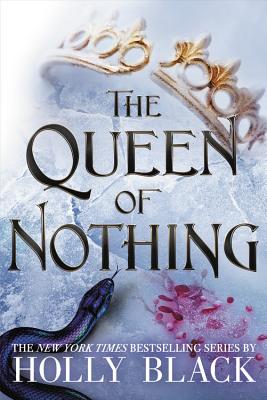
The Queen of Nothing

by Holly Black
First sentence: “The Royal Astrologer, Baphen, squinted at the star chart and tried not to flinch when it seemed sure the youngest prince of Elfhame was about to be dropped on his royal head.”
Support your local independent bookstore: buy it there!
Review copy provided by the publisher
Others in the series: The Cruel Prince, The Wicked King
Content: There’s a lot of violence, some mild swearing, and one tasteful sex scene. It will be in the teen section (grades 9+) of the bookstore.

Before I get started: if you are one of those sorts of people who like to wait until the whole series is done, then now is a good time to read this. It’s the final one in this trilogy, and it wraps the story up beautifully.

If you’ve been reading this series as it comes out, this is more of the lush yet fierce storytelling that Black has given us in the past two books. It feels tighter than the other ones; it comes in under 300 pages, and doesn’t have many side trips. Jude — who has been exiled by her husband, the High King Cardan — gets into faerie, nominally to save Taryn from the inquest involving her husband’s murder (which was brushed over… maybe Black will write a book about Taryn sometime; she turned out to be more interesting than I originally thought), but ends up in the middle of the court politics as her faerie foster father Madoc challenges Cardan for the crown.

It’s a compelling story, as Jude tries to stay a step ahead of the magic and Madoc and her feelings for Cardan, and it’s a tight ending to a fantastic trilogy. I loved the ending that Black came up with; it fits with the characters and was satisfying enough that when I finished I didn’t feel like she cheated me out of something. It’s a gorgeous trilogy and I will definitely miss spending time with Jude and Cardan and their friends and family.

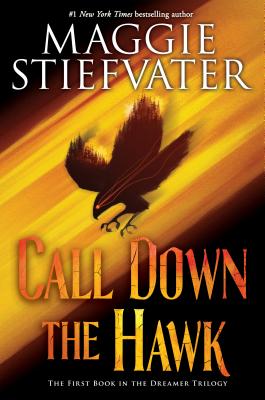
Call Down the Hawk

by Maggie Stiefvater
First sentence: “This is going to be a story about the Lynch brothers.”
Support your local independent bookstore: buy it there!
Content: There is a lot of violence (and a pretty high body count) and swearing, including multiple f-bombs. It’s in the Teen section (grades 9+) of the bookstore.

Some non-spoilery things about Call Down the Hawk:

  1. You don’t have to have read the Raven Cycle to enjoy this one. (But why haven’t you?)
  2. It’s very much a first in a series book. There’s a LOT of set up, which takes most of the book, as Stiefvater lays down the groundwork to this world that’s similar to, but more expanded than, the one in the Raven Cycle.
  3. Which means she’s introduced new elements into the Dreamer world. It’s made it a more realistic source of magic, I think.
  4. She promised adventure, and by the end, there is tension and suspense and adventure.
  5. Ronan-and-Adam are fine, if not physically together.
  6. My favorite pages are 253-255.
  7. Her writing is So. Damn. Beautiful. Even when writing about horrible things.
  8. I liked the new characters — especially Hennessey and Jordan.
  9. Surprisingly, I didn’t mind spending a whole book with Ronan (I was a bit worried about that) and I really liked Declan. A lot. He was always probably not a prick, but Ronan just thought he was so readers did too.
  10. I’m curious to see where the next one goes.

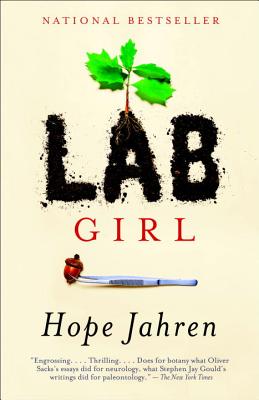
Lab Girl

by Hope Jahren
First sentence: “People love the ocean.”
Support your local independent bookstore: buy it there!
Content: There is a lot of swearing, including multiple f-bombs. It’s in the biography section of the bookstore.

This was the Big Read for Wichita this year, and I kind of knew what to expect going in. A science-based memoir of a biologist. And that’s pretty much what I got: Hope Jahren grew up in Minnesota, the daughter of a scientist, and she knew she was going to be one when she “grew up”. She went away to Berkley for her PhD in biology, and picked up a lab partner, Bill, and embarked upon a really weird career. Interspersed with facts about trees and plants (they really are very awesome, trees), Jahren tells about her ups and downs of being a research scientist and the odd brother/partner/friend she has in Bill.

It’s a fascinating story — being woman in the research science field in the late-1990s/early-2000s wasn’t easy, and it was made more difficult by Jahren’s eventual bipolar diagnosis — interspersed with interesting science. It did drag a bit in the middle, and I’ll admit to skimming some of the science, which I find interesting but I don’t always understand. But, in the end, she’s had an interesting life, she’s a brilliant scientific mind, and I’m glad I read it.

Twenty-One Truths About Love

by Matthew Dicks
First sentence: “Ways to keep Jill from getting pregnant”
Support your local independent bookstore: buy it there!
Release date: November 19, 2019
Review copy provided by the publisher.
Content: There is swearing, including multiple f-bombs. It will be in the adult fiction section of the bookstore.

10 Reasons you should read this book
1. It’s told in lists. Seriously
2. And yet, there’s a plot with character development.
3. Which is really quite brilliant, if you think about it
4. It’s about a not-quite 40-something man stressing about his life.
5. Which sounds boring, but really isn’t because of the lists.
6. They range from “books of the month” — Dan, the main character owns a bookstore — to “Songs you would think have great lyrics but don’t”.
7. It’s charming and sweet and funny but isn’t all happiness and roses.
8. And about being honest with your spouse and how having friends is important.
9. And maybe a little bit about forgiveness.
10. But really, it’s that it’s told through lists that makes it so incredibly unique and worth spending your time on.

I loved it.

American Street

by Ibi Zoboi
First sentence: “If only I could break the glass separating me and Manman with my thoughts alone.”
Support your local independent bookstore: buy it there!
Content: There is a lot of swearing, including multiple f-bombs, some violence against women, some inference to sex, and drug use. It’s in the Teen section (grades 9+) of the bookstore.

Fabiola has just arrived in America from Haiti, nominally because she and her mother are finally joining her mother’s sister and family. Fab’s Aunt Jo has failing health and her mom is going to come take care of everyone. Except that the last time Fab’s mom was in America — when Fabiola was born — she overstayed her visa. So, she was flagged at customs and now is in detention, and so Fabiola has to face her aunt and cousins — whom she’s never actually met, though they’ve talked on the phone — and the new and scary America alone.

It’s not an easy transition; although Fab has been going to an English private school in Haiti, that’s not the same as a private school in Detroit. And she has to deal with the cultural differences between Haiti and America. And it doesn’t help that her cousin Donna’s boyfriend is a drug dealer, and a cop has approached Fab in order to get information.

It’s a tough book to read — I had to read in small snippets, and I was never fully immersed, but I admit this is not a book that reflects my life. That said, I think Zoboi did a remarkable job capturing the difficulties that not just immigrants face but class divisions and the things that people do just to stay afloat. The family connections that come up between friends, and the ways in which people — no, black people — who are struggling will keep an eye out for each other because there just isn’t anyone else. There’s a lot here about racism and class, and immigrants, and family. There’s a slight bit of magical realism; Fab practices Vodou, and I’m glad that Zoboi included that because it’s nothing like the representations I’ve been exposed to (yeah, in the movies). I appreciated that education.

I’ve read Zoboi’s other books, but had never read this one, and I’m glad I have now. It’s excellent.

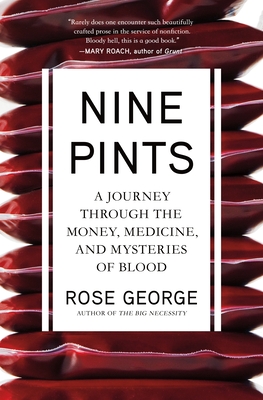
Nine Pints

by Rose George
First sentence: “There is a TV but I watch my blood.”
Support your local independent bookstore: buy it there!
Content: There are some mild swear words, and some frank talk about sex and sexually transmitted diseases. It’s in the science section of the bookstore.

This one, kind of obviously, is all about blood: what it does in the body, sure, but more about the business of blood, about donating and transfusions, about the history of bloodletting and leeches, and about the diseases that are transmitted by blood. It’s also about the stigma that surrounds blood: we like it when it’s in our body, but not so much when it’s not. It’s a fascinating look through the world of medicine and science surrounding blood.

I liked some chapters better than others. The chapter on donating reminded me that it’s been a while since I’ve donated, though I know they probably don’t use my blood and plasma for transfusions (something about hormones in a woman). I didn’t like the leeches chapter (it made my skin crawl!). I found the chapters about HIV and menstruation to be the most powerful. George focused on the stigma behind both in third-world countries (though we are not without it here) which I found fascinating.

Then again, I do like these pop-science books. George is much like Mary Roach, picking a topic and delving deep and making it interesting and accessible to those of use who are not scientists. It’s a fascinating book.