Library Loot #41

Follow up from last week: thanks for all the recommendations! I’ve saved them all, but didn’t check any out because M has decided that she’s interested in Chaim Potok, and has moved all the books we have of his upstairs to her room. She seems to be enjoying them, too.

So this week is fairly small…

For A/K:
Dora Climbs Star Mountain (Dora the Explorer)
When the Moon Forgot, by Jimmy Liao
The Nine Lives of Rotten Ralph, by Jack Gantos/Illus. by Nicole Rubel
Wag a Tail, by Lois Ehlert
Dinosaur Starts School, by Pamela Duncan Edwards/Illus. by Deborah Allwright

For me (and anyone else who wants to read them):
The Beast of Blackslope (The Sherlock Files), Tracy Barrett
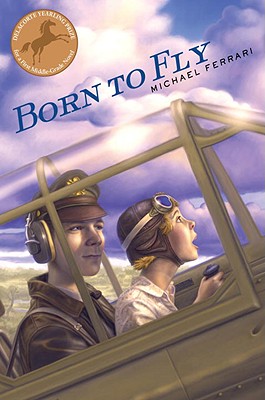
Born to Fly, by Michael Ferrari
Operation Redwood, by S. Terrell French
Neil Armstrong is My Uncle and Other Lies Muscle Man McGinty Told Me, by Nan Marino
Strawberry Hill, by Mary Ann Hoberman
The Last Newspaper Boy in America, by Sue Corbett
Winnie’s War, by Jenny Moss

The roundup is either at Reading Adventures or A Striped Armchair. Obligatory FTC love: the links are provided through my Amazon Associates account. If you click through and actually purchase one of these books, I’ll get a teeny, tiny payment. But, since no one ever does, and it’s SO much easier using the associates account to put up these links, I’m going to keep doing it.

*Ones that M eventually read.
**Picture books we really liked.

The Brilliant Fall of Gianna Z

by Kate Messner
ages: 10-13
First sentence: “Forty one minutes to cross-country practice.”
I received the ARC from Bloomsbury.
Support your local independent bookstore: buy it there!

Seventh grader Gianna Zales loves art and running, especially cross-country. However, she’s not so good at deadlines, and her spot at cross-country sectionals is in jeopardy: if she doesn’t get her science project — collecting and cataloging 25 different leaves — completed and in on time, then her spot is going to go to arrogant, popular Bianca. Which Gianna doesn’t like, because in her own words: sparkly girls don’t run. Runners do.

Over the course of a week, her best friend Zig tries to keep her focused and spending time searching for leaves, except it’s not as easy as it sounds. A funny thing called life keeps getting in the way, whether it’s her father’s job — he runs a mortuary — or her beloved Nonna’s increasingly alarming inability to remember things, or her mother’s rising stress level and denial about Nonna’s problems.

It’s a quiet book, funny at times, as Gianna struggles to not only complete her leaf project in time but to deal with the impending change with Nonna. What Messner does best with the book is give a sense of place: the sights, sounds, smells and feel of a Vermont fall literally popped off the page. Messner also helps by intertwining Robert Frost poems amid the science and running: it broadens the scope of the book and grounds it in ways that it wouldn’t be without the poetry connection.

The only real complaint is the stereotypical plot: Gianna is neither popular or unpopular, in spite of her running prowess, and has to waffle between being friends or not with the two outcast girls, Ellen and Ruby; the friendship-but-is-there-more with Zig; the overbearing and irritating mom; the popular versus nerdy conflict with Bianca (two guesses who gets to go to sectionals; it’s not difficult to figure out).

Still, even though it was pretty predictable, it is an enjoyable read. Enough so, that I’m looking forward to what Messner has to offer in the future.

(Just for the record: because this is a Cybils nominee, I’ve been asked to make sure y’all know this is my opinion only, and not that of the panel.)

Childhood and A Love of Reading

This ran in Estella’s Revenge back in August 2007. I thought I’d reprint it here for National Day on Writing and post it to the gallery A Lifetime of Reading. Enjoy.

It’s no secret that I enjoy — no, love — middle-grade and young adult fiction.

This is not a passion that I have always had. It’s not that I didn’t read as a child; I did. A lot. But after I got through the usuals — Little House on the Prairie, Harriet the Spy, Anne of Green Gables, the Ramona books, Tales of Fourth Grade Nothing, and probably others I can’t remember — I read a lot of junk. Or, what I would now consider junk.

Then, by the time I hit 7th grade, I’d left YA fiction behind for Piers Anthony, Ray Bradbury and Edgar Allen Poe (my morbid phase). From there, it was the Agatha Christie obsession that lasted for several years. And by the time high school hit, it was mostly reading for English classes; I’m not sure I read for fun between 10th grade and sometime in college.

It wasn’t until about 12 years ago that I discovered all that I had missed.

It started innocently enough, in a conversation with a friend who asked if I’d ever read Beauty by Robin McKinley. No, I replied, I hadn’t. She loaned me that, along with Susan Cooper’s The Dark is Rising series, and I was hooked. Soon, I was picking up children’s books from the library (my oldest at the time was still a baby) and the bookstore and devouring them. Because I realized something: these books, these kid’s books, were good.

I think somewhere along the line, I was convinced that books for young adults, for children, were considered immature, and if you were an adult (or wanted to be), then you needed to get out of the kids section. I think this is a common perception; I have been asked numerous times if I read middle-grade and young-adult fiction because I’m “prescreening” books for my kids. My blog has been dismissed by some because I read too many kids books. (Ironically, it’s also not that respected in the kidlit world because I review adult books, too. There’s no winning.) The assumption is that there just can’t be anything in these books that I, as an adult woman, would enjoy or be satisfied by.

Yet, I have often found that it is the adult books are less than satisfying. Authors that write for adults–or at least, those that want to get noticed by big-name reviewers–tend to either get lost in the words of the book, rather than developing characters or storylines; or, they heap on so much “adult” stuff (sex, language, violence), that in the end I’m left wondering where the story was. For me, for the type of reader I am, the story and the characters are critical to the success of a book. I enjoy a beautifully written book, but the words themselves rarely draw me in (perhaps this is partly a result of my education in journalism rather than English). However, it’s all about the story.

And the truth is, some of the best stories out there are being written for children and young adults. There’s the obvious examples of J.K. Rowling or Philip Pullman or Roald Dahl. But it goes deeper than that. Ann Rinaldi spins convincing and interesting historical tales, usually featuring some strong and admirable heroine. Christopher Paul Curtis tells stories of being black in America that are engaging and challenging at the same time. Rick Riordan has come up with a brilliant idea of bringing the Greek myths to life (even though his series has the obvious Harry Potter comparisons). And Francis Hardinge’s debut book, Fly By Night, had me hanging on every word until the end.

In addition to the stories that are being told by current authors, I’ve managed to discover jewels that I passed over as a child. I never read The Hobbit or Treasure Island (I was too judgmental; they were “boy books”). I rediscovered All-of-a-Kind-Family and The Westing Game. I found out what choice opportunities reading The Mixed of Files of Mrs. Basil E. Frankweiler, Tuck Everlasting and Railway Children were. Or the challenge in reading The Devil’s Arithmatic.

Yes, my life wouldn’t have ended if I’d never read any of those books. But, my life wouldn’t have ended if I’d never read How Green Was My Valley or Zorro either. The point is that my life was enriched by reading those books. They brought me something that I, in turn, wanted to share with my family and friends. They had the power of a good story, well told.

And in the end, that’s what has brought us together as people since the beginning of time: the ability to tell stories and learn from them. Whether or not they’re supposed to be for kids.

The Princetta

by Anne-Laure Bondoux
ages: 12+
First sentence: “A few months ago you summoned me to the Council Chamber.”
Support your local independent bookstore: buy it there!

Malva dreams of adventure. She’s the crown princess of Galnicia, and she loathes being a puppet in her parent’s grand plans. She hates sitting, looking perfect and pretty and dreams of escape. So, on the night before her engagement party (to some stuffy old prince), she and her maid escape from the castle.

Thus begins The Princetta, a book in the tradition of Grand Fantasy: high adventure, romance, princesses, noble sailors, evil revenge-seeking counts, giants, sirens, mystical lands, battles, storms… in fact, it reminded me a lot of The Princess Bride. Except, it didn’t quite work.

I don’t know if it was the translation — it was originally written in French — or the story. But, honestly, about halfway through the book I started skimming because it was boring. There was a lot of telling, rather than showing, and Malva — for all her feisty ideals — wasn’t terribly interesting. For all the characters to juggle, it was managing okay, until they got to the mystical Archipelago, where they were to get Tested and Tried. The book was only half done, and I had no idea how it was going to manage for the rest of the (overlong) 430 pages. I skimmed enough to get the gist of it, read the ending (which wasn’t predictable at all, which surprised me) and called it quits.

I do wish it had been better, though.

There and Back Again: Kidlit Con

Oh, my.

I have absolutely no way to even begin to wrap my brain around KidlitCon, or even figure out remotely how to report on it. So, how about a few Book Nut awards?

Most awesome blogger in the whole world for putting this fabulous conference together: MotherReader, of course.

Best announcers: FatherReader and TeenReader and KidReader. Nothing like a lot of humor (and organization and creativity) to make a charity raffle memorable.

Best panel (even though it wasn’t, really): The FTC sent a representative to talk to us about the guides/regulations. Great round ups/discussions at A Chair, A Fireplace and A Teacozy, Galleysmith, and Charlotte’s Library (among others).

Best presentation (since it wasn’t a panel): Greg’s discussion of social media and how it can work for you. It was geared more towards the authors in the room, but it was very fascinating and interesting and helpful and useful. It’s all about connection. Really.

Best people to hang with: everyone. But, specifically…
Michelle at Galleysmith,

Maureen at Confessions of a Bibliofore,

Charlotte at Charlotte’s Library, Jennie at BiblioFile,

and Abby at Abby(the)Librarian (yay for finally meeting her!).

They totally made my day.

Best laugh: Varian Johnson. I want to have him and his wife over for dinner because he’s interesting, fun, and his laugh just makes me want to laugh.

Best idea: getting involved. There’s so many ways — that goes for you non-kidlit people out there — to share a love of reading. I won’t go into them now (one for the future that I want to participate in, and should have last year, is Share a Story, Shape a Future), but there is one relevant participation thing: tomorrow — October 2oth is National Day on Writing. The lovely ladies at A Year of Reading have set up a forum called A Lifetime of Reading for you to submit your stories about your reading experiences. It doesn’t have to be fancy — just go through old blog posts and find one about reading that you’d like to share. And then do it. 🙂

I could go one about the fabulous time I had and how much I want to go back, and how exciting it was to meet everyone (including my Nookish friends Corinne, Cami and Kelly, even though they weren’t actually at KidlitCon)

and how many people lived up to what I thought they’d be, and how weird it was being known as the person from Kansas with four girls (just embrace it, don’t fight it!)… but I won’t.

I am going to try really, really, really hard to go next year, though.

Trail of Crumbs

Hunger, Love, and the Search for Home
by Kim Sunee
ages: adult
First sentence: “Let me start by saying where I am.”

Perhaps I was influenced by Corinne’s and Lilly’s reviews of this book. Perhaps if I hadn’t read those, I would still have had the same reaction to the book. As it was, I couldn’t make it even 50 pages into it.

Many of Corinne’s and Lilly’s complaints are mine: Kim Sunee is unsympathetic, she tells more than shows, she’s not even very good — for a food memoir — at describing the smells, tastes, and feel of the food she’s cooking, eating or enjoying.

Honestly, I skipped around, read the ending, and chalked it up to me being much less hip, much less interested in self-discovery than the book wants from me.

There are better food memoirs out there, and better ways to spend my time.

Sweetness in the Belly

by Camilla Gibb
ages: Adult
First sentence: “The sun makes its orange way east from Arabia, over a Red Sea, across the volcanic fields and desert and over the black hills to the qat- and coffee-shrubbed land of the fertile valley that surrounds our walled city.”

This was a buddy read with Kailana — and if it seems a little weird, it’s because she has the first half of the conversation up on her blog. Go visit it, then come back for the second half…

Melissa: That’s funny. I don’t know of many white Muslims, but I do have friends (who are white) who are very interested in Islam, so I knew a bit about the religion going into the book. I do like the portrait that Gibb painted of the religion: how there are some extremes (like the female circumcision, which was very difficult for me to read!) but most Muslims are just trying to find their path back to God. I liked how she looked upon Christians as “misguided”. That made me chuckle.

Kelly: Yeah, I have always had trouble with female circumcisions. It is so horrifying to hear described, and I know I never want to experience it first-hand! In other cultures the male circumcisions can be pretty graphic, too. Then it is less about religion and more about making the men feel less manly, but still, I will never understand the practice!

Melissa: Me, either! I got into an argument with my husband over it: I compared it to foot-binding in China (he disagreed that there were similarities), and wondered why women put their girls through such things for the sake of a “good marriage”. I’ve never encountered this in a book before (pretty sheltered reading, I guess): it was horrifying. One of the other things I liked about the religion is how much of it was cultural; how much of her religion when she got to Britain was almost more Ethiopian than what we’d consider (as an outsider) to be “Muslim”.

Kelly: It is actually China that is one of the places that would cut off men’s manly parts to make them better servants… And, women put themselves through that because it has become a norm that it is what is desired. So, it really is the men’s choice as much as the women’s. Women are worthless in many cultures if they don’t marry, and men won’t marry them if they don’t abide by cultural norms for what a woman is supposed to be!

Melissa: Very true. And very unfair! So… one of the things I noticed about the book was the language. Usually, it stands out to me and grates on me when a writer is so very effusive? technical? with language — like they’re trying to be flowery and trying to show that they have a mastery of it — but this felt very natural, very poetic. I loved it. What did you think?

Kelly: Oh, so happy you brought this up because I never would have thought to. I totally agree, though. Flowery writing is something I have never been a big fan of, but Gibb did it so well that I didn’t even pay attention. Normally I would also find writing like that slows the book down, but once I got into the book I found it was over with really fast. For the style it was actually a pretty fast read. I was impressed. I learned a lot, too, which was great. She says in the note in the back that it is mixed with fiction, so obviously not a true story, but I think she captures well what a character in Lilly’s position would be thinking. Would you agree?

Melissa: I totally agree. I have had problems with current “classics” in the past because the way the writer’s written the book is distracting from the story and the characters. I like the way you put it: that Gibb captures well the character of Lilly. I also felt like she gave a real sense of what it was like to be living in Ethiopia; the feel, the rhythm, the smell. It almost felt like I was there.

Kelly: I know! I really felt like I got a sense for everything, which is always a good thing in a fiction novel. Was there anything that you didn’t like about the book?

Melissa: Aside from the circumcisions and the medical stuff in general (I have a weak stomach!)? No. I think that’s one of the things that really surprised me about the book: there wasn’t anything that stood out as being really negative? How about you?

Kelly: I know! It is great, huh? I have read a bunch of good books in a row. I think I have another book by her on my TBR pile, so I am really looking forward to it! I can’t remember what book actually won the Giller the year she was nominated, but it must have been some book for her to lose to it! Medical stuff doesn’t really bother me, but I am bothered by the ways that women try and make themselves ‘appealing’ for men. Anything else that you want to mention?

Melissa: You have a stronger stomach than I do! You’ll have to let me know how her other book is; I’m not sure the library here has anything else by her. It was good reading this; thanks for introducing me to her books!

Kelly: Welcome! I am glad this worked out so well!

Library Loot #40

I’ve been really bad lately in getting books for M. It seems the last month or so, she’s been handing me the stack of books back without having read any of them mostly because they don’t sound “interesting.” So, when she came home from the library on Saturday having checked out Orson Scott Card’s Hart’s Hope (verdict: interesting, but very disturbing), it occurred to me that maybe she’s moving beyond the teen section.

So: what do I give a 13 year old girl to read that isn’t too graphic (violence, language, or sex) that is a bit more challenging/interesting/intriguing than the teen books I’ve been bringing home? She tends toward the fantasy, but she also likes historical and realistic fiction, too.

For A/K:
Monster Baby, by Dian Curtis Regan/Illus. by Doug Cushman
Bella & Bean, by Rebecca Kai Dotlich/Illus by Aileen Leijten*
Dora’s Costume Party! (Dora the Explorer) (I was really happy all those weeks when the Dora books weren’t in. Sigh.)
One Wolf Howls, by Scotti Cohn/Illus. by Susan Detwiler
Who Wants to Be a Poodle I Don’t, by Lauren Child*
The Terrible Plop, by Ursula Dubosarsky/Illus. by Andrew Joyner
Just How Long Can A Long String Be?!, by Keith Baker

For C:
Still reading “grumpy Harry”. I’m glad she’s so determined.

For M:
The Strongbow Saga, Book One: Viking Warrior, by Judson Roberts
Magic Street, by Orson Scott Card
The Memory of Earth, by Orson Scott Card

For me:
The Princess Bride: S. Morgenstern’s Classic Tale of True Love and High Adventure, by William Goldman
Oracle Bones: A Journey Through Time in China (P.S.), by Peter Hessler
Ninth Grade Slays: The Chronicles of Vladimir Tod, by Heather Brewer
Emma-Jean Lazarus Fell Out of a Tree, by Lauren Tarshis
Emma Jean Lazarus Fell in Love, by Lauren Tarshis

The roundup is either at Reading Adventures or A Striped Armchair. Obligatory FTC love: the links are provided through my Amazon Associates account. If you click through and actually purchase one of these books, I’ll get a teeny, tiny payment. But, since no one ever does, and it’s SO much easier using the associates account to put up these links, I’m going to keep doing it.

*Ones that M eventually read.
**Picture books we really liked.

Liar

by Justine Larbalestier
ages: 13+
First sentence: “I was born with a light covering of fur.”
Review copy sent to me by the folks at Bloomsbury.

The hardest part about reviewing a book like this is not giving anything away. The hardest part about reading a book like this is knowing what to believe.

There are unreliable narrators — characters who don’t understand what’s going on around them, who whether willfully or unknowingly misinterpret the information around them, while the reader fully understands what’s going on. Then, there’s Micah. Micah is a liar, something for which she’s very up front about.

However, that means everything in the book is suspect. Everything.

I think the basic plot — that Micah’s “after hours” boyfriend, Zach was brutally killed — is pretty much sound. But everything else, from the opening sentence to the final paragraph, is suspect. How much is truth? Micah tells you that she’s telling the truth, but as the book unravels, there are lies. So you wonder: is she lying about lying? You can’t trust her as a narrator, and yet you have no information other than what she gives you. Everything in the book is on shaky ground, and you’re left at the end wondering what really happened.

It’s a compelling look at… what? Lying and truth-telling, yes. But other things as well. But you could also go meta here: it’s exploring the role of a narrator in a book, the role of a reader and the agreements the reader makes with the narrator/author when opening up the book. It’s an exploration of a girl trying to fit in, but… how?

I’d go on, but really, as Justine Larbalestier says, it’s better left spoiler free. Once you’ve read the book, head over to the spoiler thread and leave your two cents on what it all means.

I’m still reeling from it all. Fascinating.

Get Your Nominations In

Two days from now — Thursday, October 15th — is the last day to nominate your favorite children’s and young adult books published in the last year for a Cybil Award. The book(s) you nominate need to have have been published sometime between October 15, 2008 and October 15, 2009. You are allowed to nominate one book in each of the following categories:

Easy Readers/Short Chapter Books
Fantasy & Science Fiction
Fiction Picture Books
Graphic Novels
Middle Grade Fiction
Non-Fiction Picture Books
Non-Fiction: Middle Grade & Young Adult
Poetry
Young Adult Fiction

Click on the category title to see the list of books already nominated in that category. I’m really not very good when it comes to coming up with lists of books that haven’t been nominated. Click here to see Sherry’s list of books she’d like to see… I can tell you that right now we only have 92 books on my panel’s list, which is about 40 short from last year. (Does that mean there aren’t as many good Middle Grade books published this year?) I have noticed that we’re missing the latest Moxy Maxwell and Heavy Medal Newbery favorite A Season of Gifts on our list. If you haven’t spent your nomination in the Middle Grade Fiction category, consider one of those two. (Or others. I’m sure there are others…)

At any rate, you only have two days left to get your nominations in!