
Happy Thanksgiving!
Have a wonderful day. Eat lots of good food. Enjoy time with family and friends. Read a good book.
Be grateful for all the wonderful things in your life.
I know I will.

Happy Thanksgiving!
Have a wonderful day. Eat lots of good food. Enjoy time with family and friends. Read a good book.
Be grateful for all the wonderful things in your life.
I know I will.
 Happy Thanksgiving to all the Americans out there. I managed to squeeze in another small trip to the library amid the cleaning and the visiting and the baking.
You didn’t think I’d miss a week did you?
For A/K:
Goldilicious, by Victoria Kann
Katy Did It!, by Lorianne Siomades
A Book, by Mordicai Gerstein
Robot Zot!, by Jon Scieszka/Illus. by David Shannon**
For me:
Umbrella Summer, by Lisa Graff
Road to Tater Hill, by Edith M. Hemingway
Love, Aubrey, by Suzanne LaFleur
The Wine-Dark Sea , by Leonardo Sciascia
The Heretic’s Daughter: A Novel, by Kathleen Kent
The roundup is either at Reading Adventures or A Striped Armchair. Obligatory FTC note: the links are provided through my Amazon Associates account. If you click through and actually purchase one of these books, I’ll get a teeny, tiny payment. But, since no one ever does, and it’s SO much easier using the associates account to put up these links, I’m going to keep doing it.
*Ones that M eventually read.
**Picture books we really liked.
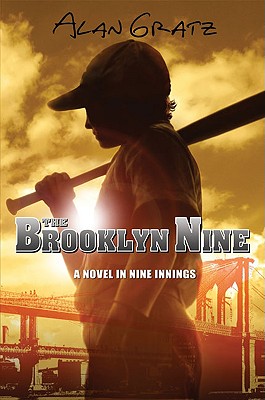 by Alan Gratz
ages: 10+
First sentence: “Nine months ago, Felix Schneider was the fastest boy in Bremen, Germany.”
Support your local independent bookstore: buy it there!
This book is one of the more unique ones I’ve read recently. It’s not that it’s tackling something different or controversial. Rather, it’s quite the opposite: it’s a sweeping portrait of a family, a game, a nation. Quiet in its execution, yet grand in its ambition, Gratz pulls off something I didn’t think was possible: this book is a slice of Americana through and through.
The format is clever, too: it’s a series of short stories, told in nine “innings”, that travel through the years. Beginning in 1845, with a German immigrant, Felix Schneider, and going until present, the stories offer up a picture of how baseball — and America — has evolved over the last 160 years. Gratz touches on all the major highlights of Americana: there’s a Civil War soldier, Vaudeville, gangsters, racism and the Negro League, the All-American Girls Baseball league, and the Cold War. As in the case of all short story collections, some of the stories work better than others: in my case, the further back in time, the better the story; the final two more modern stories felt a bit cliched to me. But, even with its unevenness, it’s a fabulous undertaking. This is probably sounding like a sports book, and in some ways it is — I think there are many baseball-minded boys out there who would love the book — but, it’s so grounded in history and in family that baseball becomes more a character in the story than just a game that people played. That, and the stories — and especially the authors notes in the back, which I flipped to and read after every chapter — make the game itself sound quite fascinating.
At one point, I thought that it would have been nice to read these stories backward, beginning with the present day, and working back to 1840s. But, that’s just me being particular. This book really is a wonderful little story.
(Just for the record: because this is a Cybils nominee, I’ve been asked to make sure y’all know this is my opinion only, and not that of the panel.)
 This week’s geek is a reprise from last year: help the Weekly Geekers come up with a Top 10 for 2009. The basic guidelines:
This year, when you submit your novels, you must include the genre it is from as well. Last year, when I was trying to categorize everything, I had to guess on a lot of novels and I know there were some people who disagreed with my choice. If there are any contradictions in genres (say if a book was selected for two genres), then the Weekly Geek Staff will vote on where it goes (please?).
We’re trying to gather as many lists as we can, so we can come up with a nice comprehensive list. You’ll have two weeks to come up with your list before I begin compiling the voting booths. Then we’ll put it to a vote. Last year, we ended up with over 1300 individual voters and I know we can make it just as big this year.
I’m sending out a personal plea: let’s get some kidlit on this list, okay?!
So, my top ten that were published in 2009 (in no particular order…) (I also discovered that if it’s not kidlit, then chances are I’m not going to read it new!):
1. When You Reach Me, Rebecca Stead (sci/fi/fantasy/middle grade)
2. The Actor and the Housewife, Shannon Hale (ungenreable: chick lit? fiction? fantasy? what?)
3. Lips Touch Three Times, Laini Taylor (fantasy/YA)
4. Fire, Kristin Cashore (fantasy/YA)
5. Anything But Typical, Nora Raleigh Baskin (middle grade)
6. Liar, Justine Larbalistier (fantasy?/YA)
7. The Chosen One, Carol Lynch Williams (YA)
8. Wild Things, Clay Carmichael (middle grade)
9. The Evolution of Calpurnia Tate, Jacqueline Kelly (middle grade/historical fiction)
10. Babymouse: Dragonslayer, Jennifer L. Holm and Matthew Holm (graphic novel)
Okay, there’s my list. What’s yours?
 Five years.
When I started this blog, I had no idea that I’d write more than 1,000 posts.
When I started this blog, I had no idea that I’d make as many friends and read as many books as I have.
Then again, five years is a long time! And as I am feeling generous, and because I want to thank y’all for reading my blatherings over the last five years, I’m doing a a drawing for a $25 gift certificate to a book store of your choice on November 30th. To enter, leave a comment with your favorite book (from the pastfive years). I’ll give you an extra entry for tweeting the post, too (if Twitter is your thing…).
And, because it’s been a project of mine this year, I’m also going to give you a full 100 things about me. It’s mostly cobbled together from the posts I’ve done over the course of the year, but with 25 new things in there. Since, after five years, you really deserve to get to know me a little bit better.
1. I like to read.
2. Check that: I love to read.
3. I read on average four books a week.
4. Which breaks down to between 2 and 4 hours a day.
5. I don’t watch much TV anymore. (30 Rock is about it. Though sometimes I watch Glee.)
6. Though there’s a lot of TV I’d love to watch. (Mad Men, House, True Blood…)
7. I do watch So You Think You Can Dance pretty regularly now, thanks to Corinne.
8. I use the excuse that I love to watch dancing.
9. I do love to dance, too, though it embarrasses my girls.
10. And I took all forms of dance in college — folk, modern, ballet.
11. My favorite was ballroom dance, though.
12. The best part of ballroom dancing is the competitions. (I was even in one, once! Got 5th place.)
13. And, yes, I love Strictly Ballroom.
14. Though it’s not my favorite movie of all time.
15. That’s probably one of the Jane Austen adaptations, though don’t make me choose which one.
16. Because I love nearly all of them.
17. My opinion of the movies reflects my opinion of the books. Mansfield Park = bleh. The rest are good.
18. My favorites, if I had to choose, are the big two — Persuasion, Pride and Prejudice — and Emma.
19. Because I love the Austen Men: Colin Firth (Mr. Darcey), Jeremy Northam (Mr. Knightley) and Ciaran Hines (Captain Wentworth). And to a lesser extent Alan Rickman (Colonel Brandon… but he doesn’t count since I’ve liked him since the horrid Kevin Costner Robin Hood.)
20. I appreciate them like I appreciate art (or dance!). I admire them. I enjoy looking at them. Watching movies they are in make me happy.
21. I am not a stalker. (Yet?)
22. I pretty much watch everything the Austen Men are in, because I’m that sort of person. Which means I’ve watched some pretty bad movies. (And have thought to myself: hey, Ciaran Hines/Jeremy Northam is in that; I should see it!)
23. Colin Firth makes the best case for himself out of period clothes.
24. In other words: no matter how bad the movie is, I still like him. The others, I seem to only like in period dress.
25. I have liked other actors — most notably Viggo Mortenson (Aragorn), Orlando Bloom (Will Turner, not Legolas) or Richard Armitage (heck, I’ll take him as both Guy Gisborne and John Thornton) — but nowhere near as much as my Austen Men.
26. All this begs the question: what is it about dark-haired British men in period clothing?
27. Actually, if you REALLY want to make my day, what you need to do is get a dark-haired British actor to dress up in period clothing, have him drive me around in a minicooper (red, of course), and feed me cake.
28. Mmm… cake.
29. Love the stuff, but can’t make it terribly well. Which is probably for the best.
30. Frosting, on the other hand, I do quite well.
31. I love decorating cakes. My girls love that I do, too. Makes birthdays fun.
32. In fact, I’m looking forward to doing their wedding cakes (if they’ll let me).
33. I’m so taken with the whole period-clothing thing, that if I could go back and re-do my wedding, I’d make everyone wear period (preferably Regency, but I’d go for Renaissance, too) clothing.
34. Thankfully, I’m married to a guy who’d go for that. And who doesn’t mind my actor-obsessions.
35. He laughs at me a lot, though.
36. I don’t mind. I laugh at me a lot, too.
37. There is one exception to the British Rule: Brendan Fraser. He is dark-haired, but he’s not British. He’s not even a terribly brilliant actor. But he is imminently watchable, even in the really stupid movies he’s been in.
38. And I think he’s cute when he’s dirty and sweaty and smiles that goofy smile of his.
39. Sometimes, I wonder if I ought to act my age.
40. I think that, too, when I tell people I love reading books for children and young adults.
41. Especially since I don’t read them because I’m pre-screening them for my girls.
42. Or because I’m a children’s librarian or a bookseller (though I have aspirations in those directions).
43. I read them because I like stories and good storytelling.
44. And I think they’re fun to read.
45. I do read adult books, just not as many.
46. Mostly because I can’t find as many that I like.
47. And I’m always surprised when I find one that I do like.
48. I find I’m impatient with the writing.
49. I have a better track record with non-fiction, though. Especially travel and food books.
50. Travel books are best in January. I hate January.
51. Food books are best all the time.
52. Especially if they’re written so that you can almost taste or smell the food.
53. Because lately, my real passion (outside of books and blogging, of course) is food.
54. I’m not a gourmet or a foodie, and I’m no good at inventing recipes, but I love to cook.
55. I’m a weird that way: making dinner is one of my favorite things to do.
56. Maybe it’s because my first job was working in the kitchen of a bar/restaurant. I started as a dishwasher and worked my way up to line chef.
57. Whatever it is, I find something calming and creative in the throwing together of ingredients to create something delicious.
58. Bad mom moment: even though I need to teach them to cook, I actually DON’T like it when my kids want to help.
59. It throws me off my groove. Don’t mess with my groove.
60. My new hero is Julia Child. She totally rocks.
61. In fact, when I was in DC for KidlitCon, I made sure I I had time to go to the American History Smithsonian and see her kitchen. In a word: awesome.
62. General cooking is great, but what I really really love is baking.
63. Bread, rolls, cake, cookies, doughnuts, sweetbreads… if it goes in the oven, I’m SO there.
64. I used to say that there was no way I could do the Atkin’s diet because I. Live. For. Bread.
65. I bake bread every week for the family to use.
66. I started doing this because there’s high-fructose corn syrup in the store-bought loaves, and I’m anti-high-fructose-corn syrup as much as possible.
67. Which came about from reading a book.
68. But now I do it because I love baking bread.
69. Someday, I’ll even own a baking stone and learn how to bake artisan bread.
70. Until then, I’ll just keep frequenting Panera when I can.
71. I have had other hobbies: sewing (briefly), decorating (briefly), gardening (on and off), playing the piano (do it quite a bit still), and photography (not as good as I’d like to be).
72. And I did, once, fancy myself a writer of novels.
73. If I did write a book, it’d probably be some sort of travel book/memoir.
74. But that means I’d have to travel. Which we don’t. Not really.
75. We do go places — I do what my parents did: throw the kids in the car and drive to see stuff.
76. Mostly educational/historical stuff: I’ve never been to Disneyworld or Disneyland.
77. But my my childhood really was too ordinary to make a good memoir.
79. I’ve thought, in the years since it fell apart, that that relationship would probably make a good novel.
86. I really am much better at writing my opinions about what other people write.
88. Instead of a newspaper, my outlet is my blog.
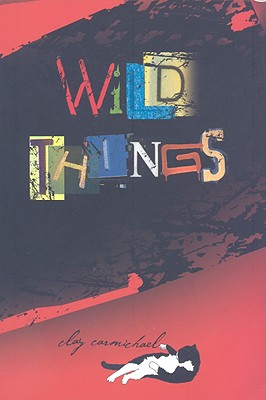 by Clay Carmichael
ages: 10+
First sentence: “Humans were diggers and buriers, the cat thought, like dogs.”
Review copy provided by the publisher.
Support your local independent bookstore: buy it there!
It’s a familiar story: girl — who has been forced, because of a crazy and neglectful mother, to mostly raise herself — finds, after her mother’s untimely death, herself under the guardianship of her odd, reclusive uncle. It’s an uneasy relationship; neither girl or uncle, for their own reasons, are quite ready for other people in their lives. Over the short months in the book, they grow, they stretch and yes, they change.
But as Fuse #8 pointed out in her review, this is not a coming-of-age story. It’s a story of wildness and freedom. Of love and trust. Of art and beauty. And about finding everything in a broken life.
And familiar though it is, Carmichael makes this story soar.
One of the reasons that this books works so well, is because, although it’s familiar, it’s not stereotypical. It’s not the Carmichael makes them do the unexpected, it’s that she breathes life into the familiarity and makes the characters real. Perhaps it’s the chapters from the cat’s perspective that makes it unusual enough, or perhaps it’s because there’s so many characters to love: from Zoe, wise beyond her years, but a total spitfire about it; her Uncle Henry, who reminded me strongly of a good friend, cranky, disillusioned, yet with great capacity to love; to Bessie, broken in the heart, but is not defined by her illness; and the Padre, the local priest with a loving and tolerant heart. Or the minor characters, who had me giggling and and smiling and loving every minute of it.
The other reason is that Carmichael holds the book together with a motif — something that could backfire, if she had gotten preachy about it. Too often, it’s easy to fall into the mundane with something as familiar as love, or the affairs of the heart. But, while the motif there and, yes, it’s obvious, it doesn’t overwhelm the plot or the characters or the simple beauty of the writing. Carmichael takes the motif, weaves it into the book and makes it work with the story instead of letting it overwhelm it.
It’s not much to hang a book on: familiar characters and plot and a motif, but it’s genuine and heartfelt. A book very much worth reading.
(Just for the record: because this is a Cybils nominee, I’ve been asked to make sure y’all know this is my opinion only, and not that of the panel.)
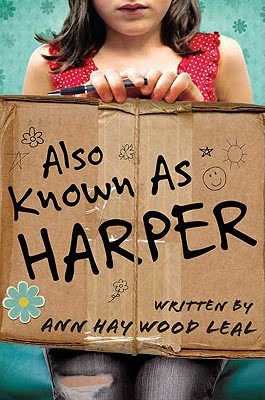 by Ann Haywood Leal
ages: 10+
First sentence: “Winnie Rae Early followed ten steps behind me the entire way home from school.”
Support your local independent bookstore: buy it there!
Eleven-year-old Harper Lee Morgan loves to write poetry. It’s possibly fate — her mother named her after the author, after all — but she thinks it’s more that she just has words bubbling up inside her that need to come out. And come out they do: her short, observant, often touching poems are interspersed throughout the book.
Some people like things shiny and crisp
But I tend to like the things with the scraped up edges.
That way I can tell other people have liked them too.
They’ve torn them and spilled on them
or broken off a corner or two
As they went about the important business
Of their day.
Something smooth and straight and new
Has an emptiness about it
Because it hasn’t been important
To anyone yet.
Because her life is full of fodder for poems. See, her Daddy took to drinking and eventually took off for good, leaving her Mamma, herself, and her little brother Hemingway with too many bills and too little money. Eventually, the family gets evicted from their home, and things go from bad to worse, as the family moves to a motel and eventually is kicked out on to the streets.
The word is overused, but this really is a poignant little book: Haper’s full of spunk and spittle, anger and love, hope and disillusionment. The world that she and Hemingway encounter is a harsh one, but it’s not black and white: Leal paints a gray picture. No one is “good”, no one is “bad”, and even the looming idea of social workers coming after them because they aren’t in school isn’t inherently evil. It’s a world where no one is exactly what they seem — whether it be someone who appears to be homeless, or the next door neighbor girl who is as mean as they come. It’s a world where literature — To Kill a Mockingbird, specifically — provides hope, escape and a place of refuge.
It also provides a glimpse into the plight of the homeless, but does so without being preachy, which isn’t an easy balance to achieve. Above all, it’s a good story about a girl — a family — just trying to find a way to make it all work.
(Just for the record: because this is a Cybils nominee, I’ve been asked to make sure y’all know this is my opinion only, and not that of the panel.)
Um… it’s not bigger. It’s smaller. On the upside, I’m getting a lot more books in the mail, thanks to the Cybils.
For A/K:
Dora’s Book of Words / Libro de Palabras de Dora : A Bilingual Pull-Tab Adventure!
Waiting for Winter, by Sebastian Meschenmoser
Two at the Zoo, by Danna Smith/Illus. by Valeria Petrone
One Fine Trade, retold by Bobbi Miller/Illus. by Will Hillenbrand
Eliot Jones, Midnight Superhero, by Anne Cottringer/Illus. by Alex T. Smith
Catfish Kate and the Sweet Swamp Band, by Sarah Weeks/Illus by Elwood H. Smith
The Last Polar Bear, by Jean Craighead George/Illus. by Wendell Minor
For C/me:
Outlaw Princess of Sherwood A Tale of Rowan Hood, by Nancy Springer
The Last Invisible Boy, by Evan Kuhlman
The roundup is either at Reading Adventures or A Striped Armchair. Obligatory FTC note: the links are provided through my Amazon Associates account. If you click through and actually purchase one of these books, I’ll get a teeny, tiny payment. But, since no one ever does, and it’s SO much easier using the associates account to put up these links, I’m going to keep doing it.
*Ones that M eventually read.
**Picture books we really liked.
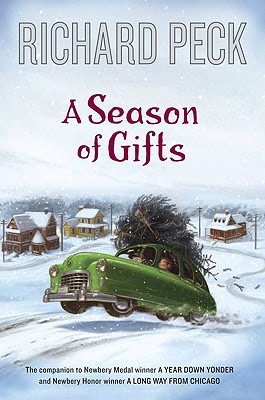 by Richard Peck
ages: 9-12
First sentence: “You could see from here the house was haunted.”
Support your local independent bookstore: buy it there!
I’m not a big Richard Peck fan. Sure, I’ve read his other Grandma Dowdel books, but while I think I found them charming, I think that’s about all I found them to be. Not exactly thrilling or touching or even memorable.
That said, I really wanted to love this one. Perhaps it’s because it’s that time of year, and it’s vaguely a Christmas book. Perhaps it’s because I’ve heard so much good about Peck over the years that I wanted to see if I could figure out what I was missing.
It was a good book: charming, like I remember the others being; funny at times, poignant at others. It’s full of fun and interesting and mildly skanky characters; historical details from the 1950s, from Elvis going into the Army to the Russian scare. There’s a lovely, hilarious Christmas program and an overall moral to the story. There’s bullies and new friends, there’s adjusting to small town life by our narrator, Bobby, one of the new Methodist parson’s kids. Yet — like so often when you have expectations from a book — there was something missing. Something to make the book soar. Becky has more thoughts on that — and she hit upon much of what I was feeling.
Perhaps some of Peck’s other books are better?
(Just for the record: because this is a Cybils nominee, I’ve been asked to make sure y’all know this is my opinion only, and not that of the panel.)
 by Roberston Davies
ages: adult
First sentence: “My lifelong involvement with Mrs. Dempster began at 5:58 o’clock p.m. on the 27th of December, 1908, at which time I was ten years and seven months old.”
Support your local independent bookstore: buy it there!
I first became aware of this trilogy several years ago when Julie at On the Curve (Back then she was Bookworm…) told me I HAD to read it. I started it, once, got nearly a third of the way in, and then abandoned it because life got in the way.
Thankfully, my online book group chose it for this month’s book, and I was able to sit down to thoroughly enjoy this book.
The first in a trilogy (I will read the other two… later…), Fifth Business is the personal history of Dunstan Ramsey: historian, scholar, Deptford boy. He’s also a friend to Boy Staunton, recently murdered. The history seems almost pointless, aimless in its endeavor: why does Dunstan’s connection with Mrs. Dempster — the woman of the first sentence, and a fairly major presence for much of Dunstan’s life — matter in the ultimate rise and fall in the plot? I found that it didn’t matter: Dunstan’s story, mundane as it was, was immensely fascinating. The writing was at once elegant and accessible: Davies didn’t go in for the long, flowery, overwrought descriptions that seem to plague many authors, instead choosing a first-person narrative that drew you in with simple, yet evocative language.
It was also surprisingly religious. I think I was expecting something more along the lines of the fantastical: magical realism and all that. What I got was an introspective, philosophical work about faith, doubt, and life’s purpose. Dunstan’s fascination with saints, his discussions with the Jesuit priest about a God to help him grow old; all incredibly fascinating, yet somehow didn’t have much to do with the plot.
I wonder — and this is why I’ll eventually get around to reading the other two — how the story all plays out, because this book felt very much like a beginning. While there was a story arc, the plot, the mystery, didn’t kick in until near the very end of the book. Which makes me wonder in what direction the other two books — The Manticore and World of Wonders — takes the plot.
At any rate, Julie (if you’re still out there), you’re right: Davies is a brilliant writer, and this book is definitely worth the time. I’m just sorry it took me so long to get around to it.
 The Book Nut