Guys Read: Other Worlds

edited by Jon Scieszka
ages: 10+
First sentence: “What would happen if invading warlords from another planet landed on your school’s basketball court?”
Support your local independent bookstore: buy it there!

I have off and on luck with short stories; sometimes I am really entertained by them. Others, not so much. This collection, however, worked for me. Not all of the stories worked equally well, but overall, it was a good collection.

It may have something to do with my fondness for Ray Bradbury stories.

Scieszka was nice enough to include a Bradbury short story that I hadn’t read (or at least don’t remember reading) as the last one in this collection. And it was a joy to read the weird, wonderfulness that was Bradbury. This time it was about a planet where, due to the radiation from the sun, humans only lived for 8 days. And one boy’s determination to make it off the planet. Brilliant, and by far my favorite story.

The others weren’t bad, either. I liked Tom Angleberger’s “Rise of the RoboShoes” (with illustrations), and found “The Klack Bros. Museum,” by KEnneth Oppel to be delightfully creepy. “Plan B,” by Rebecca Stead had a great twist on the end, and both “Bouncing the Grinning Goat,” by Shannon Hale and “A Day in the Life” by Shaun Tan were delightful.

Sure, I think Rick Riordan phoned it in for his short story, but it was still cool to read about a Percy/Grover adventure, since it’d been quite a while since I’d read about those two together. There were some that didn’t work for me — most notably “The Scout” by D. J. MacHale — but I guess that’s a side-effect of a collection of stories by multiple authors. There are some you like; there are some that fall flat.

There’s a little something for everyone. But get it for the Bradbury story.

(Just for the record: because this is a Cybils nominee, I’ve been asked to make sure y’all know this is my opinion only, and not that of the panel.)

The Books of Elsewhere: The Strangers

by Jacqueline West
ages: 9+
First sentence: “Houses are good at keeping secrets.”
Support your local independent bookstore: buy it there!
Others in the series:The ShadowsSpellbound, The Second Spy

I’m going to be honest. At this point in the series, if it hadn’t been nominated for the Cybils panel I’m on, I wouldn’t have read it. Because I feel like the series is kind of dragging on. Just how many more times can Olive go up against Annabelle McMartin in order to save the house? How many threads can not be wrapped up by the end of a book? Why can’t they find Morton’s parents? And how completely dense are Olive’s?

In this one, some neighbors show up: a Brilliant Professor married to a Slightly Batty Medium (it’s too bad she wasn’t a Small Medium at Large), and an Incompetent Apprentice. They weasel their way into Olive’s life when her parents get kidnapped on Halloween. The main focus of this one is figuring out where Olive’s parents are and getting them back, while still protecting the house from Nasty Annabelle.  As far as that goes, I called who the Bad (or Misguided) Guys were early on, and so it was just a matter of time until Olive caught up to what I already knew.

It’s not that it was a poorly written book — it wasn’t. It’s just that the premise is getting old by book 4, and even the talking cats that were so much fun in book one aren’t making me laugh. And to be totally, completely honest: I skimmed this one, mostly, because I just wasn’t interested in Olive anymore.

(Just for the record: because this is a Cybils nominee, I’ve been asked to make sure y’all know this is my opinion only, and not that of the panel.)

First Sunday Daughter Reviews: November 2013

Fall is upon us in full force, with the trees turning lovely colors (well, as much as they can in Kansas), and schoolwork piling on. Still, the girls manage to find time to squeeze in reading books for pleasure.

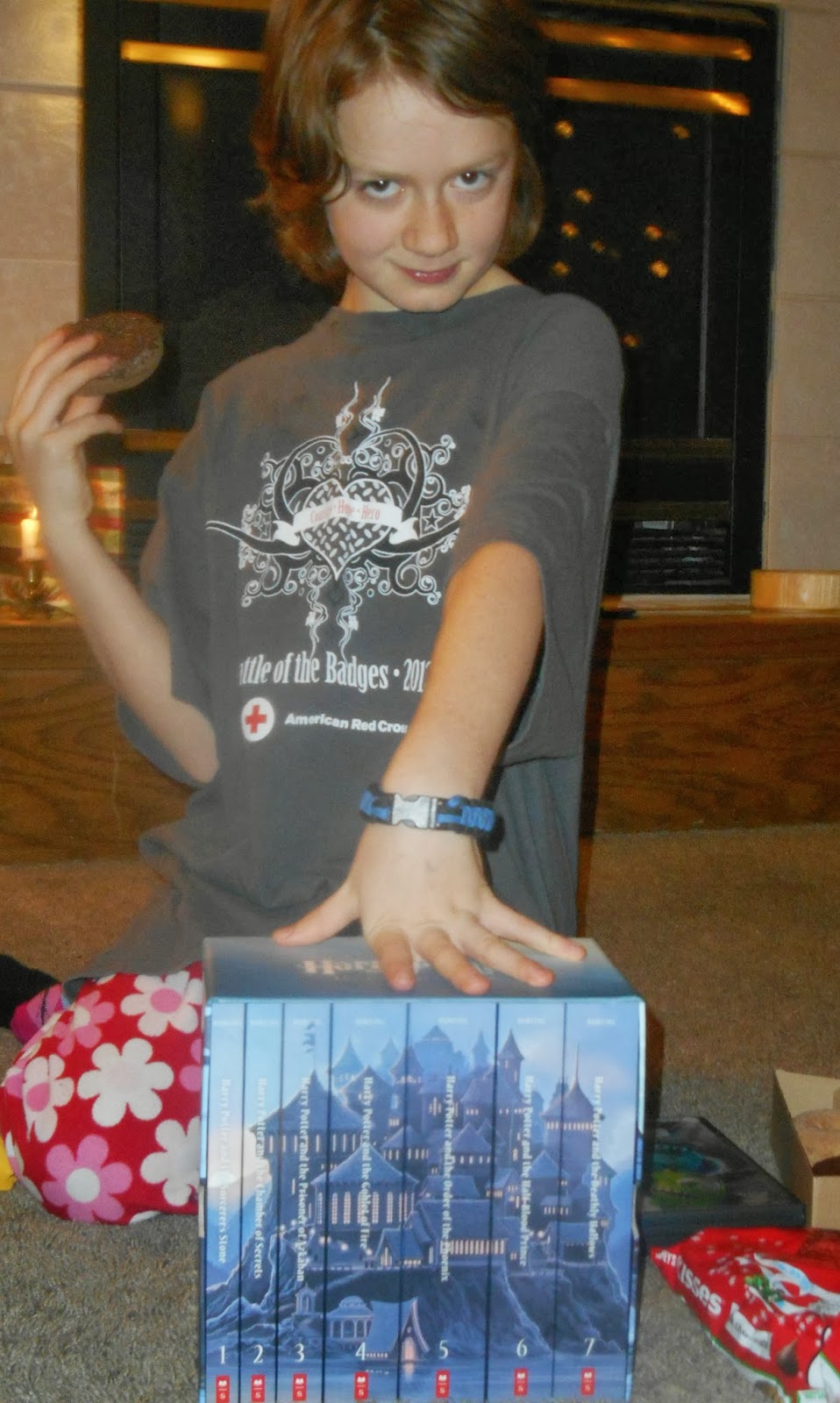
C decided that, in anticipation of the movie, she would reread this:

It’s her favorite of the series (“It’s like i, but better because you know what’s going to happen, and it’s not as scary!”) and she plowed through it in just a couple of days. And then she watched the final trailer:

and got even more excited: “They included that!! AWESOME!” Guess what we’ll be doing on November 22? (I think I probably should pick up tickets now, huh?)

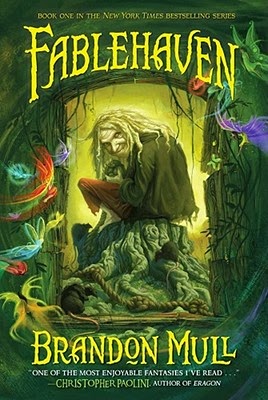
A is up to her eyeballs in books. She’s reading The View From Saturday (which she is often confused by), Hoot (for our book group; she likes it and wishes she had more time to read it), and a Christmas book at school (for a book report; I don’t remember which one it is). But a couple days ago, C convinced A to read this one:

and A is hooked. Forget about everything else: THIS is the book she wants to devote her time to. She’s enthralled.

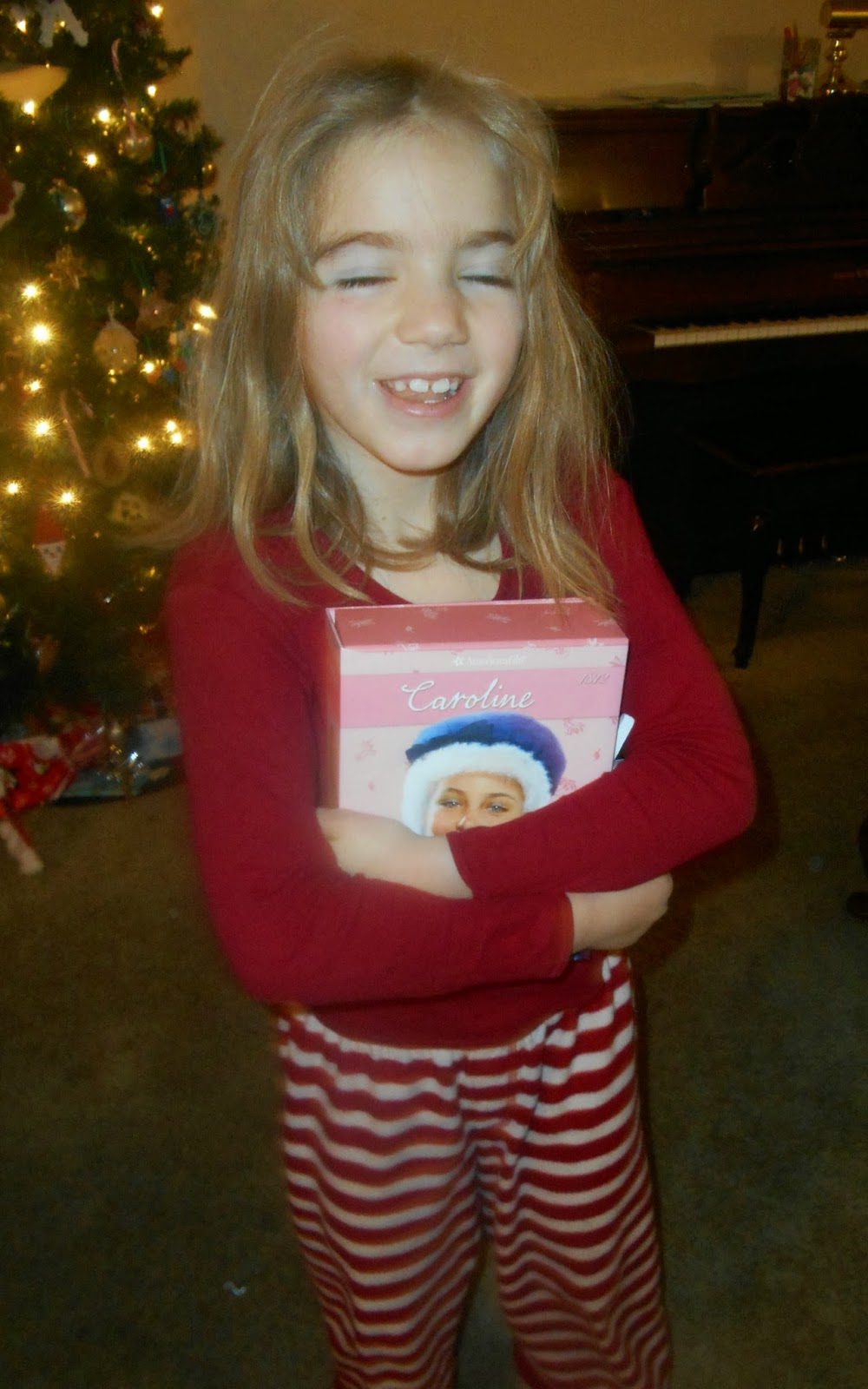
K has gone through the first two Great Brain books with Hubby, and enjoyed them quite a bit. But she decided she wanted a break from that and has gone back to Harry Potter and the Goblet of Fire. In addition she and I are reading this:

There’s a lot of difficult words in there for a 7-year-old, but I help her through those, mostly. She does get what’s going on, and she remembers things that I forget. She loves the action, and thinks Rapunzel is pretty cool. In other words: she looks forward to reading with me every night. And a parent can’t ask for anything more than that!

I’ll be in Austin for KidlitCon next weekend (YAY!!). I hope to see a bunch of you there!

A Grimm Conlcusion

by Adam Gidwitz
ages: 11+
First sentence: “
Support your local independent bookstore: buy it there!
Others in the series:  A Tale Dark and GrimmIn a Glass Grimmly

If you’ve read the other two books, you pretty know what to expect with this one. Some pretty grisly awesome bloody violence, a winding fairy tale-inspired story, with a very snarky narrator. This time, it’s twins Jorinda (YOUR-inda) and Joringle (YOUR-ingle) whose story we follow.

I should say up front that if C’s language arts teacher last year hadn’t been insistent on her students learning some of the more obscure Grimm tales, I wouldn’t have believed that this one was really based on a real fairy tale. But it is, and it’s one of the more, um, gross ones. See, the twins’ stepfather doesn’t like them, and so he kills off Joringle, makes Jorinda feel like it’s her fault, and then cooks Joringle and serves him to his mother. Seriously. Ew.

But, since that one is not enough, Gidwitz smashes it up with the real Cinderella (actually, the narrator’s side notes on the meaning of Cinderella — or, rather Ashputtle — is quite hilarious), Sleeping Beauty, and several tales I don’t even know. It’s all very gruesome, all very weird.

In the middle, however, this one turned… well… odd. Gidwitz went meta on me, and Jorinda and Joringle left the story world, and actually started interacting with the narrator, who turned out to be an elementary school teacher named Adam. He read the characters A Tale Dark and Grimm and In a Glass Grimmly in order to help them solve their current crisis. Additionally, the narrator/Adam got all moralistic on us. He had Lessons that Needed to Be Taught, and was actually — surprisingly — heavy-handed with them. And, for the first time in this series, I got pulled out of the story. The intrusive narrator was no longer funny and witty, but rather truly intrusive. And it bothered me. I didn’t mind how the story resolved itself; Jorinda and Joringle were actually good Middle Grade Heroes and did what they needed to do to resolve the story happily. But, after the point where they met the narrator, I wasn’t that interested in how the story resolved itself.

Which is too bad. Because, for the most part, this is a really good series. And I do like the way Gidwitz plays with the Grimm tales. I just wish he could have gotten there without bringing the narrator fully into the story.

(Just for the record: because this is a Cybils nominee, I’ve been asked to make sure y’all know this is my opinion only, and not that of the panel.)

October 2013 Wrap Up

Happy Halloween!! And because it’s Halloween (and I’m working today), I give you our jack-o-lanterns:

From left: A, K (which I helped with), Hubby, and C

And my favorite book this month (it was hard to choose) was:

Boxers & Saints

I thought about picking Quintana, since I really did love that one, but I decided I’m ALWAYS picking the YA fantasy, and I really did love Boxers & Saints, too.

Next month will be Middle Grade Speculative Fiction heavy. You’ll have to bear with me. Oh, and I cheated a little this month. I reread two books for various book groups, but when I went back and checked my old reviews, I realized I didn’t have anything new to say. So I just linked to the old reviews. Feel free to go back and read them, back when we were actually commenting on blog posts. 😀 Now, for the rest:

YA:

All the Truth That’s in Me
The Beginning of Everything
The Clockwork Scarab (DNF)
Quintana of Charyn
The House of Hades

Middle Grade:

11 Birthdays (reread) (2009 review)
Exile
Flora & Ulysses
Heaven is Paved with Oreos

Adult:

Deadly Heat
The Lowland (audio)
Persuasion (audio)

Non-fiction:

Totto-Chan The Little Girl at the Window (reread) (2008 review)

What were your favorites this month?

Audiobook: The Lowland

by Jjumpa Lahirir
read by: Sunil Malhotra
Support your local independent bookstore: buy it there!

I admit that I picked this up solely because M is currently in the part of India where this is set. I thought: Kolkata, Bengali… I should see if I could learn a little more of where M is staying for the next school year. Other than that, I really had no expectations.

It’s a much more political work than I was expecting. While, nominally it’s the story of the relationship between two brothers, Shubash and Udayan Mitra, Lahriri uses the background of the political unrest and Communist movement in India as a backdrop. The two brothers, who were close as children, grow apart as Udayan (the younger) gets involved with the Naxalite movement and Shubash heads to Rhode Island to pursue a PhD. Udayan gets married to Gauri (which Malhotra alternately pronounced Godi and Gori, so I had to check on the spelling) and then ends up killed by the police. When Shubash comes back for the funeral, he takes pity on Gauri, mostly because she’s pregnant, and marries her, bringing her back to the US.

That is the first third of the book. At which point, I was left wondering: What on earth is Lahiri going to do with the rest of the novel? Well, much like Khaled Hosseini’s And the Mountains Echoed, Lahiri explores the ramifications of those decisions. We follow Shubash and Gauri, and later Gauri’s biological daughter, through the years to present day (when Shubash is 70, and Gauri s in her mid-60s), and experience the fallout. Because there is fallout, and it’s not pleasant.

As I mentioned to people that I was reading this, their first question was “Do you like it?” Well…. no. And yes. It wasn’t bad enough to abandon. Malhotra was a delightful reader, capturing both Indian and American accents well. Perhaps it was him who kept my interest in the book going, because I was constantly annoyed at the characters. Gauri could never get past her dead love and move on with her life. And right up to the end, she never thought about the consequences for her actions, acting impulsively. But the thing that really infuriated me was Shubash’s insistence that because he wasn’t the sperm donor for Gauri and Udayan’s daughter, that he wasn’t her father. He. Raised. The. Girl. He was there for her when her mother abandons her, and yet he still questions whether or not he’s her father. *grumble* Biology isn’t what being a parent is about.

Maybe that was Lahiri’s point, in the end. Because, after finishing the last disc (a very unsatisfying ending, by the way), that’s what I got out of it. Family is what you make, and loving and caring for other people is the way to happiness.

So maybe it was a good book after all?

All the Truth That’s in Me

by Julie Berry
ages: 13+
First sentence: “We came here by ship, you and I.”
Support your local independent bookstore: buy it there!
Review copy pilfered off the ARC shelves at work.

Two girls go missing. One turns up dead, floating in the stream. Two years later, the other one returns to the small town, intact, but with her tongue cut out. The villagers — from the preacher to her own mother — call her cursed, and shun her.

I’ve tried to sum up what goes on in the rest of the book, but I’ve found that I don’t really want to give too much away. Because much of the pleasure I got from reading this (in one sitting!) was not knowing that much about it. I will tell you this: at first, I thought it was a fantasy setting, because I think that’s what I was expecting. It’s not. Even though it’s not explicitly stated, it’s a Puritan setting, somewhere on the east coast. And the religion and mores that those communities set out play a major role in the book. And, even though it’s a story about kidnapping and murder, and you fear the worst for Judith, I will tell you that, as the story unfolds, it’s not the worst. It’s bad, but it’s not as bad as it gets.

The meat of the story is Judith — she’s the girl that returns — and her road to healing. For, in spite of everything that the village (and her mother) heaps on her, she does need to heal. It’s this process that is the true story. How Judith salvages her life from her trauma and reclaims her own sense of self. How she finds friends in the face of all the opposition in the town. How she even finds love. It’s a testament to the power of truth, to the power of the human spirit.

Remarkable.

KitlitCon and Blogging Middle Grade

I don’t know why I’ve been mum about writing on KidlitCon this year. I’m going. And I’m quite excited. Call it laziness, business, or just blogging burnout (hey, there’s a panel for that this year!), but I haven’t quite gotten around to putting it out there that 1) it’s happening (November 8-9, Austin, TX, only $65!) and that 2) you should come. Seriously. (Reigstration’s open until Nov 1.) It’s a great place to hang out with like-minded people, chat, stay up late, get away from the family (well, maybe that’s only a reason I have…), and become excited about kidlt and blogging again. It’s worth your time and money. Promise.

I’m not saying that because I’ve thrown my metaphorical hat in with Charlotte and Katy on a panel/round table discussion on blogging about middle grade books. Our Grand Plan for this is to lead a discussion on middle grade books, reading them, blogging about them, enjoying them, and so on… Charlotte’s got a discussion list going on her post (follow the link above), so if you’d please go check it out and add whatever you think we should be talking about to the post, we’d appreciate it. Oh, and we’re all planning on bringing our piles of middle grade ARCs to hand out, so there’s that, too.

Hopefully, we’ll see you in Austin!

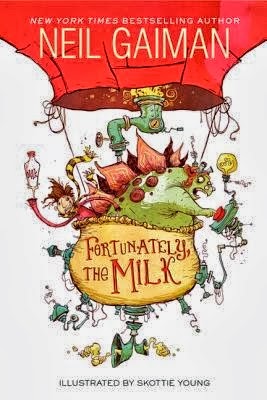
Fortunately the Milk

by Neil Gaiman, illustrated by Skottie Young
First sentence: “There was only orange juice in the fridge.”
Support your local independent bookstore: buy it there!

Two things up front: First, this is a tall tale. Second, because it’s a tall tale (and because it’s meant for beginning(ish) readers), there’s not much substance to it.

That doesn’t mean it’s not enjoyable; it is. I enjoy Gaiman’s stuff normally, but I really do think I prefer his whimsical works for younger kids. This one is basically the tale of a dad who went out to get milk for the morning cereal, and had a wild adventure getting back home. There are hot air balloons (or rather “Professor Steg’s Floaty-Ball-Person-Carrier”), pirates, piranhas, aliens, time travel, and even sparkly ponies. Of course, the kids don’t believe the dad, because he’s obviously telling a story. Or is he?

As I said, this is delightful. The illustrations are brilliantly funny, and I laughed aloud at many parts. My only problem with the book is that I would have liked it better if it had been a true middle grade novel, and one of the kids had had the adventure, rather than their father doing all the cool, fun stuff.

But that’s such a minor quibble. I’m going to hand this one to K to see what she thinks. I have an inkling that she’ll like it.

(Just for the record: because this is a Cybils nominee, I’ve been asked to make sure y’all know this is my opinion only, and not that of the panel.)

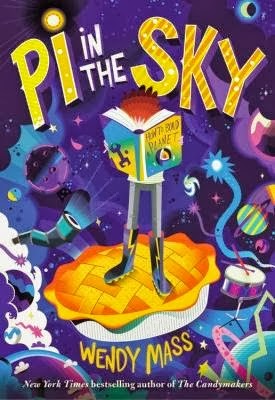
Pi in the Sky

by Wendy Mass
ages: 9+
First sentence: “Okay, first off, the quotes that start each chapter are from real people who know a lot of really cool things.”
Support your local independent bookstore, buy it there!

Joss is the seventh son of the Supreme Overlord of the Universe. He lives in the realms, and even though he’s a billion years old by our count, he’s really only just entering teenage-hood by theirs. His six older brothers are established in their jobs in the Realms: managing afterlife, creating planets, observing said planets. Joss, well, he delivers pies. (They’re really good pies, though.)

He doesn’t think much about his existence, going about his daily life with his friend Kal, until one day when someone from some planet (it turns out to be Earth) spies the Realms through their telescope. This is, to put it mildly, a Big Taboo. Usually, the planet in question gets destroyed. But, since this is Earth and Kal’s parents were there as Onworld observers, Earth isn’t destroyed, it’s just taken out of time. And, for some reason unknown to Joss, it’s his job to put it back to rights.

To complicate matters, an Earth girl named Annika has showed up in Kal’s place (I forgot to mention that he summarily disappears along with his parents, who were on Earth), and is tasked with the job of helping Joss recreate the Earth. From scratch.

Like many of Wendy Mass’s other books, this one was thoroughly enjoyable. I especially liked — and I’m not sure it was intentional or not — the blending of  science and “religion”. As Joss worked through the scientific application of the Earth’s creation — and I don’t doubt that Mass’s science is spot on; she’s known for her research — from the big bang through evolution, it occurred to me (granted this is an adult, and a religious, perspective) that you could see God in what Joss was doing. Sure, Mass called it the Supreme Overlord of the Universe and cloaked it in the mask of kids speculative fiction. But, why couldn’t God have used science to create the world?

Sorry. I got off track.

At any rate, I really enjoyed Joss’s learning of evolutionary science. And physics and chemistry as well. And I thought Mass was clever to frame it as a fantastical adventure. It made the science less… boring. There was a sweet ending as well.

In short: a very fun book.

(Just for the record: because this is a Cybils nominee, I’ve been asked to make sure y’all know this is my opinion only, and not that of the panel.)