Hoot

by Carl Hiaasen
First sentence: “Roy would not have noticed the strange boy if it weren’t for Dana Matherson, because Roy ordinarily didn’t look out the window of the school bus.”
Support your local independent bookstore: buy it there!
Content: There were a few mild swear words (which A found amusing), and some instances of bullying and domestic violence. It feels like a genuine middle grade book, with real middle grade heroes (yay!) and happily sits in the middle grade (grades 3-5) section of the bookstore.

Ah, Florida. The air is hot and humid, it rains a ton, and Roy Eberhardt hates it. With a burning passion. He most recently lived in Montana, the land of the huge vistas and great snowboarding, but because of his dad’s job, he’s stuck in boring Florida. Until the day he notices a strange boy with dirty feet running away from the bus stop. His curiosity piqued, Roy follows the boy and discovers Something To Care About. See: Mother Paula’s Pancake House is building a new restaurant. On top of some burrowing owl dens, and the boy is bound and determined to stop the company. And Roy, for better or for worse, finds that he Cares enough to get involved.

I remember reading this ages ago — probably when it first came out — and liking it. Though, I seem to remember it being funnier than I found it this time. It was amusing, sure, especially when Bully Dana Matherson gets his come-uppance at the hands of Beatrice Leep, Tough Girl Extraordinaire. But, mostly, it’s a quiet book about Making A Difference. I like how Roy finds out that while vandalism is one way to get a corporation’s attention, there are other — possibly more effective — ways of handling it. It’s not only a fun book, it’s a lesson in civics and awareness. There are layers of complexity; Roy is bullied (a lot) and there’s some domestic issues with Beatrice. But Hiaasen did it without being preachy; this is NOT an issue book.

Which, honestly, is a mark of a talented writer. And for that reason alone more than worth the time it takes to read it.

Audiobook: The Boneshaker

by Kate Milford
Read by: Erin Moon
Content: some intense moments (the Devil’s pretty scary), some violence, some disturbing images (if it were a movie). Language is probably suitable for someone reading on a 5th grade level. Has the feel of an older Middle Grade book, so I’d probably put it in the YA section (grades 6-8) at the bookstore.
Support your local independent bookstore: buy it there!

It’s 1914, and 13-year-old Natalie Minks has a pretty good life. Her father is the local mechanic — bicycle, mostly, but he’ll tinker with cars — and her mother tells the most amazing stories about their town, Arcane. Natalie herself has a predisposition for both: she loves tinkering with her father as well as listening to her mother’s stories.

Then one day Dr. Jake Limberleg’s Nostrum Fair and Technological Medicine Show comes to town. It was a fluke — their front wheel came off at the crossroads, and they decided to set up shop while they waited for Mr. Minks to fix their wagon. And that’s when the Trouble starts. Natalie, for better or for worse, is tuned into it and with her frienemy Miranda (I think that’s what her name was; I can’t look it up in the book!) and her trusty Chesterlane Eidolon bicycle (a bone shaker of an old thing that would be the fastest in the world, if Natalie could ever ride it), she decides to take on Limberleg and solve the mystery, saving her town. If she can.

I don’t know how I can write about the way this captured my attention. Sure, I was on a long drive to Austin, and it had my full attention anyway, but I didn’t want to stop listening. Milford has taken the idea of a Faustian Bargain — you know: those stories where a character meets the Devil and then outsmarts Old Scratch? — and elevated it. Not only is there two elements to this bargain, but we get historical elements thrown in as well. The traveling medicine show (I loved the Paragons of Science, even though they were Evil), the bicycles, the references to the “war” (which took me a minute to realize they meant the Civil War): it all added Atmosphere, which made the fantasy element, the bargains with the Devil at the Crossroads, that much creepier.

(It also helped that I kept thinking about this song:)

In short: a winner of a book.

Changes And Gender Issues

Or: What I Learned From KidlitCon 13.

I kind of have some unformed thoughts that I’d like to put into something Grand and Introspective, but I think it’s just going to end up being  a jumbled mess.

One of the questions that was brought up in the Middle Grade panel was reader ages and appropriateness, and since we’re really blogging for the gatekeepers, rather than the readers themselves, what we, as bloggers, can do to help with that. And the thing that I got out of it was this: ages for books are Not Helpful. Rather, content advisories are preferable. So: one of the simple changes is that I’m going to do away with the age range on the books. Instead, I’m going to (briefly, I hope) mention anything I think is worth bringing up (ie, anything “offensive” or just general content), the general “feel” of the book, and where I’d shelve it in the bookstore. And then let the reader decide the age.

I hope that helps.

Also: the thing I took away from Lee’s panel was that labeling posts — not broadly, but specifically — helps reader find posts better. And that my general categories — middle grade, YA, science fiction/fantasy — are not especially helpful. So, I’m going to try to be more specific in my labeling. Hopefully, that will help readers better be able to find books.

And: I think I’m going to start a monthly list feature. It was one of Jen Robinson and Sarah Stevenson’s suggestions in order to get blogging groove back. And it came up again in Lee’s session. I’m going to try to, once a month, come up with a list of books on some topic that I think are worthy.

Which brings me to gender issues.

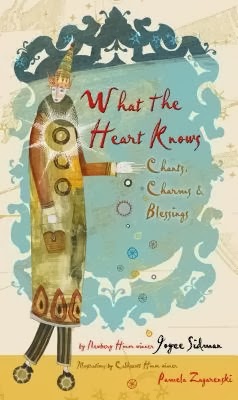
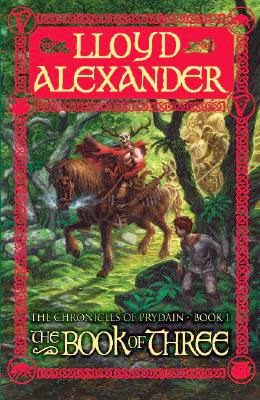
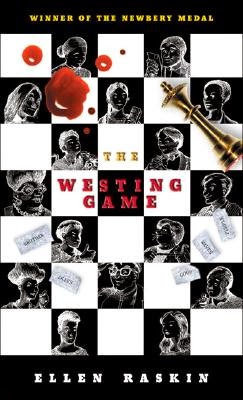
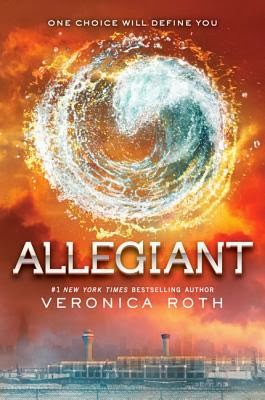
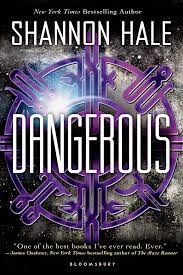
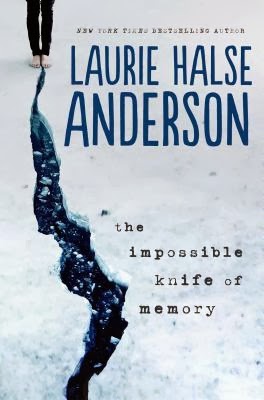
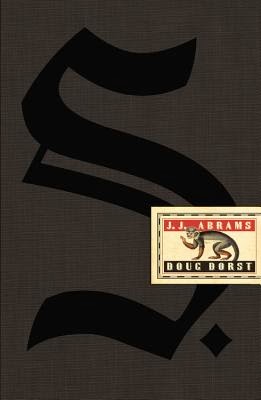
The question I asked in the middle grade panel was this: I find that I have a very hard time selling a book with a cover like this

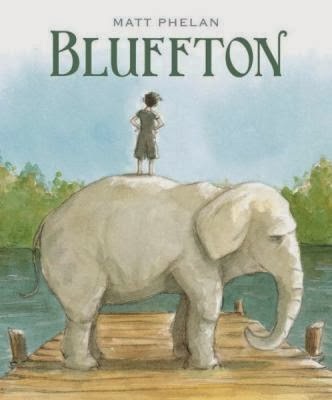
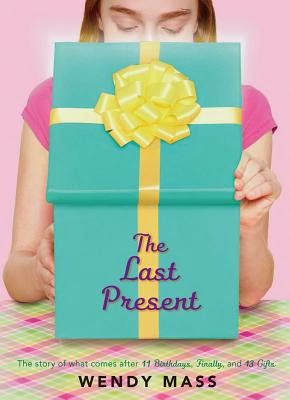
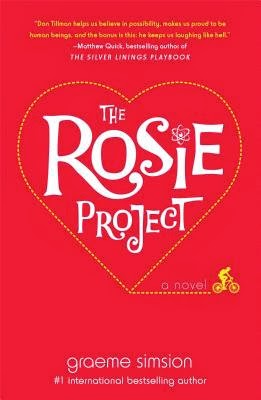
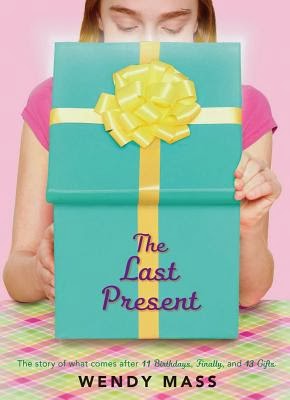
to the parents/grandparents of boys. And sometimes, even, the boys themselves (though not as much, since I don’t really interact with kids that often.) Likewise, I have problems selling books like this

to parents/grandparents of girls, though less so.

I know a lot of it is the way “we” as a society raise our boys. (Granted: I don’t have ANY experience with this, having 4 girls, but this is what I’ve observed.) We are much more comfortable, for many reasons, with our girls being Masculine than our boys being Feminine. But, what I’m really asking is not how to Solve This, but rather, what can I, as a blogger (and a mother of girls and a bookseller), do to help people the truth that every avid reader knows: a good story is a good story! I’m not sure I have answers, but I am thinking about it, which is more than I was before.

Other people have brought this up in better ways than I can. Shannon Hale, obviously (I didn’t dig through her blog to find a specific post, but she often blogs about gender issues), but also go check out what Charlotte and Anne Ursu have to say about the AASL panels this coming weekend.  Either way, it’s going to be an ongoing discussion, and one I hope I can add to.

Which is all one blogger/mom/bookseller can ask.

Rose Under Fire

by Elizabeth Wein
First sentence: “I just got back from Celia Forester’s funeral.”
Support your local independent bookstore: buy it there!
Content: there were a lot of f-bombs (I didn’t count them) that came up once at the concentration camp (understandable) and other mild swearing throughout. Also a number of disturbing images and content (Nazi concentration camps don’t make for Light Reading). It is most definitely one I wouldn’t hand to a kid under the age of 13 or 14 (depending on their maturity handling Difficult Situation), whether or not they were on the reading level, so it’s shelved in my Teen section (grades 9-12) at the bookstore.

I don’t quite know where to start with this one. Once I discovered it was a Holocaust novel (as opposed to just a WWII novel), I put off reading it. I don’t like Holocaust novels, mostly because I don’t like being confronted with the evil things the Nazis did. But, because it was Elizabeth Wein, and because it’s a companion to Code Name Verity, I bravely gave it a shot.

And I found myself sucked into the world of women pilots, of strong, resilient women who know how to survive. It’s odd to say this about a Holocaust book, but I loved it.

Rose Justice is an American who has pulled strings to get enlisted as a transport pilot for the RAF. She’s doing her duty, blissfully unaware of the evils of the Nazis. Sure, they’re the Enemy, but the can’t be as horrible as they all say, right? Then, on a mission, she chases after a flying bomb (German pilotless planes loaded with bombs), gets lost over enemy territory, and ends up in Ravensbrück.

Even I, who actively avoids anything Holocaust, know about the horrors of Ravensbrück.

And yet, even though Wein captures the horrors, and the crimes, and the terribleness (I can’t seem to find a word strong enough) of Ravensbrück, it isn’t a hopeless, dark book. Even though Rose is changed permanently by her six months (only six measly months! How did people survive years there?), she retains her will to survive. And Wein has created a cohort of strong, amazing, wonderful (again, there is no word strong enough) women who do just that: survive. It’s amazing — and inspiring — to read.

I’m so glad I did.

The Girl Who Soared Over Fairyland and Cut the Moon in Two

By Catherynn M. Valente
ages: 11+ (I’m not sure the younger set would like this one. Just saying.)
First sentence: “
Support your local independent bookstore: buy it there!
Others in the series: The Girl Who Circumnavigated Fairyland in a Ship of Her Own Making, The Girl Who Fell Beneath Fairyland and Led the Revels There
Review copy snagged off the ARC shelves at work.

It’s been a year since September has left Fairyland Underneath, and she aches to return. The Real World just isn’t as fun or as interesting as Fairyland. And she’s been told that she can return every year, so she waits. And waits. But no one comes. Until, one day, long after she’s expecting them, someone does come, but won’t let her in. So, desperate as she is, she breaks in. Which means she’s a Criminal. She finds that things aren’t the same as they were, encounters the Blue Wind (who’s quite obnoxious), gets sent on a Mission, and tries to fight a Yeti on the moon. Yes, it is as weird as it sounds.

But, even though there were passages I found amusing (most specifically, the description of the Lopsided Library) and characters (like the car Aroostook) I liked, I just wasn’t as charmed with this one as I was with the other two. Maybe it’s because September is Getting Older, and Valente tried to bring in not only romance (Saturday, the Marid, is in love with September), but also the Trials of Getting Older, and it just didn’t Work. (This book makes me want to Emphasize with Capital Letters. It’s an unfortunate side effect.) I skimmed more than I read, I rolled my eyes more than I laughed. I wanted to Love Ell the Wyvery and Saturday again; I wanted to Enjoy September’s journey. But my heart wasn’t in it.

I don’t know if that means it’s the writing or just that I’m getting tired of this series. Could be either. Or both.

(Just for the record: because this is a Cybils nominee, I’ve been asked to make sure y’all know this is my opinion only, and not that of the panel.)

Ten Things About KidlitCon 2013

1. As always, I have a THOROUGHLY enjoyable time at KidlitCon. Also: I’m pretty loopy after driving 9 hours. And three days away from my bed makes me a DANGEROUS person on the highway, even when I’m highly caffeinated.

2. Kidlit Bloggers are Awesome. Seriously. They are fun, and smart, and interesting. And I want to bring them all back to Kansas and have them move in next door so I can hang out with them all of the time. I knew this already, but it’s worth reiterating.

3. And I met Holly from Book Harbinger (who’s also one of the YAcker’s with me). She was really, really cool. Also: it was nice not being the only LDS blogger at the conference. Unless there’s more out there incognito.

4. I didn’t take any pictures, but I was completely blown away by Cynthia Leitech Smith‘s keynote. I haven’t read any of her books, but then back in 2010, I hadn’t read any of Maggie Stiefvater’s and look how that turned out. Also: we both have KS and MI connections. I should have taken the time to go chat with her after her address. But I was too busy talking to other people.

5. Lee Wind gives AMAZING presentations. I learned SO much, not the least of which is that I need to label my posts MORE and BETTER, because if I don’t label things how will people find them. There was also the themes of DIVERSITY and how it’s important to read outside of your comfort zone, which is something I used to be better at, but have gotten out of the habit. Also: he’s a great person to sit next to at dinner.

Photo courtesy (ie stolen from) Rosemund

6. One of the reasons the Kidlit Community is so tight-knit is because of the Cybils. I’m not sure I realized this before now, but I’ve served on panels for the last 6 years, and through that I’ve met a LOT of bloggers. And meeting them in person is great. Also: we tend to swap Cybils horror stories, which is hilarious.

Maureen, me, Charlotte, Sherry, Jennifer.

7. You can take notes at your own panel, but they may not make sense. Also: if you bring up the idea of covers and gender and the fact that people really do judge books by their covers and ask a (slightly incoherent) question about how to get people to stop looking at the covers, you will probably make people uncomfortable/offend them. Oops.

8. Lists. Lists. Lists. I’m going to start doing lists. Once a month. Hopefully. Because all reviews all the time are boring. (And HEY, look: I’m starting today!)

9. The food committee this year did AMAZING. It was yummy.

10. And, of course, when bookish bloggers get together, where do they go afterward?

The bookstore, of course. It was fun hanging out there with other like-minded people (the most common phrase heard: “Have you read….?”). I totally envy their shelf space (so many face outs! So much ROOM!), and they do clever things with their staff recommendations. Yes, I was totally snooping to get ideas.

As always, it was WONDERFUL seeing people I enjoy hanging with, and meeting new people. I loved that it was small enough that I had a chance (I think) to talk to pretty much everyone there. And, as always, waiting for next year is too long.

Ghost Hawk

by Susan Cooper
ages: 11+
First sentence: “He had left his canoe in the river, tied to a branch of a low-growing cherry tree.”
Support your local independent bookstore: buy it there!

I should start with this: the woman can write. A random passage: “John went off to their allotted acre of land beyond the houses, where corn and pumpkins were growing. He did not point out to Daniel Smith that the swelling ears of corn were more at risk from night-prowling raccoon than from daytime birds.”  Or: “We gutted the deer, and tied their forelegs together and then their hind legs, and we carried them home, each one hanging by the legs form a pole carried by two strong men. It took all night and half the net day, but it was a triumphal procession, and our return was greed with cries of praise and delight.” It’s one of the things I’ve always enjoyed about Cooper’s writing: she knows how to evoke a place, and with the simplest of words, create a mood.

But.

I knew about the inaccuracies and controversy surrounding this one before starting it. In some ways, I think it was inevitable: a book about a Wampanoag young man (especially a children’s book, it seems; was there the same sort of backlash around Caleb’s Crossing? If so, I missed it.) written by a white person is bound to create backlash. And to be fair, I understand that. But I have to admit that that’s not my primary problem with the novel. No: for me, it was because it was boring.

Cooper went into detail about the life of both Little Hawk as well as a Puritan boy, John Wakeley, and even though there were a couple of surprises (let me just say, I found out a third of the way through why it’s a SFEMG nominee), I was bored. I could care less about the characters, the story. I wanted to care. I wanted to see people like Daniel Smith and William Kelly — who were in favor of exterminating the Native Americans because they were savages (which always brought to mind the savages song from Pocahontas) — I just didn’t. It’s not because I didn’t recognize that their views were wrong. I just didn’t feel it.

And the last third? (The epilogue and post-epilogue as I think of them.) I basically skimmed them. Because once both Little Hawk and John stopped being kids, I lost interest. It’s a middle-grade book, for heaven’s sake. Have we forgotten what that means??

I wanted this to be better, just because it’s Susan Cooper. And I was disappointed that it wasn’t.

(Just for the record: because this is a Cybils nominee, I’ve been asked to make sure y’all know this is my opinion only, and not that of the panel.)

Audiobook: I am America (And So Can You)

by Stephen Colbert
read by the author
Support your local independent bookstore: buy it there!

I picked this up on a whim because I needed something short, and I was in the mood for something funny. And, even though I’m not a fan of his show, I had hopes Colbert would be both.

Well. It was short, anyway.

As for the funny, sometimes it was. There were moments — I can’t remember them now, though — when I did chuckle, guffaw, and few when I snorted. But, mostly I had to constantly remind myself that he doesn’t mean any of this. I’m not quite sure if this was a parody of or a commentary on conservative thinking, but either way, I spent a good part of the time thinking “What’s the point?”

If his point was commentary, then sometimes it was brilliant. Sometimes, he went on rants that I thought worked if you heard (in this case) them ironically. And sometimes, I thought that it was a terrific parody of conservative culture. But — perhaps like all good parodists (is that a word?) — it was uneven. Sometimes it worked. Mostly, though (and this is because humor is really subjective), it didn’t work for me. Every time I found myself ticked off or agreeing with something Colbert said, I had to remind myself he doesn’t mean ANY of it. Or if he does, it’s so hard to filter what’s “real” and what isn’t that I just gave up.

I did come to one conclusion, though: give me Jon Stewart and I’m a happy person.

The Neptune Project

by Polly Holyoke
ages: 10+
First sentence: “I wake to an urgent tap at my window.”
Support your local independent bookstore: buy it there!

Nere Hanson (a terrible name, that, as A pointed out) has never understood why she felt more at home in the sea, with the dolphins. Her parents are scientists who study the ocean, but that’s not the whole picture. Nere has problems breathing on land, and it’s just getting worse. Then the government of the Western Collective (roughly some futuristic dictatorship that came out of the US; this is set along the Pacific coast) demands that everyone who lives by the ocean move inland, to help with “food production.” So, Nere’s mom pushes forward her plans, breaking the news  to Nere and her friends Robry and Lena that the reason why they struggle to live on land is that they’re genetically altered to survive — like breathe seawater and everything — under the ocean.

I’m going to stop here for a minute. I’ve read books about exploring the ocean as an option for when global warming takes over and turns this planet into one gigantic mass of water, and I’ve read books that deal with genetic mutation of people (and I think I’ve read one that combines the two in some search for Atlantis, now that I think about it), but this one struck me as unique. Holyoke has done her research and this one felt, well, authentic. I appreciated that. I also enjoyed her use of dolphins; they weren’t props, but rather their own characters, which added another interesting layer to the story.

After they make the change, and get away from the Marine Guard (read government thugs), Nere, Robry, and Lena have to figure out how to survive in their new environment. They meet up with another group of kids who have had this change done to them — Nere is resentful for a good part of the book because her mother did this to her, without her consent, and didn’t give her the time to adjust to this. I love Bad Mom Decisions in Middle Grade books — and set out for the rendezvous point. From there, they head north to Vancouver to the colony that Nere’s father is setting up.

Even though it’s a first in a series — I really would love a stand-alone speculative middle grade fiction book sometime — and it’s just an elaborate set-up, Holyoke does a fantastic job creating her world. And I liked the dynamics she created in the group. It wasn’t as middle school-ish as the jacket flap led me to believe, but a genuine portrayal of kids thrown in a new situation and forced to survive. And Holyoke isn’t afraid to kill characters off or have characters betray one another. It was complex, and I enjoyed that.

I only wish I had more of a sense of closure with this one; I’m not sure I’m all excited to read further adventures of Neve and the Neptune Project. But this one was definitely enjoyable.

(Just for the record: because this is a Cybils nominee, I’ve been asked to make sure y’all know this is my opinion only, and not that of the panel.)