A couple of Sundays ago Watermark had our annual Book Club Sunday (held on Super Bowl Sunday, because, you know, we’re all really into football). One of my managers asked me to come up with a list of kids’ books the adult book clubs should be reading. I never did get a chance to give the presentation at the event (things went long and/or they forgot they’d asked me), but I thought this would make a great blog post. I know I’m mostly preaching to the crowd here (we all love kids’ books, right?), but feel free to pass this on to your bookish adult friends who are gun-shy about reading something “just” for kids.
I decided that the three books adults always ask for, at our store at least, are 1) The Fault in Our Stars, 2) The Book Thief, and 3) The Hunger Games and I used those as my starting point. Originally, I had picked not only books I’ve read and loved, but ones that are coming out soon. I’ve reconfigured it to only the ones I’ve read, just because I can.
Middle Grade books you should be reading:
Counting By 7s, by Holly Goldberg Sloan. What an adult will get out of it: hope, some brilliant writing, and some intriguing characters. “On top of being absolutely refreshing with her subject matter, she never talks down to her reader. Sure, her sentences are simple — it is a middle grade book after all — but they are never simplistic. She respects her characters and her readers, and knows how to pick the best words to make the book flow, even when it’s being simple.”
Doll Bones, by Holly Black. What an adult will get out of it: I think, actually, adults will get more out of this than kids. It’s a good, creepy story, but it’s more a growing-up story, of that transition between childhood and young adulthood. “The awkwardness, the feeling of being left behind by close friends, the desire to hang on to the things of childhood, the insecurity of facing the future: they’re all there. Dressed up in a Quest, an adventure, a ghost story. “
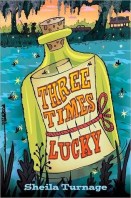
Three Times Lucky, by Sheila Turnage. What adults will get out of it: a rollicking story, a pretty-good mystery, and a handful of wonderful characters to fall in love with. “But the real reason to fall in love with this book — as I did — is because Turnage has created a wonderful couple of characters in Mo and Dale. In fact, all the characters, from Miss Lana and the Colonel, down to Mayor Little and aspiring lawyer Skeeter pop off the page, and it’s entirely because of the way Turnage writes.” Bonus: the sequel, Ghosts of Tupelo Landing, just came out. I can’t wait to read it.
If You Liked TFiOS (and you’ve read all of John Green’s other books)…
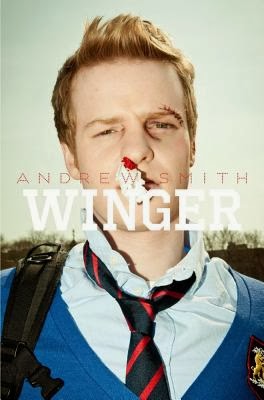
… for the contemporary element, try Winger, by Andrew Smith. Boarding school, boys, rugby, edgy and thoughtful at the same time. I had issues with the ending, but that was just me. “I found myself compelled by this. I was invested in Ryan Dean’s drama. I loved the camaraderie of the rugby team. I enjoyed Ryan Dean, dork that he was.”
… for the precocious kids who are actually smarter than you think they should be, try The Disreputable History of Frankie Landau-Banks, by E. Lockhart. Another boarding school, but this time with a brilliantly smart girl at the center of it all, defying the norms, and breaking traditions. “So, here’s to the Frankie’s of the world: the girls who think outside of the box. Who invent neglected positives, and need people to understand (not just talk at) them. And here’s to the books that celebrate them.”
Bonus: E. Lockhart’s new book, We Are Liars, is due out in May. I’ve heard nothing but good stuff about it.
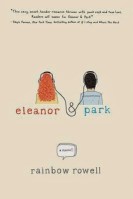
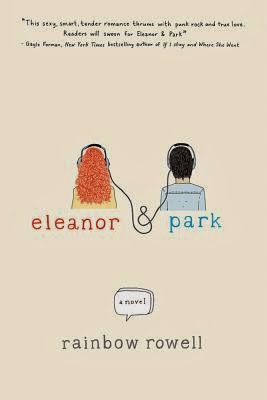
…. for the romance, try Eleanor & Park, by Rainbow Rowell. It’s historical, set in 1985, but it captures first love wonderfully. And both Eleanor and Park are delightful characters. “The most beautiful thing about this book, I think, is the slow development of Eleanor & Park’s relationship. It’s not instalove, it’s not all sparks and romance. It’s a friendship that develops into something more. And it’s complicated.” Bonus: I’ve heard most everyone say that Fangirl is better, but I haven’t read it. Yet.
OR
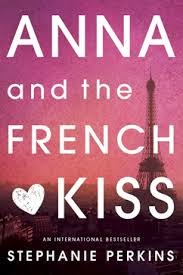
Anna and the French Kiss, by Stephanie Perkins. Because Paris. And Étienne St. Clair. And a smart, wonderful romance. “But I did enjoy the relationship between Anna and St. Clair, it’s heights and valleys, and it’s inevitable, swoon-worthy resolution. It’s not a simple book, and much like Maureen Johnson’s work, Perkins knows how to write a romance that deals with more even while putting the relationship front-and-center.”
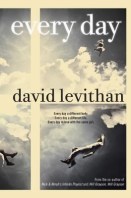
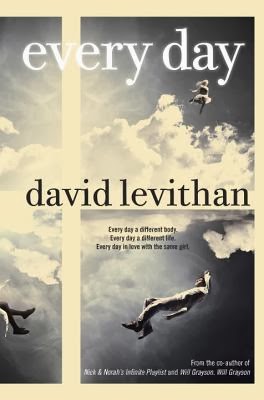
…. for the thought-provoking ideas behind it, try Every Day, by David Levithan. It’s a trippy premise, but once you get past that, you find that Levithan is writing about the human experience, and all its ups and downs. “As I was reading, I thought that it reads much like a John Green book: philosophical and introspective, with always the possibility of being pretentious. (Though I appreciated much of the musings, like how 98% of the human experience is the same and it’s the 2% that we’re always fighting over.) “
If you liked The Book Thief…
There are two authors you need to know about.
Ruta Sepetys
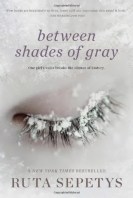
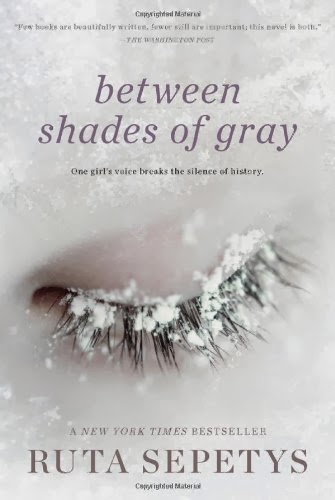
Between Shades of Gray. Stalin, concentration camps, solemn and gripping. “It’s a harrowing book, disturbing, and completely wrecked me. I could only read it in short chunks, interspersing it with something lighter, because that’s all I could handle. I couldn’t tell you about the writing, or the characters, or whether or not I liked it, because (like many Holocaust books), I couldn’t get past the fact that this was based on true events.”
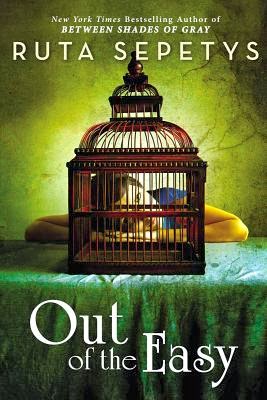
Out of the Easy. New Orleans, 1950s. Gritty, intense, and compelling characters. “And Josie is such a great character to root for; I wanted her to get out, to succeed. I felt her heartbreak, her anger, her hope. Which is really the mark of a great writer. Sepetys knows how to engage the reader, to write in a way that makes these characters fully dimensional. And even though her subjects are not pretty, her writing is gorgeous.”
and Elizabeth Wein:
Code Name Verity. World War II, Nazis, British spy, woman pilots, and a friendship story that will rip your heart out. “Things this book is not:
Trite.
Another Holocaust book.
Boring.”
Rose Under Fire. Yet another World War II Holocaust story. But not like you’ve ever seen before. Strong women take the center stage and they will weave themselves into your life. “And yet, even though Wein captures the horrors, and the crimes, and the terribleness (I can’t seem to find a word strong enough) of Ravensbrück, it isn’t a hopeless, dark book.”
And one more (because it doesn’t fit anywhere else):
The Strange and Beautiful Sorrows of Ava Lavender, by Leslye Walton. It’s magical realism, which isn’t necessarily my thing. But this one feels more like an adult book than anything I’ve read in a long time. “There’s foolish love, unrequited love, passion, and most of all a magic running through it all. It’s the magic of Like Water for Chocolate: Things happen because of the passion.”
If you Liked Hunger Games….
I figure everyone knows about Divergent now, with the movie coming out. And even though I know they’rea a dime a dozen theses days, I thought I’d pick a few older/less-well known post-apocalyptic/dystopian books that have stood out in my mind.
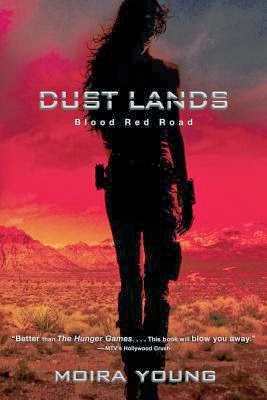
Blood Red Road, by Moira Young. Set in the distant future, where the world has gone to pot. It’s a slow starting book, but once it picks up, it’s gripping. “She’s given us a strong reluctant heroine, someone who leads without knowing it, inspiring greatness in both herself and those around her.” It’s the start of a series, and I have to admit that I’ve never gone back and read the others. But this one stands well enough on its own, and is worth the time.
Uglies, by Scott Westerfeld. This is the one I’ve had the most success with, at least with kids. They read the Hunger Games, and come looking for something else, and I throw this one at them. And, they usually love it. It’s because it’s smart, fun, and observant. “In addition to romance and adventure and typical end-of-the-world stuff (I loved all the descriptions of the Rusties), Westerfeld has some interesting observations about beauty and society.” First in a series, but honestly, this one’s the best.
5th Wave, by Rick Yancey. ALIEN INVASION. Do I really need to say more? “” There are no magical or supernatural powers, no high-tech blow-em-up sequences, no kidnapping. Just good-old-human grit. And there’s a LOT of that.” It’s also a first in a series, I think, but it stands remarkably well on its own.
Fantasy series worth dipping into:
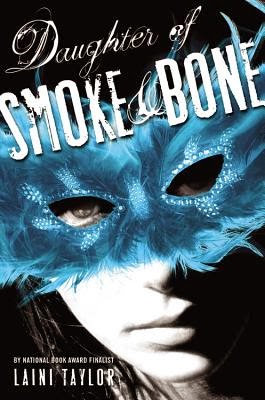
Daughter of Smoke & Bone, by Laini Taylor. “I adore Taylor’s storytelling. It’s dark and sinister and yet so very lovely all at the same time. It’s a twisting, meandering sort of story, and yet nothing superfluous or out of place.” Bonus: if you start this one now, you won’t have to wait for the third, Dreams of Gods and Monsters, which is out in April.
The Raven Boys, by Maggie Stiefvater. “There’s just something eloquent in this book: it’s not that its prose is beautiful; I can’t thing of a single passage that stood out. But rather, Stiefvater is eloquent in her simplicity. There’s nothing outstanding about any of the characters individually, and yet as a whole they become remarkable.” There’s only two out in the series — out of a projected four — but honestly, it’s worth picking up and devouring, if only for the way Stiefvater writes.
Graceling, by Kristin Cashore. “I loved the action — Cashore has a way with words that vividly portrays action, and I was on the edge of my seat most of the time. Which brings me to point number two: I loved the tension, the twists and turns.”
Thankfully, this series is complete, so you can read one right after the other. I envy you that experience.
Demon’s Lexicon, by Sarah Rees Brennan. “The only real drawback is that one of the main characters, Nick, is so very unlikable. It’s a turn off at the beginning of the book; you just want to smack the kid upside the head. But, give it time: he will grow on you, he does have a few redeeming qualities. And then there’s Alan, who’s an enigma: he keeps secrets from Nick, he’s up to something, but you never quite know what. They’re an interesting and appealing pair, these brothers.” Again, another complete series. Especially good, now that I think about it, for fans of Supernatural. More people should know about this one.
Okay, that was 20. What did I miss? What else should be on this list?















 The Book Nut