First Sunday Daughter Reviews: February 2014

Whew, January is done. That means — in spite of the snow that’s threatening to come (those up north: don’t laugh) — spring is that much closer. It also means things get busier and there are holidays (even the dreaded Valentine’s Day, ugh) to distract me from the Cold and Snow. Which is something.

What did the girls read this month?

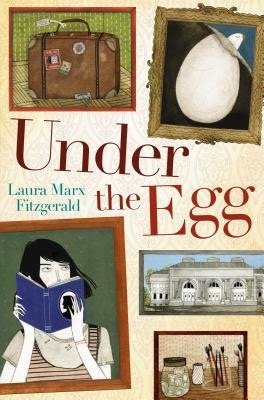
Hubby and K read this:

Which K picked out (she has a very elaborate picking scheme when she doesn’t have her  mind already made up), and thoroughly enjoyed. She said she liked Elionwy the best, because she’s “good and awesome and a good fighter. She’s very funny and talks a lot, and even though she has a bauble, she stands up for herself.” But she also liked how Taran admitted to making mistakes at the end. She’s very thoughtful, my daughter.

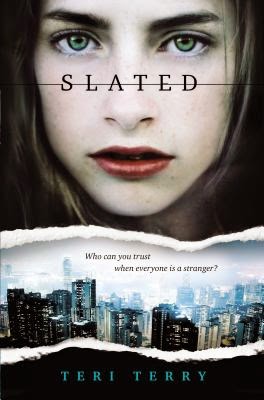
A had a book report on Joan of Arc due, but she still found time to read

She really loved the first one, and so requested I pick up the second. She’s liking it — there’s more conflicts than there were in the first book, which she’s liking, and bonus: Seth is a LOT less annoying — but she’s reserving final judgement until she finishes.

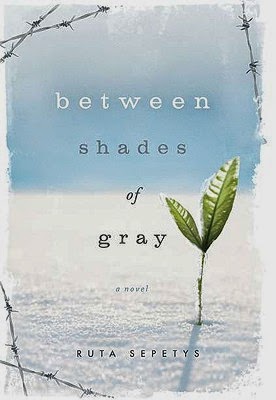
And C, having seen this flow chart on Tumblr (and because Days of Blood & Starlight wasn’t as interesting as she wanted it to be)decided she wanted to go on a dystopian/post-apocalyptic bender. We requested a bunch from the library, but the one she picked up was

which she’s enjoying, though she has to constantly remind herself that it doesn’t quite fit in with the Uglies universe. She misses Tally and all the rest. Also, she’s decided that Westerfeld’s novels need to be illustrated: “He describes things that are hard to imagine.”

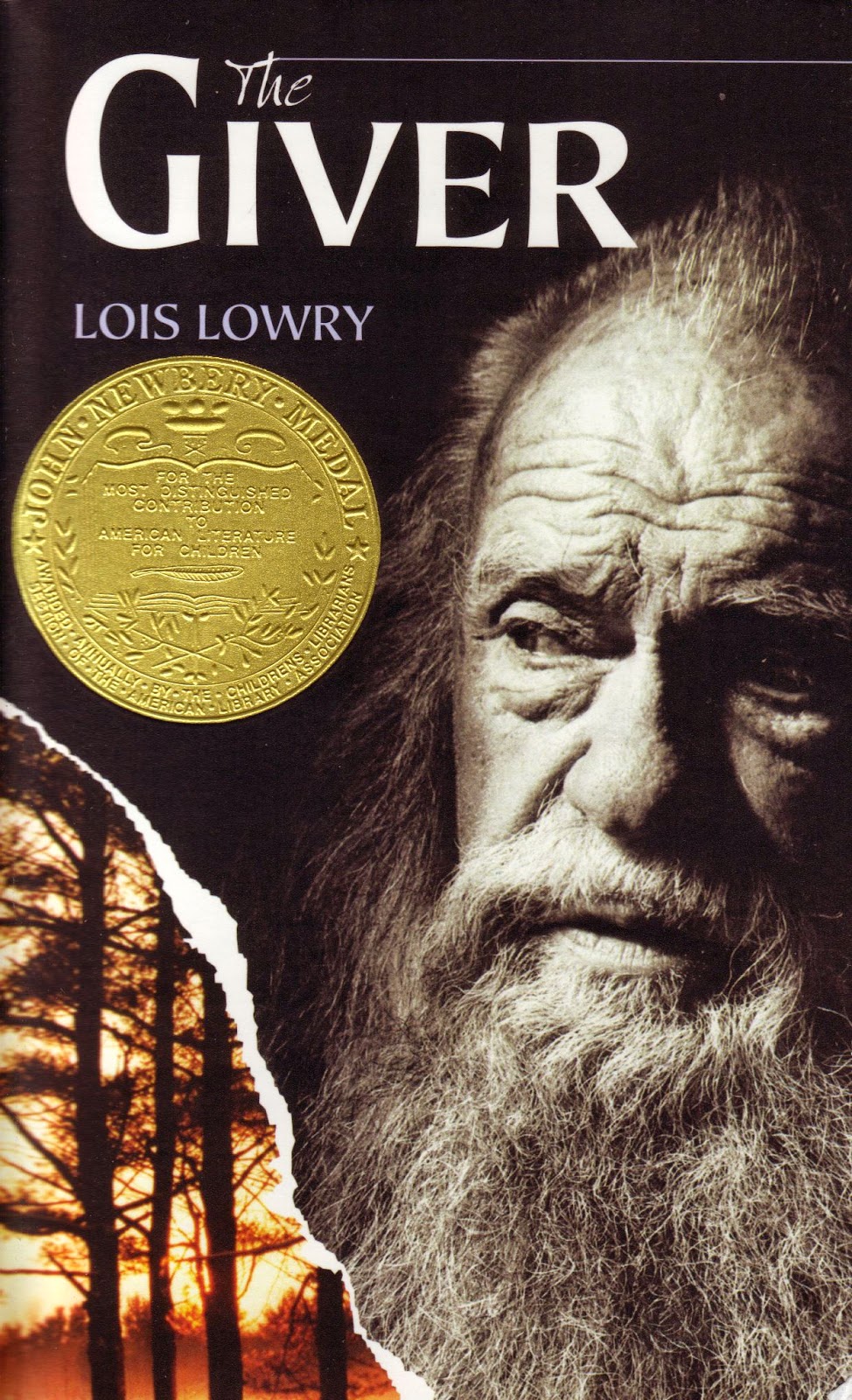
I think I’m going to start including by 3-5th Grade Book Group choices here, just so I have a record of them. The kids — probably predictably — really liked Fablehaven last month. We had a great discussion about choices and annoying boys and whether or not magic creatures are real. I also appreciated that Brandon Mull had a lot of cool things on his website (the kids love it when there are extras). This month, we’re reading one of my favorites as a kid:

Here’s hoping the kids like it.

I’m off today for our Book Club Sunday at work before the SuperBowl, and have gotten roped into talking about good Middle Grade/YA books for adults. I think I’ve worked up a good list of already published and soon-to come out books. I’l be sure to stick them up on the third Sunday as my list this month.

Happy reading!

January 2014 Round Up

Happy January! (ugh) I have found myself in the middle of a reading slump. I’m still reading, but in many ways, it feels like I’m doing it because I have to, not because I want to. I’ve always found that it’s better for me to push through these slumps (too many books to read to completely give up!), but that means everything I’ve read is all kind of… meh.

Except for this one, though it was an audiobook, so I don’t know if it counts:

One Summer: America, 1927 

As for the rest:

YA:

Allegiant (DNF)
Dangerous
The Impossible Knife of Memory

Graphic novels:

Bluffton

Middle Grade:

Fablehaven
The Last Present
Better Nate than Ever

Adult:

S.
The Importance of Being Ernest

That one was my favorite review this month, though.

The Rosie Project

What was your favorite this month?

S.

by J. J. Abrams and Doug Dorst
First sentence: “If found, please return to the workroom B19, Main Library, Pollard State University.”
Support your local independent bookstore: buy it there!
Content: Language, including lots of f-bombs. And some violence. It’s in the adult section of the bookstore.

The thing that piqued my interest about this book was the buzz about the form. We had a sample copy and I perused through it. The format — a book published in 1948, stolen from a high school library, with notes scribbled in the margins — was intriguing. Enough so, that I bought myself a copy for Christmas, and eagerly dove in. It IS an intriguing concept, reading someone else’s notes, figuring out the story as you go.

It’s an incredibly layered book: the “book” is one Ship of Theseus, written by the mysterious V. M. Straka. A book where the main character, S., has amnesia, and goes on a journey to figure out who he really is. In doing so, he finds out that he was involved with some shady figures. The second layer is the work that a disenfranchised grad student, Eric, is doing to figure out the real identity of V. M. Straka. All that’s really known about him is that he was involved in this mysterious organization, the S. Eric gets help on this quest from a struggling undergrad, Jen, who finds Ship of Theseus laying in the stacks and begins a conversation. Which brings me to layer three: Jen and Eric’s story. They work together, and over the course of the book, develop their own relationship.

I realized fairly early on that the layers were too dense for me. I couldn’t hold everything in my mind, for starters. I ended up giving up the main Ship of Theseus story, partially because it was boring, but also because I just couldn’t keep multiple storylines in my head. Call it being out of practice, or lack of interest, but I just couldn’t do it. But there was also the fact that the story’s told  inside out and backward. I did think that maybe if I had read it in shifts — read Ship of Theseus first, then the inked-comments, then maybe it would have made sense.

So, in the end, this was all form and no substance. In the end, all the thrills, chills, and mystery They were promising weren’t there. It was a simple story, one that tries to give grad school a mystique and make it cool (it doesn’t succeed). It did succeed in being a homage to paper books — there’s no way this would make a decent e-book. But it wasn’t much else.

And in the end, I found that disappointing.

Better Nate Than Ever

by Tim Federle
First sentence: “I’d rather not start with any backstory.”
Support your local independent bookstore: buy it there!
Content: There is some bullying, a bit of swearing, and some frank talk about sexuality and alcoholism. I probably wouldn’t give it to a third grader (it just feels more mature than an 8-year-old, but you know your kid), but a 4th or 5th grader would be fine with it. It’s in the middle grade (3-5th grade) section of the bookstore, though the library has it in the teen section (which surprised me).

Nate Foster is a 13-year-old kid living in the blue collar town of Jankburg, PA (just outside of Pittsburg). His dad is a “maintenance engineer” and his mom runs a slowly dying flower shop. They have put all their hopes, dreams, and expectations on Nate’s older brother, Alex, the sports star. Which leaves Nate as the… well… outcast. It doesn’t help that he’s a Broadway musical fanatic, knowing them all, singing away, quoting incessantly. Which leaves his family (and the town) baffled.

Of course, Federle is playing off of stereotypes here: people in blue-collar towns are (obviously) backward and don’t understand Culture. People — boys especially — who like musicals are (obviously) gay. (There is much too much discussion about Nate’s sexuality here. And while his position is “I’m 13, how would I know if I were gay?” it bothered me that musicals are, necessarily, lumped in with being gay. Can we just get over that, now, please?) Boys who are short, overweight, and awkward are (obviously) bullied at school (and by his — jerk is not a strong enough word — older brother).

When Nate finds out about open auditions for a new musical based on the movie E. T. he jumps at the chance. And because he knows his backward parents would never let him, he takes the opportunity (with the help of his friend Libby) to run away to the auditions. He was supposed to go there and back again in a day, but (of course) things don’t quite work out. Which brings us to another cliche here — the kid from the backward blue-collar town has NO IDEA how to make it in New York City. (Which may be true, having never run away to the big city when I was 13.)

Even with all the cliches and stereotypes, this wasn’t a terrible book. And I think what saved it, for me at least, was Nate himself. Federle caught the voice of an awkward, insecure, hopeful kid someone who has been beaten down his whole life, and yet still remains optimistic about everything. He’s adorable, and heart-warming, and just plain fun. It was this that kept me reading, and when I finished, it was this that made the book a good one for me.

Additionally, it’s one of those books that’s good to have out there, if only because it addresses stereotypes. There aren’t that many books out there where the male main character gets to be something other than stereotypically male. Hopefully, boys will pick this up and give it a shot. If only to increase their empathy.

There’s a sequel — Five, Six, Seven, Nate — which just came out. I may even like Nate enough to give that one a shot.

The Last Present

by Wendy Mass
First sentence: “When you’ve drawn breath for nearly a hundred years, not much surprises you.”
Support your local independent bookstore: buy it there!
Others in the series: 11 Birthdays, Finally, 13 Gifts
Content: There some kissing (a first kiss) and a bit of fudging the truth, but other than that, nothing objectionable. Sits quite happily with the rest of the series in the middle grade (3-5th grade) section of the bookstore.

Amanda and Leo have gone without talking for a year. Again. This time, though, it wasn’t a fight that did it: Angelina — the mysterious, magical woman in the town of Willow Falls — asked them to. Because when Amanda and Leo don’t talk, they have the power travel through time.

This time, they’re tasked with going back in time to fix their friend’s sister’s birthday party. See, Angelina bestows a “benediction” of protection on all the children of Willow Falls, something that will keep them safe. But she didn’t make it in time to help Grace (that’s the friend’s sister), and every attempt she made in the intermittent 10 years didn’t work either. And she’s tasked Amanda and Leo with going back and making sure that Grace’s benediction happens. Three times.

It sounds simple, and in many ways it is: Amanda and Leo head back to a different year each day over the course of a week, and all they have to do is fix one little thing at each birthday party. But as they find out, it’s not as easy as it sounds. And then there’s the problem that all this might be more about Angelina than it is about Grace.

While it’s nothing earth-shattering or ground-breaking, it’s a very sweet little book. I liked how Mass brought in all the elements of the whole series, and though this is Amanda and Leo’s follow-up story (they were always my favorite, anyway), Rory and Tara do have parts to play. It’s very much one of those “on the cusp of adulthood” books: Amanda and Leo have their first kiss, and they are beginning to make decisions that will effect their future. But even with that, it’s a simple, sweet (I know: I keep saying that. There really is no better word.) story about moving on and making things right.

And a fitting end to this series.

Audiobook: One Summer: American 1927

by Bill Bryson
Read by the author
Support your local independent bookstore: buy it there!
Content: It’s popular history. And because of that, there is talk of sex and some swearing (maybe 4 or 5 f-bombs). It’s adult-oriented, but I’m sure an inquisitive high schooler could read it.

I adore Bill Bryson. Sure, he’s a former journalist and a popular historian, but he comes at history in such unique ways that I can’t help but love him. Rather than Another Dry Biography of any of the people he talks about in this book — Charles Lindberg, Babe Ruth, Jack Dempsey, Al Capone, Calvin Coolidge, Ruth Snyder, Niccola Sacco and Bartolomeo Vanzetti, among others — he realized that talking about a summer, the summer where everything seemed to gel, would be so much more interesting.

And he was right.

He had me enthralled from the prologue when he talked about the failed attempts at flying across the Atlantic in the early 1920s. And he kept me enthralled (for the most part; I did tune out the banking parts) for the whole of the entire book. (Granted, that may be because I listened to it, and I love listening to Bill Bryson read his books. Kind of like Neil Gaiman.) It was chock full of trivia (the one thing I remember is that the summer of 1927, Memphis had the highest murder rate in the country, not Chicago), sure, but also of insightful passages. (I would quote them, but again: audio book.) That’s one of the things I love about Bryson; the way he throws in asides and commentary about his subject, but you never quite feel he’s being didactic. Snarky, yes. But didactic or preachy? No.

One of the things that I kept thinking as listened is just how much history repeats himself. And how much we ARE. Racism and trying to block immigrants? Check. (Except it’s south of the border and Middle East rather than Ireland, Italy, and Jews.) Banking bubble because politicians won’t regulate it? Check. I’m sure there are others, but (audio book, dangit!) I can’t think of them right now. I’d say everyone needs to read this for that reason — so we can grow and change and become better — but really? Read it because it’s Bill Bryson and it’s fascinating and a lot of fun.

You won’t regret it. Promise.

Allegiant

by Veronica Roth
First sentence: “I pace our cell in Erudite headquarters, her words echoing in my mind: My name is Edith Prior, and there is much I am happy to forget.
Others in the series: Divergent, Insurgent
Content: There’s violence, some swearing, and a whole lot of kissing. In the first half, anyway. It’s in the Teen (grades 9-12) section of the bookstore, but I wouldn’t have an issue giving it to someone younger.

I’m going to get hate for this.

This is how my opinion on the series has gone (without looking at my reviews): Divergent is a unique dystopian idea, with some cool action scenes. The movie might be good. Insugent I don’t remember a thing about. Not a thing. Except that I don’t remember liking it all that much. And I had no interest in reading Allegiant. I only picked it up because I succumbed to the hype and stuck my name on the hold list at the library.

So, if I gathered right, after the events of Insurgent, Four’s mom has taken over things, deciding that the factions are to be done away with. Except that’s not working. And she’s executing people right and left. So, there’s an underground movement to fight against the Man (still) and to get people out to explore the world outside the fence. Tris and Four are part of that group. And when they get out they discover that 1) their life is an elaborate experiment by a government bureau in order to make people’s genes “normal” again after a gene war (or something like that) and 2) I was so over it.

I was. I didn’t care that Four was angsting about not being a true Divergent. I didn’t care Tris stressing about Who She Was. Their hallway snogging did nothing for me. I found the world to be trite and simplistic. I was over caring about government conspiracies or parental abuse or revolutions.

So I bailed. I admit I’m a little curious to know why the whole fandom was up in arms about the book, but I have so many other books to read, that I honestly don’t care if I don’t finish this one. Ever.

There’s just not enough time to waste it on things that I’m so over.

10 (Really Good) Books That Didn’t Make Our Cybils Shortlist

I know this is a bit late. And things have moved on to awards season (yes, I am avidly reading Heavy Medal and I squeed — and put a bunch of books on hold! — when Battle of the Books announced their line-up). But when I sat down to do this month’s list, I realized that here was an opportunity to highlight some of my favorites (ones that were really good, even if they weren’t perfect) that we didn’t all agree on. (They are roughly in the order of excellence. In my opinion, anyway.)

1. The Vengekeep Prophecies, by Brian Farrey: “There’s so much to love in this book. Jax is a terrific character: a bookish kid (I love that he’s wearing glasses. I know it’s a little thing, but I do love it.), an unwilling hero, and yet he finds a way to outsmart the more Savvy characters and Save the Day.”

2. The Real Boy, by Anne Ursu: “This was a lovely, lyrical book; Ursu is a magnificent, quiet writer. She knows how to evoke a feeling and a place — the forest is dark and magical and calming.”

3. Parched, by Melanie Crowder: “That said, the writing was gorgeous. And I have to give Crowder props for setting a dystopia book in an African-feeling setting.” I think out of all the ones I read, this one I had the worst initial reaction to, but I can’t stop thinking about.

4. How to Catch a Bogle, by Catherine Jinks: “[T]he combination of a clever take on the paranormal and the plucky character of Birdie was enough of a combination for me to fall head over heels for this one.”

5. Pi in the Sky, by Wendy Mass: “I really enjoyed Joss’s learning of evolutionary science. And physics and chemistry as well. And I thought Mass was clever to frame it as a fantastical adventure. It made the science less… boring.”

6. The Year of Shadows, by Claire Legrand: “Olivia was dark and grumpy and prickly and perfect for a ghost story. Additionally, I loved the musical setting for this — the concert hall, the strains of orchestral music (it needs a soundtrack!) running through the story; in the endnote, Legrand talks about choosing pieces to fit the mood of Olivia’s life, and being familiar with many of the pieces, I think she did fabulously.”

7. The Hero’s Guide to Storming the Castle, by Christopher Healy: “How will the League of Princes handle this? Well, much like they do in the first book: with of silliness, laughs, luck, and heart. Yeah, sure, this is more of the same as the first book, but why mess with a good thing?”

8. Fortunately, the Milk, by Neil Gaiman: “I enjoy Gaiman’s stuff normally, but I really do think I prefer his whimsical works for younger kids.”

9. Neptune Project, by Polly Holyoke: ” I’ve read books about exploring the ocean as an option for when global warming takes over and turns this planet into one gigantic mass of water, and I’ve read books that deal with genetic mutation of people (and I think I’ve read one that combines the two in some search for Atlantis, now that I think about it), but this one struck me as unique.”

10. Magic Marks the Spot, by Caroline Carlson: “There’s more to this book — magic and treasure and an Enchantress and a Wicked Parent — but really, what I loved most about this book was that Hilary set out to be a pirate and succeeded ON HER OWN TERMS.”

There you have it. For other favorites that didn’t make the shortlist check out the post at the Cybils website.

Dangerous

by Shannon Hale
First sentence: “The warehouse was coffin dark.”
Support your local independent bookstore: buy it there!
Release date: March 4, 2014
Review copy given to me by our publishing rep.
Content: There’s some intense action, and a few characters die. But there’s no language (its all “bleeped” out), and no sex. I think it belongs in the YA section at the store (grades 6-8) but I’d give it to curious younger kids.

Maisie Brown has lived a quiet life. She has scientist (read: introverted) parents and is happily homeschooled in her community just outside of Salt Lake City. But she has a secret dream: she wants to be an astronaut. She doesn’t think this will happen: she’s missing one of her arms, after all. But her middle name is Danger (literally) and when she gets an opportunity to enter a contest to win a week at a space camp in Houston, she goes for it.

And gets in.

She arrives at the camp — run by billionaire genius (not playboy) Bonnie Howell, who built the first elevator into space — not knowing that this week will change her life. That she’ll meet the Boy of her Dreams (who’s more than a bit of a jerk). That she’ll meet friends and watch them die. That she’ll become truly Dangerous.

In many ways, this was a breath of fresh air. One gets bogged down in the current trends in young adult/teen literature (read: paranormal or dystopian/post-apocalyptic) and to have something that is honestly science fiction with high tech gadgets, spaceships, and alien lifeforms. With honest-to-goodness average people doing techy, fun, science-based things. It was wonderful. And I really enjoyed Maisie as a character. She’s Latina (her mother’s from Paraguay), she’s smart, she’s confident, she’s disabled and she doesn’t let it get in her way. (In fact, at one point, she makes herself a pretty cool robotic arm.) And Hale does a good job incorporating most of the various elements she throws at us. The “fireteam” is a hodgepodge mix of races and cultures, but none of them seem like stereotypes (to me) and there ends up being a reason for it in the end. And although the love triangle was pretty silly (I think Hale makes it clear that it’s supposed to be silly), I did like that the love interest wasn’t love at first sight.

I did have some quibbles: mostly (and I understand why she did this) that she created a character who swears a lot, but then “bleeped” out all of the swear words. Literally. It pulled me out of the story, every single time. And while I loved that the parents were good people and good parents, they were a bit… corny. Which (again) pulled me out from enjoying story.

But, even with the quibbles, Hale does know how to spin a tale. And I was kept guessing with whom to trust and the ultimate motives. And a Latina superhero girl who kicks butt and is awesome and yet vulnerable without being irritating is, well, awesome.

The Importance of Being Ernest

by Ernest Cline
First sentence: “I started writing and performing poetry in the mid-90s when I moved to Austin, TX.”
Support your local independent bookstore: buy it there!
Content: Chock full of sex talk (no actual sex, though), f-bombs, and other swearing.

I’m going to start a review — granted this is more a reaction than a review; then again, most of my “reviews” are “reactions”, I’m just being up front about this one — the way I’m not supposed to and say: I dislike poetry.

I don’t “get” it, I don’t particularly like it, and even though we have a shelf of poetry books — collected best-ofs as well as the Shel Silverstein/Jack Pretlusky ones parents are supposed to have — I rarely crack them open.

And so when my manager — who usually is spot-on pinpointing taste and books people will like — suggested I give this one a shot (because I really did love Ready Player One) I didn’t jump up and say, “Sure! I’d love to!”  It was only as we were paring down the inventory after Christmas when she said she thinks it’s worth a shot, and couldn’t I please give it a look over so maybe we can sell it? Please?

So I did.

And.

It’s Geeky poetry. There’s that.
But I’m not sure I’m the target audience.
And they are really foul. Like REALLY. Foul.
I’m not one to get turned off by language, usually,
but I did this time.

Some of the poems — most notably
“When I Was a Kid” —
made me laugh.
And “Nerd Porn Auteur” was spot-on
about smart girls
even though it made me blush.

But some of it was just
very Geek Gamer Guy
which I’m not.
And I don’t care enough
about poetry
in order to care enough
about Geeky Gamers
to like/get/understand
this collection.

That said,
I guess I know who I
can sell it to now.