Textbook

textbookby Amy Krouse Rosenthal
First sentence: “Welcome to the first book that offers additional engagement via texting.”
Support your local independent bookstore: buy it there!
Content: It’s wonderfully interactive, with short vignettes rather than long passages. I’d give it to a middle- or high-schooler who expressed interest. There’s one swear word. It’s in the biography section of the bookstore.

I don’t even know where to start with this. Perhaps with it’s the most unique reading experience I’ve had in a long time. The basic gist is that Amy Krouse Rosenthal wrote this as a sequel (of sorts) to Encyclopedia of Me (but  you don’t have to read that one first). It’s a collection (of sorts) of thoughts, musings, Things That Happened, and insights into Amy’s life and mind. But it’s more than that.

Loosely laid out like an actual textbook, there are quizzes, math problems (radiant + redolent + gorgeous + melancholy + patina + rhapsody + calm = words I kept trying to find a home for in this book), Art, observations on Life (both Amy’s and Life in General). And perhaps it was a case of right book for me at the exact right time, but I found it to be charming, interesting, and quite lovely.

A suggestion: go in wanting to be an active participant in the book. Text the number. Follow the instructions. Click on the links. Submit your pictures (I still have one picture I need to submit before I am truly done). The book (and you) will be better for it.

This one is not just a book; it’s an experience. And a delightful one at that.
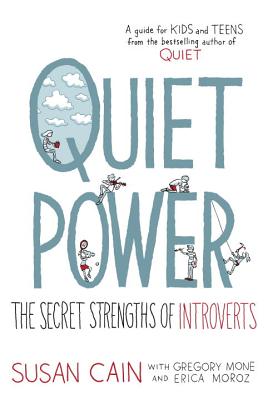
Quiet Power

quietpowerby Susan Cain (with Gregory Mone and Erica Moroz)
First sentence: “Why are you being so quiet?”
Support your local independent bookstore: buy it there!
Release date: May 3, 2016
Review copy sent to me by the publisher because we’re having the illustrator, Grant Snider (who’s local) for an event.
Content: It’s geared more toward middle- and high-school students; most of the examples are from those age groups, and the settings are generally for older kids. Though it’s written at a level that I think a 5-th grader (or an advanced 4th-grader) could handle. It’ll probably be in the Teen Information (which is where all the upper level kids’ non-fiction goes) section of the bookstore.

I’ve been meaning to read Quiet for years, but haven’t ever gotten to it. As a self-described introvert, I figured there was stuff I needed to know about us, but life, and an expanding TBR list, got in the way. The comes along Quiet Power, the young readers version of Quiet,  and all of a sudden I need to read it because of an upcoming store event. Not having read Quiet, I don’t know how it compares.

That said, this is an excellent resource for introverted kids who are trying to figure out how to navigate life. Especially the ones who think there’s something “wrong” with them. Cain has done her research, highlighting the successes of a number of introverted kids (she specifically says that this edition was requested by kids and others who have read her other book and wanted one for themselves), and giving introverted kids coping mechanisms. It covers everything from defining what an “introvert” really is (and comparing it to being “shy”), to how to handle public speaking, to finding a space in your house to retreat (restoration niches! I love that. I have definitely found that those are important in my life.). It gives encouragement: introverts can be performers, can be public speakers, can use their strengths to enact change. It’s inspiring to read about people who actually can put their mind to things and do something great.

A bit about the illustrations, since Grant Snider is local: I love the webcomic style, and the handy one-page illustrations that not only sum-up several of the chapters, but add a bit of humor as well.

There’s also a couple of chapters at the end, one for teachers on how to better help more introverted students in the classroom and one for parents to help them understand their more introverted children. It’s a great resource for the adults as well, to help kids express themselves more fully.

Definitely a good read.

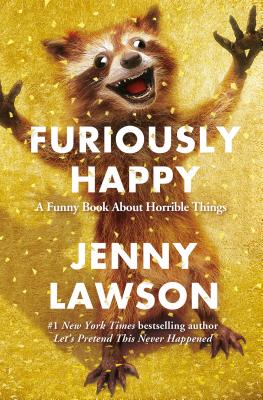
Audiobook: Furiously Happy

furiouslyhappyby Jenny Lawson
Read by the author.
Support your local independent bookstore: buy it there!
Content: Lots of swearing. Lots. And lots. You’ve been warned. It’s in the adult biography section of the bookstore.

I’m late to this party. I knew who Jenny Lawson was (I do work in a bookstore, after all) and I was aware of her book. I’d just never picked it up. I have so much else to read, that I figured a small book about a weird upbringing as the daughter of a taxidermist never really appealed to me.

But, when I was looking for a new audiobook, this one jumped out at me. Ann Kingman talked about it on Books on the Nightstand a while back, and so I picked it up.

I had no idea I was missing THIS.

In a series of short, random, wandering essays, Lawson tackles her mental illnesses (ADHD, anxiety, and depression), her crazy life and marriage, therapy, the ways she copes, and her adventures in, well, everything. It’s really random  and often super hilarious. I laughed a TON. Possibly because she’s super deadpan in her reading of the book, which just helped make it that more often. But, I also appreciated her being so candid about things I struggle with. She’s right: it does help to know that there are other people out there talking about struggling with depression, who have ways of dealing with it (or not), to put in perspective your own struggles. It’s wonderful. And the fact she does it with a sense of humor is that much better, too.

I probably should backtrack and get her first book, just to be complete.

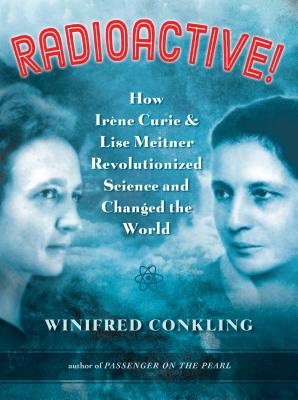
Radioactive!

radioactiveby Winifred Conkling
First sentence: “Their moment had finally arrived.”
Support your local independent bookstore: buy it there!
Review copy provided by the publisher.
Content: There’s some science terms and such in this, but they’re explained pretty well. It’s a bit on a higher grade level, but I think 5th graders and up could handle it.  It’s in the kids’ biography section at the bookstore.

I’m a sucker for biographies highlighting people or things I don’t know much about. And this one definitely fits the bill. Conkling highlights two physicists doing research in the 1920s and 1930s, ones that I didn’t know anything about.

Irene Curie was the daughter of the more-famous Marie, but was a stellar physicist in her own right. Along with her husband, Frederic Joliot, she discovered artificial radiation. This opened up many avenues in the scientific world. And while she got credit, no one (well, not us non-scientists anyway) remember her for this. The other scientist Conkling highlights — and in some ways, the more interesting story — is Leisl Meitner. She, along with several other scientists, discovered nuclear fission. The rub, though, is that because Leisl was considered a Jew in Nazi Germany (her grandparents were Jewish), she had to flee to Sweden. Then her partner (and friend?!), Otto Hahn, completely wrote her out of the research. He said he did this all on his own, mostly because he was afraid of the Nazis.

It’s a fascinating story, and Conkling does a good job of explaining the science (there’s some helpful tables, etc. throughout the book) as well as making both of these fascinating women come to life. There’s a bit about their history, their relationship with the scientific community (which was incredibly sexist, no surprise), as well as a lot on their contributions to the advancement of physics.

It’s fascinating and well worth the read.

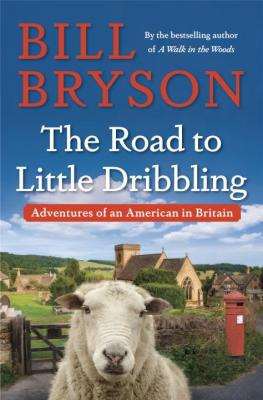
The Road to Little Dribbling

littledribblingby Bill Bryson
First sentence: “One of the things that happens when you get older is that you discover lots of new ways to hurt yourself.”
Support your local independent bookstore: buy it there!
Content: There’s a bunch (a dozen or so?) of f-bombs scattered throughout, and it’s a bit old-n-cranky for the younger set. But if you’re interested in that sort of thing (plus England), then it’s in the Creative Non-Fiction section of the bookstore.

It’s been 20 years since Notes from a Small Island, and Bryson’s publisher thought it’d be an interesting thing for Bryson to go back and revisit places. Well, he decided not to do that. Partially because he’s not one to do things exactly the same way, and partially because he applied for British citizenship and one of the questions asked what were the two farthest cities in Great Britain, he drew a line down the middle of the country and decided to loosely follow it, visiting places.

It doesn’t sound like much to hang a book on, but this is Bill Bryson after all. It’s been a while since he’s done a travel book, and I was more than happy that he got back to it. I was much more willing to read this one than I was Notes (I didn’t “get it”. I wonder what that means now.) and I thoroughly enjoyed traveling to all these small, out of the way, strange little English places with him.

But what really struck me is that Bryson is a bit of a crank. A lovable, affable, hilarious crank, but a crank nonetheless. He’s one of those people who think that it Used To Be Better back when he was younger, and that the world — or, more particularly, Great Britain — is going to pot. And yet, the affection he has for his adopted country is obvious. He adores Great Britain, not just with all his faults but because of them. In spite of his occasional crankiness (or maybe because of it?) I had a hilarious, fun, and sometimes insightful (his throw-away comments on U. S. gun control in the last chapter are spot-on) time traveling England with him.

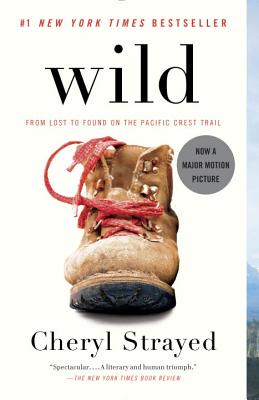
Audio book: Wild

wildby Cheryl Strayed
Read by Bernadette Dunne
Support your local independent bookstore: buy it there!
Content: Drug use, sex, drinking, yeah: it’s all in here. Definitely not for the faint of heart.

I was wandering around, looking for a new audio book, and stumbled on this one. I figured so many people have raved about it that it couldn’t be terrible. So, I picked it up.

If you’ve been under a rock, it’s Cheryl’s personal story of her redemption, of sorts, after her mother died and her marriage fell apart (due to her infidelities and drug addiction). She decides that what she needs to do is hike the Pacific Crest Trail from California to Washington (actually, Oregon came later, after she discovered that the Sierras were snowed in) alone. She has no experience, she has no idea what’s in store for her. And yet, you have to admire her for going through with it, even when — especially when — the going gets hard.

But I couldn’t get past the “poor me” vibe that I felt was under the whole book. Maybe it’s because Cheryl didn’t narrate her own book and I never really got past that. Or maybe I’m just too judgmental (which I am, unfortunately). But while I really enjoyed the moments when Cheryl was battling against the trail, and mostly succeeding, I didn’t have much patience for Cheryl herself. (Now that I write this, it sounds really judgmental. Maybe it’s just wrong time wrong book?) I was talking to someone who had a similar experience with Eat, Pray, Love (which I really liked). Perhaps we’re more apt to judge women who travel because their lives are broken than those (men?) who just up and leave (I’m looking at you, Bill Bryson) to go experience the world.

I don’t know. I just know that I didn’t connect with this one as much as I hoped it would.

We Should All Be Feminists

weshouldallbefeministsby Chimamanda Ngozi Adichie
First sentence: “Okoloma was one of my greatest childhood friends.”
Support your local independent bookstore: buy it there!
Content: There’s really nothing objectionable; my 12 year old has read it. It’s in the sociology section of the bookstore.

I wasn’t going to write a review of this one, mostly because it’s so short and simple, but I decided I needed a record of having read it.

It’s basically an extended, written version of Adichie’s Ted Talk on the same subject, an exploration of the value of feminism. I read this over Christmas, after I heard a that Sweden gave this book out to every 16 year old in the country. I know I’m not really the target audience (neither are my girls, to whom I gave this book for Christmas) already self-identifying as a feminist, but I wanted to see what Adichie had to say.

And she had a lot to say, actually. A lot of it was directed toward African culture — it’s very male — but I think that it’s relevant even in America. The fact that women do experience sexism, the fact that men don’t notice gender, the fact that things are easier for men, and so on, is important. It’s important to have discussions about gender and equality, to raise boys so that they understand the value of women, to raise girls to speak their minds without fear. It’s important, to say, as Adichie writes, “Yes, there’s a problem with gender as it is today and we must fix it, we must do better.”

I may not be the target audience for this one, but it was definitely worth my time.

Most Dangerous

mostdangerousby Steve Sheinkin
First sentence: “They came to California to ruin a man.”
Support your local independent bookstore: buy it there!
Content: There’s some swearing (no f-bombs), and it’s a bit complex. It’s in the teen non-fiction section at the bookstore, but I think a 5th- or 6th-grader would be interested.

I’m late fan of Sheinkin’s but I’m becoming a truly devoted one. There are few people who tackle more interesting subjects in a way that’s accessible to kids without being simplistic and yet make the book (and the subject) utterly fascinating.

This time, the subject is Daniel Ellsberg, a former Pentagon employee in the 1960s who turned against the Vietnam War and ended up stealing and releasing a series of Top Secret papers in order to expose conspiracies in the government surrounding the war. It’s a fascinating story, one that (given my age; I was only 2 years old when Vietnam ended) I hadn’t heard of before. And Sheinkin raises interesting questions: sure, governments need secrets in order to operate, but how much is too much?

Much like Port Chicago 50, the government didn’t come off well in this book. Sheinkin was fair — Ellsberg was never lauded as a hero or portrayed as anything but human  and Sheinkin pointed out times in which presidents made good decisions — but, in my view, the actions of the government were despicable. Perhaps it’s my political views toward war in general, but there really was never anything solid given for why Vietnam happened. It seemed like it was all just a big Bro statement: look at us, we’re America, and we’re bigger than you.

And yes, I drew a lot of parallels to our current situation as well. There’s the obvious one that Sheinkin brought up in the epilogue with Edward Snowden, but for me, there was a general underlying mistrust of current motives for the government to head into any military action. Why, actually, are we doing this?

A very timely book, and (like everything Sheinkin touches) an excellent one.


Audiobook: You’re Never Weird on the Internet (Almost)

youreneverweirdby Felicia Day
Read by the author
Support your local independent bookstore: buy it there!
Content: There’s some mild swearing and a couple of f-bombs until you get to the second-to-last chapter, where she talks about Gamer Gate and trolls on the internet,  and then there’s a LOT. It’s in the Biography section of the bookstore.

I am not a huge fan of Felicia Day. Don’t get me wrong: I know who she is, I’ve seen some of what she’s done, and I like her. But fan? Not really. And yet, this book appealed to me from the moment I saw the cover (and heard the title). A memoir of an awkward, anxiety-riddled, gamer girl who happens to be a semi-famous actor? Count me in.

And it, as read by Day, was absolutely charming. (I’m sure it was charming in print form, too, but I’d definitely recommend listening to this one.) Day writes about her interesting childhood (homeschooled for “hippie reasons not God reasons”), starting college at 16 (double majoring in math and violin performance), heading to LA and trying to break into the acting business, playing World of Warcraft, and finally, creating her own web show ages before anyone knew what a web show was.

It’s a fascinating journey, and while she has “coffee mug” nuggets of wisdom along the way (I wish I wrote them down; they were pretty great), the best part, for me, was just listening to Day be honest about anxiety, depression, and figuring out how to be the best and most honest person she can be.

She sounds like a delightful person, one I’d happily invite to that dinner party with famous people I’d love to have. And this is an absolutely delightful book.

Bad Feminist

badfeministby Roxane Gay
First sentence: “The world changes faster than we can fathom in ways that are complicated.”
Support your local independent bookstore: buy it there!
Content: There’s fewer than 6 f-bombs, and some other mild swearing. And there’s a whole chapter on 50 Shades of Gray which is frank, but not explicit. It’s in the Sociology section of the bookstore.

I really don’t know what compelled me to pick this up. It’s been on my radar for a while, and I always figured I’d get to it, but why now?  No idea.

I’m glad I did, though.

In this series of essays, Gay takes on not only feminism (the Establishment) but race relations, sexism, culture, and Scrabble. (Well, there’s only one essay on Scrabble.) She’s insightful about relationships, critical about the State of Culture, but most of all, open and honest about the fact that she’s conflicted. She laments the lack of people of color on TV but is critical of the idea of diversity for Diversity’s Sake. (She’s not all that impressed with Orange is the New Black. It’s still a white woman’s story and the diverse characters are often stereotypes.) She admits to finding Blurred Lines catchy, while being disgusted at the content. There’s a whole chapter about the disturbing nature of 50 Shades of Grey while addressing the fact that its popularity shouldn’t be dismissed.

And it was this conflict I found I connected with. Because I’m a conflicted feminist. I don’t live up to Establishment Ideals. And it’s so refreshing to hear the voice of someone outside the establishment — in this case, a first-generation Haitian woman — stand up and say that there’s room in feminism for those of us who don’t fit the mold.

I borrowed my copy from the library, but I need to get this one. There’s an awful lot I need to underline and mark up, and it’s definitely one I want all my girls to read.