Audiobook: One Summer: American 1927

by Bill Bryson
Read by the author
Support your local independent bookstore: buy it there!
Content: It’s popular history. And because of that, there is talk of sex and some swearing (maybe 4 or 5 f-bombs). It’s adult-oriented, but I’m sure an inquisitive high schooler could read it.

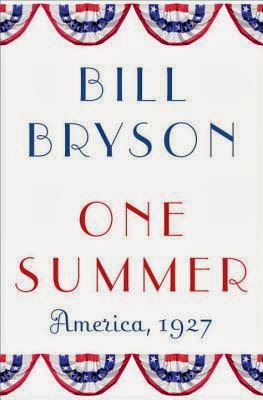
I adore Bill Bryson. Sure, he’s a former journalist and a popular historian, but he comes at history in such unique ways that I can’t help but love him. Rather than Another Dry Biography of any of the people he talks about in this book — Charles Lindberg, Babe Ruth, Jack Dempsey, Al Capone, Calvin Coolidge, Ruth Snyder, Niccola Sacco and Bartolomeo Vanzetti, among others — he realized that talking about a summer, the summer where everything seemed to gel, would be so much more interesting.

And he was right.

He had me enthralled from the prologue when he talked about the failed attempts at flying across the Atlantic in the early 1920s. And he kept me enthralled (for the most part; I did tune out the banking parts) for the whole of the entire book. (Granted, that may be because I listened to it, and I love listening to Bill Bryson read his books. Kind of like Neil Gaiman.) It was chock full of trivia (the one thing I remember is that the summer of 1927, Memphis had the highest murder rate in the country, not Chicago), sure, but also of insightful passages. (I would quote them, but again: audio book.) That’s one of the things I love about Bryson; the way he throws in asides and commentary about his subject, but you never quite feel he’s being didactic. Snarky, yes. But didactic or preachy? No.

One of the things that I kept thinking as listened is just how much history repeats himself. And how much we ARE. Racism and trying to block immigrants? Check. (Except it’s south of the border and Middle East rather than Ireland, Italy, and Jews.) Banking bubble because politicians won’t regulate it? Check. I’m sure there are others, but (audio book, dangit!) I can’t think of them right now. I’d say everyone needs to read this for that reason — so we can grow and change and become better — but really? Read it because it’s Bill Bryson and it’s fascinating and a lot of fun.

You won’t regret it. Promise.

Audiobook: Longbourn

by Jo Baker
read by Emma Fielding
Support your local independent bookstore: buy it there!
Content: There is some talk of sex, but it’s vague and not at all explicit. And some mild swear words. It’s in the general fiction section at the bookstore, mostly because that’s the way it’s marketed. If a 15 year old were interested, I’d give it to them.

This is, to be frank, Pride and Prejudice fanfiction. All the familiar settings — Longbourn, Pemberly, London — are there, as are the familiar characters — Lizzie, Jane, Mr. and Mrs. Bennett, Bingley and Wickham (Darcy not so much).The difference is that it’s really only the bare bones of the P&P and the story is told from the points of view of three servants: Mrs. Hill, the housekeeper; Sarah, a maid; and James, a footman.

It basically follows the plot arc of P&P, though the concerns are not the concerns of Lizzie and Jane. And, honestly, I was expecting to love visiting that story from the perspective of the downstairs help. However, I was in for a surprise: unlike Austen’s witty observations on human character, Longbourn is a very pedantic book: every day is get up, do the work, collapse in bed. It’s also a dirty book — literally, there’s dirt, blood, pig slop, mud, you name it; Baker doesn’t whitewash the 19th-century.

There’s a slight love triangle between Sarah, James and Mr. Bingley’s footman, and while it goes somewhere, it feels kind of superfluous. I never really connected with the help; Baker didn’t make me care about all the work they were doing, or how annoying Mrs. Bennett was, or what a creeper Wickham was. And so, when at the beginning of volume 4 (I think; listening to it kind of throws off those things), I got backstory on Mrs. Hill and James, I was more than annoyed. First, at the timing — why wait until most of the way through the book? — but secondly because Mrs. Hill and James were not who I cared about or was interested in.

And then it just kind of petered out at the end. Baker kept the story going past the end of P&P, through the marriage of Lizzie and Darcy and even later until everyone is Old. I didn’t care. I wanted to care, but I was just Tired of the story.

I finished it. But I’m thinking that I shouldn’t have. Which is too bad.

(A note on the reader: she was fine. She was interesting. But it wasn’t enough to make me really like the book.)

Audiobook: Sense & Sensibility

by Jane Austen
Read by: Wanda McCaddon
Support your local independent bookstore: buy it there!
Content: Aside from Willoughby being a bit of a cad (!), there really isn’t anything improper in this one. The main obstacles are with the length and the language and the pacing.

The last time I read this one, five years ago, I ended up liking it. At least more than I did the first time I read it. Well, call me fickle, but I’m back on the “not so much” side of things. Perhaps it was the reader of this audiobook — she had a slightly grating voice; or perhaps it was that I was trying to listen to this driving back from Austin and it kept putting me to sleep. Either way, I was underwhelmed by this Austen novel.

This time, while I was amused at parts, and even laughed aloud once or twice, mostly I just kept thinking how poorly Austen plotted. It took too long to get started, it took too long to get events rolling, and it went on long after it could have ended. None of which is a crime; there are many adult books that suffer from the same issues. But I found myself irritated with it this time around. I wanted the story to be tighter, more streamlined. And while I enjoyed Austen’s trademark wit, I wanted more of it and less, well, austerity.

It’s not a bad book; it’s just not one of my favorite Austen books. I wouldn’t recommend listening to it, however. That was just a bad experience.

Audiobook: The Boneshaker

by Kate Milford
Read by: Erin Moon
Content: some intense moments (the Devil’s pretty scary), some violence, some disturbing images (if it were a movie). Language is probably suitable for someone reading on a 5th grade level. Has the feel of an older Middle Grade book, so I’d probably put it in the YA section (grades 6-8) at the bookstore.
Support your local independent bookstore: buy it there!

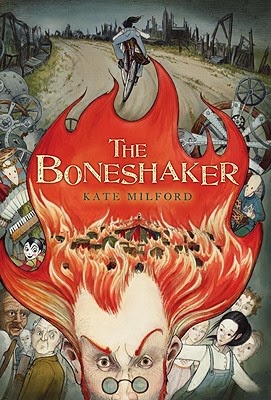
It’s 1914, and 13-year-old Natalie Minks has a pretty good life. Her father is the local mechanic — bicycle, mostly, but he’ll tinker with cars — and her mother tells the most amazing stories about their town, Arcane. Natalie herself has a predisposition for both: she loves tinkering with her father as well as listening to her mother’s stories.

Then one day Dr. Jake Limberleg’s Nostrum Fair and Technological Medicine Show comes to town. It was a fluke — their front wheel came off at the crossroads, and they decided to set up shop while they waited for Mr. Minks to fix their wagon. And that’s when the Trouble starts. Natalie, for better or for worse, is tuned into it and with her frienemy Miranda (I think that’s what her name was; I can’t look it up in the book!) and her trusty Chesterlane Eidolon bicycle (a bone shaker of an old thing that would be the fastest in the world, if Natalie could ever ride it), she decides to take on Limberleg and solve the mystery, saving her town. If she can.

I don’t know how I can write about the way this captured my attention. Sure, I was on a long drive to Austin, and it had my full attention anyway, but I didn’t want to stop listening. Milford has taken the idea of a Faustian Bargain — you know: those stories where a character meets the Devil and then outsmarts Old Scratch? — and elevated it. Not only is there two elements to this bargain, but we get historical elements thrown in as well. The traveling medicine show (I loved the Paragons of Science, even though they were Evil), the bicycles, the references to the “war” (which took me a minute to realize they meant the Civil War): it all added Atmosphere, which made the fantasy element, the bargains with the Devil at the Crossroads, that much creepier.

(It also helped that I kept thinking about this song:)

In short: a winner of a book.

Audiobook: I am America (And So Can You)

by Stephen Colbert
read by the author
Support your local independent bookstore: buy it there!

I picked this up on a whim because I needed something short, and I was in the mood for something funny. And, even though I’m not a fan of his show, I had hopes Colbert would be both.

Well. It was short, anyway.

As for the funny, sometimes it was. There were moments — I can’t remember them now, though — when I did chuckle, guffaw, and few when I snorted. But, mostly I had to constantly remind myself that he doesn’t mean any of this. I’m not quite sure if this was a parody of or a commentary on conservative thinking, but either way, I spent a good part of the time thinking “What’s the point?”

If his point was commentary, then sometimes it was brilliant. Sometimes, he went on rants that I thought worked if you heard (in this case) them ironically. And sometimes, I thought that it was a terrific parody of conservative culture. But — perhaps like all good parodists (is that a word?) — it was uneven. Sometimes it worked. Mostly, though (and this is because humor is really subjective), it didn’t work for me. Every time I found myself ticked off or agreeing with something Colbert said, I had to remind myself he doesn’t mean ANY of it. Or if he does, it’s so hard to filter what’s “real” and what isn’t that I just gave up.

I did come to one conclusion, though: give me Jon Stewart and I’m a happy person.

Audiobook: The Lowland

by Jjumpa Lahirir
read by: Sunil Malhotra
Support your local independent bookstore: buy it there!

I admit that I picked this up solely because M is currently in the part of India where this is set. I thought: Kolkata, Bengali… I should see if I could learn a little more of where M is staying for the next school year. Other than that, I really had no expectations.

It’s a much more political work than I was expecting. While, nominally it’s the story of the relationship between two brothers, Shubash and Udayan Mitra, Lahriri uses the background of the political unrest and Communist movement in India as a backdrop. The two brothers, who were close as children, grow apart as Udayan (the younger) gets involved with the Naxalite movement and Shubash heads to Rhode Island to pursue a PhD. Udayan gets married to Gauri (which Malhotra alternately pronounced Godi and Gori, so I had to check on the spelling) and then ends up killed by the police. When Shubash comes back for the funeral, he takes pity on Gauri, mostly because she’s pregnant, and marries her, bringing her back to the US.

That is the first third of the book. At which point, I was left wondering: What on earth is Lahiri going to do with the rest of the novel? Well, much like Khaled Hosseini’s And the Mountains Echoed, Lahiri explores the ramifications of those decisions. We follow Shubash and Gauri, and later Gauri’s biological daughter, through the years to present day (when Shubash is 70, and Gauri s in her mid-60s), and experience the fallout. Because there is fallout, and it’s not pleasant.

As I mentioned to people that I was reading this, their first question was “Do you like it?” Well…. no. And yes. It wasn’t bad enough to abandon. Malhotra was a delightful reader, capturing both Indian and American accents well. Perhaps it was him who kept my interest in the book going, because I was constantly annoyed at the characters. Gauri could never get past her dead love and move on with her life. And right up to the end, she never thought about the consequences for her actions, acting impulsively. But the thing that really infuriated me was Shubash’s insistence that because he wasn’t the sperm donor for Gauri and Udayan’s daughter, that he wasn’t her father. He. Raised. The. Girl. He was there for her when her mother abandons her, and yet he still questions whether or not he’s her father. *grumble* Biology isn’t what being a parent is about.

Maybe that was Lahiri’s point, in the end. Because, after finishing the last disc (a very unsatisfying ending, by the way), that’s what I got out of it. Family is what you make, and loving and caring for other people is the way to happiness.

So maybe it was a good book after all?

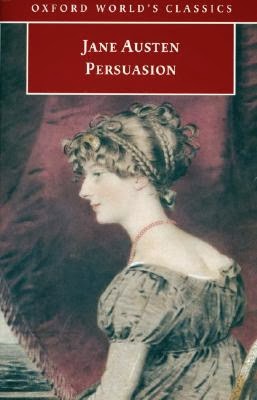
Audiobook: Persuasion

by Jane Austen
read by Greta Scacchi
ages: adult
Support your local independent bookstore: buy it there!

It’s been nearly five years since I last visited Anne Elliott and Captain Wentworth’s story, and I thought, especially after liking Emma so much and because of this article in Slate where they ranked it dead last, that maybe it wouldn’t be nearly as good this time around.

Maybe it was the reader — she was delightful — but I really do think that no matter how much I like to pretend otherwise, Persuasion will always hold a special place in my heart. It’s not funny or witty, though it is poking fun at snobby class-conscious people. No, what I said last time still holds:

This book is the best one of Austen’s because it’s a re-finding of love lost, it’s the rekindling of hope, rather than the blush of first love. Anne and Wentworth were torn apart — by pride, prejudice, situation, class… all of which are Austen themes in her other books — and yet they overcome all in order to be together.

It’s still my favorite.

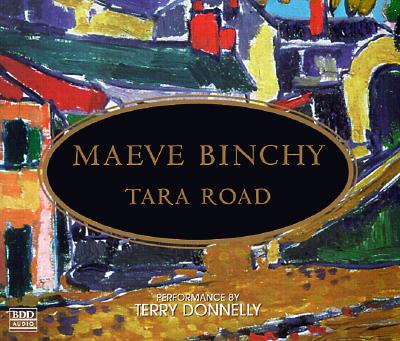
Audiobook: Tara Road

by Maeve Binchy
read by: Terry Donnelly
ages: adult
Support your local independent bookstore: buy it there!

I think I’m going to start with the why on this one. Because, honestly, much like a Jane Austen novel, the plot is really inconsequential to the enjoyment of this book. Earlier this year, Maeve Binchy released A Week in Winter, and people came in to snap it up, raving about her work. After the Northanger Abbey debacle, I was wandering the library looking for something light but good, and I settled on this. I knew nothing about it other than the author’s name.

The jacket flap posed this as a post-divorce/traumatic incident/finding oneself house swap story. And while there was a house swap, it didn’t come until late in the novel. Which leads me to believe: the jacket flap writers didn’t know what to do with this one. See: it’s really just a portrait of a woman, Ria Lynch, and the life she led. She married the first man, Danny Lynch, whom she fell in love with, and thought she had a good life. But, as the reader finds out through the pages, that good life was all in Ria’s head. She was surrounded by friends, by her children, in this lovely home, and her husband was off… being a philandering Irish jerk. (He wasn’t stereotypical, though: the role of Irish drunk was given to one of Ria’s friends’ husbands, who thankfully, got his just deserts in the end.) It’s the portrait of a woman who makes choices and stands by them, and then when life throws her a curveball, she goes on. It’s a testament to the power of community and connection: Marilyn, the American Ria trades houses with at the end, is grieving for a dead son and has been unable to move on. But through the connections she makes by being a part of Ria’s life, she is able to find some healing.

In the end, while “nothing” happened (well, lots happened, but it was everyday stuff) it was a compelling novel. A lot of that is credited to Binchy — she (again, like Austen) is a master of the domestic drama, painting gorgeous portraits of the Everyday — but I do have to admit that Terry Donnelly’s voice had me mesmerized. A light, lilting Irish accent; voices perfect for the characters; she had me staying in the car waiting for an “acceptable” stopping point.

I should read (or listen to) more Binchy. Because my first foray was gold.

Audiobook: Northanger Abbey

by Jane Austen
Read by Donada Peters
Support your local independent bookstore: buy it there!

Next up on my “reading Jane Austen” this year project was Northanger Abbey. It was more of a whim; I haven’t listened to any Austen in a while, and I was at the library, and this one just jumped out at me. I remembered reading it a while ago (2008, it turned out; follow the link if you want a plot summary), but I didn’t remember much else. I was excited to get going.

But… when I put it on, I realized that it was the same reader as Madame Bovary. Remember when I didn’t know if it was the book or the reader?? I’m here to tell you that it was at least 60% the reader. Because, while I plowed through this one (it’s JANE AUSTEN, and I can’t bail on her), I didn’t get much out of it. Peters’ voice grates on me, and I ended up tuning things out and missing huge chunks of the story.

Things I did get: John Thorpe is a complete jerk. Boorish, manipulative, and possibly one of the worst male characters Austen invented. He’s not a cad, or a rake, or even a Bad Guy. No: he thinks he’s Noble and Right, but he’s a bully, and that’s what makes him so terrible.

Along the same lines, General Tilney is shallow and boorish as well. Maybe they needed to exist so that Henry — who is a little on the dull side — would shine.

That said, Catherine herself is a silly, silly girl. Emma is, too, but in a completely different way. Catherine lets her imagination run away with her, but that’s really all she is. (Emma’s a snob, but there’s some growth there by the end of the book.) I didn’t feel like there was any growth, any reason for Henry to fall in love with Catherine other than she was pretty and nice. It was kind of unsatisfying, in the end. Which, by the way, I felt was rushed, a little.

Still not my favorite Jane Austen, but I also have to blame the reader for my lackluster reaction to this. Maybe sometime I’ll see if a different person read another edition of the audiobook and see if I have a different reaction.

Audiobook: The Sweetness at the Bottom of the Pie

by Alan Bradley
read by Jayne Entwistle
ages: adult
Support your local independent bookstore: buy it there!

Flavia DeLuce is an 11-year-old aspiring chemist in 1950s England. Often at odds with her two older sisters, she mostly tries to stay out of the way. That is, when she’s not researching poisons.

Then one fateful night, her father has an argument with a stranger, who turns up dead in the cucumber patch, uttering one word: “Vale”. Flavia (of course) was there to hear it, and it sets her on a path to figure out who the murderer really is, and free her father.

On the one hand, I was thoroughly entertained by Entwistle’s reading of this book. Her voices were terrific, and she managed to keep my attention, even though I had problems with the book itself. The first one being the number of similes. Oh. My. Heavens. If I drank, I’d make a drinking game of them. And I’d be plastered by the end of chapter 2. I tried counting them, but I lost count after a dozen (within 10 minutes or so). I was complaining about them to Hubby, and he did point out that Flavia — who is a precocious child (I don’t like precocious children in adult fiction; it grates) — is the narrator, which may have something to do with the inordinate number of similes. Even so, I resigned myself to them, rolling my eyes whenever I heard one.

My other problem was that I called the murderer too early. Bradley introduced a random character about halfway through, and even though I didn’t know how or why, I knew he had to be the murderer. Why else introduce a random character. And, in many ways, I find that bad form.

But, it wasn’t a terrible waste of time — I did finish it after all. Even if it wasn’t perfect.