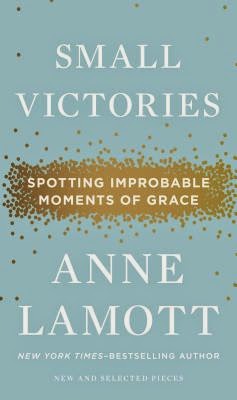
Audiobook: Small Victories

by Anne Lamott
Read by the author
Support your local independent bookstore: buy it there!
Content: She likes the word s**t, and drops about five f-bombs.  Which kind of caught me off-guard. It’s in the religion/philosophy section of the bookstore.

I’ve been curious about Anne Lamott for a while now; she’s an incredibly popular author at the store. I was in between audio books recently and discovered this one, and it was delightfully short. I figured audio was a good way to experience her.

This is basically a series of short reflections on life, God, and the intersection of the two. For the record: Lamott is a liberal, which I don’t mind at all, and was very against the invasion of Iraq in 2003. (Several of the essays are from around that time period.) She belongs to a church in northern California. She has a son, and lots and lots of friends, many of whom are suffering from serious illnesses. She has a good sense of humor, and is honest about her struggles with God, people, and just life in general.

In many ways, the words were just what I needed to hear: we’re all human, we’re all trying. God is in connecting with other people and reaching out to love them.

What I didn’t like so much, was Lamott’s reading of her own work. I understand why she needed to read her own words; it would have been odd otherwise. But Lamott read in such a way that it soundedlikeonereallylongsentancewithoutevertakingapauseorevenraisedorloweredhervoicewithsentenceinflection. When I concentrated to hear the words, I loved it. But her reading of them almost turned me off altogether. I’m glad I stuck it through to the end, for the thoughts and ideas. But, I wish Lamott had been a better narrator.

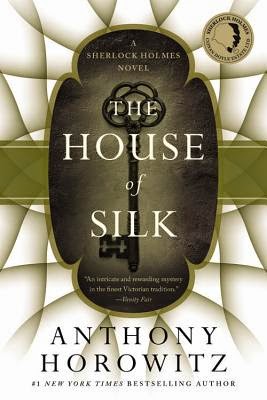
Audiobook: The House of Silk

by Anthony Horowitz
Read by Sir Derek Jacobi
Support your local independent bookstore: buy it there!
Content: While there’s nothing “objectionable”, it does, in the end, feature murder, and the solution is pretty tough to take. Still, I think it’d be a good book for all the teen Sherlock lovers out there. It’s in the mystery section at the bookstore.

I’ve been meaning to read this one for years, I swear. I like Sherlock Holmes, and this one is actually sanctioned by the Conan Doyle estate, and Horowitz has written some fun middle grade books… and and and.

I finally got around to it because Horowitz published Moriarty, and I remembered that I did want to read House of Silk. Thankfully, the library had an audio version, and so I opted for that.

And what a ride. First: I loved Jacobi’s narration, from his slightly gruff Watson to his more elegant Holmes. And the wide variations of English accents were amazing. The only time I felt he was off was when he did an American woman, but I was able to forgive that.

The conceit is that Watson is writing this at the end of his life, with the intent that it would be hidden and released in 100 years, because the scandal was too great for it to be published during his lifetime. Which sets up an ominous tone that permeates the whole book. Holmes and Watson (married now, and his wife was away so he was back at 221B Baker Street) were solicited by a man, Carstairs, who felt he was being threatened by one of the Flat Cap Gang from Boston. That leads Holmes and Watson down a tricky, twisty, dark path and into the deepest darkest secrets of some of the most powerful men in Britain.

I know I’m being vague. But, really: the less you know, the more enjoyable the ride. And the ending had me flabbergasted. I had some of it figured out — in retrospect, nothing comes out of left field, which is nice — but when the final revelation came I was sufficiently amazed at Holmes and disgusted by the depravity. As well I should be.

I don’t know if I would have liked it as much had I read it; I prefer the TV shows to the stories, and listening to it gave it the feel of one of those. Or maybe it’s just because Horowitz knows action and plotting… which lends credence to my middle grade/mystery crossover theory.

Either way, I thoroughly enjoyed this one.

Audiobook: Yes, Please

by Amy Poehler
Read by the author.
Support your local independent bookstore: buy it there!
Content: Amy likes to swear. A lot, but not excessively, and generally not gratuitously. She is also pretty frank about sex and her drug use. I’m not going to say it’s not for teens — whom I know make up some of her fan base — but know that going in. It’s in the humor section at work.

I have made an executive decision: all celebrity bios are better in audiobook form. Period. That is all.

I really wasn’t that interested in reading this one; I’d paged through it a couple times when it came in back in October, and I figured: this was one for the True Fans. (Which I am not. I’m more like a Passing-by Fan.) But even I couldn’t resist the opportunity to listen to Amy Poehler read her book.

And, for the most part, it was a lot of fun. It’s a meandering book, wandering through memories, observations, Deep Thoughts, and Pithy Comments. That worked for me for a while, but wore me down by the end. Thankfully, the last chapter was recorded live, which helped end the book on a high note.

Perhaps it’s because she comes from an improv background, but I felt Poehler (and the audiobook) was at its best when she strayed from the script and just riffed. The two minutes she and Seth Meyer went off (which I’m assuming is not in the book, though I haven’t checked) were brilliant. She operated under the guise that she was recording the whole thing in her own personal home audio booth, and that there was a party going on in the background. She chatted for a bit with Patrick Stewart, Kathleen Turner, and Carol Burnett which just made me happy. And hearing her parents’ Boston accents (actually, I loved it when Poehler’s came out too) was charming.

It was all the little extra things that made this book enjoyable. But in the end, that wasn’t enough for me to truly love it.

Audiobook: The Boys in the Boat

by Daniel James Brown
Read by: Edward Herrmann
Support your local independent bookstore: buy it there!
Content: It’s a book about the 1930s, rowing, and Nazism. It’s appropriate for anyone who’s interested in reading about those things, and can handle a long-ish book. It’s in the History section of the bookstore.

In the 1930s, 8-man rowing was one of the most popular sports (who knew). And the west coast — the University of California and University of Washington — was the hot-spot of the sport. And in the years leading up to the 1936 Olympics in Berlin, the Washtington team became the best of the world.

This is the story of how the Washington boys became the Olympic gold medalists.

I think this is one of those books that I really needed to listen to rather than read. While I think it would have been interesting, listening to it made it riveting. I enjoyed the stories of Joe Ranz — who ended up in the number 7 seat in the Olympic boat — and the other boys, and how they came to be at Washington. I enjoyed the conflict that coach Al Ulbrickson had with the California coach. I didn’t enjoy the rehashing of 1930s Berlin, but I think that’s because I listened to In the Garden of the Beasts and this is basically re-hashing much of that territory. For someone who is unfamiliar with Hitler’s rise, it’s pertinent information.

But what I  really loved was the bits about how the sculls were made, about the effort it took to row a race. And the races themselves? They had me glued to my seat, hooked on every word.

It was a remarkable event, a remarkable story. And I’m so glad I know about it, now.

10 Great Audiobooks

For quite a few years, I’ve gone to the library and picked out a few (sometimes upwards to a dozen) audiobooks to choose from as alternatives to music or movies in the car. This time, we got to talking about books we’ve listened to (and liked) over the years, and that prompted me to come up with a list of our favorite audiobooks. I’ve added a few of my personal favorites as well.

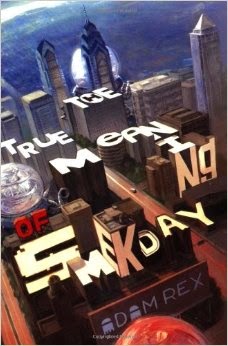
1. The True Meaning of Smekday, by Adam Rex; read by Bahni Turpin. This is one we still rave about; it’s absolutely captivating and Turpin is fantastic as a narrator. In fact, we love it so much, we’re kind of worried about the changes that they’re making with the movie. Though we agree that Jim Parsons is perfect at J. Lo.

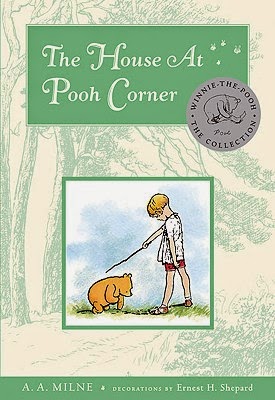
2. The House at Pooh Corner, by A. A. Milne; read by a whole cast. As I was going back through my records, it turns out we listened to this one before. Doesn’t matter; we were still captivated by the voices (particularly Geoffry Palmer as Eeyore) and you can’t go wrong with the Pooh bear stories.

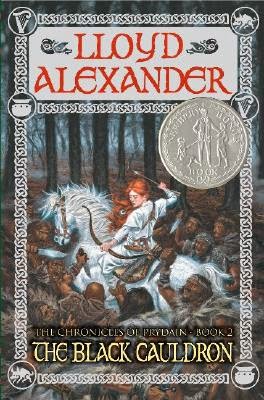
3. The Black Cauldron, by Lloyd Alexander; read by James Langton. I think hubby and I enjoyed this one more than the girls did. They complained there were too many characters and it was confusing. Perhaps, they were just too young. Langton, however, was a perfect narrator.

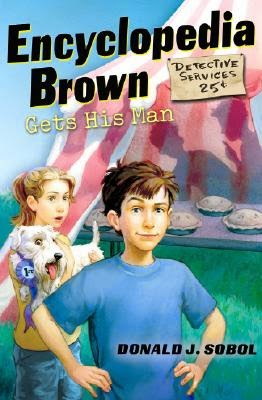
4. Encyclopedia Brown Gets His Man by Donald J. Sobol; read by Greg Steinbruner. Another one we rave about, still. The girls have asked, on multiple occasions, if we can get more of these, but I haven’t found any yet. We loved listening to the stories and trying to solve along. And Steinbruner was excellent.

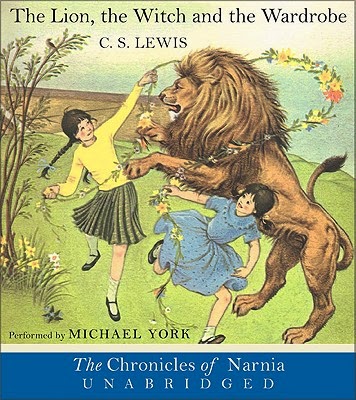
5. The Lion, the Witch, and the Wardrobe by C. S. Lewis; read by Michael York. If you haven’t noticed yet, we tend to pick classics to listen to while we road trip. Partially that’s because we want to expose our kids to them, but also because I think they’re more interesting when read by a good reader. This is certainly true for Lewis’s books. The ones we’ve listened to have been fantastic.

6. The Graveyard Book, by Neil Gaiman; read by the author. The only thing I have to say is that if you’ve never heard Gaiman read one of his books, you’re missing out. I’d listen to him read a tech manual and be hanging on every word. It helps, of course, that he’s a great writer and storyteller as well.

7. Daughter of Smoke and Bone, by Laini Taylor; read by Khristine Hvam. Taylor’s a beautiful writer, and Hvam captures her characters perfectly. Especially Brimstone. It was one that I just listened to on my own, but she had me hanging on every word.

8. To Kill a Mockingbird, by Harper Lee; read by Sissy Spacek. It’s one of those that everyone should read, and Sissy Spacek’s perfect southern drawl compliments Lee’s words quite nicely.


9. Major Pettigrew’s Last Stand, by Helen Simonson; read by Peter Altschuler. Often, when listening to an audio book, the reader makes or breaks the experience. In this case, the reader made it. He captured everything perfectly, and I had a better experience than I think I would have if I had just read the book.

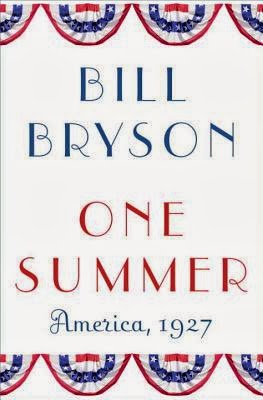
10. One Summer: America, 1927, by Bill Bryson; read by the author. Much like Neil Gaiman, Bryson’s books are better listened to. He’s got an incredibly dry sense of humor, and that suits his writing quite well. They’re chock full of information, though, so don’t be surprised if you end up checking out the print book as well.

What have been some of your favorite audio books?

Audiobook: Keeping the Castle

by Patricia Kindl
Read by Biana Amato
Support your local independent bookstore: buy it there!
Content: There’s nothing objectionable, but my 8-year-old was quite confused while listening to it. So, it’s probably not for the younger set, just because of intricate plot lines and needing at least a working knowledge of Regency England. It’s in the YA section (grades 6-8) of the bookstore.

Althea Crawley has always known that she needed to marry well. Her father died shortly before her younger brother (and her father’s heir), Alexander, was born. The castle — in the north of England, on a cliff, and their home — her great-grandfather built is slowly falling apart (well, maybe not so slowly). And so when Lord Boring (yes, that really is his name) shows up in the neighborhood, Althea knows what she must do: get him to marry her. Unfortunately, his crass, merchant, cousin, Mr. Fredericks, keeps getting in the way.

The jacket compared this one to I Capture the Castle and Pride and Prejudice. The Capture the Castle part of it is silly: the only things those two books have in common is a young heroine and a castle. However, the book read like a spin on all of Austen’s books. There were elements of Emma and Sense and Sensibility as well as P&P. It’s a more practical Austen, however: Kindl gives us a more confident and curious and modern heroine than Austen ever did. And Kindl gives us more blatant class divisions than Austen did, as well. The love interest is a merchant, and falling in love with a merchant, even a  wealthy one, is something which a landed gentry in Austen’s world just wouldn’t do. In fact, there’s quite a few interesting elements that probably existed in Austen’s time but didn’t overtly make it into her books. As we were listening to it (Hubby quite liked it, too), it occurred to me that this is Jane Austen-lite: an Austenesque books for kids who are curious but can’t quite make it through Pride and Prejudice.

The back did have this right: it is frothy and light as a champagne cocktail. It’s not deep — we were discussing all the ways in which Kindl could have made it more complex and darker than it was — but it sure is fun.

Audiobook: Randi Rhodes Ninja Detective: The Case of the Time Capsule Bandit

by Octavia Spencer
Read by the author.
Support your local independent bookstore: buy it there!
Content: There wasn’t anything objectionable. I don’t know how it’d be reading it, but my 8-year-old followed the story pretty well while listening to it. We did have to stop the audio a few times to explain some things, however. It’s in the middle grade (grades 3-5) section of the bookstore.

I threw this in the audiobook pile mostly because I’ve seen it at the store and wondered if it was any good. (I know: celebrity authors. Ugh. But, sometimes they surprise me. Not often, though.)

Randi Rhodes is a die-hard city girl. She’s grown up in Brooklyn and loved every minute of it. Her family summers in Deer Creek, Tennessee, which is just about the right length of time for a city girl to spend in a boring, dull, small town. But the year after her mother dies (I called that pretty early on; I do get so tired of dead parents), her father, a mystery writer, packs the two of them up to live full-time in Deer Creek. Randi is not happy about this.

But, once there, she falls head-first into a mystery: the 200-year-old time capsule for the town’s Founder’s Day has been stolen. And they have 72 hours to get it back. Much against her over-protective father’s wishes, Randi (and her two new friends, D. C. and Pudge) decide that they are the only ones to solve the mystery.

It’s a pretty run-of-the-mill middle grade mystery book. Nothing too fantastic or brilliant; in fact, as an adult, I’ve seen all the tropes before. The banker is a Bad Guy, as is the power-grabbing Mayor. There’s a grumpy old man with a heart of gold, and a woman sheriff who’s a bit bumbling. (Though — spoiler — this isn’t a true middle grade novel, because by the end, you discover that the sheriff isn’t bumbling at all, but has instead figured out the mystery WAY before the kids ever did.) The best parts of the book are when Randi and her friends are out being detectives; the worst are the angsty tensions between her and her overprotective dad. I got extremely tired of the rants Randi went on about not being “understood.” (But that’s a parent speaking. I did appreciate that Randi was a non-girly girl; she was often ranting about how she wasn’t a princess and didn’t need protection. She’s a black belt in Tae Kwon Do, after all.)

In the end, it wasn’t anything special, though A and K enjoyed listening to it. But, it wasn’t absolutely horrible, either, and Spencer did an admirable job of narrating her book (which I would expect, with her being an actress and all).

Audiobook: The House at Pooh Corner

by A. A. Milne
Read by: Stephen Fry, Judi Dench, Michael Williams, Geoffry Palmer
Support your local independent bookstore: buy it there!
Content: It’s Pooh Bear! Perfect for everyone.

I have read the Pooh Bear stories over and over to my children (as has Hubby), but still, when I saw this on the shelf at the library, I snapped it up. I never mind hearing the Pooh Bear stories again, if they are being read by a handful of really great British actors, it’s positively perfect.

And it really was. These are the later ones, the Tigger stories, and I loved (we all did!) hearing them again. Our realizations this time? Eeyore is such a delightful cynic. He made us laugh every single time. Piglet is such a Good person (or pig, as is the case) and no one appreciates it. Tigger is quite possibly high. Rabbit is the only one of the bunch who actually actively has machinations: he wants to Get Rid of some of the other animals (*cough*tigger*cough*). Owl is a complete fraud. Christopher Robin is God. And Pooh? He’s that delightfully clueless person that you can’t help but love. The full cast audio was an absolutely perfect way to do this book; the personalities came shining through with each reader.

And the last story, In Which Christopher Robin and Pooh Come to an Enchanted Place? It made Hubby and me both tear up. Growing up is such a bittersweet thing.

Delightful.

Audiobook: The Cuckoo’s Calling

by Robert Galbraith
read by Robert Glenister
Support your local independent bookstore: buy it there!
Content: None of the murders are grisly — they’re all alluded to — and there’s some talk of sex, but none actual on screen. However, the language is very adult (including many, many f-bombs), and for that reason, it’s in the mystery section (well, also because it’s a mystery) of the bookstore.

Cormoran Strike is hard up on his luck. Retired from the military due to an accident in which he lost part of his leg, and recently broken up with his posh, upper class girlfriend, the only thing Strike has is his private detective practice. And even that’s not doing terribly well. He can’t afford the temporary secretary that’s shown up, and he’s pretty sure he’s going to default on the loan his estranged (but famous) father gave him.

Things are looking pretty down when John Bristow, adopted brother of supermodel Lula Landry walks in Strike’s office with an incredible story. Bristow claims that the police have it wrong: that Landry’s death was not a suicide as originally thought, but rather murder. Someone pushed her off her third floor balcony to her death. The question is: who?

I really didn’t have expectations going into this one. I knew it was J. K. Rowling but I don’t really read many mysteries, so I wasn’t dying to get to this one. But, when I saw the audio book, I figured it was worth a try. I didn’t love it, but I was intrigued by it.

Perhaps it was because I knew it was Rowling before I went in, but I could tell that it was Rowling’s work. The way she described things (and because it’s audio, I don’t have a handy example) felt similar to the Harry Potter books. That, and she really does have a gift for names. The plotting was good as well; she kept up a good pace, and even though there were some bits that weren’t vitally necessary, it wasn’t under-edited. And the twist at the end didn’t come out of nowhere; something which was incredibly important to me.

I did feel like she under-utilized the administrative assistant, Robin. She gave us background on her, and made her a sympathetic character, but really didn’t have her do much of anything. I kept waiting for a grand Robin Moment that never quite came. The narration was excellent; I was impressed with the range of accents and voices that Glenister could do; perhaps one of the reasons I stayed interested in the book was because his narration was so compelling.

That said, it was a good, solid mystery. Nothing too spectacular, but nothing mundane or pedantic. Which means it’s just about right.

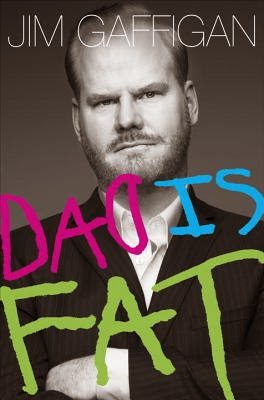
Audio book: Dad is Fat

by Jim Gaffigan
read by the author
Support your local independent bookstore: buy it there!
Content: Some mild swearing (like, less than a dozen times) and it’s all about parenting, so I’m not sure how many kids would be interested. It’s in the humor section at the bookstore.

Jim Gaffigan is a comedian (whom I hadn’t heard of) and a father of five kids. In New York City. He lives in a two-bedroom apartment in a five-story walk-up. And as you can imagine, all this leads to an immense amount of hilarity, most of which he turns into comic gold. (Well, not gold, really.)

Like most comedians (and humor really), it’s really quite subjective. This one tickled my funny bone, partially because I could relate to it (one tweet I sent out: “So true: ‘When children see animals in captivity, it makes them want ice cream.’ – Jim Gaffigan), perhaps because I have nearly as many kids as he does. And partially because he’s honest about himself and his abilities as a parent. I want to sit down with him, swap horror stories, and say, “Yeah, I think I suck at this parenting gig, too.”

I’m not sure I would have liked it if I had read it, but Gaffigan is a terrific narrator of his own material (see: stand-up comedian), and I often found myself guffawing (yes, I do guffaw) along with his hilarious and often ridiculous (see: five kids in NYC) stories. As I was telling a friend of mine: there’s nothing like listening to the war stories of someone who’s got it more challenging than you to make you feel good about your life.

And this was a thoroughly diverting ego boost.