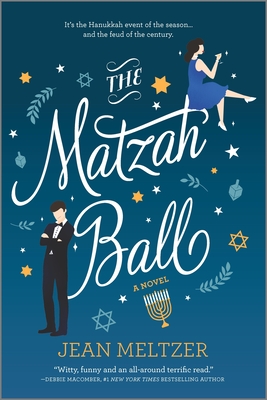
The Matzah Ball

by Jean Meltzer
First sentence: “She just needed one more.”
Support your local independent bookstore: buy it there!
Content: There’s some mild swearing. It’s in the romance setion of the bookstore.

Rachel is the daughter of a well-regarded rabbi, but she has a secret: she is a famous author (under a pseudonym, of course) of Christmas romance books. Jacob is trying to find his way back to Judaism after his mother’s death and is throwing the biggest party of the Season (on the eighth night of Hanukkah, no less). They knew each other, one summer at Jewish day camp, and had a brief fling (they were 12), but never kept in touch. But when they are thrown into each other’s orbit — Rachel’s publisher is demanding Hanukkah romance, and Jacob invites her parents to the Matzah Ball (yes, that is what the party is called). Sparks fly, of course.

On the one hand: I picked up this book because the title made me laugh. It hit all the right “Hallmark movie” moments; no one reads romances expecting them to be anything but predictable. There was even the added bonus of a disabled main character; she has chronic fatigue, which defies much of her life.

But. I didn’t buy that Rachel and Jacob had been holing on to 1) first love at age 12 and 2) a grudge because they had a misunderstanding at age 12. That’s silly and pushed the edge of suspension of disbelief. Also, there’s a throw-away line that’s anti-Palestinian, which I have to confess I didn’t realize was there until I read reviews after I finished. People were also concerned that the author used language around coming out as LGBT when describing Rachel’s “shameful” obsession with Christmas. I have to admit that I found her obsession with keeping it secret weird, but then again: I’m not Jewish.

IN the end, it was fun and cute, but nothing earth-shattering.

Friends Forever

by Shannon Hale and LeUyen Pham
Support your local independent bookstore: buy it there!
Others in the series: Real Friends, Best Friends
Content: There is talk of crushes and “going together” and mental illness. It’s in the middle-grade graphic novel section of the bookstore.

It’s eighth grade, and Shannon finally feels like things are going to go Her Way. She’s basically found her people in the drama club and thinks she understands how to navigate middle school. Except, she doesn’t feel beautiful, compared to her best friend, Jenn. There are friendship ups and downs. Her classmates keep asking whether she and her other best friend, Andrei, are “going together”. It’s hard when everything everyone says sticks in her brain, rumbling around, making her question her worth. (I get that.) Is she “good enough”? Can she even be good enough? Will anyone really gruly get and like her?

This is such a smart book: Hale and Pham get not just the mid-1908s (it’s the 1987-1988 school year), but the inherent angst of being 13/14. There are good moments, ones where Hale captures the silliness of young teenagers, but also ones that she uses as teaching moments, like the time she was assaulted by a mall Santa. She is open about her mental illnesses, and the mistakes she made (and her parents made) as a teenager — most telling was the way he “threw” her appointment with a therapist. It was the 1982s; therapy was only for “bad” people, and she didn’t want to be seen that way. It does have a hopeful ending, though. And Pham’s art captures everything perfectly.

I am going to miss this series, but I can’t wait to see what Hale and Pham do next.

Graceling

by Kristin Cashore, illustrated by Gareth Hinds
Support your local independent bookstore: buy it there!
Content: There is some violence and an implied sex scene. It’s in the graphic novel section of the bookstore.

Graceling, if I had to choose, is one of my favorite books of all time. So, I’m glad it exists in graphic novel form if only to draw in more readers to the world that Cashore has built. And I admit that I’ve been meaning to reread these before reading Winterkeep (I’ve been putting it off), and reading the graphic novel gave me a reason to read it without having to actually read it.

On the one hand, it was wonderful to be back in Katsa’s world, to see the story that Cashore built, follow its twists and turns. And Hinds’s illustrations are pretty great; I loved the way he illustrated the fights, and how he imagined Cashore’s world.

But I think the graphic novel diluted some of the impact of the novel (or maybe it’s just because I know what’s going to happen). It didn’t have the same punch that the novel did. I didn’t feel the same connection for the characters, the same dread. Maybe, though, it’ll inspire people to pick up the books. Or maybe Hinds will illustrate the other ones. Either way, I’m glad I got a chance to visit the world again.

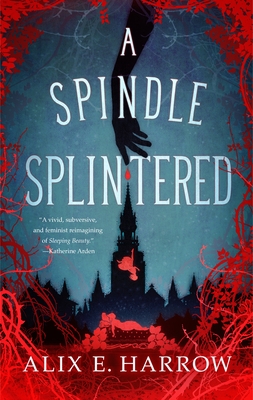
Audiobook: A Spindle Splintered

by Alix Harrow
Read by Amy Landon
Support your local independent booktore: buy it there!
Or listen at Libro.fm
Content: There is some mild drug use (marijuana) and a few f-bombs. It’s in the Science Fiction/Fantasy section of the bookstore.

Zinnia Gray is dying. She has known her whole life that she won’t live long past her 21st birthday, so as it arrives, she figures she is doomed. Her best friend, Charm, throws a Sleeping Beauty-themed party in a tower for Zinnia’s birthday. But a rip in the continuum opens up and Zinnia finds herself in the actual Sleeping Beauty story. Or at least one version of it. The princess’s name is Primrose, and Zinnia has disrupted the curse. Together they need to figure out how to break the curse and get Zinnia back to her world.

It sounds like a pretty basic fairy tale retelling, but I did appreciate Harrow slightly subverting it. Primrose is gay, which is why she doesn’t want to marry the boorish prince. The Wicked fairy is.. .not. The tale and everyone’s impending death/sleep can’t be changed. And yet, Harrow keeps the reader pulled in and intrigued in the story. It helps that Landon is a fabulous narrator, keeping me intrigued. It also helps that it’s a short read: only 4 hours– so I didn’t feel like Harrow padded the book with anything but the bare necessities.

All this to say that it was a delightful diversion, and an enjoyable listen.

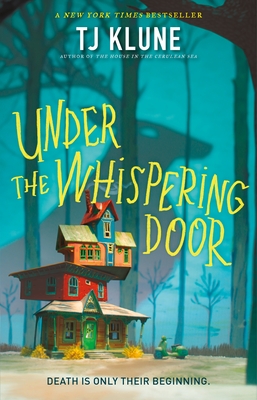
Under the Whispering Door

by T. J. Klune
First sentence: “Patricia was crying.”
Support your local independent bookstore: Buy it there!
Content: There is some mild swearing and talk of death. It’s in the Science Fiction/Fantasy section of the bookstore.

Wallace is a partner in his own law firm, successful, powerful, demanding. He is not well-liked, but that doesn’t bother him. He is determined to milk the most out of his employees and works twice as hard as he demands they do. And yet, one weekend, he finds himself strangely outside his body. That’s odd, but what is even odder is when he finds himself at his own funeral, and the only person who can see him is a woman who calls herself his Reaper. That sets Wallace on a very interesting path as he lands at Charon’s Crossing Tea and Pastries with Mei, the Reapers, and Hugo, the ferryman. Wallace sets about trying to figure out his (after)life, and learning how to live and love better than he did when he was alive.

Oh, my heart. I picked this one up when it came out in October and I have been just waiting to have a chance to sit and savor it. And it was just as wonderful — heartfelt, funny, poignant, bittersweet — as I was hoping it would be. Seriously: if you haven’t given Klune’s books a try, do. His storytelling is incredibly affirming, and you can’t help but be happier having read them. I loved his vision of the Afterlife, of what it means to come to grips with your life and death, and just the overall love and care he put into this story.

I will most definitely be reading everything he writes from here on out.

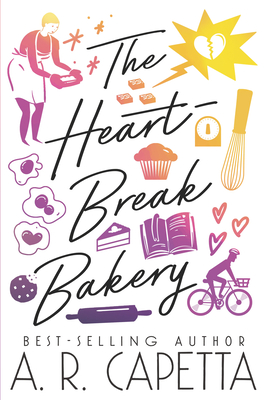
The Heartbreak Bakery

by A. R. Capetta
First sentence: “The splintered crack of my egg of the counter sounds like an ending.”
Support your local independent bookstore: buy it there!
Content: There is talk of sex, and a couple of f-bombs with some mild swearing It’s in the YA section (grades 6-8) of the bookstore.

This book hits all my buttons: it’s a book about food and baking — Syd our main character, loves to bake as self-expression; it’s a book about Austin (which I really do love to visit); it’s a book about friendships and finding love; it’s a book that truly embraces the entire rainbow of LGBTQIAP+ life and culture.

The plot is simple: Syd goes through a bad breakup, and bakes heartbreak into brownies, which get sold at the bakery, and which cause everyone who eats them to break up. Syd, feeling guilty and miserable — the owners of the Proud Muffin bakery where Syd works are one of the couples — sets about with Harley, the delivery person at the bakery, setting things right. There are lessons Learned and Love along the way, along with a smattering of magical baked goods.

Syd doesn’t have pronouns, and identifies as agender, which to be honest, has made writing this really difficult. One doesn’t consider how much pronouns are a part of life until one tries to write a review not using them.

But the book is still cute and light and frothy, following the paces of a foody romance, with an LGBT+ spin. I did like that this one felt Queer in incredibly inclusive ways (I think the only cis/het characters were Syd’s parents); I felt like (as an outsider) that the whole rainbow was represented. As a baker, I love the idea of magical baking, and some of the recipes Capetta includes sound amazing.

I don’t think tis is going to be my favorite book this year, but I am so happy that a book like this exists in the world.

Bingo Love Volume 1: Jackpot Edition

by Tee Franklin, Jenn St-Onge, Joy San, and Cardinal Rae
Support your local independent bookstore: buy it there!
Content: There is some mention of sex. It’s in the Graphic Novel section in the bookstore.

It’s the 1960s, and Hazel has met and fallen in love with (over the course of four years) Mari. The problem, it’s the 1960s, and being a Black lesbian isn’t the most accepted thing. So Mari and Hazel break up, go their separate ways. And marry men, have children and grandchildren. But 50 years later, when Mari shows up back in Hazel’s life, they both realize that being true to who they really are is the choice they need to make. They get divorced from their husbands — their families aren’t terribly happy about that — and end up marrying each other, living out their days together.

I really appreciated a positive portrayal of Black lesbians. I appreciated the historical aspect of this: LGBTQ+ people have never had an easy time being out in public, and this was especially true in the past. I appreciated the positive portrayal of someone who was overweight her weight was never an issue, and it was something that contributed to making her beautiful.

I just didn’t particularly like the story. Perhaps it’s because I’m cis/het, but the whole story fell kind of flat for me. Let’s just say I wanted to like thi one more than I actually did.

Cinderella is Dead

by Kalynn Bayron
First sentence: “Cinderella has been dead for two hundred years.”
Support your local independent bookstore: buy it there!
Content: There are illusions to domestic abuse. It’s in the YA section (grades 6-8) of the bookstore.

In the kingdom of Lille, the story of Cinderella is not just a fairy tale, it’s fact. It’s the book by which every young woman is to live their life. Serve their family. Prepare for the ball, which happens every fall, where they are to be Chosen by one of the eligible men in the kingdom, and then live out their lives happily ever after. There are problems with this, of course: there are rules — curfews, limits on autonomy — that work to keep women and girls in line. Our main character, Sophia, isn’t interested in being chosen — she’s in love with another girl, which is strictly forbidden — and doesn’t want any part of the ball. Unfortunately, that’s not allowed. But, at the ball, she can’t take any more, so she runs off — which is a crime. She hides out in the woods, finds Cinderella’s mausoleum, and meets one of Cinderella’s only living descendants, and discovers the story that everyone in Lille is told is actually built upon a lie.

On the one hand, I’m always down for a new telling of a fairy tale. I adore retellings, and this one does have a unique spin. I liked that Sophia, in the end, was able to begin to fix the country — with help of course — and find her own version of happiness. What didn’t sit right with me was the way she got there. I didn’t like that all the men (except for the gay one) were complete assholes on one level or another. I get that you’re drilling down the misogynistic rules, but “not all men”? It sounds bad saying that, but that’s what I felt reading it. I also felt like Bayron felt she needed to have Sophia be gay because to have her in a hetero relationship would be Bad for the Message. (I just didn’t feel like this book was Queer in the way books written by LGBTQ+ authors are.) It’s not a bad book, but in the end, I didn’t love it.

Starfish

by Lisa Fipps
First sentence: “I step down into the pool.”
Support your local independent bookstore: buy it there!
Content: It’s in verse, so good for reluctant readers. Though her mother is… not great.. which may be triggering for some. It’s in the Middle Grade section (grades 3-5) of the bookstore.

This is a book about Ellie. Ellie, who has been called “splash” since her 5th birthday party, when her older sister christened her that, after a huge cannonball into the pool. Ellie, who is bullied mercilessly at school by, well, pretty much everyone. Ellie, whose mother is constantly nagging Ellie about what she eats, how much she weighs, and lamenting that Ellie’s life would be better if she was just, well thinner.

This is a book about Ellie learning — through the help of a therapist (yay!) — that she has worth as a human being, no matter what she weighs; that she can stand up for herself at school and to her mom; and that true friends will have your back always.

Oh my heart, I loved this book. I loved Fipps poetry, the way she made Ellie three-dimensional as a character, though everyone else from teachers and kids at school to her siblings and mom (except her dad; there’s probably a whole essay on why it was her mom that was always picking on her weight and not her dad) kept trying to define her by how she looked. It says so much about society that we can’t see fat people as anything but “fat”, and not as people, and I think Fipps hits upon that. It’s always age appropriate — Ellie is in 7th grade, and she feels like a 7th grader — but Fipps is dealing with bullying, self-acceptance and self-love, and confidence no matter what “people” say about you.

It’s an incredibly rewarding book, which I thoroughly loved.

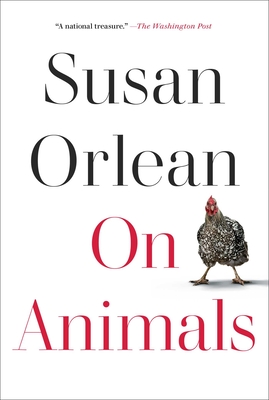
Audiobook: On Animals

by Susan Orlean
Read by the author
Support your local independent bookstore: buy it there!
Or listen at Libro.fm
Content: There’s nothing objectionable, except maybe some animal violence. It’s in the Science section of the bookstore and is probably good for anyone who loves animals.

I think it’s pretty well-accepted that Orlean is a fabulous non-fiction writer. And so an entire book filled with essays on different animals? Sign me up. She covers a whole range of animals from her adventures in chicken raising to her fascination with donkeys as well as other animals: lions, pigeons, mules, pandas, orca whales.

I learned so much about animals, some of which I knew but much of which I didn’t. Orlean has a dry sense of humor and some of the stories — there’s one about her picking a chicken to go on Marth Stewart as well as the story about her homicidal rooster, Laura — just cracked me up listening. She’s a good narrator, sounding just like I thought someone who has spent much time writing and researching non-fiction subjects (my first exposure to her was The Orchid Thief, which is just amazing) would sound. She takes her subjects seriously, but it doesn’t feel weighty.

An excellent book, highly recommended on audio.