(A Few More than) 10 Questions forJames Kennedy

I guess one of the ways I can shake my blogging slump is to start something new, right? Hence, a monthly feature “10 Questions for…” and, because he’s just a great guy, my first guinea pig is The Order of the Odd-Fish author, James Kennedy.

I could blather about how I adored the book, or how I find his blog posts incredibly entertaining (like this one, or this one, which you should really check out because it’s got great pictures of his adorable newborn daughter), but I think I’ll just let you read his long and entertaining answers to my meandering questions.

MF: So, this is your first published novel. (I’m assuming, at least, since there were no others listed on the jacket flap…) Congrats! Can you tell us a bit about the process? How long did it take, how difficult was it, etc…

JK: How I wish I could say that I wrote The Order of Odd-Fish on a idle Saturday afternoon between cocktails, whereupon the manuscript was immediately whisked away by snow-white herons and dropped into the diamond mouth of Random House.

But the humiliating truth is, it took a stupidly long time. The process was piecemeal and convoluted. And even once it was finished, nobody wanted it! I got rejected by over a hundred agents. Each agent was carefully noted in the bitterest Excel spreadsheet ever.

It started as a short story I wrote in 1995 called “The Cockroach and the Music-Box.” That short story has almost nothing in common with what finally became The Order of Odd-Fish, but it served as a kind of scaffolding for it. Over the years I’d occasionally haul it out and add new characters, subplots, and stories-within-stories. After a couple years, the original story had bloated into a mammoth, creaky, unholy mess. I didn’t even like it anymore.

But I did like all the digressions and sidetracks I’d added. So I threw away the original story and decided to write a book that would feature all my digressions.

I mostly wrote Odd-Fish in fits and starts. Months or even years would go by when I wouldn’t look at it at all, because I was busy with too many other things—teaching junior high school science, living in Japan, trying to write other books, making a short movie with my friends, working as a computer programmer, trying to play in bands, trying improv comedy.

In the end, it was an appropriate way to write this particular book. The sacred mission of the knights of the Odd-Fish, after all, is to muddle about in pointless, unprofitable disciplines, and that’s what The Order of Odd-Fish is: all my failed ideas, blind alleys, and curdled ambitions, thrown in a pot and then boiled, until a new story rose out of the muck, placed its slimy paws on the rim of the pot, and howled at me until I did right by it.

MF: A hundred rejections? Wow. (That’s why I’m not a writer. Can’t handle the rejection!) I’m impressed you stuck with it. So, my 12 year old wants to know: who was your inspiration for Jo?

JK: One of my best friends in high school was an awesome girl named Karey Hansen. She had a wry, matter-of-fact humor that I really admired. She was surrounded by strange and fascinating people, but Karey herself was refreshingly practical and clear-eyed. She had good taste in books. She introduced me to good music. She handled the absurdities and indignities of high school better than anyone else I knew. I particularly liked her sly, ironic way of verbally cutting people down to size, sometimes even without them knowing it. Jo is her own character, but there’s lots of Karey Hansen in her.


MF: How about for the other characters? (My personal favorite is Sefino, in case you were interested.)

JK: Sefino appeared in the original short story. The idea came when I was in my dorm room at college and a cockroach crawled out of my sink drain. I killed the cockroach immediately, but then I felt bad about it, so I included a cockroach in the story as a kind of penance.

In that story, Jo befriended this cockroach, which had no name. Since cockroaches scavenge things from humans, and since Jo wasn’t using the “sephine” of her name “Josephine,” she let the cockroach scavenge it. The cockroach added an “o” to “sephine” to make “Sefino.” As the main story changed, that little vignette didn’t work anymore, but the name remained.

As for Sefino’s personality: I was reading a lot of Evelyn Waugh at the time, which made me want to try to write a fey, foppish, blithely self-entitled, yet somehow charming-in-his-selfishness character.


MF: And you succeeded, I think, with that. While we’re talking about inspirations, I was struck with the eccentricities you built into Eldritch City. Can you tell us about the inspiration for it?

JK: While I was writing Odd-Fish, one catchphrase that kept going through my head was “urban Narnia.” The Narnia books have many bucolic nature scenes, a lot of rambles in the woods, and Narnia’s denizens are talking forest animals. I wanted to do something similar, but in a city.

So what are the corresponding denizens in a city? Cockroaches, centipedes, beetles. I put them in. What are the corresponding adventures in a city? Getting lost in a dangerous neighborhood; a wild night out; the spectacle of a city-wide festival; exploring the underground sewers; getting in trouble with the law; organized crime, bureaucracy, tabloid media, colorful public markets, crowds, riots, dense social networks. I put it all in.

Eldritch City also comes from my experience of living in Japan and traveling around India. I wanted Eldritch City to be aggressively foreign, a place with long-established rituals and bafflingly complex culture, but still welcoming. I wanted Jo to feel both alienated and strangely at home, which is often how I felt when I lived in Japan.


MF: And I can see all that in there. I do like the idea of an urban Narnia. How about the inspiration for the Order of the Odd-Fish? It’s not often that you have a society devoted to being utterly pointless….

JK: The Order of Odd-Fish developed from something a professor said to me when I was studying physics in college. I was researching a paper for his class on the philosophy of space and time, but I got sidetracked by a treasure trove of crackpot science in the university library, books written by contentious engineers or dogged amateurs that sought to “debunk” relativity theory or quantum mechanics on dubious philosophical or theological grounds.


I loved the querulous, desperate, paranoid, yet boundlessly confident tone of these mostly self-published books. I gorged on them until my professor gently advised me to stop, saying something like, “When you’re a millionaire, by all means take up the hobby of collecting cranks’ monographs, but for now, stick to learning the material, and not the half-baked refutations of it.” This stuck with me, and over time it developed into the idea of the Order of Odd-Fish—a society of scholars bent on studying the half-baked exclusively: things like lost causes, irregular contraptions, unusual smells, improbable botany, discredited metaphysics, absurd animals, unlikely musical instruments, ludicrous weaponry, and the art of dithering.


Once I had this idea established, it was fun to make up specific instances of what the knights study, like the Apology Gun (from the specialty of ludicrous weaponry) or the urk-ack (a combination of the specialties of absurd animals and unlikely musical instruments: the urk-ack is a living musical instrument, an animal one “plays” by climbing inside and manipulating its forty-one orifices).


MF: I knew physics was useful for something! How about the All-Devouring Mother? She’s a very dark and vicious bit of mythology. Where did she come from?

JK: Jo is a female hero, so I wanted the villain to be female too. In Star Wars, the villain is Darth Vader, who is a “dark father.” I wondered, what’s a corresponding female evil, a kind of “dark mother”?

I thought about Kali, the Hindu goddess associated with death and destruction; I thought about how some mother animals, like rats, sometimes eat their young; I thought about the mother alien in the movie Aliens. I mixed this up with the idea of apocalyptic religions, and out of this came the idea of a goddess who is the ultimate mouth, a hungry demon who threatens to gobble up the universe. That’s why the theme of digestion, of eating, of getting absorbed runs throughout the book.

I like stories in which the hero has a special intimacy with the villain. The All-Devouring Mother isn’t something outside of Jo that she fights against; she secretly is the All-Devouring Mother, and she must find a way to stop the terrible prophecies about her before they come true. When Jo learns her true nature, she loses everything—even her status as a “hero.” She isn’t the savior of Eldritch City, but the monster that Eldritch City must be protected against.

MF: I agree: some of the best books are the ones where the hero and the villain are intimately connected. I also felt that the All-Devouring Mother added to the surrealness of the book, which I loved. I felt (and it may have been because I had just reread The Hitchhiker’s Guide to the Galaxy) that it had a very Douglas Adams feel to it: funny, weird, unusual, unlike anything else (hard to categorize!). Is that what you were aiming for when you began writing, or did it just evolve that way?
JK: I definitely wanted to write like Douglas Adams! I vividly remember the first time I encountered Hitchhiker’s in sixth grade. I loved the density of his humor. Every page felt crammed with ideas. Some of his jokes, such as how the improbability drive was invented, are as clever as a mathematical proof. I snuck a couple oblique references to Hitchhiker’s into Odd-Fish, but I’m probably the only one who notices them.

Hitchhiker’s had a freewheeling, open-ended vibe that really appealed to me. I wanted Odd-Fish to have a similarly messy, jazzy, improvisational feel.


MF: Dang. Now I feel like I need to re-read Odd Fish and look for the Hitchhiker references… Any other specific writing influences?

JK: I like Evelyn Waugh and G. K. Chesterton, especially The Man Who Was Thursday. Some other books that directly influenced Odd-Fish are The Last Hurrah by Edwin O’Connor and A Confederacy of Dunces by John Kennedy Toole. Anything by Roald Dahl. And the Ken Kiang subplot of Odd-Fish is a takeoff on Au Rebours by J. K. Huysmans.

The writer who truly freed me, though, was J.K. Rowling. I’d been hacking away for a while at Odd-Fish when I first read Harry Potter, and it helped me a lot. I had been stuck the trap of trying to keep Odd-Fish simple and short, because I thought the genre demanded it. But J.K. Rowling showed that you can succeed at writing long, sophisticated, socially complicated YA stories. She opened the way for that kind of story in YA.

It was necessary, because modern YA audiences are more savvy than previous generations. Only recently has there been so much culture aimed specifically at children. This generation has been marinating in thousands of stories from a very early age, and so they’re much smarter, more impatient with cliché, and more comfortable with complexity than previous generations. Rowling was one of the first YA authors to trust the audience, not to dumb her story down. Philip Pullman is another.


MF: I totally agree about how Rowling (and Pullman, as well as others) have changed the face of YA literature; there’s so much more and much of it is so much better than the books I remember as a kid. I know it’s hard to choose, but do you have a favorite character or scene from the book?

JK: My favorite character to write was Ken Kiang. He’s an idle, enervated Chinese millionaire who is kind of the ultimate connoisseur, someone who has seen everything and done everything. Ken Kiang decides, on a whim, to become evil; the trouble is, he’s not very good at it. His story is the reverse of Jo’s. She is born with this terrible evil in her, but she’s trying to overcome it. Ken Kiang wants to be evil, but he’s so feckless and ludicrous, he can’t manage it.

I’m afraid I must admit that Ken Kiang is the character in The Order of Odd-Fish who is most like me. He’s kind of pretentious, yet naïve in many ways.


MF: Does that mean you’re secretly evil? As an aside: did you always intend to write for a YA audience, or did you just write the book and let the publishers decide?

JK: I did intend for the book to be marketed as YA. That said, it wasn’t written exclusively for a YA audience. These days people of all ages read YA fantasy like Harry Potter or The Golden Compass. I think these kinds of books have become popular because we miss cultural unanimity, something that people of all ages can understand and enjoy and talk to each other about.

I certainly don’t think YA is more lightweight than “adult” fiction. In fact, there’s certain depths a writer can plumb in YA, certain freedoms one can exploit, that are unavailable in conventional literary fiction. I’ll go even further and say that I’ve read quite a few books that pass themselves off as “adult literary fiction” that are much more juvenile, in the pejorative sense, than what I see in the YA section. A lot of what calls itself realistic fiction bears no resemblance to any reality I know. “Realism,” as a literary convention, can be much more fantastical than anything in YA fantasy.


MF: I agree: I’ve been saying for years that the best writing is in YA. The first exposure I had to your writing was a “true history” of a fan, Kevin Bucklew, who showed up at the Midwinter ALA wearing an enormous fish hat. What do you think of fans like Kevin Bucklew (or fans in general)?

JK: What do I think of fans? They’re delightful. I wish I had more of them. I cherish the ones I do have. Let there be a hundred Kevin Buckelews, a thousand Kevin Buckelews. Every home should have its own Kevin Buckelew. Let Buckelew be Buckelew!

I learned a valuable lesson from Philip Pullman about communicating with fans. Back when The Amber Spyglass came out in 2000, I went to see him at a bookstore in suburban Chicago, and afterward we traded some emails. The astonishing thing about Philip Pullman was, he always replied super-quickly—like, within the hour. And not single-line emails, but relatively long ones. I was impressed that he took the time to do that. Actually, he always replied so promptly that I soon ran out of things to say to him. Eventually I stopped emailing him, precisely because he was so courteous and prompt. I was intimidated by how generous and accessible he was. Does that make any sense? Anyway, my point is, if a reader takes the time to write to me, then I want to make them feel as special as Philip Pullman made me feel. Although I probably can’t beat his speed.


JK: It is always nice when authors can take the time to acknowledge a reader’s enjoyment in his work. So, what inspired you to write the “factual” account like you did? Or, better yet, how did you feel being at the ALA?

MF: I actually didn’t attend the ALA conference in Denver. I did read about it online, and that’s how I heard of Kevin Buckelew. I was able to get a picture of him (and his three-foot-tall red-and-white fish hat) through a friend of my sister-in-law who had attended the conference.

But as it happens, I got a crucial fact wrong. In my story I wrote that the President of the ALA (whom I represented as a “twenty-foot-tall, vulture-like, twelve-armed lizard”) was Loriene Roy. A couple weeks later I got an email from a man named Jim Rettig, who claimed that Loriene Roy’s term had actually ran out six months ago, and that he was the current sitting president of the ALA. (He said he couldn’t decide whether he was pleased or miffed that I had made this mistake.)

I took this Jim Rettig at his word. But then I started asking around to other librarians, and do you know what? Nobody’s ever heard of him! I suspect Jim Rettig is the only one in the world who “knows” he’s the President of the ALA.

The librarians who have met Jim Rettig just humor him. It’s actually rather cute: he made some ALA business cards, he even has an ALA blog, and he wanders from library to library. “Just checking in,” he booms genially. “Everything had better be up to snuff!” he chuckles, and the librarians just play along with it—they tolerate him the way you might a stray dog; he’s almost a kind of mascot —anyway, the librarians give Jim Rettig a shave and a hot meal and send him on his way. It’s touching, when you think about it, maybe even inspiring. Jim Rettig as the last American cowboy. A ragged, wandering minstrel, tramping that open road, a nickel in his pocket and a song in his heart. I guess we all wish we could be Jim Rettig, but then again, we grow up.


MF: That’s awesome. I’ll have to check out the link. Speaking of blogs, how long have you been blogging and what do you get out of blogging (if anything)?

JK: I’ve been blogging since right around The Order of Odd-Fish came out in the summer of 2008. I started the blog against my will, because my agent and editor told me it was a good idea, but over time I’ve come to enjoy it.

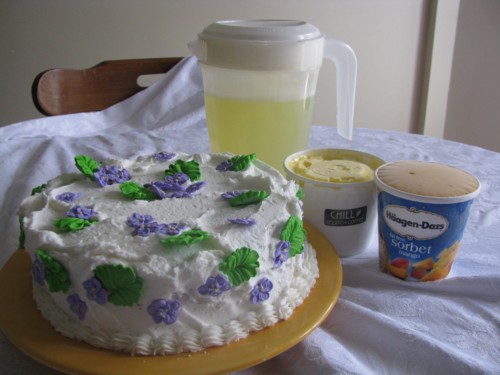
It does take up valuable writing time, but it’s worth it because it gives me a way to be in touch with readers. Being in touch with readers also gives me a chance to see their Odd-Fish fan art, which I love. Some have done drawings based on Odd-Fish, such as Fiona and Jo in their costume armor or Colonel Korsakov and some squires hunting the Schwenk. One girl wrote a poem about the struggle between Jo and the All-Devouring Mother. A woman in Gainesville baked a cake of a fish vomiting the Odd-Fish lodge into Eldritch City. And another fan said she was working on an Ichthala mask. I can’t wait to see it. And through the blog, I can share this stuff with everyone.


MF: Speaking of odd things that have to do with your book, I love the idea of making a playlist for your book. How did you go about choosing the songs?

JK: I approached the playlist as if I were putting together a soundtrack for a theoretical Order of Odd-Fish movie. I’ve always been interested in music—I was a radio DJ in college, I’ve dithered in various musical projects, and nowadays I play bass in a band called Brilliant Pebbles—so it was fun to scour my library for songs that were appropriate for Odd-Fish. I put on French ye-ye, a punk marching band, Bollywood soundtrack music, puzzling blippity-boop stuff, and much more. I also got invaluable help from my friend Philip, who’s much more knowledgeable about music than I.


MF: Totally off topic: are there five books you think everyone should read?

JK: I don’t think I’ll be able to answer that. Instead, how about some books that I love that, as far as I can tell, don’t get enough attention?

For instance, I don’t understand how Edwin O’Connor’s The Last Hurrah is out of print. G. K. Chesterton’s The Club of Queer Trades is not read by nearly enough people. Angela Carter’s The Infernal Desire Machines of Doctor Hoffman is satisfyingly insane. Yukio Mishima’s Sea of Fertility tetralogy is great. The Diary of a Nobody by George and Weedon Grossmith is hilarious. Seven Men by Max Beerbohm is very funny, too. Almost anything by J.F. Powers. The Glass Bees by Ernst Junger.


MF: And I haven’t read a single one. Shame on me. What can we expect from you next, if you don’t mind telling us?

JK: I’m working on a science-fiction comedy called The Magnificent Moots. It’s slow going because I’ve been working full-time and I have a baby on the way. I usually describe it as The Hitchhiker’s Guide to the Galaxy meets A Wrinkle in Time meets Ender’s Game meets The Royal Tennenbaums, along with “Battle of the Network Stars.” I don’t know what else I can say about it without giving it away!


MF: I’m definitely looking forward to that! Thanks, James, for your time.

JK: Thanks for the great questions!

Geeky Guilty Pleasures

This week’s geek is all about pleasures:

So. Weekly Geeks, we’re going into the confessional this week.

What’s your non-reading guilty pleasure?
Trashy TV?
Trashier movies?
Junk food?

Share with the group. 🙂

And I have to ask: is it a guilty pleasure if everyone knows about it?

I’m cheating this week, and just posting a link to a previous post, since my guilty pleasure can be pretty much summed up as follows: dark-haired British men in period clothing. Click through to read more. Or not.

This also made me think about a series of clips Hubby found on You Tube of Stephen Fry (of Fry&Laurie and Jeeves and Wooster fame) talking about his guilty pleasures. Here’s the first in the series, but they’re all worth watching.

And, since we’re being confessional: what’s your guilty pleasure?

May Jacket-Flap-a-thon

Summer.

Our air conditioning is on the fritz, and while it’s okay in the house in the morning through mid-afternoon, by evening, we’re dying and retreat to the basement. We must get this fixed… because if it’s this hot at the end of May, who knows how hot it will be in a month!

Hope you’re staying (relatively) cool… On to this month’s books:

The Wee Free Men (HarperTempest): “There’s trouble on the Aching farm: monsters in the river, headless horsemen in the lane — and Tiffany Aching’s little brother has been stolen by the Queen of Fairies. Getting him back will require all of Tiffany’s strenght and determination (as well as a sturdy skillet) and the help of the rowdy clan of fightin’, stealin’, tiny blue-skinned pictisies known as the Wee Free Men!”

I’m sorry. I know this book is hard to describe and write a blurb about, but they didn’t even really try. It’s part of the reason why I took so long to actually read the book.

Doc Wilde and The Frogs of Doom (G.P. Putnam Sons): “To the world at large, the Wilde family is an amazing team of golden skinned adventurers, born to daring escapades and globetrotting excitement! Doctor Spartacus Wilde, world class scientist and inventor, physical exemplar, ultimate warrior, and loving dad! Brian and Wren Wilde, the worlds most swashbuckling kids, able to survive the most perilous situations through quick wits and the intensive training and astonishing gadgets that are their birthright! Aided by their dashing majordomo Phineas Bartlett and their loyal driver and pilot Declan mac Coul, the Wildes crisscross the Earth on a constant quest for new knowledge, incredible thrills, and good old fashioned adventure! The Frogs of Doom… “

Campy and fun and over the top. Just like the book.


The Year the Swallows Came Early (The Bowen Press): “Eleanor “Groovy” Robinson loves cooking and plans to go to culinary school just as soon as she’s old enough. But even Groovy’s thoughtfully—planned menus won’t fix the things that start to go wrong the year she turns eleven—suddenly, her father is in jail, her best friend’s long-absent mother reappears, and the swallows that make their annual migration to her hometown arrive surprisingly early. As Groovy begins to expect the unexpected, she learns about the importance of forgiveness, understands the complex stories of the people around her, and realizes that even an earthquake can’t get in the way of a family that needs to come together. Kathryn Fitzmaurice’s lovely debut novel is distinctively Californian in its flavor. Her rich characters and strong sense of place feel both familiar and fresh at first meeting—and worth revisiting, again and again.”

One of the better examples of a blurb that gives you the basic arc of the story without giving anything away. Perfect.

The Actor and the Housewife (Bloomsbury): “A very different kind of fantasy from New York Times bestselling author Shannon Hale. What if you were to meet the number-one person on your laminated list–you know, that list you joke about with your significant other about which five celebrities you’d be allowed to run off with if ever given the chance? And of course since it’ll never happen it doesn’t matter… Mormon housewife Becky Jack is seven months pregnant with her fourth child when she meets celebrity hearththrob Felix Callahan. Twelve hours, one elevator ride, and one alcohol-free dinner later, something has happened…though nothing has happened. It isn’t sexual. It isn’t even quite love. But a month later Felix shows up in Salt Lake City to visit and before they know what’s hit them, Felix and Becky are best friends. Really. Becky’s husband is pretty cool about it. Her children roll their eyes. Her neighbors gossip endlessly. But Felix and Becky have something special…something unusual, something completely impossible to sustain. Or is it? A magical story, The Actor and the Housewife explores what could happen when your not-so-secret celebrity crush walks right into real life and changes everything.”

And this one is just here because I really like the book. 🙂

Other books read this month:
Extras
The Screwtape Letters
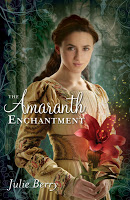
The Amaranth Enchantment
The Lucky Ones
The Woman in White
Babymouse: The Musical
Life Sucks
The Good Neighbors

The Ordinary Princess
Ranger’s Apprentice: The Burning Bridge
The Last Olympian
The 19th Wife: A Novel
Devilish

Book to Movie Friday: Nim’s Island

It’s officially summer here; yesterday was the last day of school. And to celebrate, I thought I’d put up a summerish book-to-movie post, since around here at least, movies are part of what summer is all about.

Having read the book a short while before I watched the movie, I have to say that I had no real allegiances to it in particular. I thought that I wouldn’t care if they tweaked the story.

However, while I enjoyed the movie — Jodie Foster as Alexandra Rover was hands-down the best part — and thought it was very cute. I actually found myself annoyed at it for changing the storyline. (Usually I don’t care, so this surprised me.)

I could go through the litany of everything they did wrong (even if having the character Alex Rover be the author Alex Rover’s imaginary friend was entertaining, it was wrong. Just wrong.) but I’ll refrain. I’ll just say that they threw in so many extra things, and changed enough to make it more unlike the book than like the book. And while I understand that movies and books are not the same medium, and that when you just stick a book on the screen it doesn’t work (Harry Potter movies 1-4, for example; 1 being the worst), I still was not quite happy with the changes they made. It made the story lose some of its care-free quality, it’s innocence. And I missed that.

Verdict: the movie’s very cute, but the book’s better.

Library Loot #20

I put about a dozen books on hold that will be in next week. Plus the girls are out of school. I hope I’m ready for summer…. (You should see my pile for the 48 hour Reading Challenge; I’ll put it up before the challenge starts next week.)

For A/K:
I decided that since summer is coming on, and it’s a challenge getting the new books — they’re usually gone — that what I’d do is have one of the girls pick a letter and get random books from that section. Today’s letter is S (with a couple others thrown in). 🙂
Dinosaur vs. Bedtime, by Bob Shea**
The Frog Prince, Continued, by Jon Scieska/Illus. by Steve Johnson
Pete’s a Pizza, by William Steig**
Cowboy Ned & Andy, by David Ezra Stein
Daisy and the Beastie, by Jane Simmons
Little Beauty, by Anthony Browne
Edwina, The Dinosaur Who Didn’t Know She Was Extinct, by Mo Willems (Requisite Mo Book)**
A Day at the Beach (Requisite Dora Book)

For C:
Phineas L. MacGuire . . . Blasts Off! (From the Highly Scientific Notebooks of Phineas L. Macguire), by Frances O’Roark Dowell
Coraline, by Neil Gaiman
(Both of these are an experiment to see if we can find something else for her to read, especially now that she’s finished the Gregor the Overlander and Percy Jackson series…)

For M:
Nation, by Terry Pratchett (thought Hubby might want to read this, too)*
Trickster’s Choice (Daughter of the Lioness, Book 1), by Tamora Pierce
Trickster’s Queen (Aliane), by Tamora Pierce (I seem to recall that she’s read these before, but I’m not sure. And it doesn’t cost anything to check books out!)
Storyteller, by Edward Myers
Bloodhound: The Legend of Beka Cooper #2, by Tamora Pierce. (I put the first one on hold, and will pick it up next week. I figured I’d better get the second one just in case it’s not there next time!)

For me:
Manga Shakespeare: The Tempest, Illustrated by Paul Duffield*

The roundup is either at Out of the Blue or A Striped Armchair.

*Ones that M eventually read.
**Picture books we really liked.

The Year the Swallows Came Early

by Kathryn Fitzmaurice
ages: 10+
First sentence: “We lived in a perfect stucco house, just off the sparkly Pacific, with a lime tree in the backyard and pink and yellow roses gone wild around a picket fence.”

I started wondering if I went back and looked through my posts, how many would start like this:

[Blank — this time it was Becky and Natasha] highly recommended this/loved it, and I thought it sounded good/interesting/intriguing/worth my time, and so when it showed up at the library/I found it/pulled it off my pile, I found that I really liked/loved/thought it was good, too.

And then I go on to summarize the book [essentially: a girl, Eleanor “Groovy” Robinson, whose father ends up in jail the summer she turns eleven, learns to forgive] and say what I thought about the book [very sweet, very cute, and I loved the asides, how all the expressions were given “verbalizations”, her friendships, and Groovy’s journey through sadness, anger and finally acceptance of her father again, as well as all the food — the strawberries, the tacos espeically — and the recipe at the back!]

And then I hope you read it, like it, and are interested in the book.

When, really, what I’d like to do sometimes, is this: Becky loved it. Natasha loved it. Take their words for what they’re worth: it’s a great book.

The Actor and the Housewife

by Shannon Hale
ages: adult
First sentence: “Becky was seven months pregnant when she met Felix Callahan.”
Release date: June 9, 2009
ARC sent to me by the publisher.

Becky is your normal, average, run-of-the mill, Mormon mother of (almost) four (she’s pregnant with her fourth when the book opens). She doesn’t work, instead focusing most of her energies on running her house and taking care of her kids and husband. She does dabble in screenwriting, and sends one off to a publishing house on a whim, not expecting much of anything. To her surprise, an agent asks to meet with her; she flies out to LA, and it’s at this meeting that her future changes: she meets, accidentally, Hollywood heart-throb Felix Callahan. When she and Felix discover they’re staying at the same hotel, and he offers to buy her dinner, Becky figures it’s a once-in-a-lifetime, never-to-be-repeated experience (and will make a great story); besides, what do a Mormon mom and a British actor have in common, anyway?

Turns out that they the have formed a bond — purely platonic, of course — that keeps them connected through thick and thin. Over the course of eleven years, through good times as well as bad, Becky and Felix keep their friendship strong, and find the rewards that come from having a best friend.
Only in Hale’s adept storytelling hands can something this far-fetched become a poignant story of a Mormon woman, who in the face of a fairly prohibitive religious community (where men and women don’t usually form friendships outside of marriage) happens to have an unconventional friendship, with not only a man, but someone who is outside of the community and faith. The story becomes not one about friendship — there’s really not much given as a basis for Felix and Becky’s friendship; it’s just stipulated by Hale that they are — as it is a story about Becky, and how her friendship with Felix affects her life. There’s laughs (at least for me; Hale happens to have a sense of humor that I appreciate), there’s tears (lots and lots), there’s uncomfortable moments (especially for me, as a Mormon) as well as moments of true joy. Hale has a fascinating story here, and she knows how to milk it for all that it’s worth.
That said, I’m not sure that this book will be for everyone. It’s a very Mormon book, in the way Chaiam Potok’s are Jewish: Becky is Mormon, it permeates her life, her thinking, her being. It’s who she is. And while Hale does explain elements of the religion and culture, someone who is not familiar with it has the potential to be hanging at loose ends, wondering why this character would even begin to think this way. On the other hand, it’s not a conventional Mormon book; she doesn’t pander to traditional Mormon literature conventions, something which I greatly apprecaited. I liked Hale’s portrayal of Mormonism; she treats the religion and culture with love and good-humored ribbing. But, for a Mormon reader, who’s expecting the story to go in particular ways (it’s a book by a Mormon author with a Mormon main character, after all), they might be sorely disappointed.
Then again, it’s not a conventional chick-lit book, even though that’s the way Bloomsbury is marketing it. For one, it’s a very married book; more important than her relationship with Felix is her relationship with her husband, Mike. I liked her portrayal of them as a married couple: it’s a healthy, giving, committed relationship, one in which both partners feel loved, respected and valued. There’s very little romance, in the traditional chick-lit sense. And the ending, for better or for worse, is not a conventional ending (in any sense). I was surprised with the direction Hale took the story, but, in the end, very gratified.
I have to say, overall I adored it. I laughed, I cried, I fantasized, and it touched a place within me that I don’t often like to look at. I wondered… what if? But, then I put the book down, and looked out at my four girls playing outside with my dear husband, and was grateful for what I’ve got. And, perhaps, that’s all that Hale really wanted to do with this story.

The 19th Wife

by David Ebershoff
ages: adult
First sentence: “In the one year since I renounced my Mormon faith, and set out to tell the nation the truth about American polygamy, many people have wondered why I ever agreed to become a plural wife.”

Three bloggers, whose opinions I respect and who are all members of my church, have read and reviewed this book. Two had positive reactions to it; the other didn’t. Needless to say, it made me curious, and when Lisa Munley of TLC Tours offered me the chance to be a part of another tour of The 19th Wife, I accepted.

My dad once said, when we were watching Chariots of Fire and I made some sort of comment about how amazing it was that something happened “that way”, that the movie makers were out to make a good drama. And good drama isn’t always good history.

That thought ran through my mind quite often as I read The 19th Wife.

The story is both basic and complex: it’s a historical “biography” of a real person, Ann Eliza Young, the 19th polygamous wife of Brigham Young. It’s also a murder mystery: Jordan Scott, who has been kicked out of the Firsts’ polygamous compound in Southern Utah, is drawn back to his home because his mother has been accused of killing his father. The two stories are interwoven and intertwined (in more ways than one) as the book unfolds.

The problem I had with the novel was not with its portrayal of the LDS church’s past, or its portraits of our first two prophets, its portrayal of an early form of something I hold sacred, or even its implied criticism of the church’s present stance on gay marriage. No, the thing that bothered me most was that the line between history and fiction was incredibly blurred. Chalk this up to Ebershoff being a great writer, or my being overly paranoid, but I couldn’t tell, especially in the Ann Eliza sections, where history stopped and fiction began. Which led me to wonder what Ebershoff’s motivations in writing the book were. To tell an interesting story, obviously, but what else? Why does he compare the early church to a modern polygamous cult? Is he exploring the nature of faith and belief? Or how far people will go in following an egomaniacal leader? Is he passing judgment on the LDS Church for its history with polygamy (or suppressing women), and comparing that, to a lesser degree, to its stance on gay marriage?

Am I just reading too much into this novel?

Okay, yeah, I know it’s a novel, and the job of a novel is to blur the lines between fact and fiction. But, while reading this, I also thought of the myriad of reactions to The Da Vinci Code when it first came out; a friend of mine told me to read it, because it was brilliant, because she’d never been told the truth before. I wondered if this book — for both members of our church and those who aren’t — might serve the same purpose. It’s not that we shouldn’t question our history, or that Ebershoff doesn’t have a right to rewrite it for us, but that it’s a fiction book, a story being told, and I wonder if people won’t take it as “truth”.

Which brings me to what I felt was the crux of the novel. It’s a “letter” from Ann Eliza’s son, Lorenzo Dee, to a fictional scholar, circa 1939:

Even so, history has one flaw. It is a subjective art, no less so than poetry or music. The true historian has two sources: the written record and the witness’s testimony. This is as it should be. Yet one is memory and the other is written, quite often, from memory. There is nothing to be done about this defect except acknowledge it for what it is. Yet this is your field’s Achilles’ heel. You say in your letter the historian writes truth. Forgive me, I must disagree. The historian writes a truth. The memoirist writes a truth. The novelist writes a truth. And so on. My mother, we both know, wrote a truth in The 19th Wife — a truth that corresponded to her memory and desires. It is not the truth, certainly not. But a truth, yes.

I should note that Ebershoff is coming to Wichita and will be at Watermark Books on June 9th at 7 p.m. (Hey, Bobby, can you help spread the word?) I am planning on going, not only because I was asked as part of this tour, but because now that I’ve finished the book, I’m quite curious to meet the author — and his motivations for writing this — behind this book.

For more opinions, head over to the other stops on the tour:

Monday, May 18: Hey, Lady! Whatcha Readin’?
Wednesday, May 20th: A Guy’s Moleskin Notebook
Thursday, May 21st: Becky’s Book Reviews
Tuesday, June 2nd: Biblioaddict
Thursday, June 4th: A Life in Books
Friday, June 5th: Bookgirl’s Nightstand
Monday, June 8th: Live and Let Di
Tuesday, June 9th: Ramya’s Bookshelf
Wednesday, June 10th: As Usual, I Need More Bookshelves
Thursday, June 11th: A Novel Menagerie
Monday, June 15th: The 3 R’s: Reading, ‘Riting, and Randomness
Tuesday, June 16th: The Book Faery Reviews
Wednesday, June 17th: Shelf Life
Friday, June 19th: In the Shadow of Mt. TBR

The Wee Free Men

by Terry Pratchett
ages: 12+
First sentence: “Some things start before other things.”

 Yes, I’m here in Cincinnati, enjoying the lull in the reunion (there’s an awesome uncle who make a great playmate, and the rest of us thoroughly enjoy the downtime… though they do come away really wound up)… it’s been fun being with family.
And I managed to get a bit of reading done in the cracks. In fact, it was kind of hard to get it read because I’d leave it lying around, and I’d come back and find it had been snatched up by one family member or another. Which is a testament to how fun this little novel is.
Tiffany is a nine year old girl, the daughter of sheepherder, who isn’t really noticed by much of anything, especially now that Granny Aching has died. That is, until the day when she saw a monster come out of the river. She hit the monster with a frying pan, and the path of her life was changed: she was a witch. That, and her younger brother was stolen by the Queen of Faeries. Tiffany, being the sort of girl she is, decides not to wait for help, and tackles the problem head-on… with the help of the Nac Mac Feegle, the Wee Free men.
But this book isn’t about plot, really. It’s a wonderful example of character- and world-building. The characters — from Tiffany down to the Nac Mac Feegle — are fully drawn and exciting and interesting and engaging. Which makes the book thoroughly entertaining.
I’m going to have to leave it at that… this has taken me a lot longer than I thought it would, mostly because conversation around me is more interesting than the review I’m writing. Needless to say, I’m going to read the next two in the Tiffany Aching series. Terry Pratchett is definately an author — and Discworld a world — worth checking out.

Devilish

by Maureen Johnson
ages: 13+
First sentence: “So this was how it ended.”

Ingredients for a fun YA romance:
1 kick-butt heroine (this one’s named Joan)
1 best friend in trouble (Allison)

Add
1 not-so-hot ex-boyfriend
1 interesting new friend who may be trouble
1 new guy who may or may not be a love interest

Mix in some adventure, interesting family members, a curious conflict, and some swoon-worthy romance.

Have Maureen Johnson stir it up, and bake and enjoy for an afternoon or so.

Absolutely delicious.