Library Loot #19

Small haul this week because we’re off tomorrow for a quickie Memorial Day family reunion with my family. Who knows exactly how much we’ll read.

By the way, Hubby really enjoyed the Tiffany Aching books, and is currently reading Small Gods…

For A/K:
Chicken Soup with Rice: A Book of Months, by Maurice Sendak
Jack the Tripper, by Gene Barretta
Princess Baby, by Karen Katz**
Class Three at Sea, by Julia Jarman/Illus. by Lynne Chapman
I Love My Mami! (Dora the Explorer Ready-to-Read)
Show Me Your Smile!: A Visit to the Dentist (Dora the Explorer)

For M/me:
The Unnameables, by Ellen Boorean
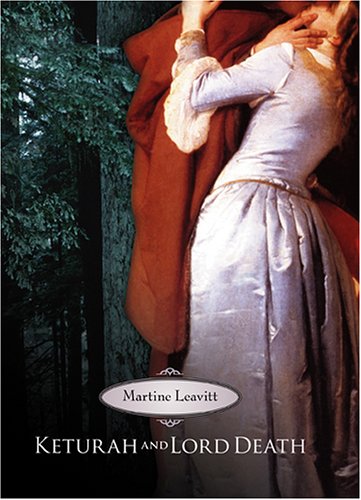
Keturah And Lord Death, by Martine Leavitt*
New Girl (Allie Finkle’s Rules for Girls), by Meg Cabot (oops, this is a book 2; I don’t know if she’ll want to read it…)
Here Lies Arthur, by Philip Reeve*
Dragon’s Heart: The Pit Dragon Chronicles, Volume Four, by Jane Yolen

The roundup is either at Out of the Blue or A Striped Armchair.

*Ones that M eventually read.
**Picture books we really liked.

Ranger’s Apprentice: The Burning Bridge

by John Flanagan
ages: 10-14
First sentence: “Halt and Will had been trailing the Wargals for three days.”

When we last left our determined Hero, Will, he had just killed off a couple of Big Bad Guy Morgarath’s bad beasties, and received a hero’s welcome home. But, this being War, he is not allowed to rest. While the army and Rangers — including stodgy mentor Halt — prepare for the impending battle, Halt, his apprentice friend Horace, and Ranger Gilan head for Celtica to see if the king there will come to Aruelian’s aid.

Of course things go badly wrong, and Gilan heads back to the army to warn the king, while Gilan, Horace and a stray girl they picked up, Evelyn, follow later. Except they get sidetracked, and find out what Morgarath’s really up to. And because Will is determined, and plucky and brave and resourceful, he is able to find a way — with Horace and Evelyn’s help, of course — to stop (or at least slow down) Morgarath. Unfortunately, while his resourcefulness is no match for the Wargals, he and Evelyn are captured by the Skandians (another country, this one run by sea raiders whom Morgarath paid to help him), and at the end of the book, they are hauled off.

All that said, this is a blast to read (aloud). Next in the Ranger’s Apprentice series, it didn’t have any of the problems with exposition that the first one had. It came out with a bang, and managed to keep up the pace pretty much (go Horace!) throughout the whole novel. C lost interest, but I don’t think it was the book — she’s been heading off to her room to read by herself rather than asking me to read aloud to her. I’m sad to see the end of it, but M hit that point, too, and we still get along. 🙂 I ended up finishing this one on my own, and have every intention to keep going with the series (on occasion, when I’m in the mood for a good fantasy-war-action-hero book) on my own. Maybe C will even pick them up and then we can talk about them. I’d like that.

Geeky Wichita Books, Part 2

I thought since I did the book tour of Wichita, I’d also run an interview I did with Sarah Bagby, the Managing Partner of Watermark Books and Cafe, the biggest independent bookstore in town, for Estella’s Revenge in May of 2007 also.

MF: What’s it like operating an independent bookstore in Wichita?

SB: Watermark’s celebrating our 30th anniversary this year. The business has changed a lot since we opened. Presently, it’s a business that includes a cafe, so we’re actually running two businesses, which keeps everybody on their toes constantly. We’re always trying to integrate the food side with the book side. But they fit together so well, because both provide a sense of community and connection.

You ask what it’s like running a bookstore. I’m active in the industry, and because of our geography, and because most of the publishing and decision making is in New York City, it requires travel to make the connections necessary so that we can be included in some of the national decisions that are made for author tours and that sort of thing.

MF: People don’t necessarily think of Wichita, Kansas when they’re planning a book tour?

SB: Well, the east coast is far away. Not a lot of people have been to Kansas. Technically, the midwest starts in Ohio, so when you say you’re from the midwest, they think it’s close by. And really, we’re not. We’re clear across the country. So, you have to at once be very involved in both the publishing community and the local community. Getting those two to come together in a way that works for both is both a challenge and at the same time very exciting.

MF: Why?

SB: Because you get to find out what’s new. Because it’s a business that’s relevant to people’s lives. And while there’s a tendency in publishing and bookselling to go after the “next hot thing”, there’s also a level of commitment to culture that is relevant. And I think people are looking for relevance right now. When you look at how many book clubs there are, and how people gather around writing, and writers, and ideas, we fit into that really well.

MF: How did you end up at Watermark?

SB: I was in college studying art history and I got a part time job at Watermark. In my house growing up, books were more important than furniture, so this was a comfortable place to be at a time in my life when there weren’t many comfort zones. And sort of by default I ended up in the position of running it, and then I became a partner. Now I’m sort of entrenched and I like it. The business and the challenges have changed so much in the time that I’ve been here. I’m not running the same business that I was running 20 years ago.

MF: What’s the best part of working here?

SB: The feeling of creative possibilities. Connecting a book to a reader. The possibilities are endless of what you can do there. The staff that I work with is amazing and dedicated. And the product is, well, first class. And even if you don’t like one, you can still sell it and sell one you love later.

MF: And the down side is?

SB: You can never do everything you want to do. Because every season there’s the next new book to read, and you probably didn’t get through the stack from last year. It’s the nature of the business. We’re just getting caught up with the spring list, and the fall one’s just coming out. At this point in the year, publishers are sending us stuff that they want to know if it’s any good that won’t be out for another year. The lag time that is kind of hard. We have a reading journal on our web site where our staff can write about what we’re reading, as we finish, which helps so much.

MF: How do you deal with the challenges of being an independent bookstore in the age of box stores and Amazon.com?

SB: Well, we get to choose our product. You can find the blockbusters, and certain other types of books, at the box stores and wholesale clubs at a price that we have to buy them for. So, we
intentionally look for the books that are not going to be in those stores that are just as good, and that we can convince people to read. That gives us the ability to create relationships with our
customers and develop a reputation that they rely on: that if they only have so much time to read, they know that if it’s from us, it’s really good. We also keep in close touch with local opportunities that may not be available to the national chains because their decision making process isn’t here in town.

Additionally, the cafe and the bookstore working together is unique. They cross over and that contributes to the profit margin. It’s a good mix. It just wouldn’t have the same effect if we didn’t have both.

MF: Can you give me an example of local opportunities?

SB: We take local author’s books without question. In those, are always opportunities to resonate with the community, either just because of the person’s friends, or, for example, because it’s a history of the local area. There’s always a connection there. We also carry books for instructors for local colleges.

MF: You do a lot of community outreach — book groups, story times, author events — it can’t just be good for business. Why do you feel it’s important?

SB: I think it helps the culture of the community. Because of our connection to the national and local scenes, we can bring them together in ways that no one else is doing. There are no real lecture series in town that bring in big names. If we weren’t doing it, I don’t know who would be. We’re bringing in Anna Quindlen, and Kahled Hosseini this year, both who are nationally-recognized writers. What we do provides relevance, again. Books are things that people are
passionate about, and we give the citizens of Wichita a way to participate.

MF: Are your book groups well attended?

SB: Yeah. We had one that just started –Shakespeare Out Loud — and we had eight people. That was a good amount, because everyone’s reading out loud, everyone’s participating. And for a first time idea that’s different, we felt it was successful. The groups range in attendance, some have more than others. On average, there are at least ten people for book clubs. We also have a monthly literary feast that sells out. That’s thirty people who, once they’ve bought tickets and the book, have invested $50 in the event. I think the book groups are well-attended because everyone can participate. They’re not so big that it becomes a lecture, and it gives us a way
to highlight books that we think are good to read. We sell many more copies than people who come, so it’s obviously reaching a broader base than we could otherwise.

MF: Do you feel like your other efforts are well received?

SB: Absolutely. We have good attendance for our events. We hear a lot from speakers who come to Wichita that their best event was ours. When I get quotes I got from authors, I sometimes think, “Are they really talking about us?” They feel a connection to readers, they feel like they came and talked to people who were interested and who knew their work. The people who are coming to our events are readers, and they love meeting the author and express that to them. If that is all we’ve done, it’s great.

I was recently interviewed for an article in Publishers Weekly — they’re doing a series on independent bookstores across the country — and my quote was something like: you can predict what we like to read in Kansas but don’t try to pigeon hole the market because you’ll be surprised.

MF: Do you get that a lot? People trying to pigeon hole Kansas?

SB: Before I started to develop personal relationships with the publishing world in the past few years, I was just “Wichita”. Now I’m “Sarah”, so they’ll call me for advice and information. Now that I understand what they’re doing, they are more willing to understand ours. I had to be concerned about their world so I could insert my own in there. If I were to wait for them to come to me, it would have never happened because of the distance. I don’t begrudge anybody
that. But having the personal relationships have really helped the quality of my business.

MF: Have you ever done something that was just a complete flop?

SB: Oh, yeah. But we haven’t had one in a long, long time, because it’s too painful for them and for us. And the publishers aren’t interested. So, we figured out how to make them work. We’ll sometimes have just a handful of people come, but it’s not empty. We have several people who are good friends that will come and help us if they know, because they understand how hard it is.

MF: What do you think the future holds for Watermark, and for
independent bookstores?

SB: I think independent bookstores are tough. They are opening all the time, though they’re not opening big stores, say 10,000 square feet. The Internet is a huge competitor. Probably bigger than other stores, I think. So, we’ll just continue to seek out a product that will be relevant, and provide that to our customers and present it in a way that’s unique and personal and lasting. It’s not like we’re getting rich here; it’s a struggle, there are really low margins of profit. But it’s a business, and experience helps.

Many thanks to Sarah for taking the time with me that day; I’ve since come to love the times when I can drop by Watermark. Good atmosphere, gret staff, good food at the cafe, and — of course — good books. Wichita would definitely be a lesser place without it!

Babymouse: The Musical

by Jennifer L. Holm and Matthew Holm
ages: 7+
First sentence: “The show is about to begin.”

Alysa said it was her favorite so far, and I have to agree. Totally. Completely. Awesome. (Especially if you love musicals.)

Babymouse is awesome no matter what she does… and in this one, she tries out for the school musical, getting the understudy part. LOVED the hedgehog Henry Higgins (yes, he’s British). He totally cracked me up. But the best part was that they (including the narrator, in a brilliant spoof of Modern Major General) kept breaking into song. The fun, for me, was identifying all the references to musicals (only two I didn’t get). Totally hilarious.

C loved it, too, especially the narrator. I’m not sure she got all the references — she hasn’t seen Grease or Phantom of the Opera — but she thought it was a fun book.

But what we’re both REALLY looking forward to is the next one this fall: Babymouse: Dragonslayer. Awesome.

Geeky Wichita Books

For this week’s geek, we are supposed to do something literary about our hometown. However, my current town doesn’t exactly sport a hip literary community (that’s not to knock local writers… I’m sure there are some. I just don’t know any, and don’t want to work that hard). It also doesn’t exactly bring in huge names (though perhaps I’ll wander down to Watermark and take some pictures of their basement room, of which there are some pretty cool names…) on a regular basis. So, I decided to resurrect a piece I did for Estella’s Revenge in May of 2007, and give you a book tour of my town.

Most people don’t associate Wichita, Kansas with anything literary. But then, many people don’t really associate Kansas with anything in particular. Usually, when I tell other book-minded folks I’m from Wichita, all I get is semi-blank stares.

“Kansas?” they say. “Isn’t that the place where Dorothy’s from?”

Well, yeah. It is set in Kansas, but L. Frank Baum wasn’t actually from here.

“Okay, I know. Truman Capote wrotethat book right? The one Capote’s about?”

Uh-huh. But that’s not Wichita, and we really don’t want to be known for a book about a serial murderer, no matter how good it is, do we?

They think and think, but nothing springs to mind. “Okay, I give. What is there that is literary in Wichita, Kansas?”

The answer: not much, at first blush. Our current connections with the famous are that the current Secretary of Defense, Robert Gates, hails from here, as does Phil Stacey who’s on the current season of American Idol (but interestingly, he doesn’t say that he’s from Wichita). In fact, in a perusal of interesting people from Wichita as listed in I found that there was not a single literary person on the list.

Undaunted by these facts, I set out to see if I could prove that Wichita is indeed a literary town. If we can’t produce notable authors, at least we can appreciate them, right?

I looked up bookstores in the Yellow Pages (always a good place to start), and after winnowing out the box stores, explicitly Christian stores, and adult bookstores (who lists adult book stores under books? If I were going to buy that stuff, I wouldn’t look for it under the book listing), I was left with nine stores to visit. Of those nine, there are three that are worth mentioning (the rest? two were typical big-city used bookstores, three didn’t exist — being private houses on back roads, and one was a new-agey bookstore with limited hours).

The first store, Delano Book Room is not your typical used book store. Sure, they have the usual used-book fare: mostly horror, sci-fi, romance and mystery, with a smattering of really good books (ones that I wonder why on earth people would want to get rid of). Even though their children’s section left something to be desired, my children (all four of them) each managed to find something to curl up with in one of the many cozy chairs scattered around the store. But the store is so much more than that. It’s located in the historic Delano district in Wichita, a local hot-spot for clubs, live music, and cafes. Admittedly, being there on a Monday afternoon with my kids, I wasn’t able to experience all that. But the number of community events offered through the store impressed me, and shows how well integrated they and the Delano neighborhood are. The store has both an open-mic poetry night and a “No Podium Poets” night for those microphone-shy every week. There’s a mystery book club, an American history book club, and a story time that each meet once a month. In addition to all that, the store puts on several special events over the course of the year. Most recently, they had a Shakespeare’s 443rd Birthday celebration (alas, I wasn’t able to attend). I’ve never seen a used-book store that is so involved in the community. Very cool.

Next is Wichita’s biggest independent bookstore, Watermark Books and Cafe. Watermark is one of those places where you just feel hipper walking in to — the buzz of conversations at the cafe, the welcoming atmosphere, the staff’s friendly smile — and I immediately wanted to be a part of it. It’s been a fixture in Wichita for 30 years, originally part of the downtown area. They moved to their current location — on the east side — in 1996 and expanded to include a cafe. It’s a welcoming place; there are comfortable chairs scattered throughout the store, and the cafe has ample places to sit and enjoy a coffee while perusing books. My daughters (only the youngest two this time) made a beeline for the children’s section, mostly to play with their Schleich princess toys. While they played, I wandered. Watermark has an amazing collection of reader-oriented stuff: glasses, bags, dolls, cups, footnotes, magnets, all of which I wanted to buy. Their books are an eclectic collection: not much of the hot-new-bestseller ones, but rather tables of staff-recommended books, books for their store-sponsored book groups, and a few best-sellers. Not only do they sponsor book groups (to be expected), but they put forth the effort to be Wichita’s link to the wider literary world, bringing in authors, sponsoring lectures, and connecting the community to books. I was surprised and impressed with the number of authors they’ve had in: Lane Smith, Tomi DePaola, Jan Brett, Linda Sue Park, T.A. Barron have all signed the wall in Watermark’s basement meeting room. They’ve got Anna Quindlen scheduled to do a reading and a signing for the paperback release of Rise and Shineas well as a visit from Khaled Hosseini during is book tour for A Thousand Splendid Suns. [Actually, he canceled the signing, citing personal reasons.] It’s not only the biggest independent bookstore in town, but the best one I’ve visited in a long time.

The last store worth mentioning, and possibly the most unique, was Eighth Day Books. It’s situated just east of Wichita’s downtown in a lovely old house. Once inside, it’s like nothing I’ve ever seen before. It’s a cozy, crowded place: all available wallspace is covered in bookshelves and religious icons. There’s benches, tables, and chairs to sit that look inviting for reading or discussing. There are books everywhere: rooms full of classics, poetry, religious studies, philosophy, and Kansas authors. I chatted for a while with Josh, one of Eighth Days’ three employees, who told me that the store has been part of the Wichita literary scene for 18 years. They sell both used (labeled “recycled”) and new books, specializing in good literature, Christianity (though there’s a world religion section) and philosophy. While they don’t have any book groups, and only occasionally have author signings (they hosted Scott Cairns a recent weekend), they do open up their space to anyone who wants to meet and discuss books. We were even more pleasantly surprised when Josh said that there was a children’s room in the basement. We headed past the “hobbit hole” sign (love that!) to find a little space filled not only with an extensive collection of picture books on saints, but assorted other picture and chapter books. While my girls enjoyed the books, I think the best part for them was going down the stairs to get them. We didn’t have the time to thoroughly browse the stacks (that would take hours), so I’ll definitely be heading back there.

So, there. I have presented the evidence for Wichita’s literary status. Personally, I was disappointed that there weren’t more stores for a city of 300,000 people, but I found that their small numbers are more than made up for in quality. There are both readers and owners working to build a literary community here, and I respect that and want to be a part of it. Come and see for yourself sometime.

And Now We Interrupt Our Regularly Scheduled Program

Back when I first did 25 things about me, Pam left a comment that I took as a challenge: to do, eventually, 75 more to get to 100. I took the challenge seriously, and determined to do another set… as soon as I could think up a decent theme. It hit me last night, on the way to yoga.

1. If you’ve known me for any length of time (and this probably spills over into my blogging), you know I have a “thing” for dark-haired, British actors.
2. I haven’t always been this way.
3. When I was in high school, I had enormous crushes on Michael J. Fox, Richard Dean Anderson and the blond-haired guy from Simon and Simon.
4. I had posters of all of them (and INXS) on my walls.
5. I also had one entire wall that was covered in comic strips cut out from the newspaper. But I digress.
6. So, obviously, my taste in actor crushes (which I “always” have had) has evolved.
7. I can pinpoint my dark-haired, British fixation to 1995, when a slew of Jane Austen adaptations came out.
8. I “fell in love” with: Colin Firth (Mr. Darcey), Jeremy Northam (Mr. Knightley) and Ciaran Hines (Captain Wentworth). And to a lesser extent Alan Rickman (Colonel Brandon… but he doesn’t count since I’ve liked him since the horrid Kevin Costner Robin Hood.)
9. I say “fell in love”, but it was more like appreciating fine art. I admire them. I enjoy looking at them. Watching movies they are in make me happy.
10. I am not a stalker. (Yet?)
11. I started tracking down everything they were in, because I’m that sort of person. Which means I’ve watched some pretty bad movies. (And have thought to myself: hey, Ciran Hines/Jeremy Northam is in that; I should see it!)
12. Colin Firth makes the best case for himself out of period clothes.
13. In other words: no matter how bad the movie is, I still like him. The others, I seem to only like in period dress.
14. For years and years, it was just those three.
15. I have adored others, though — most notably Viggo Mortenson (Aragon) and Orlando Bloom (Will Turner, not Legolas) — but nowhere near as much as the original Three.
16. And, generally, my interest seems to wane over time. (Sorry, Orlando.) Or just be limited to one movie.
17. I would add Daniel Radcliff to the list, but a friend of mine has a formula for how young is too young — take half your age and add seven years — and Dan falls outside that limit for me. I’m practially old enough to be his mom (though I would have been a teenage mom), and that’s probably a bit skanky.
18. Then this year, I’ve found others to adore and have found myself reacting in nearly the same way as I did originally: Jonas Armstrong (Robin Hood), Hugh Dancy (Grigg in The Jane Austen Book Club), and Elliot Cowan (Mr. Darcey in Lost in Austen.)
19. Which begs the question: what is it about dark-haired British men in period clothing?
20. I’m so taken with it that if I could go back and re-do my wedding, I’d make everyone wear period (preferrably Regency, but I’d go for Renaissance, too) clothing.
21. Thankfully, I’m married to a guy who’d go for that. And who doesn’t mind my actor-obsessions.
22. There is one exception, though: Brendan Fraser. He is dark-haired, but he’s not British. He’s not even a terribly brilliant actor. But he is imminently watchable, even in the really stupid movies he’s been in.
23. And I think he’s cute when he’s dirty and sweaty and smiles that smile of his.
24. Someday, I’ll probably look back on all this and cringe.
25. But then, someday, I’ll act my actual age and not like I’m 16. But, thankfully (?), that’s not quite yet.

The Ordinary Princess

by M.M. Kaye
ages: 9-12
First sentence: “Long and long ago, when Oberon was king of the fairies, there reigned over the country of Phantasmorania a monarch who had six beautiful daughters.”

Charming. Completely and utterly charming.

The story of Amy — actually Amethyst Augusta Araminta Adelaide Aurelia Anne — who happens to be the seventh daughter of a king. The Queen and the council decide, since it’s tradition, to invite the fairies (over the King’s objection: “You may have forgotten what happened to my great-great-great-grandmother, but I have not. Had to sleep for a hundred years, poor girl, and the entire court with her, and all because of some silly fairy-business at the christening.”) to the christening of the baby. And, of course, something rash happens: the fairy Crustacea gives the baby the gift of being… ordinary.

Which means, of course, that next to her beautiful, stunning, perfect princess sisters, she’s pretty much nothing. And that no one wants to marry her. And that suits Amy just fine. She’s allowed the freedom to explore, to discover, to grow, to be. Until, because no one wants to marry her, her father decides to hire a dragon and imprison her in a tower until she is rescued.

Of course Amy won’t stand for that, and so she runs away, and hangs out in the forest until her dress falls apart. Then she gets a — shock — job, in order to save for a new dress. Since this is a fairy tale, she obviously has to meet The One, and of course it all has to work out as a happily-ever-after, but I will say this: you will be utterly charmed. And enchanted. And come away with a smile on your face.

Because it’s just that sort of book.

(Thanks, Sarah, for recommending it.)

Doc Wilde and The Frogs of Doom

by Tim Byrd
ages: 9-12
First sentence: “The Lyceum of the Wilde family’s manor was a huge, odd room that seemed a combination of world-class library and Olympic gymnasium.”
Release date: May 14, 2009
Review copy sent to me by the publisher.

I needed something, after finishing The Woman in White, that was as far away from Victorian serialized novels as I could get. And, sorting through my piles of stuff, I came across this one. Which screams “not stuffy”. (Also “campy” and “not deep”, among other things.)

First off: how awesome is that title? Just saying it makes me grin… though I have to admit that I tend to say it in that movie-announcer voice: “DOC WILDE and the FROGS of DOOOOOOM!” Honestly: how much better can you get than frogs of doom? Not much.

That said, it totally and completely lived up to my campy expectations. You have a god of a Dad in Doc: a tall, muscular, blonde, intelligent, rich inventor who happens to Love his family and adventures. So he takes his family on adventures. Alas, his wife is dead (presumably, she was tall, muscular, blonde, intelligent and rich also), but that doesn’t seem to stop Doc or his two kids 12-year-old Brian and 10-year-old Wren (who are not tall and muscular, but are intelligent and rich). Add into this mix a British majordomo/butler who tends, in a crisis, to quote from literature (which the kids can always guess — though they stump him with Dr. Seuss — obviously they’re home schooled) and an Irish pilot/heavy and you pretty much have the Wilde family.

The adventure begins when their super-smart, tall, rich (he lives on the 86th floor of the Empire State Building) Grandpa Wilde goes missing. Of course the Wilde family have to go rescue him, and following his trail end up in the Amazon jungle of Hildago. Flying their gyrocopter into the jungle, they are attacked by MUTANT FROGS (Really. Totally. Awesome.), which crash the gyrocopter (but, which due to the super-intelligent design of Doc’s doesn’t actually crash), and the Wilde family are forced to hike through the forest. Where they’re attacked by more mutant frogs (but which they manage to fend off, without killing, because they respect all life forms, no matter how mutant, and are repelled by killing) one of which eventually possesses the body of one of them. Of course, Indiana Jones style, they manage to make their way into the lair, and rid the world of mutant frogs forever. (I would apologize for the spoiler, but really: did you think this could have any other ending?)

It’s smart, enjoyable, campy fun. Perfect for a hot summer day (or a kid whose tastes tend toward the mutant…).

Library Loot #18

Still have a pile, and now I’m making it bigger: I’m stocking up for Mother Reader’s 48 Hour Challenge…

For A/K:
Man on the Moon: (a day in the life of Bob), by Simon Bartram
A Weekend with Wendell, by Kevin Henkes**
A Beautiful Feast for a Big King Cat, by John Archambault and Bill Martin, Jr./Illus. by Bruce Degen
What’s Under the Bed?, by Joe Fenton**
Don’t Let the Pigeon Stay Up Late!, by Mo Willems**
Waffle, by Chris Rashka**
Pickles To Pittsburgh, Written and Colored by Judi Barrett/Drawn by Ron Barrett
Prancing, Dancing Lily, by Marsha Diane Arnold/Illus. by John Manders
Milo’s Hat Trick, by John Agee**

For C/me:
Babymouse #10: The Musical, by Jennifer L. Holm and Matthew Holm
The Ordinary Princess, by M.M. Kaye

For M/me:
How Not to Be Popular, by Jennifer Ziegler*
Whales on Stilts, by M. T. Anderson*
Alcatraz Versus The Scrivener’s Bones, by Brandon Sanderson*
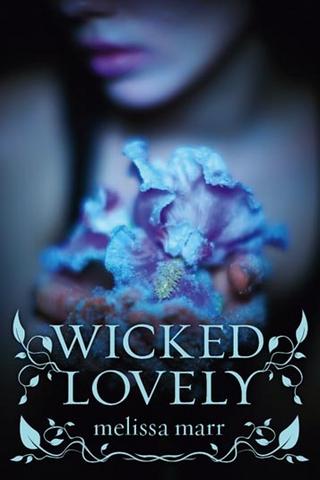
Wicked Lovely, by Melissa Marr*
Girl at Sea, by Maureen Johnson*

For Hubby/M:
(Yes, you read that right: I checked out books for my husband! He started Wee Free Men, and became thoroughly enchanted with the series, and since we don’t own the last one, I had to check it out. And, additionally, he wants to read more Terry Pratchett…)
Wintersmith, by Terry Pratchett*
Small Gods, by Terry Pratchett

The roundup is either at Out of the Blue or A Striped Armchair.

*Ones that M eventually read.
**Picture books we really liked.

The Woman in White

by Wilkie Collins
ages: adult(ish)
First sentence: “This is the story of what a Woman’s patience can endure, and what a Man’s resolution can achieve.”

First off — and I know it’s bad form to do this — I have to say novels that have been serialized and I have not gotten along in the past. Yes, I stand here and say that I dislike Dickens. Sorry. But, novels like these tend to go on and on and on and round and round and round and take FOREVER to get to the stinking point. Which drives me batty.

That said, I — mostly — liked this one. Yes, it was serialized, but for the most part, Collins handled that serialization quite well. He is a master of the cliffhanger. At one point while reading this book (if you really need a summary go here; it takes way too bloody long to explain, as I discovered the other night when trying to sum it up for my husband…) that if I had been alive in 1859 when this was being serialized, I would have totally lined up to get a copy. Every single day/week/time.

The mostly part is because the middle part is the best. It takes a while to get going — say 150 to 200 pages. But by the time Walter (our hero) is out-of-country (having been Spurned in Love) and Marian and Laura (our two heroines: Marian being strong and sensible and ugly; Laura weak, flighty and beautiful. Guess which one gets the guy…) are in the house of Sir Percival and under the influence of Count Fosco (our villains) and you don’t quite know what everyone is up to… that’s the good part. It’s okay after the first couple of twists, and Walter (who came back) sets about avenging the women, and is on the trail of Sir Percival’s Secret and there are still several twists you don’t quite expect. But the last 120 pages… yawn. I skimmed. I slid. I wished it would go faster… think of it as a really, really good TV show that kept you engaged throughout the entire run, and then completely and totally tanked on the season/series finale. Then you’ve pretty much got how I felt.

That said, I think I’m going to give Moonstone a go, if only because I’ve heard it’s better (that, and it’s on the schedule for my in-person book group…). And because, all my complaining aside, I did enjoy the ride that this book was.