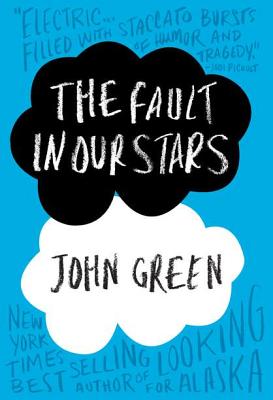
by John Green
ages: 14+
First sentence: “Late in the winter of my seventeenth year, my mother decided I was depressed, presumably because I rarely left the house, spent a lot of time in bed, read the same book over and over, ate infrequently, and devoted quite a bit of my abundant free time to thinking about death.”
Support your local independent bookstore: buy it there!
I love John Green, the person. I adore his blog, think he’s a smart, insightful, funny guy, and would absolutely love to have him (and his wife and kid) over for dinner sometime.
I have not, however, been a really huge fan of his books. Saying that almost makes me an outcast in Nerdfighteria, but I’ll live with that. Sure, he has moments of brilliant hilarity, but I have always thought that he tries too hard to be Deep, which too often comes off as pretentious.
That said, I think he’s one of those writers that as he gets older, he gets better. I’ve liked each one of his books better than the last, thinking that maybe he’s figuring out the balance between angst and thoughtfulness, human observation and invention.
Which leads me to The Fault in Our Stars: I honestly can say that this is a John Green book that I loved. Seriously, wonderfully, amazingly loved. (No, I didn’t cry. I’d figured it out before it came along, and I managed to steel myself, but I do admit that I was moved.)
Hazel is 16 and dying of cancer. Sure, she’s had a miracle drug that’s prolonged her life, but really: she has cancer, she is slowly dying, mostly because her lungs are “crap”. Tethered to an oxygen tube, she basically exists, waiting to die. Then she meets Augustus Waters. Hot, amazing, full-of-life (even though he’s got cancer as well), Augustus Waters. We get to watch them slowly fall in love, as they share Thoughts, and Books, and Ideas, and Hopes, and Fears. Sure, there’s an improbable trip (cancer perk!) to Amsterdam to meet the douchebag author (as M called him) of the book that Hazel adores (and Augustus grew to love as well).
But really it’s mostly one of those books that Makes You Think. But, this is where John’s gotten better: it’s not pretentious. Really. The emotions are honest; the cynicism, the reflections, the quoting of improbably sophisticated literature all works in this context. And yes, it is heartbreaking and hilarious, as everyone promises.
In other words, if you want the best that John Green has to offer, this is it. (Until he writes another book.)