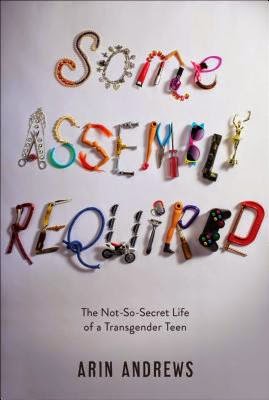
Two Transgender Books

I thought about reviewing them separately, but then I realized that the authors of the two books actually dated at one point, and I think Simon & Schuster kind of meant for them to be a pair. So, here they are, together.

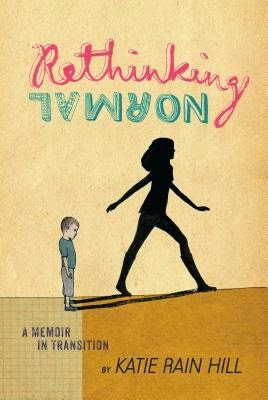
Rethinking Normal
by Katie Rain Hill (with Ariel Schrag)
First sentence: “I really, really hate flies.”
Support your local independent bookstore: buy it there!
Content: There are a few f-bombs, and some frank talk about genetalia. Also, some frank talk about having sex, though it’s not graphic. That, and the subject matter (which isn’t necessarily not for younger kids, but maybe parents want to have a chat with the younger set while they read this), put this in the Teen section (grades 9+) of the bookstore.

Katie is a trans girl. Which means — if I get this correctly — she was assigned the male gender at birth, named Luke by her parents, and as she grew up, she felt increasingly at odds with her physical body. She didn’t feel “male”; she was attracted to males, but wanted them to see her as a woman. This is the story of her journey.

It’s not an easy one for her. For her first few years, she was okay, but as she grew older, she became depressed. She didn’t know what was wrong with her, or why she didn’t feel comfortable in her body. Why she wasn’t compelled to do traditional “guy” things. She went to therapists, but they didn’t help. Most just threw medication at her. It wasn’t until she was 13 that she discovered a transgender website that opened the doors to what she was experiencing. She found a support group, a doctor who was willing to take her seriously (turns out that she was intersexual; she had high levels of estrogen in her body and undeveloped ovaries as well as a penis), and she was on the path to becoming who she truly felt she was.

I was hoping, I think, for this to shed some light on transgender(ism? Can I say that?) for me. It didn’t; but then I think my expectations were too high. One person’s story is going to shed light on just that: one person’s story. And even though the writing style was overly casual (imagine Katie sitting down and just rambling her story at you), I was fascinating by her experiences. And ashamed; this was set down in Oklahoma, and unfortunately, the religious people Katie knew did not treat her well. That always makes me feel sad; I do hope that there would be more acceptance and charity and kindness in these sorts of stories.

I am glad Katie wrote this book, though. The first step to making the unknown more knowable is to learn someone’s story. And this book does just that.

Some Assembly Required
by Arin Anderson (with Joshua Lyon)
First sentence: “Getting dumped at prom sucks.”
Support your local independent bookstore: buy it there!
Content: Same as above.

I didn’t have as positive an experience with this one. I’m not quite sure why, so this is mostly going to be me ruminating about why I bailed on this memoir, when I found the other one fascinating

First off, Arin is a trans boy, which means he was assigned the female gender (and had female body parts) when he was born. He struggled with this, but unlike Katie, his struggles seemed to come off as “I don’t like the clothes/pageants my mother is putting me in.” He was a tomboy as a child, even though he enjoyed the dance classes his mother insisted he take. He didn’t want anything to do with anything else about being a girl, and was repulsed when his body started to change.

I’m not asking for a justification or an explanation, but this seems weak to me. Especially in the light of the experiences Katie had. The way Arin presented himself (to me) came off as much more shallow. Or maybe it was because I’m a woman, and I had some of the same struggles with expectations and my body image. (I just turned feminist instead of trans, though…) I wanted to know what made his experience DIFFERENT from mine. How I could have a similar reaction to clothes/pageants/activities/my body changing and NOT be trans. Maybe I was expecting too much

Growing up in Oklahoma, Arin had a tough time. He came out as bi, and then trans, both of which were strongly rejected by the community, the religious school he was attending, and his mother.  (Of course, since religious people are closed-minded, duh.) In the end it was the the way these so-called Christians treated him that made me put down the book.

But, I also had to admit that my perception of Arin was skewed from the beginning; he shows up in Katie’s book, and while she isn’t cruel, he comes off as a whiny, clingy, needy boy. I couldn’t shake that image as I tried to read this one.

So, maybe the best thing is to pick one or the other, and immerse oneself in that individual story, recognizing that it’s just that: one individual story. Even so, it’s something that isn’t talked about much, and both of these books would be good for discussion.

7 Memorable Author Events

Stephen King was in Wichita Friday night. It was a huge deal (thankfully, I was tucked away in a back corner and didn’t have to deal with the angry people) for which thousands (literally) of people turned out. Was it a great event? For a lot of people, yes. For me? Not so much. We were talking on the way to the event about which authors we’d individually REALLY like to see, ones that we’d go to great lengths to see. Which got me thinking about some of the best author presentations I’ve seen in the past 5 years or so. (As a side note: I really didn’t go see authors before then. A lot of it was little kids, but some of it was I just wasn’t involved that way. That part of my reading experience has changed dramatically with a job at the bookstore.)

I’m defining “best” in an entirely personal way. For me, it’s something I can still remember, even years later,as a fun and rewarding experience.

Eoin Colfer: I’ve never been a big fan of his Artemis Fowl books, but he was coming to the store, and I was curious. I’m SO glad he went; he was hilarious. And entertaining. And completely knew how to work his crowd.

Rick Riordan: Before Stephen King, this was the biggest event I’d been to; it was impressive how many fans were in the room. I wish I had gone to see him before he got really huge because I would have liked to chat with him, or get a picture with him, but this was the way the cards fell. Even so, Riordan knows his crowd, knows how to give a great presentation, and had all of us eating out of the palm of his hand. So, it was okay.

Gabrielle Zevin: I think this one sticks with me mostly because I had seen Kristopher Jansma the night before and he was awful. But, she was lovely. She was interesting, she was funny, she had good things to say, and she interacted with the audience in a way that made us feel welcome and a part of the experience. She was so wonderfully gracious afterward, as well.

And a few author meets through KidlitCon:

Scott Westerfeld (2011) was amazing. His presentation (which I saw twice that year, interestingly enough) was fantastic, he was delightful and kind to all of us (I remember standing in a circle chatting with him and a few other people and thinking to myself, “I’M TALKING WITH SCOTT WESTERFELD!! THIS CAN’T BE REAL!”). I would love to go to another event of his again.

Maggie Stiefvater (2010): Okay, so I didn’t actually take time to meet her, mostly because I was shy and intimidated. BUT, her talk was influential enough that I actually took the time to pick up her books. And became a fan. I’d love a chance to see her again, so I could chat with her and get a picture with her.

Maureen Johnson (2012): Her presentation at KidlitCon was…. weird. But I’m counting this because I made such a fool of myself in front of her at the Austin Teen BookFest in 2011 and I completely (almost) redeemed myself. A group of us stayed after to chat with her and Robin Wasserman and it was a LOT of fun. She’s very much like her online personality: weird, deadpan, and very very funny.  And yes, if I ever got a chance to see her again, I’d go.

Mitali Perkins (2014): I didn’t get a picture with Mitali, either, though I did talk to her after her presentation. (I don’t know why I asked. Doh!) I think the main thing about these presentations is that I like people to be organized, and informative about themselves and their writing, and to draw the crowd in. Mitali did all of that and then some. She was gracious and funny and a delight to listen to.

So who are some authors I’d still like to see? Shannon Hale, beyond her floating head, of course. John Green would be a trip and a half. Megan Whalen Turner. Holly Black. Sarah Beth Durst. Anne Ursu. Jonathan Stroud.

Who have you seen that you’ve loved and/or who would you like to see?

Egg & Spoon

by Gregory Maguire
First sentence: “The heels of military boots, striking marble floors, made a sound like thrown stones.”
Support your local independent bookstore: buy it there!
Review copy provided by the publisher.
Content: There’s nothing objectionable, but it’s a bit long and slow for all but the most advanced middle grade readers. It’s not a Teen book, either, so it’s ended up in the no-man’s land of YA books (grades 6-8) at the bookstore. I’m wondering how it would go as a read-aloud, though.

Elena Rudina is a peasant in pre-Revolution Russia. Her father died in a freak accident, and her mother never quite recovered from that. Her oldest brother is a servant in the baryn’s household and is away in Russia. So when her other brother gets conscripted into the Tsar’s army, Elena decides she needs to do something about that.

Ekaterina is the daughter of semi-noble parents who have dropped her in a London boarding school and gone off gallivanting around the world. The only person who cares about her is her Great-Aunt Sophie, and she’s determined that Ekaterina is going to show up at the Tsar’s party for his godson and be presented as a possible match, which is something Ekaterina does not want.

So, it was quite fortuitous when Elena and Ekaterina meet by accident — the train stops in Elena’s village when the bridge is out — and then (again by accident) switch places. Each get exposure to a different world and are led on the adventure of a lifetime.

I really wanted to like this one. And I did, sometimes. I loved Baba Yaga in all her snarkiness. (In fact, I bookmarked a bunch of her lines. Like: “You’re not going to drink the Kool-Aid?” and “Dumb Doma remodels itself. A nasty habit, like binge shopping.” and “No wonder they call these fairy tales. Tolstoi woudl know better, and a fast train comign into a station would be involved. Blood, tears, regrets. All the fun stuff.”) I sometimes liked the adventure that Elena and Ekaterina were having. (Madame Sophia ended up being a favorite of mine as well.) But, something seemed… off… about this one. Usually I don’t mind intrusive narrators, but this time, he (though I wonder why Maguire chose that particular narrator) was annoying enough that I just wanted him to go away. And that (along with Baba Yaga) got me wondering if this is really a kids’ book, or rather a book for adults who like kids’ books. I found myself hard-pressed to come up with a kid who would enjoy this.

It reminded me most of The Girl Who Circumnavigated Fairyland in tone and style (though it’s much, much longer), And K really liked having that one read aloud to her. So, maybe there is some hope for this one. I just wish I liked it better.

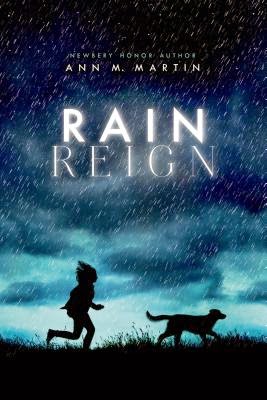
Rain Reign

by Ann M. Martin
First sentence: “I am Rose Howard and my first name has a homonym.”
Support your local independent bookstore: buy it there!
Content: There’s really nothing, and the words are mostly simple with lots of white space. It’s in the middle grade (grades 3-5) section of the bookstore.

Rose Howard is a 12-year-old fifth grader with high-functiohttp://www.thebooknut.com/2013/08/counting-by-7s.htmlning autism. Her mom ran of when she was two, and she’s been raised in a small New York town by her dad. (And her uncle, who’s much nicer than her dad.) She generally makes do in school, at home. Especially since her dad’s gone either at work or at the bar down the road.

He did pick up a dog for her, one day, though. Which she named Rain. And Rain keeps Rose company.

(There is a side bit about Rose loving homonyms but I felt that was more distraction than anything, and didn’t really add much to the plot.)

A big storm hits, the remnants of a hurricane, and knocks power out in the down. Rose’s father lets the dog out, and she never comes back. So, Rose and her uncle set to checking in shelters to find Rain. And when they do, they’re in for a surprise.

I’ve never read any Ann Martin before (yeah, I missed the whole Babysitter’s Club thing), and I really wanted to like this one. But I just… didn’t. Counting by 7s and Anything But Typical did the whole autism spectrum thing so much better. I didn’t care about Rose, I’m tired of missing mothers and bad fathers, and I just. didn’t. care.

That’s not to say it’s a bad book… I did like the way Rose narrated it, like she was writing a report. It was clever, but I found that the form got in the way of the substance. That’s not to say others (especially dog lovers) wouldn’t like it. But it wasn’t for me.

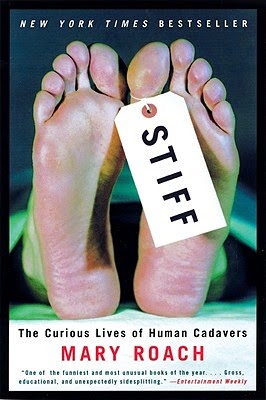
Audiobok: Stiff

by Mary Roach
Read by Shelly Frasier
Support your local independent bookstore: buy it there!
Content: Um, Roach doesn’t mince her words when she talks about scientific stuff, and so some of this is kind of … gross. Fascinating, but gross. There’s a few mild swear words, but if you’re interested in dead bodies, go for it. It’s in the science section of the bookstore.

I picked this one out because I was in between audio books and because I really enjoyed Roach’s writing in Gulp. This time (it’s an earlier book), Roach takes a look into what happens to bodies after people die. From the ones that are donated to science — used in anatomy labs, for surgery practice, for research, etc — to the way the bodies decompose, you have to say that Roach is nothing but thorough.

On the one hand, this wasn’t the best book to listen to. Frasier did a good enough job narrating (though I had to keep reminding myself it wasn’t Roach talking; much of the book is in first person), it’s just that when you read about bodies decomposing, you don’t want to LISTEN to the words. Or at least I don’t. I never got physically ill, but it did make me queasy on a couple of occasions.

On the other hand, though: it was fascinating. Even if the book is 10 years out of date, it’s interesting to think about what can be accomplished through science after one dies. If anything, it got me thinking about what I want done with my body (though Roach pointed out that much of what is done with the body is decided not only by the deceased but by the family members) after I pass on. I think I was most swayed by one of the final chapters where Roach wrote about a woman in Sweden who was advocating for promession, which is a way of composting bodies. For some reason, this really struck a chord with me. I’d much rather be turned into earth and help a tree grow than sit in a graveyard. Shocking, I suppose. But my kids are on board with that (at least right now).

In the end, even though it was gross at times, I really enjoyed this one.

Mortal Heart

by Robin LaFevers
First sentence: “For most the bleak dark months when the black storms came howling out of the north is a time of grimness and sorrow as people await the arrival of winter, which brings death, hunger, and bitter cold in its wake.”
Support your local independent bookstore: buy it there!
Others in the series: Grave Mercy, Dark Triumph
Content: Like the other two, it has death (though no murders, I think), some sex (off screen) and more mature themes. It’s in the Teen section (grades 9+) of the bookstore.

Annith is the one who was always left behind. Quiet and dutiful, the Abbess always passed her over when it was time to go on missions. First Ismae left, and then Sybella. And Annith is the one to babysit the new novices. However, when the resident seer gets ill and Annith overhears the Abbess say that Annith would be perfect for the position, Annith panics. And takes off in the middle of the night: dang it if she isn’t going to get her adventure.

She ends up being overtaken by hellequins — servants of the God Mortain, like Annith herself — and their leader Bathazar, takes it upon himself to protect her from the, shall we say, less savory of the bunch. They ride around together — nominally to get Annith to some city I can’t remember the name of right now — for a couple of weeks, falling in love. And then Annith — and this is what I liked most about the book — decides that she really wants to be Independent and Have and Adventure, so she takes off. And she does. She never really becomes as Awesome as Ismae (who is still my favorite) or Sybella, but she holds her own.

Of course there are twisty twists and swoony swoons, and over it all is some very interesting (if only vaguely) historical setting. At some point, though, the twists made my eyes roll, and the swoons stopped being swoony, and I was predicting things right and left, which is never much fun for me.

It’s not my favorite in the trilogy, though it does wrap things up nicely. Even so, it’s a good series, and one worth reading.

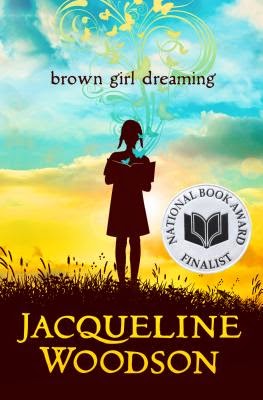
Brown Girl Dreaming

by Jacqueline Woodson
First sentence: “I am born on a Tuesday at University Hospital Columbus, Ohio, USA — a country caught between Black and White.”
Support your local independent bookstore: buy it there!
Content: There’s nothing objectionable. And it’s even an easy-ish read. Sure, it’s poetry, but it’s not difficult. Hand it to anyone with an interest in writing, kids, and history. It’s in our middle grade biography section at the bookstore.

I’m not quite sure where to start on this one. It seems We’ve (the collective we, here) been inundated by memoirs and biographies of celebrities, People of Note, and at first glance Jacqueline Woodson’s new book just falls into that pit of “celebrity” (of a sort) biographies.

Except, it’s not so much a biography or memoir as it is a reflection upon a childhood. Woodson makes her childhood an Everyperson experience, something that the reader can readily identify with, even if they didn’t have her exact same experiences.

Her childhood begins in Ohio, but mostly it’s spent in South Carolina, with her grandparents, and in Brooklyn, where her mother finally settled with Jacqueline and her brothers and sister. I kept trying to figure out the timeline (if she was born in 1963, then it must be…) but eventually, I just gave up and let myself get absorbed in the story.

And absorbed I was. Woodson wove historical elements into her story — sit-ins in the South; the way her grandmother felt about the way she was treated in stores by white people; music that was playing on the radio — all of which helped put her personal story in a larger framework. I could easily forget I was reading a memoir; it felt so much like a novel.

Part of that, too, was the form. Written in free verse, the memoir took on a lyrical quality. There were moments, especially toward the end, where I was moved by her insights not only in her life, but for Life in general.

One more thing: I appreciated her portrayal of religion. I get the sense she’s not a practicing Jehovah’s Witness anymore, but she portrayed the religion of her grandmother and her own childhood with respect. It was neither good nor bad; it was just a part of her life. And I found that refreshing.

Highly recommended.

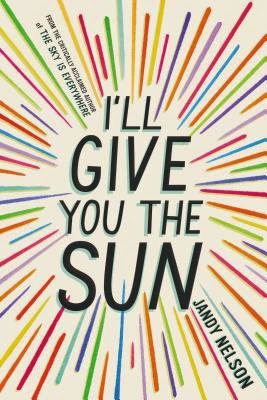
I’ll Give You the Sun

by Jandy Nelson
First sentence: “This is how it all begins.”
Support your local independent bookstore: buy it there!
Content: There is some teen drinking, a (non-graphic) rape scene, and several f-bombs. That, and because of the subject matter, puts it in the Teen section (grades 9+) of the bookstore.

Noah and Jude are twins, separate people but connected in thought and purpose (generally). So much so that they’ve become NoahandJude, pratically inseparable. That is, until the summer they turn 14. Then everything starts to fall apart. Jude becomes “wild”; Noah retreats into his own world until a new boy shows up next door. They end up “dividing” their parents, each vying for the other parent’s attention and love. On top of that, they are fiercely competing to get into the local prestigious art high school. It’s a mess.

Two years later, things aren’t much better. Jude made it into the school; Noah (who was arguably the better artist) did not. They’re still dealing with the aftermath of their mother’s fatal accident. They harbor secrets. And they’re no longer NoahandJude. They’re not even Noah and Jude. They’re two separate planets, who never talk to each other. It’s different from what it was before, but no better.

Did I mention that Jude sees the ghost of her dead grandmother, and senses the presence of her dead mom?

It’s thanks to the two ghosts that Jude searches out Guillermo, sculptor extraordinaire and Latino Mystical Guide, and finds not only salvation but True Love.

Yeah, the book derailed just about there.

For the record: everyone in this book is a Tortured Soul Needing Redemption. And they all find it together. I did enjoy Guillermo — in fact, he was the most interesting character — but that doesn’t change the fact that his role in the book was to cause a change in the white people around him. He was Passionate Lover, he was Father Figure, he was Spiritual Guide. And sometimes he was a living-breathing person, but those times were rare.

And don’t even get me started on the whole Soul Mate thing. Ugh.

What saved this book from being Truly Horrible was the writing — Nelson paints the world vividly, and I do have to admit that there was some good chemistry between Jude and her Soul Mate, even if that’s a trite trope and needs to be done away with. But what I really loved was the art. I loved Guillermo’s giant sculptures and the way Nelson depicted the process of art. I loved Noah’s chapters and the way he’d come up with paintings for everything. I loved how she considered fashion an art.

In the end, I did respect what Nelson was trying to do. But it’s not a perfect book by any means.

State of the TBR Pile: November 2014

This is what’s on my pile right now. Except I’m still in a slump (of sorts) and don’t feel like reading any of them. So, we’ll see what gets read before the end of the month.

Blood Song, by Anthony Ryan  (Someone told me it was a tamer GoT. We’ll see.)
Sugar, by Jewell Parker Rhodes (She was very lovely and signed this copy for me at KidlitCon.)
The Bridge of San Luis Rey, by Thornton Wilder (For book group, so this one has to get read.)
Arcaday’s Goal, by Eugene Yelchin (I just spent a week pitching this one to librarians. I might as well read it.)
Atlantia, by Ally Condie (I’m curious.)
Marina,  by Carlos Ruiz Zafon (Curious, and an attempt to diversify my reading.)
The Grimjinx Rebellion, by Brian Farrey (I’m enjoying this series and I’m glad the next one is out!)
Obsidion Mirror, Catherine Fisher (I’ve loved her stuff in the past, and have been meaning to get to this for AGES.)
Greenglass House, by Kate Milford (I’m curious.)
The Secret Sky, by Atia Abawi
The Burning Sky, by Sherry Thomas

What’s on your pile?

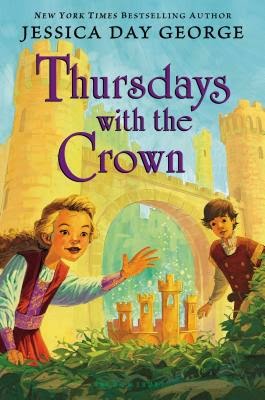
Thursdays with the Crown

by Jessica Day George
First sentence: “‘You are not leaving me behind,’ Celie repeated.
Support your local independent bookstore: buy it there!
Others in the series: Tuesdays at the Castle, Wednesdays in the Tower
Content: There’s nothing objectionable, really. It’s a good book for both readers who love fantasy, and for struggling readers — lots of white space, and short chapters — who need action. It’s in the middle grade (grades 3-5) section of the bookstore.

When we last left Celie, Rolf, and Lila, they had just disappeared from Slene (along with Lulath and Pogue). No one knew where they went or why the castle sent them away.

As the book opens, Celie and her intrepid siblings and friends are stuck in a place they didn’t know existed. And they need to find the Glorious Arkower, the head magician, to go back to Slene. Except, things aren’t that simple. They discover that Rufus (Celie’s griffin) isn’t the only one; he’s got parents. Who happen to be the king and queen of the Royal Griffins. The motley crew manages to find and hatch a couple more griffin eggs (one for everyone!) and discover that the Glorious Arkower is… not so glorious. And things aren’t as simple. The question is: can Celie figure out a way to return back (and wake up!) the castle she loves?

This is such an adorable series, though I think it might be one that’s better read in one sitting. Sure, I fell pretty fast into the world (I haven’t read the other two in a while). But, I think I would have liked it more had I read them all in quick succession. Even so, Celie’s delightful, Lulath’s still my favorite, and I’ll happily spend time in Slene with them for as long as George wants to write about them