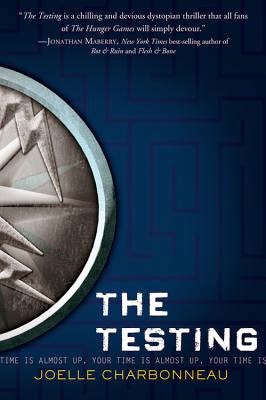
The Testing

by Joelle Charbonneau
First sentence: “Graduation Day.”
Support your local independent bookstore: buy it there!
Content: It’s violent, but not graphically so. And there’s kissing, but no sex. Which means it’s in the YA section (grades 6-8) of the bookstore. However, much like Hunger Games, I’d be wary of more sensitive readers liking it.

This book has been out for two years now, and I’ve been putting it off for just as long. Mostly because the whole post-apocalyptic/dystopian genre has been SO overdone, that I really didn’t want to read yet another one.

Then we scheduled Charbonneau to come to the store — they’ve been working on it since the first one came out and the rep mentioned it was set in a futuristic Wichita — and I was tasked with reading and reviewing the book before she gets here. And so I did, smacking myself when I finished for waiting too long to get around to this one.

Sixteen-year-old Cia Vale has just graduated from her colony’s small school near the top of her class. She’s excited: in this post-Seven Stages War America, now called the United Commonwealth, that means she’s likely to be chosen to attend The Testing in the capitol, Tosu City (aka Wichita, though it took me nearly the whole book to figure that out). Except her father — a former Testing candidate and University graduate himself — doesn’t want her to go. However, once Cia’s been chosen, she can’t say no; refusing the Testing is an act of treason, punishable by death.

So, Cia travels to Tosu City with her father’s warning — TRUST NO ONE — echoing in her ears, and discovers what he meant. The Testing is not just high-pressure and high-competition for the twenty university slots. It’s deadly.

While the plotting and writing isn’t as tight as Suzanne Collins’s, it’s still a quick, engaging read. Charbonneau sets the stakes high right away, with Cia’s roommate committing suicide, and doesn’t let up until the final pages of the book. There are twists and turns — some of which I saw, some of which I didn’t — and Cia is a good, strong narrator to carry this story on her shoulders. It’s definitely post-apocalyptic; Charbonneau cleverly gave us a brief history of how this country came to be in a series of short written test questions early on. The dystopian part is harder to see — Cia comes to hate the Testing officials, and the government as an extension, but I’m not sure I ever felt the way she did about the officials. Unlike, say, President Snow in The Hunger Games. (Yes, comparisons are inevitable.) I do think, on the other hand, that it’s a tighter, more interesting story than Divergent (yes, there’s a love interest, which I think was mostly unnecessary).

But the best thing about waiting to read this one is that the whole series is out already. And I don’t have to wait to read the second one. And I’m invested enough in Cia’s story that I’m quite curious to find out what happens next.

Just Mercy

by Bryan Stevenson
First sentence: “I wasn’t prepared to meet a condemned man.”
Support your local independent bookstore: buy it there!
Content: It’s intense, and there are some graphic elements, as well as swearing. It’s not for the tender-hearted (I had to put it down several times and read other books because I couldn’t handle the nature of the story). It’s in the adult non-fiction sections of the bookstore.

This one has been on my radar for a while as one I’d need to get around to reading. But what really prompted me to pick it up was listening to Serial. The two don’t really have a ton in common, but there are similarities. Both deal with minorities being imprisoned, mostly unjustly. Both are difficult, at times, to listen to/read. Both are important.

Bryan Stevenson was a young lawyer from Harvard in the mid-80s when he went to Atlanta to do an internship there. He got involved with a death-penalty case in Alabama, where he determined that the man was accused falsely. Stevenson became involved in the case to the point where he started the Equal Justice Initiative, a group that advocates for people on death row, as well as for children and for those with mental disabilities who have been imprisoned for life.

I took away two things from this book: First, our justice system may work “as well as it can”, but that usually means “for those who can afford it.” If it wasn’t clear before, it’s clear after reading this: our system is broke. It favors those who are white, those who are healthy, and those who are well off. Especially in the South. It saddened and depressed me that this isn’t history. This is happening in my lifetime, not in some distant past.

The second thing is that Stevenson is an incredibly hopeful individual. He’s practical, yes. But he’s also hopeful, and Christian, and just Good to do this work for people society — people like me — have written off. It makes me want to go out and give everyone I meet a second, or third, chance. Yes, there are people out there who are beyond hope, but I think, especially after reading this, that there aren’t that many people who are completely unredeemable.

It was a tough book, emotionally, for me to read (it didn’t help that I went and saw Selma while reading this as well). I cried a lot. My heart broke. And I had to think about the way I treat and judge people.

I am grateful that there are people like Stevenson out there doing this work. And I’m glad he wrote this book if only to make people like me more aware.

Dory

Dory Fantasmagory
by Abby Hanlon
First sentence: “My name is Dory, but everyone calls me Rascal.”
Support your local independent bookstore: buy it there!

Dory and the Real True Friend
First sentence: “My name is Dory, but everyone calls me Rascal.”
Support your local independent bookstore: buy it there!
Review copy snagged from the publisher rep.
Release date: July 2015
Content: It’s pretty basic, short, and liberally illustrated with pencil sketches throughout. It’s in the beginning chapter book (grades 1-2) section of the bookstore.

I don’t often read beginning chapter books anymore. K is past that age (and prefers graphic novels, anyway), and it’s just not where my interest lies. That said, every once in a while, a book comes along that I just have to pick up, and in the end, just makes me smile. I ended up reading this one becuas while it’s been on my radar for a while, it was making it as a finalist for the Cybils that convinced me  I really ought to read it.

And I was thoroughly charmed.

Dory is a 6-year-old with a VERY active imagination. She’s the youngest child, and her two older siblings don’t ever really want to play with her. So, she plays with her imaginary monster friend, Mary, and goes on a ton of adventures. That’s really all there is to the plot. (Well, in the second book, she goes to first grade and eventually makes a “real” friend, whom everyone thinks is imaginary.) But what these have going for it is that Hanlon gets first graders. Seriously. She gets their quirks, their habits, their curiosity, their silliness. And she makes Dory an absolutely fantastic character. She’s someone you want to spend time with, laugh with, and who just makes you happy.

My only criticisms are superficial: I’m going to have a hard time getting boys to read this. But, much like Princess in Black, I think that boys are really going to enjoy Dory and her crazy imagination. And secondly, everyone’s white. It’s a little thing, but Dory didn’t have to be white, and her best friend didn’t have to be white, but they are.

Even so, they are adorable books. And adorable wins every time.

The Bishop’s Wife

by Mette Ivie Harrison
First sentence: “Mormon bishop’s wife isn’t an official calling.”
Support your local independent bookstore: buy it there!
Review copy snagged from the ARC shelves at my place of employment.
Content: There’s a few instances of mild swearing, but it is a murder mystery, and there are some pretty adult situations at the end of the book. It’s in the mystery section of the bookstore.

When this one came into the store, I knew I needed to read it. First, because I have enjoyed Harrison’s fantasies in the past, but mostly because, as the bookstore’s resident Mormon, I was interested in seeing what this one was about.

It’s published by Soho Crime, a division of Penguin/Random House, and it’s being touted as a mystery. Which, on one level, it is.

Our main character is Linda Wallheim, the wife of a bishop of a small Draper, Utah, ward. Her children are mostly grown and gone; her last boy is a senior in high school. She still hasn’t gone back to work, and so one of the tasks her husband gives her is to go visit people he feels need extra help and care. That’s how Linda gets mixed up in not one, but two tricky situations in the ward. One is the disappearance of a woman who left behind a husband and a 5-year-old girl. This is the really messy one, that doesn’t end well at all. The other is support to a woman whose husband is dying, and whose first wife died in what turns out to be a long-hidde murder. Linda is over her head, true, but she perseveres, and manages to solve both.

That’s the simple explanation. But, as mysteries go, this one is pretty pedestrian. I went through a couple of suspects before I settled in on who eventually committed the murder. And so, at the end, I wasn’t surprised, but that’s okay. See, for me, this book was a lot less about the murder and a lot more about Harrison’s portrayal of Mormon women.

Perhaps it’s because I’m the right age, the right target audience, the right sensibilities, but I was thoroughly drawn in by Harrison’s portrait of all the varying opinions, ideas, thoughts, and beliefs of members of the church. She shows that there are good people who are doing good things there are crazy people doing crazy things, there are dangerous people doing evil things. There are people who believe strongly, there are people who are questioning but still want to believe, there are people who don’t believe any more. Harrison also does a fantastic job of putting our religion (she’s LDS too, obviously) out there in a way that’s accessible to people who aren’t familiar with our faith. She’s most interested in the roles women play in the church, and in each other’s lives, and that’s what spoke the most to me.

I’m not quite sure who else would enjoy the book, though,. I tweeted Harrison when I finished, and she admitted she’s been getting a lot of flack for the book, which (unfortunately) doesn’t surprise me. But, I do hope this book finds readers and creates discussion.

Because it’s worth thinking about.

Audiobook: Yes, Please

by Amy Poehler
Read by the author.
Support your local independent bookstore: buy it there!
Content: Amy likes to swear. A lot, but not excessively, and generally not gratuitously. She is also pretty frank about sex and her drug use. I’m not going to say it’s not for teens — whom I know make up some of her fan base — but know that going in. It’s in the humor section at work.

I have made an executive decision: all celebrity bios are better in audiobook form. Period. That is all.

I really wasn’t that interested in reading this one; I’d paged through it a couple times when it came in back in October, and I figured: this was one for the True Fans. (Which I am not. I’m more like a Passing-by Fan.) But even I couldn’t resist the opportunity to listen to Amy Poehler read her book.

And, for the most part, it was a lot of fun. It’s a meandering book, wandering through memories, observations, Deep Thoughts, and Pithy Comments. That worked for me for a while, but wore me down by the end. Thankfully, the last chapter was recorded live, which helped end the book on a high note.

Perhaps it’s because she comes from an improv background, but I felt Poehler (and the audiobook) was at its best when she strayed from the script and just riffed. The two minutes she and Seth Meyer went off (which I’m assuming is not in the book, though I haven’t checked) were brilliant. She operated under the guise that she was recording the whole thing in her own personal home audio booth, and that there was a party going on in the background. She chatted for a bit with Patrick Stewart, Kathleen Turner, and Carol Burnett which just made me happy. And hearing her parents’ Boston accents (actually, I loved it when Poehler’s came out too) was charming.

It was all the little extra things that made this book enjoyable. But in the end, that wasn’t enough for me to truly love it.

A Dozen Books about the African-American Experience

It’s Martin Luther King Jr Day tomorrow, and we’re probably celebrating by going to see Selma. And I know I’m a bit early for Black History Month, but I thought I’d do a list of books that celebrate the depth and breadth of the African-American experience. I don’t think I came up with one that’s really comprehensive, especially since I tend toward the historical fiction, but it’s a start.

Historical:

Sugar, by Jewell Parker Rhodes: “It’s 1871, and slavery is supposed to be over. However, for ten-year-old Sugar, on a sugar plantation in Louisiana, it doesn’t feel like it. Sure, the former slaves are free to go if they can, but they’re paid so little that it’s almost impossible for them to leave.”

Stella By Starlight, by Sharon M. Draper: “It’s 1932, North Carolina. The whole country is in the throes of the Great Depression, Franklin D. Roosevelt is running for office. For Stella and her family, this doesn’t really matter. They’re more concerned about making ends meet. And avoiding the local Klu Klux Klan.”

Mare’s War, by Tanita S. Davis: “As they start driving, Mare starts talking about her past: what made her run away from Bay Slough, Alabama and join up in the Women’s Army Corps near the end of World War II. Her experiences in both a segregated south and a 1940s midwest, not to mention in the army. The chapters alternate between then — Mare’s history — and now — the road trip — and as the book unfolds, we learn more about all three of our characters”

Flygirl, by Sherri L. Smith: “Ida Mae Jones has always wanted to fly. Ever since she was put behind the wheel of her daddy’s plane and taught how, she knew that this was what she was born to do. Except, she’s an African American and lives in the outskirts of New Orleans. Not only can she not get a pilot’s license because she’s a woman; she can’t get one because she’s the wrong color.”
March: Book One, by John Lewis:This is a slim graphic memoir, telling the first part of Congressman John Lewis’s story. This volume starts with his childhood in Alabama, and goes through the Nashville sit-ins that he participated in. My favorite thing about this memoir was the framing: It opens with Lewis waking up the morning of Obama’s first inauguration, and the story unfolds as Lewis is remembering his path to D.C. as he tells it to a couple of constituents who have stopped by his office.

The Watsons Go to Birmingham, by Christopher Paul Curtis: “: This was a terrific book — a wonderful portrayal of a black family in early 1960s Flint, MI. It was hilarious (all the way through the end): the narrator called his family the “Wacky Watsons” and they were.”

Brown Girl Dreaming, by Jacqueline Woodson: “Her childhood begins in Ohio, but mostly it’s spent in South Carolina, with her grandparents, and in Brooklyn, where her mother finally settled with Jacqueline and her brothers and sister. I kept trying to figure out the timeline (if she was born in 1963, then it must be…) but eventually, I just gave up and let myself get absorbed in the story.”

No Crystal Stair, by Vaunda Micheaux Nelson: “The book follows Lewis and his family — his parents, and a couple of his brothers — through most of the 20th century, beginning in 1906, through his many failed ventures to his inception and success in the bookstore. It’s fascinating to read and think about: Lewis’s big thing was that black people can’t stop being Negros — that is, defined by white people — until they know their history. Which means: they need to read. And read about their people.”

Contemporary:

Out of My Mind, by Sharon M. Draper: “Melody is very, very smart. She’s known words and ideas and concepts since she was very little. She loves music, and can see colors when it plays. But, she has no way to tell anyone any of this. Melody has cerebral palsey, and while she can hear and understand, she just can’t communicate. Which is incredibly frustrating to her.”

Peace, Locomotion, by Jacqueline Woodson: “The book is a series of letters from Lonnie — aka Locomotion — to his younger sister Lili. They’ve been put in different foster homes after a fire killed their parents. The loss is still there, at least for Locomotion, and he’s made it his “job” to help Lili not forget his parents.”

Ghetto Cowboy, by G. Neri; “Living in Detroit, twelve-year-old Cole and his mom are scraping by. Sure, he doesn’t go to school that often, but he’s okay. Until the day he gets caught, his mom flips, and drives him to Philadelphia to live with a father Cole has never met. Once he gets to Philly, angry about being abandoned (as he sees it), by his mom, he decides he will have nothing to do with his father, or the stables he runs in North Philly.”

Saving Maddie, by Varian Johnson: Joshua Wynn is a good guy. He doesn’t drink, he doesn’t smoke, he doesn’t party, he doesn’t have sex. He chooses leading his church’s youth group over playing on the school basketball team. Granted, he’s the preacher’s kid, and there’s an enormous amount of pressure on Joshua to be good. And Joshua’s mostly okay with that.  That is, until Maddie Smith — his best childhood friend who moved away when she was 13 — moves back into town.”

So, I know I left off a lot. What are some of the best ones?

All the Bright Places

by Jennifer Niven
First sentence: “Is today a good day to die?”
Support your local independent bookstore: buy it there!
Content: There’s teenage smoking and drinking and some off-screen sex. Not to mention the several f-bombs, and the weighty subject matter. All this puts it squarely in the Teen (grades 9+) section of the bookstore.

Finch is just coming out of a two month’s “sleep”, as he calls it. Violet is dealing with survivor’s remorse, being the only survivor in a car accident that killed her sister. Both find themselves at the top of the school’s bell tower one wintery day, contemplating the idea of jumping off, ending it all.

It’s a weird way to start a relationship, saving each other from suicide, but Finch can’t get Violet off his mind. And slowly, through a class project and sheer determination, he wins her over.

There’s really not much else to the plot. I’m sure this one will get huge comparisons to Fault in Our Stars (teens fall in love in spite of Obstacles) or Eleanor & Park (teens fall in love in spite of Differences in background and in spite of Bad Circumstances), but I didn’t feel like it was as good as either of those.  I wanted to like Finch and Violet, but didn’t connect with either one. I felt like Niven was throwing WAY too much at me: suicidal thoughts, car accident deaths, neglectful parenting, abuse, depression, bi-polar, actual suicide, and bullying, with a smattering of eating disorders in there as well. It’s like all the crappy things that could happen to anyone in life were happening to Finch and Violet. And that was just too. too. much.

What I did like, however, were Finch and Violet’s trips exploring the state of Indiana. I enjoyed seeing the state through their eyes, exploring the nooks and crannies and off-beat places that people don’t usually go.

But that wasn’t enough for me to truly enjoy this book.

Stella By Starlight

by Sharon M. Draper
First sentence: “Nine robed figures dressed all in white.”
Support your local independent bookstore: buy it there!
Review copy snagged off the ARC shelves at my place of employment.
Content: There’s some pretty intense stuff going on in this book, by Draper never lets it get too dark. She knows her audience and (rightly) assumes they can handle anything that is thrown at them. Be prepared, however, for some discussion. It’s in the middle grade (grades 3-5) at the bookstore.

It’s 1932, North Carolina. The whole country is in the throes of the Great Depression, Franklin D. Roosevelt is running for office. For Stella and her family, this doesn’t really matter. They’re more concerned about making ends meet. And avoiding the local Klu Klux Klan.

And they’re doing a pretty good job until Stella’s dad, pastor, and a family friend decide to exercise their constitutional right and vote. Then, all hell breaks loose.

There’s actually a lot more going on than that: Draper knows her history, and paints a picture of what life was like for African Americans struggling to get ahead in the 1930s. The one-room school, with a teacher who handles all grades next to the white school where they get new books. The small houses and hand-me-over clothes. Having to enter in the back door of shops. Or, most tellingly, a white doctor who won’t come help Stella’s mother after she’d been bitten by a rattler.

And Stella is such an engaging character to go through all this with. She’s an observant, smart girl, but one who also struggles with writing in school. She’s trying to figure out her place in life, how to navigate the injustices of her situation, and still come out ahead. She’s got fantastic parents, and a supportive community. There’s so much that I found admirable about the way she deals with her situation. And so much to discuss (I know; I ended up talking to my family) when you’re done.

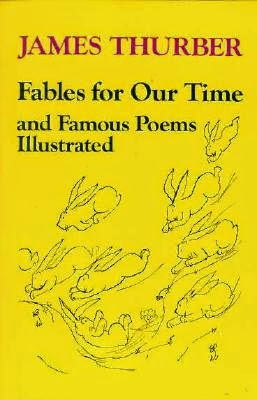
Fables for Our Time

by James Thurber
First sentence: “Once upon a Sunday there was a city mouse who went to visit a country mouse.”
Content: There’s nothing overt, and no swearing. It’d probably end up in the poetry section of the bookstore.

I think I’ve vaguely heard of Thurber before this book was picked for my in-person book group. But I’d never really paid him much attention. So I didn’t really have any expectations going into this.

It’s a series of short fables followed by illustrated poems (the poems are by other people). Pretty simple, right? The fables are pretty standard: animals doing human-like things. But the twist was that they had pretty… unusual… morals.

Things like “It’s not so easy to fool little girls nowadays as it used to be.”

And: “Early to rise and early to bed makes a male healthy and wealthy and dead.”

And: “Never allow a nervous female to have access to a pistol, no matter what you’re wearing.”

And: “The male was made to lie and roam, but woman’s place is in the home.” (The title of that one was “The Stork Who Married a Dumb Wife.”)

And at that point, I decided that Thurber — no matter what time period he’s writing in (the 1930s) is horribly sexist and doesn’t deserve to be read.

That’s a bit harsh. I get that these are satire (which I have a hard time with, anyway), and that they’re supposed to be stereotypes. But STILL. I was more impatient than amused. Stop it already with the sexist crap.

State of the TBR Pile: January 2015

It’s no secret that I dislike winter. Thankfully, winter in Kansas is relatively short and not terribly bitter. Even so, it’s also a good thing that I’ve got a handful of good books to keep me company as I snuggle under blankets and drink hot cocoa.

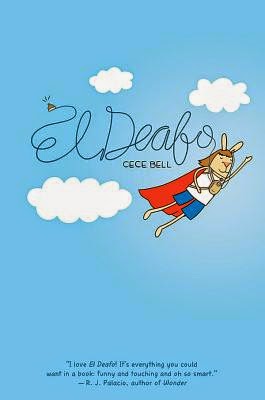
El Deafo, by Cece Bell (Because K liked it so much)
The Calligrapher’s Daughter, by Eugenia Kim (in-person book group pick)
The Jupiter Pirates, by Jason Fry (Cybils book)
The Castle Behind Thorns, by Merrie Haskell (Cybils book)
Nuts to You, by Lynne Rae Perkins (Cybils book)
The Winner’s Crime, by Marie Rutkoski (Because squee!)
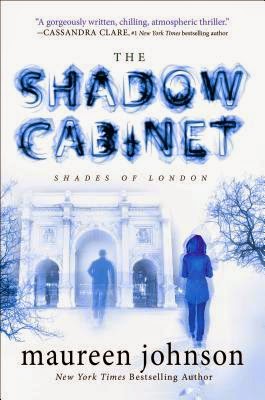
The Shadow Cabinet, by Maureen Johnson (It’s the new Shades of London. I HAVE to read it.)
Palace of Stone, by Shannon Hale (I’m invested in this series.)
The Slanted Worlds, by Catherine Fisher (Because I need to k now what happens next.)

What’s on your pile this January?