Audio book: The Wolf Hour

by Sarah Lewis Holmes
Read by David de Vries; Thérèse Plummer
Support your local independent bookstore: buy it there!
Listen at Libro.fm
Content: There is violence, though none of it is graphic. There are some biggish words, as well. It’s in the Middle Grade (grades 3-5) section of the bookstore.

Magia lives on the edge of the Puszcza — a huge, dark, magical forest — with her woodcutter father, mother, and siblings. Her mother has big dreams for everyone: Magia’s sister is going to be a healer, her brother a solder. And her mother wants Magia to be a singer. Except Magia wants to be a woodcutter like her father. But, she’s a good daughter, so she goes to music lessons with Miss Grand… and gets stuck in a story. And not a happy one at that.

I really liked this play and mashing of the Red Riding Hood and Three Little Pigs fairy tales. Actually, what I think I liked was the narration by deVries and Plummer. I loved listening to this one; it had the feel of an oral tale, and I loved how deVries and Plummer interpreted the text. Their narration kept me engaged with a text that I probably would have dismissed otherwise. But, because of that, I stuck through it. And while I wondered if there would be a happy  (or even hopeful) ending because Holmes kept the tension in the story going for a lot longer than I expected, it all does resolve well. Which was a nice touch.

In the end: surprisingly good.

The Cruel Prince

by Holly Black
First sentence: “On a drowsy Sunday afternoon, a man in a long coat hesitated in front of a house on a tree-lined street.”
Support your local independent bookstore: buy it there!
Review copy provided by the publisher.
Content: It’s violent. And dark. It’s in the Teen section (grades 9+) of the bookstore, but I’d give it to a willing 7th grader.

Jude has lived in Faerie ever since she was 10, when her mother’s first husband, a faerie general named Madoc, came to the human world and slaughtered her parents, and spirited away her, her twin sister, Taryn, and her mother’s first child, Vivian. It’s not been a comfortable life, being a human in Faerie, but Jude had made do. In fact, she’s done better than that: in spite of her terror at everything (because her life is constantly in danger), she has learned to fight, to strategize, and to, well, thrive.

And so when, as Faerie prepares to crown a new High King, she gets involved in the Court drama, she feels capable of handling what’s thrown at her. Except, things don’t quite go the way she thinks.

I loved this one. I like faerie stories generally, and Holly Black’s are particularly gorgeously told. I loved the dark undertones, and I loved the way Jude worked with her limitations and made the best of her situations, the way she played the situation. And, since this is the first in a series, I can’t wait to see how it all will play out in the next one.

Audiobook: Holidays on Ice

by David Sedaris
Read by the author.
Support your local independent bookstore: buy it there!
Listen on Libro.fm
Content: There was a lot of swearing. It’s in the holiday book section at the store every year.

Okay, yeah, so I’m starting the year off with a DNF. It’s not that I don’t like David Sedaris. I do. (Sometimes.) I like him a lot better on audio than in print, so I was hoping that this one would come off better listening to it. And the first one, his Santaland Diaries, kind of did. I didn’t really laugh (his humor is often too mean for me), but I was amused. But, by the third story, the Christmas letter where everything goes wrong, I was thinking that satire really isn’t my thing. I’ve learned this before; i just take things way too literally to be amused by satire. But I guess I thought maybe this one would be different. It wasn’t, though.

I had to abandon it to listen to a Cybils book, and was thinking I’d get back to this one. But, the holidays are over, I’m enjoying (for the most part) the other book, and I have no desire to listen to the other two stories in this one. So, I’m calling it a DNF and moving on.

Cybils Finalists Are Live!

The shortlists are live! (YAY!)

I was a first-round panelist for the first time in several years, and I remembered why I needed to back off from that… it’s SO very time consuming. I was lucky enough to be on a panel with some fantastic readers, who read a lot faster than me, and so I managed okay. I am really proud of the shortlist we came up with, and it was relatively painless as well. There were a lot of good books to choose from, and I’m happy with the list we came up with.

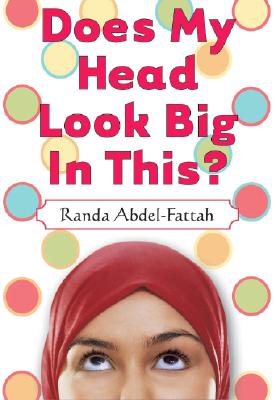
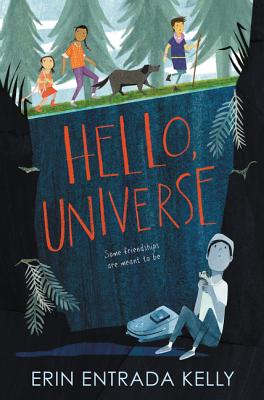
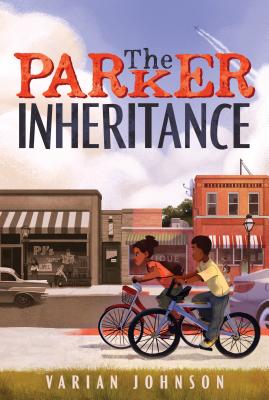
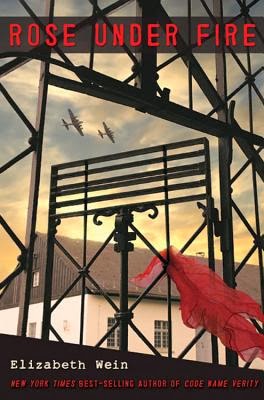
Here’s our books:

Click through to see what everyone else chose. (I even have a few nominations in the finalists, though I’m most happy about Escargot!)


My Best-Of 2017

When I said, last year, that 2016 was awful, I had NO idea that 2017 would be the dumpster fire that it was.  But it was, not just politically, but it was also challenging personally. I know that for years and years I’ve done a huge round-up at the end of the year (it’s how I got my tagline: it’s not just a blog name, it’s a diagnosis), but this year, I’m just not feeling it. I don’t know if it’s the dumpster-fire year, or the general busy-ness of my life, but I just don’t have the will to do it.

I will still do the numbers:

Middle Grade Fiction: 50
YA Fiction: 40
Graphic Novels: 14
Non-Fiction: 12
Adult Fiction: 17
Number of those that were sci-fi/fantasy books, not counting graphic novels:  61
Number of those that were by authors of color: 17
Number of those that had prominent characters of color: 23
Number of those that were audio books: 19
Number of those that were rereads: 16

Grand Total: 133

Abandoned (not counting Cybils books): 3

As for the bests? Here’s the five I turned in for my work best-of list:

And here’s the rest of the top 10:


I reread a lot this year! My favorites:

And some of my favorite audio books:

What were your favorites this year?

Cybils Reading Round-Up, Part 2

Frogkisser!
by Garth Nix
First sentence: “The scream was very loud and went on for a very long time.”
Support your local independent bookstore: buy it there!
Content: There’s really nothing “objectionable”, but it just feels… older. It’s in the YA section (grades 6-8) of the bookstore, but I’m sure a fifth grader who really likes quests and/or fairy tales would enjoy it too.

Anya is a princess in a minor kingdom, whose parents have died and left her and her older sister to be raised by her stepmother (who is off doing…something) and her husband (whom Anya calls her “stepstepfather”), who is trying to take over the kingdom. So, Anya is sent on a Quest, nominally to find the ingredients to make a lip balm to turn Prince Duncan back from a frog, but ultimately, for control of her kingdom.

It’s a charming little tale; I enjoyed the fairy tale references (Snow White is a male wizard, etc.) and it was mildly funny, but honestly, it was just too long. I lost interested about 23 of the way through, and skipped to the end to find out how it all finished, and I don’t feel like I missed much. I’m sure it’s enjoyable; I just don’t have the patience for it right now.

Beyond the Doors
by David Neilsen
First sentence: “Edward Rothbaum was in a grumpy mood.”
Support your local independent bookstore: buy it there!
Content: It’s a bit odd; it’s long, but there are interior illustrations, so it’s like the publisher (what’s up Random House?!) couldn’t figure out if it was for the younger or older end of the middle grade spectrum. It’s in the Middle Grade (grades 3-5) section of the bookstore.

The Rothbaum’s mom has been missing for years, and then a freak fire leaves their dad in a coma. So they’re bundled off to their (previously unknown) Aunt Gladys’s house, where there are no doors and nothing to eat but cereal. And Gladys is a bit… off… as well. Through some digging, the Rothbaums discover the real secret: their grandfather discovered an ability to jump into memories, and has gotten stuck there. And it’s up to the kids to figure out how to solve the problem.

This was fun. Nothing super brilliant, but I liked the kids and the idea of memory jumping is a clever one.

A Face Like Glass
by Frances Hardinge
First sentence: “One dark season, Grandible became certain that there was something living in his domain within the cheese tunnels.”
Support your local independent bookstore: buy it there!
Content: It’s long and slow moving. So, maybe not for a reluctant reader. It’s in the Young Adult section (grades 6-8) of the bookstore.

Neverfell is an outsider in the world of Caverna, an abomination… because you can see her emotions on her face. So, when Neverfell gets caught up in court politics, the fate of Caverna lies within her hands.

I usually like Hardinge’s books, but this one just fell flat for me. I wanted to like it, and I liked parts of it, but it was just… too long. And it didn’t hold my interest. I would put it down for days and just not care enough to pick it back up. (I would have abandoned it, except for the Cybils.) It’s not that it was badly written, or a bad story… it just didn’t hold my interest. So maybe it was more me than anything else.

Dragon’s Green
by Scarlet Thomas
First sentence: “Mrs. Breathag Hide was exactly the kind of teacher who gives children nightmares.”
Support your local independent bookstore: buy it there!
Content: There are a few scary bits. It’s in the middle grade (grades 3-5) section of the bookstore.

Effie Trulove’s grandfather spent time teaching her about the magical world, and even though she’s not quite sure she believes him, it was spending time. But, he’s passed on, and suddenly Effie’s thrown into situations where she comes to realize that, yes, her grandfather wasn’t making things up: there really is magic. So with the help of her trusty new friends, she can defeat the Bad Guys (who are out to steal all the magic books), and figure out her place in the magic world.

I said, once, that silly names and magic don’t a fantasy make. And I think that holds here. The names bugged me (so very much), as did the gendering of  the friends (the boys were the Warrior and Scholar, the girls were the Witch and the Healer, though Effie was the Hero). I thought it would have more of a D&D feel, and be predictable that way, but it veered a bit from that, which was nice. It just… bugged me, in the end. I’m not sure I can really put my finger on why. But this was was most definitely not for me.

Educated

by Tara Westover
First sentence: “I’m standing on the red railway car that sits abandoned next to the barn.”
Support your local independent bookstore: buy it there!
Release date: February 20, 2018
Review copy provided by the publisher.
Content: There are some harrowing scenes of abuse and some mild swearing (no f-bombs). It will be in the biography section of the bookstore, but I think any junior or senior in high school may be interested in it.

I was handed this book because I’m the Mormon on staff, and because Westover grew up Mormon, in Idaho, everyone just assumed I needed to read it. Having finished it, I’m here to say that it’s not for those of us who are Mormon (though I think we’ll see some inherent criticisms of our culture, that others might miss), but it’s for everyone, in the way The Glass Castle is for everyone. Westover’s story is remarkable.

The basics are these: she grew up on a mountain in Idaho, the child of a fundamentalist/survivalist father who used religion as the reason to spurn the government. She was a wild child, helping out in the junkyard, avoiding books, until her older brother, Tyler, left and went to college. That spurred something in her, and she tried to go to school (they were all nominally “homeschooled”, which is code for “there are scriptures lying around the house if you choose to read them”) but consistently fell back into old habits. It wasn’t until she began being physically abused by her older brother that she felt a need to leave. She got into BYU (she studied for the ACT, and managed to get a good enough score), and once there learned just how far from “normal” her family was.

It’s a remarkable journey, not just because Westover got “out” of the situation she was in (though there really isn’t a resolution with her abusive brother, in the end, which while disappointing in a narrative setting, makes sense), but because of her reflections on education, class, money, religion, and the government. It’s an interesting line she walked, between her family and the education she received, first at BYU and then at Cambridge, but it is made so by her writing, her open, honest (sometimes brutally so) reflections on not just her family (she points no fingers) but also herself. This book feels like a work of therapy; like Westover needed to write it to understand herself, and by sharing it with the rest of us, we may understand not just her family, but ourselves as well.

I’m not sure remarkable is the best word for it. I was caught up in the story, my breath taken away (as a mother I was shocked and appalled: how COULD they let these things happen to their daughter!) and I was in awe that she found a way for herself.

Excellent.

American Heart

by Laura Moriarty
First sentence: “One thing someone just meeting me might want to know is why I have two first names.”
Support your local independent bookstore: buy it there!
Review copy provided by the publisher.
Release date: January 30. 2018
Content: There are some disturbing situations, including an almost rape and violence against minorities. It will be in the YA (grades 6-8) section of the bookstore.

Sarah-Mary and her younger brother are living with their aunt in Hannibal, Missouri, because their mother is one of those Bad Mothers who can’t take care of her children. Her younger brother is okay with this (except for the missing mom part), but it chafes with Sarah-Mary. She has a limited amount of freedom, which chafes. And then, she and her brother meet an Iranian woman, whom Sarah-Mary ends up calling Chloe, who is  on the run, avoiding the mandatory Muslim registry that has been implemented for “our safety”. Her brother begs Sarah-Mary to help get Chloe to safety in Canada, and of course Sarah-Mary promises. And thus begins the adventure.

It’s not a pleasant one, either. Moriarty attempts to focus on the wrongness of profiling people by race or religion (there’s this scene where Sarah-Mary witnesses a raid on a house where the person was harboring Muslims) and touches on prejudice and discrimination. She also make sure that the dangers of two women hitchhiking are amply described.  Nothing “bad” ever happens, but the novel brushes up against it several times, and it’s only through luck, wit, and technology that Sarah-Mary and Chloe get away.

And along the way Sarah-Mary learns the one great lesson that we all need to learn, especially right now: people are people. They all have hopes, dreams, and stories. And that judging a whole religion or race by one person’s actions not only is not fair, it’s wrong. However, the Muslim registry doesn’t miraculously go away at the end of the book, nor does Sarah-Mary’s actions have a larger Meaning, so maybe Moriarty missed the mark on something big here.

Perhaps, though, that’s also the problem with the book. That Sarah-Mary (read: white people) needed a Muslim woman (read: any diverse person of color) to Show Her the Way. As a concept, it’s clumsy, and I’ve read some responses on the book that lead me to think that it might be harmful, reinforcing White Stereotypes of Islam and Muslims, and just the White Savior narrative. I did enjoy this while reading it, but in retrospect, I’m not sure it was the best idea for a white woman to tackle something like this.