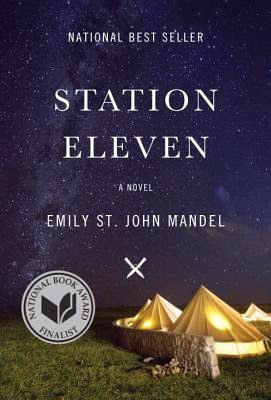
Station Eleven

by Emily St. John Mandel
First sentence: “The king stood in a pool of blue light, unmoored.”
Support your local independent bookstore: buy it there!
Content: There are a half-dozen f-bombs, spread throughout the second half of the book. It’s a bit meandering, but otherwise, it’s a good crossover story, and I’d give it to a teen interested in the post-apocalyptic genre. It’s in the Fiction section of the bookstore.

It’s difficult, I think, to write a linear plot for Station Eleven. There’s a pandemic, obviously: the world has to end somehow. An aside: I think it’s interesting that the way the world ends in fiction these days is through sickness or climate change rather than some horrific nuclear event. Times have changed since Canticle for Leibowitz.

Anyway, a pandemic — Georgia Flu — sweeps through the world, with a 99% fatality rate. It kills you within 48 hours of catching it, so it doesn’t take long. That simple thing, changes the world. Station Eleven follows an actor, Arthur, and everyone his life touches — ex-wives, son, paparazzi, best friend, the child actors he was in King Lear with — before and through the pandemic, exploring the connections between them and the way everyone handles the New World.

The book was less about the pandemic or the world collapsing as it was about the connections between people. The action flipped between before the pandemic to 20 years after, only vaguely hitting upon time in-between. There was enough movement to keep me interested; the huge cast of characters were always doing something, and the non-linear plot helped with that as well. I think it was an intriguing reflection on the way our lives touch one another, how seemingly random occurrences to one person have great significance to another. Admittedly, there were times when I didn’t get the connections: the paparazzi’s story, for example, was so disconnected from the rest, I wondered why his was included. But for the most part, I found the book to be an intriguing examination of connection and humanity in a time of crisis.
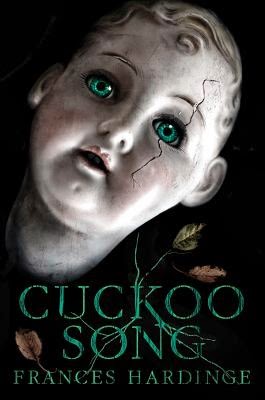
Cuckoo Song

by Frances Hardinge
First sentence: “Her head hurt.”
Support your local independent bookstore: buy it there!
Review copy left for me by the publisher rep.
Comtent: It’s more than a bit creepy, and it’s slow (like many Hardinge) books. I’ll probably put it in the YA section (grades 6-8), but I’d give it to a 10-year-old who showed interest and was willing to be patient with it.

I have not read everything Hardinge has read, but what I’ve read I’ve (almost) wholeheartedly loved. She is not an easy author to love; she makes you work for the story, often having a very slow start and building from there. Cuckoo Song was no different in that respect. It was a slow and somewhat confusing beginning, one that took me a bit to get into.

Triss has been ill for a good long while. She is Delicate, and often prone to Sickness. And so when she wakes after an accident during her family’s vacation no one seems to think that anything is the matter. Except she feels like something is … off. And her younger sister, Pen, (with whom she has always had a contentious relationship) is screaming awful things at her.  And so Triss does what any 12-year-old would do: she tries to figure out what’s wrong with her. And the deeper she goes into that mystery, the more she discovers that there are things Wrong with her family in some very dark (and somewhat magical) ways. And it’s probably up to her and Pen to fix things.

I don’t want to give away too much because much of what I loved about this was the slow realization of what was going on. There’s a reason the beginning is slow and confusing: Triss, herself, is slow and confused. The reader figures things out as Triss does, peeling one glorious, dark, delicious layer back after another. And no to worry: once the story really gets going, Hardinge’s writing is so lyrical it pulls you in, increasing the tension until the immensely satisfying ending.

It’s absolutely wonderful.

State of the TBR Pile: May 2015

Happy Mother’s Day, to all of you who celebrate it. I don’t think we have much planned here, but perhaps I’ll get some reading off my pile done today… Though looking at this pile, it’s heavy on the YA. I may have to look through my other piles and find some nice middle grade books to balance it out.

The Cage, by Megan Shepherd
The Heart of Betrayal, by Mary E. Pearson (she’ll be at the store on June 10th; I figure I should read this)
The Curious World of Calpurnia Tate, by Jacqueline Kelly
The Wrath and the Dawn, by Renee Ahdieh
Truth Commission, by Susan Juby
Saint Anything, by Sarah Dessen
Spelled, by Betsy Schow
Read Between the Lines, by Jo Knowles
I’ll Meet You There, by Heather Demetrios

What’s on your TBR pile?

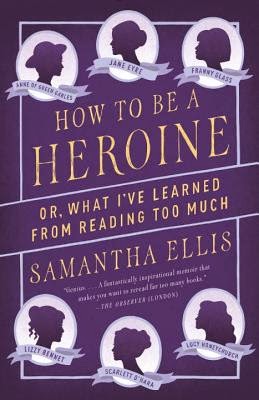
How to Be a Heroine

by Samantha Eliis
First sentence: “A couple of summers ago, I was on the Yorkshire moors, arguing (over the wuthering) with my best friend about whether we’d rather be Jane Eyre or Cathy Ernshaw.”
Support your local independent bookstore: buy it there!
Review copy provided by the publisher.
Content: There’s a handful — not more than six — of f-bombs and some mentions of sex, but nothing graphic. It’s in the adult creative nonfiction section of the bookstore, but I’d give this to anyone in high school and up.

Somehow, I ended up with a complimentary copy of this book. I really have no idea how it ended up on my pile. I do know the idea of it (and the subtitle: “Or, What I’ve Learned from Reading Too Much”) appealed to me. Any book that is about books or the love of reading has to be good, right?

And it was.

The book is nominally a reflection of Ellis’s life. She’s an Iraqi Jew, living in London, with all the cultural and religious implications you’d think that entails. She struggled against expectations, she struggled with faith, she struggled to find her own path. And, on its own that would be a fascinating story. But she framed the book with an analysis, heavily feminist, of classic heroines. From familiar to me ones like Jo March and Anne Shirley and Jane Eyre to ones I’ve never heard of, like Franny Glass and Esther Greenwood. She explored their narrative arcs, and what she took away from their stories. Both when she was younger and then, as an adult, how she feels the held up. Some did. A lot didn’t. And many she got something different out of the book than what she got when she was younger. She discovered new things along the way, and made me want to revisit books I’d loved when I was younger and read ones I’ve not read before.

And for all the literary criticism, it wasn’t a stuffy book. Ellis has a way of drawing the reader in, of making the characters pop to life. Perhaps that’s because she’s a playwright and has a way with words as it is. But whatever the reason, this one won my heart over.

Momo

by Michael Ende
First sentence: “Long, long ago, when people spoke languages quite different from our own, many fine, big cities already existed in the sunny lands of the world.”
Support your local independent bookstore: buy it there!
Content: If you can read The Phantom Tollbooth, then this one is for you. It’d be in the Middle Grade (grades 3-5) section of the bookstore.

This book is one of the reasons why, busy as I am, I won’t give up an in-person book group. (I’ve been a slacker with my on-line one lately…) While I read The Neverending Story by Ende as a child (when the movie came out…), I had no idea (and no inclination to find out, for some reason) that he’d written any other books. But, because it’s probably been 30 years since I’d read Neverending Story (or seen it for that matter; we may have tried showing it to the kids), I had no idea what to expect.

What I got was a sweet little fable. Momo is a little orphan girl that shows up in this town and moves into the old amphitheater. What endears her to the people in this town to Momo is twofold: she has a remarkable imagination, and she truly listens to them. Then one day, the grey men show up and infiltrate the town, stealing time from people. Suddenly, no one has enough time for Momo to listen to them, and everyone except the children stay away. And even the children are different. Momo happens to find out the grey men’s plan, and then sets out on an adventure to get her friends back.

It reminded me most of The Phantom Tollbooth: it was a bit on the preachy end — YEAH I get it, unplug from being busy and actually CONNECT with people — but it was also sweet and tender and had that late-60s/early-70s feel to it. It’s nothing earth-shattering, but it is very sweet.

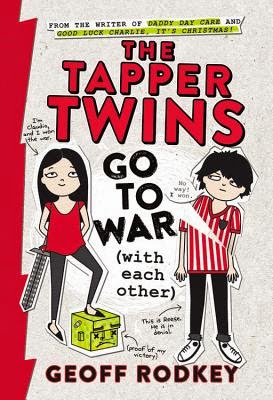
The Tapper Twins Go To War (with each other)

by Geoff Rodkey
First sentence: “Wars are terrible things.”
Support your local independent bookstore: buy it there!
Review copy picked up at Winter Institute for me by my co-workers
Content: There’s a lot of silliness, and it’s a “notebook” book and told in an oral history form, which means lots of pictures, not a lot of exposition, and a generous mix of technology. Perfect for reluctant readers. It’s in the middle grade (grades 3-5) section of the bookstore, but it’d be good up through 7th, I think.

The Tapper twins, Claudia and Reese, are at war. They disagree on how it started, but both are pretty invested in making each other’s life miserable now. It escalates from name calling to pranking (a dead fish left in a backpack) to online bullying to out-and-out destruction in an online gaming forum.

It’s told as an oral history; Claudia is the narrator, and nominally the one telling the events as they unfold, but she interviews friends and family (well, she uses text messages from her parents) and neighbors to defend or refute her point: that Reese is the one who started the War, and that he Deserved It. Of course, Reese totally rejects that idea.

Sure, this isn’t a lot of things, but it IS a lot of fun. And honestly: that’s what kids want and like. Personally, I loved the dynamic between the twins, their push and pull with each other. And while it’s an upper-middle class life that they live (computers, tablets, phones, babysitter, private school), and while it’s yet another New York City book, it’s a fun “fantasy” life for those of us in middle class, Midwest America (although yeah, I’d like to have their life and their problems) and a fun look at kids in New York City. It got me laughing, aloud at times, and sometimes that’s exactly all you want out of a book.

And I’m sure kids will love it.

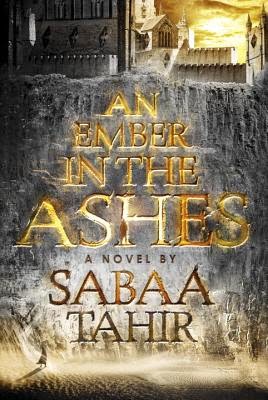
An Ember in the Ashes

by Sabaa Tahir
First sentence: “My big brother reaches home in the dark hours before daown, when even ghosts take their rest.”
Support your local independent bookstore: buy it there!
Review copy provided by the publisher.
Content: It’s dark and it’s brutal. Seriously. More so than Hunger Games. And because of that, it’s in the Teen section (grades 9+) of the bookstore.

Laia has grown up in a world where her people, the Scholars, are a captive people. Their great enemy, the Martials, conquered them and have shown no mercy. They imprison the Scholars, they rape the women, they torture and kill those that they catch. Laia’s parents were part of the resistance, and they were betrayed and killed, along with her older sister. She and her brother Darin lived with their grandparents, trying to fly under the radar of the Martials. Until one day, when they don’t. And the Masks come for them, kill her grandparents, take Darin. Laia barely gets away.

Elias has grown up at Blackcliff, the military school that trains the Martial Masks. An unwanted bastard son of Blackcliff’s Commander, he spent the years before he turned six with the Tribal people in the desert. Then the Augurs — the mystic, magical, immortal Martial prophets — came for him and thrust him into a kill-or-be-killed world. The only way he survived was because of Helene, his fellow student and best friend. Now, just as he was graduating and dreaming of freedom, the Augurs decide that it’s time for a new emperor, and pit Elias and Helene against each other and two other students in a bid to be emperor (or die).

I think the most logical comparison read for this book is Game of Thrones. This is brutal, unflinching, dark, violent, harsh… there’s magic, but it takes a back seat to the exploration of Martial culture. And yet, underneath all of that dark is a hope, a light. Elias, for all the terrible things he’s done (and that have been done to him), turned out to be a decent human being. Laia, even though she thinks of herself as weak, has a quiet strength and bravery to her that isn’t readily seen or valued. It’s a very human book, as well: the characters are complex and messy, there’s depth even to the most hateful of characters (Marcus and the Commander, I’m looking at you), that makes them understandable, even if they aren’t likable.

In fact, the only thing I didn’t like about this book was that there are many unresolved issues, and many unanswered questions at the end. Then again, if this is the quality of writing that Tahir gives us with her first book, I only have high hopes for where this story is going to go.

First Sunday Daughter Reviews: May 2015

Happy May! (Seriously: It’s MAY? School ends in 19 days? WHERE DID THE TIME GO? I could swear it’s still March, although I’m glad it’s not.) On a side note: I just realized that I’ve crossed the 2500 post threshold. I’ve stopped keeping track of blogging milestones (it’s been more than 10 years, people!) but that seems something worth mentioning! (I’m amazed, anyway….)

My kids’ reading has gone down this month. In fact, out of the three that are at home. I can only think of one who actually read something at all. (Not true: I just thought of something K read.) A lot of that is end-of-the-year busy-ness: field trips and event days and projects and plays, but some of that is an uptick in electronic usage. That seriously needs to be curbed, especially with summer coming on. Maybe rewards for books read? Suggestions are always welcome….

So, C got A hooked on this:

 She seriously plowed through it, eating it all up. And for the record, she’s Team Cal (which makes C very happy).

And I picked up an ARC of this in Pasadena, and K discovered it:

It’s a bit “weird” but it’s also pretty cool: a girl magician who has to play basketball to defeat the bad guy. I think she thinks it’s weird because of the art style, but she completely loves the story.

That’s about it. Are your kids reading anything good?

April 2015 Round-up

I completely spaced getting this post up yesterday!  I don’t know if that’s the first time it’s happened, but it probably won’t be the last. Life has been super crazy. I still managed to read a bunch…

My favorite this month was

All the Light We Cannot See

It’s really stayed with me in ways that I haven’t expected. Definitely worth the hype.

As for the rest:

YA:

Miss Mayhem

Middle Grade:

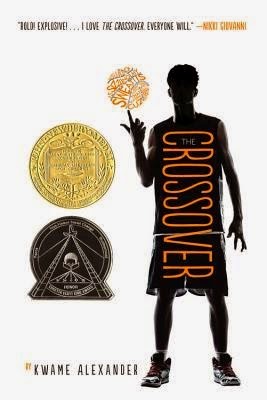
Crossover
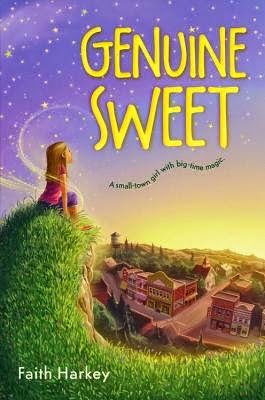
Genuine Sweet
The Island of Dr. Libris
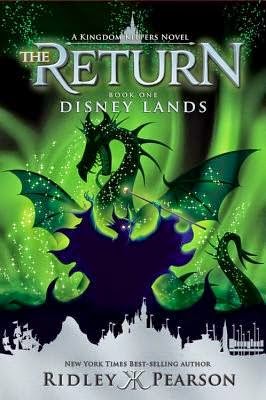
The Return: Disney Lands
The Trap
Willy Maykit in Space

Non-fiction:

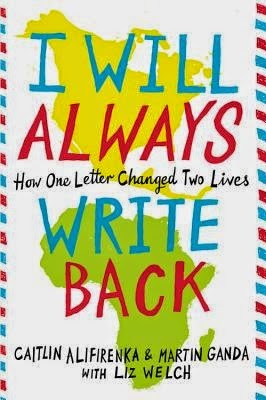
I Will Always Write Back
Life from Scratch

Adult:

Trigger Warning

What did you like this month?