October 2014 Wrap-Up

Happy Halloween!! And as a treat, I give you our family pumpkins:

I like them all, but my favorite is the one 8-year-old K carved herself (on the right). Here it is by daylight:

Cracks. Me. Up.

As for reading, I read (and reread) a ton this month. But, hands down (WHY CAN’T I SELL THESE? *shakes fist*) my favorite was this:

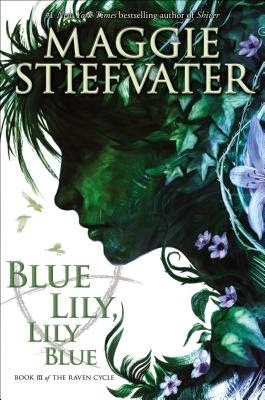
Blue Lily, Lily Blue

So good. SOOOO good.

As for the rest:

Middle Grade

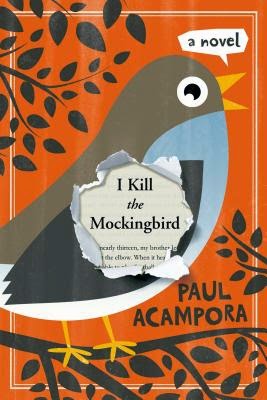
I Kill the Mockingbird
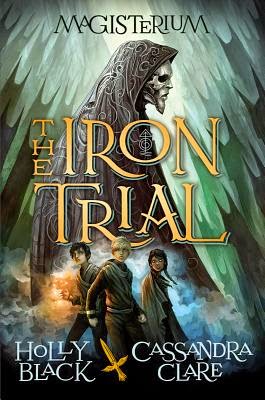
The Iron Trial
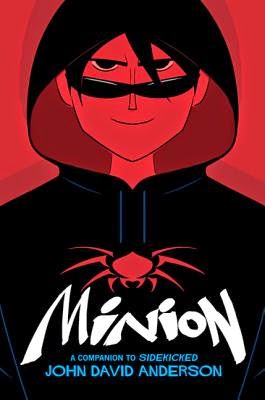
Minion
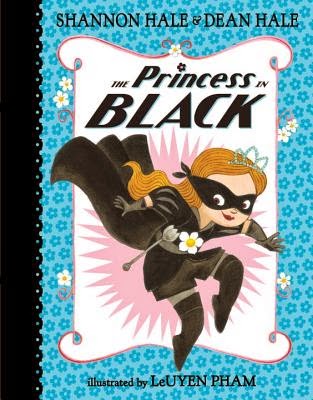
The Princess in Black

YA

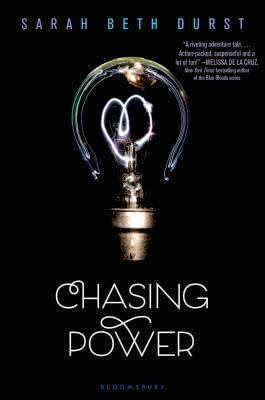
Chasing Power
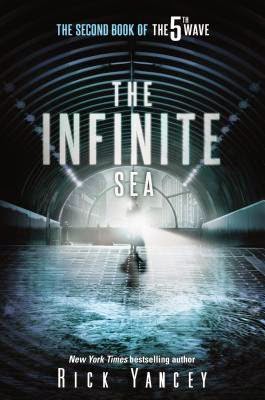
The Infinite Sea
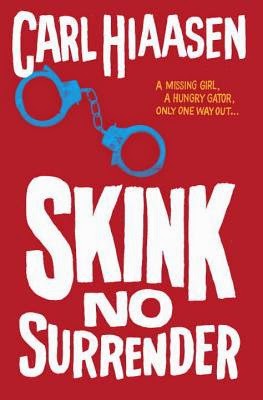
Skink: No Surrender

Graphic Novel

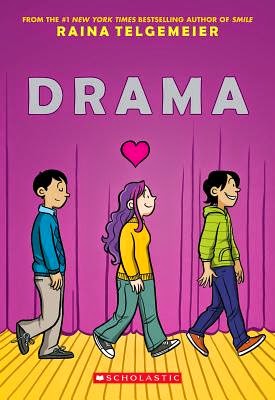
Drama
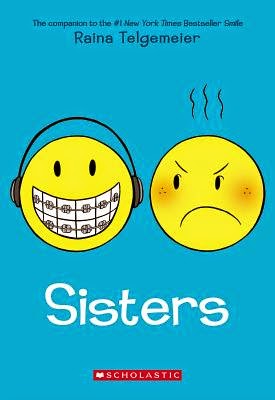
Sisters
Smile

Nonfiction

Port Chicago 50

Adult

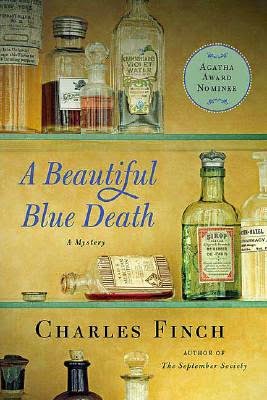
A Beautiful Blue Death
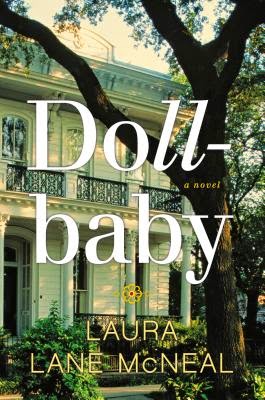
Dollbaby
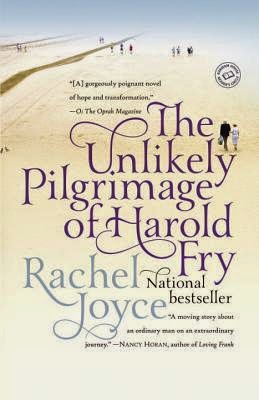
The Unlikely Pilgrimage of Harold Fry (audio)
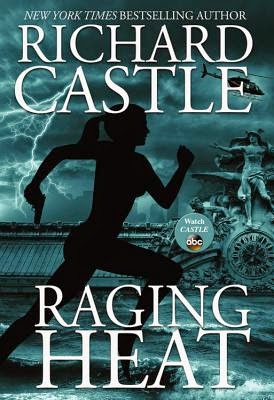
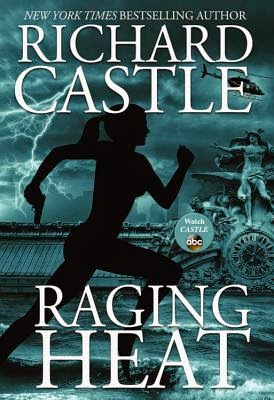
Raging Heat

What were your favorites this month?

The Port Chicago 50

by Steve Sheinkin
First sentence: “He was gathering dirty laundry when the bombs started falling.”
Support your local independent bookstore: buy it there!
Content: There’s some disturbing moments, not only violence, but also racism. I was made uncomfortable by it (which I think was the point). There is also about four censored f-bombs. Sheinkin is masterful at simplifying data  without being simplistic, so I think this is suitable for 5th grade on up. It’s in the Middle Grade History section at the bookstore.

During the summer of 1944, on a little-known port in the San Francisco Bay where Navy ships were loaded with ammunition, an enormous explosion happened. So large that it killed more than 300 men were killed, the pier and the docked ship were obliterated, and men in the barracks were injured, some severely.

It sounds like a tragedy, but nothing too serious. Except for this fact: of the 320 men who were killed, 202 of them were African American men who had signed up for the Navy and had been relegated to the dangerous job of loading the ammunition. The way the Navy worked in 1944 was that the white men got to serve on the ships; the black ones were segregated out and assigned the menial tasks the white sailors didn’t want.

But it gets better. The men who survived the blast were shuttled to a nearby port, and even though they were suffering trauma from the blast (who wouldn’t be), the were ordered to go back to loading the ships. Fifty sailors flat out refused orders. So they were put on trial for mutiny. And convicted. Even though there was never any plot to defy their superiors or take over the base. They just were tired of being treated differently than the white sailors and wanted to know why.

Some good came out of this: because the Secretary of the Navy was a (mostly) reasonable man (and because Eleanor Roosevelt got involved) the Navy (and soon after the rest of the military) was one of the first places that was desegregated in the country.  But, was the price of being convicted mutineers and spending 16 months in jail too high?

Sheinkin doesn’t whitewash anything that happened during those months and years surrounding the Port Chicago 50 trial. He lets the Naval officers stand for themselves (and any reasonable person would see that they were IDIOTS. Or maybe that was just me), and lets the trial transcripts stand for themselves. Thurgood Marshall even got involved, trying to get the government and the military (the officers of which come off as a bunch of racists; I was going to use a stronger word, but changed my mind) to exonerate these men for being human. Sheinkin pointed out that this was the first event on the long path of the Civil Rights movement, which was something I didn’t know, and something we don’t often remember in history books.

It’s extremely well-written and as intriguing as Sheinkin’s other works. He’s a masterful history writer, and knows just how to make things interesting and informative without being dry.

Excellent.

Skink No Surrender

by Carl Hiaasen
First sentence: “I walked down to the beach and waited for Malley, but she didn’t show up”
Support your local independent bookstore: buy it there!
Content: Even though the reading level isn’t very difficult, the nature of this book solidly lands it on the YA (grades 6-8) shelves. Not for the young or the faint of heart.

Richard has grown up in a little beachside town in Florida his whole life. And it hasn’t been a bad life; even though his father died in a freak accident a few years ago, Richard has his mother, older brothers, an okay stepfather, and his best friend — his cousin Malley.

Richard and Malley had a long-standing nighttime ritual on the beach: walking and looking for turtle nests. Then one night, two things happen: Malley doesn’t show up, and Richard meets former-governer-turned-ecoterrorist Clint Tyree, otherwise known as Skink.

It turns out that Malley has run away with a guy she met online in a chat room. And even though it started out okay — there was video of her willingly getting in his car — it took a turn south. And the people on tap to rescue her? Richard and Skink.

I wanted to like this. And sometimes, I did. I really did laugh at the oddness of Skink, at the adventures that Richard found himself in. But I couldn’t get past the whole SHE RAN AWAY WITH A GUY SHE MET IN A CHAT ROOM problem. And it’s corollary: SHE NEEDED A GUY TO RESCUE HER. Aren’t we past all this? I do have to give Hiaasen one bonus point: when the guy tried something on Malley she punched him in the nose, breaking it. She also said that he needed to be caught and punished because the next girl might not be as strong as her. So, she’s not completely helpless. And Richard rescued her not as part of some macho thing, but because he truly cared for her. So, there’s that as well.

And I did like the environmental trivia that Hiaasen threw in, as well; he really does make Florida come alive. So, I didn’t hate the book in the end. I just wish there was a better premise for it.

Raging Heat

by Richard Castle
First sentence: “Nikki Heat wondered if her mother hadn’t been murdered what her life would have been.”
Support your local independent bookstore: buy it there!
Others in the series: Heat Wave, Naked Heat, Heat Rises, Frozen Heat, Deadly Heat
Content: These aren’t for the younger fans of the TV show. Grisly murders (though not terribly descriptive), off-screen sex, and lots of f-bombs puts it squarely in the adult mystery section at the bookstore.

I don’t know if I have anything new to say. I still enjoy these books for their own sake; although this one had highlights from both season 5 AND 6, it’s really it’s own beast. The mystery had me guessing, as Heat and Rook wandered the streets of New York and Long Island looking for the murderer of a Haitian immigrant. It was a pretty messy mystery, with lots of characters involved (both on the murdered end — there ended up being 4 or 5, I think — and as the murderers) and while I probably could have figured it out, I didn’t. I just sat back and thoroughly enjoyed the twists and turns.

I also enjoyed the tension between Rook and Heat as they tried to balance life, work, and romance. If you follow the show, you’ll figure out where the book character’s relationship is going, but it’s a satisfyingly bumpy ride. (I especially enjoyed it when Heat lost her cool and dumped a bottle of Tequlia in Rook’s lap. He really did deserve it.)

All I can say is I’m glad the show’s back on, so I can get a preview of the next book.

A Beautiful Blue Death

by Charles Finch
First sentence: “The fateful note came just as Lenox was settling into his armchair after a long, tiresome day in the city.”
Support your local independent bookstore: buy it there!
Content: It’s actually quite tame, and not at all difficult to read. It’s in the mystery section at the bookstore, but it’d be good to give to a teen who really likes Sherlock Holmes.

It’s 1865, London, and Charles Lenox is one of those aristocratic men who like dabbling in things. He’s mainly a collector of maps and a bit of an explorer, but his hobby (and possibly passion) is being a detective. And, because it’s that sort of book, he’s much better at it than the bumbling, arrogant, unobservant Exeter, a member of the Scotland Yard.

Sounding familiar? It should. because Charles Lenox is just a much nicer Sherlock Holmes.

The murder in question is that of Prudence Shaw, a former maid of Lenox’s next-door neighbor and BFF, Lady Jane Grey. Scotland Yard (and her current employer) are calling it a suicide, but Lenox knows differently. She’s been poisoned by a rare (and expensive) poison called bella indigo. The question is: who did it, and why. (Well, duh. Isn’t that always the question?)

I thoroughly liked Lenox; as a character, he was charming and intelligent and just a pleasure to be around. I really liked his relationship with Jane, how it wasn’t a romance, but a real honest-to-goodness friendship. What I lost patience with, however, was the mystery. While I didn’t figure it out (I’m not good at those things), I wasn’t surprised at the end (which is probably a good thing). But, by the end, I had lost interest in the whole murder thing. And then it went on for several chapters after the final reveal, chapters I ended up skipping.

It wasn’t a bad mystery, just not one I was super enthused about. Liking Lenox as a Sherlock Holmes knock-off wasn’t enough to make me enthused.

Minion

by John David Anderson
First sentence: “I want you to know, right from the start, that I’m not evil.”
Support your local independent bookstore: buy it there!
Others in the series: Sidekicked
Content: There’s really nothing objectionable, and I ended up putting these in the Middle Grade (grades 3-5) section of the bookstore. It still feels slightly older than that, however. I just can’t place why.

Michael Morn is a villain. His adoptive father is one of those mad scientist types, who invents boxes that do… well, stuff. Like scrambling all the cameras, or maybe blowing up. And so the duo have committed crimes. Nothing extravagant, mostly just bank robberies when they needed the money.

But Michael also has a secret: he has unusual powers of persuasion. When he looks someone in the eye, he can compel them to do something. Sure, it has to be within the realm of possibility, but he can do it. So far, he and his dad have kept that power under wraps, only using it when they really have to. But with the arrival of The Dictator — a true super-villain — and his nemesis, the Comet, Michael’s life is about to change. And not necessarily for the better.

I remember liking the companion book to this, Sidekicked, but even so, when I picked this up, I wasn’t quite sure what to expect. On the one hand, it’s a very clever take on superheroes and super powers. I like the world that Anderson has created, where being super isn’t necessarily an unusual thing and superheroes aren’t necessarily saviors of the world. And where villains are just people trying to scrape by.

That said, I felt that this one was missing something: A concrete ending, for starters. I won’t give anything away, but it left more questions than answers by the end. And it didn’t feel like a real middle grade (or even YA) novel, either. Michael did stuff, sure, but mostly he was reacting to the adults around him, and spent more time being their pawn (from this father, to the crime boss his father worked for, to The Dictator, in the end) and didn’t actually do anything. It felt like an elaborate set-up without much of a pay-off.

That said, it wasn’t bad either. Or, at least, not bad enough to put down. But it wasn’t satisfying in the end.

Audiobook: The Unlikely Pilgrimage of Harold Fry

by Rachel Joyce
Read by: Jim Broadbent
Support your local independent bookstore: buy it there!
Content: There are a couple of characters with foul mouths and swear quite a bit (including multiple f-bombs), but that’s it. It’s also a book about aging, life, death, and marriage, so I’m not sure how interested younger people would be in it. It’s in the adult fiction section of the bookstore.

I don’t really know what inspired me to pick this one up; I suppose it’s because I’ve heard a lot about it over the months it’s been out, but I guess I needed a journey story, because this one hit home,

Harold Fry is 65 years old and has just retired from 45 years as a salesman at a local brewery. He doesn’t have much to do, and he and his wife, Maureen, haven’t had much of a marriage in 20 years. So, mostly he just sits around. So, when he gets a letter from Queenie Hennessy, a colleague he hasn’t seen in 20 years, that she’s dying of cancer, he sets out to mail a letter back to her. And then just keeps walking.

A girl in a garage inspires Harold: perhaps if he walks the 600 miles from his home in Kingsbrige to were Queenie is in Berwick-Upon-Tweed, perhaps she will live.

What Harold didn’t count on was how much his walk would change his life.

I completely empathized with all the characters in the book. Sometimes, Harold struck home, with his need to do something to feel productive. Sometimes, it was Maureen, with her frustrations about the stagnation of their marriage — though there’s more to that story, which is slowly revealed over the course of the book. And it was a testament to the kindness of strangers. Harold started out spending money and staying at hotels, but over the course of the 87 days he walked, he increasingly became more dependent on other people. And they didn’t disappoint; sure, there are unkind people, but Joyce seems to be affirming that most people in this world are decent.

It did get a bit meandering in the middle, but I was so enthralled with Broadbent’s narration, I didn’t mind. He was spot-on with all the characters, from the Scottish nuns in the hospice to Maureen’s irritation, to the 70-something next door neighbor, Rex, who turns out to be a gem.

I loved it.

10 Awesome Middle Grade/YA Families

I had a bad week, and I ended up pulling the Casson family books (by Hilary McKay) off the shelf, just for some comfort reading. And I realized: THIS (with the exception of Bill, who’s a jerk) is a great family. And it got me wondering: with all the dead moms, and bad dads, and missing parents in middle grade and YA literature… how many books are out there with some really great families? (Great enough that you remember they’re wonderful.)

This is what I came up with.

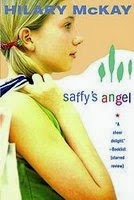
Saffy’s Angel, by Hilary McKay: I couldn’t live in the Banana House, but I want, very much, to live next to the Banana house and be best friends with the Cassons.

The Misadventures of the Family Fletcher, by Dana Alison Levy: I loved the every day feel of this, and I wanted Dad and Papa to be my parents. They were really amazing dads.

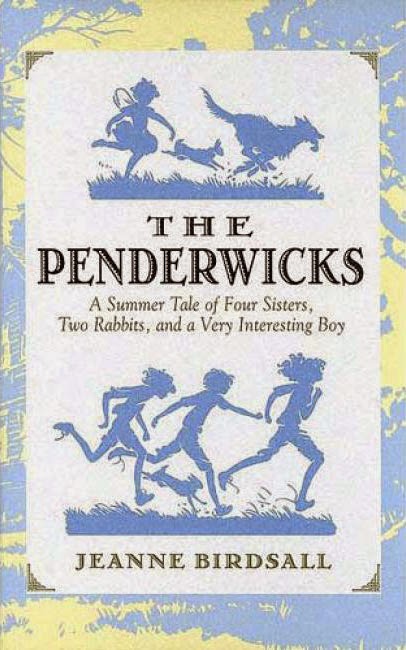
The Penderwicks, by Jeanne Birdsall: I feel like this is one of my go-to books for these lists, but it really is that good. And yeah, there is a dead parent (Mr. Penderwick gets remarried the end of the second one, though.), but I love the way the Penderwicks work as a unit.

Tuesdays at the Castle, by Jessica Day George: Another one where the family just rocks. Sure, Mom and Dad are missing for most of the book, but the kids care enough to look for them and fight for them, and the work really well as a unit. Even though I loved Celie on her own, I really enjoyed her in context of her family.

Penny Dreadful, by Laurel Snyder: I’m not sure this one is a good family as much as a good community book. I loved the place Penny ended up and the people she met. The town became her family and I loved that.

Three Times Lucky, by Sheila Turnage: same goes for Mo and the town of Tupelo Landing. She doesn’t have a “family” but she finds one in the town and Ms. Lana and the Colonel. I want to move there and just be friends with everyone.

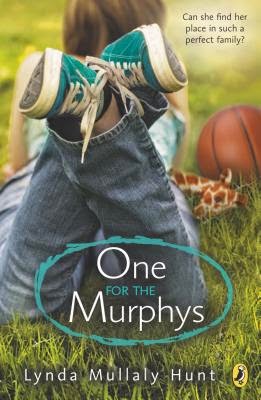
One for the Murphys, by Linda Mullaly Hunt: Another non-traditional family. There is one in the book, but the main character doesn’t belong to it. And what I loved is that the family embraced her and made her one of their own. Wonderful.

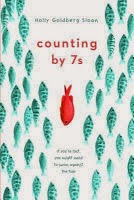
Counting by 7s, by Holly Goldberg Sloan: The best part of this book is not the dead parents in the beginning, but the fact that Willow created another family for herself out of broken fragments. And it was a good thing.

The Raven Boys, by Maggie Stiefvater: Sure the focus of the book is the boys and the search for the ley line and Glendower. But let’s not forget the psychic house and the way these women — some related, some not — are a complete, close-knit family. They are there for each other. And much like the Cassons, I wouldn’t want to live there, but I would want to visit often.

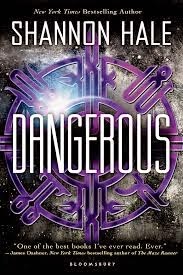
Dangerous, by Shannon Hale: Again, family is not the center of this story, but let’s take a minute to recognize that Maisie has awesome parents. They don’t hover, they don’t control, they let her be what she wants and needs to be. It’s wonderfully refreshing.

So, what did I miss? (And this is not an especially diverse list. Help me out?)

Graphic Novel Roundup – Raina Telgemeir Edition

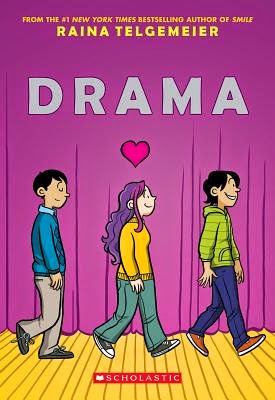
Drama
Support your local independent bookstore: buy it there!
Content: There’s middle school drama, but other than that, it’s pretty tame. It’s in the teen graphic novel section of the bookstore, but only because it feels a bit mature for the middle grade section.

Callie is a theater nerd. She’s not one to be on stage — she can’t sing, and her acting needs some work — but she LOVES being backstage, helping create the sets. And so, for the middle school production (middle school!) of Moon over Mississippi, she’s been assigned to be in charge of the sets. That’s overwhelming enough, but Callie’s personal life has taken a turn for the confusing. She thought she was getting somewhere with her long-time crush, but he went back to his girlfriend (who’s not terribly nice). And then a set of twin brothers show up in her life to just confuse things more.

I really liked Telgemeir’s depiction of middle school (spot on!) and the theater program (again, spot on!). I loved Callie’s spunk and drive and her longing to feel accepted and belong. And even though it was Callie’s story, I thought that all her friends — from the twins to her best friend, Liz — were fully developed. (Though there were some stereotypes, the mean girl girlfriend being one.) My only real complaint was the inclusion that all guys who do theater (at least on-stage) are gay. It’s a stereotype, and although there are gay boys who do theater, not all theater boys (even on-stage) are gay. I know I’m nitpicking, but here in Kansas, that’s the kind of stereotype that really takes hold and so parents discourage boys from participating in the arts because of it. I would have appreciated one character, at least, who wasn’t part of that.

Even so, it was a lot of fun to read.

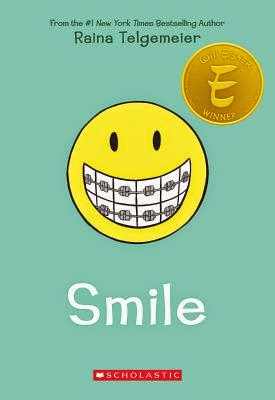
Smile
Support your local independent bookstore: buy it there!
Content: much the same as Drama; it’s got some themes that are a bit old for the younger elementary crowd, but there’s not much “objectionable”. It’s in the Teen Graphic Novel section, mostly because it seems to do better there.

Every once in a while, there’s an author (or in this case an author/artist) who gets the middle grade years so absolutely perfectly. The awkwardness, the challenges with friends, the wanting to be liked and not feeling liked.

Telgemeier is one of those people. It’s loosely based on her early teen years, and tells the story of how she lost her two front teeth in an accident and the dental work it took to make her smile what it is today. But it’s also the story of acceptance (inner and outer) and the things we’ll do and put up with so we don’t feel alone.

One thing I liked (well, I liked lots of things) was that the middle and high school Telgemeier drew was a diverse one. From her friends to the boys she liked, there were all shades of skin. And it wasn’t  this one’s the “black friend” or the “Asian friend”. They were all just friends — well, sort of; some of her friends, as A pointed out when she read it, were not very nice — and it wasn’t like Telgemeier was forcing a diverse world on things. It felt natural.

And, on top of that, she set it in 1989, which was a lot of fun to revisit.

Sisters
Support your local independent bookstore: buy it there!
Content: This one is “tamer” (not that the other two are wild) than the previous two books, and has a more universal appeal, being about sibling rivalry. It’s in the middle grade graphic novel section of the store.

This is another memoir(ish) graphic novel, that takes place during Smile (though you don’t need to read that one to enjoy this one). It’s centered on Raina’s relationship with her younger sister, Amara. It has their backstory, their relationship as siblings as well as a road trip (yay road trip!) to visit cousins in Colorado for a family reunion.

It’s not an easy relationship, the one between Raina and Amara. There’s jealousy, age difference, interest differences, and (of course) just plain sibling rivalry. It’s the usual stuff: hitting, yelling, punching, name-calling. But an event on the road trip (I knew they were useful!), helps the sisters see that maybe it’s okay if they’re different. They can still get along.

I think, out of the three, this one was the least angsty, the least middle-school drama-y, and my personal favorite. Not only because I still remember fighting with my siblings, but because I’ve got all these girls around here who fight and squabble and don’t get along. Maybe, someday, they’ll figure it out. So, this one hit home in a way the other two didn’t.

A word on her art: it’s a bit cartoon-y (that’s the techincal term), but I thought it fit her story-telling style. It’s not terribly detailed, but it served it’s purpose, and the bright colors drew the eye in.

I handed all three of these off to the girls and they enjoyed them as much as I did. I’m glad we finally got around to reading her work!

Blue Lily, Lily Blue

by Maggie Stiefvater
First sentence: “Persephone stood on the bare mountaintop, her ruffled ivory dress whipping around her legs, her masses of white-blond curls streaming behind her.”
Support your local independent bookstore: buy it there!
Release date: October 21, 2014
Others in the series: The Raven Boys, The Dream Thieves
Content: There’s swearing, lots of it, including f-bombs, but nothing felt gratuitous. There’s also violence and some adult drinking. Plus, it’s a complicated story arc that may prove confusing for younger readers. It will be in the Teen section (grades 9+) of the bookstore.

I’m always at a bit of a loss when dealing with this series. I just want to throw it at everyone (especially people who come in the store. WHY WON’T THEY BUY THIS BOOK?) and say “READ THIS! THIS IS WHAT STORYTELLING AND WRITING IS.” It really doesn’t matter that I love the characters (“What [Orla] didn’t realize about Blue and her boys was that they were all in love with one another.” Count me in on that.), and I am intrigued and fascinated by the people they meet. In this book, most especially, it was Jesse Dittley, the man who took care of the cave in the hills, who talked in ALL CAPS and called Blue an ANT. He was wonderful.

The basic plot that Stiefvater weaves is that Blue, Gansey, Adam, and Ronan are getting closer to waking their unknown king, Glendower. Blue’s mom, Maura is missing, gone off on a quest of her own. And Mr. Gray’s employer, Greenmantle (“Greenmantle had always liked the idea of being a mysterious hit man, but that career goal invariably paled in comparison with his enjoyment of going out in the town and having people admire his reputation and driving his Audi with its custom plate (GRNMNTL) and going on cheese holidays in countries that put little hats over their vowels like so: ê.”), has shown up in town, furious at Mr. Gray for defying him, determined to make him pay.

But, things don’t necessarily go right. (There is one more book, after all.) And Blue and the boys are possibly in deeper than they can handle.

What I love most (as evidenced by the frequency of quotes already), however, is the writing. It’s so drop-dead gorgeous. Stiefvater is a poet here, capturing so much — mood, character, events — with so little (even her use of swearing has Meaning.), it’s breathtaking.

If you haven’t picked these up yet, the series is almost done. Now is a good time to start. You won’t regret it.