February 2014 Round-up

I think I figured out why I was in a reading slump. Look at my adult titles? So far, this year, I’ve read 9 of them. Which is a quarter of the total I read for the entire year last year. And the year’s not even a quarter done. And I’ve only read 12 middle grade and YA books COMBINED. Now I know: adult books make me grumpy. I’ve been reading MG and YA books for the past week and I’ve been SO much happier.

That said, my favorite last month was:

The Crane Wife

I know it’s an adult book, but it’s Patrick Ness, and I forgive him for that. It really is a charming book.

As for the rest:

Middle Grade:

The Year of Billy Miller
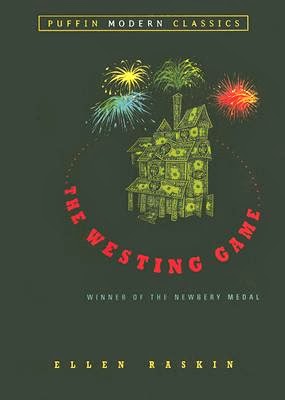
The Westing Game
What the Heart Knows
Jinx’s Magic

Adult:

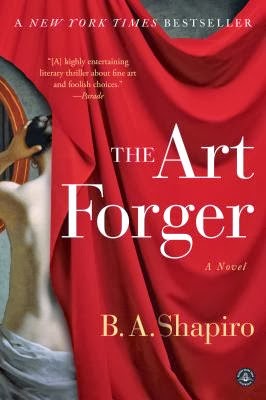
The Art Forger (audio book)
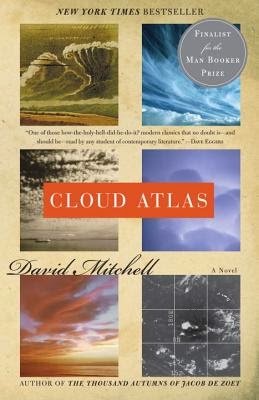
Cloud Atlas (DNF)
One More Thing (audio book)

Non-fiction:

From Scratch

YA:

Cress
Grasshopper Jungle
The Tyrant’s Daughter

What did you enjoy reading this month?

The Tyrant’s Daughter

by J. C. Carleson
First sentence: “My brother is the King of Nowhere.”
Support your local independent bookstore: buy it there!
Review copy downloaded from NetGalley
Content: Some mild language, and some indirect violence. It sits in the YA section (grades 6-8) of the bookstore. I don’t know if I’d give it to a 5th grader or not. I think it depends on how news-savvy the kid is.

Laila is the daughter of the ruler of an unnamed Middle Eastern country. She has a good life — trips to Paris with her mother, a private tutor, a resort by the sea. Then one day her world turns upside down when her father is assassinated right before her eyes.

Suddenly Laila, her mother, and her younger brother, Bastian (the “little king”) are exiled, taking refuge in the United States as Laila’s fundamentalist uncle takes over the country. Not only is Laila exiled from her country, she’s thrown into a world that — for all the riches and opulence she was used to — is vastly different from her own. And, on top of that, as she meets other refugees from her country, she discovers that her loving father was actually a brutal dictator.

I think the publishers are billing this as a thriller — J. C. Carleson is a former CIA operative, after all — but it’s not. It’s much more one girl’s story of awakening, and the harsh realities that brings, as well as of the plight of immigrants and how difficult it is to make a new home. Although she makes friends in her Washington D. C. school, Laila never quite belongs here, being uncomfortable with little things: from wearing short skirts to the dance to the seeming nonchalance that the students have to a bomb threat. Laila is constantly a fish out of water, and I think Carleson captures that perfectly.

There are some thriller-esque elements; Laila’s mom is a constant schemer, and there’s a CIA guy hanging around ominously. And I felt the ending was a bit too pat, not quite fitting in with the rest of Laila’s story. But, for the most part, it was a fascinating exploration of one girl’s attempt to come to terms with her family and the outside world.

The Year of Billy Miller

by Kevin Henkes
First sentence: “It was the first day of second grade and Billy Miller was worried.”
Support your local independent bookstore: buy it there!
Content: None. It’s currently in the middle grade (grades 3-5) section of the bookstore, but after finishing it, I’m wondering if I should move it to the beginning chapter books section. Since Billy’s a second grader and the type is pretty large and the words pretty simple.

Billy Miller is in second grade. That’s a Big Deal. He’s never done that before. And he’s not sure he can. Especially since the first day of school — with his very kind, and probably unrealistically good teacher, Ms. Silver — gets off to a bad start.

But, as the book unfolds in a series of short vignettes, each focusing on a different member of Billy’s family and in a different season, we find that Billy has ways of dealing with each and every challenge that comes his way.

It’s a very sweet little book. Simplistic, sure — there’s a girl, Emma, in Billy’s class that isn’t very nice, but instead of dealing with (or expanding) the problem, Henkes just kind of glosses over it — and without much conflict. But that doesn’t stop it from being sweet and charming. But really, that’s all it is.

Which isn’t a bad thing.

The Westing Game

by Ellen Raskin

First sentence: “The sun sets in the west (just about everyone knows that), but Sunset Towers faced east.”
Support your local independent bookstore: buy it there!
Content: There are about three mild swear words, and some talk of murder. Plus a couple of bombs. It’s in the middle grade (grades 3-5) section of the bookstore (actually, I have a Newbery Award Winner section; it’s in that), and I can see no reason for this not to be there. 
Review copy provided by the publisher as a complimentary copy for my bookgroup.
There are very few books I have fond memories of from when I was a kid. The Little House books, and Wrinkle in Time are a couple. And this one. I’m not sure why I remember it so well; maybe it was because it’s a pretty decent puzzle book/mystery, or maybe I just liked the spunk that Turtle Wexler has. Either way, this one has stayed with me throughout the years as a charming, fun little book.

I’m happy to say that this is still — even after all these years — a charming, fun little book. For those who don’t know the plot, it’s this: Sam Westing has died, and 16 people –all connected to Sam Westing in some way — are called into solve the mystery of his “murder” in order to win his inheritance. It’s a rag-tag collection of people, from a judge to a doorman, to a dysfunctional family, to a couple of restaurant owners. There are several sympathetic characters: Doug Hoo, the resident jock/track star; Theo Theodorakis, an incredible support to his disabled older brother; and (my favorite) Turtle Wexler, 13-year-old spitfire. There are also some despicable characters, most notably Turtle’s mom. She is the epitome of overbearing mothers who have good intentions but go about it all wrong. Pushing her older daughter (at age 19!) into a marriage she doesn’t want, and emotionally abusive to Turtle… I disliked her with every fiber of my being.

I’m not sure if the puzzle was terribly well-plotted. I knew the answer, having remembered it from a previous read (maybe 10 years or so ago), but A read it and kind of felt the answer came out of nowhere. That didn’t much matter; she enjoyed the story for the characters. And perhaps that’s the real charm of the book. Raskin created a group of people that we can’t help but identify with and either love or hate. Either way, we’re more than happy to go on a bit of an adventure with them. 

Cloud Atlas

by David Mitchell
First sentence: “Beyond the Indian hamlet, upon a forlorn strand, I happened on a trail of recent footprints.”
Support your local independent bookstore: buy it there!
Content: There is some language, including strong language in some of the chapters, and some implied sex. It’s in the adult fiction section at the bookstore, and I think, while there are some kids who might like this, it’s a good place for it.

I won’t say that I had high expectations going into this. Or that I really wanted to read it. Actually, after S., I kind of didn’t want to have anything to do with adult fiction for a good long while. But, this was our book group pick, and I’m a good book group member, so I picked it up.

I’m not even going to try a plot summary; mostly because I’m not sure there is a plot. There are multiple plots. And, even though I kind of liked some of them, they’re not worth recounting. It’s because this book isn’t about plot. It’s about Style and Meaning. And it doesn’t even really pretend (unlike S.) to be anything else.

But that’s what infuriated me. Aside from the stories stopping halfway through (very annoying, that), I wanted there to be some real connection between the individual stories. (Mostly because it’s a “novel” rather than a collection of stories.) But there wasn’t. Sure, the previous story is referenced in the next as a book or a movie (Symbolizing The Interconnectedness Of Our Existence or something Deep like that), but I wanted a character to travel through time. Or it to be someone’s descendant. Or something like that. And so, I spent too much of my time trying to figure out how the stories interconnected.

Plus, I’m not a careful reader. I miss details. And if you miss details in this, you loose Meaning and Substance.

I was game to finish the book, reading it as it’s “supposed” to be read (I did, briefly, contemplate jumping and finishing each individual story before moving on.), but I bailed when I got to the “middle” story, not just because I was increasingly frustrated with the book, but because of this: “I watched the clock’s tickers that mornin’ too tll Abbess came back from her augurin’ an’ sat ‘cross from me. She telled me Old Georgie was hungerin’ for my soul, so he’d put a cuss on my dreamin’s to fog their meanin’.” I. Don’t. Like. Dialect. I find it hard enough to read in the most normal of circumstances, but to throw dialect on me, in addition to all the other frustrations, was the straw that broke the camel’s back.

I bailed. I did go and check on Wikipedia to see what I missed, and I found that (at least according to them) I didn’t miss much.

THIS is why I read kids’ books.

Audiobook: One More Thing

by B. J. Novak
read by the author
Support your local independent bookstore: buy it there!
Content: lots of language, both mild and strong. Most of it unnecessary, but I don’t think I expected anything less. Is in the adult fiction section of the bookstore, but I bet older teens would like it.

I picked this up because people at work were raving about it. Said it was hilarious. And I decided that I need some humor in my life. So, even though it’s by an actor I’ve never heard of (I didn’t watch The Office, though he was the “other guy” — the one that I didn’t recognize – in Saving Mr. Banks), I figured why not give it a try.

It says it’s “stories and more stories” but I think it’s more “jokes, observations, and a couple of stories.” There were 64 in the book, and sometimes that felt derivative. Not that I minded: some of the shortest stories were some of the funniest ones. Novak is a great narrator, by the way, and he got a whole bunch of other celebrities to help him out, though he used Rainn Wilson and Mindy Kahling the most

My favorite of the whole book was “The Something by John Grisham,” where John Grisham’s newest novel gets published with his place-saving title instead of a “real” one. I was guffawing at the idea that Grisham’s novel would not only get published with such a bad title, but get rave reviews. Just because he’s John Grisham. (I suppose there’s a poignant commentary there on publishing and fame, but I was laughing too hard to find it.) I did like “No One Goes to Heaven to See Dan Fogelberg”, which is an imagining of what Heaven will be like, and how, maybe, we won’t want to spend time with people we didn’t know well in life, even if they are family. Some of them — like the “Comedy Central Roast of Nelson Mandela — made me uncomfortable, and I thought Novak’s humor was more mean than observant. But, for the most part, like in Wikipedia Brown and the Case of the Missing Bicycle” — a spoof on Encyclopedia Brown — or “Bingo” — where three cousins are vying to win Bingo at a resort, only to lose to their grandpa — or “Closure” — where a girl whose boyfriend has broken up with him gets absolute closure I was highly amused. And the discussion questions at the end of a couple stories, as well as the end of the book, I thought were a nice touch.

It’s like David Sedaris without the sardonic undertones.

I’m not sure I would have liked this as much if I hadn’t have listened to it. (Much like me and David Sedaris, come to think of it.) There’s something about hearing jokes, as opposed to reading them, that makes the humor work better for me. It’s not a deep book, or one that’s going to stay with me for a long time. But it was amusing, and it did make the drive back and forth to work enjoyable.

Grasshopper Jungle

by Andrew Smith
First sentence: “I read somewhere that human beings are genetically predisposed to record history.”
Support your local independent bookstore: buy it there!
Review copy highly recommended by our publisher rep.
Content: Weeelll….. sh*t is Austin’s favorite word, and all grasshoppers do is “f**k and eat”. Which gives you a pretty good idea of the language. And Austin and Robby smoke. There is some drinking and one very unsexy sex scene (and talk of masturbating and erections and sex). It’s in the teen section of the bookstore, but I know I’m going to find it difficult to find a parent willing to buy this one for their kid. (That’s not to say the kids won’t like it. They might.)

The short version, the one I’ve been pitching at work (after I realized it was more than “grasshoppers and sex” — though it is that), is that it’s what would happen if Holden Caulfield found himself in a Stephen King novel. Austin — he’s the 16-year-old, sex-obsessed boy whose head we’re living in — is confused and lonely (even though he has a best friend and a girlfriend) and angsty and more than a little self-absorbed, much like Holden. And yet, the setting is so utterly antithetical to our character: a strain of mutant bacteria gets out and starts changing people into six-foot-tall praying mantises whose sole purpose in life is to eat — everything, including each other — and procreate.

Who dreams up these sorts of things? (Well, Stephen King and Andrew Smith, obviously.)

At any rate, it’s nothing like what I expected. I think with all the advance buzz — not just from our rep, but also Publisher’s Weekly, and just the reviews on Goodreads — I expected something, well, amazing. And I got… well, a sex-obsessed, selfish, confused 16-year-old boy. I can deal with that, for the most part (I did make it through Winger after all), and I appreciated Smith for giving us a confused sex-obsessed boy; Austin’s not only confused about life, but also about his own sexuality: how can a person be in love with — and desire — both of his best friends at once?

But, reading through the Goodreads reviews, I stumbled upon one from Kellie at Stacked that made points that I think had been at the back of my mind while reading this book. Nominally, it boils down to this: a woman couldn’t have written a book like this about a girl talking so frankly about sex or her vagina and have it receive the same amount of buzz and acclaim that this one is getting. And secondly: Austin treats girls and women as objects.

The first point, I can see and understand and am a little bit miffed about. It really does go back to this “boy books” and “girl books” thing we (publishers/sellers/parents) have gotten into. We “need” this book because boys “need” this book (because they’re not reading anything else). But that least me to point number two, which is what was bothering me while I read the book. I had chalked it up to being inside a 16-year-old boy’s mind, which is not a comfortable place. But, looking back, it’s really because, to Austin, all women (well, perhaps all people) are a means to an end: sex. He says he “loves” his girlfriend, but honestly, he just wants to jump her. And this — at my very core — bothered me. (In fact, when Robby finally confronts Austin and tells him he’s selfish, I cheered. More of that, please.)

I was talking to a friend at work about this and she pointed out that maybe, just maybe, it was meant to be satirical or ironic. That perhaps we, as readers, were meant to see that Austin is a complete jerk, and find humor in that. Or at the very least, self-reflection.  Perhaps. All I found was discomfort.

There were other things I was disappointed in: Austin’s circular telling of his own personal history, his constant repeating of people’s names (yes, I know Shann’s name is Shann Collins and her stepfather is Johnny McKeon, can you PLEASE stop already?), and just the general uneven pace of the narrative. That said, there were things to admire: actual sentences that made me laugh aloud. Or the fact that Austin’s (and Robby’s for that matter) sexuality was just a thing, and not an “issue”. Or six-foot-tall unstoppable praying mantises.

But I don’t think the positives outweigh the negatives on this one.

20 Middle Grade/YA/Teen Books Adults Should Be Reading

A couple of Sundays ago Watermark had our annual Book Club Sunday (held on Super Bowl Sunday, because, you know, we’re all really into football). One of my managers asked me to come up with a list of kids’ books the adult book clubs should be reading. I never did get a chance to give the presentation at the event (things went long and/or they forgot they’d asked me), but I thought this would make a great blog post. I know I’m mostly preaching to the crowd here (we all love kids’ books, right?), but feel free to pass this on to your bookish adult friends who are gun-shy about reading something “just” for kids.

I decided that the three books adults always ask for, at our store at least, are 1) The Fault in Our Stars, 2) The Book Thief, and 3) The Hunger Games and I used those as my starting point.  Originally, I had picked not only books I’ve read and loved, but ones that are coming out soon. I’ve reconfigured it to only the ones I’ve read, just because I can.

Middle Grade books you should be reading: 

Counting By 7s, by Holly Goldberg Sloan. What an adult will get out of it: hope, some brilliant writing, and some intriguing characters. “On top of being absolutely refreshing with her subject matter, she never talks down to her reader. Sure, her sentences are simple — it is a middle grade book after all — but they are never simplistic. She respects her characters and her readers, and knows how to pick the best words to make the book flow, even when it’s being simple.”

 Doll Bones, by Holly Black. What an adult will get out of it: I think, actually, adults will get more out of this than kids. It’s a good, creepy story, but it’s more a growing-up story, of that transition between childhood and young adulthood. “The awkwardness, the feeling of being left behind by close friends, the desire to hang on to the things of childhood, the insecurity of facing the future: they’re all there. Dressed up in a Quest, an adventure, a ghost story. “
Three Times Lucky, by Sheila Turnage. What adults will get out of it: a rollicking story, a pretty-good mystery, and a handful of wonderful characters to fall in love with. “But the real reason to fall in love with this book — as I did — is because Turnage has created a wonderful couple of characters in Mo and Dale. In fact, all the characters, from Miss Lana and the Colonel, down to Mayor Little and aspiring lawyer Skeeter pop off the page, and it’s entirely because of the way Turnage writes.” Bonus: the sequel, Ghosts of Tupelo Landing, just came out. I can’t wait to read it.

If You Liked TFiOS (and you’ve read all of John Green’s other books)…

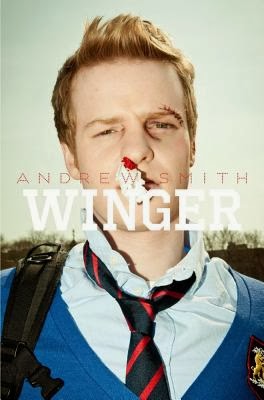
… for the contemporary element, try Winger, by Andrew Smith. Boarding school, boys, rugby, edgy and thoughtful at the same time. I had issues with the ending, but that was just me. “I found myself compelled by this. I was invested in Ryan Dean’s drama. I loved the camaraderie of the rugby team. I enjoyed Ryan Dean, dork that he was.”

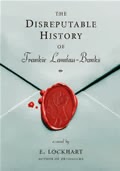
… for the precocious kids who are actually smarter than you think they should be, try The Disreputable History of Frankie Landau-Banks, by E. Lockhart. Another boarding school, but this time with a brilliantly smart girl at the center of it all, defying the norms, and breaking traditions. “So, here’s to the Frankie’s of the world: the girls who think outside of the box. Who invent neglected positives, and need people to understand (not just talk at) them. And here’s to the books that celebrate them.”
Bonus: E. Lockhart’s new book, We Are Liars, is due out in May. I’ve heard nothing but good stuff about it.
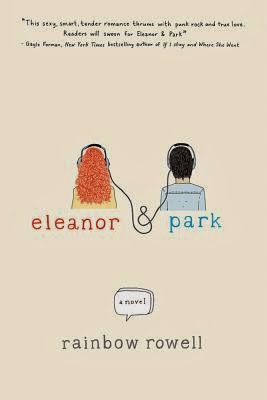
…. for the romance, try Eleanor & Park, by Rainbow Rowell. It’s historical, set in 1985, but it captures first love wonderfully. And both Eleanor and Park are delightful characters. “The most beautiful thing about this book, I think, is the slow development of Eleanor & Park’s relationship. It’s not instalove, it’s not all sparks and romance. It’s a friendship that develops into something more. And it’s complicated.” Bonus: I’ve heard most everyone say that Fangirl is better, but I haven’t read it. Yet.

OR

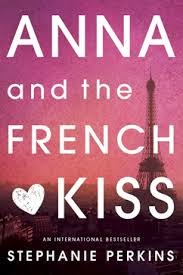
Anna and the French Kiss, by Stephanie Perkins. Because Paris. And Étienne St. Clair. And a smart, wonderful romance. “But I did enjoy the relationship between Anna and St. Clair, it’s heights and valleys, and it’s inevitable, swoon-worthy resolution. It’s not a simple book, and much like Maureen Johnson’s work, Perkins knows how to write a romance that deals with more even while putting the relationship front-and-center.”
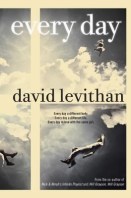
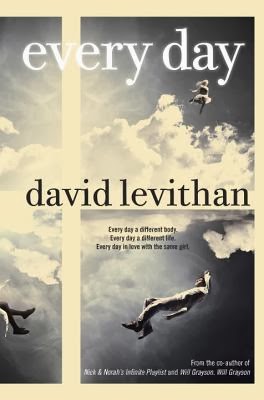
…. for the thought-provoking ideas behind it, try Every Day, by David Levithan. It’s a trippy premise, but once you get past that, you find  that Levithan is writing about the human experience, and all its ups and downs. “As I was reading, I thought that it reads much like a John Green book: philosophical and introspective, with always the possibility of being pretentious. (Though I appreciated much of the musings, like how 98% of the human experience is the same and it’s the 2% that we’re always fighting over.) “


If you liked The Book Thief…
There are two authors you need to know about.
Ruta Sepetys
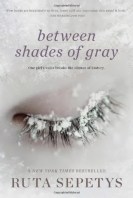
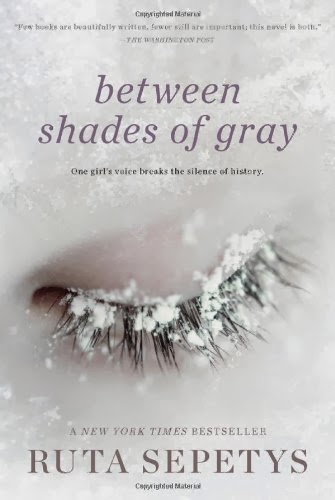
Between Shades of Gray. Stalin, concentration camps, solemn and gripping. “It’s a harrowing book, disturbing, and completely wrecked me. I could only read it in short chunks, interspersing it with something lighter, because that’s all I could handle. I couldn’t tell you about the writing, or the characters, or whether or not I liked it, because (like many Holocaust books), I couldn’t get past the fact that this was based on true events.”

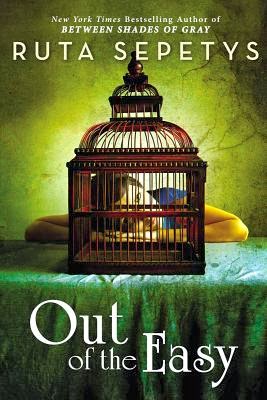
Out of the Easy. New Orleans, 1950s. Gritty, intense, and compelling characters. “And Josie is such a great character to root for; I wanted her to get out, to succeed. I felt her heartbreak, her anger, her hope. Which is really the mark of a great writer. Sepetys knows how to engage the reader, to write in a way that makes these characters fully dimensional. And even though her subjects are not pretty, her writing is gorgeous.”

and Elizabeth Wein:

Code Name Verity. World War II, Nazis, British spy, woman pilots, and a friendship story that will rip your heart out. “Things this book is not:
Trite.
Another Holocaust book.
Boring.”

Rose Under Fire. Yet another World War II Holocaust story. But not like you’ve ever seen before. Strong women take the center stage and they will weave themselves into your life. “And yet, even though Wein captures the horrors, and the crimes, and the terribleness (I can’t seem to find a word strong enough) of Ravensbrück, it isn’t a hopeless, dark book.”

And one more (because it doesn’t fit anywhere else):

The Strange and Beautiful Sorrows of Ava Lavender, by Leslye Walton. It’s magical realism, which isn’t necessarily my thing. But this one feels more like an adult book than anything I’ve read in a long time. “There’s foolish love, unrequited love, passion, and most of all a magic running through it all. It’s the magic of Like Water for Chocolate: Things happen because of the passion.”

If you Liked Hunger Games….
I figure everyone knows about Divergent now, with the movie coming out. And even though I know they’rea a dime a dozen theses days, I thought I’d pick a few older/less-well known post-apocalyptic/dystopian books that have stood out in my mind.

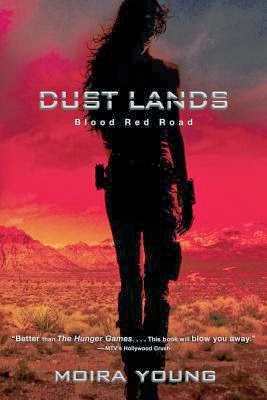
Blood Red Road, by Moira Young.  Set in the distant future, where the world has gone to pot. It’s a slow starting book, but once it picks up, it’s gripping. “She’s given us a strong reluctant heroine, someone who leads without knowing it, inspiring greatness in both herself and those around her.” It’s the start of a series, and I have to admit that I’ve never gone back and read the others. But this one stands well enough on its own, and is worth the time.

Uglies, by Scott Westerfeld. This is the one I’ve had the most success with, at least with kids. They read the Hunger Games, and come looking for something else, and I throw this one at them. And, they usually love it. It’s because it’s smart, fun, and observant. “In addition to romance and adventure and typical end-of-the-world stuff (I loved all the descriptions of the Rusties), Westerfeld has some interesting observations about beauty and society.” First in a series, but honestly, this one’s the best.

5th Wave, by Rick Yancey. ALIEN INVASION. Do I really need to say more? “” There are no magical or supernatural powers, no high-tech blow-em-up sequences, no kidnapping. Just good-old-human grit. And there’s a LOT of that.” It’s also a first in a series, I think, but it stands remarkably well on its own.

Fantasy series worth dipping into:

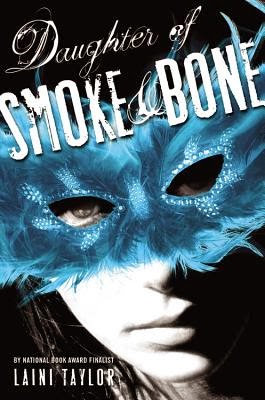
Daughter of Smoke & Bone, by Laini Taylor. “I adore Taylor’s storytelling. It’s dark and sinister and yet so very lovely all at the same time. It’s a twisting, meandering sort of story, and yet nothing superfluous or out of place.” Bonus: if you start this one now, you won’t have to wait for the third, Dreams of Gods and Monsters, which is out in April.

The Raven Boys, by Maggie Stiefvater. “There’s just something eloquent in this book: it’s not that its prose is beautiful; I can’t thing of a single passage that stood out. But rather, Stiefvater is eloquent in her simplicity. There’s nothing outstanding about any of the characters individually, and yet as a whole they become remarkable.” There’s only two out in the series — out of a projected four — but honestly, it’s worth picking up and devouring, if only for the way Stiefvater writes.

Graceling, by Kristin Cashore. “I loved the action — Cashore has a way with words that vividly portrays action, and I was on the edge of my seat most of the time. Which brings me to point number two: I loved the tension, the twists and turns.”
Thankfully, this series is complete, so you can read one right after the other. I envy you that experience.

Demon’s Lexicon, by Sarah Rees Brennan. “The only real drawback is that one of the main characters, Nick, is so very unlikable. It’s a turn off at the beginning of the book; you just want to smack the kid upside the head. But, give it time: he will grow on you, he does have a few redeeming qualities. And then there’s Alan, who’s an enigma: he keeps secrets from Nick, he’s up to something, but you never quite know what. They’re an interesting and appealing pair, these brothers.” Again, another complete series. Especially good, now that I think about it, for fans of Supernatural. More people should know about this one.

Okay, that was 20. What did I miss? What else should be on this list?

Audiobook: The Art Forger

by B. A. Shapiro
read by Xe Sands
Support your local independent bookstore: buy it there!
Content: All kinds of swearing, plus some explicit (but not graphic) sex. Definitely deserves to be in the adult fiction section.

Claire Roth is three years out of grad school, and she’s been blacklisted as an artist. It was a bit of a big deal with one of her professors whom she was having an affair with (and who ended up killing himself). But now, when the owner of the most prestigious art gallery in Boston — Aiden Markel of Markel G — comes to her with a Degas — no, the Degas from the 1990 Gardiner heist — asking her to create a forgery of it, she can’t refuse.

Well, she could have. But then we wouldn’t have a story.

This, in many ways, is a story of obsession and compulsion, and because I watch White Collar (which is a quite fantastic show, that) I was already familiar with the idea of how art becomes a compulsion. That said, I still don’t… get it. The depth of obsession, the idea of owning something priceless. It’s just paintings on a wall, right?

That said, I really enjoyed the journey Shapiro took us on. The initial journey of Claire’s painting the forgery, the gradual unfolding of how she became blacklisted, the relationship between her and  Aiden, and the unraveling of all their best-laid plans. Shapiro had a lot of different threads going, and she kept me wondering how they all fit together.

Which does lead me to the end. It all felt too tidy for me. She did manage to wrap everything up with a bit of an idealistic bow (it is fiction after all), and I’m not quite sure I’m satisfied with the way she did that. But that said, getting there was such an intriguing ride, I’m not unhappy I took it.

One note on the audiobook: while Sands was a good narrator — I loved that she did all the voices, though her men all sounded the same — she made Claire often out to be simpering. And that grated on me. Not enough to bail on the book, but I didn’t see Claire as someone who was insecure and simpering. Indecisive and unsure of herself, perhaps. But not simpering.

That’s just a personal problem, though, and only with the audiobook. The book itself was quite fascinating.

And the Winners Are….

(Or the reason February 14th Isn’t Horrible.)

The Cybils winners are announced! Go here for all the awards, but the one I’m most invested in (though none of my three nominations that made it to the finals won…) is the Elementary/Middle Grade Speculative Fiction winner is:

And honestly, if they had picked anything else, I’d be incensed. It really was the best book we read.

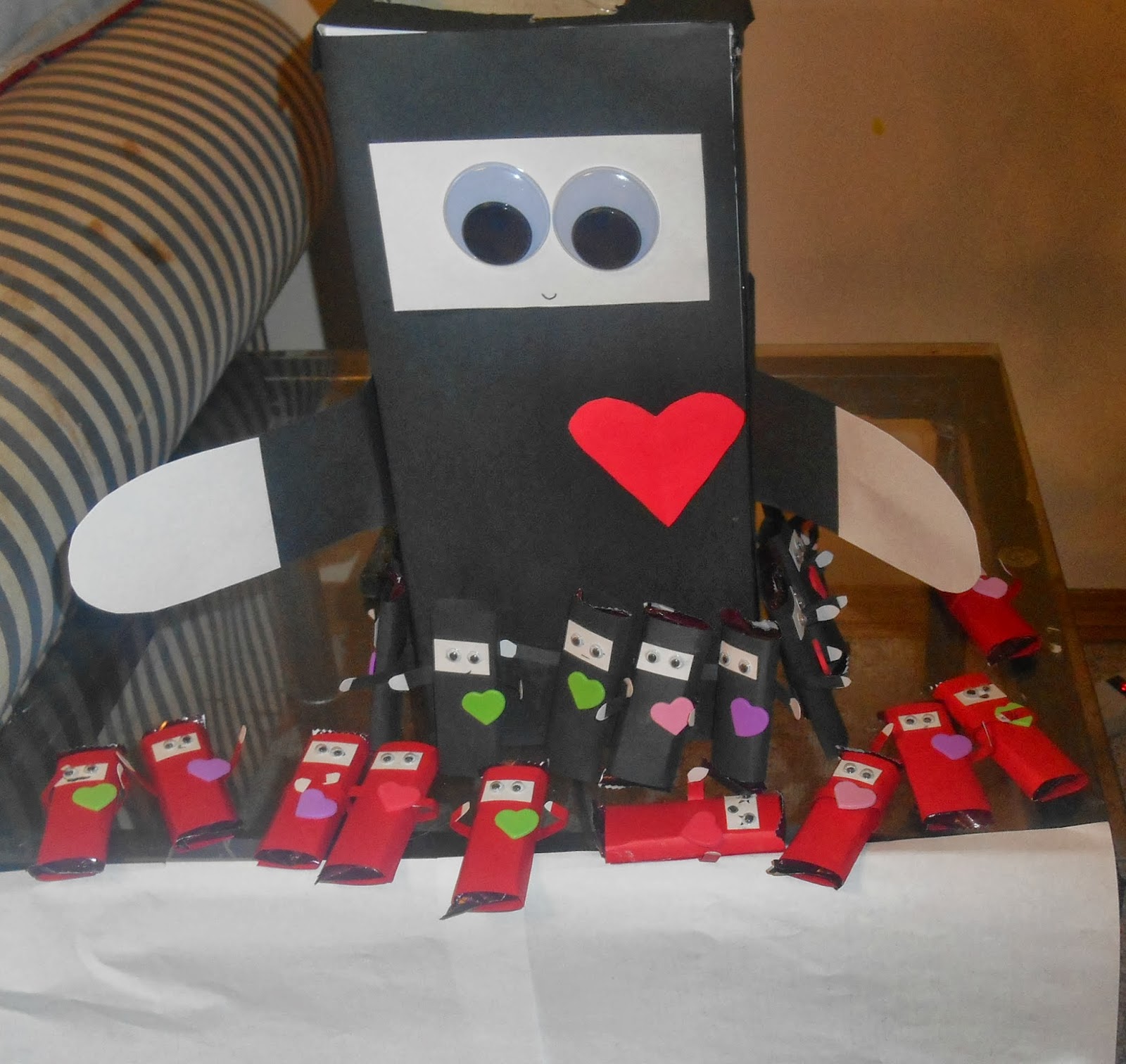
And, because they turned out so awesome, here are A and K’s valentine’s boxes for their parties today.

OH! It’s also International Book Giving day! Find/buy a book to pass on to a child. I think I’m going to finally take those bags of books to our local children’s home. Seems like a much better thing to do today than to eat overpiced chocolate. (Now tomorrow, the chocolate will be discounted. I’ll eat it then.)

Happy Valentines Day!