September Jacket Flap-a-thon

One last little thought from KidLitCon… (I know it’s been a while but I honestly thought this was the best place to put this.) I went to a panel put on by Holly and Shiraz Cupala about marketing books. No, I don’t have a book to market, nor will I ever, but I did find this one statistic they stuck up to be interesting (especially considering where my interests lie):

People buy books based on:
Next one in a series (61%)
Familiarity with the author (57%)
Flap copy (51%)
Title (32%)
Cover (31%)

See that? Flap copy — good flap copy — is important. I know it is to me.

In other news: if all is going well, M and I should be on our way to the Austin Teen Book Festival. We’re both quite excited! Hope to see (some of) you there!

Daughter of Smoke and Bone (Little, Brown): “Around the world, black handprints are appearing on doorways, scorched there by winged strangers who have crept through a slit in the sky. In a dark and dusty shop, a devil’s supply of human teeth grown dangerously low. And in the tangled lanes of Prague, a young art student is about to be caught up in a brutal otherwordly war. Meet Karou. She fills her sketchbooks with monsters that may or may not be real; she’s prone to disappearing on mysterious “errands”; she speaks many languages–not all of them human; and her bright blue hair actually grows out of her head that color. Who is she? That is the question that haunts her, and she’s about to find out. When one of the strangers–beautiful, haunted Akiva–fixes his fire-colored eyes on her in an alley in Marrakesh, the result is blood and starlight, secrets unveiled, and a star-crossed love whose roots drink deep of a violent past. But will Karou live to regret learning the truth about herself?”
What I love about this one is that they capture the essence of Taylor’s writing and of the story, without giving the plot away. You know there will be mystery and angels and demons, and it all sounds so very enticing.
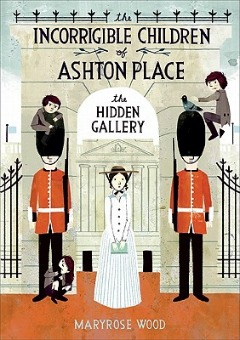
The Incorrigible Children of Aston Place: The Hidden Gallery (Balzer and Bray): “Of especially naughty children it is sometimes said, “They must have been raised by wolves.” The Incorrigible children actually were. Thanks to the efforts of Miss Penelope Lumley, their plucky governess, Alexander, Beowulf, and Cassiopeia are much more like children than wolf pups now. They are accustomed to wearing clothes. They hardly ever howl at the moon. And for the most part, they resist the urge to chase squirrels up trees. Despite Penelope’s civilizing influence, the Incorrigibles still managed to ruin Lady Constance’s Christmas ball, nearly destroying the grand house. So while Ashton Place is being restored, Penelope, the Ashtons, and the children take up residence in London. Penelope is thrilled, as London offers so many opportunities to further the education of her unique students. But the city presents challenges, too, in the form of the palace guards’ bearskin hats, which drive the children wild—not to mention the abundance of pigeons the Incorrigibles love to hunt. As they explore London, however, they discover more about themselves as clues about the children’s—and Penelope’s—mysterious past crop up in the most unexpected ways. . .”
This one is good because it gets you up to speed about the Incorrigibles, and lets you in on the plot of the first book, while giving you the briefest of hints about what the second one is all about.

The Night Circus (Doubleday): “The circus arrives without warning. No announcements precede it. It is simply there, when yesterday it was not. Within the black-and-white striped canvas tents is an utterly unique experience full of breathtaking amazements. It is called Le Cirque des Rêves, and it is only open at night. But behind the scenes, a fierce competition is underway—a duel between two young magicians, Celia and Marco, who have been trained since childhood expressly for this purpose by their mercurial instructors. Unbeknownst to them, this is a game in which only one can be left standing, and the circus is but the stage for a remarkable battle of imagination and will. Despite themselves, however, Celia and Marco tumble headfirst into love—a deep, magical love that makes the lights flicker and the room grow warm whenever they so much as brush hands. True love or not, the game must play out, and the fates of everyone involved, from the cast of extraordinary circus per­formers to the patrons, hang in the balance, suspended as precariously as the daring acrobats overhead. Written in rich, seductive prose, this spell-casting novel is a feast for the senses and the heart.”
This one is a little long for my taste, and it gives away a few of the plot points that would have better been left unsaid, but it’s gorgeously written, much like the novel.

Other books read this month:
Year of the Horse
Cold Sassy Tree
The Demon’s Surrender
The Absolute Value of Mike
Friday Night Lights
Mercury
The Slayer Chronicles: First Kill
Uncommon Criminals
Molly Moon’s Incredible Book of Hypnotism
The Son of the Shadows
The Grand Sophy
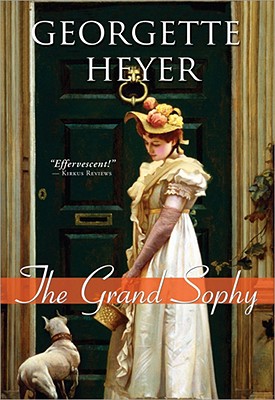
The Grand Sophy

by Georgette Heyer
ages: adult
First sentence: “The butler, recognizing her ladyship’s only surviving brother at a glance, as he afterwards informed his less percipient subordinates, favoured Sir Horace with a low bow, and took it upon himself to say that my lady, although not at home to see less nearly-connected persons, would be happy to see him.”
Support your local independent bookstore: buy it there!

Ah, Georgette Heyer. (Which I just learned is pronounced “hair”. Now I know.) I think the best way to sum her up is this: when she’s good, she’s really, really good. (And when she’s bad she’s horrid?)

And this one was good.

Twenty-year-old Sophy has spent her life following her father all around Europe. Because her mother died early on, Sophy has become accustomed to being the lady of the house, performing tasks for her father that most women wouldn’t dream of doing. As a result, she’s unpredictable, independent, and, to the fashionable London society, completely shocking. So, when her father dumps her on some little-known relatives (his sister, Lady Ombersley) so he can pop off to Brazil (with the side hope that they’ll somehow manage to marry Sophy off, since she’s — shock — heading towards being an old maid!), little do they know the chaos that Sophy will cause.

Like so many other of Heyer’s books, the point is not the plot. There will be a slight romance, two people will fall in love and get married. It’s the getting there that’s so much fun. And this one is classic Heyer: wonderfully amusing. Initially I wrote “hilarious”, but I think that’s misleading. While the book is funny, it’s not the snort-milk-through-your-nose funny. But it did make me smile and chuckle.

Like (and the characters and situations don’t really matter):

“No, of course I do not!” responded Cecilia. ” But Eugenia never wears modish gowns. She says there are more important things to think of than one’s dresses.”

“What a stupid thing to say!” remarked Sophy. “Naturally there are, but not, I hold, when one is dressing for dinner.”

From the sparing way in which Miss Wraxton partook of a few of the delicacies it was not dificult to see that she considered such lavish hospitality vulgar; but Huber, making a hearty meal, began to think the Marquesa a very good sort of woman after all. When he saw how many coffee creams, Italian rusks, and brandy-cherries she herself consumed, in the most negligent fashion, his manner towards her because tinged with respect bordering on awe.

There are more. Truly.

I think one of the reasons I like Heyer so much is the same reason I like Jane Austen: she pokes fun at socieity, the primness and properness, while endearing us to all these silly, stuffy, stupid characters. She invites us to laugh at them and (in Heyer’s case, at least) their outdated ideas, while, especially in this book, introducing a thoroughly modern character to challenge the others’ ways. It makes for a wonderfully entertaining romp.

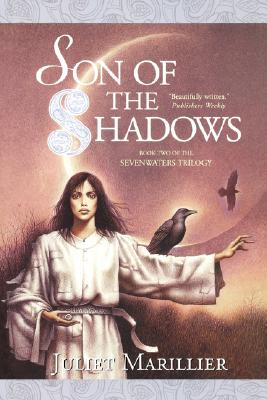
Son of the Shadows

by Juliet Marillier
ages: adult
First sentence: “My mother knew every tale that was ever told by the firesides of Erin, and more besides.”
Support your local independent bookstore: buy it there!

This book picks up a little while where Daughter of the Forest left off. Red and Sorcha have three children: Niamh, and twins Sean and Liadan. Things are becoming uneasy again; there’s a band of outlaws that are wandering the countryside. Niamh has a forbidden dalliance, and is sent off to marry someone for an alliance. Sean is coming into his own, learning to be the lord of Sevenwaters. And Liadan is just trying to be a healer. That is, until she’s kidnapped by the Painted Man’s outlaws, and taken to their camp. There, everything changes, not only for Liadan, but for Sevenwaters and maybe for Erin as well.

Since we enjoyed the last book, Kelly (she’s in bold; I’m not) suggested reading this one as a buddy read as well.

So, the obvious first question: how did it compare to Daughter of the Forest?

Well, I was a little worried at first. The second book in a trilogy, which this started off being, isn’t usually a big letdown from the first book. I actually enjoyed that in order to keep this fresh book fresh the focus was on Sorcha’s daughter. That being said, this book wasn’t quite as good as the first book. It was a bit too much of a romance for me and there wasn’t as much action. It was basically a set-up for the third book and considering that I still really enjoyed this book, I am really excited for the third book. What did you think of this book?

I enjoyed the first book more as well, but I think it was because that one had a premise (the fairy tale) that I actually knew. I didn’t mind learning about the Irish tales in this one, but it really slowed the book down for me. I didn’t mind the romance so much, though I still have issues with the idea of The One. She’s 16, and she finds (by accident) the guy she wants to spend the rest of her life with? That raises the red flag for me. That said, I did feel that Marillier managed the romance pretty well. I think part of my enjoyment of the first one was that I just happened to like Sorcha as a character better.

The book this reminded me most of was Mists of Avalon; there was a lot of strong women and Goddess-inspired magic in it. Was that just me?

Yes, I was always excited about the first book because of the fairy tale connection. It still took me forever to get around to reading it, but that is what drew me to it in the first place. This book still had tales as its background, but they were not tales that I was familiar with. It made the whole experience a bit different. As to the romance, it didn’t bother me necessarily, but I did just find it more a central theme than in the other book. I would have enjoyed if there was a bit less emphasis on that aspect. I also am getting a bit tired of the story-line where a young girl meets a guy and then that is who she wants to be with for the rest of her life. I didn’t find myself getting as annoyed with this book as others, though, so she obviously carried it off well.

No, I can see that. I have read Mists of Avalon and the other books that Bradley wrote in that series and I can actually see a very strong connection between how Bradley wrote and what Marillier is trying to accomplish with her books. My favourite part of this trilogy so far is the strong women that are portrayed. I always feel like there is not enough of that in fiction.

What did you think of the men in the book? Any stand out for you?

I agree: there’s never enough books with strong women characters. I also wish I knew more about the tales that served as a backdrop for the book; while I like things Irish, I’m actually not that familiar with them. Perhaps I should change that…. As for men, I kind of liked Bran, especially once I figured out (well, it was revealed anyway), how he fit into the Sevenwaters family and his connection to the past. I liked that he was passionate and strict, but also fair and merciful as well. I also liked that he cared about the men he worked hard to save from the edges of society. I also liked Red (can’t remember his Irish name, now), for his strength and balance in the family. Though, speaking of him (and the men in general): I loathed the treatment of Niamh when she was found with her lover. Especially since Liadan turned around and did the same thing (and got pregnant by it!). What a bunch of hypocrites! I know I’m imposing modern sensibilities on this, but STILL! To rip her away from her lover and marry her to a brute who barely cared for her? Horrid, horrid men.

What did you think?

I really enjoy books with strong women. I think part of my problem is the love triangles and other drama in young adult books lately. It doesn’t set a very good example. I always wish I could read more. I know when I read the Fables series, for example, I always figured I was either missing something or knowing that I was missing something. There is just too many things to read!

I enjoyed Bran. He was an interesting character. I knew there was going to be more to him than met the eye and spent the entire time reading trying to fit the pieces together in my mind. When it came together I was thinking I should have known that long before it was revealed. And, yes, the part with Niamh was TERRIBLE! I understand that they thought they had their reasons, but it was really quite sad. It was a bit strange that it was okay when Liadan did it. It was a bit of a double standard. It was particularly bad because we didn’t know why everything played out like it did. It made a bit of sense when it was explained, but it still bothered me.

Head over to The Written World for the rest of the conversation!

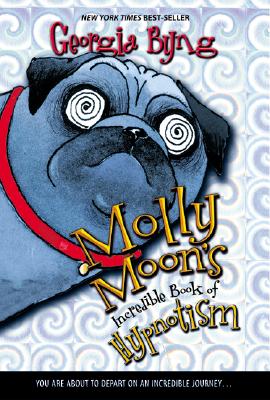
Molly Moon’s Incredible Book of Hypnotism

by Georgia Byng
ages: 10+
First sentence: “Molly Moon looked down at her pink, blotchy legs.”
Support your local independent bookstore: buy it there!

Molly is an orphan in a not very happy-making orphanage. It’s a dismal, dank place, full of bullies, run by the meanest director this side of Miss Hannigan.

Then, Molly discovers (in the library!) an old how-to book on Hypnotism, which she furtively devours and discovers that she’s got the gift. From there, she takes control of her life, hypnotizing people left and right: she wins a talent competition, heads to New York, becomes a famous starlet. Everything is going great, except her best friend Rocky has been adopted. However (again through hypnotism), once they’re reunited, nothing can stop them.

Except for a bad guy who wants them to seal a bunch of jewels. Can Molly hypnotize her way out of the muddle she’s gotten herself into?

It’s a fun little book, and even though I found the middle of the book to be a bit sluggish, and the end a bit preachy, I had a fun enough time with the book. It’s quite silly, with it’s tongue-in-cheek, over-the-top situations. And it’s a grand fantasy, giving a 10-year-old girl not only control, but almost superhuman power.

Which makes it, in the end, quite fun.

Friday Night Lights

by H. G. Bissinger
ages: adult
First sentence: “Maybe it was a suddenly acute awareness of being ‘thirtysomething.'”
Support your local independent bookstore: buy it there!

I’m probably the last person on the planet to read this; I didn’t even know it existed until the movie came out several years back. Since then (and the highly recommended TV show, as well), I’ve known that I “should” read this one, especially since I consider myself a football fan. But it wasn’t until I read Rammer Jammer Yellow Hammer a few months back that I really got serious about reading this book.

You want to know what? It’s incredibly depressing.

If you’ve been living under a rock, the basic story is Bessinger moving to Odessa, TX; a small town in the late 80s that has gone through the boom and bust of oil. Bessinger moves there to follow the town’s main football team, The Permian High MoJo. However, while it’s a book about football, it’s not a football book. Bessinger follows the team throughout the season and highlights the games, but uses football as a springboard to talk about bigger issues: race, class, education, and most of all, the sense of entitlement (and pressure) that comes with being a high school football player.

Bessinger doesn’t paint a pretty picture about it all. Odessa was — one of the things I kept wondering was how everyone’s fared in the 23 years since the 1988 football season — obsessed with football. Perhaps unhealthily so. It was their life, their all, and I’m not talking about the players, either. In a town where there wasn’t much of anything: the industry being basically shut down (I seem to remember a statistic that at one point the unemployment rate in Odessa was at 20%, but I could be wrong), the educational system being basically average, the only hope for anyone — and really, we’re just talking about the boys, most of them white — was to be on their above-average, mostly winning football team.

And so most boys held the dream of playing for the Mojo.

But, even with the hope of something better — or perhaps they put all of their hopes into that promise — the boys didn’t go anywhere. Sure, they made it into the state playoffs, and got as far as the semi-finals. But, their lives, with the exception of the one who put his effort into his academics, didn’t go anywhere. And I found that depressing. Because it’s all for a game.

The other depressing thing was how little has changed in America in the last 23 years. In some ways, things have gotten better. But there was too much in the book that I could nod at and say, “You know, that’s still exactly the same.” We like to think we’ve made progress in race, in education, in our livelihood. But this made me wonder just how much has changed. I’m not sure much has; football is still more important in our lives than, say, a speech by the president on his plan to create jobs. While Rammer Jammer made me feel like I wasn’t enough of a fan, this book in many ways made me ashamed to support a game (a game!) that creates the kind of situations that were put out in this book. Those high school and college players we put so much pressure on to win? They’re boys. And this book is a weighty reminder of what pressure, stress, and too much privilege can do to boys.

And that’s depressing.

One Last Reminder: Austin Teen Book Fest THIS Saturday

You guys, this is worth driving from Wichita to Austin because:

  • On Friday night there will be a screening of “Nick & Nora’s Ultimate Playlist” (at Alamo Drafthouse South Lamar) with a Q&A featuring festival author David Levithan, co-author of the book on which the film was based. BookPeople will be selling signed copies of his books in the lobby. The screening benefits the APLFF.
  • The festival’s theme is steam punk — a nod to keynote speaker Scott Westerfeld. There’s going to be a green screen where you can take pictures of yourself in the Leviathan world. On top of that, the entertainment will be courtesy of Delirium of Grandeur and the band Darwin Prophet, neither of which I’ve ever heard of, but are sure to be awesome.
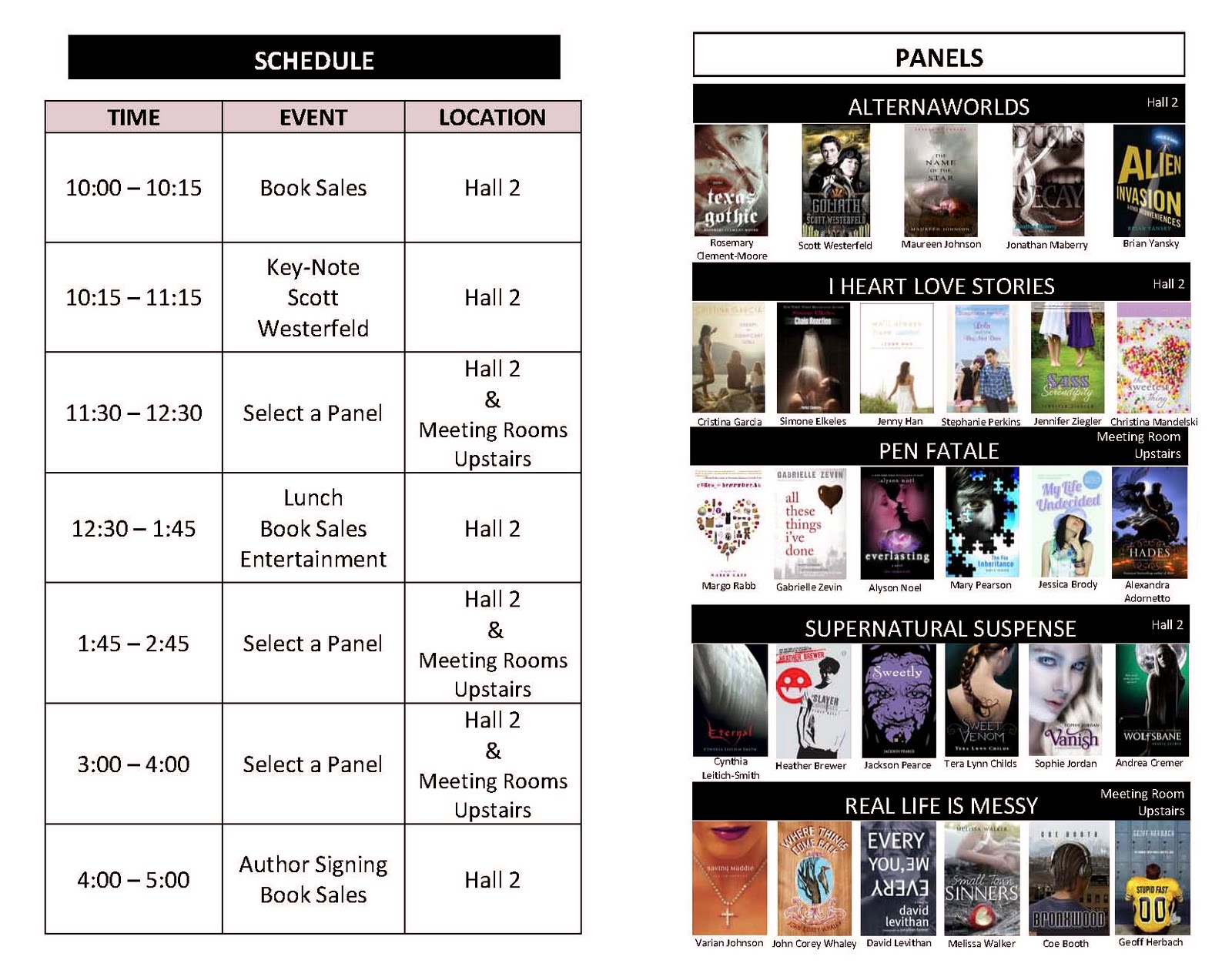
  • The panels:


(click to embiggen…) There are some seriously fine authors talking about fascinating things.

  • And lastly but not leastly: Amanda and I are organizing a blogger luncheon — we don’t have a specific place to eat, but are planning on meeting at the Barton Springs Road entrance of the Palmer Events Center around 12:30.

Hope to see you there! It’s going to be a blast. Promise.

Uncommon Criminals

by Ally Carter
ages: 12+
First sentence: “Moscow can be a cold, hard place in winter.”
Support your local independent bookstore: buy it there!

This book, as pointed out by Liz B., can be summed up in three sentences: It’s fluff. But it’s such fun fluff. And no one does fluff as well as Ally Carter.

The other best way to sell it (and Heist Society, the first one in the series)? It’s Oceans 11 for teens. In book form.

After pulling off the heist of the century (which I suppose is a bit of a spoiler for the first book. Sorry), Kat and crew have basically gone their separate ways. Kat’s taken on a personal mission for good, taking jobs stealing back paintings stolen by Nazis in World War II. Hale’s constantly upset with her because she keeps shutting him out. Gabby’s gone her own way, and Uncle Eddie’s moved to Paraguay (or was it Uruguay? That’s a running gag.) to run a sting for the family. So, when Kat is propositioned to steal the Cleopatra diamond for what is ostensibly a good cause, she doesn’t hesitate.

Then things get deliciously complicated.

Honestly? The best thing about this book (aside from Hale’s swoonworthiness; I really shouldn’t have crushes on 17 year old fictional boys. Not healthy.) is that Kat and crew up and go all over the world at a drop of a hat. They’re MINORS! And they get away with so much. It’s hilarious and improbable and fun. Who cares that they’re smart rich kids basically stealing things because they can? (Well, not exactly, but it feels that way at times.) I don’t. I’m along for the ride, and, man, it’s a fun one with an absolutely brilliant twist at the end.

Sometimes, fluff — especially good fluff — is exactly what you need.

The Night Circus

by Erin Morgensternages: 16+ (shelved in the Adult Fiction section of my library)
First sentence: “The circus arrives without warning.”
Support your local independent bookstore: buy it there!

I am inherently suspicious of anything that receives an inordinate amount of buzz. (Which is why I have yet to read The Help.) People have told me it’s just sour grapes; that if I would just catch a book early enough, I wouldn’t have this violently negative reaction to hip and popular books.

But when Corinne said that I should read it, I listened.

I’ll be frank here: there is a plot to this book, but it’s pretty predictable and fairly cliche. In the end, it’s your basic Romeo and Juliet love story. Two magicians from two differing schools of thought pit their students against one another. This time it’s Celia and Marco. They’re never supposed to meet, they’re not supposed to even know who the other is; yet, they find out, and fall in love. Of course there are ramifications, of course there are hazards and heartbreak.

That’s not the point of the book, though.

The point of the book is the atmosphere. It’s a very slow moving book, one that luxuriates in the descriptions of the circus, of clothes, of the food, of the magic. It’s not a spare and poetic book, but rather weighty and opulent: there’s scenes that for plot purposes probably don’t need to be there, but because they add to the atmosphere and mood of the book, fit perfectly. There’s characters wandering in and out of the book that have little to do with the plot, and yet they add to the carnival-esque feeling. It reminded me strongly of Jonathan Strange and Mr. Norell; the use of magic is unique and traditional at the same time. Morgenstern uses stage magicians as a launching point, musing on the idea of an the illusion actually not being an illusion. And, surprisingly for me: the book is written in the present tense while still flitting back and forth in time. Usually, this drives me batty, but in this book, in this setting, it worked. (I didn’t even notice until I was halfway through. Which says much.)

I do recognize that all this all might be a downer for some people; I’m not expecting to add to the hype for this book. I don’t think it’s the next Harry Potter, or even the next “big thing”. But, in many ways it is worth the hype: it’s a beautiful, descriptive, haunting and gorgeous book.

Thoughts on KidLitCon: Photographic Evidence

I promised pictures.

I not only went to KidLitCon, I managed to connect with some friends from my on-line book group. I can’t say it enough: it’s absolutely wonderful being able to put faces to names, and to sit and chat with them in person. I wouldn’t trade the internet, or the blogosphere, for anything, but people are vastly different in person than they are on-line. And that’s a good thing.

So, the conference. Yesterday I talked about the nuts and bolts of what I thought was important, but that left out all the fun stuff.

Like the hotel, which was so uber posh (I’ve honestly never stayed in a hotel with a doorman before!) that I was intimidated at first. But eventually, grew to love the ambiance. I didn’t, however, take a picture of my favorite feature: the shelf in the shower that had bottles for shampoo, conditioner, and soap. That little touch completely thrilled me. Then again, I’m easy to please.

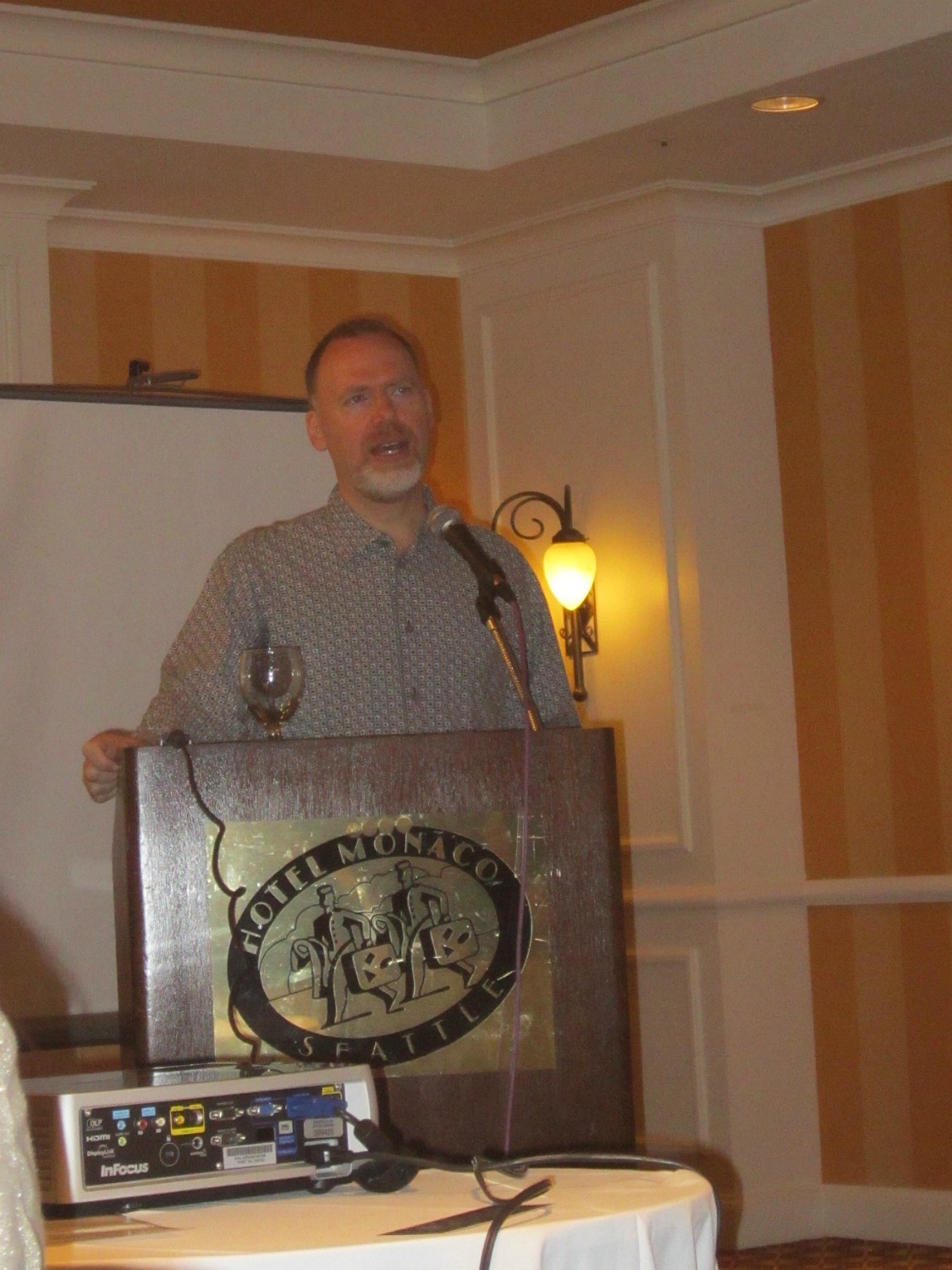
I know I’ve posted the one of me with Scott Westerfeld, but here’s one of his keynote address… just for good measure. Did I mention how funny and interesting he is as a speaker?

Then there’s the friends:

Elissa Cruz from From the Mixed-Up Files. We connected last year at KidLitCon, and it was a pleasure to see her again.

The group I had lunch with on Saturday (in which we talked about everything from reviewing to Battlestar Galactica. We are nothing if not diverse in our conversation). Including newcomer Lisa Song at Reads for Keeps, my delightful roomie Maureen, the ever-charming Liz B. and the fun Sondra (though I didn’t get a picture of her in her Elephant and Piggie shirt. Which I want.) at Sonderbooks.

As another shout out to how absolutely wonderful this con was: the food was amazing. I wasn’t expecting much, but what we got (the reception! the snacks! the lunch! the dinner!) exceeded anything I was expecting.

One last one: of Pam and Jen. To be honest, I’m still a little star struck that both these amazing women even acknowledge that I exist. Seriously, though… another testament to getting to know people in person; I adore both of them, and love listening to them talk. They’re smart, funny, amazing women, and I’m glad to say they’re my friends.

And that’s enough sappiness. For the record: there are pictures of me, Jen and Maureen on our panel as well as me talking to Karen Cushman (KAREN CUSHMAN! And I was brave enough to talk to her!) out there. I’m hoping I find them in the midst of all the wrap-ups (links to which can be found here).

KidlitCon (not to mention mini-vacations without Hubby or the girls): in all ways, a good, good thing.

Thoughts on KidlitCon, Part 1

The one thing about going to KidLitCon is that you come home brimming over with ideas for your blog, not to mention thoughts about the conversations you’ve had and listened to. It’s exhilarating and overwhelming at the same time (I mean, look at all the live tweets at #kidlitcon. Seriously!): where do I even begin to put it down in a post?

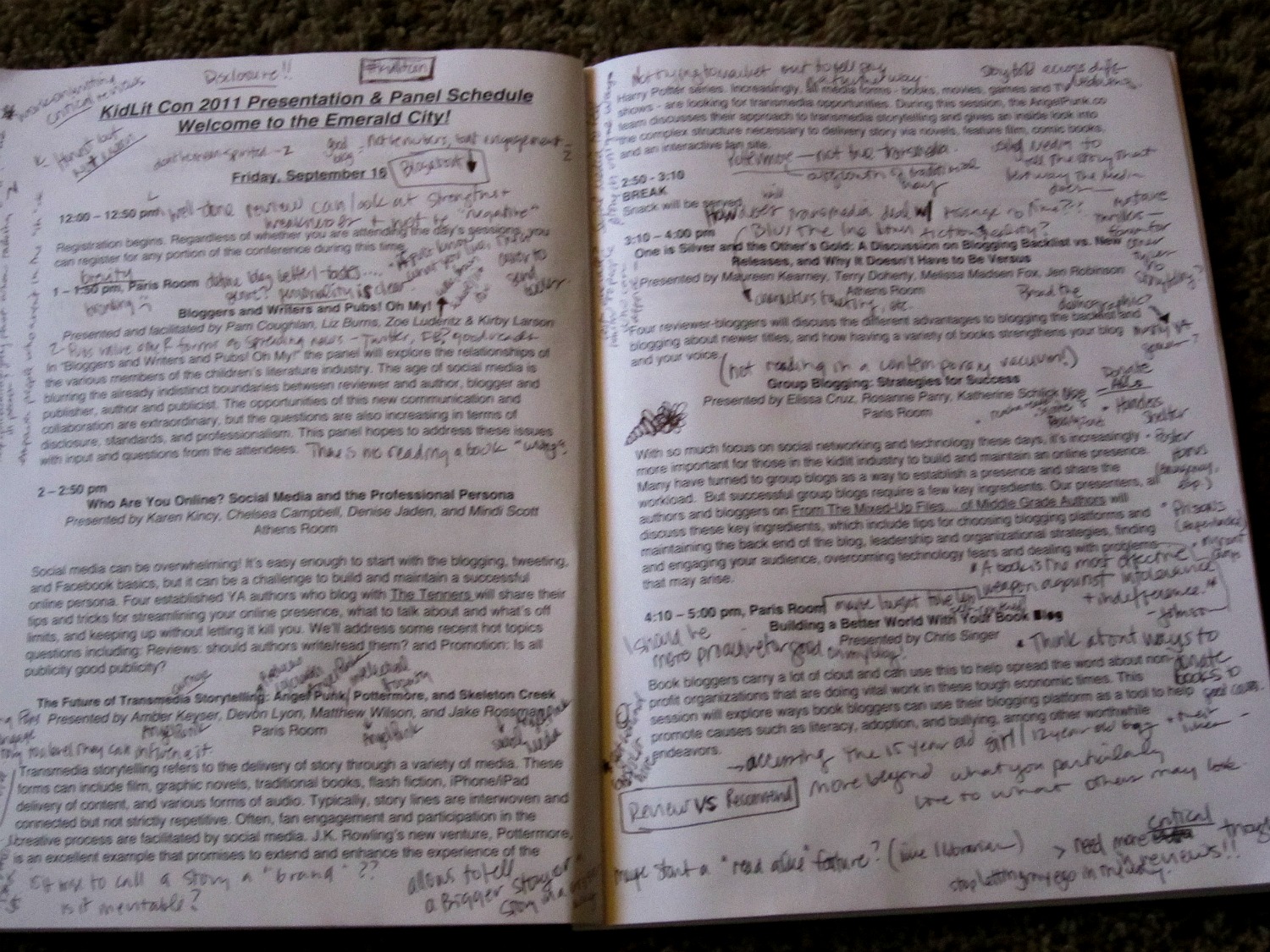
Out of all the notes I scribbled on my program (loved having that!) and on the (wonderfully provided) notebook paper, here are some of the things I found to be of most value:

There was a lot (a LOT) of talk about positive reviews versus critical reviews versus negative reviews. I’ve long known that I’m among the minority in the blogosphere: I review everything, the good, bad, the didn’t finish. (And I’m up-front about that, I think.) I’ve always considered what I write to be “negative” reviews, but listening to people talk about it the nature of reviews, I suppose what I write is actually “critical” reviews. The big difference: I try, very hard, to answer the WHY. And that makes all the difference. Instead of saying “this book sucks”, I think about how I’m reacting to the book, and what made me react that way. I need to be better about providing support for that reaction (as well as positive reactions, as well); I used to be good about that, and have gotten out of the habit. Abby, who was part of a very helpful panel on writing critical reviews, has a post on her thoughts on the matter. Go check it out.

That said, I agree with the idea of writing critically: it’s helpful for me to know not just what you thought about the book, but why. The other thing I brought home from the conference is the idea that we always need to be aware of who our audience is, and what our blog’s purpose is. This was brought up in several panels, including the one I was on (where I used the term “shiny” to describe new books; I really need to lighten up on my Nathan Fillion crush…): the idea that even if we feel like we are, we’re not blogging into a void, and we have a responsibility not to the publishers or the authors but to our readers first and foremost. Know who they are. As a blogger, you have influence.

Everything else was just frosting. Scott Westerfeld’s keynote was funny, fascinating, and thoroughly engaging. He spoke about the relationship between text and image and the process of writing an illustrated novel (which he considers the Leviathan trilogy to be). It built upon a fascinating panel about transmedia (definition: books that use more than text — video, images, text messages, etc — to tell their stories; though it seemed a bit limited and really only suited to horror/thriller/mystery and fantasy) stories, which thoroughly sold me on the Angel Punk world, and another panel I went to that highlighted some of the book apps for kids. I left feeling that my old stick-in-the-mud attitude to iPads and e-readers needs to change; while there’s a lot of crap out there, there’s also a lot of good storytelling going on, and I’m not the solely linear reader I thought I was.

Two final thoughts: keep in mind quality over quantity; your blog will be better if you focus on having good, quality posts rather than one (or more) every day. And from author Brent Hartinger: It’s okay to write what is your truth. He meant it in context of writing stories, but I think it works for blogs as well. If the book didn’t work for you, it’s okay to write that. It’s your truth, and no one can take it away from you.

I’ll put up the pictures I took tomorrow. Promise.