The Slayer Chronicles: First Kill

by Heather Brewer
ages: 13+
First sentence: “Abraham’s heels clicked along the marble floor as he moved the length of the room.”
Support your local independent bookstore: buy it there!
Review copy provided by the publisher.
Release date: September 20, 2011

When Joss McMillian was 10, his life was practically perfect. Happy parents, great relationship with his younger sister. Aside from his unfortunate tendency to excel at sports without trying, which didn’t help with his making friends, he was perfectly happy.

The one night the unthinkable happened, and Joss saw it all: a vampire killed Joss’s younger sister.

At the funeral, Joss’s uncle Abraham offers Joss a way to get revenge, and three years later Abraham has come to cash in on the promise Joss made: it’s time to be trained as a Slayer.

From this point, the book gets incredibly harsh. I’m sure there’s some book out there somewhere which says “all training in any supernatural fighting must be incredibly abusive to the teenager involved”. Because the training in this book was harsh. As a mom, I cringed; how on earth did Joss survive this punishment? As a reader, I cringed: is revenge that great a motive that you’d basically kill yourself to achieve it? I suppose it’s partly because I’ve decided vampires are passé: everyone’s done the whole vampire/slayer/whatever angle to death.

That said, the book did have one nice little twist coming at the end that redeemed it for me, and actually made me want to see where the next book takes the series. But, that said: be prepared for the harshness of the journey here. It’s not a pretty book, and the tale has no glory.

Perhaps that’s for the best.

KidlitCon, Austin Teen Book Fest, and Scott Westerfeld

Oh, my.

First: I’m home again. YAY! Had a lovely, lovely time, thanks so much to Colleen and Jackie who organized, slaved, kept us all on time, and were essentially grand hostesses to a grand party. I will, I promise, get my wrap-up post put up as soon as I possibly can (not tomorrow.). There’s also a matter of writing reviews of the four books I read this weekend, too…

Second: now I’m home from this trip, I can think about the next one: to Austin, TX and the Austin Teen Book Festival on Oct 1. If you’re anywhere near Austin (I think Wichita counts as “near”) COME! There’s an amazing line-up of authors, and (trust me on this one) Scott Westerfeld as a keynote speaker will be more than worth your time. Check out the site for info on the other authors who will be there. PLUS: Amanda and I are organizing a blogger luncheon — we don’t have a specific place to eat, but are planning on meeting at the Barton Springs Road entrance of the Palmer Events Center around 12:30. We’d love for you to join us.

Third: fangirl moment:

So, yeah, I accosted him on Friday with a book to sign (Uglies; I picked a favorite, not the new one) and chatted about Austin in two weeks, and accosted him again on Saturday for the picture. I can say this: he’s absolutely hilarious, incredibly gracious, and has interesting stories to tell. It’s silly, but I’m glad I was brave enough to get this.

More later. Promise!

On My Birthday

I’m 39 years old today. And, probably for many reasons, Landslide is the song that has resonated the most with me in the past few months. There’s something about growing older, especially as my girls grow older, that makes me wistful for the past, but at the same time excited for the future. I read somewhere that Stevie Nicks wrote this in her late 20s; maybe I’m just behind, it’s not until I’m nearly 40 that I started feeling this way.

I don’t mind Stevie Nicks’ version of the song, but I do like the way the Dixie Chicks covered it better.

I’m happily hanging out in Seattle with bloggy friends at KidLitCon today, enjoying being with a lovely bunch of people. I can’t think of a better way to begin my last year in my 30s.

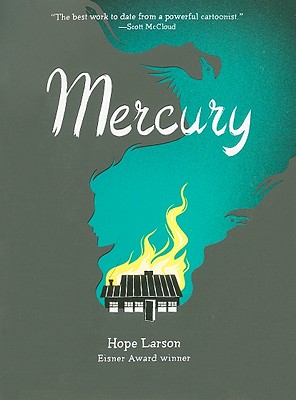
Mercury

by Hope Larson
ages: 12+
First sentence: “Hi, house.” (Though, admittedly, there are eight pages of pictures before that sentence.”)
Support your local independent bookstore: buy it there!

There are two stories going on here, both take place in a small town in Novia Scotia. One involves 16 year old Tara whose old family farm house has just burned down. Her mother is off to Alberta to look for work, and Tara is back in her old town (before they moved to the farmhouse, after her parents’ divorce) living with her aunt, uncle and cousin. She’s trying to adjust to a new life, and it doesn’t help that her mom wants to move to Edmonton.

The other story takes place 150 years ago: Josey is living in the farm house (the same one that burned down; you realize as the story unfolds that Josey and Tara are related), living her life. Her mother isn’t the most compassionate person, and her father isn’t the best farmer, but they’re making do. That is, until Asa Curry comes into their lives. He offers Josey’s father a way to get rich quick: there’s ore under the farmlands, and they can mine for gold. Things seem to be going well; Josey, at least, knows that she really likes Asa. But unfortunately, what is gold is not always good.

It’s an intriguing tale Larson is telling here, one that works well for the medium that it’s in. Sometimes I’m impressed how much can be “said” in a picture, how much one little frame can convey that would take pages and pages of prose to get across. I’m also impressed that something like magical realism, which bothers me in prose, I can accept and go with in a graphic novel. It’s a smattering of magic, something so innocuous that it shouldn’t really matter to the plot. And yet, it does.

It’s a good story as well: there’s heartache and loss and hope. My only question is wondering what Mercury has to do with the story. I missed that somehow.

That said, I’m going to be reading more of Larson’s work.

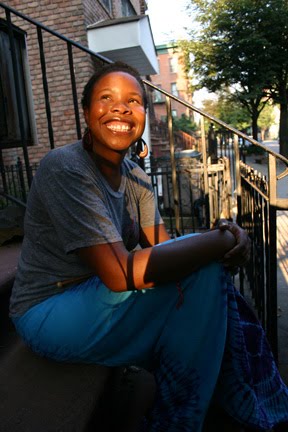
Ten Questions for Olugibemisola Rhuday-Perkovich

Today I have the absolute pleasure of interviewing Olugibemisola Rhuday-Perkovich about her novel Eighth Grade Superzero, which I read (and loved) for the first round of Nerds Heart YA. I meant for this interview to go up during the summer, but it turned out that both of us had insane summers, and it just didn’t work out. However, late is better than never! So, without further adieu, here is the delightful Gbemi.

MF: Is this your first novel? If so, congrats! Even if it’s not, can you tell us a bit about the whole process — from inspiration to publication?

ORP: Yes, Superzero is my first novel. I’d only written a few scraps of paper before, and I got to a point where I told myself that I had to stop “wanting to be” a writer, or being afraid to think of myself as a writer, and just…write. And keep going. I started out with an image of a 10-year-old boy hiding under the covers in his bed, afraid of bugs and terrified of being laughed at. I knew that he’d thrown up in front of everyone on the first day of school. Over a four-year period, that character, Reggie, grew and bloomed, and we got to know each other well — it was a tumultuous love/hate relationship! I spend a lot of time thinking about characters and making random notes that are not part of the story. I need to really know my characters in order to know how their stories go.

MF: You juggle a lot of issues in this book: race, religion, unemployment, bullying, homelessness, among others. How did you go about finding the right balance for all of them?

ORP: I really kept my mind on the characters and the story; it felt natural. Those issues were a part of what was going on in his world. I’m blessed to live in such a lovely and amazing and heartbreaking city (New York), and there are so many stories to see, many opportunities to listen.

MF: It showed in the book that the characters were front and center. Reggie is such a strong character with a unique voice. What did you do to tap into a 13-year-old boy’s head? Anything special, unique, different?

ORP: Thank you! I don’t think that I did anything special. The character came to me as a boy and stayed that way. I was inspired by people I knew, people I saw…my own life…I didn’t think too much about it while I was writing, though afterward I wondered what I could have been thinking, trying to write a boy!

MF: Whatever you were thinking, it worked great! I know this is an unfair question, but do you have a favorite character or scene?

ORP: Yes, it’s totally unfair! 🙂 I love Ruthie, George Henderson, Monica…really I love them all. Reggie was a struggle for me, and it took me a while to warm up to him. He started out very whiny and too passive, and it took a while to find the Reggie I now know and love. When I was writing the first few chapters, I was in a workshop with the author Kate Morgenroth, who was well aware of my struggle with Reggie, and she advised me to look again at the beauty and strength of his relationship with his friends — that really helped me turn a corner and anchor him in something good and strong.

It’s been a while since I’ve read it, I almost can’t bear to now! But I think that my favourite scenes are the ones in the cafeteria, the one where Reggie and Charlie first meet, and the one where Reggie sits with Charlie after they’ve suffered a big disappointment…

MF: I agree: those are good scenes. You’ve made God, faith, and religion a central part of your novel. Did you experience any resistance from publishers with that? How do you hope it will go down with your readers?

ORP: My editor really understood that those elements were part of Reggie’s story and not part of a particular agenda or lesson of mine. I think that the kids and teens who read the book understand that too — their responses have been wonderful, whether or not they share Reggie’s perspective and ideas about faith and spirituality.

MF: What would you like your readers to take away from their experience with 8th Grade Superzero?

ORP: I hope that a reader connects with the idea that there are many different kinds of “heroes”, many ways to be an activist. I hope that readers know that the small things they do matter, and not everything that we say, do, and think needs to be for public consumption or for some sort of recognition. And there is always room for mercy, redemption, and growth. I hope that they’re inspired to make things, without worrying about being good at it. And I hope that they challenge themselves, be willing to be uncomfortable regularly. And smile often.

MF: Is writing for a middle grade audience something you’ve always wanted to do, or did you just fall into it?

ORP: I think that it’s always been where I’m most comfortable. I’d love to write for all ages…one of these days, I’ll get a picture book done.

MF: Who, or what, inspires you to write?

ORP: I’m fascinated by people, by the small moments, and the big what ifs…I’m inspired and buoyed by my fantastic family and friends, by the children and teens that I meet…I have always needed to write, and always will — it’s my way of growing and working out what I think, figuring out my place in the world, sharing a bit of myself with others.

MF: What’s the most recent book you’ve read and loved, and why did you love it?

ORP: Another tough question….Water Balloon by Audrey Vernick is exquisite — the writing is both delicate and sure, and the main character Marley, is wonderfully vivid and real. I’m currently reading and enjoying The Reluctant Pilgrim by Enuma Okoro, Tiny Sunbirds Far Away, by Christie Watson, As Always, Julia: The Letters of Julia Child, Vanished by Sheela Chari, Inconvenient by Margie Gelbwasserand Manning Marable’s Malcolm X. I’m re-reading Doublefields by Elizabeth Enright and studying Kevin Henkes’ novels; I’m in awe of his ability to write such spare but full-bodied stories.

MF: That is a very impressive list of books! If you don’t mind telling us, what can we expect from you next?

ORP: I hope that the two books that I’m working on now, about Ruthie (a Superzero character), work out. And I’m also working on a book about Harriet, a swimmer and knitter who believes that she’s responsible for her brother’s death and believes she has a chance to make things right through a visit to an abandoned subway tunnel. I’ve been working on that one for years, since before Superzero; it’s very close to my heart.

MF: A book about Ruthie would be amazing. And the second one sounds intriguing as well. Thank you so much for your time!

ORP: Thank you so much!

The Absolute Value of Mike

by Kathryn Erskine
ages: 10+
First sentence: “My cell phone rang just as I was about to crush the Emperor of Doom’s trebuchet and save the villagers from certain annihilation.”
Support your local independent bookstore: buy it there!

Mike and his Dad get along okay. His dad, a professor of mathematics and engineering, handles the earning of money and the being of genius; Mike handles everything else (from bills to shopping). It’s an okay life, with one exception: Mike constantly feels like he’s not living up to his father’s expectations. He feels like his dad wants him to follow in his footsteps, and Mike is just. not. good. at math.

Then one summer, Mike is sent to live with is great-aunt and uncle, Moo and Poppy, while his dad heads over to Romania for a six-week teaching gig. There’s one parting instruction from his father: help Poppy build an artesian screw (yeah, your guess is as good as mine). Once he gets to Do Over, PA (it was Donover, but the sign lost it’s n.) he discovers that things aren’t what he (or his father) thought they would be. Poppy and Moo’s only son died four month ago, and Poppy hasn’t moved from his chair, or spoken, since. To say that Moo is quirky is an understatement. She’s half-blind, and drives her car (which she has charmingly named Tyrone and speaks about if it’s a real person) recklessly. She’s trying to hold things together while Poppy falls apart, but is only barely making it. Thankfully she has other things to focus on: rescuing resident punk-rocker Gladys from an abusive boyfriend and helping the town raise money so Karen, a local minister, can adopt a 5-year-old boy, Misha, from Romania.

It turns out that there is no artesian screw, either: Poppy’s supposed to be making boxes to sell to help Karen raise money, but doesn’t have a crew. (Artisan’s crew. Ha.) So it falls to Mike to rally the town, get people moving, and help Karen raise the money, and by doing so, he finds his true calling. Now if only he could tell his dad.

Two things struck me about this novel: the town is full of requisite small-town quirky people (why is it that only backward, quirky people live in small, rural towns?), and there was a lot of death and rejection in this book. It seemed that every character, starting with Mike, was dealing with loss in some form or another. (Perhaps Erskine likes dealing with death? It was a main theme in Mockingbird as well.) It could have made for a very depressing book, but instead Erskine chose to focus on the healing. Although I disagreed with the way Mike handled things (I don’t see how being mean to an octogenarian would truly motivate him to get out of the chair), I understood the purpose behind it: even if you’re suffering from loss, life does go on, and healing will eventually happen.

Additionally, the book addressed the way we misunderstand and judge other people. From his lack of communication to his father to his snap judgements of the homeless man he meets, Mike is constantly mis-perceiving people. It’s a hard lesson for him to learn, but in Erskine’s hands, one that doesn’t come off as heavy-handed.

With all the quirkiness and hopefulness, it’s a nice story. But it’s missing the spark it takes to be truly great. Even so, it’s a good little book, one that I think kids will like.

That said, it ended up being a very hopeful book. While I didn’t necessarily

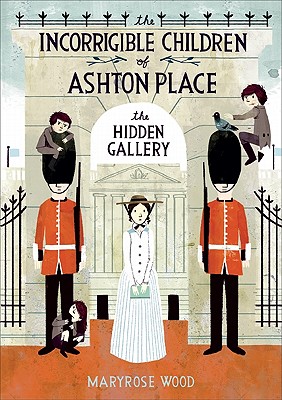
The Incorrigible Children of Ashton Place: The Hidden Gallery

by Maryrose Wood
ages: 9+
First sentence: “But the workman swore the repairs to the house would be finished by now!”
Support your local independent bookstore: buy it there!

When we last left our stalwart heroine Penelope and her wild charges, they were adjusting to life at the majestic Ashton Place. Unfortunately, that wasn’t going to well, and after a disastrous (this book, mush like the first book, makes me want to use grand adjectives) Christmas party, Ashton Place is in much need of repair.

Three months later, those repairs still aren’t finished, much to Lady Constance’s dismay. So, she (upon the suggestion of our fair Penelope) up and moves the whole household to London for a while. Whereupon, many adventures ensue, including (but not limited to) encountering a prophesying gypsy, going to the zoo, luncheon at a very posh restaurant, attempting to ride a bicycle (or a velocipede, as Penelope seems to call it), and attending the opening night at a West End play. So none of those sound terribly exciting, but with Penelope and the Incorrigibles, what is generally mundane always takes on an air of excitement.

Much like the last book, this one is full of wit and humor in the form of incredibly hilarious asides. (Additionally: inventing new words like “optoomuchism”, what happens when one is overly optimistic.) Also like the last book, there are many questions here that are still not being answered, though, almost infuriatingly, there are clues. I feel like I have the puzzle pieces (more of them anyway), and if I could only figure out how they go together, I could see the big picture. (I wonder if this would be as infuriating for kids as it was for me?) It wasn’t enough for me to completely lose interest in the book, but I am starting to wonder if it wouldn’t be best just to wait out the writing of the series, and then read them all back to back.

That way, at least, I’d have the answers to the puzzle.

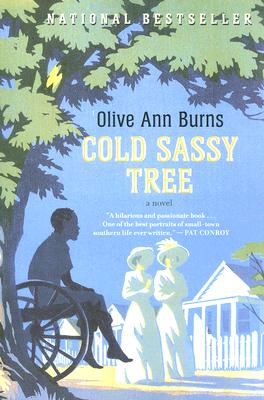
Cold Sassy Tree

by Olive Ann Burns
ages: adult
First sentence: “Three weeks after Granny Blakeslee died, Grandpa came to our house for his early morning snort of whiskey, as usual, and said to me, ‘Will Tweedy? Go find yore mama, then run up to yore Aunt Loma’s and tell her I said git on down here. I got something to say. And I ain’t a-go’n to say it but once’t.'”
Support your local independent bookstore: buy it there!

It’s 1906, in Cold Sassy, Georgia. Everyone knows their place in society, and how to behave. But, the summer Will Tweedy’s grandmother dies, his Grandpa decides to shake everything — including everyone’s expectations — upside down by marrying, a mere three weeks after the death, a woman half his age.

It sounds a bit creepy (everyone I described the plot to said, “Ew” as their first reaction), it’s really not; it’s more a story of second chances. From the Grandpa getting a second chance at a kind of youth; to his wife, Miss Love, getting a second chance at happiness (she has a very sad life story); to Will’s aunt getting a second chance at chasing her dreams. It helps that the story is told from 14-year-old Will’s point of view, which adds to the innocence. Will’s just discovering love and learning to live his life, and he has this wide-eyed naivete towards his grandfather and his beautiful bride.

In addition, it’s nice reading about someone (granted, that someone is white, and fairly well off; black people barely make a presence in the book, except as the cooks and hired help they were during Jim Crow in the South) shake up the entrenched Southern Expectations of the small town from his married daughters on down. It’s not an easy journey: it’s lonely and harsh being different from the norm, as any visionary knows, and Burns doesn’t spare us any of either the spite or the heartache.

Perhaps that’s what makes this simple novel work: the fact that everyone’s emotions and the consequences of their actions are laid open for us to discover. From the treatment of Will’s uneducated Uncle Camp to the desires of Will himself towards a mill girl, someone a “respectable” town boy should never deign to associate himself with. It’s a picture of a time, and not a glossed-over, prettified one, either. There’s racism, classism, xenophobia towards the Yankees. On the other hand, there’s an incredible sense of family, community, loyalty and responsibility. In other words: for good or ill, it’s the South.

Unfortunately, the book peters out in the end, giving Grandpa (and the town) a kind of pathetic, easy way out. I so wanted for them all to work things out, to get along, and for Grandpa and Miss Love to be happy, but it was not to be so. Which, perhaps, it the way it should be. There are no happily-ever-afters in real life, after all.

Very, very good.

The Demon’s Surrender

by Sarah Rees Brennan

ages: 14+

First sentence: “Magic was like a special guest in Sin’s life.”

Support your local independent bookstore: buy it there!

There are many things I enjoy about this trilogy (the other two being The Demon’s Lexicon and The Demon’s Covenant): there’s action, there’s romance, there’s magic. It’s a grand package. But the think I think I most enjoy is that every book is written from a different point of view, something which ramps up the tension, and makes even the old information seem fresh.

Take the opening chapter of this book, for instance. It takes us back to a scene that happened in the first book (something which I was grateful for, actually, since my notorious bad memory and I have a hard time remembering details when it’s been a while since I’ve read this book). But it didn’t seem repetitive or even old because Brennan told the scene from the perspective of Goblin Market dancer, and supposed new leader, Sin.

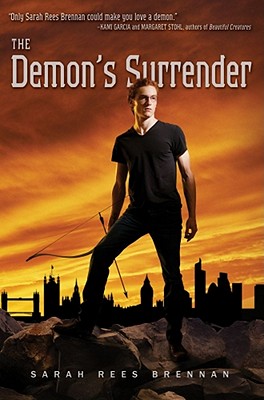
This whole story, with its inevitable climax was told from Sin’s perspective, and that was the absolute right way to tell it. Though it’s not entirely her story, as evidenced by the cover: it’s also very much Alan’s story as well. I’ve come to realize over the course of the trilogy that it’s a complex, messy book: there’s no simple black and white story here. This is something which, at the beginning of every book, I struggle with: I want to trust characters, and there really isn’t anyone to trust. There is a greater good overarching everything, but getting there is in no way simple. I came to realize that, in the end, it’s lust for power, greed, and using people for personal gain (whether that’s just possession or killing) that is the real “bad guy.” Which means there’s a moral to the story, but it’s not one that’s heavy handed or even blatantly obvious. Both marks of excellent storytelling.

That said, there are some delicious characters to hate, some very intense moments, and Brennan knows how to write swoon-worthy romance (and yet not let it take over the book). All of which makes this trilogy worth reading.

Daughter of Smoke and Bone

by Laini Taylor

ages: 14+

First sentence: “Walking to school over the snow-muffled cobbles, Karou had no sinister premonitions about the day.”

Support your local independent bookstore: buy it there!

Review copy provided by a friend of a friend who got it from the publisher.

Release date: September 27, 2011

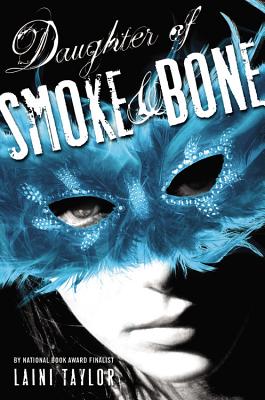
As an art student in Prague, 16-year-old Karou tries to keep up the appearance of a normal life. Except her life (not to mention her azure hair and myriad of tattoos, including the hamsa eyes on her hands) is anything but normal. She lives with a group of monsters called chimera, who have been her family for as long as she can remember. She runs errands for her father-figure, Brimstone, collecting teeth. It’s a lonely life, but she finds comfort in knowing that while she has many unanswered questions about who she is, she has a family (of sorts).

And then things take a turn for the, well, interesting. The seraphim — other beings from the same world as the chimera — attack Brimstone, closing all the magic portals in our world. As they are doing this, one of them, Akiva spots Karou and is inexplicably drawn to her.

There is more to the story, obviously, but it’s best left for you to discover on your own. I will say this: I adore Taylor’s storytelling. It’s dark and sinister and yet so very lovely all at the same time. It’s a twisting, meandering sort of story, and yet nothing superfluous or out of place. Her characters are captivating, drawing you in with humor and affection; you can’t help but love Karou and all the people she loves in her life. (As M said when she finished: “I want to be an art student in Prague and have blue hair.”) Added to that, Taylor plays with fantasy and religion and myth in wild, fascinating ways. Yes, there are angels and monsters in this book, but in playing around with themes of tolerance and prejudice — there’s a war going on between the chimera and the seraphim, and Karou is, for many reasons, caught in the middle — Taylor takes the simple myths, and mythological creatures, to a new, higher level.

The only quibble I have — and it’s not really much considering this is the sort of haunting, beautiful story that will stay with you for a long time — is that while the story comes to a natural stopping point, it doesn’t fully resolve (infuriatingly!). Which means, we’ll need to wait until Taylor’s imagination works its wonders again, and she comes out with a sequel. Which is sure to be as wonderful as everything else Taylor writes is.