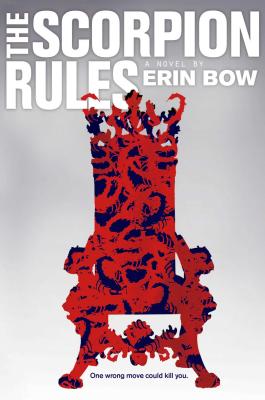
The Scorpion Rules

 scorpionrulesby Erin Bow
First sentence: “Once Upon a Time, at the End of the World.”
Support your local independent bookstore: buy it there!
Content: There are exactly two f-bombs, some mild swearing, and one illusion to sex. It’s in the Teen (grades 9+) section of the bookstore, but I’d give it to a 7th grader, if they had no objections to the content.

At this point in my life, I’m very much been-there, done-that when it comes to dystopian/post-apocalyptic books. I feel like I’ve read/seen them all, and there’s really nothing new to explore there.  So, my first thought was that this was just going to be more of the same-old, same-old, and I passed on the ARC. Then it came in, and on the back were quotes from authors I respect, so I thought (somewhat begrudgingly), that I would give this one a try.

(I know, I know: I’m not “supposed” to start these with “I’m not a fan of x”. But bear with me.)

It didn’t take me too long to realize that I was utterly wrong. First of all, the premise is something I haven’t encountered in a long while: humans have destroyed the world through climate change and war, and somewhere along the way, invented artificial intelligence. One of the AIs decided that enough was enough, and took over — by blowing up a number of huge cities — ruling the world. And the way Talis, the AI, decided to keep the peace? By keeping the children of the world’s rulers hostage. If they enter into war, their children would be killed.

Brilliant, no?

Greta is the Crown Princess of the PanPolar Confederacy, a major North American power formed out of what we know as Canada. She’s also a hostage of Talis, living in the prairies of Saskatchewan at the Precepture with her compatriots, fellow hostages. Then one day, war breaks out, one of her friends dies, and a new boy, Elian, shows up. He’s the grandson of the leader of a new alliance, and he’s not at all willing to take his role as a Dutiful and Humble hostage. He fights every step of the way. And somehow, this awakens Greta (and the rest, including her best friend La Da-Xia) to the horrible reality that is her life.

There is so much more to it than that, but I don’t want to give it all away. I adored the combination of high-tech (there are flying battleships and smart pads and cameras and, of course, the AI) and low-tech (the children at the Precepture are basically farmers, thinking about raising goats and bees and harvesting vegetables. There’s a monastery-like feel, as well: they call the AI in charge “Father”. But I also loved the diversity: Bow rightly depicted people from all over the world — African, Asian, Native American, Hispanic — but it felt natural and organic rather than some sort of forced diversity.

But what I really loved was the fluidity of the romance. There’s a love triangle of sorts, but not your typical one; Greta is bisexual and there’s no angst or heartache about this. She’s in love with both a male and a female, and it’s just the way she is. And even Talis, when he shows up, was more gender fluid in his depiction (as benefiting and AI, no?). It was all very different, and very, very refreshing.

It’s the start of a series, and I’ll definitely be picking up the next one to see where Bow takes Greta’s story.
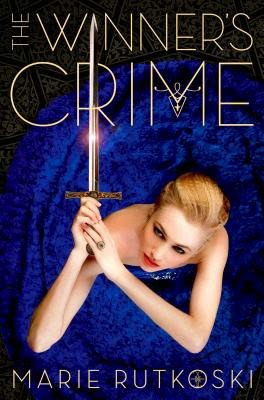
The Winner’s Crime

by Marie Rutkoski
First sentence: “She cut herself opening the envelope.”
Support your local independent bookstore: buy it there!
Review copy snagged from the ARC shelves at my place of employment.
Others in the series: The Winner’s Curse
Content: There’s some violence, sometimes a bit graphic, and mention of sex (but only illusions). It’s in the YA section (grades 6-8) of the bookstore.

There will be spoilers for Winner’s Curse. You’ve been warned.

Kestrel handed Arin his country, a treaty that gave them a pseudo-independence from Valoria after their brief revolution. Even though she’s in love with Arin, she knows she can’t have him. He’s Herran. He was her slave. And, probably most importantly, she offered herself to the emperor to be his son’s bride in exchange for Herran’s independence.

But, of course, things are not simple. She can’t get Arin out of her head. The emperor is cruel and manipulative, which means Kestrel is constantly playing games with other people’s (and her own) lives. Especially because she wants — no, NEEDS — to help the Herrani out. By becoming a spy for them. She’s definitely playing with fire.

First: I LOVED being back with Kestrel. She’s so smart, so wily, and yet feels everything deeply. She’s just a fantastically complex character, and I thoroughly loved being in her head as she went through the paces. I loved hating the emperor (oh, man, he’s despicable). And even though Arin is pretty annoying, I enjoyed his character growth.

That said, it’s very much a middle book in a trilogy. It’s moving things forward, sure, but it’s also very much spinning in place. Kestrel, while fun, doesn’t have any character growth, really, until the end when she does something completely out of character (but leads to a pretty great cliffhanger ending). Arin did grow, however, and after he stops being moody about Kestrel, he has some pretty great scenes. It took me a while to get going, but once I did, I plowed through straight to the end which left me begging for the last book.

Even with the second-book-in-a-series curse hanging over it, it’s still a GREAT read.

The Forgotten Sisters

by Shannon Hale
First sentence: “Miri woke to the rustle of a feather-stuffed quilt.”
Support your local independent bookstore: buy it there!
Others in the series: Princess Academy, Palace of Stone
Release Date: February 24, 2015
Review copy snagged from the ARC shelves of my place of employment.
Content: There’s some violence, but nothing graphic. And some kissing, which may be ew-inducing in the younger set. Still, I think it belongs in the middle grade (grades 3-5) section of the bookstore, though it might do better with the 5-7th graders.

Miri finished her year at the Palace and was looking forward to going back home to Mount Eskel, seeing her family, enjoying getting back to the life she once had before the Princess Academy changed her path. But, her winding road isn’t finished yet: the neighboring country, Stora, is threatening invasion, and in order to pacify them King Bjorn has offered up some distant cousins as a bride to the aging Storan king. And Miri is sent, unwilling and unprepared, to the swamp of Lesser Alvan to find these cousins and whip them into shape for a royal wedding.

What Miri finds when she gets to the swamp are three motherless girls — Astrid, Felissa, and Sus — who have been resourceful enough to find a way to survive without the help of the castle. They were supposed to be getting an allowance, which has been stolen by the local village overlord. They were supposed to have servants and a family, and they’ve been robbed of that, too. However, they made to, and once Miri figured out how to connect with them, things went well.

In fact, Astrid and Sus were my favorite characters. Felissa was nice enough — her main characteristic, as Hale often reminded us, was smiling — but Astrid was tough, no-nonsense, responsible, and just plain amazing. Sus soaked up the knowledge, and there’s a scene at the end (I won’t spoil it) where she talks coolly and rationally and logically and in the end makes everyone listen to her. Miri,too, was a bastion of resourcefulness: she adapted to the swamp life and fought back against the bandits and robber barons. She fought for justice and did so in a way that wasn’t violent.

The thing that kept running through my mind while reading this was that it was a girl power book, but not in the way we usually think of it. Usually, we want our girls to be like guys: kicking butt, fighting. But, Hale has given us girls and women who Do Things and stand up to people without violence, without force. In fact, you can look at this book as the myriad of ways women survive what men in power do to them. From making decisions to making war to actual physical violence, men can be (are often?) cruel and unthinking. But, women can survive and flourish.

It never got didactic or heavy-handed, though I did think some of the twists and turns of plot were a bit much. It came together in the end, though, in a very satisfying way. Because above all, Hale is a consummate storyteller. And this is definitely a good story.

Graphic Novel Round Up, December 2014

In Real Life
by Cory Doctorow and Jen Wang
Support your local independent bookstore: buy it there!
Content: There’s a couple instances mild swearing and because it’s about economics and gaming, it’s in the teen section of the bookstore. That said, A (who is in 5th grade) read it, understood most of it (at least the general idea), and really liked it. It’s in the teen graphic novel section of the bookstore.

I’ve never read anything by Cory Doctorow, but I was intrigued by this when it came into the store, and after reading a review of it for the Cybils blog I knew I needed to pick this one up.

Anda is a gamer. Which makes her a bit of an anomaly in her new school in Flagstaff, Arizona. So when a woman comes to their tech class, inviting them all to join this new online gaming community, Coarsegold, Anda jumps at the chance. Once inside the game, though, she soon finds out things are not all coming up roses. She hooks up with another player, Sarge, who introduces Anda to the world of gold farming. Actually, Anda and Sarge’s job is to kill off those who are gold farming — harvesting virtual gold for real money.

But then Anda befriends one of the gold farmers, a Chinese boy who goes by the English name, Raymond. She discovers that he’s being forced to work for hours on end without a break, for very little money and no health coverage. So, she gets Involved.

I enjoyed much about this foray into the gaming world. I enjoyed Anda as a character, and that Jen Wang drew her realistically. Even her avatar, which was slimmer and “whiter” than Anda was, wasn’t Barbie perfect. I enjoyed the fact that the introduction to the gamer world was a girl, as well. Especially with gamer-gate, acknowledging that girls are gamers, too (and good at it) is a good thing. Doctorow mentions in his introduction that this is not just about gamers, but it’s also about economics and making a difference. And I could see that as well; it’s a primer how electronic transactions take place and a reminder that in this world, no one is truly ever disconnected from anyone else.

Fascinating.

I Remember Beirut
by Zeina Abirached
Support your local independent bookstore: buy it there!
Others in the series (loosely speaking): A Game for Swallows
Content: Much like Hidden, this is about the effects of war on everyday people. It’s pretty matter-of-fact, but it feels like an older graphic novel. It’d be in the teen graphic novel section of the bookstore.

This is basically Abirached’s memories of growing up during the war in Lebanon. Her  house was in the middle of what she called “no man’s land”, which was a zone in between the worst of the fighting and the safer places in Beirut. Her memories are organized roughly chronologically, and range from the mundane — how they showered — to the macabre — her brother loved collecting bits of schrapnel — to the sad — when a neighbor had to move because their house got blown up.

Done in the same stark black and white drawings, it’s a reminder that no war is without casualties, and that sometimes those casualties are the everyday lives of people who aren’t even involved in the fighting. 

Graphic Novel Roundup, June 2014

I discovered that 1) I’m reading more graphic novels than usual right now. Perhaps because I’m picking up a bunch for K at the library due to summer reading. Her goal is to read 36 graphic novels by the end of July. She’s read 15 so far. And 2) I really like these graphic novel roundups. Here’s what I’ve been reading this month.

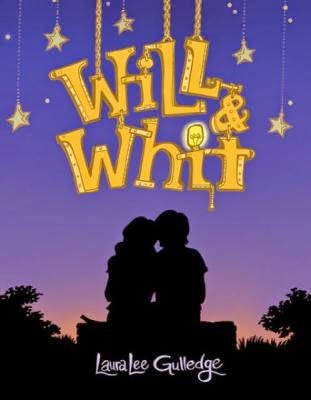
Will & Whit
by Laura Lee Gulledge
Support your local independent bookstore: buy it there!
Content: The cover is misleading; it’s not a romance. Not really. Thematically, it’s a little mature — it’s in the teen graphic novel section — but I’d give it to an interested 10- or 11-year-old.

The Will in the title is Wilhelmina Huckstep,  girl whose parents died in an accident recently, the summer before her senior year. She’s living with her aunt, who runs the family antiques store. The Whit in the story is Tropical Storm Whitney which causes the entire town to lose power, thereby creating a situation where everyone has to be unplugged from their technology and interact with each other. It’s delightfully drawn, and balances the dark — Will grieving for her parents and trying not to be a burden — and light — her wonderfully eclectic friends, and the Penny Farthing carnival they put on. There is some romance, with a couple of Will’s friends, but it was very sweet and not at all central to the plot. A delightful summer read.

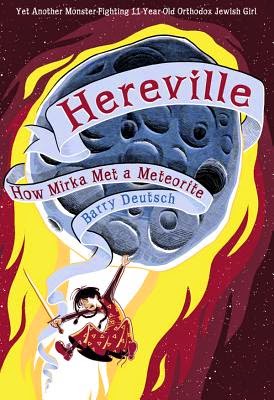
Hereville: How Mirka Met a Meteorite
by Barry Deutsch
Support your local independent bookstore: buy it there!
Others in the series: How Mirka Got her Sword
Content: There’s nothing. I’d let K read this, though she might be a bit confused with the Yiddish words. It’s in the middle reader graphic novel section.

Mirka has her sword, but she longs for more adventures. Instead, she’s stuck at home, knitting berets (its the only thing she can knit) because she’s grounded. Her stepmother, Fruma, just wants her to make reasonable choices. But Mirka is impulsive — something I love about her — and as soon as she could, she went back to the troll for her sword, craving something More. Then the troll sends a meteorite to earth, and the witch changes it into another Mirka. Suddenly, Mirka’s got someone she hast to share her life with. It’s complicated, and Mirka learns that adventures sometimes aren’t all they’re cracked up to be.

Like the first, this one is a delightful mix of Orthodox Judiasm and fantasy. And it works wonderfully. I adore Mirka, I love learning about her life, and I love the adventures Deutsch gives her. Fantastic.

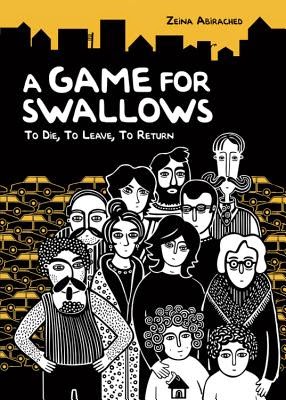
A Game for Swallows
by Zeina Abirached
Support your local independent bookstore: buy it there!
Content: There’s some talk of war and killing, so thematically it’s pretty intense. But, I wouldn’t object to giving it to a 10- or 11-year-old, if they expressed interest. It would been in the teen graphic novel section.

I know absolutely nothing of the Lebanese civil war that happened in from 1975 to 1990. I was a teenager in a small town in America, and it just wasn’t on my radar. But, thanks to Abirached, I have gotten a glimpse into what life was like for those going through it. The book takes place entirely in one night in the foyer of the apartment of two children as they wait for their parents to come back from their grandparents’ house. It shouldn’t be that big of a deal, but in East Beirut, full of shelling and snipers, it is. The foyer is the only safe place in the apartment, and their neighbors — from the young(ish) handyman to the older couple to the former French teacher to the older woman who has been a nanny for a family for 65 years — congregate there in the evenings. The mood ranges from celebratory — they make a cake and enjoy a game of Scrabble — to tense — when they find out that the children’s parents had left an hour earlier and had still not arrived. It’s a picture to how life goes on in the face of war, in the face of uncertainty and in the face of death. Done in very stark black-and-white drawings, it’s a very simple and powerful tale of human resilience.

Mockingjay

by Suzanne Collins
ages: 14+
First sentence: “I stare down at my shoes, watching as a fine layer of ash settles on the worn leather.”
Support your local independent bookstore: buy it there! (Though you probably already have.)

NO SPOILERS. Promise.

Like Hunger Games and Catching Fire, this book is very unputdownable. Thankfully, I set aside the day to sit and read, otherwise I’d have been biting my nails and obsessing over the book. Better to get it all over with in one sitting.

And, for the most part, I really really liked the book. I liked what Collins did with Katniss, and the rebellion, and Gale, and especially Peeta. I liked the direction Collins was taking the books, the whole Katniss-as-Mockingjay thing. There were touching moments, some kick-butt moments, she kept me guessing as to where the plot was going, and she generally laid foundation work for something absolutely incredible to happen. There’s a lot of good anti-war stuff in there, how rebellions don’t always work right, how killing ourselves isn’t always the answer.

There are some things I wished she would have done: I missed Cinna, I wished Haymitch had more to do, I wished she had done something more with the District 13 government. Those were minor quibbles, though.

Because, the book fell apart for me. Completely and totally by the last 45 pages. There’s a moment near the end — and if you’ve read the book, you know where it is — where I was on the edge of my seat, disbelieving. However, in the pages that followed, Collins made choices — with characters, with the plot, with narrative — that completely derailed the rest of the book. It would have been so much better if… but it wasn’t. The whole ending was anticlimactic, and took the book in a direction that felt forced. I ended up feeling dissatisfied with the whole book, in the end. I’m not sure what I wanted, really, but it wasn’t the ending that Collins gave me.

Which, unfortunately, left me with a less-than-stellar reaction to the book overall. (And am I the only one?) And that’s too bad. Because it’s a great series: thought provoking and intense. I just wanted something better to end with.