Summer Days and Summer Nights

summerdaysedited by Stephanie Perkins
First sentence: “There were a lot of stories about Annalee Saperstein an d why she came to Little Spindle, but Gracie’s favorite was the heat wave.”
Support your local independent bookstore: buy it there!
Content: Some stories are sweary (including f-bombs), some have drinking. I don’t think there’s any sex (maybe some references to it, but none actual.) It’s in the teen section (grades 9+) of the bookstore.

Short story collections are hard books to talk about. Do you talk about the theme as a whole — ah, swoony summer romance, how wonderful it is? Or do you talk about individual stories, and how they resonate with you? (And how hard it is to actually read short stories? You get going and settled in the story and then it ends. *sigh*)

I did love that the stories by authors I knew absolutely fit them: Libba Bray of course would write a story about a haunted classic movie. Stephanie Perkins’, Nina LaCour’s, and Jennifer Smith’s stories felt like their books. Cassandra Clare’s was kind of lame (it was supernatural, sure, but underdeveloped). Some were definitely better than others: I really like Brandy Colbert’s story as well as Lev Grossman’s.  And surprisingly, Veronica Roth’s story made me tear up.

Is it something I’m going to come back to over and over again? No. But that’s the nature of short stories: they’re there, and they disappear as quickly as they come. But, I did enjoy the time I spent with it.

The Wonder Garden

by Lauren Acampora
First sentence: “John likes to arrive first.”
Support your local independent bookstore: buy it there!
Review copy pilfered from the ARC shelves at work.
Content: There’s a bunch of f-bombs, but not as many as you’d think. Also some mild drug use and off-screen sex. It’s in the adult fiction section of the bookstore.

If I had to choose a favorite way to read short stories (other than not at all), I prefer them to be interconnected ones. Ones where it almost seems like I’m reading a novel. So, I was immediately made curious about these with the words “intricately interwoven stories”. Yes, please.

And, at first I enjoyed this. One minor character from the previous story would show up as the protagonist in the next, giving layers to what had previously went on. Some stories were odd (the insect installation), others kind of weird (the accountant-turned-hippie). I don’t know if I was truly enjoying it, but I was interested.

But about 2/3 of the way through, it fizzled. I was tired of trying to remember which story what protagonist showed up in. I was bored with the way it interconnected. And the stories weren’t enough to keep me interested; I just couldn’t find myself interested in their lives, and the words just weren’t pulling me in.

It could totally be me: short stories and I aren’t always the best of friends and I may have just not been in the mood for this. But, it is possible that it may have just worn out its welcome.

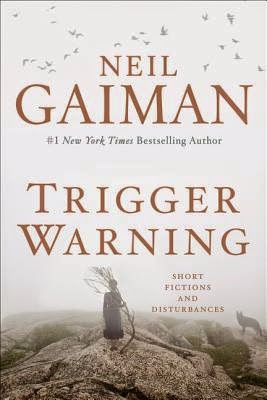
Trigger Warning

by Neil Gaiman
First sentence: “There are things that upset us.”
Support your local independent bookstore: buy it there!
Review copy snagged from the ARC shelves at my place of employment.
Content: This collection is fairly tame, ranging from simpler stories to more complex ones. I’d give it to anyone who has the attention span long enough to get through the stories and who likes short works of speculative fiction. It’s in the science fiction/fantasy section of the bookstore.

I like Neil Gaiman’s writing. I do. I even actually think I like his short stories better than his longer works of fiction. But I think what I like best is listening to the audio of him reading his work. It’s only then that I feel I “get” what he’s trying to say.

Which means, that while I enjoyed this work of short fiction — and I did love some of the stories immensely. Namely, “The Thing about Cassandra” and “The Truth Is a Cave in the Black Mountains” and “A Calendar of Tales” (September fits me quite nicely) and “The Sleeper and the Spindle”. All were elegant and lovely and charming and thoroughly enjoyable.

But there was something missing. And, thinking back on it, that something was Gaiman reading his own stories, enrapturing me with his interpretation of the written word.

Perhaps, then my enjoyment would have crossed over into love.

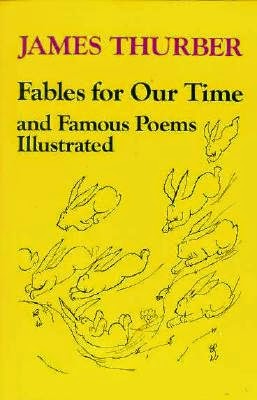
Fables for Our Time

by James Thurber
First sentence: “Once upon a Sunday there was a city mouse who went to visit a country mouse.”
Content: There’s nothing overt, and no swearing. It’d probably end up in the poetry section of the bookstore.

I think I’ve vaguely heard of Thurber before this book was picked for my in-person book group. But I’d never really paid him much attention. So I didn’t really have any expectations going into this.

It’s a series of short fables followed by illustrated poems (the poems are by other people). Pretty simple, right? The fables are pretty standard: animals doing human-like things. But the twist was that they had pretty… unusual… morals.

Things like “It’s not so easy to fool little girls nowadays as it used to be.”

And: “Early to rise and early to bed makes a male healthy and wealthy and dead.”

And: “Never allow a nervous female to have access to a pistol, no matter what you’re wearing.”

And: “The male was made to lie and roam, but woman’s place is in the home.” (The title of that one was “The Stork Who Married a Dumb Wife.”)

And at that point, I decided that Thurber — no matter what time period he’s writing in (the 1930s) is horribly sexist and doesn’t deserve to be read.

That’s a bit harsh. I get that these are satire (which I have a hard time with, anyway), and that they’re supposed to be stereotypes. But STILL. I was more impatient than amused. Stop it already with the sexist crap.

Audiobook: One More Thing

by B. J. Novak
read by the author
Support your local independent bookstore: buy it there!
Content: lots of language, both mild and strong. Most of it unnecessary, but I don’t think I expected anything less. Is in the adult fiction section of the bookstore, but I bet older teens would like it.

I picked this up because people at work were raving about it. Said it was hilarious. And I decided that I need some humor in my life. So, even though it’s by an actor I’ve never heard of (I didn’t watch The Office, though he was the “other guy” — the one that I didn’t recognize – in Saving Mr. Banks), I figured why not give it a try.

It says it’s “stories and more stories” but I think it’s more “jokes, observations, and a couple of stories.” There were 64 in the book, and sometimes that felt derivative. Not that I minded: some of the shortest stories were some of the funniest ones. Novak is a great narrator, by the way, and he got a whole bunch of other celebrities to help him out, though he used Rainn Wilson and Mindy Kahling the most

My favorite of the whole book was “The Something by John Grisham,” where John Grisham’s newest novel gets published with his place-saving title instead of a “real” one. I was guffawing at the idea that Grisham’s novel would not only get published with such a bad title, but get rave reviews. Just because he’s John Grisham. (I suppose there’s a poignant commentary there on publishing and fame, but I was laughing too hard to find it.) I did like “No One Goes to Heaven to See Dan Fogelberg”, which is an imagining of what Heaven will be like, and how, maybe, we won’t want to spend time with people we didn’t know well in life, even if they are family. Some of them — like the “Comedy Central Roast of Nelson Mandela — made me uncomfortable, and I thought Novak’s humor was more mean than observant. But, for the most part, like in Wikipedia Brown and the Case of the Missing Bicycle” — a spoof on Encyclopedia Brown — or “Bingo” — where three cousins are vying to win Bingo at a resort, only to lose to their grandpa — or “Closure” — where a girl whose boyfriend has broken up with him gets absolute closure I was highly amused. And the discussion questions at the end of a couple stories, as well as the end of the book, I thought were a nice touch.

It’s like David Sedaris without the sardonic undertones.

I’m not sure I would have liked this as much if I hadn’t have listened to it. (Much like me and David Sedaris, come to think of it.) There’s something about hearing jokes, as opposed to reading them, that makes the humor work better for me. It’s not a deep book, or one that’s going to stay with me for a long time. But it was amusing, and it did make the drive back and forth to work enjoyable.

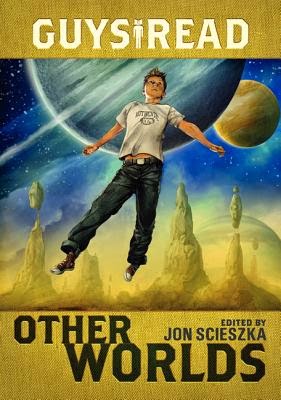
Guys Read: Other Worlds

edited by Jon Scieszka
ages: 10+
First sentence: “What would happen if invading warlords from another planet landed on your school’s basketball court?”
Support your local independent bookstore: buy it there!

I have off and on luck with short stories; sometimes I am really entertained by them. Others, not so much. This collection, however, worked for me. Not all of the stories worked equally well, but overall, it was a good collection.

It may have something to do with my fondness for Ray Bradbury stories.

Scieszka was nice enough to include a Bradbury short story that I hadn’t read (or at least don’t remember reading) as the last one in this collection. And it was a joy to read the weird, wonderfulness that was Bradbury. This time it was about a planet where, due to the radiation from the sun, humans only lived for 8 days. And one boy’s determination to make it off the planet. Brilliant, and by far my favorite story.

The others weren’t bad, either. I liked Tom Angleberger’s “Rise of the RoboShoes” (with illustrations), and found “The Klack Bros. Museum,” by KEnneth Oppel to be delightfully creepy. “Plan B,” by Rebecca Stead had a great twist on the end, and both “Bouncing the Grinning Goat,” by Shannon Hale and “A Day in the Life” by Shaun Tan were delightful.

Sure, I think Rick Riordan phoned it in for his short story, but it was still cool to read about a Percy/Grover adventure, since it’d been quite a while since I’d read about those two together. There were some that didn’t work for me — most notably “The Scout” by D. J. MacHale — but I guess that’s a side-effect of a collection of stories by multiple authors. There are some you like; there are some that fall flat.

There’s a little something for everyone. But get it for the Bradbury story.

(Just for the record: because this is a Cybils nominee, I’ve been asked to make sure y’all know this is my opinion only, and not that of the panel.)

Audiobook: Fragile Things

by Neil Gaiman
read by the author
ages: adult
Support your local independent bookstore: buy it there!

I decided, upon finishing listening to this, that I wouldn’t mind if Neil Gaiman came and narrated my life. He has such a wonderful reading voice, spellbinding on its own, that he could be reading my grocery list, and I would listen, captivated.

But, thankfully, I didn’t have to listen to my grocery list, which would have gotten quite tedious after a while. Rather, I got a collection of some fascinating, some entertaining, some disturbing Gaiman stories. I didn’t love them all, but the ones I liked, I really liked. I think, perhaps, that I like Gaiman in short doses — I absolutely love his stuff for kids — rather than his long novels. So, a collection of stories and poems was just about my speed.

Some of my favorites? “A Study in Emerald,” his take on a Sherlock Holmes story which is weird and wild, and has an absolutely brilliant twist at the end. Or “October in the Chair,” a delightful story personalizing the months of the year and their gathering where they each take turns telling one story, and the story that October (it’s his year) tells. Or “How to Talk to Girls at Parties,” which is a mundane awkward boy party until you realize that they crashed a party of alien girls. Or “Sunbird” which is about an epicurean club who have basically tried eating everything there is to eat. Except for the sunbird. Or, the poem “Instructions”, which is one of my favorite picture books.

Sure, there were some missteps (I had issues with ” The Problem of Susan” and another story, where the sex just felt gratuitous), but for the most part, I thoroughly enjoyed listening to this one. Then again, it may have been because I’d listen to Gaiman read anything.

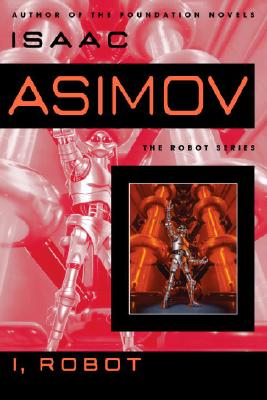
I, Robot

by Isaac Asimov
ages: adult (ish)
First sentence: “I looked at my notes and I didn’t like them.”
Support your local independent bookstore: buy it there!

This is one of those books that I’ve always heard of but never had gotten around to reading. I can’t really tell you why; it just never seemed like something I’d be interested in.

Thank heavens for book groups.

Framed as an interview with retiring robopsychologist, Dr. Susan Calvin, it’s a series of interconnected short stories detailing the evolution of robotics in the “future”. It’s an interesting look into what Asimov thought our future would be like, and the prevalence of robots in society.

I’m not quite sure what to say about the book other than I really, really liked it I thought it was fascinating to read about what Asimov though the future would be like. I liked the character of Dr. Calvin; she was an interesting person to frame the book around, smart and capable (if a bit cold), and gave the book a good grounding. In fact, the stories went down better for me than short stories usually do, mostly because they seemed like chapters in something larger.

That said, two of my favorite stories were “Liar”, in which a mind-reading robot just tells humans what they want to hear; and “Little Lost Robot,” in which a robot goes missing, hiding in the midst of a bunch of other robots that look exactly like it. I found it fascinating the things the psychologists and scientists go through to figure out which one is the missing robot.

But my favorite was one near the end, “Evidence,” where a man is running for mayor of the region, but there are allegations against him: he’s a robot. The point is to prove he’s not. It’s a fascinating look at the line between robotics and humanity, and the issues about whether or not it’s ethical for a robot to actually “act” human.

It’s a good work, one that stands up to the test of time, even if there were moments when I cringed at the 1950s-ness of it all. Even so, I’m glad I had the chance (finally!) to read it.

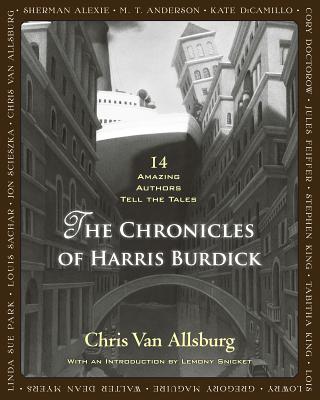
The Chronicles of Harris Burdick

by Chris Van Allsburg, and 14 other writers
ages: 10+
First sentence: “Is there any author more mysterious than Harris Burdick?”
Support your local independent bookstore: buy it there!

Back in 1984, Chris Van Allsburg authored a book called The Mysteries of Harris Burdick. Supposedly, he was recreating the art of one Harris Burdick, who left fourteen paintings at a man called Peter Wender’s office, with only the titles and a brief caption. The drawings were mysterious and wondrous all at the same time: something for parents and children to pour over and imagine.

Of course the next logical step — albeit nearly 30 years later — is to get fourteen (including Van Allsburg himself) of the most talented children’s (and adult) writers to do the imagining for us. Each author — and there are some brilliant ones here: from Sherman Alexie and Lois Lowry, to M. T. Anderson and Kate DiCamillo , to Stephen King and Gregory Maguire — takes a different painting, and spins a story around it, incorporating the tantalizing caption that “Harris Burdick” gave to each painting.

Let me say right off: this is not a picture book. I cannot imagine curling up with my 5-year-old and reading these stories. For one, they are much too long. For two, they are much too… old. This is an illustrated set of short stories, ranging from the disturbing to the strange to the whimsical, meant for older audiences to savor and think about.

Like every short story collection, the stories themselves are uneven: I found Cory Doctorow’s “Another Place, Another Time” to be odd, full of science I couldn’t quite grasp; and Sherman Alexie’s “A Strange Day in July” to be terribly cruel in a ten-year-old bully sort of way. But, when the writing is on, the book is a marvel: Jon Scieszka’s “Under the Rug” is hilarious; Linda Lois Lowry’s “The Seven Chairs” is simple and magical; both Linda Sue Park’s “The Harp” and Louis Sachar’s “Captain Tory” are deliciously sweet; and Stephen King’s “The House on Maple Street” is perfect. It’s fascinating to see how each author’s imagination works with the painting, taking the small details and spinning them into a larger, more complex story, and yet leaving enough space that the reader can invent and hope and dream right along with.

It’s one of those books that begs to be taken out time and time again, to read and look at, inspiring you to dream about both the possible and the impossible. In other words: it’s just the perfect sort of book.

Guys Read: Funny Business

edited by John Scieszka
ages: 10+
First sentence: “A kid gets transferred to a new school.”
Support your local independent bookstore: buy it there!

Ah, humor.

It’s such an individual thing, really. Some people snort milk out their nose at the slightest silliness (guilty), others just crack a small smile. It’s so hard to find one style that suits everyone.

The best solution? A short story collection. There’s enough different kinds of stories in here (all with male protagonists, so hand this one to the boys. Which was its point, actually.), from enough different authors, that everyone will find at least one that will tickle their funny bone.

For me, it was Eoin Colfer’s story. If I had been drinking milk (or anything at all), I would have snorted it. I howled. It’s basically a personal essay about his older brother, the evil genius, and how he got his younger brother out of trouble. Seriously, it doesn’t sound that funny, but it is. Or at least it was to me.

The other stories were nothing to sneeze at either: there are stories about not-so-great friends, projects gone bad, getting addicted to danger, stupid English assignments, obnoxious parents and grandparents, and superheroes. Not all were equally funny, in my opinion, but all were entertaining and interesting and fun to read. Completely worth picking up (and not just for the guys.)

Besides, how can you not want to read a book that has a trailer like this?