Enchanted Air

by Margarita Engle
First sentence: “When my parents met, it was love at first sight.”
Support your local independent bookstore: buy it there!
Content: It talks indirectly about drugs, sex, and teen pregnancy, as well as the violence of war, but it doesn’t dwell on that. It’ll be in the children’s biography section of the bookstore

I noticed that Abby had read this one and liked it, so I pulled it off my pile to give it a try. I mostly wanted something I could finish in one sitting, and this one — being a memoir in verse — fit the bill.

I didn’t expect to be thoroughly delighted by it.

Margarita is the daughter of a Cuban immigrant and the son of Ukranian holocaust survivors. Needless to say, she had an interesting story to start. Add to that the conflict in the 1950s with the Cuban revolution and the subsequent cold war, she definitely had  a story to tell. But: she chose to tell it through travel, through depictions of the island itself (which she described so lushly) as well as her family’s vacations to Mexico and Europe. She portrayed herself as an awkward child, caught between two countries and then unexpectedly cut off from half of her family. I can only imagine what her mother felt.

Elegantly told, beautifully imagined, it’s a love story to the power of words and images and home. (And I’m glad that her hope in her afterward for more normalized relations between the U.S. and Cuba may slowly be coming to fruition. I would love to visit there someday.)
How to Be a Heroine

by Samantha Eliis
First sentence: “A couple of summers ago, I was on the Yorkshire moors, arguing (over the wuthering) with my best friend about whether we’d rather be Jane Eyre or Cathy Ernshaw.”
Support your local independent bookstore: buy it there!
Review copy provided by the publisher.
Content: There’s a handful — not more than six — of f-bombs and some mentions of sex, but nothing graphic. It’s in the adult creative nonfiction section of the bookstore, but I’d give this to anyone in high school and up.

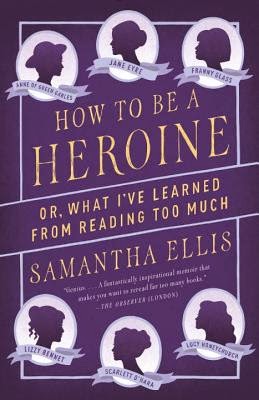
Somehow, I ended up with a complimentary copy of this book. I really have no idea how it ended up on my pile. I do know the idea of it (and the subtitle: “Or, What I’ve Learned from Reading Too Much”) appealed to me. Any book that is about books or the love of reading has to be good, right?

And it was.

The book is nominally a reflection of Ellis’s life. She’s an Iraqi Jew, living in London, with all the cultural and religious implications you’d think that entails. She struggled against expectations, she struggled with faith, she struggled to find her own path. And, on its own that would be a fascinating story. But she framed the book with an analysis, heavily feminist, of classic heroines. From familiar to me ones like Jo March and Anne Shirley and Jane Eyre to ones I’ve never heard of, like Franny Glass and Esther Greenwood. She explored their narrative arcs, and what she took away from their stories. Both when she was younger and then, as an adult, how she feels the held up. Some did. A lot didn’t. And many she got something different out of the book than what she got when she was younger. She discovered new things along the way, and made me want to revisit books I’d loved when I was younger and read ones I’ve not read before.

And for all the literary criticism, it wasn’t a stuffy book. Ellis has a way of drawing the reader in, of making the characters pop to life. Perhaps that’s because she’s a playwright and has a way with words as it is. But whatever the reason, this one won my heart over.

El Deafo

by Cece Bell
Support your local independent bookstore: buy it there!
Content: There’s a little talk of Love (she has a crush) but other than that, it’s quite accessible for the 3-5 grader. It’s in the middle grade graphic novel section at the bookstore.

This one has been on my radar for a long time, and (like too many other things), I can now say I Should Have Read it Sooner!

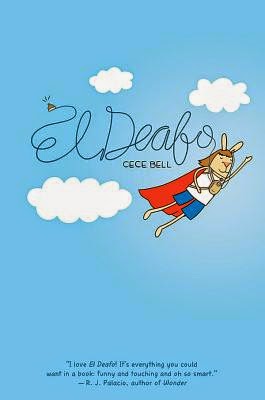
It’s the mostly-true (except for the part where she’s a bunny) story of Cece Bell, and her experiences as a deaf child in the 70s and early 80s. She lost her hearing due to a bout with meningitis when she was four, and as a result had to wear a hearing aid and use a Phonic Ear during school. It’s not something she really enjoys at first, even though she realizes it gives her a sort of super-power.

But, the story is really only incidentally about being deaf, it’s more about finding a way to belong and a friend. Bell is very practical about the friends she made, not sugar coating anything. But, it’s not a harsh book; on the contrary, it’s a very sweet and often hilarious story. And it’s good that it’s out there to remind readers that it’s because of our differences that life is interesting.

Very highly recommended.

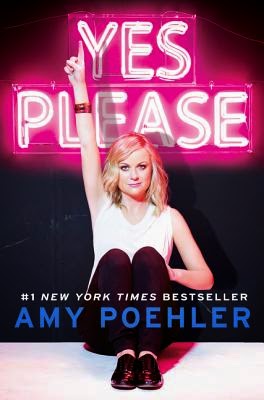
Audiobook: Yes, Please

by Amy Poehler
Read by the author.
Support your local independent bookstore: buy it there!
Content: Amy likes to swear. A lot, but not excessively, and generally not gratuitously. She is also pretty frank about sex and her drug use. I’m not going to say it’s not for teens — whom I know make up some of her fan base — but know that going in. It’s in the humor section at work.

I have made an executive decision: all celebrity bios are better in audiobook form. Period. That is all.

I really wasn’t that interested in reading this one; I’d paged through it a couple times when it came in back in October, and I figured: this was one for the True Fans. (Which I am not. I’m more like a Passing-by Fan.) But even I couldn’t resist the opportunity to listen to Amy Poehler read her book.

And, for the most part, it was a lot of fun. It’s a meandering book, wandering through memories, observations, Deep Thoughts, and Pithy Comments. That worked for me for a while, but wore me down by the end. Thankfully, the last chapter was recorded live, which helped end the book on a high note.

Perhaps it’s because she comes from an improv background, but I felt Poehler (and the audiobook) was at its best when she strayed from the script and just riffed. The two minutes she and Seth Meyer went off (which I’m assuming is not in the book, though I haven’t checked) were brilliant. She operated under the guise that she was recording the whole thing in her own personal home audio booth, and that there was a party going on in the background. She chatted for a bit with Patrick Stewart, Kathleen Turner, and Carol Burnett which just made me happy. And hearing her parents’ Boston accents (actually, I loved it when Poehler’s came out too) was charming.

It was all the little extra things that made this book enjoyable. But in the end, that wasn’t enough for me to truly love it.

Audiobook: The Art of Asking

by Amanda Palmer
Read by the author
Support your local independent bookstore: buy it there!
Content: Amanda doesn’t check her language. There’s a ton of swearing, of all shades. And she’s pretty frank about pretty much everything. It’s in a couple of sections at the bookstore: self-help (which it really isn’t) and biography (where it fits a bit better).

When this book came in, the conversation with one of my bosses as I was shelving this went something like this:

Her: “I saw Amanda Palmer once. She was intense.”
Me: “I didn’t know who she was until she started dating Neil Gaiman.”
Her: “You know, she’s her own person.”

That last sentence really does sum up this book quite nicely: Amanda Palmer is, for better or worse, her own person. And she is not ashamed of any of it.

Nominally an expansion of her TED talk, it’s more a meandering look into what makes Amanda Palmer tick. On the surface, it’s not a book for everyone. Amanda is frank, which means that sometimes she (and her music) will rub you the wrong way. BUT, she is frank. Which means she’s honest, and that gives the book a refreshing clarity. She talks about a lot of things: her time as a street performer, her music, her relationship with Neil Gaiman, but at its heart, it comes down to one thing: she is interested in the connections between people and how we ask for things.

Because of who she is, this is framed in music terms: a musician asking her fans for support, help, love, money. But what she says — that there are ways to ask that isn’t begging, and that it’s the connections (what she calls the net) that makes asking possible — is applicable for just about everyone. It got me thinking about gifts and connections, and how we work at relationships, and about how I’m much too hesitant to ask for things. At one point, she says that asking without condition is a gift, because it allows the other person to give. That’s something that resonated with me.

I enjoyed the audio version of this quite a bit as well: while Amanda’s voice was sometimes difficult for me to hear (which is entirely my fault), I loved hearing snatches of her music (I prefer her later, ukulele songs to the Dresden Dolls stuff) and her Neil Gaiman voice (seriously: she had a slightly British affection when she had him talking. It was quite adorable). But, mostly, I felt like she was in the car with me, explaining her life view, and how, just maybe, it might make my life a little bit better.

Highly recommended.

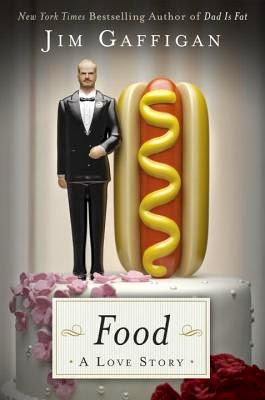
Audiobook: Food, A Love Story

by Jim Gaffigan
read by the author
Support your local independent bookstore: buy it there!
Content: There’s some mild swearing, but its quite seldom. It’s in the humor section of the bookstore.

I love food. I  love to laugh. And yeah, I kind of like Jim Gaffigan’s humor, though I’m new to it (and only in book form, having quite enjoyed Dad is Fat.) All that adds up to a “yeah, I guess I’ll pick up the audio version of his new book” mentality.

There’s really not much to say about this book beyond that it’s hilarious and a lot of fun to listen to. Gaffigan isn’t a foodie (he’s an “eatie”) and so there’s really not luscious descriptions of making food or of recipes (there is one — how to make a hot dog — and it’s quite hilarious) or how food changes lives. No, I imagine it’s just a series of stand-up bits (which is why I think this works better in audio. Plus he does voices, which end up adding to the humor) based on Gaffigan’s love of eating… everything. (And, yes, for those who are actually fans, he does have a chapter on Hot Pockets.)

Some highlights: the chapter on steak, or desserts, or breakfast foods, or on bacon. He hates vegetables and thinks kale is the worst thing ever. It’s really an every-person’s (read: non-food snob) tribute to the joy of eating. And the only down side? I often got hungry while I was listening to it.

Enjoyable, to say the least.

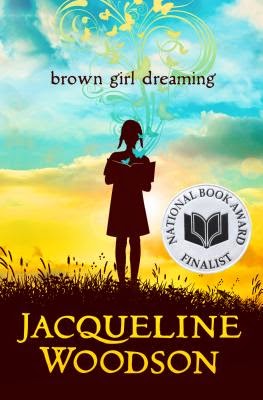
Brown Girl Dreaming

by Jacqueline Woodson
First sentence: “I am born on a Tuesday at University Hospital Columbus, Ohio, USA — a country caught between Black and White.”
Support your local independent bookstore: buy it there!
Content: There’s nothing objectionable. And it’s even an easy-ish read. Sure, it’s poetry, but it’s not difficult. Hand it to anyone with an interest in writing, kids, and history. It’s in our middle grade biography section at the bookstore.

I’m not quite sure where to start on this one. It seems We’ve (the collective we, here) been inundated by memoirs and biographies of celebrities, People of Note, and at first glance Jacqueline Woodson’s new book just falls into that pit of “celebrity” (of a sort) biographies.

Except, it’s not so much a biography or memoir as it is a reflection upon a childhood. Woodson makes her childhood an Everyperson experience, something that the reader can readily identify with, even if they didn’t have her exact same experiences.

Her childhood begins in Ohio, but mostly it’s spent in South Carolina, with her grandparents, and in Brooklyn, where her mother finally settled with Jacqueline and her brothers and sister. I kept trying to figure out the timeline (if she was born in 1963, then it must be…) but eventually, I just gave up and let myself get absorbed in the story.

And absorbed I was. Woodson wove historical elements into her story — sit-ins in the South; the way her grandmother felt about the way she was treated in stores by white people; music that was playing on the radio — all of which helped put her personal story in a larger framework. I could easily forget I was reading a memoir; it felt so much like a novel.

Part of that, too, was the form. Written in free verse, the memoir took on a lyrical quality. There were moments, especially toward the end, where I was moved by her insights not only in her life, but for Life in general.

One more thing: I appreciated her portrayal of religion. I get the sense she’s not a practicing Jehovah’s Witness anymore, but she portrayed the religion of her grandmother and her own childhood with respect. It was neither good nor bad; it was just a part of her life. And I found that refreshing.

Highly recommended.

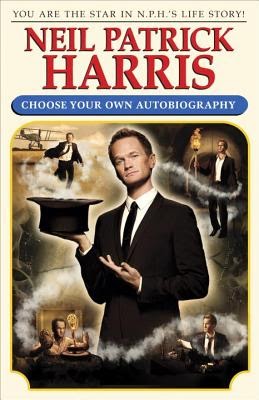
Audiobook: Neil Patrick Harris: Choose Your Own Autobiography

by Neil Patrick Harris
Read by the author.
Support your local independent bookstore: buy it there!
Content: There are eight f-bombs (yes, I counted) and some frank (but not graphic) descriptions of his sexual experiences as he was trying to figure himself out. It’s in the adult biography section of the bookstore, but if you’ve got an interested teen, it’s a lot of fun and quite accessible.

I’m a sucker for celebrity bios. I really am. I love the peek into their lives and their histories, and I’ll devour their histories. I’m curious and a bit of a voyeur. (but not a stalker. Yet.)

So, I was probably going to read Neil Patrick Harris’s bio anyway. But when I got wind of the premise — it was going to be a choose your own adventure book! I LOVED those! — I knew I had to read it.

It comes in two formats: print and audio, and for this experience I chose audio. (Event though I ended up picking up the print book as well. Just to see.) And what an experience it is. On the one hand, I missed out on the whole “choose your own” part; it’s kind of hard to do that with audio. And one of the reasons I wanted to see what the print book was like. Instead of leaping through the book following one path (some of which include fake deaths by sand trap — somehow Joss Whedon was responsible for that one — or avalanche — Big Bird’s fault — or death by bowling ball) or another (where he/you end up overweight and working in a Schlotzsky’s), he reads it straight through. So, it gets a little difficult to tell which is Truth (so, I thought the bit about Katy Perry and the homophobe at the pre-Superbowl Party was fake until C informed me otherwise) and what was Fiction.

But the positives completely offset the negatives in this listening experience. For one: it’s NEIL PATRICK HARRIS narrating. And he’s brilliant. More than brilliant: phenomenal.  Voices (I LOVE his announcer voice) and clips (the best one is the audio of 13-year-old Neil doing a speech on optimism). And (in my favorite section) the vocal annotation of David Burtka in the chapter on how they met which just slayed me with adorableness.

I could go on and on raving about this one. I loved every moment I spent listening to it. The format (using second person instead of presenting it as “this is my life”) involved me, and on top of that NPH has a wonderful sense of humor and gratitude about his life. Maybe it’s not great literature, but it was a truly enjoyable book to read/listen to.

The World’s Strongest Librarian

by Josh Hanagarne
First sentence: “Today the library was hot, humid, and smelly.”
Support your local independent bookstore: buy it there!
Content: There’s some mild swearing, including a half-dozen (or so) f-bombs. I think older teenagers — especially ones that are struggling with education — would really like this one. It’s in the biography section at the bookstore.

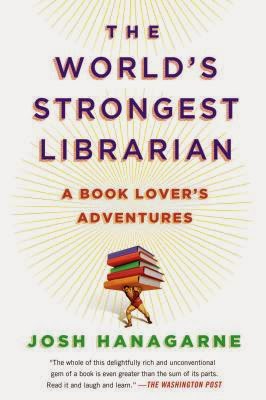
As soon as this came out, I knew I wanted to read it. It’s about a Mormon, a librarian, and a man who has Tourette Syndrome. Granted, it’s been out for a while and it took my book group to get me to read it (too many other things to read; no excuse!), but I’m very (very!) glad I did.

It’s a straight-up memoir of Hanagarne’s experiences growing up. He was raised LDS (I loved his family; he’s got great parents), and struggled with tics as a result of Tourette’s throughout growing up. He wasn’t officially diagnosed until he was a teenager, but it was a part of his life. He found books though (yay, books!) and that helped give him a sense of purpose and direction. Though his life wasn’t easy: it took him 10 years to graduate from college; he kept dropping out because his Tourette’s made it difficult for him to focus.

It was a fascinating tale, not only of his faith journey — he has had some good leaders in his life — but of his personal journey trying to figure out how to handle his increasingly worsening Tourette’s. And it’s a very hopeful book: Hanagarne has managed to create a life for himself that works, in spite of (maybe because of) the obstacles in his way. He did an incredible job helping me picture what life with Tourette’s is like (not fun).

In addition — and perhaps this was my favorite part — Haragarne splices his personal story with ones from working at the Salt Lake City library, which helped break up the stories from the past and were highly interesting and entertaining.

It’s an odd book, probably not for everyone. But I found it be thought-provoking and fascinating.

Lifesaving Lessons

by Linda Greenlaw
First sentence: “Confrontation was imminent.”
Support your local independent bookstore: buy it there!
Content: There’s some swearing, including a number of f-bombs. Plus some discussion of sexual abuse of an adult and a minor.

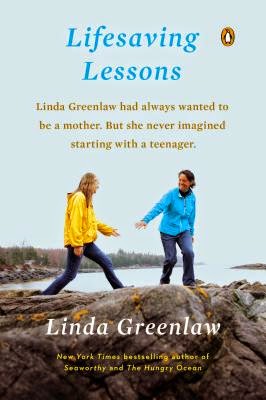
I read a few of Linda Greenlaw’s books way back when and although I didn’t keep up with what she was doing, when I found that she was coming to the store for the paperback version of her latest memoir, I snagged at the chance to both see her and read the book.

This one is a memoir of how she became a mother, of sorts. It’s the story of a girl who came to the island from an abusive family, with an uncle who was seen as a savior. That is, until she escaped one night, and the truth came out: her uncle was sexually and emotionally abusing her. It’s not a pleasant story to read; Greenlaw pulls no punches when talking about the abuse. She’s not graphic either, but rather giving us the full emotional heartache that her daughter — and the island — went through because of this. And how she ended up the legal guardian — and eventually feeling like a mother figure — of the girl.

It’s a hopeful book in the end, though. It’s not an easy road, with a lot of ups and downs, but Greenlaw takes us along for the ride in her frank, yet engaging way. I was drawn into her island way of life again, and worked through her problems with her. I wanted things to work out the best for Greenlaw and her ward, and it was that desire that kept me plugging through what usually would be considered Other People’s Problems.

I’m not sure it’s a book for everyone. But I did find the journey interesting.