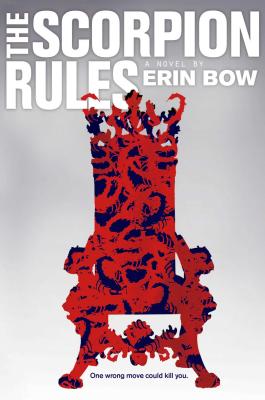
The Scorpion Rules

 scorpionrulesby Erin Bow
First sentence: “Once Upon a Time, at the End of the World.”
Support your local independent bookstore: buy it there!
Content: There are exactly two f-bombs, some mild swearing, and one illusion to sex. It’s in the Teen (grades 9+) section of the bookstore, but I’d give it to a 7th grader, if they had no objections to the content.

At this point in my life, I’m very much been-there, done-that when it comes to dystopian/post-apocalyptic books. I feel like I’ve read/seen them all, and there’s really nothing new to explore there.  So, my first thought was that this was just going to be more of the same-old, same-old, and I passed on the ARC. Then it came in, and on the back were quotes from authors I respect, so I thought (somewhat begrudgingly), that I would give this one a try.

(I know, I know: I’m not “supposed” to start these with “I’m not a fan of x”. But bear with me.)

It didn’t take me too long to realize that I was utterly wrong. First of all, the premise is something I haven’t encountered in a long while: humans have destroyed the world through climate change and war, and somewhere along the way, invented artificial intelligence. One of the AIs decided that enough was enough, and took over — by blowing up a number of huge cities — ruling the world. And the way Talis, the AI, decided to keep the peace? By keeping the children of the world’s rulers hostage. If they enter into war, their children would be killed.

Brilliant, no?

Greta is the Crown Princess of the PanPolar Confederacy, a major North American power formed out of what we know as Canada. She’s also a hostage of Talis, living in the prairies of Saskatchewan at the Precepture with her compatriots, fellow hostages. Then one day, war breaks out, one of her friends dies, and a new boy, Elian, shows up. He’s the grandson of the leader of a new alliance, and he’s not at all willing to take his role as a Dutiful and Humble hostage. He fights every step of the way. And somehow, this awakens Greta (and the rest, including her best friend La Da-Xia) to the horrible reality that is her life.

There is so much more to it than that, but I don’t want to give it all away. I adored the combination of high-tech (there are flying battleships and smart pads and cameras and, of course, the AI) and low-tech (the children at the Precepture are basically farmers, thinking about raising goats and bees and harvesting vegetables. There’s a monastery-like feel, as well: they call the AI in charge “Father”. But I also loved the diversity: Bow rightly depicted people from all over the world — African, Asian, Native American, Hispanic — but it felt natural and organic rather than some sort of forced diversity.

But what I really loved was the fluidity of the romance. There’s a love triangle of sorts, but not your typical one; Greta is bisexual and there’s no angst or heartache about this. She’s in love with both a male and a female, and it’s just the way she is. And even Talis, when he shows up, was more gender fluid in his depiction (as benefiting and AI, no?). It was all very different, and very, very refreshing.

It’s the start of a series, and I’ll definitely be picking up the next one to see where Bow takes Greta’s story.
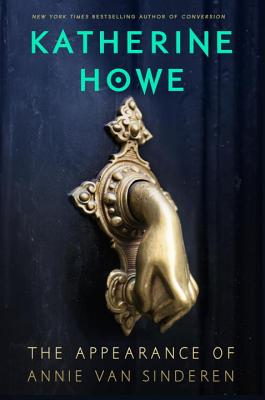
The Appearance of Annie Van Sinderen

by Katherine Howe
First sentence: “The cafe in the basement of Tisch, the art and film school at New York University, was redecorated this year.”
Support your local independent bookstore: buy it there!
Review copy snagged from the ARC shelves at work.
Content: There’s talk of teenage drinking (and some actual), plus drug use. There’s also one almost-sex scene. It’s in the Teen (grades 9+) section at the bookstore.

There is no way to write this, I think, without spoiling the premise. If you choose to go into this without knowing what it is, then you should probably stop reading now.

Wes is at NYU for the summer film workshop for a reason: he wants to transfer from the University of Wisconsin-Madison to NYU because Madison is, well, small. Constricting. The Same. He needs something different, and he Knows he can find it in New York City. (Well, can’t we all?) He’s out helping one of his friends, Tyler, film an art film at a seance when his life really changes: he meets Annie and Maddie. They’re edgy, they’re different, they are most definitely not from Wisconsin. And as Annie pulls Wes into her story (and he gets more tangled up with Maddie), he discovers that maybe the life-changing event he thought New York would offer him isn’t going to be in film school.

I’m going to say it, even though Howe danced around it: this is a ghost story. And, as such, it’s quite good. I liked not knowing that Annie was a ghost for a while — it took the whole first section for me to figure it out, though there’s a pretty big clue at the end of the prologue. I liked Wes’s discovering of her story, and how Annie flitted back and forth in time. I liked Howe’s historical detail; it’s most definitely something she excels at. And I thought the love triangle-ish thing between Wes, Annie, and Maddie was unique as well.

The only thing that really bothered me was that Howe refused to call a spade a spade. She never, once, admitted, in words, that Annie was a Ghost. She was a Rip Van Winkle. Every time it came up, they dodged the bullet. It got old. Just say she’s a ghost, please.

But, other than that, it was an intriguing weaving between past and present, and a unique way to look at ghost stories.

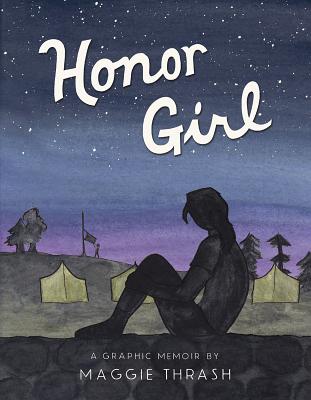
Honor Girl

by Maggie Thrash
Support your local independent bookstore: buy it there!
Content: There’s about a half-dozen f-bombs scattered throughout the book. It’s in the teen graphic novel section of the bookstore.

It’s the summer of 2000, and Maggie is 15. She’s been going to the same summer camp in Kentucky — Camp Bellflower — since she was little, the same camp her mother and grandmother both went to. There was a lot of tradition in the camp, including that of Honor Girl: the one senior camper that was supposed to embody all the Tradition of the camp.

There are very few books, I think, that truly capture what a 15-year-old girl is really like, in all her angst and insecurity. And Thrash’s graphic memoir hits the nail on the head. It’s spot-on. From the drama between her and another girl over who will get their shooting D.E. (a mark of excellence) first to the rumors that fly around the camp about anyone and everyone. But, for Maggie, her summer is wrapped up in a crush she has on one of the counselors, Erin. Does she like Maggie back? Is Maggie even supposed to like one of the counselors? What does it all mean?

The answer is, ultimately and honestly, that she doesn’t know. There is no grand Coming Out moment. There are some moments when I wanted to smack those running the camp, when they discriminated against Maggie for exploring who she is. But, mostly, it was just one slice of a moment in time, when a girl fell in love and didn’t really know what to do about that. And that was something I found I could relate to.

I’m glad Thrash decided that her story needed to be told.

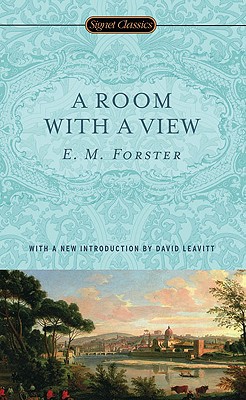
Room With a View

by E. M. Forester
First sentence: “‘The Signora had no business to do it,’ said Miss Barttlet, ‘no business at all.'”
Support your local independent bookstore: buy it there!
Content:  There’s some mild swearing, but not much at all. It’s dated, and English, but not too difficult to understand. It’s in the adult fiction section of the bookstore.

I don’t know when I first read this one; probably sometime soon after the Merchant Ivory movie (which I own still on videotape!) came out in the 1980. I don’t know when I got the copy I own, either. (A duo with Howard’s End). I do know that it’s loved enough that it’s falling apart.

And it’s well worth it.

I love Lucy’s innocence and Charlotte’s fussbudget-ness and George’s impulsiveness and Mr. Emerson’s progressiveness and Cecil’s snobbishness. I love Forester’s commentary on the Victorian English upperclass. I love it all. (And yes, I do firmly have the movie in mind when I read.)

I don’t have much more to say; this has been one of my comfort reads in the past, and it was absolutely delightful revisiting it again after being away for so long.

Everything Everything

by Nicola Yoon
First sentence: “
Support your local independent bookstore: buy it there!
Release date: September 1, 2015
Review copy picked up at CI3 and signed by the author.
Content: There is a few mild swear words, and one sort-of on-screen, sort-of-off-screen sex scene. The publisher has it listed for grades 7 and up, which puts it in the YA section, but I might move it to the Teen (grades 9+).

Madeline has spent her entire life inside. White furniture, white walls, filtered air, the whole deal. It’s because she has Severe Combined Immunodefiency (SCID), which basically means she’s allergic to the world. Any little disease, any little microorganism will kill her. So, she stays inside, reading, doing her online school.

And then Olly moves in next door.

Okay: yes, the plot is predictable. Boy moves in next door, they meet and have instalike, and suddenly the girl is questioning her Life Choices and Taking Risks.

But I ate this up. I don’t know if it was the short chapters, snippets of Madeline’s thoughts and observations, interspersed by some charming line drawings. Or the parallel worlds between her being trapped inside her house because she’s sick and Olly being trapped because of his abusive father. Or just the chemistry between Madeline and Olly, which was fantastic. Or the fact that Madeline was Afro-Asian, and yet it wasn’t really an issue. She just was. Her mother is suffenciently controlling (for good reason), and I adored Carla the Latina nurse, who was really more of a mother figure to Madeline.

And all of this added up to overcome the predictable plot and make me fall for this book. Another absolutely amazing debut.

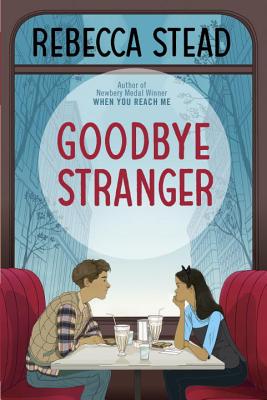
Goodbye Stranger

by Rebecca Stead
First sentence: “When she was eight years old, Bridget Barsamian woke up in a hospital, where a doctor told her she shouldn’t be alive.”
Support your local independent bookstore: buy it there!
Review copy picked up at Children’s Institute
Content: There’s one swear word. And several situations that are more middle school than elementary school. It’s in the YA section (grades 6-8) of the bookstore, but I’d give it to a fifth grader, especially as they’re approaching middle school.

I’ve been thinking about how to start this. It’s not an easy book to categorize: is it a book about friendship? Yes. About growing up? Also yes. About bullying and the shame girls feel about their developing bodies?Again: yes. About first love and that line between friendship and something more? Yep.

But it’s also more: it’s about doing the wrong thing and making it right. About figuring out who you are in the wake of change. And it’s all done with Rebecca Stead’s beautiful writing.

The story is nominally about three friends — Bridge, Em, and Tab — who have been friends since the third grade. They made a pact to always stick together and never to fight, which is easy until seventh grade. Then Em begins attracting the notice of older kids and boys, and, well, likes it. Tab becomes enamored of a feminist teacher and dives headfirst into the world of equality and civil disobedience. And Bridge is kind of stuck in between. She doesn’t really want to grow up (I can relate), and yet she’s kind of interested in it as well. She picks up a pair of cat ears on a headband and wears those through the fall and winter because they felt “right”. She’s not quite sure who she is, or where she fits.

There are plot points, and chapters written in second person by a “mystery” high school freshman narrator (I figured out who it was fairly quickly. Yay me!), but mostly the book is about every day little things as Bridge is trying to figure out where she fits in this weird middle school world.

I loved it, and I think I did for one reason: I saw both myself and my daughters in this book. I saw the awkward 7th grader I was, and realized that Bridge was okay in her journey, because I survived. I saw M and C in the friends, and the ups and downs of their middle school experiences. And I saw A, as she starts middle school next year, and was reminded (again) of all the changes that will come her way. And for that, I loved this. I loved the smallness of it (and the diverseness: Bridge is Armenian and Tab is Indian) and the hopefulness of it. And I loved that the friends did, in fact, make it work out.

I thought it was marvelous. I just hope it finds the kids who will think that too.

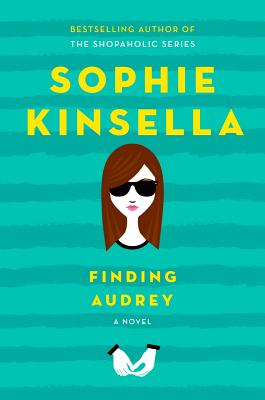
Finding Audrey

by Sophie Kinsella
First sentence: “OMG, Mum’s gone insane.”
Support your local independent bookstore: buy it there
Content: It has six f-bombs, all near the end of the book, and nothing else. So, I’m torn: do I leave it on the YA shelves (grades 6-8), where it thematically belongs? Or do I move it to Teen (grades 9+) where it’s not quite edgy enough, but it fits language-wise? Tough call.

Audrey doesn’t leave the house. Doesn’t talk on the phone. Doesn’t talk to people (outside of her therapist and her family). Doesn’t look people in the eye (in fact, she prefers to wear dark sunglasses all the time). She hasn’t done any of these things since the “incident”. And she prefers to keep it that way.

Before I go much further I have to interject: this is a hilarious book. Perhaps it’s because I love All Things British, but I was thoroughly charmed by Audrey and her family. It is possible to take something serious (like bullying — though you never really find out what happened, and that’s okay) and severe anxiety and to be, well, warm about it.

Maybe I should make a second diversion: I adored Audrey’s family. From her gamer older brother (with his mile-wide sarcastic streak) to her absolutely adorable four-year-old younger brother (adorable!) to her completely clueless dad (probably stereotypical, but it worked), to her over-protective mom (I will stand by my statement that the best way to be a good parent is to read YA books), they were all entertaining. Kinsella definitely wrote this with love.

(It reminded me, in some ways, of the Casson family books. That makes me happy.)

The arc of the novel is Audrey’s “recovery”. It’s aided by Linus, one of her brother’s friends who takes an interest in her. He supports her and pushes her to try new things, to somehow get a grip on her anxiety. I really liked that Audrey was never “cured”: she learned how to handle her fears and her body’s reaction to them, but they were always still around, which was not only realistic but somewhat of a relief.

Yes, things were kind of tied up in a nice bow at the end, but that’s kind of expected and I didn’t mind. In fact, I really quite enjoyed this.

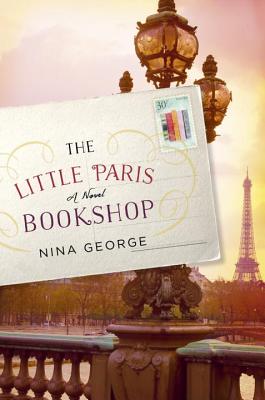
The Little Paris Bookshop

by Nina George
First sentence: “How on earth could i have let them talk me into it?”
Support your local independent bookstore: buy it there!
Content: There’s a few sex scenes, mostly tasteful, though it gets somewhat crude once. There are also several instances of mild swearing. It’s in the adult section for thematic reasons.

Jean Perdu (which is French for lost) owns a small bookshop on a barge floating in the Seine in Paris. His specialty is figuring out what a person needs to read and then “prescribing” the Right Book for the malady. He calls his store the Literary Apothecary and has had some measure of success.

With everyone but himself.

His great love, Manon, left him 22 years ago, and Jean’s life has basically frozen since then. Sure, he’s lived — he’s in his 50s now — but he’s not Lived. And then he meets Catherine, and his life starts unthawing (but not in the way you think at first). He ends up on a boat trip (river trip?) down to the south of France to find Manon’s memory (she died soon after she left him) and to properly grieve.

This book is being billed as a bookish book, and it is in a way. It’s about the power of stories and narrative to help us through all times — both the good and the bad. But, it’s more about the healing power of grief. How, if you don’t let yourself grieve for what is lost then you can never move on, never really live again.

It’s very French, as well.  (A co-worker, who is very knowledgeable in All Things French, mentioned that this is a homage to Jean de Flourette and Manon of the Spring, both of which I saw when I was at BYU and probably should hunt down again.) There’s is a slight magical realism thread through it, in the way Jean could find the right book, to the power of food and company. It gets bogged down in the middle, during the river trip, and Manon’s travel journals, while providing some interesting insight to her and Jean’s relationship, interrupt the flow of the book.

That said, it was enjoyable, though it’s not my favorite bookish book about books.

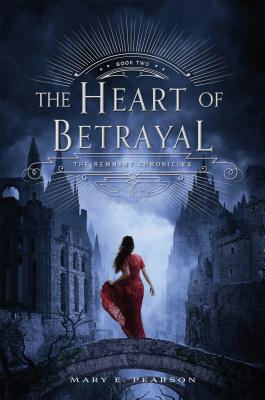
The Heart of Betrayal

by Mary E. Pearson
First sentence: “
Support your local independent bookstore: buy it there!
Review copy snagged off the ARC shelves at my place of employment.
Release date: July 7, 2015
Others in the series: The Kiss of Deception
Content: There’s violence, and a hint at sex (but none actual). It’s kind of slow moving, and complex, but it should be find for the younger end of the age range. It’s in the YA section (grades 6-8) of the bookstore.

Spoilers for The Kiss of Deception. You’ve been warned.

Lia is a prisoner in the “barbaric” country of Venda, having been kidnapped by Kaden, the assassin, and dragged there as a prize for the Komizar, Vendan’s ruler. Venda doesn’t take prisoners; their reputation for violence is well-deserved. But because Kaden has a thing for Lia, so he made an exception.

Lia regrets that now.

It doesn’t help that Rafe — the prince Lia was initially supposed to marry and whom she fell in love with when they were both pretending to be commoners — is also a prisoner in Venda, masquerading as an inept emissary. They have to keep it under wraps that they know each other (let alone that they care for each other), or they are both dead.

And that’s just the beginning.

It’s a twisty, turn-y maze of lies, double crossing, manipulation, maneuvering, and deception, and I loved every minute. Even the love triangle, which could have been trite, worked to Pearson’s advantage. Kaden and Rafe play off each other, and I truly didn’t care, really, which one Lia “ended” up with. (Honestly: the woman is her own woman, and doesn’t need either of them. You go girl!) There was complexities to the relationships that Lia had with both of them, and even though Pearson wrote that Rafe was Lia’s True Love, I never felt that that relationship defined her.

But what intrigued me most was Lia’s role in Venda, how she plays against the Komizar, trying to outsmart him, using his weaknesses (of which there are few) to her advantage. The Komizar is the primary villain, but Pearson gives him layers; he’s not simply an Evil Dictator Overlord (though there is some of that). Additionally, there was an element of prophecy to the book that could have been oppressive and lame, but I felt Pearson even worked that to her advantage. And Pearson is still ruthless: killing people right and left.

Of course, this ended on a cliff-hanger, and I have to WAIT until the next one comes out. Which is always the most difficult part.

Excellent.

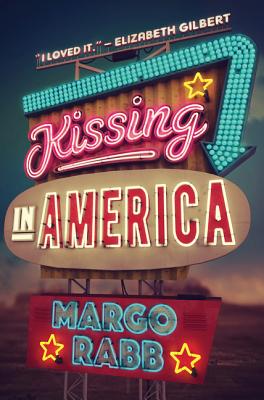
Kissing in America

by Margo Rabb
First sentence: “According to my mother, my first kiss happened on a Saturday in July.”
Support your local independent bookstore: buy it there!
Review copy pilfered off the ARC shelves at my place of employment.
Content: There’s a few mild swear words, s**t being the most prevalent. It’s in the YA section (grades 6-8) of the bookstore.

Eva Roth adores romance novels, much to her feminist mother’s chagrin. Eva loves the sweeping romance, the rugged men (who are ruggedly handsome), the idea of falling in love. She lives in New York City, though; someplace where there aren’t rugged cowboys or Highland Scotsmen to sweep her off her feet.

Then she meets Will: cool, on the swim team, completely inaccessible. Until he is: he’s kissing her on the sidewalk in front of a subway stop, and Eva’s world changes completely.

Enough so that when Will moves to LA  to live with his dad, Eva concocts a way to go see him: she and her best friend, Annie, are going on a cross-country bus trip to be on this Smart Kids game show. Just so she can see Will.

It sounds like a fluffy romance, no? And in many ways it is: Eva falls in love, other people fall in love, there is sweeping kisses and lots of corny romance novel references. But this novel has a darker undercurrent running through it: The reason for the bus trip is that Eva has been afraid to fly, ever since her father died in a freak plane crash.  In fact, the novel turns out less to be about romance than about Eva’s relationship with her mother, grief, and moving on since her father’s death. Which is not what I was expecting.

Even though it wasn’t quite the fluffy romance I was expecting, I did enjoy the story. I liked Eva’s relationship with her best friend, Annie. (Though I wanted to smack her aunt and mother. Seriously overprotective, even if it is understandable.) I liked the road trip part, with Eva getting out of her bubble and routine. (Though it was quite tame compared to, say, the bus trip in Mosquitoland.) And I did like that everything wasn’t “happily ever after”;  it was realistic while being hopeful, and that worked for me.

A good summer read.