Lilliput

lilliputby Sam Gayton
First sentence: “All down the pebble path to the beach, Lily sulked about her iron shoes.”
Support your local independent bookstore: buy it there!
Content: There’s some abuse and danger, and there are some larger words, but for the most part, this one is suitable for grades 3 and up. It’s in the Middle Grade (grades 3-5) section of the bookstore.

Lily is a young child in the land of Lilliput when this big giant, Gulliver, comes and snatches her away. He takes her back to London to serve as “proof”. It seems, his stories of his travels have been dismissed as fake and so for the sake of his pride, he kidnapped Lily. He has her in a cage while he finishes his book. Lily, however, just wants to be free. Her life span is a lot shorter than Gulliver’s, and she’s spent half of her life in this cage. She needs to be free.

So, she keeps trying to escape. And eventually, she finds some humans who are willing to help her.

It’s an interesting take on Gulliver’s travels, and I enjoyed having it from the point of view of Lily. There’s some nice subtle commentary on the ethics of taking people from their homeland as well as the conditions which children often found themselves in, both in orphanages as well as in apprenticeships. It was a nice change to have the Spanish character be the “good” guy (in addition to him being the stay-home dad while his wife traveled the world).

But, while it all added up to something nice, it wasn’t overwhelmingly compelling, in my view. And that’s too bad.

(Just for the record: because this is a Cybils nominee, I’ve been asked to make sure y’all know this is my opinion only, and not that of the panel.)

Audiobook: The Boston Girl

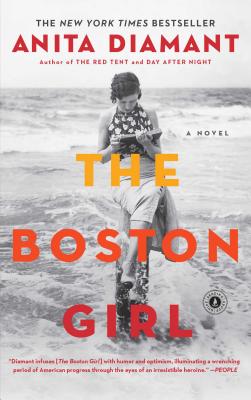
bostongirlby Anita Diamant
Read by: Linda Lavin
Support your local independent bookstore: buy it there!
Content: There are some mild swear words and references to drinking and smoking. It’s in the adult fiction section of the bookstore.

Addie Baum is the daughter of Eastern European immigrants, who came to American when the persecution became too bad back home. Addie was born in 1900 in Boston, and grew up in a world wholly different from that her parents, and even her older sisters (the youngest who was 14 years older than Addie), knew. It was a world where Addie went to school instead of getting married young and having babies. A world where she held a job and chose love for herself. A fascinating, modern world, but one that put her at odds with her parents — especially her mother — and the way of life they had always known.

I loved this one from the start. It begins as a series of reflections of an 85-year-old Addie in response to the question asked by her 22-year-old granddaughter: “How did you get to be the woman you are today?” The whole novel felt like a personal history, complete with asides that a grandmother would say in the telling. And while it covered Addie’s whole life, the focus was on her formative years from when she was 15 until she met and married her husband. The opportunities she had (because of the people she met), her struggles with family and religion and men, her jobs and the experiences she had because of them. It was a fascinating slice of life.

And the narrator was perfect. She caught that personal history vibe and ran with it; so very often I could almost see Addie, sitting in her living room, telling this story to an interested granddaughter. No, she didn’t do voices, though she had a good Boston accent overall, but I don’t think it was needed for this. The way Lavin read it was just perfect.

As was this story.

Audiobook: Beautiful Ruins

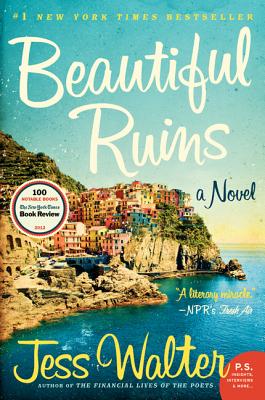
beautiful ruinsby Jess Walter
Read by: Edoardo Ballerini
Support your local independent bookstore: buy it there!
Content: There is a bit of sex, and a lot of swearing, including a bunch of f-bombs. It’s in the adult section of the bookstore.

It’s April 1962, and Pasquale has just returned home to his small seaside village of Porto Vergogna to run his deceased father’s hotel, Hotel Adequate View. It’s a nothing of a hotel in a nothing of a village, and he pretty much feels like he’s at a dead end. Then the beautiful American actress Dee Moray shows up on Pasquale’s doorstep.

Thinking she has cancer, Dee’s on leave from the Richard Burton/Elizabeth Taylor production from Cleopatra. She takes refuge at Pasquale’s hotel while he tries to figure out who sent her and why she was there.

Flash forward fifty years, when Pasquale shows up in Hollywood at the famous producer Michael Dean’s office, looking for Dee. And in and around those two events there is a story. Between flashbacks and flash forwards and a few side trips, Walter spills out Dee and Pasquale’s story, from his affair with an older woman (that resulted in a child) to her affair with Richard Burton (that resulted in a child) and the consequences of their decisions.

It was a bit more meandering than I like my books to be. There were several sections that if I had read this in print, I would have skipped. And so, listening to it on audio, I kind of got impatient. However, the narrator was brilliant. Didn’t matter the accent, he was there and so, so good. In fact, it’s what kept me listening throughout the book. Eventually, I did bail, during the epilogue-like part because I just lost interest.

There were parts that I did enjoy, threads of the larger story that I did connect with. But mostly, other than the narrator, I wasn’t that thrilled with the book. It’s just wasn’t my sort of story.

Curiosity House: The Shrunken Head

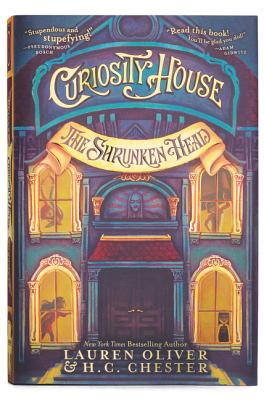
curiosityhouseby Lauren Oliver (and H. C. Chester)
First sentence: “Ladies and gentlemen, boys and girls: step right up and don’t be shy.”
Support your local independent bookstore: buy it there!
Review copy pilfered off the ARC shelves at my place of employment.
Content: There’s murder and some adult smoking and drunkenness. It’s in the middle grade section (grades 3-5) of the bookstore.

Orphans Philippa, Sam, and Thomas have basically grown up in Dumfrey’s Dime House, a place where unusual kids like them — Philippa is a mentalist, Sam is a strong man, and Thomas is a super-math-genius — are welcome. But, soon after Max (knife thrower extraordinaire) arrives, Mr. Dumfrey’s prize shrunken head goes missing and then people around the city start dying. It’s up to the four kids to figure out what is going on. And, in the process, figure out who they Really Are.

I found the mystery end of this delightful. I thoroughly enjoyed the four kids as they learned to work together and puzzle out who exactly was the person behind the killings. I figured it out before they did, but not much before, and I loved that the clues were there for anyone to pick up. Even the big twist ending wasn’t a huge surprise. It’s only vaguely speculative fiction (mentalist abilities and all that), so it’s perfect for those who don’t want much magic or ficitonal places. The only complaint is one I remember Ms. Yingling having: I wish the historical context was more explicitly put out there. Like her, I was able to figure it out, but I’m not sure that kids would get it (in fact I know so: this is one that my kid review group at work read and they didn’t even notice). Though that’s probably not something that would bother them.

At any rate, it’s a lot of fun.

(Just for the record: because this is a Cybils nominee, I’ve been asked to make sure y’all know this is my opinion only, and not that of the panel.)

Firebrand

by Aaron Barnhart
First sentence: “The boy with the long black hair pushed his way through the shouting, jostling mass of students.”
Support your local independent bookstore: buy it there!
Content: There’s some fighting and battle scenes, but the language is simple(ish) and the book itself is short. It’s in the middle grade (grades 3-5) section of the bookstore.

Fifteen-year-old August Bondi and his family are Jews who are getting by in early 19th-century in Vienna, Austria. Life is good until the law comes down against them, and the Vienna Uprising occurs in in 1848. August’s parents decide that life is too dangerous for their family, and so they flee to America where they hope to have a better life. After a harrowing journey, the family ends up in St. Louis, where August’s parents find work and a community. But August is still restless and settling down doesn’t suit him. So he heads out to the Kansas territory, where he discovers the fight between those who want Kansas to be a slave state and those who don’t. It’s a cause that August can get behind: he is more than willing to fight against slavery and for the freedom of all people. So, he joins up with John Brown and his sons, fighting back against those who would have Kansas be a slave state. It’s a dangerous business, but one that August is willing to sacrifice for. From there, he settles down with a wife and then joins the Greater Cause in the Civil War.

It’s not a bad book, overall, and August’s story (he’s a real person) is a good one to tell. My only problem is that this is really three books. The first book: August’s story back in Vienna. How did he become a part of the resistance? What was it that caught his eye? What was it like being a Jew in Vienna in the early 19th century? So many questions glossed over. The second book is August’s journey to America and perhaps his joining the Browns in their fight against slavery. And the third is August’s time in the Civil War. It’s not that Barnhart can’t write (he can, actually; there were parts of this that were quite interesting), it’s just that he tried to do too much in such a small book and I feel like it would have been better served spreading it out. (And I never think that!)

But it is a good story to tell; it’s always good to hear the lesser known stories of history. (Even if they are more white male stories.) And the fact that it’s set here in Kansas is good as well. But I feel like it could have been better.

Prayers for Sale

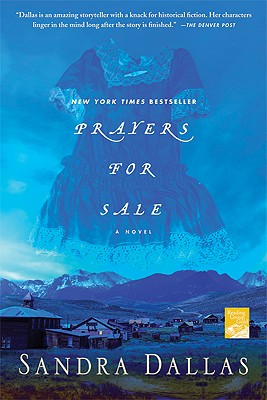
by Sandra Dallas
First sentence: “The old woman peered past the red geraniums in her deep front window at the figure lingering in the moon-white snow at the gate.”
Support your local independent bookstore: buy it there!
Content: There’s some harsh violence against women in the beginning, but other than that, it’s mostly just more mature themes. It’d be in the adult fiction section of the bookstore.

This is one of those moments when I am grateful for my book group, because they introduce me to books I wouldn’t otherwise pick up. I had previously read Sandra Dallas and thought she was okay, but I wasn’t prepared for the storm of emotions that this one brought on.

It’s the early 1900s and Hennie Comfort is a long time resident of Upper Swan, a gold mining camp in the mountains of Colorado. She’s 86 and she’s loved her long life up in the mountains. So much so that she doesn’t want to go down and live with her daughter. She’s determined to get the most out of these last few months she has. And then she meets Nit. The wife of a new worker on the drudge boat, Nit is suffering from lots of things: being new, obviously, but also from the stillborn death of her first baby. Hennie reaches out to her as a mother-figure and a friend, and they form a bond. It’s through that bond that we learn about Hennie’s past (and a bit of Nit’s as well) and her life.

It’s a glorious novel, one that celebrates all aspects of women-hood. It made me long for a connection like Hennie and Nit had (they bonded over quilting; it also made me wish I was into that). Hennie’s stories were so rich, her life so full, and yet she probably didn’t feel that way in the midst of it all. I loved that it was straight-forward, that Hennie was open and loving and accepting, and yet wasn’t entirely perfect either. She had her struggles and her faults and her doubts. It gave me hope that maybe I can pull off a decent life in the end.

A full, rich work of historical fiction.

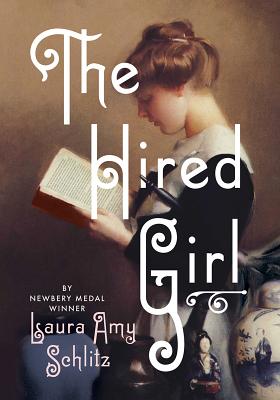
The Hired Girl

by Laura Amy Schlitz
First sentence: “Today Miss Chandler gave me this beautiful book.”
Support your local independent bookstore: buy it there!
Content:  There’s some harsh illusions to domestic violence in the beginning and some illusions to sex near the end, but nothing actual. It’s in the YA (grades 6-8) of the bookstore.

Joan is a 14-year-old Pennsylvania farm girl in the early 1900s who longs to be Educated and See the World. However, ever since her mother died, she has been increasingly chained to the farm by her boorish and harsh father. He forces her to withdraw from the local school, but the last straw was when he burned her books. So, she packs up in the middle of the night, and heads to Baltimore to Make Her Fortune.

Her fortune turns out to be Solomon Rosenbach, who finds her distraught in the park with nowhere to go. He brings her home and his mother hires Joan — who is pretending to be 18 and is going by Janet — to be the hired girl. From there, Joan becomes a part of the Rosenbach family’s lives, sometimes with positive results and other times not so much.

It sounds pretty mundane, but in Schlitz’s hands, this time period comes alive. Not only does she capture the cusp of the women’s movement: the idea that women can be educated and can be live without husbands and fathers, she captures a girl who is out discovering not only the world, but herself. Additionally, Joan’s voice is so captivating that it makes the book a delight to read.

But what I liked best — being religious myself — is the way Schlitz addressed religion. The Rosenbach’s are Jewish, and while not Orthodox, they do practice their religion. And Joan is a Catholic. Or at least, she’d like to be because her mother was. Schlitz explores prejudice and Antisemitism, explores how to practice your own religion while respecting that of other people around you. All of which is not only relevant, but interesting.

I do have to admit that I kind of lost interest near the end, when there is some Drama involving another Rosenbach son. But, Schlitz even handled that well, and the last chapter gave the book a good ending.

Overall, a good book.

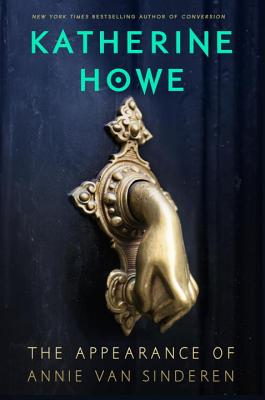
The Appearance of Annie Van Sinderen

by Katherine Howe
First sentence: “The cafe in the basement of Tisch, the art and film school at New York University, was redecorated this year.”
Support your local independent bookstore: buy it there!
Review copy snagged from the ARC shelves at work.
Content: There’s talk of teenage drinking (and some actual), plus drug use. There’s also one almost-sex scene. It’s in the Teen (grades 9+) section at the bookstore.

There is no way to write this, I think, without spoiling the premise. If you choose to go into this without knowing what it is, then you should probably stop reading now.

Wes is at NYU for the summer film workshop for a reason: he wants to transfer from the University of Wisconsin-Madison to NYU because Madison is, well, small. Constricting. The Same. He needs something different, and he Knows he can find it in New York City. (Well, can’t we all?) He’s out helping one of his friends, Tyler, film an art film at a seance when his life really changes: he meets Annie and Maddie. They’re edgy, they’re different, they are most definitely not from Wisconsin. And as Annie pulls Wes into her story (and he gets more tangled up with Maddie), he discovers that maybe the life-changing event he thought New York would offer him isn’t going to be in film school.

I’m going to say it, even though Howe danced around it: this is a ghost story. And, as such, it’s quite good. I liked not knowing that Annie was a ghost for a while — it took the whole first section for me to figure it out, though there’s a pretty big clue at the end of the prologue. I liked Wes’s discovering of her story, and how Annie flitted back and forth in time. I liked Howe’s historical detail; it’s most definitely something she excels at. And I thought the love triangle-ish thing between Wes, Annie, and Maddie was unique as well.

The only thing that really bothered me was that Howe refused to call a spade a spade. She never, once, admitted, in words, that Annie was a Ghost. She was a Rip Van Winkle. Every time it came up, they dodged the bullet. It got old. Just say she’s a ghost, please.

But, other than that, it was an intriguing weaving between past and present, and a unique way to look at ghost stories.

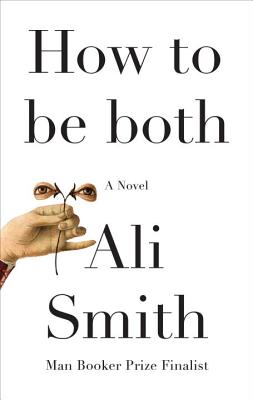
Audiobook: How to Be Both

by Ali Smith
Read by John Banks
Support your local independent bookstore: buy it there!
Content: There’s probably six or so f-bombs spread through the whole book. It’s in the adult fiction section of the bookstore.

I knew very little about this book before picking it up, only that it made for an excellent book group discussion in one of the book groups at the store, and that a couple people on staff really loved it. It was enough for me to use my last audiobooks.com credit to get the audio. The other thing I knew was that this book is two novellas in one, and that half the books printed have one first, and the other half are reversed. You don’t know, previous to picking it up, whose story you will get first.

The two stories are interconnected looks at art and perception. One is contemporary, the story of a mother-daughter relationship. The other is a stream-of-consciousness from the perspective of an Italian Renaissance painter in the 1400s. I really don’t want to say much more than that, except I read it Camera-Eyes, and I thoroughly enjoyed the way the two stories weaved together. It gave me much to think about.

Also, once I got used to the narrator (and the book), I thoroughly enjoyed listening to this one. I enjoyed his style, and that he didn’t try to do falsetto female voices. Everything was pretty matter-of-fact, which took a bit to fall into the groove with, but once I did, was quite lovely.

An excellent read.

Walk on Earth a Stranger

by Rae Carson
First sentence: “I hear the deer before I see him, though he makes less noise than a squirrel — the gentle crunch of snow, a snapping twig, the soft whuff as he roots around for dead grass.”
Support your local independent bookstore: buy it there!
Review copy picked up at Children’s Institute and signed by the author (who I fangirled over).
Content: There’s some violence, including a few deaths, and some talk about sex (but none actual). It’s in the YA section (grades 6-8) of the bookstore.

Leah Westfall has a talent for finding gold. Well, maybe more than a talent: she can magically sense gold out in the wilderness. But, in northern Georgia in 1849, gold is getting pretty scarce. Even so, she and her parents get by. She’s fairly content. Then, her parents are brutally murdered by a man wants to control her “talent”, so she disguises herself as a man, runs away and head for the place where gold is most plentiful: California.

That’s basically the premise, as this book is primarily concerned with Leah’s — Lee’s — journey getting to California. It’s full of action and suspense, but it’s ordinary action and suspense. Robbers, rough rivers, threats from the known and unknown. It doesn’t seem like much, but it kept me turning pages.

This book deviates from Carson’s other works in that it’s more of a historical fiction piece and less of a magical one. Sure, Lee has magical abilities. But (so far), that’s the only magic. The rest of it, from the inherent sexism and racism to the trials they face while crossing the plains is historical. Even though I like Carson’s magic, I think I enjoyed this one more because the magic was so understated. It did help Lee out, on occasion. But for the most part, she was making her own way on her own terms. Which was awesome.

The other thing is that this is the first of a projected trilogy, but I have no idea where Carson is heading. Sure, the Big Bad isn’t taken care of, but he wasn’t a real threat in this novel either. I was actually content with the way this one ended: Lee survived the journey, she got to California, she can live happily ever after. However, I will follow Carson down whatever road she wants to take, and I wouldn’t mind reading more of Lee’s story at all.