Audiobook: Happy Medium

by Sarah Adler
Read by Mara Wilson
Support your local independent bookstore: buy it there!
Or listen at Libro.fm
Content: It’s sweary including many -bombs, and has on-screen, explicit sex. It’s in the romance section of the bookstore.

Gretchen Acorn is a con artist. She runs a business where her job is to connect to the spirit world and help her clients connect with their dead loved ones. She tells herself that she’s doing them a service, comforting them in their time of grief. Then one of her clients pays her to go perform an exorcism at the farm of her bridge partner. Gretchen was expecting a quick, weekend job with a nice septuagenarian, and instead gets Charlie Waybill – hot, skeptical, and not at all grateful Gretchen is there. She also gets… a real ghost and a family curse. So, instead of performing an exorcism, she’s tasked with keeping Charlie at the goat farm because his life is in danger if he sells. And she ends up upending her own life in the process. 

By any measure, this was a fun book – a morally gray main character (that you can’t help but really like), a hot guy that pushes her to question her life, while also understanding where she comes from, a clever ghost sidekick. There are baby goats and goofily-knit sweaters! And a slight love triangle, not to mention a sassy best friend (that isn’t a goat). There are bad parents and questionable decisions. Oh, and the narrator is fabulous too. 

But. 

Something is off with it. I’m not sure if it was the sex – they were exceptionally rough, and there was some transactional quality to it that rubbed me a bit wrong – or if it was something else – the quick way Charlie came around to Gretchen (it was only a month, and yet there are books that move faster and I don’t mind), or… I’m not entirely sure. So, while I enjoyed this one, I didn’t outright love it (at least not as much as I loved Adler’s first book). It’s worth reading, though.
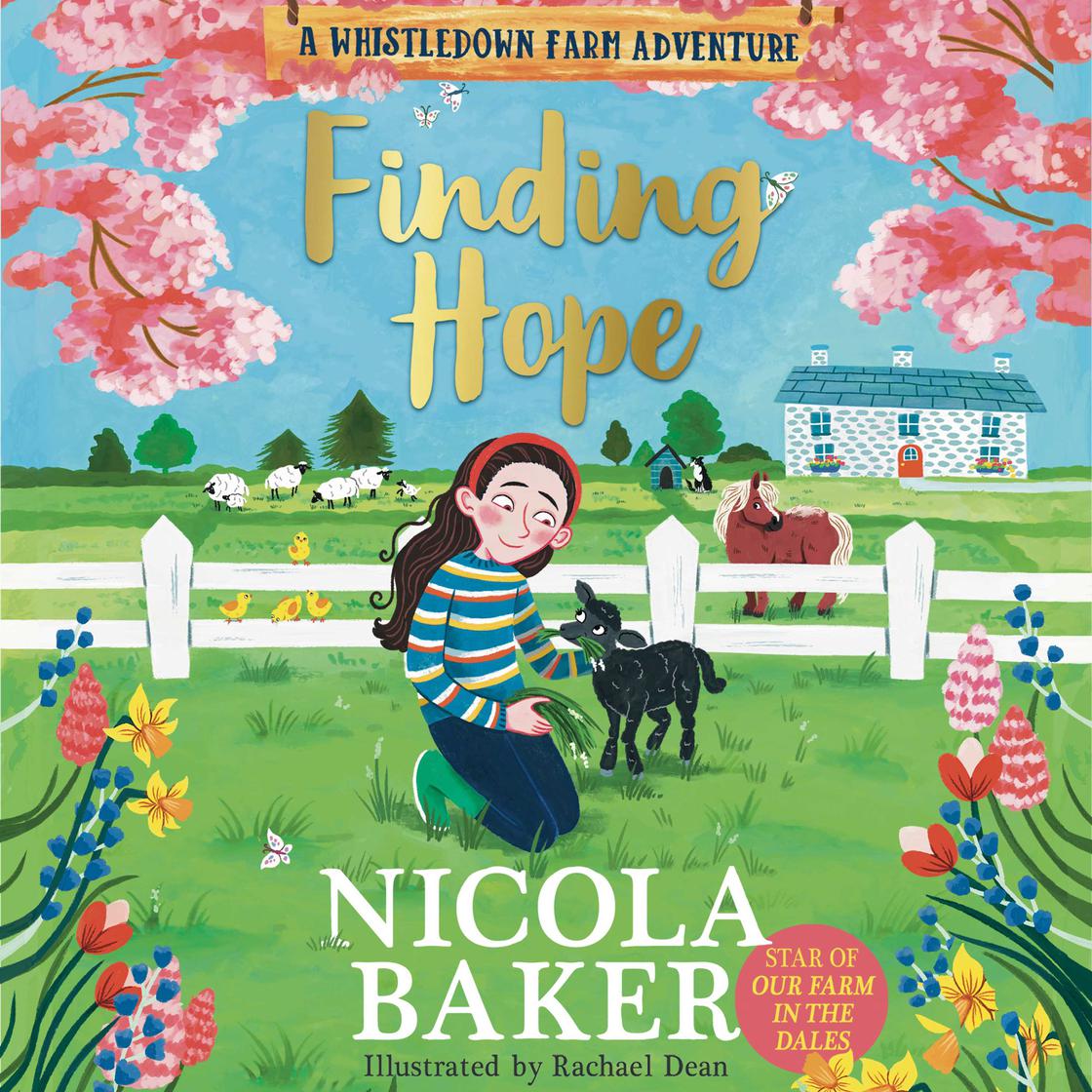
Audiobook: Finding Hope

by Nicola Baker
Read by Kristin Atherton
Listen at Libro.fm (I think it’s only in e-book and audio)
Content: There are some intense moments. It would be in the Middle Grade (grades 3-5) section of the bookstore if it were a print book.

Ava is stuck at Whistledown Farm for two whole weeks while her parents make an important trip to America. She’s a city girl, and during the only visits she’s ever made to the sheep farm she’s mostly kept to the house. She’s not sure she wants to spend two whole weeks with her aunt, uncle, and cousin (especially since her cousin is less than thrlled to see her!), but she’s determined to help. Then, on the first night, she finds a lost lamb and brings it in. They all set Ava to carig for it, and that’s the first step on her journey to learning to love the farm and the work it takes to run it.

There’s some dramatic moments: Ava forgets to close the chicken barn door one night and a fox kills off half of the flock, and there’s some sheep rustling nonsense, but mostly, it’s Ava learning how to live and work on a farm.

I liked this one well enough. The cousin, Tom, was an annoying 10-year-old boy that I wanted to smack a few times, but it wasn’t terrible. The thing that made this one work for me was the narrator. Atherton was fantastic. I’m not sure the book (it’s a celebrity author, I guess) would have been great otherwise, but Atherton made the characters shine.

It’s a short, fun read, especially for those kids who love animals.

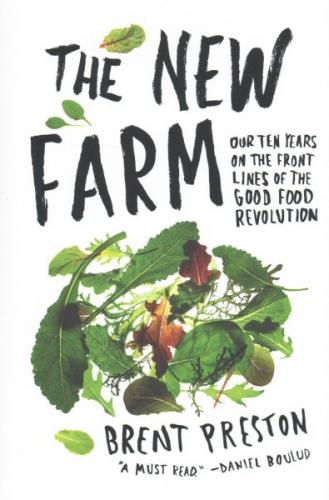
Audiobook: The New Farm

by Brent Preston
Read by: Chris Henry Coffey
Support your local independent bookstore: buy it there!
Or listen at Libro.fm
Content:  There’s some swearing, including a handful (6 or so) f-bombs. It’d be in the sociology or gardening section of the bookstore, if we had it. 

To be honest, this is usually the sort of book that my husband would read: the story of a couple of Canadians who got tired of working the office grind and city life, and decided to head out to the country and start an organic farm. I don’t know if that’s something he would like to do, but it’s definitely something he admires. I don’t know what made me pick it up; I suppose I was curious to see what went goes into making a sustainable, small, organic farm work and survive as a business. And I guess it just sounded interesting. 

And it was, for the most part. Preston and his wife Gillian had a super huge learning curve with this farm, and he doesn’t mince words about all the things that went wrong. Or how much money they lost during their first two or three years. He was also pretty frank about how running a small, sustainable, organic farm is a community effort: they started making progress financially when they reached out and found communities to be a part of, and ways to increase their reach. Growing excellent produce isn’t enough (though it’s important); you also need to have ways to reach people, and ways to get help working the farm. 

I did pick up some good gardening tips, things to help with the soil in our little garden, and things to help with growing plants better. And I did find the narrator entertaining (though I assumed it was the author reading it; I was mildly disappointed when I found out it wasn’t). My only real complaint is that it only went through the first couple of seasons, and it just kind of … ended. That may have been my version of the audiobook, but the narrative just stopped. But, if that’s the only complaint, it’s not that bad. 

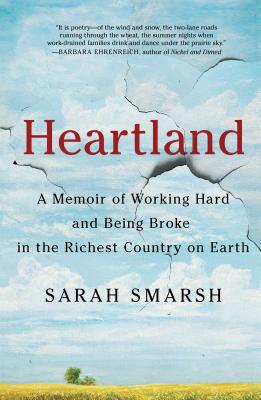
Audio book: Heartland

heartandby Sarah Smarsh
Read by the author.
Support your local independent bookstore: buy it there!
Or listen at Libro.fm
Content: There is some frank talk about abuse and drinking as well as a lot of swearing (including multiple f-bombs). It’s in the biography section of the bookstore, but I think a teenager might be interested in this.

This has been a big deal around the store, mostly because Smarsh grew up just outside of Wichita (and rumor has it she’s moved back here), and the places and people in it are pretty much staples in this community. But her story — the child of a teenage mom, growing up in a rural community on a family farm — belongs to much more than those of us here in Wichita. In fact, as I listened to her story — which sometimes got political, but mostly she kept personal — I heard echos of my own mother’s and grandmother’s story — married young, growing up in a small rural community, working hard their entire lives for just barely enough. It’s the story of many, many Americans.

Even so, Smarsh has one thing going for her that many poor do not: she is white. Sometimes, she acknowledges that fact, and tries to be more inclusive in her conclusions. But often, I felt like she was saying “look at me, look how poor we were, look how much I suffered, look at those scars” and I wanted to roll my eyes. Very few of us escape our childhoods without scars. And just because she grew up poor in Wichita and Kingman, doesn’t make her story exceptional.

Except she told it (and read it) well. So I have to give her that.

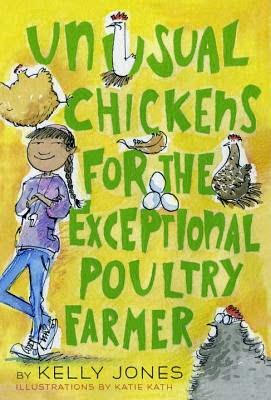
Unusual Chickens for the Exceptional Poultry Farmer

by Kelly Johnson
illustrated by Katie Kath
First sentence: “My great-uncle Jim had your flyer in his barn.”
Support your local independent bookstore: buy it there!
Review copy swiped off the ARC shelves at my place of employment.
Content: There’s some tricky words, and I’m not sure whether or not the epistolary format will turn off reluctant readers or encourage them. There’s a lot of fun illustrations and some good chicken facts, though. It’s in the middle grade (grades 3-5) section of the bookstore, but I’d probably give it to a confident 2nd grade reader.

Sophie Brown and her parents have just moved from the bustling city of Los Angeles to a farm in the middle of nowhere California. It was a move partially because of necessity — her dad lost his job and hasn’t been able to find a new one — and partially out of happenstance — Sophie’s dad’s uncle died and left him the farm. So, they’re trying to figure this whole thing out. And it’s not going terribly well. That is, until Sophie discovers a catalog for “exceptional” chickens. Turns out, that Uncle Jim was not only a farmer (he had a vegetable garden and some grape vines) but he raised, well, unusual chickens.

The chickens are not quite magical, and they’re based on real chickens, but they’re not quite normal either. (One lays glass eggs, for example.) Sophie is given instructions by the person who runs the catalog on how to catch and care for the chickens, but someone is trying to steal Sophie’s chickens. The question is: will she figure out how to keep the chickens (without divulging their magical properties)? And can she stop the thief from stealing her chickens?

The cleverest thing about this book is the format: Sophie’s story spills slowly over the course of the book through letters she writes to her dead abuela, dead great-uncle Jim, and the chicken place. (It’s kind of unusual her writing to dead people, but it works. She doesn’t really expect an answer back.) It’s a very one-sided story, and we only get snippets of things other than chickens: her mother’s free-lance writing, or her father’s failing search for a job. But, the tone is light, and there is a mystery to be solved with the chicken thief. But what really comes through is Sophie’s voice. She’s a determined child, someone who is willing to figure things out and solve problems. She’s spunky. And she’s half Latina. All of which makes for a charming book, a fun read, and a book worth checking out.