Not if I See You First

by Eric Lindstrom
First sentence: “My alarm buzzes and I slap it off and tap the speech button at the same time.”
Support your local independent bookstore: buy it there!
Review copy provided by the publisher.
Release date: December 1, 2015
Content: There’s a lot of swearing — not overly so, but enough that I wouldn’t recommend it to sensitive souls. It’ll be in the Teen section (grades 9+) of the bookstore.

Parker Grant hasn’t had an easy life. She lost her sight at age 7 when her mother crashed the car (and was killed), but she and her dad have made do. Parker found a close cohort of friends that have stuck with her through the years. With the exception of Scott, who she thought was her friend until a betrayal in 8th grade. Now, just before the start her junior year, Parker’s life just got messy again: her father accidentally overdosed on prescription meds, and she’s alone again. (Well, not really: her aunt and uncle and their family have moved in with her. Which helps, but isn’t really something she is happy about.)

(Before I go much further, I know: dead parents. I understand getting them out of the way for the purposes of the story, but wow. Merciless.)

Now, Parker has to figure out what she’s going to do. She’s coping, but not well. And when Scott shows back up at her high school (they went their separate ways in 9th grade), she has to deal with those resurfacing emotions as well.

Lest that make it sound like a love story, it isn’t really. Yeah, there’s some kissing, and some talk about love and boyfriends and such, but the ending isn’t a perfect, happily-ever-after.

I did, however, fall in love with Parker. Seriously. From the opening pages where she goes for an early morning run, and the mechanics of that, I knew I was hanging out with someone worth getting to know. And the great thing is that she was a complicated person. She was angry, she was holding her emotions about her dad, about Scott, about everything in. She was a bad friend sometimes. But she also learned and grew and changed. And there were pretty great people (who were also normal) surrounding her.

I don’t know how accurate Lindstrom’s depiction of a blind girl was, or how well it’ll resonate with people who have experience with blindness. But, I liked that he didn’t limit Parker by her “disability”. She was capable, she was smart, and yes she needed help, but she was independent in so many ways. I also liked that no one was limited by color, size, sexuality (though that wasn’t really explored), or ability. There were POCs in the book, but it was only mentioned in passing. It wasn’t dwelt upon; these were just kids hanging out, making decisions, trying to get through each day.
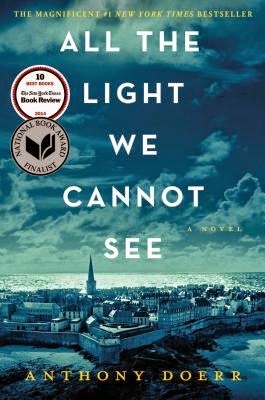
All the Light We Cannot See

by Anthony Doerr
First sentence: “At dusk they pour from the sky.”
Support your local independent bookstore: buy it there!
Content: There is some graphic (read: Nazi) violence and about a half-dozen f-bombs. It’s not a difficult read, even for it’s length, and if there’s a teen interested in WWII, it would be a good one to give. It’s in the adult fiction section of the bookstore.

I’ve kind of been avoiding this one. It was a slow build, but eventually EVERYONE was reading this. And we all know how much I love reading books that everyone is reading. (Not.) At least when it comes to adult books, anyway. I just don’t trust Everyone. (No interest in Gone Girl. Or The Girl on the Train. At. All.)

But this was picked for my in-person book group, and so I was kind of obligated to read it. I didn’t go in expecting much of anything, so I was pleasantly surprised when the chapters were short. And the story was engaging. And that the 500+ page book wasn’t one that was going to bog me down.

In fact, if I dare say this: I enjoyed it. Immensely.

This is, at its simplest, the story of two kids, a blind French girl and an orphan German boy, during World War II. Werner, the boy, is an orphan resigned to growing up in this mining town, working the mines, even though he’s a technical genius. Then, he gets drafted into the German Army, which in 1939 isn’t the happiest place. Marie-Laure is a French girl, living in Paris, with her father who works at the Museum of Natural History. When the Germans invade, they end up in Saint-Malo with Marie-Laure’s great-uncle Etienne. Then her father gets called back to Paris and goes “missing”. Their stories meet, finally, in August 1944, when the town of Saint-Malo is set on fire.

The story, however, is immaterial in this book. No, what’s important, I think are the characters. They way they interconnect with each other, with themselves. And the little acts of goodness — of light — that thread throughout the book. It’s a very dark time, World War II, but this is an incredibly hopeful book. Its short chapters are lyrical and evocative, and the suspense building up to August 1944 — every section or so, Doerr gives us a glimpse of what is happening — is palpable.

My only real complaint is that I could have done without the two epilogues, one in 1974 and the other in 2014. I felt no need to know what the characters were up to after the story ended, and it felt forced and not nearly as emotional as the rest of the book. But that’s a small complaint in the wake of the story.

Fish in a Tree

by Lynda Mullaly Hunt
First sentence: “It’s always there.”
Support your local independent bookstore: buy it there!
Content: The chapters are short, and while there are some bigger words, there’s nothing that a 3rd grader couldn’t handle. It’s in the middle grade (grades 3-5) section of the bookstore.

Ally doesn’t like school. Part of that is the result of her moving so much — her dad’s in the military, currently deployed in Iraq/Afghanistan (it didn’t say; I’m assuming this) — of it is because Ally can’t read. It’s a fact she’s hidden by becoming a troublemaker and through her art, but whenever she tries to read, the words swim, her head hurts, and she just. can’t. do. it.

Enter in Mr. Daniels, the permanent sub for her regular sixth-grade teacher who’s off on maternity leave. He picks up on Ally’s defense mechanisms, and realizes that there’s more going on than meets the eye. He espouses the believe that not everyone’s smart in the same way (yay for that!), and draws on Ally’s strength, giving her the confidence to make friends — Albert, the science geek, and Keisha, a baker extraordinaire — and to stand up to the classroom bully, Shay.

There are some nitpicky things that bothered me throughout that kept me from loving this as much as I wanted to. First, why did the teacher have to be male? I’m torn on this one: on the one hand, it’s showing a man doing things that are “normally” reserved for women. He’s concerned about his students, he’s caring, and he reaches out. Not to mention that he’s a man in a female-heavy profession. However, it seems to me in books like this — where a teacher saves a struggling student — the teacher is always male. It’s the men who get to think outside the box, who find ways to connect with the struggling students, who make changes within the system. And that bothered me.

Additionally, there’s a point when Albert comes out of his shell to fight back against his bullies, in order to protect Ally and Keisha from them. Perhaps that was in character for Albert, but it bothered me deeply. Why did he need to protect them? I initially thought it was because they were his friends — maybe he’d do the same for boys who were his friends — but then he says something about “never hitting a girl”and I cringed.

On the other hand, I was glad that Hunt included a broad spectrum of personalities and classes: there are people who are hyper, middle of the road kids, rich kids, kids on free lunches. The usual suspects — drugs, bad parents, etc –aren’t anywhere to be seen. The focus, really, is on celebrating our differences, and recognizing that intelligence isn’t tied to doing well on tests. And that’s worth celebrating.

So, while it’s an uneven book, I’m glad it’s out there.

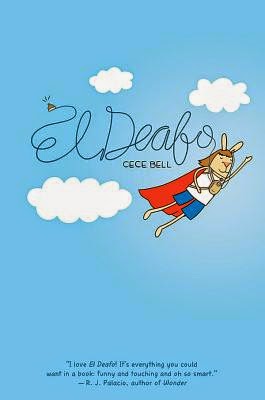
El Deafo

by Cece Bell
Support your local independent bookstore: buy it there!
Content: There’s a little talk of Love (she has a crush) but other than that, it’s quite accessible for the 3-5 grader. It’s in the middle grade graphic novel section at the bookstore.

This one has been on my radar for a long time, and (like too many other things), I can now say I Should Have Read it Sooner!

It’s the mostly-true (except for the part where she’s a bunny) story of Cece Bell, and her experiences as a deaf child in the 70s and early 80s. She lost her hearing due to a bout with meningitis when she was four, and as a result had to wear a hearing aid and use a Phonic Ear during school. It’s not something she really enjoys at first, even though she realizes it gives her a sort of super-power.

But, the story is really only incidentally about being deaf, it’s more about finding a way to belong and a friend. Bell is very practical about the friends she made, not sugar coating anything. But, it’s not a harsh book; on the contrary, it’s a very sweet and often hilarious story. And it’s good that it’s out there to remind readers that it’s because of our differences that life is interesting.

Very highly recommended.

Absolutely Almost

by Lisa Graff
First sentence: “Not everybody can be the rock at the top of the rock pile.”
Support your local independent bookstore: buy it there!
Content: It’s pretty basic: short chapters, nothing too difficult plot or language-wise. It’d be good for reluctant readers as well as stronger ones. It’s in the middle grade (grades 3-5) section of the bookstore.

Albie has spent his life being almost. Almost smart enough. Almost good enough. Almost observant enough. But not quite. In fact, he’s been kicked out of his fancy prep school because he wasn’t smart enough, and his parents sent him to a public school. It’s never said what kind of learning disorder Albie has, but he definitely has one: math is hard, spelling is near impossible, and he just can’t live up to his busy parents’ expectations.

But things are going to change for Albie — not drastically, but some — because of a couple of teachers and a nanny who truly see potential in Albie. Not for just almost, but on his own terms.

It’s a simple story, following Albie over the course of most of a school year. He does learn and grow, and figures out things about friendship and how to stand up to his overbearing parents. It’s one of those affirming books: kids can be successful on their own terms and in their own way, and we need to appreciate that without making them measure up to some sort of standard. It’s all fine and good and sweet (and I did like Albie, quite a bit), but it lacked depth for me. Sure, it’s a middle grade novel, but that doesn’t mean that there can be some bite, some seriousness to it.

I don’t know if I was looking to shed tears, or to be Truly Moved, but I did feel like this one felt a little flat. Not bad, but not amazing, either.

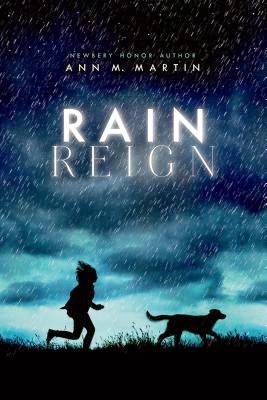
Rain Reign

by Ann M. Martin
First sentence: “I am Rose Howard and my first name has a homonym.”
Support your local independent bookstore: buy it there!
Content: There’s really nothing, and the words are mostly simple with lots of white space. It’s in the middle grade (grades 3-5) section of the bookstore.

Rose Howard is a 12-year-old fifth grader with high-functiohttp://www.thebooknut.com/2013/08/counting-by-7s.htmlning autism. Her mom ran of when she was two, and she’s been raised in a small New York town by her dad. (And her uncle, who’s much nicer than her dad.) She generally makes do in school, at home. Especially since her dad’s gone either at work or at the bar down the road.

He did pick up a dog for her, one day, though. Which she named Rain. And Rain keeps Rose company.

(There is a side bit about Rose loving homonyms but I felt that was more distraction than anything, and didn’t really add much to the plot.)

A big storm hits, the remnants of a hurricane, and knocks power out in the down. Rose’s father lets the dog out, and she never comes back. So, Rose and her uncle set to checking in shelters to find Rain. And when they do, they’re in for a surprise.

I’ve never read any Ann Martin before (yeah, I missed the whole Babysitter’s Club thing), and I really wanted to like this one. But I just… didn’t. Counting by 7s and Anything But Typical did the whole autism spectrum thing so much better. I didn’t care about Rose, I’m tired of missing mothers and bad fathers, and I just. didn’t. care.

That’s not to say it’s a bad book… I did like the way Rose narrated it, like she was writing a report. It was clever, but I found that the form got in the way of the substance. That’s not to say others (especially dog lovers) wouldn’t like it. But it wasn’t for me.

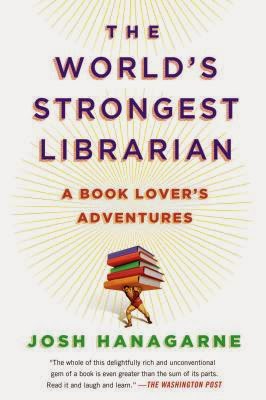
The World’s Strongest Librarian

by Josh Hanagarne
First sentence: “Today the library was hot, humid, and smelly.”
Support your local independent bookstore: buy it there!
Content: There’s some mild swearing, including a half-dozen (or so) f-bombs. I think older teenagers — especially ones that are struggling with education — would really like this one. It’s in the biography section at the bookstore.

As soon as this came out, I knew I wanted to read it. It’s about a Mormon, a librarian, and a man who has Tourette Syndrome. Granted, it’s been out for a while and it took my book group to get me to read it (too many other things to read; no excuse!), but I’m very (very!) glad I did.

It’s a straight-up memoir of Hanagarne’s experiences growing up. He was raised LDS (I loved his family; he’s got great parents), and struggled with tics as a result of Tourette’s throughout growing up. He wasn’t officially diagnosed until he was a teenager, but it was a part of his life. He found books though (yay, books!) and that helped give him a sense of purpose and direction. Though his life wasn’t easy: it took him 10 years to graduate from college; he kept dropping out because his Tourette’s made it difficult for him to focus.

It was a fascinating tale, not only of his faith journey — he has had some good leaders in his life — but of his personal journey trying to figure out how to handle his increasingly worsening Tourette’s. And it’s a very hopeful book: Hanagarne has managed to create a life for himself that works, in spite of (maybe because of) the obstacles in his way. He did an incredible job helping me picture what life with Tourette’s is like (not fun).

In addition — and perhaps this was my favorite part — Haragarne splices his personal story with ones from working at the Salt Lake City library, which helped break up the stories from the past and were highly interesting and entertaining.

It’s an odd book, probably not for everyone. But I found it be thought-provoking and fascinating.

A Snicker of Magic

by Natalie Lloyd
First sentence: “‘They say all the magic is gone up out of this place,’ said Mama.”
Support your local independent bookstore: buy it there!
Content: Because the main character collects words, some of the vocabulary might be more advanced for some of the younger readers. Also, there’s a bit of a romance(ish; they’re more just really good friends though the hint is there) but it’s pretty tame. Is in the middle grade (grades 3-5) section of the bookstore.

All Felicity Juniper Pickle wants is to stop moving. Sure, she’s used to her mother’s wandering ways — the longest they’ve ever stayed in one spot has been six months — but that doesn’t mean she doesn’t long for the comforts of a true home and the ability to make friends. So when the Pickled Jalapeño (that’s their car) rolls into Felicity’s mom’s hometown of Midnight Gulch, Tennessee, Felicity hopes that they will finally settle down and call this Home.

Of course, getting her mom to settle down isn’t all that simple. And the longer they stay in town the more secrets are revealed about the town’s history. About why the ice cream there is so good. About why Felicity can actually see words floating through the air. And, mostly, about why her mother is so keen on wandering, and how Felicity can get her to stop.

And it all involves… a snicker of magic.

It’s a very quiet book, this, with a quiet sort of magic. And as I was reading this charming little story, the thought that came to me the most was that this felt a lot like Ingrid Law’s Savvy. This one is more Southern and small-town-ish than Savvy is, but at its heart, they’re quite similar. Both have a strong female character at the core, one who is determined to not only keep their family together, but to figure out how she fits in with everything else. And the magic is similar as well. Felicity sees words and “catches” them, by writing them down. (Which leads to a lot of fun word play: in addition to making words up — like spindiddly — words have textures, shapes and colors. It’s pretty cool.) The Blackberry Sunrise ice cream makes you remember. Her uncle sees colors when he plays notes. Someone in town doesn’t show up in pictures. Nothing grand, nothing life-changing, but magic nonetheless.

But it was more the feel of the book, the discovery of finding a home, a place to fit in. And Felicity’s desire to help her mother move past her divorce (dad just walked out on them), and their realization that home can mean a lot of different things. Full of delightful characters and quirky magic, it’s a delight to read.

Dangerous

by Shannon Hale
First sentence: “The warehouse was coffin dark.”
Support your local independent bookstore: buy it there!
Release date: March 4, 2014
Review copy given to me by our publishing rep.
Content: There’s some intense action, and a few characters die. But there’s no language (its all “bleeped” out), and no sex. I think it belongs in the YA section at the store (grades 6-8) but I’d give it to curious younger kids.

Maisie Brown has lived a quiet life. She has scientist (read: introverted) parents and is happily homeschooled in her community just outside of Salt Lake City. But she has a secret dream: she wants to be an astronaut. She doesn’t think this will happen: she’s missing one of her arms, after all. But her middle name is Danger (literally) and when she gets an opportunity to enter a contest to win a week at a space camp in Houston, she goes for it.

And gets in.

She arrives at the camp — run by billionaire genius (not playboy) Bonnie Howell, who built the first elevator into space — not knowing that this week will change her life. That she’ll meet the Boy of her Dreams (who’s more than a bit of a jerk). That she’ll meet friends and watch them die. That she’ll become truly Dangerous.

In many ways, this was a breath of fresh air. One gets bogged down in the current trends in young adult/teen literature (read: paranormal or dystopian/post-apocalyptic) and to have something that is honestly science fiction with high tech gadgets, spaceships, and alien lifeforms. With honest-to-goodness average people doing techy, fun, science-based things. It was wonderful. And I really enjoyed Maisie as a character. She’s Latina (her mother’s from Paraguay), she’s smart, she’s confident, she’s disabled and she doesn’t let it get in her way. (In fact, at one point, she makes herself a pretty cool robotic arm.) And Hale does a good job incorporating most of the various elements she throws at us. The “fireteam” is a hodgepodge mix of races and cultures, but none of them seem like stereotypes (to me) and there ends up being a reason for it in the end. And although the love triangle was pretty silly (I think Hale makes it clear that it’s supposed to be silly), I did like that the love interest wasn’t love at first sight.

I did have some quibbles: mostly (and I understand why she did this) that she created a character who swears a lot, but then “bleeped” out all of the swear words. Literally. It pulled me out of the story, every single time. And while I loved that the parents were good people and good parents, they were a bit… corny. Which (again) pulled me out from enjoying story.

But, even with the quibbles, Hale does know how to spin a tale. And I was kept guessing with whom to trust and the ultimate motives. And a Latina superhero girl who kicks butt and is awesome and yet vulnerable without being irritating is, well, awesome.

The Real Boy

by Anne Ursu
First sentence: “The residents of the gleaming hilltop town of Asteri called their home, simply, the City.”
Support your local independent bookstore: buy it there!
Content: Some intense moments — both physically and psychologically — and the language and pacing are a bit slow, especially for a struggling reader. Still, it fits in the middle grade (3-5th grade) section of the bookstore.
Review copy snagged from the ARC shelves at my place of employment.

After I finished reading this, A took a look at it and said,”Huh.’The Real Boy’? Is that like Pinocchio?”

Well, yes. Yes it is.

The island of Aletheia is full of magic, even though there are no wizards anymore. There are magic smiths, and Oscar is the hand to one. Which means, he collects and chops the herbs and basically stays out of the way. That is, until the apprentice turns up dead and the magic smith go missing. That’s when Oscar’s world starts unraveling: everything he thought Aletheia was built on, everything he thought his master was turns out to be built upon a lie. And it’s up to Oscar and Callie, the healer’s apprentice, to figure out what the truth is, and how to set everything right. And, because I alluded to it, yes, the Pinocchio story does play a small role.

This was a lovely, lyrical book; Ursu is a magnificent, quiet writer. She knows how to evoke a feeling and a place — the forest is dark and magical and calming. And even though it’s never explicitly said, Ursu makes it obvious through little words and phrases that Oscar has some form of autism. That simple fact upped the tension when it was up to Oscar become the Hero of this story. How — if he doesn’t know how to interact with people — is he supposed to figure everything out? Enter Callie, who was a remarkable character. (In fact, all the characters, from the magic smiths to the bullies, to the people in the city who were Indulged and Coddled, were remarkably written.) She is the healer’s apprentice, magicless in a world where magic is everything, and yet she’s smart and plucky and brave, but most of all caring.

In addition to all that, and refreshingly, it’s not a start of a series! Hooray for stand-alone books! My only detriment is that I’m not sure this will appeal to many kids. But for the ones who are daring enough (or quiet enough) to pick it up, they’re in for a real treat.

(Just for the record: because this is a Cybils nominee, I’ve been asked to make sure y’all know this is my opinion only, and not that of the panel.)