The Inventor’s Secret

by Andrea Cremer
First sentence: “Every heartbeat brought the boy closer.”
Support your local independent bookstore: buy it there!
Content: There’s a couple of intense romantic moments, and the characters talk of “wanting” each other, but no actual physical contact takes place other than kissing. There is talk of an affair a character’s dad had, and there is quite a bit of violence. It’s in the YA section (grades 6-8th) but I wouldn’t blink at giving it to a savvy 5th grader.

It was the cover that caught my eye. The steampunk dragonfly with the explosion in the background promised really cool things. And since I hadn’t read any Cremer before (she of the Wolf series), I wasn’t really expecting anything.

So, I was more than blown away when I was pulled into an alternate history where the American Revolution failed, Boston converted to a maximum security prison, and the “traitors” were hanged for their crimes against the crown. And they were the lucky ones. In the years since the failed revolution, the Empire has just become stronger and more stratified. The elite live in the Floating City, New York City, in levels rising up into the sky. The lower you are, the worse off. There’s still a rebellion, out in the woods outside of the city, where the adults are trying to topple the Empire. And the children? They’re in the Catacombs, underground, safe from harm until they turn 18 and go to join the rebellion.

The Catacombs is all Charlotte remembers. She and her older brother, Ash, have been there since they were 5 and 7, respectively. And now, at nearly 18, Ash is in charge. This is where the plot gets a bit tricky to describe. Too much, and it sounds silly. And maybe it is.  I do know there was more romance than I was expecting, and it was a bit hackneyed and overwrought as well. But I loved the world. I loved the combination of history and mythology and technology. I loved how the class issues were at the forefront. I loved the imagination that Cremer put into the book, the cool little things — like mice bombs, or Pocky the gun — she littered everywhere.

No, it’s not perfect. Far from it. But it IS fun. And that’s exactly what I needed right now.

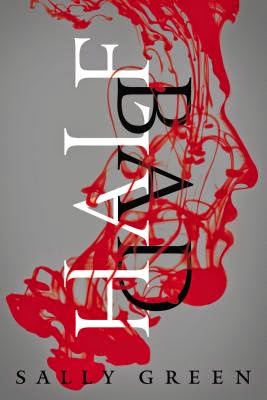
Half Bad

by Sally Green
First sentence: “There’s these two kids, boys, sitting close together, squished in by the big arms of an old chair.”
Support your local independent bookstore: buy it there!
Review copy pilfered from the ARC shelves at my place of employment
Content: There’s talk of imagined sex (none actual), and some (mostly mild) swearing. But the talk of the abuse Nathan takes is hard to get though, even for me as an adult. It’s in the teen section  (grades 9 and up) because of that. Be wary of giving this one to an overly-sensitive person.

I was talking this book up in January to a group of educators, saying to look for it, that Green turns the whole “white=good and black=bad” thing upside down. How little did I know.

It does do that: sure. But to say that’s all this first in a trilogy does is to woefully underestimate it.

Nathan is the illegitimate child of a White Witch — his mother — and the baddest of all Black witches. Marcus, Nathan’s father, has alluded the White Hunters for years. And so, to say that having his kid in their midst irks them is a gross understatement. So the council imposes Codes — restrictions — on all Half Bloods. They start mild, with yearly assessments, but get increasingly more restrictive as Nathan gets older. It ends with him being held in a cage for two years. This is partially because of a vision Marcus saw that Nathan would kill him. The White Hunters want to make that happen: he’s ostensibly being “trained” to murder his father. Not that he has any say in the matter.

So, yes, Greene is turning good and evil upside down; how can the “good” people treat someone who is different from them so atrociously. (And believe me, it’s worse than bad.) But, the black witches don’t fare so well, either. Marcus, from all reports (granted, they’re  untrustworthy) is a despicable person. And the one time we see him, he doesn’t entirely acquit himself either. And the only other black witches we see aren’t that much better. Perhaps it’s more a treatise on how power corrupts, and how differences become so ingrained that we can’t see those who aren’t the same as us.

And even though it was difficult at times to get through, emotionally, it did give me a lot to think about. I’m quite interested to see where she goes with this series, and if she can keep up the complex nature of the characters.

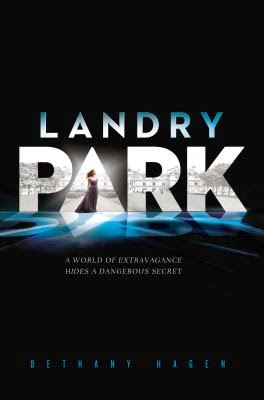
Landry Park

by Bethany Hagen
First sentence: “Two hundred years ago, America found itself at a crossroads.”
Support your local independent bookstore: buy it there!
Review copy snagged from the ARC shelves at work.
Content: There’s some talk of violence, though it’s all offscreen; a few mild swear word; and an illusion to an affair. It’s in the YA section (6-8th grade) of the bookstore, but I’d have no problems giving it to a younger child if they were interested.

Madeline Landry has grown up in a luxurious world: she’s the only child of an elite family and surrounded with opulence. She’s not particularly happy: she has struggles with her father over her education. She wants to got to university; he (and his will, not to mention the law) wants her to stay home, get married, run the estate, and pop out an heir. But she’s not entirely unhappy either: she loves her family and her home and the life. That is, until David Dana — the un-landed son of a gentry — comes into her life. Then, the things that have been skirting around her life — the class issues, the environmental concerns, especially with the lowest class, the Rootless — come front and center. Not to mention that David’s pretty dreamy.

In many ways, Hagen is treading the same ground as every dystopian book before her. America falls to the Eastern Empire, only managing to hang on by a thread. In the aftermath, a class system is formed — not based on race, as Hagen is so careful to point out — based on money and influence. And at the bottom are the Rootless, who handle the nuclear charges the gentry’s energy — and much of the wealth, especially the Landry wealth — comes from. And they’re getting restless. Where Hagen’s dystopian diverges from the pack is in the focus: Madeline is one of the elite, not the underclass. And when she has her eyes opened, she stands to lose everything. And I respected that.

I also really loved the world Hagen built, even though she never really gave us an explanation why the women were corseted and shoved into ball gowns and paraded around like it was Victorian England. I’m sure I could come up with some hypotheses — fancy dresses are synonymous with wealth? the women are as shackled as the Rootless? — but they are just that. No matter: Hagen is tackling issues that aren’t (readily, I think) usually seen in dystopia. Also, she doesn’t have a Romeo & Juliet love story going on here: both Madeline and David are from the gentry, and have to come to terms with their increasingly dissenting opinions.

It’s not a perfect beginning, but it is an intriguing one. I’m going to be curious to see where the rest of this series goes.