Audiobook: Wandering in Strange Lands

by Morgan Jerkins
Read by the author
Support your local independent bookstore: buy it there!
Or listen at Libro.fm
Release date: August 4, 2020
Content: There is some swearing including a few f-bombs and the use of the n-word. It will be in the biography section of the bookstore.

Morgan Jerkins is a writer, but she’s also the daughter of a New Jersey woman and a North Carolina man. The central question she grapples with in this book is this: how has moving away from her families’ roots in the South (after slavery, but mostly during the Great Migration) affected their connection to the land, to their communities, and to each other? She explores this question by visiting South Carolina and talking with and trying to understand the histories of the Gullah people there. She heads to Louisiana to talk to Creole, and to Oklahoma to explore connections between African American freed slaves and the Cherokee nation. And she finally heads to Los Angeles. Through all this, she unearths her family history and stories, as much as she can, and that it was White Supremacy and Institutional Racism that was the driving force for much of what her ancestors experienced.

A friend once told me that you can talk statistics and data at people, but it’s the stories that really matter. And this book brings that home. Yes, I knew there was (and is) Institutional Racism and white people were (and are) discriminatory and prejudiced against black people to the point that they want to push them out. But, hearing Jerkins’ stories gets that point home in a way data just doesn’t do. It also reminded me of the importance of knowing where you’re from and knowing your family’s stories. (I have been very bad about passing this on to my children.)

It’s an interesting story, and Jerkins is an interesting narrator to guide the story along its path. I’m glad I read it.

10 Things I Hate About Pinky

by Sandhya Menon
First sentence: “The dead body was an especially nice touch.”
Support your local independent bookstore: buy it there!
Review copy provided by the publisher.
Release date: July 21, 2020
Content: There’s some kissing and mild swearing. It will be in the YA section of the bookstore.

Pinky Kumar is the different one in her family. With her colored hair, eyebrow ring, impulsive nature, series of not-great boyfriends, and devotion to causes (and creating trouble), her parents — her mother, especially — are at their wits end. So, after being accused (by her mother) of burning a barn down while on summer vacation, Pinky blurts out that she has a boyfriend her parents would approve of. She just needs to find that boyfriend, stat.

Samir Jha has everything planned out: he’s going to DC for the summer to do a high-stakes internship as part of his goal to getting into Harvard. However, when that suddenly falls through, he’s pretty aimless. Then he gets a text from Pinky — who he knows, but not well — out of the blue: come pretend to be her boyfriend for the summer, and she will make sure he gets an internship with her mother, a high profile lawyer. Against his better judgement, Samir accepts. It should be easy, except for one catch: he can’t actually stand Pinky’s impulsiveness. The feeling’s mutual: Pinky thinks Samir is boring. How are they going to survive the summer?

Oh this was cute. Sure, it’s a formulaic rom-com, but that’s kind of what one wants out of a romance story. And it has a couple of additional layers: Pinky’s conflicted relationship with her mom (due to a lack of communication on both sides) and Pinky getting involved in a local dispute with a developer trying to develop a habitat at their summer home. But those just added to the overall cuteness and just happy-making of the book. Menon really does have a gift for making light, fun, sweet romances and I am more than happy to read every one of them.

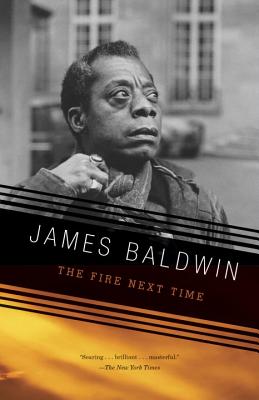
The Fire Next Time

by James Baldwin
First sentence: “Dear James: I have begun this letter five times and torn it up five times.”
Support your local independent bookstore: buy it there!
Content: There is some mild swearing and use of the n-word. It’s in the sociology section of the bookstore.

This is two essays — or one essay and a letter to Baldwin’s nephew — on the state of being Black in America. In 1962. Short version: It wasn’t easy. And it’s a sign of my privilege that I am just now realizing two things: 1) that life for a Black person in the early 1960s was not an easy or enjoyable one and 2) that it’s not changed very much for very many people in nearly 60 years. That’s the thing that stood out to me most about this book: it’s still relevant. And it shouldn’t be. This book should never have had to be written. This book shouldn’t have to be still relevant. And yet, it was and is. And it’s a sign that I am a privileged person that I am just NOW realizing this.

I think I enjoyed this more than If Beale Street Could Talk, because I think Baldwin’s style is more suited to essays and rumination than fiction. He has a very thoughtful, lyrical prose style which I thought suited both the impassioned letter to his nephew (which brought to mind Between the World and Me) and his essay about his youth and experiences with the Nation of Islam.

It’s definitely an excellent book.

Dragon Hoops

by Gene Luen Yang
Support your local independent bookstore: buy it there!
Content: There are swear words, but there are all bleeped out. It’s a bit thick, which might be intimidating for younger readers. It’s in the graphic novel section of the bookstore.

I’ve read a lot of what Yang has written, but even so, I didn’t expect this to be a graphic novelization of his last year teaching at Bishop O’Dowd in Oakland, California, and the year the high school men’s basketball team had.

Yang himself admits it up front: he never thought he’d be writing a graphic novel about basketball. He’s more of a superhero guy. And I get that. But, Yang does a fantastic job of letting his readers into the world of an elite high school basketball team. He introduces us to several of the main players, getting to know them and the dynamics they have with the coaches. As a parallel story, Yang explores the transition from teaching full time and writing part time to writing full time. It was an interesting story, one in which I found myself invested in the outcome: would the Bishop O’Dowd Dragons win the State Championship?

I found myself fascinating by the book. Not only because Yang does a superb job humanizing the people in the game, he does a superb job portraying the games themselves. I think he really does capture the athleticism and the intensity in each basketball game. All of which made this graphic novel very enjoyable.

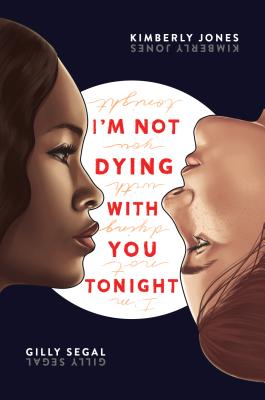
I’m Not Dying with You Tonight

by Kimberly Jones and Gilly Segal
First sentence: “‘Waiting for Black is on your agenda, not mine,’ LaShunda barks as we leave the building.”
Support your local independent bookstore: buy it there!
Review copy provided by the publisher.
Content: There is violence, some swearing and the use of the n-word. It’s in the Teen (grades 9+) section of the bookstore, but I would give it to a 7th/8th grader as well.

All Lena wants to do is hookup with her boyfriend Black after halftime at the football game. All Campbell wants to do is sell concessions and get the heck out of there. But when a fight breaks out at the game, Lena and Campbell are thrown together. And when the fight escalates and turns into a protest which escalates and turns into riots, Lena and Campbell are forced to rely on each other to survive the night.

The book this most reminded me of is All American Boys: two kids — one white and one black — thrown together have to figure out how to relate to each other. So, yeah, this has been done before. That said, one of the things I thought Johnson and Segal did well was show how introducing the police actually made things worse. The fight started at the school, police were called, and it escalated. A protest was happening, police came in full riot gear and the situation escalated. Additionally, I thought that Lena and Campbell’s personal unpacking of biases (more on Campbell’s part, which is a good thing) was a valuable thing.

That said, there are books that do this better. Like All American Boys. Or The Hate U Give. Or Riot Baby.

It’s a valuable book, one that I do hope people (probably mostly white people, who I think this book was aimed at) will read. But, it’s not the best one out there.

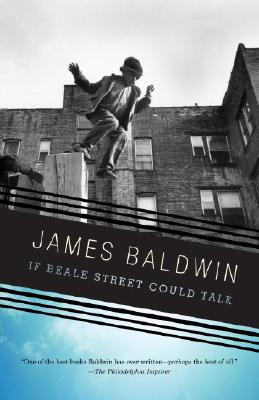
If Beale Street Could Talk

by James Baldwin
First sentence: “I look at myself in the mirror.”
Support your local independent bookstore: buy it there!
Content: There is some swearing, including multiple f-bombs. It’s in the fiction sections of the bookstore.

This is the story of Tish and Fonny, a young Black couple who are looking forward to a life together. Until Fonny is falsely arrested and imprisoned for rape. But Tish, pregnant with Fonny’s baby, and her family and Fonny’s father, are determined to get him out.

It’s a pretty basic plot when you sketch it out, but Baldwin is more about the words and the feel than the plot. He’s a very lyrical writer, which sometimes (for me) got in the way of the characters and the story, but mostly just enhanced it. I do love the way he characterizes the people in the book, fleshing them out so they feel whole. It did feel dated with some of the language, but that’s to be expected for a book written in 1973. But, the themes — of white supremacy and systemic racism in the police force — are still relevant.

I read this for a book group discussion (which I missed… boo on me!) and I’m sad I missed the discussion; there is much to talk about here. At any rate, I’m glad I missed it.

Audio book: Me and White Supremacy

by Layla Saad
Read by the author
Support your local independent bookstore: buy it there!
Or listen at Libro.fm
Content: There is some mild swearing. It is in the Self-Help section (I think?) of the bookstore.

I am going to say this up front: I read this book wrong. It was meant to be an interactive 28-day journey with journaling and extensive deep reflection. However, that just doesn’t work (for me) in audio format. I listen in the car or doing a puzzle, and it’s just not conducive to a lot of serious reflection. So. I am going to purchase this book (when it’s reprinted; it’s on backorder now) and do the actual work.

Some thoughts though:

This book, by a Black woman, centers on how white people are privileged by the system we live in. Saad asks some tough questions, explains some tough concepts (like white privilege and white fragility), and encourages readers to do the work to become anti-racist and more inclusive. She also asks about concrete commitments we (white people!) can make in order to continue the lifelong pursuit of becoming anti-racist. It’s a challenging book to read, if only because she (very calmly and eloquently) challenges the very fabric of the society white people are used to.

And for that, it’s very much worth reading.

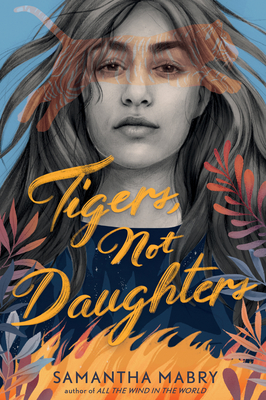
Tigers, Not Daughters

by Samantha Mabry
First sentence: “The window to Anna Torres’s second-story bedroom faced Hector’s house, and every night she’d undress with the curtains wide open, in full view of the street.”
Support your local independent bookstore: buy it there!
Content: There are a lot of swear words, including multiple f-bombs. There is also a lot of talk about teen sex and some teen drinking. It’s in the Teen section (grades 9+) of the bookstore.

The four Torres sisters live in an unhappy house. Their mother died when the youngest, Rosa, was born, and their father hasn’t been the same since. But their one attempt at running away was foiled. And a year later, the oldest sister, Ana, was dead.

The three remaining sisters have been grieving in their own way. And a year after Ana’s death they’re at a breaking point. And when Ana’s ghost shows up, it pushes the rest of the girls over the edge.

This is a little bit family drama, a little bit empowerment story, and a little bit ghost story, and Mabry makes it all work together excellently. The narrative switches between the three surviving sisters, as the story of Ana’s death, and their home life, unfolds. It’s a celebration of sisterhood — not just actually having sisters, but the act of women working together and supporting each other. And how we are stronger together than apart. It’s about grief and healing and support and the intersection of those three.

It’s an excellent story. I really ought to read more of Mabry’s book.

Almost American Girl

by Robin Ha
Support your local independent bookstore: buy it there!
Content: There is some mild swearing and a lot of bullying. It’s in the graphic novel section of the bookstore.

When Robin Ha was 14, in 1995, her mother married a Korean man in America and uprooted their life in Seoul, moving them to Alabama. Robin was shocked and upset (partially because her mother told them they were going on vacation, and then sprung it on her when they were already there) because she liked her life in Korea. She had friends, she liked her neighborhood, she liked her school. She fit.

And suddenly, she doesn’t. She doesn’t know much English and the kids in Alabama are cruel to an outsider. In this graphic memoir, Robin tells the story of the year she learned to adapt and learn and try to fit in. It’s an interesting immigrant story, but it’s also the story of how her mother didn’t fit into the conservative, patriarchal Korean society (she was a single mother who had never been married, and that’s looked down upon) and wanted not only a better life for her daughter, but a freer one for herself. Ha reflects on the dual nature of being Korean and living in America, and eventually not quite fitting in either place.

A customer at the bookstore pointed me in the direction of this one. She’s on a bit of a Korea kick, and she said this was one that helped her understand what life is like in Korea. I don’t know if I’d go that far, but it did delve into Korean cultural mores, and it really portrayed how Ha often felt like she was in over her head. I liked Ha’s artistic style as well. Everything was written in English, but she color coded the text bubbles: blue for Korean, black for English. She used color and framing to help portray young Robin’s feelings of helplessness and anger, and in sepia-toned flashbacks, gave readers her mother’s story and Robin’s history in Seoul.

It’s an excellent graphic memoir, and definitely one worth reading.

Stamped From the Beginning

by Ibram X. Kendi
First sentence: “Every historian writes in — and is impacted by — a precise historical moment.”
Support your local independent bookstore: buy it there!
Content: There is some swearing, including a few instances of the f-bomb and many of the n-word. It’s in the history section of the bookstore.

I picked this one up after listening to Stamped, which is a remix for younger readers of this history. I didn’t know what to expigect, but what I got was a book that made me rethink my perceptions of race, race relations, and class, and rethink what I was taught in history classes.

The basic idea that Kendi sets out to demonstrate is this: racial discrimination leads to racist ideas which lead to ignorance and hate. It’s the reverse of everything I had been taught which is: ignorance and hate lead to racist ideas which lead to discrimination. It’s a lot to wrap a (racist) brain around at first, but over the course of the 500 pages, Kendi does an excellent job showing how, throughout history, racism starts with racist people being self-interested and creating racist policies. I learned a ton.

I don’t know if there are any solutions to be found in the book. Except for the conclusion that self-sacrifice (of Blacks) and uplift suasion (Black people being “more like White people”, which is a racist idea), and educational persuasion (if white people just had “all the facts” about racism they wouldn’t be racist) don’t work. It will take a concerted effort of White people and Black and Brown people to realize that it’s in the best interest of ALL people to do away with racist policies.

I don’t know what the political and economic solution for this is (except maybe tax the wealthy and refund all the social programs that have been axed over the years). But I do know that it is important for corporate media (!) and White people to stop generalizing and stereotyping Black people.

As for me, this book made me rethink ideas I’ve had in the past, rethink the way I interact with the media and politics, and perhaps made me a little more antiracist. I can only hope.