When Dimple Met Rishi

by Sandhya Menon
First sentence: “Dimple couldn’t stop smiling.”
Support your local independent bookstore: buy it there!
Content: There is talk of sex, and a tasteful on-screen sex scene. It’s in the YA section (grades 6-8) of the bookstore, but it should probably be in the Teen section (grades 9+).

Dimple has one goal: go the the Insomnia Con, win, get her app idea out in the world, and go to college and be a successful developer. Her parents (her mother, really) has one goal: to get Dimple married to an Ideal Indian Husband. Rishi has one goal: to be a Good Son, and uphold the traditions of his family and culture. Therefore, he’s asked his parents to arrange a marriage for him (yes, he’s 18). The person they’ve picked? Dimple.

Rishi goes to Insomnia Con with the sole purpose of meeting Dimple and getting their relationship going. The problem? Dimple has no idea that her parents set this up. Needless to say: Dimple and Rishi don’t get started on the best foot. But, then, over the course of the six weeks of the con, they get to know each other, bring out the best in each other, and yes, fall in love.

It’s a silly Bollywood movie as a book: light, refreshing, fun (with musical numbers!), but with a serious underside that makes you think a little. I like how Menon is exploring and subverting Indian-American culture, all the the guise of a romcom. Both Rishi and Dimple are delightful characters, and their descent into love is a quick, but believable one. I’ve enjoyed Menon’s other books, and this one is no exception.

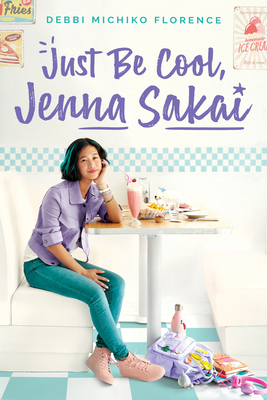
Just Be Cool, Jenna Sakai

by Debbi Michiko Florence
First sentence: “Heartbreak is for suckers.”
Support your local independent boosktore: buy it there!
Content: There is some talk of first romance and divorce. It’s in the middle grade section (grades 3-5) of the bookstore. But it’d be good for 6-7th grade as well.

Jenna Sakai has sworn off relationships. First, her parents got a messy diverse and her dad “abandoned” her by moving to Texas from California. Then her boyfriend, Elliot, who she thought she was super compatible with dumped her right before Christmas. After a very lonely winter break at her dad’s house, she’s back in California, at her school, determined to make a fresh start. No more relationships. No more Elliot (except he keeps popping up in places where she thought were Elliot-free). Just focus on the things she’s good at: journalism. Then she discovers a cute diner, and takes to going there as an escape from all the other stress in her life. It’s a great place, until she discovers that Rin Watanabe also uses the diner as a refuge, specifically what she’s come to think about as “her booth”.

Thus begins a tumultuous friendship between Jenna and Rin, as Jenna writes an article digging into a donation his family made to their school. It’s a bit more complicated than that, but that gets the gist of things.

I thought it was cute. I was a little “meh” at the beginning — boyfriends/girlfriends in 7th grade kind of turns me off, but Florence kept it pretty age-appropriate with just hand holding. But it was a really good story about a girl learning to trust other people again, after a couple of very big heartbreaks, first with her parents’ divorce, and then with the breakup with someone she thought was super compatible with her. I liked that it showed that middle school romances aren’t always great (thought there was an example of a good, healthy relationship as well). I also think that Florence does a good job capturing the complicated emotions and friendships that middle school has while not making everyone super annoying (which is easy to do). My only complaint is that I didn’t know this was a companion book to another one, and I kind of felt like I didn’t quite have the whole picture sometimes. But that was more my problem than the wriring.

It was a fun book, overall.

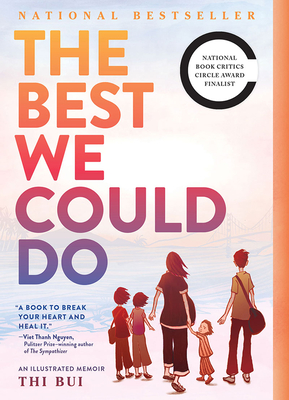
The Best We Could Do

by Thi Bui
Support your local independent bookstore: buy it there!
Content: There is talk of violence. It’s in the Graphic Novels-Nonfiction section of the bookstore.

I fit this in among my reading for school, partially because we were reading books by Asian authors, and one that Bui illustrated (and won a Caldecott honor for), A Different Pond, was on the list. I figured it was a good opportunity to read her graphic memoir, which I’d been meaning to read for years. (This is a theme with this class: I’m catching up on ones I have meant to read!)

It’s mostly the story of her parents, their lives in Vietnam before and during the war. Bui is exploring their trauma and how it relates to her, especially after she gave birth to her son. Her family fled Vietnam and came to the United States when she was young, and her parents weren’t terribly demonstrative in their affection. Bui, as she got older, wanted to understand their stories, and where they came from, in order to understand them, and by extension, herself.

Her parents’ stories were fascinating, and I learned a lot about Vietnam, a country I sadly know very little about. Her art style was simple – mostly line drawing on a muted color background – but effectively portrayed emotion and the story she was trying to tell.

A very good graphic novel.

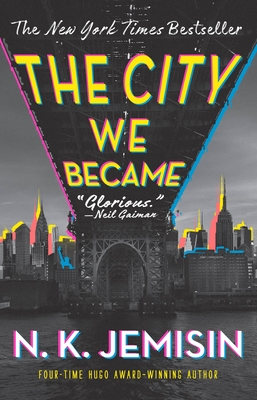
The City We Became

by N. K. Jemisin
First sentence: “I sing the city”
Support your local independent bookstore: buy it there!
Content: There is violence, including sexual assault, and many f-bombs. It’s in the Science Fiction/Fantasy section of the bookstore.

In this universe, cities are alive, not just in the metaphorical sense but literally. There is a “birth” that results in the city being embodied in a person. Sometimes this doesn’t work — New Orleans was a stillbirth, for example — but mostly it does. Except: in the case of New York City, something has gone awry. It’s not a stillbirth, but it’s not alive, yet.

So the city adapts: five other people wake up, one for each borough. Their purpose is to get together, work together, and wake up New York as a whole. But, they meet unexpected problems in the form of an alien entity that is trying to stop this city from ever becoming alive.

Oh, my word this was so good. I think I liked it better than her Broken Earth trilogy. It’s clever, it’s fun, it’s got a Neil Gaiman feel to it. And I adored the characters as well as the way Jemisin played with race and New York stereotypes in the book. It as a joy to read, one that I plowed through incredibly quickly. And while it stands well on its own, I am fascinated to see where Jemisin takes it with the sequels.

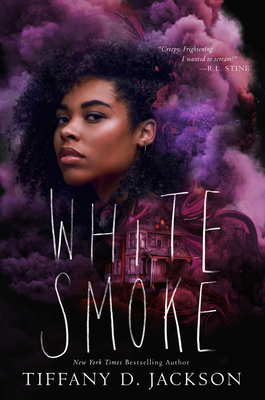
White Smoke

by Tiffany D. Jackson
First sentence: “Ah. There you are.”
Support your local independent bookstore: buy it there!
Content: There is a lot of swearing, including multiple f-bombs and some teenage marijuana usage. It’s in the Teen section (grades 9+) of the bookstore.

Marigold is looking for a fresh start. Or, at least that’s what she tells herself. She, her brother, her mother, and her stepdad and step-sister are headed away from California, away from Mari’s mistakes and moving to Cedarville for a fresh start. It doesn’t hurt that her mom got a residency there, with free housing. Except: Cedarville isn’t that great of a place. There’s something… off about it. Mari’s hearing sounds in the house. There are smells, and things go missing. Not to mention that every. single. other. house in the neighborhood is boarded up and decrepit looking. It’s all… very, very weird.

I think the mileage on this one depends on how horror-savvy you are. I’m not, so I found it spooky and intimidating and atmospheric. And I had to put it down often just to drop my anxiety levels. But, I suppose if you are the sort of person who likes horror and reads/watches it often, this one might not have the same effect. I did like that Jackson was exploring the idea of gentrification ad the impact it has on the (mostly black and poor) community. I also liked that she talked about unfair incarceration because of drug laws, and how those laws fall differently for black and white people. This horror story has some meat to it.

And then there’s the ending. Without spoilers, I’ll just say it’s kind of abrupt and weird. I wonder if there’s a sequel, because so much is unresolved. Or if Jackson meant it to be that way. At any rate, I found it a fun enough ride.

Black Boy Joy

edited y Kwame Mbalia
First sentence: “Homegoing.”
Support your local independent bookstore: buy it there!
Content: there is some slight romance. It’s in the middle grade (grades 3-5) section of the bookstore, but my teacher considered it a YA novel, so it’ss good for all ages?.

Here are the things I liked about this book:

It’s super diverse, even though all the authors are black men. There are science fiction stories, poems, art, contemporary stories, and ones based in mythology. They have protagonists that are non-binary, interested in sports, and interested in music and art.

It focuses on joy and celebration, even when it touches on hard things like funerals.

It’s a delight to read.

Not all the stories are equal, but that’s to be expected in a short story collection. And sometimes the joy felt unearned, but that’s because we weren’t given enough time with the characters. (Another fault of short stories.)

Even with the faults, it’s an excellent collection. Highly recommended.

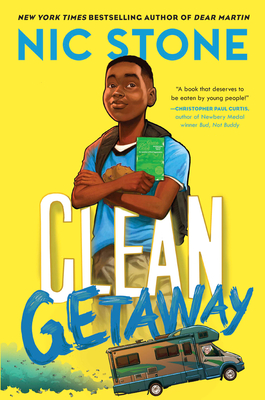
Clean Getaway

by Nic Stone
First sentence: “It might sound silly, but to William “Scoob” Lamar, the Welcome to Alabama the Beautiful sign looks… well, beautiful.
Support your local independent bookstore: buy it there!
Content: There are some uncomfortable moments. It’s i the middle grade (grades 3-5) section of the bookstore.

William “Scoob” Lamar is having a rough year at school. First, he got in trouble for beating up a bully who was making fun of Scoob’s st friends’ younger brother. Then, he figures out how to cheat on a programming quiz, and shows other kids how to do it. He doesn’t cheat, but ends up suspended because he was the “instigator” of it all. He’s at hoe, grounded, with the spring break trip canceled. But, just when all hope was lost, his G’ma sows up with an RV asking him to take a strip with her. So, he does. and leaves his phone at home, so his dad can’t stop him from going.

But, things aren’t what Scoob expected.. While the history of his (white) grandma and his (black) grandpa is interesting — his grandma kept the Green Book that helped them travel safely though the south during the Jim Crow era — things aren’t, well, right. His grandma keeps changing the plates on the RV. She won’t answer calls from Scoob’s dad. She is being super cagey. While Scoob enjoys the history, he’s not entirely sure this vacation is all it’s cracked up to be.

This is what I wrote for my class (spoilers): “Scoob’s grandfather was arrested for grand larceny and died in prison but in the end we find out that it was Scoob’s grandmother who had stolen the jewelry. She literally let a black man take the fall for her crimes. A person she was supposed to be in love with! That she had a son with! The ending didn’t provide a lot of resolution; instead of getting punished for her life of crime (she had been stealing jewelry for YEARS), she got cancer and died. And then Scoob found her stash and got his dad to drive it to Mexico to bury it. I have NO idea what to think about this. I get the underlying message is that white people are not to be trusted, even if you’re related. That a white person will always find a black person to blame things on.”

Someone in the class pushed back and said they thought the underlying message was more about how our actions can affect more than just ourselves, and maybe that’s a better way to look at the book. It does make it more age appropriate. At any rate, the book did give me a lot to think about.  

Two Black Historical Fiction Books

Finding Langston
by Lesa Cline-Ransome
First sentence: “Never really thought much about Alabama’s red dirt roads, but now, all I an think about is kicking up their dust.”
Support your local independent bookstore: buy it there!
Content: It’s short, with short chapters and about an 11-year-old. There is some bulling. It’s in the middle grade (grades 3-5) section of the bookstore.

Set in 1946, the book follows 11-year-old Langston, who has recently moved to Chicago with his father from Alabama. It’s a bit about a southern Black family trying to make a life in a big city. It’s not easy: they live in a one room apartment, Langston is bullied because of his accent, and they don’t have the comforts of family being nearby. The one thing Langston finds that is welcoming is the branch of the Chicago Public Library . he finds Black authors and learns about Langston Hughes. It makes grieving for his dad mother and the dealing with the bullies at school easier.

It’s a sweet family story, one with sympathetic characters (I even liked the dad), and a good look into issues surrounding the Great Migration. It went quick because it was short, but it had some complex character development and dealt with touch issues like classism and Northerners looking down on their Southern neighbors. I’m glad I read it.

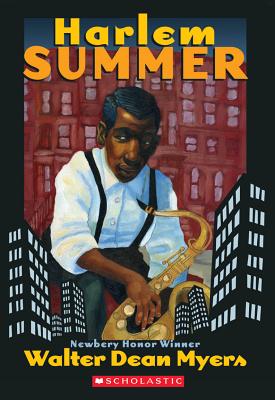
Harlem Summer
by Walter Den Myers
First sentence:”I like Harlem in the summer except when it gets too hat, which it had been for the last week and we hadn’t even reached July yet.”
Support your local independent bookstore: buy it there!
Content: There is some violence and talk of people drinking but it’s short. It’s in the Teen section of the library, but I’d probably up t it in the YA section (grades 6-8) of the bookstore.

Set in Harlem in the 1920s, it follows the summer of a 16-year-old named Mark. He gets a summer job at the Crisis, a magazine run by WEB DuBois celebrating the “New Negro”. All Mark wants to do, though, is play his saxophone and impress Fats Waller (who was a real person!) with his jazz. Unfortunately, that gets him into a whole mess of trouble involving stolen whiskey, gangsters, and Langston Hughes.

I didn’t like this one as much, partially because I felt like it was a who’s-who of 1920s Harlem, which is fine and all, but doesn’t led itself to a really great plot. But I also kept thinking of Kendi’s description of assimilationists, and how they wanted Black people to “prove” themselves to white people. That was a huge part of the book, the talk of “New Negros” and how the 10% was going to save the rest of the race. And that’s just, well, racist. Myers may have been poking fun at them; in the end Mark decides that the Crisis and the people there aren’t nearly as much fun or interesting as the people involved in jazz music. Even so, it bothered me. I didn’t hate the book, but I did struggle to finish it, and it just wasn’t what I had hoped it would be.

Black Girls Rock

by Beverly Bond (editor)
First sentence :”There is a palpable blissfulness in our magic.”
Support your local independent bookstore: buy it there!
Content: It’s marketed to adults but there’s nothing objectionable. It’s in the Sociology section of the bookstore.

Bond put together a series o short personal essays from a bunch of famous Black women: activists, politicians, actors, musicians, and artists. They each told a small slice of their own story and successes. I’m not sure what the purpose was; possibly it was hoping to inspire other Black women to become their best selves. Maybe it was a collection to highlight the diversity in black Black womanhood (which it did well) and the range of experiences and successes Black women have had.

I wanted to like the book more than I actually did. I like the idea of the book. I like that this book exists. But reading it was a bit of a chore. Some of the essays were well, not great. You could tell that many weren’t writers. And while I wanted to care about their stories, I didn’t always.

Is it an important book? Yes. Was it a good one? I’m not entirely sure.

Playing the Cards You’re Dealt

by Varian Johnson
First sentence: “The house always wins.”
Support your local independent bookstore: buy it there!
Review copy provided by the publisher.
Release date: October 5, 2021
Content: There is talk of addiction in adults, some bullying, and a mild “relationship”. It will be in the Middle Grade (grades 3-5) section of the bookstore.

AnthonyJoplin — Ant to his friends, but don’t call him little — comes from a family of serious Spades players. His grandfather, his father, his brother, were all really great at it, winning the local tournament (and then some). But Ant can’t seem to get in the game. He’s “weak”. Or that the way he feels, especially around his dad, his brother, and his friend. That he needs to be stronger, better. He needs to win the tournament, for starters.

He and his friend make a good team, but when his friend is unexpectedly unable to play, Ant turns to the new girl – Shirley – as a partner. Which is its own set of problems. Add to that his father is acting weird, staying up in the middle of the night playing online poker, and Ant is just confused about what he really is supposed to expect out of life.

I love that Johnson gets the middle grade audience, tackling touch subjects like addiction and masculinity without talking down to his readers. I love that he gives us characters that are interesting and complex, which makes them and their problems seem more real. I love that he sprinkles his books with humor, so they are not depressing, but rather reflect life’s ups and downs.

The only think I didn’t like about this book was the narrator: I liked the folksy aspect of it, with the slang and the way it felt like someone telling a story, but I often felt the narrator — who was a character in their own right — got in the way of the story.

But it was’t enough to turn me off of this book. Definitely another very good read!