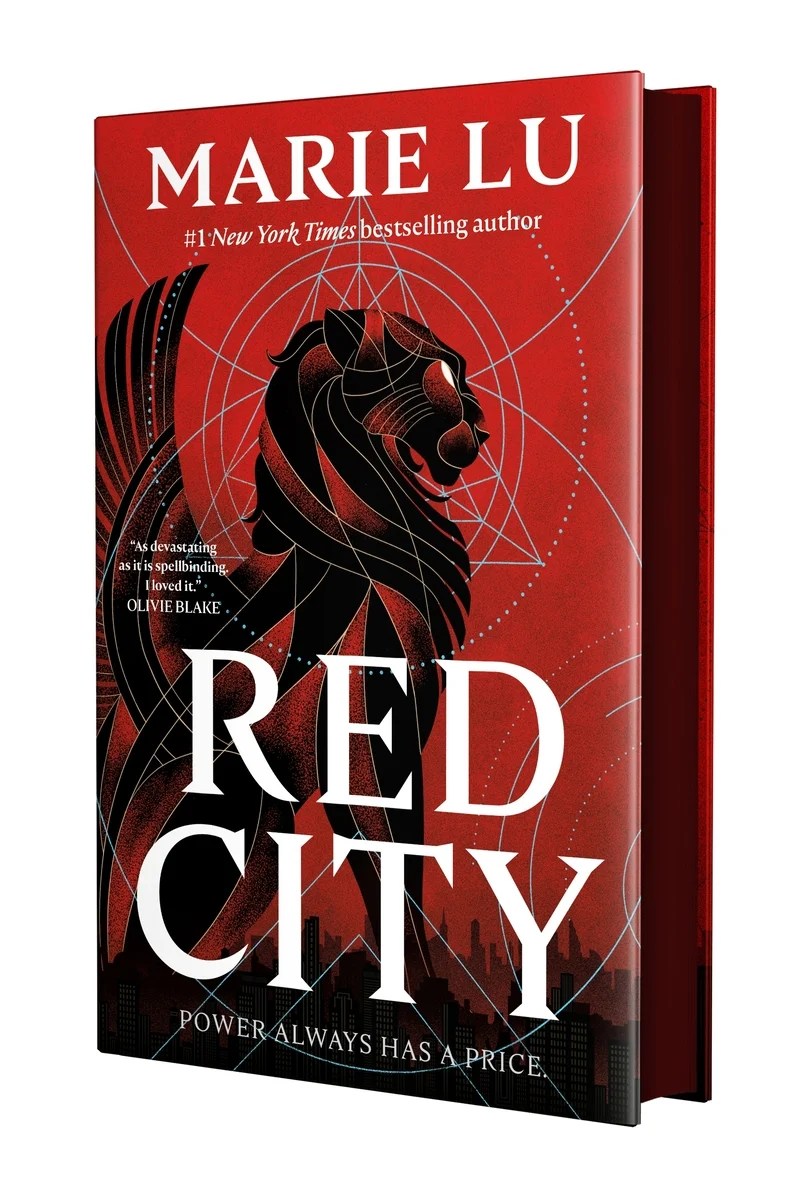
by Marie Lu Read by André Santana, Eunice Wong, Natalie Naudus & Sid Sagar Support your local independent bookstore: buy it there! Or listen at Libro.fm Content: There is a lot of violence, much of it graphic. There is also sexual assault, on-page sex, and lots of swearing, including many f-bombs. It’s in the Science Fiction/Fantasy section of the bookstore.
Growing up the child of a strict single mother, Sam wanted more for her life. She is smart – she has a perfect memory – and she had a promising future. That is, until her mom was in an accidental fire at the restaurant she worked at. Then, Sam turned to the syndicates – the organizations that control the drug Sand, and the magic in this alternate reality. She learns to be an alchemist and falls deep into this dangerous world.
Ari, on the other hand, was brought to Angel City from his home in India, recruited because of the strength of his charisma, his soul, to be a part of Luminos, one of the syndicates. He’s taught and trained since he was 10 to be a bioalchemist, someone who can persuade pretty much anyone of anything.
Ari and Sam were friends growing up, unaware of their involvement in rival syndicates, until they re-meet as adults, on the opposite side of a brewing war.
I didn’t know what to expect going in, but I really enjoyed this one. I was talking to K about the book and describing how they used alchemy as the magic system, and she was like “Oh, like Full Metal Alchemist”? And yes, exactly like that. Except mashed with the Godfather, and you have a good sense of this. But I liked the characters, I appreciated the way Lu developed the world that she set the story in, and I didn’t even mind the ending – there is still an opening for another book (hopefully, only a duology) but the story of this one is wrapped up. I loved the audio version; the narrators were amazing, capturing the emotion of the book as well as the action. I probably would have liked reading this, but I really enjoyed it on audio. Perhaps I’m being overly generous to this because I was listening to it while reading Spark of the Everflame, and it was just refreshing to have good worldbuilding and a unique, fully developed magic system.
I’ll definitely be on the lookout for the sequel to this one.
by Eunnie Support your local independent bookstore: buy it there! Content: There is talk of sex, but none actual. It’s in the graphic novel section of the bookstore.
Momo is the one friend who is the helpful one. You know: the one you go to for homework, or to borrow $10 from when you need it. PG is a slacker – I’m impressed if she passes any of her college classes! – and tends to prefer one-night stands to actual relationships. So, when they meet, Momo doesn’t think she’s PG’s type. But as they get to know each other, Momo falls for PG.
I’m not doing too well describing the plot because there’s not much there. It’s a cute girl and a butch girl falling in love, having some miscommunications and then working it out. The art is where this one shines. Eunnie is a Korean-American artist and you can tell there are Asian influences in there. It’s all very pink and sparkly and big eyes and bubble hearts. It’s just so very sweet and cute and not a whole lot else. She did try to give PG a bit of an edge, but I’m not sure how well it worked; you could tell that PG is a softie under there. I still thought it was sweet and fun, and I’m sure there’s someone out there who will fall in love with it.
by Gene Luen Yang and LeUyen Pham Support your local independent bookstore: buy it there! Content: There is romance, talk of teenage pregnancy, and a kind of spooky ghost. It’s in the Graphic Novel section of the bookstore.
Valentina Tran’s favorite holiday was always Valentine’s Day. She loved making personalized cards for her classmates and her father, and one of her best friends is a projection of Saint Valentine – Cupid. Then, her freshman year of high school, things fall apart: her classmates don’t appreciate the valentines; one even goes so far as to tear it up and throw it away. And the worst news: her mother isn’t dead, like her father always told her, but had just left them when Val was a baby.
Then she meets Les and his cousin Jae, who are lion dancers. They convince her to join up, and she starts a relationship with Les, but it’s not everything she wants it to be. She’s torn: her father’s been nursing a broken heart her whole life and doesn’t believe in love; her best friend doesn’t want to commit to any relationship; Les is unwilling to call her his girlfriend. Is there anyone who actually believes in love?
I loved this graphic novel. It deals with cultural identity – kids trying to stay connected to their heritage and the disconnect that is often between generations. It deals with grief and loss, not just because of abandonment and heartbreak, but also from death. And it deals with the hope of love. I adored its humor and tenderness, and Pham’s illustrations are just delightful.
A-Okay by Jarad Greene Support your local independent bookstore: buy it there! Content: It’s a very “middle school” book, with crushes and friendship issues. It’s in the middle grade graphic novel section of the bookstore.
Jay is starting 8th grade with a face full of acne. This is a problem, mostly b because he is very self-conscious of his looks, and he thinks that his friends won’t like him anymore. He tried everything, but nothing seemed to work until he goes to a dermatologist and got on a heavy course of medication. The only problem is that it gives him mood swings and makes him sweat a bunch. On top of that, his best friend is more interested in hanging out with his new band members and Jay feels alone. He tries to make new friends, but it doesn’t go terribly well. And one more thing: he’s just not interested in a couple of his classmates the way they are in him.
I liked that this book dealt not only with the way boys feel about their appearance but also with the lack of feelings of attraction to people. I think there are more of these coming out now, normalizing not “liking people”, which I really appreciate. It’s not a really great graphic novel, but it is a good one, and one that I think kids will find valuable.
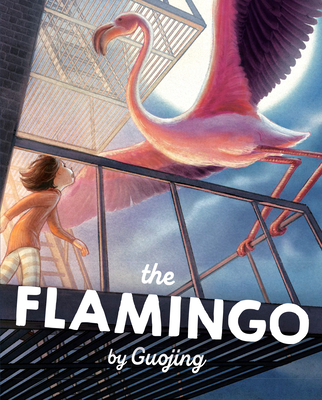
The Flamingo by Guojing Support your local independent bookstore: buy it there! Content: there are very few words, so this works as a beginning chapter book, a picture book, or a graphic novel. It’s in the Middle Grade graphic novel section of the bookstore, but it can definitely go younger.
The simple story of a city girl who goes to visit her grandmother in an unnamed (but presumably Asian) country. They spend days on the beach, and at night, her grandmother telles==s her the story of how she came to have a flamingo wing. It’s a simple story, one that is meant to delight as well as entertain, and when the girl returns home to the city, she draws the flamingo adventure for her grandmother.
There is not much to this book, but man, it was absolutely gorgeous. The art is so so evocative, you can’t help but fall in love with the characters from the girl and her grandmother to the flamingo. It’s absolutely stunning.
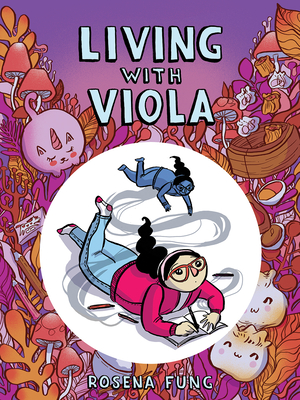
Living with Viola by Rosena Fung Support your local independent bookstore: buy it there! Content: It talks pretty frankly about anxiety, and implies suicidal thoughts. It’s in the Middle Grade Graphic Novel section of the bookstore.
Olivia is a sixth grader, and her parents have transferred her to a new school, one with a better reputation so she can get a better education, which means starting completely over. That’s shared enough, but Livvy has pretty bad anxiety, which she personifies as “Viola” Sometimes Livvy can keep Viola at bay, but often Viola becomes so big that it’s overwhelming. Livvy does make new friends, but there are friendship struggles and struggles with her immigrant parents as well as with her extended family. Overarching it all is Viola, and her insistence that Livvy is just no good.
This is an excellent graphic novel for a couple of reasons. First, it’s great that it shows anxiety as something “other” – it was a little weird to get used to at first, but eventually, I did. I think it’s beneficial because kids will realize that anxiety is not “them” but something outside of their control. At least by themselves. At the end of the book, Livvy goes to see a therapist who gives her some tools to help keep Viola at bay better. The book doesn’t get into medication, but it does provide hope that anxiety isn’t something to be ashamed or afraid of. I liked that Livvy felt like a sixth grader, aught between friends who want to “grow up” and Livvy wanting to carry around her cute plush unicorn. That pretty well sums up sixth grade. I also enjoyed Fug’s exploration of Livvy’s Cantonese heritage, from the microaggressions of kids at school (why does your food smell, why don’t you speak Chinese) to Fung choosing to make every time a character speaks in Cantonese in red. It’s a clever, good, well-drawn graphic novel and I enjoyed it quite a lot.
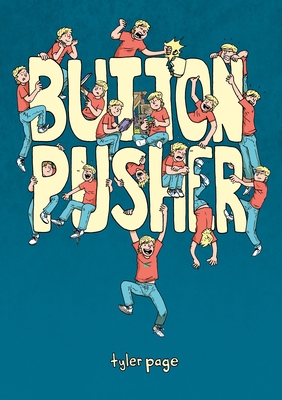
Button Pusher by Tyler Page Support your local independent bookstore: buy it there! Content: There is some domestic violence, as Tyler’s dad has a temper. There are also allusions to swearing (but they are @#!!). It’s in the Middle Grade Graphic Novel section of the bookstore.
In this graphic memoir (sort of), Page relates his history of having ADHD during his childhood, and his path to his parents not only getting him diagnosed but also the ups and downs of medication. There is also family drama: Tyler’s dad has an explosive temper and is pretty misogynistic towards Tyler’s mom (and his boys, too, really). Page doesn’t sugarcoat the contention at home, and even recalls the times when his mother had had enough and wanted to leave (but chickened out). There is a lot of “it gets better” in this book as well, as Page is looking back on his childhood.
It’s well-drawn, and I liked that Page spent time trying to explain what ADHD is, and how the brain of a person with ADHD works (and doesn’t work). It may be a bit advanced for kids, but I found it fascinating. And I think the purpose of the book is to not only try and illustrate what a kid with ADHD looks like (though, as Page notes near the end, it’s different for everyone), and to create awareness. I don’t think the problems at home had much to do with the ADHD (except maybe Page’s dad was undiagnosed? I felt like he was bipolar, but that’s me being an armchair doctor), but Page was trying to be as honest as possible about his childhood. A really good graphic novel, though maybe not as much for kids as it is for their caregivers.
by Michelle Zauner Support your local independent bookstore: buy it there! Or listen at Libro.fm Content: There are some swear words, including a few F-bombs It’s in the biography section of the bookstore.
This is basically Zauner’s homage to her Korean mother, who passed away from cancer in 2014. She goes through her childhood, how her relationship with her mother developed and struggled, and through her mother’s sickness and her death to the year or so afterward. The thing that ties everything together is Korean food. Her mother’s home cooking, the tastes and smells that accompanied Zauner all through her childhood trips to Seoul to see her mother’s family, and through to watching Mangchi on YouTube after her mother’s death, in order to learn the food traditions that she didn’t want to be lost.
It wasn’t a gad book, and Zauner wasn’t a bad narrator. But, I didn’t quite love it either. At times, Zauner felt like a whiny brat, and I just wanted to shake her. I suppose she was just being honest, and so I can admire her for that. The things I liked best were near the end when she starts learning how to cook Korean food. The chapter where she learns to make kimchee was fascinating. And I understood her pain (sort of? I haven’t lost anyone I was incredibly close to, really) or at the least, I understood that this was how she was processing her pain.
I can respect this book, at least, even if I didn’t love it.
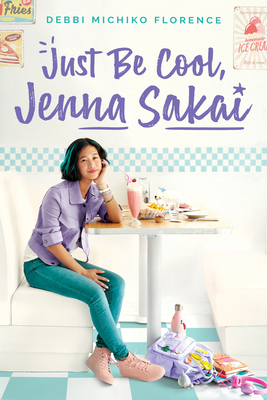
by Debbi Michiko Florence First sentence: “Heartbreak is for suckers.” Support your local independent boosktore: buy it there! Content: There is some talk of first romance and divorce. It’s in the middle grade section (grades 3-5) of the bookstore. But it’d be good for 6-7th grade as well.
Jenna Sakai has sworn off relationships. First, her parents got a messy diverse and her dad “abandoned” her by moving to Texas from California. Then her boyfriend, Elliot, who she thought she was super compatible with dumped her right before Christmas. After a very lonely winter break at her dad’s house, she’s back in California, at her school, determined to make a fresh start. No more relationships. No more Elliot (except he keeps popping up in places where she thought were Elliot-free). Just focus on the things she’s good at: journalism. Then she discovers a cute diner, and takes to going there as an escape from all the other stress in her life. It’s a great place, until she discovers that Rin Watanabe also uses the diner as a refuge, specifically what she’s come to think about as “her booth”.
Thus begins a tumultuous friendship between Jenna and Rin, as Jenna writes an article digging into a donation his family made to their school. It’s a bit more complicated than that, but that gets the gist of things.
I thought it was cute. I was a little “meh” at the beginning — boyfriends/girlfriends in 7th grade kind of turns me off, but Florence kept it pretty age-appropriate with just hand holding. But it was a really good story about a girl learning to trust other people again, after a couple of very big heartbreaks, first with her parents’ divorce, and then with the breakup with someone she thought was super compatible with her. I liked that it showed that middle school romances aren’t always great (thought there was an example of a good, healthy relationship as well). I also think that Florence does a good job capturing the complicated emotions and friendships that middle school has while not making everyone super annoying (which is easy to do). My only complaint is that I didn’t know this was a companion book to another one, and I kind of felt like I didn’t quite have the whole picture sometimes. But that was more my problem than the wriring.
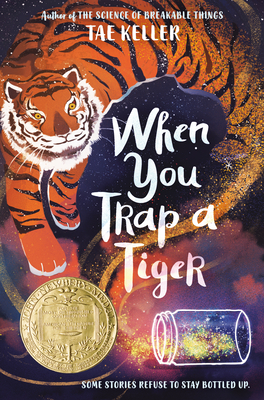
by Tae Keller First sentence: “I can turn invisible.” Support your local independent bookstore: buy it there! Content: There are a few heavy subjects, like a loss of a parent. It would be in the Middle Grade (grades 3-5) section of the bookstore if it hadn’t won the Newbery. As such, it’s in the Newbery section of the bookstore.
Lily has always been the quiet one in her family. It’s her older sister, Sam, that is loud and opinionated and always in trouble with their mom. But when their halmoni (their grandma) gets sick and the sisters and their mom move in with her to help, things change. Lily is convinced — by a magical tiger — that her halmoni stole something from the tigers god and if Lily just gave it back, her halmoni would get better.
This is such a lovely little book. A testament to the power of stories and passing those stories on. And not just book stories, but the stories of family, of Home (whether it be spiritual or ancestral). There are no stories that shouldn’t be told; even the sad ones have merit. It’s also a sweet book about family connection, surviving loss, and being strong and brave and what that means. Plus, it’s incredibly well-written and feels just perfect; not a single word or scene that’s out of place.
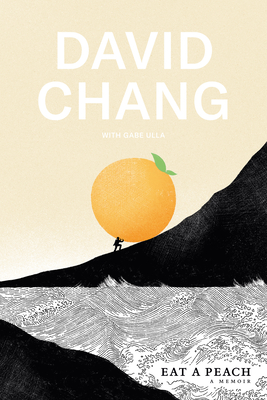
by David Chang and Gabe Ulla Read by the author Support your local independent bookstore: buy it there! Or listen at Libro.fm Content: There is talk of suicide and mental illness. There is also lots of swearing, including many f-bombs. It’s in the Cooking/Food Reference section of the bookstore, but would also work in Creative Non-Fiction or Biography.
Chang starts his memoir stating that he’s too young to write a memoir, that this all feels too pretentious. And yes, in a way he’s right: he’s only 43, and his life — well his work life — has been a mix of luck and obsessively hard work. That said, since the only thin I know about him is Ugly Delicious from Netflix (which I really enjoyed), I was fascinated to learn all about Momofuku and the path that Chang took to where he is today.
It’s not an easy path. Chang had an okay suburban childhood, but not an especially happy one. And while he went to college, it wasn’t an especially good experience. It was when we worked in Japan (for a year? I think?) that he finally got an idea of what he wanted to do: he wanted to bring excellent food to the masses, and recreate the experience of Japanese noodle bars. And thus, Momofuku was born.
I really appreciate what Chang is doing: pushing the boundaries of food, mixing cultures and inspirations to come up with something wholly new. I really would love to eat at one of the restaurants, just to see what he and his team have created. I also appreciated that he was super candid about his mental health. He was diagnosed with bi-polar disorder, and was frank about the ups and downs and the medications. He’s his own harshest critic and is adamant that failure is an important part of growth. If one doesn’t fall down, then one can’t grow. And I get that.
And as a narrator, he wasn’t bad. He kept me pulled up to the table (metaphorically) to listen to his stories. I just wish I could have had a plate or two of his excellent food as I did.
by Jessica Kim First sentence: “I should have known better than to think anyone would listen to me at the Korean beauty salon.” Support your local independent bookstore: buy it there! Review copy provided by the publisher Content: There are some awkward moments and second-hand embarrassment. It’s in the middle grade (grades 3-5) section of the bookstore.
Yumi Chung is the youngest of two daughters of Korean immigrants. Her parents run a Korean barbecue restaurant in LA, and they expect Yumi — like her older sister, Yuri — to be excellent. The problem is that Yumi wants to be a stand-up comedian, which is something her parents neither understand or respect. Instead, they send her to hagwon — a Korean summer tutoring program — that will help her get a scholarship to the best private school in LA. Yumi is miserable until she discovers a new comedy club is running a summer camp for kids, and the person teaching it is Yumi’s favorite YouTube comedian! She ends up going — pretending to be Kay Nakamura (which gives some interesting, if subtle, insight into how white people lump all East Asians together) — until things all fall apart, including her parent’s restaurant being on the verge of closing. Can Yumi fix the mess she’s made for herself?
Oh, this was so very delightful. It addressed so many things — from not living up to your older sibling’s achievements, to finding your own space int the world, to owning your mistakes — without ever being heavy-handed. Yumi was a totally believable character with completely understandable parents. The conflict came from not just the immigrant to first-generation divide, but their honest desires that their kids wouldn’t have to slave away in a restaurant to make their living. I liked how Kim never made the parents out to be villains, and how Yumi (and Yuri) was able to figure out how to balance her parents’ wishes with her desire to follow her own path.
by Robin Ha Support your local independent bookstore: buy it there! Content: There is some mild swearing and a lot of bullying. It’s in the graphic novel section of the bookstore.
When Robin Ha was 14, in 1995, her mother married a Korean man in America and uprooted their life in Seoul, moving them to Alabama. Robin was shocked and upset (partially because her mother told them they were going on vacation, and then sprung it on her when they were already there) because she liked her life in Korea. She had friends, she liked her neighborhood, she liked her school. She fit.
And suddenly, she doesn’t. She doesn’t know much English and the kids in Alabama are cruel to an outsider. In this graphic memoir, Robin tells the story of the year she learned to adapt and learn and try to fit in. It’s an interesting immigrant story, but it’s also the story of how her mother didn’t fit into the conservative, patriarchal Korean society (she was a single mother who had never been married, and that’s looked down upon) and wanted not only a better life for her daughter, but a freer one for herself. Ha reflects on the dual nature of being Korean and living in America, and eventually not quite fitting in either place.
A customer at the bookstore pointed me in the direction of this one. She’s on a bit of a Korea kick, and she said this was one that helped her understand what life is like in Korea. I don’t know if I’d go that far, but it did delve into Korean cultural mores, and it really portrayed how Ha often felt like she was in over her head. I liked Ha’s artistic style as well. Everything was written in English, but she color coded the text bubbles: blue for Korean, black for English. She used color and framing to help portray young Robin’s feelings of helplessness and anger, and in sepia-toned flashbacks, gave readers her mother’s story and Robin’s history in Seoul.
It’s an excellent graphic memoir, and definitely one worth reading.







 The Book Nut