Audiobook: Wandering in Strange Lands

by Morgan Jerkins
Read by the author
Support your local independent bookstore: buy it there!
Or listen at Libro.fm
Release date: August 4, 2020
Content: There is some swearing including a few f-bombs and the use of the n-word. It will be in the biography section of the bookstore.

Morgan Jerkins is a writer, but she’s also the daughter of a New Jersey woman and a North Carolina man. The central question she grapples with in this book is this: how has moving away from her families’ roots in the South (after slavery, but mostly during the Great Migration) affected their connection to the land, to their communities, and to each other? She explores this question by visiting South Carolina and talking with and trying to understand the histories of the Gullah people there. She heads to Louisiana to talk to Creole, and to Oklahoma to explore connections between African American freed slaves and the Cherokee nation. And she finally heads to Los Angeles. Through all this, she unearths her family history and stories, as much as she can, and that it was White Supremacy and Institutional Racism that was the driving force for much of what her ancestors experienced.

A friend once told me that you can talk statistics and data at people, but it’s the stories that really matter. And this book brings that home. Yes, I knew there was (and is) Institutional Racism and white people were (and are) discriminatory and prejudiced against black people to the point that they want to push them out. But, hearing Jerkins’ stories gets that point home in a way data just doesn’t do. It also reminded me of the importance of knowing where you’re from and knowing your family’s stories. (I have been very bad about passing this on to my children.)

It’s an interesting story, and Jerkins is an interesting narrator to guide the story along its path. I’m glad I read it.

State of the TBR Pile: July 2020

So I looked up last month: I read four (only four?) and added two this month. Not bad. Also: I’m not reading because it’s summer (I don’t know why this is) and because I’m up to my eyeballs in reading for this class I’m taking. Ah, well. I enjoy looking at the pile though.

Black is the Body by Emily Bernard
Dear Universe by Florence Gonsalves
Muse Squad by Chantel Acevedo
The Blossom and the Firefly by Sherri L. Smith
Juliet Takes a Breath by Gabby Rivera
Fire and Hemlock by Diana Wynne Jones
Sex and Vanity by Kevin Quan
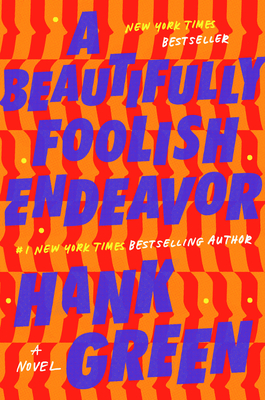
A Beautifully Foolish Endeavor by Hank Green

What’s on your TBR pile

10 Things I Hate About Pinky

by Sandhya Menon
First sentence: “The dead body was an especially nice touch.”
Support your local independent bookstore: buy it there!
Review copy provided by the publisher.
Release date: July 21, 2020
Content: There’s some kissing and mild swearing. It will be in the YA section of the bookstore.

Pinky Kumar is the different one in her family. With her colored hair, eyebrow ring, impulsive nature, series of not-great boyfriends, and devotion to causes (and creating trouble), her parents — her mother, especially — are at their wits end. So, after being accused (by her mother) of burning a barn down while on summer vacation, Pinky blurts out that she has a boyfriend her parents would approve of. She just needs to find that boyfriend, stat.

Samir Jha has everything planned out: he’s going to DC for the summer to do a high-stakes internship as part of his goal to getting into Harvard. However, when that suddenly falls through, he’s pretty aimless. Then he gets a text from Pinky — who he knows, but not well — out of the blue: come pretend to be her boyfriend for the summer, and she will make sure he gets an internship with her mother, a high profile lawyer. Against his better judgement, Samir accepts. It should be easy, except for one catch: he can’t actually stand Pinky’s impulsiveness. The feeling’s mutual: Pinky thinks Samir is boring. How are they going to survive the summer?

Oh this was cute. Sure, it’s a formulaic rom-com, but that’s kind of what one wants out of a romance story. And it has a couple of additional layers: Pinky’s conflicted relationship with her mom (due to a lack of communication on both sides) and Pinky getting involved in a local dispute with a developer trying to develop a habitat at their summer home. But those just added to the overall cuteness and just happy-making of the book. Menon really does have a gift for making light, fun, sweet romances and I am more than happy to read every one of them.

The Fire Next Time

by James Baldwin
First sentence: “Dear James: I have begun this letter five times and torn it up five times.”
Support your local independent bookstore: buy it there!
Content: There is some mild swearing and use of the n-word. It’s in the sociology section of the bookstore.

This is two essays — or one essay and a letter to Baldwin’s nephew — on the state of being Black in America. In 1962. Short version: It wasn’t easy. And it’s a sign of my privilege that I am just now realizing two things: 1) that life for a Black person in the early 1960s was not an easy or enjoyable one and 2) that it’s not changed very much for very many people in nearly 60 years. That’s the thing that stood out to me most about this book: it’s still relevant. And it shouldn’t be. This book should never have had to be written. This book shouldn’t have to be still relevant. And yet, it was and is. And it’s a sign that I am a privileged person that I am just NOW realizing this.

I think I enjoyed this more than If Beale Street Could Talk, because I think Baldwin’s style is more suited to essays and rumination than fiction. He has a very thoughtful, lyrical prose style which I thought suited both the impassioned letter to his nephew (which brought to mind Between the World and Me) and his essay about his youth and experiences with the Nation of Islam.

It’s definitely an excellent book.

Dragondrums

by Anne McCaffrey
First sentence: “The rumble-thud-boom of the big drums answering a message from the east roused Piemur.”
Support your local independent bookstore: buy it there!
Others in the series: Dragonsong, Dragonsinger
Content: There is some bullying and one very off-screen sex scene. It would be in the YA section of the bookstore if we had it.

Piemur — who was a minor character in Menolly’s story of the first two books — takes front and center in this one. A few turns have passed since we last heard from our friends in the Harper Hall, and Piemur, known for his clear boy soprano has had the worst thing happen: he’s started to go through puberty and his voice is changing. That means, he’s no longer the center of all the choruses, and Master Robinton needs to find something to do with him. That something is learning the message drums. Except precocious Piemur does it too well and he’s bullied. One thing leads to another and Piemur finds himself stranded on Southern lands, without a hold, but with a stolen fire lizard egg. Will he ever find a place again?

In some ways, I felt this was just “Dragonsong: part 2”. I guess McCaffrey felt like Piemer needed an arc ‘like Menolly’s: he was bullied, and pushed out of a place he thought he loved, he went holdless, he found joy in a new place. There are some Pern politics in the backdrop that give it a bit more depth than Dragonsong — the tension between the new dragon riders and the Oldtimers in the south, for instance. But, it was mostly just a reprise. Except that Piemur is a delightful character, and Menolly’s in the background giving him support. So: it’s really a better Dragonsong than Dragonsong is. In fact, this might be my favorite of the trilogy, as much as I want to wholly love Menolly’s books.

It holds up as a triolgy, though.

You Brought Me the Ocean

by Alex Sanchez, illustrated by Julie Maroh
Support your local independent bookstore: buy the book there!
Content: There is some kissing and some bullying. It’s in the graphic novel section of the bookstore.

Jake has always had a dream to study the ocean. Except, he lives in New Mexico with his mom — his dad disappeared when Jake as born — and no way of getting out.

It doesn’t help that he feels different: not just because he’s not sure if he’s gay (spoiler: he is), but because he’s always had these weird “birthmarks” on his body. It doesn’t help that his best friend, Maria, wants to take their relationship to the next level, either.

It’s less a book about superheroes, though it is set in the DC universe, and more about one kid coming to own his own truth. He comes out, he finds out who his dad is and what his marks mean. All of this, while falling into a relationship with Kenny.

It’s nice that the adults are fully formed; you understand Jake’s mom’s paranoia, and Maria’s parents are incredibly supportive. Kenny’s disabled father had the biggest arc: he starts out seeming unacceptng and homophobic but turns out to be supportive of his son.

It’s an incomplete story: I thought Jake would have a chance to face his father or at least move forward, but no: this book is about Jake fully becoming who we was meant to be.

And that’s a good thing.

Monthly Round-Up: June 2020

So my reading kind of tanked there ar the end of the month. I’m not entirely sure why. Part of it is being busy, but part of it is that I just haven’t felt like reading. I watched the most recent season of Queer Eye and am working my way through the seasons of Great British Bake Off that I never watched. I’m sure I’ll get back to reading. Probably.

My favorite this month:

It really was a delight watching Taika Waititi and friends read this.

As for the rest:

YA:

Aurora Burning
I’m Not Dying with You Tonight

Adult Fiction

Beach Read
The Chicken Sisters
If Beale Street Could Talk

Graphic Novels:

Dragon Hoops

Non-Fiction:

Over the Top (audio)
Me and White Supremacy (audio)
The End of Policing (audio)

What was your favorite this month?

Audio book: The End of Policing

by Alex S. Vitale
Read by Michael Butler Murray
Support your local independent bookstore: buy it there!
Or listen at Libro.fm
Content: There is some description, none graphic, of abuses by police officers over the history of policing in the United States. It’s in the sociology section of the bookstore.

When all the protests started happening around the death of George Floyd, one of the things I heard and saw was a call to defund the police. I had no idea what that meant, and so (as I do), I found a book — the author was in a story on NPR — to explain it to me.

Vitale, a sociology professor at Brooklyn College, collects data in various areas, from homelessness to the war on drugs to protest policing, about how effective the police force and criminal justice system is in the United States. The short answer: the police are completely and utterly ineffective in dealing with problems in communities. They are there to protect those who have property (usually white people) from those who don’t (usually poor, non-white people). And the methods they use are, to be frank, racist and ineffective.

The data in the book is a bit old; the most recent is from 2014-2015, but I don’t think much has gotten better. Vitale asserts that without real reform — and not just more “diversity training” — to communities and the way they tackle things like poverty, joblessness, mental illness, and immigration then searching for “criminals” and arresting Black and brown youth are not going to solve the problems. In short: defund the police and send the money into the social programs that we have been starving for 40 years.

The thing is: this isn’t a Republican/Democrat thing. Vitale reminds readers that Clinton and Obama were as bad promoting policing as the answer to being “tough on crime” as Reagan and the Bushes were. It’s a policy thing. Which reminds me of something else I’ve seen: the system isn’t broken. This IS the system. The way policing has developed in this country is inevitably skewed against the poor and the non-white. And to change it will take an overhaul of not just policing, but the whole system. It’s not going to be fixed with short-term, “look at us we’re doing ‘reforms'” bills, but a constant holding politicians and elected leaders accountable for the money that is going into the policing system.

And I think Vitale has convinced me that we really do need to #defundthepolice.

Dragon Hoops

by Gene Luen Yang
Support your local independent bookstore: buy it there!
Content: There are swear words, but there are all bleeped out. It’s a bit thick, which might be intimidating for younger readers. It’s in the graphic novel section of the bookstore.

I’ve read a lot of what Yang has written, but even so, I didn’t expect this to be a graphic novelization of his last year teaching at Bishop O’Dowd in Oakland, California, and the year the high school men’s basketball team had.

Yang himself admits it up front: he never thought he’d be writing a graphic novel about basketball. He’s more of a superhero guy. And I get that. But, Yang does a fantastic job of letting his readers into the world of an elite high school basketball team. He introduces us to several of the main players, getting to know them and the dynamics they have with the coaches. As a parallel story, Yang explores the transition from teaching full time and writing part time to writing full time. It was an interesting story, one in which I found myself invested in the outcome: would the Bishop O’Dowd Dragons win the State Championship?

I found myself fascinating by the book. Not only because Yang does a superb job humanizing the people in the game, he does a superb job portraying the games themselves. I think he really does capture the athleticism and the intensity in each basketball game. All of which made this graphic novel very enjoyable.

I’m Not Dying with You Tonight

by Kimberly Jones and Gilly Segal
First sentence: “‘Waiting for Black is on your agenda, not mine,’ LaShunda barks as we leave the building.”
Support your local independent bookstore: buy it there!
Review copy provided by the publisher.
Content: There is violence, some swearing and the use of the n-word. It’s in the Teen (grades 9+) section of the bookstore, but I would give it to a 7th/8th grader as well.

All Lena wants to do is hookup with her boyfriend Black after halftime at the football game. All Campbell wants to do is sell concessions and get the heck out of there. But when a fight breaks out at the game, Lena and Campbell are thrown together. And when the fight escalates and turns into a protest which escalates and turns into riots, Lena and Campbell are forced to rely on each other to survive the night.

The book this most reminded me of is All American Boys: two kids — one white and one black — thrown together have to figure out how to relate to each other. So, yeah, this has been done before. That said, one of the things I thought Johnson and Segal did well was show how introducing the police actually made things worse. The fight started at the school, police were called, and it escalated. A protest was happening, police came in full riot gear and the situation escalated. Additionally, I thought that Lena and Campbell’s personal unpacking of biases (more on Campbell’s part, which is a good thing) was a valuable thing.

That said, there are books that do this better. Like All American Boys. Or The Hate U Give. Or Riot Baby.

It’s a valuable book, one that I do hope people (probably mostly white people, who I think this book was aimed at) will read. But, it’s not the best one out there.