Audiobook: The Black Cauldron

by Lloyd Alexander
read by James Langton
ages: 7+
Support your local independent bookstore: buy it there!
Others in the series: The Book of Three

I picked this up because I thought the kids would want to listen to it (and they didn’t have Book of Three) on our recent vacation. But, when we put it in, there was much complaining and whining. And a couple of the kids, after listening to the first disc, said they were lost and confused. I guess after Harry Potter, even the simplest of books are boring. Either that, or The Black Cauldron starts out  too slow, and there are too many characters to keep straight. Which does make sense.

The plot is simply this: Taran is still the Assistant Pig Keeper at Caer Dallben, even though he’s fresh from his journey with Gwydion. He’s basically content (though he still longs to do things “men” do), but that changes when Gwydion shows up with a bunch of other lords and military men to hold a council. Their agenda: going after Arawn’s black cauldron and destroy it so that he doesn’t make any more of his undead cauldron born soldiers.

Sounds easy enough: go into Annuvin, get the cauldron, and get out. Except it isn’t that easy: someone has already come in and gotten the cauldron, and now it’s missing. So, the band — including Taran and his faithful friends, Fflewder Fflam (the reader actually said it “Flewdur Flam”! And here I was thinking it was some weird Welsh pronunciation), Princess Eilonwy, and Gurgi — splits up, and sets out looking for the cauldron.

Taran and his bunch get saddled with the most annoying character in the book: Ellidyr. He’s the worst kind of character: and annoying, proud, brat who thinks he’s too good for everything. I wanted to smack him whenever he came around.

Which brings me to the narration. I actually liked the was Langton read the book — he gave Eilonwy a slight Scottish accent, which suited her nicely (and she wasn’t terribly whiny, either), and he made other characters suitably menacing.  And while I thought his Gurgi was off at the beginning, the way Langton portrayed him grew on me over the course of the book.

One more thing: as I listened to the story, it occurred to me just how much Alexander drew on Tolkein’s world to create this little series of books. It’s not just the similarities in names or the magic, but the whole feel of the book. The quest that Taran has to go on. The fact that he’s mostly reactive rather than proactive (much like Frodo). The Big Evil Bad Guy lurking in the background with the Lesser Evil Bad Guy that they have to deal with immediately. It’s not a bad thing that this book felt a lot like Lord of the Rings. It’s just an observation.

I remember these books being some of my favorites as a kid. And while I’m not sure I ever found them brilliant, this one, at least, is still a good, entertaining adventure tale.

Audiobook: Harry Potter and the Prisoner of Azkaban

by J. K. Rowling
read by Jim Dale
ages: 9+ (Listening 6+)
Support your local independent bookstore: buy it there!

I could have sworn I had a review of Prisoner of Azkaban on here, but I only found a smallish blurb about the whole series here. But, I guess, I read this before the blog, and I haven’t gotten around to a reread until now.

The reason for picking this particular Harry Potter? Well, we went to the Wizarding World of Harry Potter for our family vacation a couple of weeks ago, and figured since we were going there, we needed to read a Harry Potter book. And since this is the next one in the series for K to read (her dad’s read her one and two), that’s where we started.

My thoughts, since everyone knows the plot already:

Out of all the books, this one is one of the tightest, I think. As they go on, they become more meandering and Rowling tries to pack so much in.

That said, at the end, when Sirius and Lupin confront Peter Pettigrew, there is an awful lot of monologuing. I know that Rowling needs to give us a whole bunch of information that existed before the story even started, but still. It slows the story down.

I really, really dislike the way Jim Dale reads Hermione. She’s a capable, smart girl, and every time she opens her mouth, Dale makes her sound like a whiny brat.

I adore Lupin as a character. That is all.

Hubby and I got into a discussion about adult figures in middle grade books. It was started because we realized that Dumbledore is a Really Bad Headmaster. He’s terrible at his job. Don’t get me wrong: I adore the character, but think about it: he’s neglectful, he’s bad at enforcing rules, and he plays favorites like no other. But then, if  Dumbledore were good at his job, there wouldn’t have been a story.

I think the lack of Voldemort in the story actually helps the book. It’s not as Dark and Foreboding as some of the others. 

It’s still one of my favorites of the Harry Potter series.

And I’d really like — for comparison’s sake — to hear the Stephen Fry audio versions. I wonder if he can do Hermione any better.

Audiobook: Fragile Things

by Neil Gaiman
read by the author
ages: adult
Support your local independent bookstore: buy it there!

I decided, upon finishing listening to this, that I wouldn’t mind if Neil Gaiman came and narrated my life. He has such a wonderful reading voice, spellbinding on its own, that he could be reading my grocery list, and I would listen, captivated.

But, thankfully, I didn’t have to listen to my grocery list, which would have gotten quite tedious after a while. Rather, I got a collection of some fascinating, some entertaining, some disturbing Gaiman stories. I didn’t love them all, but the ones I liked, I really liked. I think, perhaps, that I like Gaiman in short doses — I absolutely love his stuff for kids — rather than his long novels. So, a collection of stories and poems was just about my speed.

Some of my favorites? “A Study in Emerald,” his take on a Sherlock Holmes story which is weird and wild, and has an absolutely brilliant twist at the end. Or “October in the Chair,” a delightful story personalizing the months of the year and their gathering where they each take turns telling one story, and the story that October (it’s his year) tells. Or “How to Talk to Girls at Parties,” which is a mundane awkward boy party until you realize that they crashed a party of alien girls. Or “Sunbird” which is about an epicurean club who have basically tried eating everything there is to eat. Except for the sunbird. Or, the poem “Instructions”, which is one of my favorite picture books.

Sure, there were some missteps (I had issues with ” The Problem of Susan” and another story, where the sex just felt gratuitous), but for the most part, I thoroughly enjoyed listening to this one. Then again, it may have been because I’d listen to Gaiman read anything.

State of the TBR Pile 15: April 2013

And currently on the nightstand:

One for the Money, by Janet Evanovich (lent to me by a member of my in-person book group)
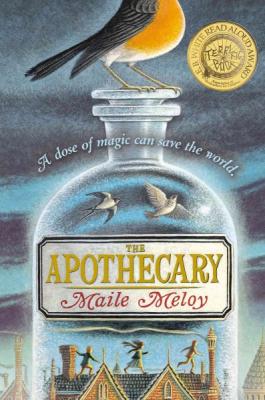
Apothecary, by Maile Meloy (for my work 3-5th Grade book club June selection)
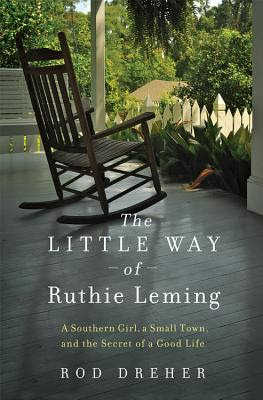
The Little Way of Ruthie Lemming, by Rod Dreher (my husband knows him, read this, and says I need to read it so I  know why he wants a cow)
Orleans, by Sherri L. Smith (because it sounds interesting, though C was freaked out by it)
A Tale for the Time Being , by Ruth Ozeki (because it sounds interesting)
The Different Girl, by Gordon Dahlquist (Ms. Yingling piqued my interest in this one)
Where’d You Go Bernadette, by Maria Semple
Last Days of Summer, by Steve Kluger (Because I adore My Most Excellent Year)
Eleanor & Park, by Rainbow Rowell
The Blind Side, by Michael Lewis (this was initially for the library winter challenge, but I didn’t get to it in time. I’m still interested in it, though.)
Here Where the Sunbeams are Green, by Helen Phillips (I liked the cover…)
The Fire Horse Girl, by Kay Honeyman (Charlotte blogged about it, and I liked the idea)
Aristotle and Dante Discover the Secrets of the Universe, by Benjamin Alire Saenz (it’s been on my radar since the ALA awards, I’m just now getting around to reading it)

And two more, unpictured:
Unlucky Charms, by Adam Rex
Hold Fast, by Blue Balliet

So, what’s on your pile this month?

Timmy Failure: Mistakes Were Made

by Stephan Pastis
ages: 9+
First sentence: “It’s harder to drive a polar bear into somebody’s living room than you’d think.”
Support your local independent bookstore: buy it there!
Review copy provided by the publisher.

Timmy Failure is the founder, president, and CEO of Total Failure, Inc. Detective Agency (“We won’t fail, despite what the names says”), the only other employee being his pet polar bear, Total. (Hence the name. Total insisted.) They haven’t had many cases, but as long as his friend Rollo or The Evil One (her name is Corrina Corrina) don’t interfere (they’re always interfering), he just knows he’ll become Famous. He’s got the brains for it.

Except… well… Let’s just say that The Diary of a Wimpy Kid made dorks loveable. And in some ways, this buys into the whole loveable dork thing. Timmy is full of bravado, but it’s not loveable dork as much as Completely Clueless and Delusional.

See — and I’m not sure kids will get this while reading it —  but there’s an undertone (I’m not quite sure it’s intentional or not) of pure Pathetic here. Timmy’s younger than Greg is (9 or so), and his litany of things going wrong is long. He’s failing school, because he doesn’t want to work. He has to move into an apartment because his mother (his father isn’t explained: Divorce? Death?) can’t hold onto the house. His mother is dating someone he really doesn’t like. He’s no good at catching things. He obsesses over Corrina Corrina. He’s friends with a polar bear, but you’re never quite sure if it’s real or if it’s imaginary. I felt bad for the kid.

 But, I do have to admit that I laughed sometimes. Sometimes, Timmy was funny in his pathetic delusions. And Pastis does capture those delusions quite well with his text and art. In fact, my favorite thing about this was the drawings. If you’re at all familiar with Pearls Before Swine, then you’ll know what to expect. More often than not, the illustrations are what made me laugh.

I’m not quite sure how kids are going to react to this, or if they’re going to eat this up the way they do Diary of a Wimpy Kid.  I was kind of lukewarm about it all, but maybe that’s because I’m an adult. I’m curious to read the next volume, though, just to see where Pastis takes Timmy’s story.

Dark Triumph

by Robin LaFevers
ages: 14+
First sentence: “I did not arrive at the convent of Saint Mortain some green stripling.”
Support your local independent bookstore: buy it there!
Review copy provided by my place of employment.
Others in the series: Grave Mercy

For a year, I have been trying to handsell Grave Mercy to customers here in Wichita by telling them it’s a book about very awesome, kick-butt Nuns of Death. (Because, seriously: why wouldn’t  you want to read a book about a kick-butt nun of death??) But I have not had a single success: no one has bought the book. (So much so that we haven’t gotten Dark Triumph in.) After finishing this one, though, I think I need to change my tactic: while the main characters are assassins, these are rich, layered, fascinating works of Historical Fiction, with adventure, passion, and politics (not just country politics, but those between men and women), at every turn. For the adult readers, who don’t normally go for the YA stuff: if you liked Discovery of Witches or Outlander or any Phillippa Gregory book, you will love this one.

The overarching story of Duchess Anne’s attempt to hold on to Brittany in the late 15th century picks up where it left off in Grave Mercy (not necessary to read, but helpful): she’s holed up in Rennes trying to figure out who’s trustworthy, while her main adversary (and vile human being) d’Albret is in Nantes, plotting against her (he wants the kingdom any way possible, and she turned him down for marriage). The nominal story, however, is not Duchess Anne’s but rather, Sybella’s, one of those assassin nuns. She’s been sent to infiltrate d’Albret’s household, get information, and possibly kill d’Albret, if she can get close enough. D’Albret’s house is not a happy place for any woman (all five of his previous wives from less-than-natural causes), but Sybella has one more layer to this madness: she is d’Albret’s daughter.

I’ll just wrap this up by saying this: it’s dark — there is evil in Sybella’s world, and that doesn’t make for an easy read — but it’s not so dark that it’s unreadable. I loved the romance; it came on slowly, and for once the romantic interest wasn’t Tall, Dark, and Handsome. I loved how LaFevers played with the politics of men and women, and how Sybella used everything she had to work with in her favor. She is smart, yet she doubts herself and her mission, making her a wonderfully complex character.

I can’t wait to read the next one.

Rump

The True Story of Rumpelstiltskin
by Liesl Shurtliff
ages: 9+
First sentence: “My mother named me after a cow’s rear end.”
Support your local independent bookstore: buy it there!
Review copy provided by my place of employment.

Rump lives in the Village on the Mountain in the Kingdom, a place where there are two surefire things: names have power (which is why they don’t name living things), and the king loves his gold. The second is vital to the Village’s survival: it’s their duty to find gold in the Mountain for the king. Except their supply is dwindling. The first is Rump’s curse, or so he feels: he’s only got half a name. He doesn’t really believe his mother — who died shortly after giving birth — only meant to name him Rump. But as to what the rest of the name is, he has no clue.

Then: his grandmother dies, and Rump’s slowly starving because he’s too sad to work. That, and the miller — who’s in charge of the rations — is becoming stingier. Then, one night, he finds his mother’s old spinning wheel, and Rump discovers something: he can spin straw into gold.

If you’re familiar with the fairy tale at all, you pretty much know what’s going to happen next. Except, Shurtliff does some fun, fresh things with the tale while staying true to the basic story arc. The most unique, I think, is the idea of a “rumple” — magic that catches a person in it’s tethers — and a “stiltskin” — powerful magic that can break the rumple. I liked how she played with the name of the fairy tale character, giving it meaning, which also fit into the world she had built.

Shurtliff made this into a journey story as well: in order for Rump to figure out his own True Name, he has to leave the Village and travel to Yonder and Beyond in order to figure things out. On his way he meets several other characters that were clever and endearing, most notably: the trolls, who find magic items and hide them from humans; and his three aunts, who weave and spin marvelous things.

It’s a tight, clever little book, one that captures what’s best about middle grade fantasy (indeed: I picked this one up because both C and A raved about it, and I thought it sounded delightful), and what we love about fairy tales.

Unchangeable Spots of Leopards

by Kristopher Jansma
ages: adult
First sentence: “I’ve lost every book I’ve ever written.”
Support your local independent bookstore: buy it there!

I’ve been wondering about  how to blog about this ever since I started it, really.  See: it’s not a book where you can tidily sum up the plot, giving you a character arc and a climax. It’s not really a book where the author divulges secrets or sucks the reader in with thrills.

No, it’s more a book of ideas: of lies and truth and the nature of stories.

The things you need to know before going in: 1) the narrator remains nameless, and you never learn his true name. And 2) he’s incredibly unreliable. It’s not like in Code Name Verity, where you learn one side of the story, and then have the second half throw everything into question. No: after the first chapter, you start wondering where the Lies end and the Truth begins. Or, if even there is a Truth to be told.

In fact, about half way through, I ran across this passage, and it struck me that this is the heart of what Jansma was trying to illustrate:

Ours is a new generation of plagiarists. Armed with Wikipedia and Google, we can manufacture our own truths. What else should we expected in an age whenever the real reporters, off in the Middle East, sent back only government-approved messages? Move over Jennings and Murrow. No need for the cold, uninterpreted facts. Make was for Stewart and Colbert! In our era, truthiness is in the dictionary, and Dan Rather got fired for not authenticating the Killian documents. And in his wake we’ve found, twisting and shouting, the Bill O’Reillys and the Chris Matthewses, spinning us sugar-sweet falsehoods. Plagiarism, class, is the new American art form.

He takes this idea — of spinning us what we want to believe — and takes pushes it to the edge, giving us an narrator who is constantly changing the story, the names of the characters themselves, the basic facts. What are we, as readers, to believe?

Well, only one thing: that you won’t be able to put this fascinating novel down.

First Sunday Daughter Reviews: April 2013

On this cloudy Sunday in April (may it rain!), where we’re all kind of dragging because of the WSU Shockers loss last night (I know: we’re not really basketball fans, but it was WICHITA STATE in the Final Four. That so rarely happens, that one has to watch the game. Though, truth be told: I’m glad I don’t have to choose between them and Michigan in the final), my daughters still have a few books they’ve recently read (and/or are reading) that they’d like to recommend.

K, who turned 7 this week, is reading The Secret Garden with her dad, and loving it. I have to admit that I bullied her into this one: we had just come back from vacation, and she wanted to read some Grand Fantasy, but I talked her into reading this one. She says, “It’s fun and I’m really glad that Mary Lennox became nice. I really like the robin, too.” I love it when I can share books I loved as a child with my children, who love them, too.

I also kind of bullied A into reading her book this month, The One and Only Ivan. See, I’m starting a book group for 3rd-5th graders at work, and this is the first month’s choice. And, since I’m mostly requiring my daughters (who can) to come, I suggested A read this one. She really liked it, enjoying the fact that the chapters were short (she kept commenting on that), and the humor in it. She didn’t cry at the end, but she was touched by Ivan and his story.

C was into rereading this month, and in between a couple of other books picked up an old favorite: Savvy. She did comment on finishing the book that she’d forgotten how good it was. Even though Mibs’ lack of awareness about her savvy drove C batty this time around. She kept wanting to shout at the book: “You know it already!!” But, still: she plowed through the book.

Nothing from M this month: she’s knee-deep in The Invisible Man, attempting to understand what it all means, and trying not to have an existential crisis in the process.

Both C and A have read the ARC I snagged from work of The School for Good and Evil (publish date: May 14, 2013), and both have REALLY liked it. (I’m putting this out there because, from what they’ve said, I’m not going to read it.) It’s the story of two girls — 12-year-old friends Agatha (the dark-haired, gothy girl) and Sophie (who’s life goal is to be a princess ) — getting into the School for Good and Evil (is where everyone goes before they get placed into a fairy tale). Except they defy stereotypes: Agatha gets into the School for Good; Sophie into the School for Evil. This is basically the source of conflict between the two friends: neither one wants to be where they are placed. The book follows the school year, as they have adventures and experiences. C says that she doesn’t know why this is slated to be a trilogy: the ending is a pretty solid one. At the very least, it’s a good stand alone. As I mentioned: both the girls have been really talking it up: they like the characters, there’s a slight bit of romance in it, and there’s a great twist ending. In short: it’s a lot of fun.

Now you’ll pardon me as we all get back to our books.

Shadow and Bone

by Leigh Bardugo
ages: 12+
First sentence: “The servants called them malenchki, little ghosts, because they were the smallest and the youngest, and because they haunted the Duke’s house like giggling phantoms, darting in and out of rooms, hiding in cupboards to eavesdrop, sneaking into the kitchen to steal the last of the summer peaches.”
Support your local independent bookstore: buy it there!

I know I’m not the last person to read this one, but I feel that way. Especially since (even with its myriad of glowing reviews) I was planning on skipping it altogether. Until I got handed an ARC of the second one. Then I figured, sure, why not jump on this bandwagon.

For those of you under a rock: Mal and Alina are orphans in a country vaguely patterned after Russia. They grew up in an orphanage, best friends and companions. As they grew up, they went to school and joine the country’s First Army, Mal as a tracker, Alina as a cartographer. And all is fine, until they cross the Fold — a patch of solid darkness full of Evil Things — and Alina saves everyone by bursting into light. It turns out that she’s a Sun Summoner, someone that the second most powerful man in the country, The Darkling, needs desperately. Suddenly, Alina finds herself thrust in the middle of the most powerful community in the country, that of the magic-maker Grishas, trying to figure out what’s real, and how on earth she’s going to handle herself, let alone save the country.

One of the things I really appreciated about this book was that the magic and the setting were all very unique. I think I’ve read Russian-influenced magic books before, but Bardugo has taken the heart of Russian culture and woven it through her book. That was something I could get behind and appreciate. I also liked that the magic was organic: for the most part, the characters’ magic was something that was inside them, a natural talent. I liked the diversity of magic, and how — when things were going well — everyone could work together to create something greater.

All that said, I didn’t really adore it wholeheartedly. I liked Mal well enough as a friend (and I was glad for the Lets Be Friends First element), but there just wasn’t a strong enough connection for me (showing rather than telling, maybe?). And while I was fascinated with the Darkling, I didn’t like the twist near the end. It felt.. forced… to me.

Even with the drawbacks, I am curious to see where Alina’s story goes from here.