The 48 Hour Book Challenge

It’s that time of year! Time for the 48 Hour Book Challenge. Or as it’s known at my house, the “time to clear off the TBR stacks” or “GO AWAY, MOMMY’S READING” time. Either way, Ms. Yingling has taken over the reins from Mother Reader and the party is still happening. There are prizes! There’s fun! And in the next 2 days I will be spamming you (hopefully) with LOTS of reviews. All the instructions are here, if you want to join in the fun.

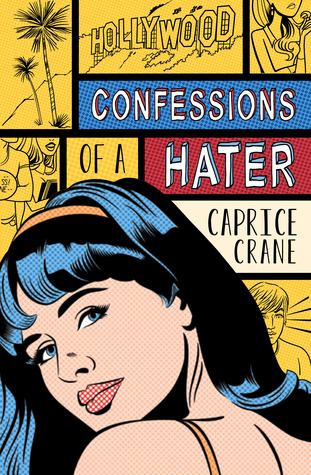
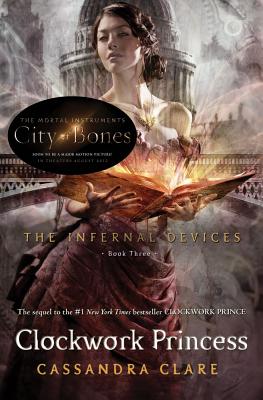
The stack I’m working from is this:

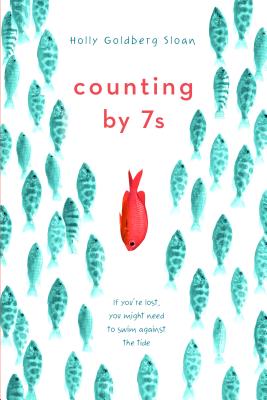
Unless I get tired of those. Then I’ll tackle this stack:

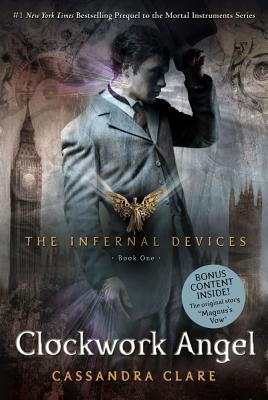
Which might be a better stack to start from…

Either way, I’m aiming for 24 hours, and as I’ve done the past couple of years, I’ll donate $1 per hour (or $25, whichever is greater) to RIF when I’m done.

And now… I’m off to go read!

Bone 1 and 2

Bone 1: Out from Boneville
Bone 2: The Great Cow Race
by Jeff Smith
ages: 10+
Support your local independent bookstore: buy it there!

Bone has been around for YEARS and I’ve heard that I should read it for YEARS, but I’ve put it off. Don’t ask me why.  But, on a whim a while back, I threw Bone 1 and Bone 2 in my library pile, just to see what the fuss is all about.

The story is basically about these three Bone cousins: Fone Bone, Phoney Bone, and Smiley Bone. Phoney has a propensity to come up with get-rich-quick schemes, and one involving bad prunes got him run out of town. Fone helps him get away; Smiley is along for the ride (not being very bright). They get lost in a desert, and end up crossing over some mountains into a valley far away from Boneville. They get separated, and you follow Fone through the winter. He makes some friends — most notably a red dragon, whom no one seems to believe exists — and some enemies — most notably some rat-like creatures who are always chasing him. (Except they disagree on how to cook and eat him; one seems to be fixated on putting him in a quiche.) Eventually, Fone meets Thorn — a beautiful girl — and she takes him back to her Grandma Ben’s place. They run into Phoney and Smiley in town (they’ve taken up with a tavern owner as his employees, since they don’t take the money Phoney has tucked away).

In the second, there’s a bit with a fair and Fone falling for Thorn (and being jealous of this hunky but kind of stupid boy she falls for). And Phoney and Smiley try to rig the great cow race so they’ll get rich (quick). But, of course, things don’t go right: the race is interrupted by legions of rat creatures, who seem to be working for a hooded man who is after Phoney Bone for some reason. And Thorn keeps having dreams about a cavern and the dragon Fone has made friends with.

I enjoyed these. I’m not sure I loved them, but I recognized the appeal. There’s humor and suspense, and I liked how Smith has multiple story lines going on at once.  I liked the drawings, the cartoonish quality of everyone (Grandma Ben was my personal favorite). And yes, I’ll probably pick up the rest just to see where the overall story line is going. Maybe I’ll learn to really love them.

Far, Far Away

by Tom McNeal
ages: 11+
First sentence: “What follows is the strange and fateful tale of a boy, a girl, and a ghost.”
Support your local independent bookstore: buy it there!
Release date: June 11, 2013
Review copy provided by my place of employment.

In the little town of Never Better there is a legend: if you eat a Prince Cake you will fall in love with the first person you look at. Jeremy blames that for his mother running away, and his father’s decline into… well, decline. And there is a problem, though  no one seems to think it one: children keep disappearing. There’s is also an oddity: the ghost of Jacob Grimm (yes, that Grimm) talks to Jeremy, which doesn’t make him the most popular kid. (Well, his dad doesn’t help, either.) Little does Jeremy know, however, that a prank a popular girl named Ginger talks him into will get him into a huge heap of trouble. And little does he know where that trouble will lead.

As much as I wanted to like this one, I had several issues with it.

I don’t particularly mind intrusive narrators, as long as their funny. Case in point: A Tale Dark and Grimm and  The Incorrigible Children of Ashton Place. In both of those instances, the narrator was 1) funny, and 2) added something to the story. In this case, the narrator drove me crazy. For two reasons 1) because Jacob Grimm was an adult. And 2) why on earth is an adult — even if he is a ghost — playing a main role (and he does) in a middle grade book? (I guess those are kind of the same point, but I’m pretending they’re not.) I ended up skimming everything Jacob said or did, mostly because all of his exposition and explanation held up the story.

I’ve read enough middle grade novels to know that you need to have your middle grade characters actually do things. I think this really fell flat for me because Jeremy and Ginger were mostly reactive characters. Sure, they set off the action in the first place, by playing the prank on the baker, but after that, they reacted to everything. And in the end, it was the ghost — the adult — who solved the conflict. Not exactly something that kids are going to want to read. (Who wants to read about the adult who comes in and saves the day? That’s real life, people.) Additionally, I didn’t realize that the characters were supposed to be 16 years old. They acted 12. I thought they were 12. It wasn’t until after that I realized they were supposed to be older.

Also, I’m invoking Ms. Yingling‘s plea: PLEASE get to the main action before page 190, which is when I gave up trying to read the whole story and just jumped to the ending. And 370 pages was TOO long for this story.

Perhaps I missed the point (I often do): this had a Grimm fairy tale feel to it (and a Grimm fairy tale ending). But, there was just too much going against this one for me to enjoy.

Audiobook: Emma

by Jane Austen
read by Michale Page
ages: adult
Support your local independent bookstore: buy it there!

After I finished listening to this one, I went back and read what I wrote after finishing last time and I pretty much still feel the same way. Mr. Knightly is still practically perfect (and still only Jeremy Northam in my mind), Emma is still silly and snobbish, Harriet is still under-served in this story (and quite silly as well). It’s still quite amusing, and very, very true to life.  Austen really is a master observer, and

The reading was fantastic as well. I had issues with his voices at first — can’t quite seem to let my movie voices go — but as it went on, I fell in love with the way he portrayed everyone. The character that stood out to me the most this time around was Mrs. Elton; Page captured her perfectly in all her snobby pretentious absurdity. Miss Bates was more annoying when listening to the book; I realized that most of the time I just skim what she’s saying, instead of listening to every single detail. I’ve never been worse for it, either.

Do I think it’s Austen’s best work? Possibly. Did I get anything new out of this re-read? Not really. But I thoroughly enjoyed revisiting Emma again.

The Lucy Variations

by Sara Zarr
ages: 12+
First sentence: “Try harder, Lucy.”
Support your local independent bookstore: buy it there!
Review copy snagged from the ARC shelves at my place of employment.

Sixteen-year-old Lucy is a has-been. Ever since she walked off the stage at a piano competition in Prague, she hasn’t touched the keys. Her grandfather — who holds the money, therefore the power — told her if she walked off that was it. Finis.

Lucy has mostly accepted it, until her younger brother Gus’s teacher died and — because Gus has a high-profile charity benefit concert coming up — their grandfather and mother hire a last-minute replacement: Will. He’s young(ish), talented, and — possibly most importantly for Lucy — interested in helping her rekindle a love of playing. Not for competition, not for an audience. For herself.

I think the thing that spoke to me most about this book was the idea of how music speaks to a person. As a pianist (though not a brilliant pianist), I know about finding peace, finding beauty, finding a sort of… love, in the act of playing, and I think Zarr captured that perfectly. That moment when Lucy realizes that playing the piano is part of who she is: perfection.

It’s not a perfect, easy ride for Lucy, and I appreciated that Zarr didn’t make it easy for her. She’s struggles with readjusting to school. Her best friend’s parents are going through a divorce, and there is drama there. Lucy develops a crush on Will, which Zarr uses most effectively. I was gratified that while Zarr brushed up against the line (Will’s happily married), she never crossed over to affair territory. That would have been creepy, and I spent a good while hoping she wouldn’t. Thankfully, she told the story — expertly, simply, beautifully — without needing to go there.

It’s a moving story about a girl trying to find her path in a family, in a world where she thought she’d lost a part of herself. One which touched me.

Bonus: there’s a playlist of songs Lucy loves at the end. Which made a nearly-perfect book that much better.

First Sunday Daughter Reviews – June 2013

And this is what my bookish girls are up to at the start of summer:

K is jumping on the Percy Jackson bandwagon and is in the middle of listening to her dad read her The Lightning Thief. She says, “It’s great!” and “I like Annabeth a LOT.”

A attempted to read The Apothecary by Maile Meloy, but bailed on it about a third of the way through. Partly because it wasn’t gelling with her — her biggest complaint: “I knew what was going to happen before it happened!” — and partly because the lure of Percy Jackson is just too strong. She’s picked up the series, and is happily ensconced in it again. For what it’s worth, I’m almost done with The Apothecary, and I quite like it.

I picked up The Bad Queen by Carolyn Meyer on a whim for C, because she’s expressed interest in Marie Antoinette before. She really liked this one, reading it twice and declaring that she MUST own this one. It’s ruined all other reading for her for a while.

And M has been spending the weeks since graduating vegging on Tumblr (yes, she is a fangirl). She has picked up The Monk and the Philosopher, by Jean Francois Revel, which she says is “really, really smart” so she just reads a little bit at a time.

Oh: and I just realized I never updated about my book group. While we got a mention on our chalkboard,

it was a dismal failure. I had one girl show up to the 3-5th grade one. And we managed to wrangle in someone else (who is going to be in Europe all summer, so it was pretty pointless). And NO ONE showed up for the 6-8th grade book group, which prompted an interesting discussion with C on the lack of readers in her age group. She contended that there are two things going on: 1) the kids she knows, at least, are pretty  determined to read only what they “like”, and they’re not very interested in branching out. Which is part of the reason series books do SO well. And why there are so many dystopian/paranormal/whatever read-alikes. And 2) the girls only read “girl” books and the boys only read “boy” books. So, even though my first book, Cold Fury, has immense crossover appeal (I mean, really: it’s about the mafia for heaven’s sake), boys won’t pick it up because there’s a girl on the cover. And my second book, Okay for Now (which is brilliant, but I can’t even get C to read it), won’t do well because it’s about a boy.

I find all of this incredibly frustrating. It’s not that I expected it all to be wildly successful the first meeting, but I  kind of hoped there’d be more. And I’m a bit wary about this second meeting on Saturday. What if no one shows up again? Do I throw in the towel? How do I market this better (it doesn’t help that our marketing person at work is more than overwhelmed!)? Is it really as hopeless as C says it is?

What do you think?

May 2013 Wrap-Up

The best thing about the end of May (aside from school being out) is June coming, and the 48 Hour Book Challenge. Mother Reader has passed the reins of the challenge over to Ms. Yingling (to whom I’m eternally grateful; I’ve always looked forward to this as a way to knock a whole bunch of books off my TBR pile). It starts next Friday, June 7th. Be ready. I know I am.

My favorite for the month was, hands down, Eleanor & Park. I think that book is one that will stay with me for a long, long time.

Eleanor & Park  

And the rest are…

YA:

Aristotle and Dante Discover the Secrets of the Universe
Icons
An Abundance of Katherines (audio) (reread)
School Spirits

Middle Grade:

The Different Girl

Here Where the Sunbeams Are Green
The Fire Horse Girl
The Reluctant Assassin (W.A.R.P. #1)

Adult:

The Castle of Otranto (audio)

One for the Money

Where’d You Go Bernadette

What did you read that you really liked this month?

Icons

by Margaret Stohl
ages: 12+
First sentence: “One tiny gray dot, no bigger than a freckle, marks the inside of the baby’s chubby arm.”
Support your local independent bookstore: buy it there!

I am making a declaration: alien invasions are the new dystopian. Maybe it’s just a stand-alone trend (yes, I am going to read The 5th Wave), but really: I think there’s some interesting ground to be covered with alien invasions.

Stohl’s take on it is this: seventeen years ago the aliens — now called the House of Lords — took over the world in a single attack. Their mother ship took over the Pentagon (why is it always America?), and they took out all the world’s major cities, instantly killing billions of people. They planted what’s come to be known as Icons near thirteen of the major cities left — Moscow, Paris, and L.A. — to keep control over the rest of the human population. The humans never see them (the Rebellion — of course there’s one — calls them the No Face); their only interaction with the House of Lords is through the Ambassadors in the cities.

Doloria — Dol to her friends — is a survivor of that day. No one knows why really. She’s been living at an orphanage outside of L.A. — called the Hole now — living there, in relative safety. Her most curious trait: the one gray dot on her wrist, and her ability to read other people’s thoughts and emotions. Her best friend is Furo — Ro — another like her: he has two red dots, and a propensity for fighting. They don’t think much of their powers until Dol’s 17th birthday, when the Embassy captures them and brings them in for “tests”. There they meet two others like them: the ambassador’s son, Lucas (three dots, can charm people into doing what he wants) and Tima (four dots; she’s called the Freak, but her talent — aside from shocking people with huge bursts of electricity when she’s angry — isn’t really explained). Together the four of them (if they can stop fighting) may be able to push back against the aliens who have kept the world hostage for so long.

On the one hand, I really liked Stohl’s vision of the alien invasion. It wasn’t little green men, and I appreciated that she left everything so vague. In many ways that was more intense. I liked the idea of the Icons, and the civilization that sprung up around them. I wanted her to spend more time there. And, to tell the truth, less on Dol. Because she grated on me (as did the love triangle. Really. *sigh*). In fact, I’m not sure I really liked any of the characters; they were all pretty bland. Even with the bland characters and predictable love story, the world building was enough to keep me interested and curious enough to wonder where Stohl is going to go next.

Hold Fast

by Blue Balliet
ages: 9+
First sentence: “It was the bitterest, meanest, darkest, coldest winter in anyone’s memory, even in one of the forgotten neighborhoods of Chicago.”
Support your local independent bookstore: buy it there!

Early Pearl is happy living in her small inner-city Chicago apartment with her family. They don’t have much — her parents barely finished high school before Early was born, though her dad scrapes a living by as a page for the Chicago Library — but they have each other, and the words that her dad, Dash, loves so much.

Then one fateful January day, Dash disappears. Early’s mother, Summer, is devastated, and goes to the police, but since this is inner city Chicago, everyone just assumes he couldn’t handle it and has run off.  Summer is insistent that he hasn’t, and  her worst fears are confirmed when some masked men break into their apartment, stealing everything they have, rendering Early, her mother, and her younger brother Jubilation (Jubie for short) homeless.

Early’s on her mother’s side: her father didn’t just run off. Something happened to him. And because her mother is having a difficult time dealing with the homeless shelter (and to be fair: she’s depressed), it’s up to Early to find the clues and figure out what has happened to Dash.

There was much to love about this book. From the onomatopoeia in the chapter titles (and themes) to the use of Langston Hughes’ poetry, to the exploration of the homeless plight in the cities. Early is a spunky character, one with determination and heart, and you can’t help but feel for the situation — however implausible — she’s put in. Balliet does an excellent job portraying not only the discrimination homeless people feel, but also the hopelessness in the shelters.

It wasn’t a perfect mystery: there were elements that kind of came out of nowhere, and it was more than a little implausible — even for a middle grade book — that an 11-year-old could figure things out the way she did. And while I enjoyed Early, I never felt like I was able to connect with the other characters the way I felt I should have.

That said, the picture Balliet paints of inner cities is a stirring one, especially for those out here in mid-America. And for that, this book is important, I think.

One for the Money

by Janet Evanovich
ages: adult
First sentence: “There are some men who enter a woman’s life and screw it up forever.”
Support your local independent bookstore: buy it there!

While I’ve been aware of the powerhouse that Janet Evanovich is (that woman puts out a least a book a year!), I’ve never really had that desire to read her. Perhaps it’s because of my NY Times-best seller aversion, or perhaps it’s because I rarely do mysteries. But whatever the reason, I only picked one up because a nice woman in my (now-defunct) in-person book group insisted she was a lot of fluffy fun.

So, for those under the rock (I don’t know how many of you are there): Stephanie Plum is an out-of work, divorced, nearly 30-something woman in Trenton, New Jersey. She’s not been able to find a new job, and she’s run out of things to hock for rent money, so she turns to her cousin Vinnie, who runs a bail bond company. She takes on the biggest case she could: apprehending former cop Joe Morelli, who’s been accused of murder. Of course he’s innocent — we can’t have the sexy cop be guilty, now, can we? — and Stephanie gets herself in some deep trouble — rapists and murderers, oh my —  as she tries to bring Morelli in.

The woman was right: this is fluff. I don’t think I felt my IQ falling while reading it, but I didn’t find much redeeming about it, either. Except maybe her portrait of Trenton in the mid-90s? I also didn’t find that I was enthralled by it, either. I would read a few chapters, put it down and read a few books before looking at it and thinking, “Yeah, I probably ought to read a bit more.”  Maybe it just wasn’t my cup of tea. But, honestly: I don’t see the appeal of this series (Eighteen books? Really?). One is more than enough for me.