State of the TBR Pile: September 2013

I am going to stop complaining about my TBR pile being out of control. It is what it is. I did, however, mean to not have library books on there, mostly because I REALLY need to get through the ones I already have sitting around my room. I have said, on occasion, that what I really need is to fly somewhere again. Not really because I want to go anywhere, but more because I want the six hours (each way) of uninterrupted (forced) reading time. I could plow through a bunch of books, then. Which would be enormously helpful. It would also help if I could get past the “ooh shiny” reaction I have to new books and stop picking them up…. But I don’t think that’s going to happen anytime soon.

So. On my current TBR pile:
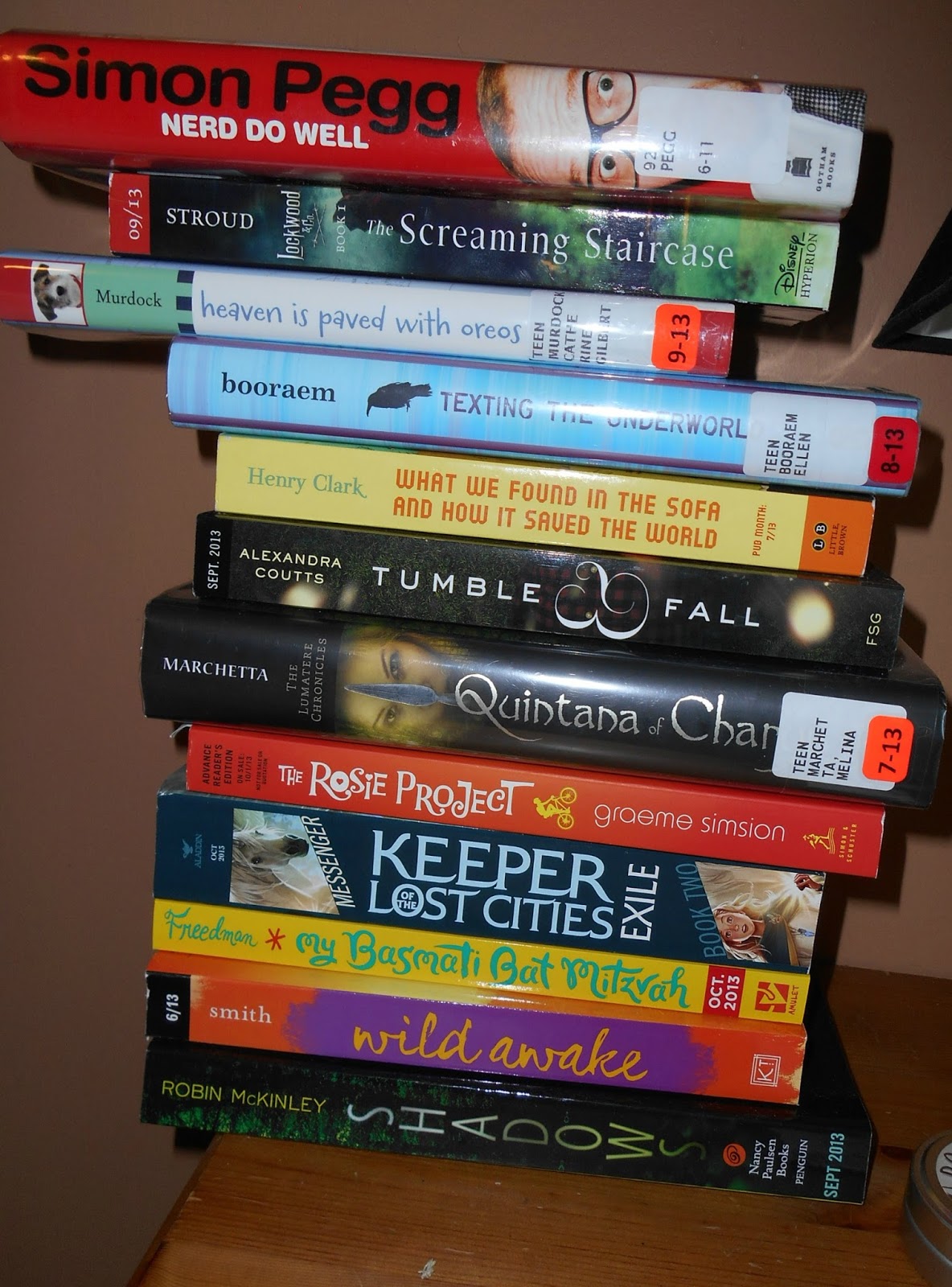
Nerd Do Well, by Simon Pegg (because M was showing me some videos about him — his pranks from the Star Trek movie filming — and I remembered that he’d written a book I was interested in reading a while back.)
The Screaming Staircase, by Jonathan Stroud (One: it’s Jonathan Stroud! Two: it’s getting great buzz.)
Heaven  is Paved with Oreos, by Catherine Gilbert Murdock (I saw somewhere that she’d written a new Dairy Queen novel. Sold.)
Texitng the Underworld, by Ellen Booraem (I have to admit that the title turned me off, but Charlotte said it was good. Now I’m curious.)
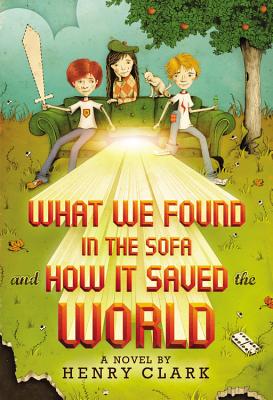
What We Found in the Sofa and How it Saved the World, by Henry Clark (C said it was trippy. I’m interested.)
Tumble & Fall, by Alexandra Coutts (Our MPS rep at work raved about this one.)
Quintana of Charyn, by Melina Marchetta (I’ve wanted to get to this for awhile, but things got in the way. But M recently devoured it — in one sitting, practically — and RAVED about it.)
The Rosie Project, by Graeme Simsion (It’s getting good buzz at work.)
Keeper of the Lost Cities: Exile, by Shannon Messenger (I’ll be honest: I wasn’t going to read this one. BUT we’ve got an author event scheduled with her, so I feel like I need to. Who knows? I may like it.)
My Basmati Bat Mitzvah, by Paula Freedman (An Indian/Jewish book? Sounds fascinating.)
Wild Awake, by Hilary T. Smith (If I don’t get to it soon, it’s going to fall off the pile.)
Shadows, by Robin McKinley (From last month. I do need to get to it..)

What’s on your TBR pile?

Treasure Hunters

by James Patterson, Chris Grabenstein, and Mark Shulman; illustrated by Juliana Neufeld
ages: 8+
First sentence: “Let me tell you about the last time I saw my dad.”
Support your local independent bookstore: buy it there!
Review copy pilfered from the ARC shelves at work.

The Kidd family — parents and children (in order) Tommy, Storm, and twins Bick and Beck — are treasure hunters. Which means, they go around the world looking for, and mostly retrieving, sunken treasure. Think of them as the Indiana Jones of the sea. Then one fateful day, in a Perfect Storm, Dad goes missing. Mom was already missing — kidnapped in Cyprus — which left the four kids on their own. To figure out what their father was doing, and how to get their mom back. All while figuring out whom to trust. And that’s not even mentioning the ninja-surfer-pirates.

On the one hand, this was non-stop action. Starting with the storm, we get pirates, sharks, creepy underworld antiques dealers, more pirates, CIA agents, more pirates, creepy underworld antiques dealers, and the Pirate King. It’s a packed book. (It also comes in at 450 pages, but the type is big and it’s liberally littered with illustrations.) While it was fun enough, sometimes I felt like the three men who wrote this just sent texts back and forth:

JP: “I think there should be pirates.”
CG: “Yeah. But they should be surfer pirates. The kids would really go for that.”
MS: “How about NINJA surfer pirates. THAT would be AWESOME.” (Okay, so MS is about 10 in my imagination.)
JP and CG: “Yeah. Totally rad.”

It was so over the top that it felt hackneyed to me. And on some level it made me sad: this isn’t really a book. (And to be honest, I only picked it up because I loved Escape from Mr. Lemoncello’s Library so much. I tend to avoid Mr. Patterson’s collaborations.) It’s a movie script. It a pile of events one on top of the other that tries to be a book. Sure, there’s a plot (of sorts), and characters (I did kind of like the twins, but the stereotypical “fat, but she’s smart so we don’t mind her weight” Storm grated on me). But it lacked any kind of… elegance that it needed to be a book.

Either that, or I’m just WAY too old for this.

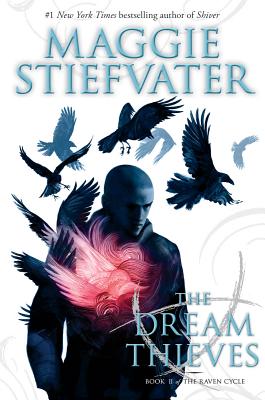
Dream Thieves

by Maggie Stiefvater
ages: 14+
First sentence: “Theoretically, Blue Sargent was probably going to kill one of these boys.”
Support your local independent bookstore: buy it there!
Review copy snagged from the ARC shelves at work.
Others in the series: The Raven Boys
Release date: September 17, 2013

I’m not quite sure where to start off on this one. Sure, I could always start with the plot, but in some ways, that’s mostly immaterial in this book. Yes, yes, Things Do Happen — it’s mostly Ronan Lynch’s story: about who and what he is, about his family, about how he got to be who he is — but that’s really a side effect to everything else that is going on in the book.

First off: because it’s about Ronan, it’s not a happy, or a light book. No, this is threaded throughout with all sorts of Darkness and Violence. Ronan is not a nice person. No, that’s not true: there are people in this book that are truly Not Nice, and Ronan isn’t one of them. But he’s not a carefree, happy-go-lucky person (well, none of them are), or at least an immediately likable and charismatic one (like Gansey, whom I decided I really liked by the end). No: you have to work to understand Ronan (I won’t say like, because I’m not sure I did), and spending so much time in his head isn’t easy.

But, it is worth it.

This time it’s worth it for the words. For the “furiously red tie” or the “sanguine, pleasant air of either a nun or a pothead” or the “all food eaten in anticipation of a kiss is delicious.” This book is full of gems like this. Stiefvater’s descriptions, casual throw-away lines littering the book, left me literally in awe and aching for more. I couldn’t read this one fast enough (and considering I had to put it down for days while I read a couple others, that was only magnified): it was mesmerizing in its terribleness, in its rawness.

And the end? How it wrapped things up, but gave us a new mystery to solve, while weaving everything that happened in both of these books together? Perfect.

Seriously.

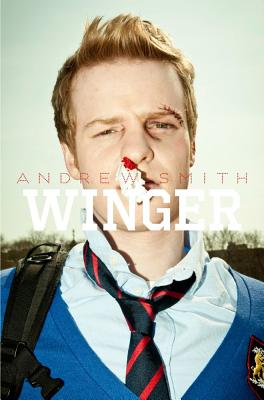
Winger

by Andrew Smith
ages: 14+
First sentence: “I said a silent prayer.”
Support your local independent bookstore: buy it there!
Review copy picked up at ABA Winter institute for me. Yes, I have taken that long to get to it.

Ryan Dean (yes, that’s his whole first name) West has a lot going for him: he’s a junior at Pine Mountain, a boarding school for troubled rich kids (his dad’s a high-powered Boston lawyer) in the Pacific Northwest. He is first string winger (think running back in football, but more intense) for the rugby team. He’s pretty smart.

But there are some downsides: he got transferred into O-Hall this year because he was caught hacking into a cell phone account at the end of last year. And, to top it all off: hes only 14.

And when you’re in O-Hall with all the delinquent football and rugby players? It’s not going to be a stellar year.

Add to that some major girl drama (he’s in love with his best friend, Annie, but snogging his roomate’s girlfriend), late night poker games (let’s just say that Ryan Dean is not a good drunk), and lots and lots of testosterone-induced fights. Let’s just say, I was impressed that Ryan Dean — who was decent human being underneath all the 14-year-old boy nonsense — survived until Thanksgiving.

I’m of two minds about this book. On the one hand, I can sum it up in two words: sex and rugby. Actually, the sex is all in Ryan Dean’s mind: he’s incredibly immature, and objectifies EVERY girl, and EVERY situation becomes about sex. In other words: he’s a normal 14-year-old boy. But unlike Carter’s Unfocused One-Track Mind which I couldn’t get through (and which is the best comparison to this one), I found myself endeared to Ryan Dean. Maybe it was the underdog element. Maybe it was because although he was annoying, he was almost mostly harmless. Maybe it was because he really did mean well, in the end.

Because, I found myself compelled by this. I was invested in Ryan Dean’s drama. I loved the camaraderie of the rugby team. I enjoyed Ryan Dean, dork that he was.

My only real problem was with the ending. See: Ryan Dean becomes good friends with the rugby captain, Joey, who also happens to be gay. Joey’s sexuality isn’t a big deal for Ryan Dean (though he feels the need to comment that he isn’t a lot), but it is for other guys in O-Hall. And in the last 20 pages of the book, it takes a sharp left turn and stops being a fun boarding school drama, and becomes Something More. Not that I minded something more, it was the sharp left turn that threw me. It didn’t work. I didn’t feel pain, or anguish, or anything at all at the end, because I was flabbergasted that a fun and entertaining book so suddenly became Serious. It came off as bad pacing and lack of focus rather than anything more substantial.

It didn’t ruin the book for me, but it did take some of the shine off. Which is too bad, because I was having fun with it before then.

First Sunday Daughter Reviews: September 2013

I know, I know: it’s the second Sunday. But I got off this month, but I figured since there were five Sundays, it didn’t really matter.

So, what have my daughters been reading in the last month since school started?

M (this is her last one, since she’s taking off to India — hopefully, if her visa comes through *fingers crossed* — on the 23rd) had stalled out reading the Lumatere Chronicles. She read Finnikin several months back, and loved it with an enormous love, but found Froi to be, well, not Finnikin. But, she picked it back up a week or so ago, and stayed up until 4 a.m. finishing it. And requested I get her Quintana immediately. Of course, I support all book addictions, and I did so.

No word on what she thinks of this one so far.

C has stalled out. She finished City of Bones before we went to see the movie — which was a LOT of fun, by the way. We even forgave their mangling of the ending — but had no interest in continuing the series. She then picked up this one from my stacks:

And was raving about it. But… she’s stalled out on it. Said it turned weird, and she just can’t get the energy to finish it. I told her to bail, but then she can’t count it for the 25 books reading campaign they have at school, so she keeps trying to finish it. Too bad, though: it has such a hilarious premise.

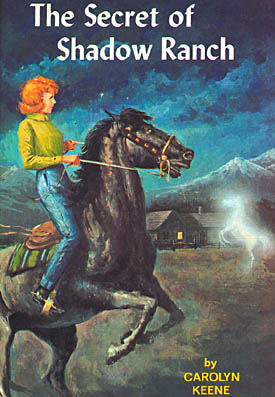
A is in the middle of three different books. She was reading the second Hollow Earth book (having liked the first one), but then decided she wanted to read all the Grimms Fairy Tales. She was reading that one — and enjoying those — but then her fourth grade teacher assigned them a mystery book report, and she picked up a Nancy Drew

and is currently devouring that one. I approve, having read all the Nancy Drew books when I was about her age.

K and Hubby are still getting through the Percy Jackson series, being nearly through The Last Olympian. She’s pressuring him to read her Goblet of Fire next. In addition, she started reading aloud to me every night. I asked her to choose the book, and she pulled this one off the shelves:

Sometimes the words are a little above her ability, but I help her with those. Have I mentioned I love graphic novels for that reason? The pictures offset the more difficult words, so the comprehension is still there. That, and this one is so much fun to read and reread.

An update on my book groups: I’m abandoning the 6-8th grade one; no one seems interested. However, I’m in the planning stages — trying to put together a comprehensive proposal — of setting up a Teen Reader program/advisory board. The idea is that they read the ARCs and report back on them, but I also want it to be slightly more substantial than that, so they can get an idea how publishing and promoting and author events and all that work. It’s still pretty unformed, so I don’t know how fast it’s going to happen. And I need to figure out a way to get boys involved, too. My 3-5th grade group is going strong, though, and we’ve decided to keep it going with the hope of getting it to grow. I’ve got a flyer I need to get out to the elementary school librarians. Crossing my fingers that it works, because I don’t want it to die.

Audiobook: Tara Road

by Maeve Binchy
read by: Terry Donnelly
ages: adult
Support your local independent bookstore: buy it there!

I think I’m going to start with the why on this one. Because, honestly, much like a Jane Austen novel, the plot is really inconsequential to the enjoyment of this book. Earlier this year, Maeve Binchy released A Week in Winter, and people came in to snap it up, raving about her work. After the Northanger Abbey debacle, I was wandering the library looking for something light but good, and I settled on this. I knew nothing about it other than the author’s name.

The jacket flap posed this as a post-divorce/traumatic incident/finding oneself house swap story. And while there was a house swap, it didn’t come until late in the novel. Which leads me to believe: the jacket flap writers didn’t know what to do with this one. See: it’s really just a portrait of a woman, Ria Lynch, and the life she led. She married the first man, Danny Lynch, whom she fell in love with, and thought she had a good life. But, as the reader finds out through the pages, that good life was all in Ria’s head. She was surrounded by friends, by her children, in this lovely home, and her husband was off… being a philandering Irish jerk. (He wasn’t stereotypical, though: the role of Irish drunk was given to one of Ria’s friends’ husbands, who thankfully, got his just deserts in the end.) It’s the portrait of a woman who makes choices and stands by them, and then when life throws her a curveball, she goes on. It’s a testament to the power of community and connection: Marilyn, the American Ria trades houses with at the end, is grieving for a dead son and has been unable to move on. But through the connections she makes by being a part of Ria’s life, she is able to find some healing.

In the end, while “nothing” happened (well, lots happened, but it was everyday stuff) it was a compelling novel. A lot of that is credited to Binchy — she (again, like Austen) is a master of the domestic drama, painting gorgeous portraits of the Everyday — but I do have to admit that Terry Donnelly’s voice had me mesmerized. A light, lilting Irish accent; voices perfect for the characters; she had me staying in the car waiting for an “acceptable” stopping point.

I should read (or listen to) more Binchy. Because my first foray was gold.

The Madman’s Daughter

by Megan Shepherd
ages: 13+
First sentence: “The basement hallways in King’s College of Medical Research were dark, even in daytime.”
Support your local independent bookstore: buy it there!

Juliet Moreau is 16 and in desperate straights. Her father — yes, that is the Dr. Moreau of H. G. Wells’ classic The Island of Dr. Moreau — has been exiled from London in a scandal and her mother has died of consumption, leaving Juliet penniless. Thankfully, someone found her work cleaning in the medical labs, but that — while keeping her off the streets — is not ideal.

So when she runs into her father’s old servant (now assistant), Montgomery, she bullies him into taking him with her back to the island, back to her father.

Which is where the madness is.

I have never read the H. G. Wells classic, so I can’t compare the two. (As a side note: I kind of want to read it now.) But this one was… interesting. Victorian in setting, Gothic in feel, the novel propelled me a long its story of love, betrayal, and, well, science. I liked Juliet as a character, even if she did feel a bit modern to my tastes; I don’t think in this kind of book it could be helped. She needed to be a strong, independent-minded young woman, and Shepherd gave us that. She also convincingly portrayed Juliet not as a naive girl, one who is all too willing to believe in her father’s innocence, but rather as someone who believes and hopes for the best in her father, until evidence beyond a shadow of a doubt proves otherwise.

In addition, the island setting, with its creatures and monsters, was sufficiently creepy. Not enough to keep me up at night, but close.

What didn’t work for me was the romance. I think it was partially because I felt it was unnecessary: Juliet had enough on her plate with her insane father, and trying to figure out all the ins and outs of his experimentation (all the way down to figuring out if she’s real or a creation), that it seemed a bit much to throw in a love triangle as well. I did like the way it turned out: there’s a spectacular twist (which I probably should have seen coming but didn’t), and while I thought the ending was somewhat unsatisfying, in retrospect, I have to admit it fit the characters and the story.

It was a good, solid debut, and since I hear the next one is based on Dr. Jekyll and Mr. Hyde, I’m sold.

Runt

by Nora Raleigh Baskin
ages: 10+
First sentence: “My mother says male dogs will fight.”
Support your local independent bookstore: buy it there!

Everyone knows sixth grade is a jungle. Trying to navigate the wilds of the middle school cafeteria, the politics of homeroom, the cliques. It’s dog-eat-dog out there. And Elizabeth knows it. Especially since she’s at the bottom of the totem pole. (I just realized I’m mixing my metaphors. Sorry.) She and her single mom run a dog boarding kennel out of their home, which doesn’t earn Elizabeth any points. And while she’s talented at writing, she does, sometimes, have a tendency to exaggerate, which also doesn’t help. Which means she’s prone to bullies.

I’m going to insert here that in many ways I felt like this tried to be 13 Reasons Why for middle schoolers (with added dogs). There were multiple narrators, while we saw events over a couple of months from different vantage points. There’s another bullying incident — a boy pees on another who ends up punching the first boy — that sets things in motion for a big showdown at the end of the book. You got to see the consequences of people’s actions, the inner feelings of the bullies.

But.

It didn’t quite work. For one: the whole dog thing was a bit odd. Especially the whole “inside a dog” chapter. And while jumping between narrators usually provides insight, this time it was just kind of awkward. I wanted to be moved. I wanted to be touched. Mostly, though, I was just confused. Which makes me sad, because I have loved Baskin’s work in the past. And I wanted to love this one again.

August 2013 Wrap-Up

August is at an end, and I would have gotten this up yesterday, but canning and swimming (it was 100 degrees… finally!) and the laptop being in the shop, which means we’re down to one computer. Again. And while I love my daughters, getting computer time inbetween all their needs is pretty difficult. How am I managing this? Why, we put on Ever After.

Also: on Tuesday, the new covers of the Harry Potter books came out, and I was literally jumping for joy. One of my managers at work was amused and snapped the following to go up on Facebook.

I am such a dork.

There was a lot of good this month, but there were two that stood out. I couldn’t choose between :

Counting by 7s

Read it. Really. It’s charming.

And

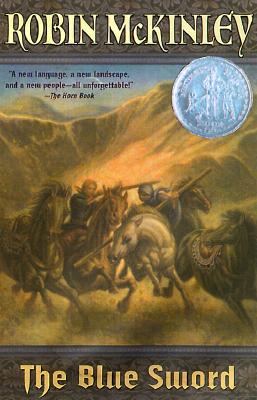
The Blue Sword (reread)

It’s an old favorite that holds up to the reread.

And for the rest:

Adult

Northanger Abbey (audio)
Sweetness at the Bottom of the Pie (audio)

YA:

Clockwork Angel
Clockwork Prince
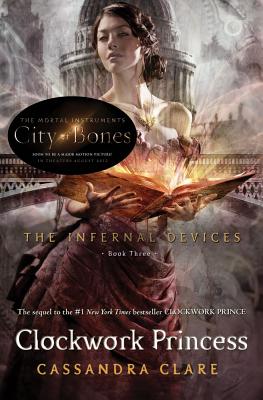
Clockwork Princess
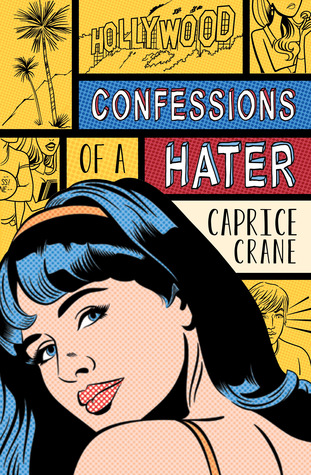
Confessions of a Hater
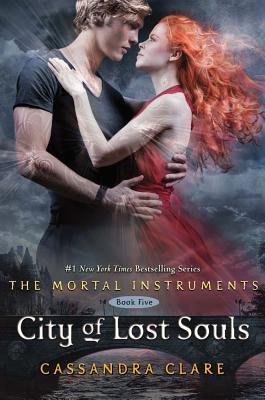
City of  Lost Souls 
The Running Dream

Non-Fiction:

The Dude and the Zen Master
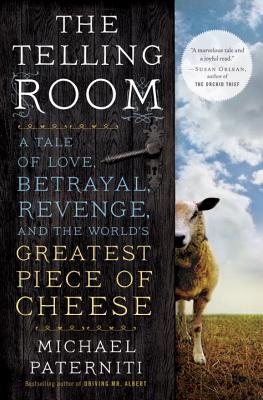
The Telling Room

Middle Grade:

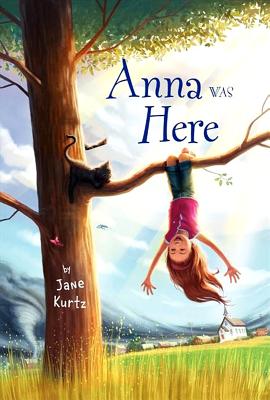
Anna Was Here

What did you enjoy this past month?

The Telling Room

A Tale of Love, Betrayal, Revenge, and the World’s Greatest Piece of Cheese
age: adult
First sentence: “This particular story begins in the dusky hollows of 1991, remembered a rotten year through and through by almost everybody living, dead, or unborn.”
Support your local independent bookstore: buy it now!

This tale — and it is, in many, many ways a “Tale” — begins in my hometown of Ann Arbor, Michigan, with a University of Michigan masters writing student. He needed a job, so he picks up one as a copyeditor for the Zingerman’s Deli newsletter. There he is introduced to Ambrosio Molinos and the Páramo de Guzmán.

And he — the author — is enthralled. Ambrosio is larger than life. Guzmán is charming. So much so that Paterniti moves his family there for a year. And the cheese… well… by the time Paterniti gets to Spain, the cheese doesn’t exist anymore. See: Ambrosio had a good thing going. He dreamt of, and made by all accounts, a brilliant sheep cheese. It won awards. It got the attention of the king, of international buyers. But. Things went south. Ambrosio said it was his best friend, the lawyer Julián who betrayed him. He sold the business out from under Ambrosio, leaving him destitute.

Except, while that makes a good Story, the truth is so much more complicated than that.

One of the things that made this story so fascinating for me was that Paterniti was so caught up in it all. This book took 10 years for him to write, mostly because he didn’t want to believe Ambrosio’s story could be wrong. He wanted to believe that Ambrosio was a Real Thing, that his ideal of Rural and Simple could work. And it took a long time for him to be able to step away from it and see the big picture. But, as he writes about Abrosio, Guzmán, and his own personal journey, you can’t help but get caught up in it all as well. It’s a layered story, with many diversions (my only real complaint is that the footnotes would sometimes get in the way of the story), side roads, and interesting people along the way. It’s a great story.

And a great book.