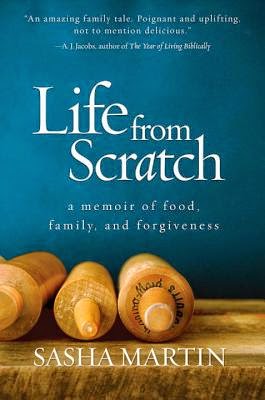
Life from Scratch

by Sasha Martin
First sentence: “This is not the book I meant to write.”
Support your local independent bookstore: buy it there!
Review copy picked up from the Random House rep.
Content: She didn’t have an easy upbringing and she doesn’t hold back on that. But, other than that, it’s suitable for anyone who’s interested in a culinary memoir. It’s in the biography section (for lack of a better place; it also fits in our creative non-fiction, which is kind of a catch-all) of the bookstore.

I know I’ve told y’all how much I love foody books How much they feed my soul, and how, when they’re wonderful, they just make me happy. Last time our Random House rep came to the store, he held this one out and said it’s a food memoir, I snatched it. I took too long getting to it, though: it wasn’t until it actually came in (the actual cover is so much more appealing than the ARC cover, trust me) and I actually read the first sentence, that I knew I would love this book.

Sasha had a hard life. Seriously. The daughter of a single mom struggling to get by in Boston, she and her older brother, Michael, didn’t know how hard their life was. They had Mom, they had each other and as far as they were concerned, things were good. Then the state decided that what they had wasn’t enough, and sent them into the foster system. Which, in the late-80s, was a terrible place to be. Sasha’s mom, however, was — is — an incredibly concerned and passionate person, and she fought to get them back. However, the state (I can see people’s objections to the state here) deemed their mother unfit, and decided that the kids needed to be raised elsewhere. Sasha recounts her mom sending out tons of letters, looking for a home for her children. And it was an old friend and her husband who took on the burden of raising the children.

You might be wondering what all this has to do with food? Well, the one thing that kept Sasha going throughout her life was a love of food and cooking. Her mother is Italian and Hungarian and she believed in the power of community coming together to eat, so very early on, Sasha helped out in the kitchen.

Her years with the friends weren’t happy. She missed her mother. Her brother committed suicide. Which propelled Sasha into a life of drinking and drugs and avoidance. The upside was that the family moved to Europe, so Sasha was exposed to culture there. So, when she finally landed on her feet, after years, in Oklahoma (I’m condensing here; there’s a lot going on), she decides that what she needs to do is cook her way around the world.

Sasha’s a compelling writer, telling her story with love and understanding, when no one would have faulted her for being bitter. She was angry at her mother for years, but somehow forged a new relationship with her. And I loved how this city girl found solace in a smaller community, finding the interesting and unique things about Tulsa. (She actually made Tulsa sound like a pretty cool place.) But the best thing, hands down, about this was the food. Sasha has a way of making the food leap off the page, of capturing not only the flavor of every day dishes, but also of the exotic ones she made from around the world.

It’s a delightful book, one that I’m sure will stay with me for a long, long time.

Genuine Sweet

by Faith Harkey
First sentence: “Genuine Sweet.”
Support your local independent bookstore: buy it there!
Review copy sent by the publisher.
Content: There’s a bit too much lovey-dovey stuff than I like for books this age (they kiss a bit and hold hands). Even so, it’s really a middle grade novel, so it’ll be in the middle grade (grades 3-5) section of the bookstore.

I’m a sucker for small town Southern books. (Unlike Ms. Yingling, who loathes them.) I love the small community feel, the quirkyness, and you throw in a bit of magical realism and I’m sold.

Genuine Sweet has all of that. She lives in a small town in Alabama where everyone knows everyone’s business, so that means everyone knows that her daddy is a drunk. Genuine’s (pronounced gen-u-wine) grandma takes care of her, since her mother’s dead, and it turns out that a gift runs in the female side of the family: wish fetching. They don’t grant them, per se, they sing to the stars and fetch the star juice (for lack of a better word) and give it to people who need things. The one cardinal rule: they can’t grant any for themselves.

So, burdened with this knowledge, Genuine sets out to make life a little better for those in the town. But, even as she does so, things get worse at home. No money, no food, no electricity. And as word gets out about her wish fetching Genuine has more and more pressure to fill them ALL. Which takes a toll.

On the one hand, quirky Southern charm. It was very sweet and very Southern, and I liked the way the magic worked: nothing major, nothing huge, just small little helps that fit in with the mood of the book.

But, even with all the quirkyness and the Southerness and the magic, I didn’t absolutely love this book. Partially, because I thought the romance between Genuine and Travis was a bit, well, out of place in a book aimed toward the younger set. And the drunk dad was pretty unnecessary. As was the angry, bitter woman who opposed Geunine’s wish fetching. And all of that added up to make me like, but not thoroughly enjoy this one.

It was a good book, but I think it could have been so much better.

First Sunday Daughter Reviews: April 2015

Happy Easter! (Happy Spring! Happy — belated — Passover! Happy whatever you celebrate!) We had a storm blow through a couple days ago, and lost power, but we’re back on and at our house (after spending a night at our friends’ house). It’s not as sunny and warm as I’d like it, but as it is not snowing (here), I’m calling it a win.

I found this at the library and gave it to K.

She says “it was very bad and very good. Bad because all her friends ditched her because she went to roller camp. Good because I found it interesting and the story was really good.”  She doesn’t recommend it wholeheartedly, but it did make her think. (Even if it is a “comic book” — yes, her teacher still has banned them. Ugh.)

A read this:

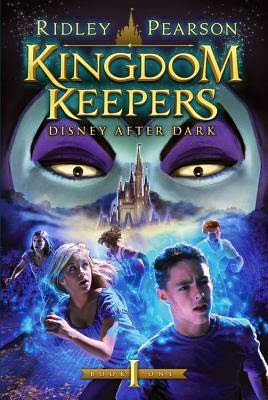
It caught her eye at the store (because Ridley is coming…) and I bought it for her. I figured that someone in the house should read a book of his before he comes. She liked it, thought the idea was clever and fun and even though she’s not a huge fan, it was enjoyable.

C’s not reading much because there’s a play coming up, but she is looking forward to reading this in her English class:

In fact, it’s one of those times where she wants to do ALL the projects the teacher assigned (she only has to do one), from memorizing a soliloquy to writing a scene as a blog post. I’m glad she’s willing to tackle Shakespeare without complaint.

What are you looking forward to reading this month?

Miss Mayhem

by Rachel Hawkins
First sentence: “This is going to be a total disaster.”
Support your local independent bookstore: buy it there!
Review copy snagged off the ARC shelves at my place of employment
Others in the series: Rebel Belle
Content: There’s some violence and a bit of swearing — not as much as Rebel Belle in either case. It’s in the YA section (grades 6-8) of the bookstore.

Spoilers for Rebel Belle. Just so you know.

It’s been a few months since Harper became a butt-kicking Paladin, sworn to protect her now-boyfriend David Stark, who’s the super-mystical Oracle. She’s working with her ex, Ryan (who’s now a Mage) to protect David, and for Harper — who is super controlly by any standard — that means limiting David’s visions to helping out Harper’s friends and family.

Unfortunately, that backfires: the Ephors find them, and while they give back Harper’s best friend Bee, who was kidnapped, they decide that Harper needs to go through a super-intense test to prove that she’s worthy to be the Oracle’s Paladin.

Of course, things aren’t as simple as that: David’s questioning his abilities, and things are on the rocks between him and Harper. Ryan’s having his own problems with girls, and Bee is finding re-entering society after being gone for several months isn’t as easy as they hoped. And then there’s the question of the spooky Ephor guy.What does he really want?

I really enjoyed Rebel Belle, and I was hoping for the same level of sillyness and fluff and fun from this one. But, alas, it’s the middle book in a trilogy, which means I got angst and unease and things unraveling to the point where it just wasn’t fun. It wasn’t bad — Hawkins knows how to write action, and Harper’s definitely grown on me even with all her Southernisms that drive me batty. But, it just wasn’t AS fun as Rebel Belle. Which made me a little sad. Then again, I can always hope for the next book to go back to being fun… at least by the end.

It’s a good series, overall, though.

March 2015 Round-up

It’s the end of March, and here in Kansas (at least) it’s finally spring. My hyacinths are blooming, I actually need to mow the lawn, and I’m finally coming out of my winter-induced depression. (It was worse this year than in the past. Gah.) And what contributed to this happiness was the knowledge that I can now share the new Penderwicks book with you. If you haven’t read them, DO. So, so wonderful.

The Penderwicks in Spring

As for the rest, I read:

Middle Grade:

Fish in a Tree

Mark of the Thief
Monstrous

The Red Butterfly

YA:

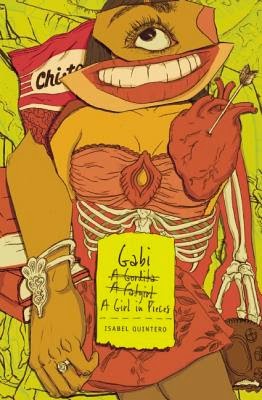
Gabi a Girl in Pieces

Rebel Belle

The Red Queen

Shadow Scale
The Winner’s Crime

Non-fiction

Small Victories (audio book)

Adult:

The Calligrapher’s Daughter
Funny Girl (audio book)

Graphic Novel

Ms. Marvel, Volume 1

What was your favorite this month?

Red Queen

by Victoria Aveyard
First sentence: “I hate First Friday.”
Support your local independent bookstore: buy it there!
Review copy brought back from the ABA Winter Institute for me by a co-worker.
Content: There’s a lot — a LOT — of violence, some of it gruesome. It’s in the teen section (grades 9+) of the bookstore, and I’m going to leave it there, but I wouldn’t be adverse to giving it to a kid who could stomach Maze Runner or The Hunger Games.

This one is getting All the Buzz (at least in the bookselling circles). It’s got a great cover (seriously), and it’s another one of those vaguely apocalyptic books and so I think publishers are expecting it to do Great Things. I don’t know if that raised my expectations — it is a debut novel, so I don’t know how high they could have been — but this fell flat for me.

Mare Barrow is a Red. Which means, in this world (it was never clear if it’s Earth or a different world entirely), that she’s considered low. Base. A slave. Because her blood bleeds red. See, in this world, the people who have all the power are the ones whose blood is Silver (perhaps because they were aliens that invaded the planet hundreds of years ago? It was never clear.) and because they have powers that give them an advantage over those low Reds. Mare figures she’s going to spend her short life stealing to get by until she gets conscripted into the war that’s been going on for a hundred years, in which she will die.

And then her life changes: she meets Cal, a Silver, who gets her a job in the palace, and then during the Queenstrial (in which Silvers from the noble houses compete to become the prince’s bride), she discovers (quite by accident) that she has powers, like a Silver.

All this sets in motion political intrigue, betrayal, and a lot of fighting that will ultimately be Mare’s downfall. Maybe.

The plot doesn’t sound half bad: there’s a bit of a forced love triangle, and a twist at the end that wasn’t entirely unexpected. But the thing that kept pulling me out of the book was two simple words: smirk and sneer. EVERYONE smirked. EVERYONE sneered. And after the first 15 times, I noticed every time someone did. Then after the next 30, I lost patience with the book and skipped to the end. I did go back and fill in the middle, just to see how we got to the end, but I ended up loathing the book for two simple words. I couldn’t get past it. That’s just lazy writing and lazy editing (and the book would have been 20 pages shorter if they were all deleted). Sure, there were some interesting ideas about class and race and bias, but I couldn’t rise above the writing level to appreciate them.

Definitely for someone less picky than me.

Audiobook: Funny Girl

by Nick Hornby
Read by Emma Fielding
Support your local independent bookstore: buy it there!
Content: Aside from the dozen f-bombs (entirely from 2 characters), this one is relatively tame. And because it deals with a character in her early 20s, it probably will have some good teen crossover. It’s in the adult fiction section of the library.

Several things conspired to actually get me to read an adult book (shock!). One, I had just finished my previous audiobook and was looking for something new. Two, the Pop Culture Happy Hour podcast (which I have come to love) announced that they were doing a book group discussion of this one in March. And three, I figured I should read Nick Hornby sometime, and this seemed like a good place to start.

It’s 1964, and Barbara Parker is looking at a bleak future. Sure, she just won the Miss Blackpool title but she wants MORE out of life. She wants to be like her heroine, Lucille Ball. So she returns the title, and takes off for the big city, hoping for her break. And, after some bad scrapes and name change — she’s Sophie Straw now — it eventually comes in the form of a BBC TV sitcom, Barbara [and Jim]. She becomes famous, with all the strings that are attached to that, as well as the ups and downs.

On the one hand, I have to admit that I found this a very male-centric, sexist, chauvinistic book. Barbara/Sophie is reduced to her looks (blonde, curvy, busty), as are all of the women in the book. The men drive the action, and Sophie is just reacting to them, much of the time. It’s also incredibly homophobic, even though one of the characters — Bill, a writer on the series — is definitely gay, and another — Tony, Bill’s writing partner — is probably bisexual. This really bothered me, until I realized that Hornby was being true to the time period. The 1960s, especially the mid-1960s when it’s set, was incredibly sexist and homophobic. This proved true by the end of the book, when the characters (and Hornby) were much less annoying.
I also felt like it went on too long, especially the ending. I didn’t really feel a need for the huge epilogue-y ending chapters; I felt the book could have ended when the series ended, and I wouldn’t have missed a whole lot.

That said, I did find it entertaining. I wonder if that had a lot to do with Fielding’s narration. She was a brilliant narrator, working in regional accents and speech affectations so I could get a sense not only of who was speaking but of their character. Sophie’s Blackpool accent, especially, endeared me to her in a way I don’t think would have come through on the page. And it was sometimes laugh-aloud funny. Not consistently, and not enough, but it was there.

I’m not sure I liked it enough to read another Hornby (unless there’s one that you strongly recommend?) but it wasn’t an unpleasant experience either.

Ms. Marvel, Volume 1: No Normal

by G. Willow Wilson and Adrian Alphona
Support your local independent bookstore: buy it there!
Content: There’s some talk of teen drinking and some violence, but I’d hand it to anyone who loves superheroes and is willing to sit through the Avengers movie. It’s in the adult graphic novel section, but I wonder if it’d get more traction in the teen?

I’m sold. Seriously. I’ve heard the buzz (thanks to Leila and others) and I caved, and THEY WERE RIGHT. It’s worth it: you should read it.

(Do I need to say more?)

Kamala Kahn is a 16-year-old daughter of Pakistani immigrants, and she’s basically chafing against her life. She doesn’t like being Muslim. She doesn’t like having overprotective parents. She doesn’t like not being “pretty” and “blonde”. And so when Captain Marvel appears to Kamala (after a party she snuck out to) and gives Kamala an opportunity to reboot her life, Kamala wishes to be like Captain Marvel. Her wish is granted: she has super-powers. (And is tall and blonde.) Eventually, she figures out that the tall and blonde and “non-politically correct” costume isn’t all it’s cracked up to be. She accepts that she — Ms. Marvel, as she dubs herself — is Pakistani and goes with it, embracing (albeit reluctantly) her new superpowers.

Why did I love it? First: it’s a Pakistani girl superhero! She’s Muslim, and while she chafes against her parents’ rules, she’s faithful, which I appreciated. Which also means she’s a character of color: not all superheroes need to be white. (Or drawn with super-skimpy costumes, so yay for that as well.) But it’s more than that: Kamala is smart and funny, and the writing and art reflect that. I loved Kamala’s ordinary-ness, and her devotion to her friends (and parents), and her struggle to figure out what all this means and to accept who she is.

It’s completely worth the buzz. Fantastic.

Mark of the Thief

by Jennifer Nielsen
First sentence: “In Rome, nothing mattered more than the gods, and nothing mattered less than its slaves.”
Support your local independent bookstore: buy it there!
Review copy snagged from the ARC shelves at my place of employment.
Content: There’s violence, since it’s set in ancient Rome, but it’s not graphic. It’s basically on the level of the Percy Jackson books, so I put it in the middle grade (grades 3-5, though it probably skews to the upper end of that) section of the bookstore.

Nicholas Calva is a slave in the mines, digging up stones and jewels for the wealthy of Ancient Rome. This is not something he chose to do; his family was captured in one of Rome’s many invasions of other, smaller countries. Or sRomething he wants to do: he would much rather be a free man. But, because his mother was sold away, and because he needs to watch after his sister, Livia, he sticks around and is (mostly) obedient. Then, one day, his master sends him down to find and fetch Julias Ceasar’s bulla, a medallion that he carried with him that was supposedly given to him by Venus. Nic finds it, of course, and fights the griffin guarding it, and is endowed with magical powers.

Which gets him in to all sorts of trouble.

See, the current emperor is weak, and there’s a war brewing between the Praetors and the general of the army, and Nic seems to be caught in the middle. The question is, will he even survive long enough to pick a side?

I loved this one. Seriously. Nielsen knows how to create a world, and I was happy to immerse myself in an ancient Rome that had magic. (And pretty cool magic, at that.) Nic, much like Sage, is a impulsive character, one is more than willing to go out on a limb to do what he thinks he should, which makes him a lot of fun to read about. I enjoyed getting to know Aurelia — his friend/pseudo romantic interest — and thought she was a great foil for Nic impulsiveness. My only regret was that Livia was more an idea than a character; I never really felt the connection that Nic did for her, and was never really upset when her life was dangled before Nic as motivation.

But there are some nice twisty moments, especially at the end, and it’s a solid first book in a series.

10 Feminist Books for Kids and Teens

Inspired by Shannon Hale’s resurrection of #BoysReadGirls, I was going to write a post with books about girls that boys should be reading. Then I realized I did that already. But, I wanted to come up with SOMETHING for women’s history month…

After much thinking, I came up with a list of feminist books for kids/teens. Which are also books that everyone should be reading. My standards were kind of loose: if it felt like a feminist book, then I’m calling it a feminist book. Which means, I probably missed a TON. Let me know what you would have added.

The Princess in Black, by Shannon Hale: “Princess Magnolia has a secret. She’s a superhero, rescuing innocent and unprotected goats from the Big Bad Monsters. The thing is: princesses aren’t supposed to be superheroes. They’re supposed to be princesses. Right?  Well, aside from the stuffy Duchess Wigtower, no one tells Princess Magnolia she can’t.”

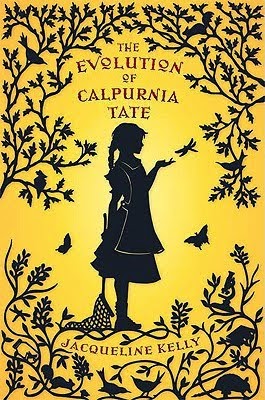
The Evolution of Calpurnia Tate, by Jacqueline Kelly: ” Callie discovers that studying the world around her is what she really wants to do. She spends as much time as possible with her grandfather — in between piano recitals, forced sewing, school, and managing her brothers’ crushes for her best friend — living for and thriving off of the time spent studying and observing. Of course, since this is 1899 and Texas, Callie couldn’t be allowed (allowed!) to proceed this way: good, proper, well-off girls just didn’t tromp through the underbrush looking at bugs. For me, this was the heart of the novel, this pull for Callie to do what she wanted and not what everyone expected of her.”

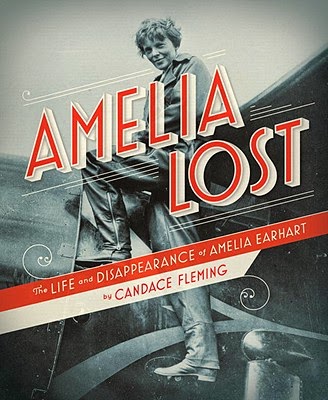
Amelia Lost, by Candace Fleming: “She flew not really because of skill — often she didn’t take the time to learn things thoroughly — but because of determination. She was a feminist: she believed that just because she was a woman didn’t mean she shouldn’t do whatever she wanted to do. Including flying. She resisted the boxes that the time period wanted to put her in, and literally soared. No, she wasn’t the most talented, or even the most skilled, but she was determined, and that made up for a lot.”

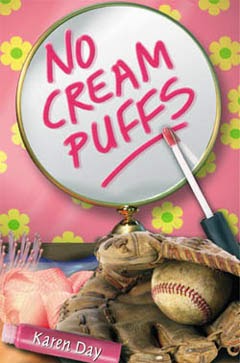
No Cream Puffs, by Karen Day: “The second big thing, and probably the more defining one, is that Madison decides to play in the boy’s baseball league. She’s a brilliant pitcher, and is encouraged by her older brother to test her skill in the league (since there isn’t a girl’s league). Because of this, she makes waves in her little town. Some people want to make her a pariah: she’s a girl, she has an unfair advantage because no one will want to hurt her, she’ll bring down the level of the game. Others, her mother included, want to make her out to be a trailblazer, a feminist, someone who stands up for women’s rights. Madison, refreshingly, just wants to play the game”

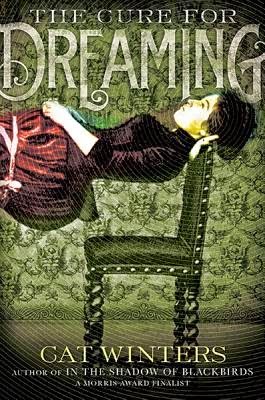
The Cure for Dreaming, by Cat Winters: “Sure, there’s more plot to this one than that, but who cares? This one has a strong feminist agenda and it’s not afraid of it. The father had me seething. The rich handsy boy whom the father liked made me want to smack him. Henri was nice enough, but I really loved Olivia and her struggle against the system (and the Man) and her desire to be Free. I was just cheering her on: you go girl!”

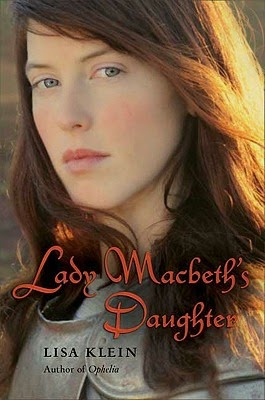
Lady Macbeth’s Daughter, by Lisa Klein: ” Lady Macbeth is only slightly better; she gives herself over to Macbeth because she knows no other way, and the motivations Klein gives her for encouraging Macbeth in his road to destruction evolve out of her feeling cornered in her life. In fact, Klein gives us an interesting dichotomy with her women characters: Lady Macbeth is what one would think is very traditional, very husband-bound; while Albia, on the other hand, is very modern and feminist, choosing her own path without being bound by men’s expectations”

The Disreputable History of Frankie Landau-Banks, by E.Lockhart: “Frankie did something big; she proved something to herself — and to her family — that she can do something. Sure, they reacted badly, but then, most people react badly to people who think outside the box. Even if that box is something as simple and silly as a secret boys’ club at a posh boarding school.”

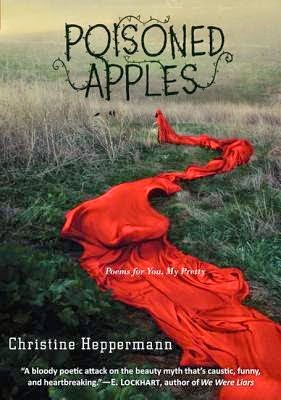
Poisoned Apples, by Christine Hepperman: “I didn’t know what to expect, but what I got was a weird, wonderful, empowering collection of poems. Hepperman mixes fairy tale retellings with modern issues, from anorexia and photoshopping to the everyday over sexualization of women. It’s a seamless transition from fantasy to reality.”

Gabi a Girl in Pieces, by Isabel Quintero: “It was Gabi’s awakening to the double standard, and her actively trying to do something about it — which came near the end of the book –which endeared me to the book. There was so much crap going on in Gabi’s life that I found it difficult, initially, to relate. But by the end, I was cheering for Gabi, for her attitude toward her life, and for Quintero’s unflinching portrayal of her.”

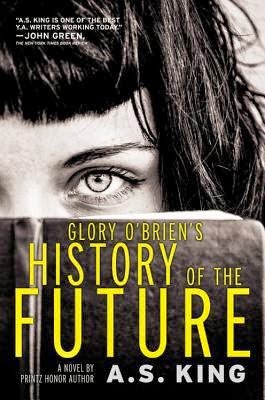
Glory O’Brein’s History of the Future, by A.S. King: “Glory’s visions are of a horrific patriarchal future, where women’s rights are completely taken away, and the country ends up in another Civil War. This fascinates and terrifies Glory — what’s her role in this future? How does it come to be like this? Will it? — and the act of having these visions pushes her into action.”

And a couple of adult ones tacked on the end:

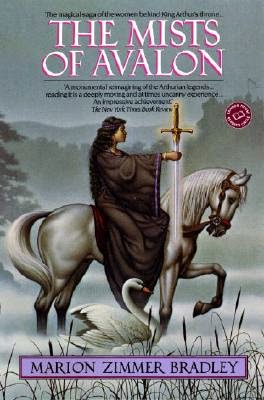
Mists of Avalon, by Marion Zimmer Bradley: “A heady piece of feminist fiction. The first time I read this, I was enraptured by the way she tells the story [of King Arthur] from the women’s point of view. “

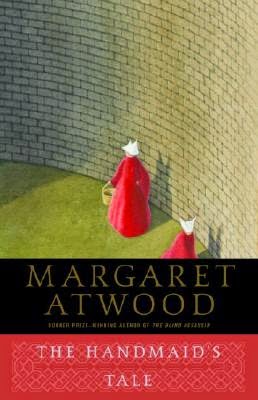
The Handmaid’s Tale, by Margaret Atwood: “I can’t imagine — more like, don’t want to imagine — a world where women are treated as nothing more than the sum of their bodies, where men get excused for their behavior because of their position, where women hate and loathe each other because of their roles. Wait… that, too much, describes what our world is like now. Without the religious framework, without the robes, without the martial law, there are elements of this world around us”