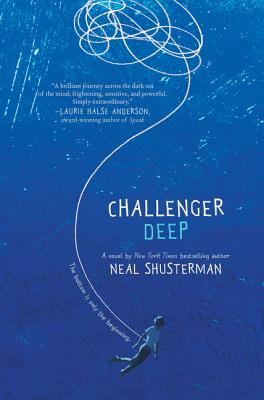
State of the TBR Pile: February 2018

I have discovered something about my class: when it’s a picture book week, I have extra time to read something fun. When it’s not, and especially if I’m busy, I don’t have much extra time to read much of anything. That said, what I’m reading for class is fun, so it doesn’t really matter, does it?

That said, only two of these are “MUST reads” (The Poet Slave of Cuba and Midwinterblood — we’re doing a unit on other ALA prize-winners); the rest are “I really wish I had a time turner so I could read” books. I like looking at them there on my pile, though.

The Poet Slave of Cuba by Margarita Engle
Refugee by Alan Gratz
Midwinterblood by Marcus Sedgwick
A Wizard of Earthsea by Ursula LeGuin
The Penderwicks at Last by Jeanne Birdsall
Children of Blood and Bone by Tomi Adeyemi
The Book of Boy by Catherine Gilbert Murdock
Orphan Monster Spy by Matt Killeen
The Hanging Girl by Eileen Cook
Tess of the Road by Rachel Hartman

What are you looking forward to reading?

Module 4: The Grey King

Cooper, S. (1975). The Grey King. New York, NY: Scholastic.

Genre: Fantasy, Newbery winner. Definitely fantasy, as it pulls from mythology and uses magic. And a good example of a Newbery winner.

Book Summary: Will, who in an earlier book in the series realized he was an Old One, and tasked with protecting the world from the rising forces of the Dark, is convalescing in Wales, recovering from a bout of hepatitis. While there, he meets Bran, a strange local boy who helps Will fulfill part of a prophecy by stopping the Grey King from garnering his forces and waking the Sleepers in preparation for the final battle.

Impressions: This is the fourth in a series, so reading it as a stand-alone probably isn’t recommended. However, I routinely re-read the second, The Dark is Rising (which, incidentally, does work as a stand-alone), so I felt comfortable dipping into this world out of order. However, for those who approach this as a stand-alone will probably be lost. There is a lack of character development, especially with Will (because you’re already supposed to be familiar with him), but also Bran, though he has a greater character arc. Cooper is a master storyteller, deftly weaving personal concerns — the neighbor who is convinced that Will’s uncle’s dogs are killing his sheep — with a greater sense of menace and tension. There is a moment when Bran’s dog is killed, and the tension between Bran and Will is palpable, especially because, as a reader, you can relate to Bran’s frustration with being a player in a higher plan and struggling with a sense of a loss of freedom because of that. Cooper’s writing is tight and elegant as well, accessible enough for younger readers (though probably not as young as eight), but smart enough to keep an adult turning pages. My only issue is that in spite of the “lesson” on speaking Welsh, I know I still don’t pronounce the names right in my head. But that’s a minor quibble. It is also one of those Newbery winners that not only deserves the award — it really is an excellently written book — but has held up as a timeless story over the past 40 years.

Review: The School Library Journal wrote that, in spite of lacking in character development, the book added much to the high fantasy genre, with the  most intriguing thing being the dichotomy between the plain lives of the Welsh sheepmen and the higher, mythical role the land — and Will — plays around them.

Wilton, S. M. & Gerhardt, L.N. (1975, October). Book reviews. School Library Journal, 22 (2). 104-105.

Library Uses: I would put this one on a display of fantasy books, series books, or older Newbery winners that are still great to read.

Readalikes:

  • Before I give other recommendations, I ought to recommend the most obvious and suggest reading the rest of this series: Over Sea, Under Stone; The Dark is Rising; Greenwitch; and Silver on the Tree.
  • The Prydian Chronicles, beginning with The Book of Three, by Lloyd Alexander: While not specifically set in Wales, this series is probably the most like Susan Cooper’s books. It has the Welsh feel, the struggle between Dark and Light, and a male main character who finds out he is More than he originally thought.
  • The Raven Cycle, beginning with The Raven Boys, by Maggie Stiefvater: This one is loosely based on Welsh mythology, though Stiefvater says that Cooper’s books were an inspiration for it. A group of four boys and one girl, the daughter of psychics, set out looking for a dead Welsh king in the hills of Virginia. Conflict, magic, and epic writing follow.
  • The Merlin Saga, beginning with The Lost Years, by T. A. Barron: I found there is a lack of Welsh fantasy books for kids (though there is more for adults), so I tapped into the Arthurian side of Cooper’s books. Barron’s series is the definitive works for kids interested in Merlin and Arthurian legend. The books follow Merlin as he becomes a powerful wizard.

The Witch of Blackbird Pond

by Elizabeth George Speare
First sentence: “On a morning in mid-April 1687, the brigantine Dolphin left the open sea, sailed briskly across the Sound to the wide mouth of the Connecticut River and into Saybrook harbor.”
Support your local independent bookstore: buy it there!
Content: There’s some violence, but it’s off screen. It’s in the Newbery Medal section of the bookstore.

I adored this book when I was a teenager. I don’t remember how I got this book, or why I got it, but I do remember reading and re-reading it endlessly. In fact, my copy, which I still have, is quite battered. I’m knee-deep in a Newbery Medal section of my class, and I thought I’d take the opportunity to see if this story held up to my recollections of it (and if I could remember why I liked it so much).

Kit Tyler is in a precarious position: raised by her grandfather on Barbados after her parents’ deaths, she is left penniless and mostly without family after his death. So, she throws everything on traveling to America, to live with her mother’s sister, whom she’s never met, in a Puritan Connecticut settlement. For most of the book, it’s a fish-out-of-water story: Kit tries and fails to fit into this strict religious community. She’s flashy, she’s never worked (they had slaves; I found some of the dichotomy between the British slave-owners in the Caribbean and the land owners in America to be interesting), she, of course is always in trouble. But Kit’s growth arc in this book is significant: after meeting Hannah, a Quaker who is ostracized from the community because she doesn’t attend Puritan services and branded a “witch”, Kit learns that having friends and helping others really is the best thing. Oh, and then there’s Nat.

Actually, I think, in the end, it was the love story between Kit and Nat that I liked as a teenager. I liked the push and pull of their relationship, how neither of them quite figured out they were Meant To Be until it was almost too late. It was very satisfying, to say the least. The other thing I got out of this was that Puritans were Awful.  At least in historical fiction. They are quick to judge, closed-minded, insular, and set on being against everything that is different or not plain. I don’t think Speare set out to condemn them; they’re not wholly bad as a group and there are some redeemable characters. But as a whole, Purtians are definitely awful.

In the end, I’m not sure I liked it as much as I did when I was younger, but I do see why I liked it so much. And it’s a good book, overall.

Black Panther, Book 1: A Nation Under our Feet

by Ta-Nehisi Coates
Illustrated by Brian Stelfreeze
Support your local independent bookstore: buy it there!
Content: There’s some violence (of course), but nothing else. I’d give it to a middle schooler or higher who’s interested in it. It’s in the Graphic Novels section of the bookstore.

I honestly didn’t know what to expect heading into this one; Black Panther isn’t a superhero I was really familiar with until the movie trailers started playing. But, it looked cool, and I thought I’d give it a try.

What I got was a really intriguing, somewhat complicated, very deep story about King T’Challa who comes back from being away (he was off fighting with the Avengers) and finding his country in chaos. He’s not sure if he can be a leader, or even really sure how to be the leader his people want. And it doesn’t help that there are two distinct groups rebelling against him. One has a mind-controller (I think) involved, and that’s the one T’Challa is most concerned with. But there’s this other one (to be honest, I liked their story better), a couple of women soldiers who go renegade and start punishing men for treating women badly (timely, no?) and decide that no one man should lead the country.

As I said, it’s a complex, fascinating story about what it means to have power, what it means to be a citizen of a country, and the dichotomy between holding on to one’s traditions and moving toward the future. There was a lot to think about in these four issues, and it kind of makes me want to continue the story, just to see what happens to T’Challa and Wakanda, in the end.

First Sunday Daughter Reviews: February 2018

It’s been a bit of a crazy day here; church this morning and then I dashed off to work for our 6th annual Book Club Sunday (the bookish answer to the Super Bowl!) then home to interact with the family… and it’s only now that I’m sitting down to think about what the kids read this past month.

C attempted 1984 for her APLit class, but decided it wasn’t for her, and is enjoying this much more:

She’s actually been super busy with a show, so we found an audiobook version of it that she’s quite enjoying.

Alison has moved on to another William Allen White book:

Not her usual fare (that’s the point), but she’s enjoying it.

And K is juggling between three books (it used to be four but she bailed on one because it got too kissy):

It seems we’re all Rick Riordan all the time now.

What are you reading?

Module 3: The Adventures of Beekle

Santat, D. (2014). The Adventures of Beekle: The Unimaginary Friend. New York, NY: Little, Brown, and Company.

Genre: Picture book, imagination stories, and Caldecott winner. I have no objections to this at all.

Book Summary:  An imaginary creature is born on a magical island and waits to be chosen as a friend, imagining all the fun things that they will do. When that doesn’t happen, he sets off  to find his friend, ending up in the top of a tree. He waits until his friend comes along and gives him his name: Beekle. They then proceed to have a number of wonderful adventures together.

Impressions: (Full disclosure: I met Dan last fall, when he was out for school visits for After the Fall, and he was one of the most fun and delightful people I’ve met. That has probably influenced my view of this book.)  I thought The Adventures of Beekle was a sweet story, one that had a right amount of challenge — Beekle being determined to find his friend — suspense — will he find his friend? — and a very cute, hopeful resolution. I really liked the whole package as well, from the endpapers with everyone’s different imaginary friend, to the range of colors that Santat uses throughout the book. It’s telling that the magical world is in bright colors, but the real world in more muted grays and blues (until he gets the playground, of course; adults are boring!). It’s also very poignant that the world become brighter and more colorful after Beekle finds his friend. I know that Santat is a digital artist, and it amazes me that he drew everything on a tablet and colored it in digitally; it not only shows how far technology has come, but how talented he is to be able to get the range he does. It truly is a delightful book.

Review: The School Library Journal gave The Adventures of Beekle a starred review, writing, “Santat’s attention to detail in the mixed-media illustrations shares a child’s eye for laughter and movement on full-bleed spreads with strategically placed text.” Interestingly enough, while Publisher’s Weekly gave it a glowing review, they felt that the third-person narrative, with no dialogue, slowed the book down.

School Library Journal (SLJ). (2015, February 2). SLJ reviews of 2015 youth media award-winning publications. Retrieved from:  http://www.slj.com/2015/02/industry-news/slj-reviews-of-2015-youth-media-award-winning-and-honor-books/#_.

Staff. (2014). Children’s reviews. Publishers Weekly.  261 (4), n.p. Retrieved
from: https://www.publishersweekly.com/978-0-316-19998-8.

Library Uses: This one is perfect for a storytime on friendship, imagination, or even one featuring Caldecott winners.

Readalikes:

  • We Forgot Brock by Carter Goodrich: Another imaginary friend story, though in this one, the imaginary friend gets left at the fair and it’s up to the boy to rescue his friend. Another delightful story of friendship, even if other people can’t see them.
  • My Friend is Sad by Mo Willems: In which Piggie sees that Gerald is sad, and because Piggie is such a good friend, tries to cheer him up, with no success. It turns out that’s because Gerald wants to share the exciting things with his best friend, Piggie. With a sly sense of humor — kids love being more in the know than Gerald — this teaches that 1) it’s okay to be sad sometimes and 2) we all need friends.
  • Not a Stick by Antoinette Portis: A simple story illustrating all the fun things a simple stick can be when you use a little imagination.There is a lot to discuss, as each picture illustrates something different, while the text is pretty plain. Great for inspiring imagination, though.


Audio book: When They Call You a Terrorist

by Patrisse Khan-Cullors and Asha Bandele
Read by the author
Support your local independent bookstore: buy it there!
Listen to it on Libro.fm
Content: There is a lot of swearing, including multiple f-bombs. It’s in the Sociology section at the bookstore.

This book, from one of the founders of the Black Lives Matter Movement, is small, but it packs a punch. It’s basically Cullors’ life, growing up poor in LA in the 1990s, and how that experience — along with the arrests of her biological father and brother — propelled her to activism and the forming of the Black Lives Matter movement.

I am a white, cis-gender, hetrosexual woman, so I don’t really have a lot to say, really, about this one. Except to stand as a witness to Cullors’ experience and pain and try to be better about my behavior and opinions and actions in the future. I do think this book, much like Between the World and Me is a vitally important one. We, as a society, need to open our eyes and recognize that experiences like Cullors’ are not only valid, but that they should NOT be happening in a first world country. That the world that she experienced is not the world I experienced, and that there is a fundamental wrong happening there.

The audio book is excellent as well. I highly recommend listening to Cullors’ experiences in her own voice; it adds a power to it that may not have existed in print. There is an interview at the end of the book, as well. I recommend sticking around for that.

Monthly Round-up: January 2018

January, in which my reading comes to a screeching halt. Which isn’t true; I’ve been reading, but it’s all books that are out in February or March, so it just doesn’t look like I am. Also, class started. Can I tell you a secret about the class? I’m loving it. (No surprise.) And I’m kind of an instigator on the discussion boards (though no one has really taken me on); I’ve had to defend audio books, Madeline, and In the Night Kitchen so far. We’ll see how the rest of the semester goes.

My favorite this month:

The Cruel Prince

So, so very good.

Young Adult:


The Belles
The Burning Sky
Simon vs. the Homo Sapiens Agenda

Middle Grade:

The Middle Moffat
Beezus and Ramona
The Wolf Hour (audio book)

Adult:

Holidays on Ice (audio book)

What were your favorites this month?

The Belles

by Dhonielle Clayton
First sentence: “We all turned sixteen today, and for any normal girl that would mean raspberry and lemon macarons and tiny pastel blimps and pink champagne and card games.”
Support your local independent bookstore: buy it there!
Release date: February 6, 2018
Content: There is some physical and emotional abuse and an attempted rape scene, but it’s not overly graphic. It will probably be in the YA section (grades 6-8) of the bookstore.

Camille is one of the Belles, the only people in the kingdom of Orléans who was born with color and who have the ability to manipulate the bodies of everyone else, and she is determined to be the favorite of the Queen. This means she’s the best, the chosen, the, well, favored.  Only she’s not chosen to be the favorite… and from there, she starts unraveling the mystery that is the Belles, and discovers the lengths that the royals will go to keep the Belles in their control.

So the tagline on the ARC was “the revolution is here” which is REALLY misleading, so I’m glad they changed that. This is a very long (almost overlong), very opulent, set up to whatever is going to happen in the next. There’s a lot of world-building here, and quite of bit of it leaves questions hanging. We discover things as Camille discovers them, which means we are left as frustrated and impatient as she is. I liked the world and I liked the characters… for me the downfall was just the descriptions. Everything was food (buttercream, chocolate, caramel, honey) and fabric, and I felt almost smothered in it all. Underneath, I could sense a criticism of plastic surgery, of the desire to change one’s appearance, but I’m not sure I could find it underneath all the clothes and makeup. But that’s just me (though I do admit that I’m curious about the sequel). There will be readers who gobble this up and love every minute. I’m just not one of them.

Module 2: The Middle Moffat

Estes. E. (1942). The Middle Moffat. New York, NY: Houghton Mifflin Harcourt.

Genre: Classic, realistic fiction. It is definitely a classic, not only because it was published more than 70 years ago, but also because it won a Newbery Honor, thereby bestowing upon it “classic” status. I’m not sure I entirely agree with that, but will discuss that more later. It is definitely realistic fiction, as there is no fantasy elements.

Book Summary:  Jane Moffat is the third of four Moffat children, but has decided that she’s the “middle one”, because she’s neither the oldest or the youngest or the oldest son (which describe her three siblings). Over the course of a year, Jane has a myriad of experiences as the Moffats get used to their new house after the death of their father: she makes, loses, and regains a best friend; she develops a good relationship with the town’s “oldest citizen” (he’s 99!); she plays  on a basketball team; and she better figures out her role in her family. 

Impressions: I desperately wanted to like this one. I generally do like stories like this: I adore All of a Kind Family and read the Betsy-Tacy books to all my daughters. I don’t mind the historical setting; I often find it fascinating to see how authors perceive their present and recent past (I’m thinking this was set in the 1930s, though I may be wrong). However, this one just didn’t click with me.  Perhaps it was because I just finished Beezus and Ramona before diving into this one, but Jane just fell flat. Even though I intellectually could see that Estes was trying to be humorous, like when the Moffats received a hand-me-down organ, and Jane was instant on having an organ recital, which ultimately failed due to overuse and because the organ was filled with moths. That, to be fair, should be funny. But, it just didn’t work for me. Intellectually, I could see that Jane was sweet and charming and tried hard, and  I wanted to like her and be interested in her experiences, but I just found I didn’t care. I can see value in the book; there are children who love this sort of story, and perhaps if I had read it when I was younger, I would have as well. 

Review: It was challenging finding a review of a book this old. I went with a blog post, from Into the Book, in which the reviewer gave The Middle Moffat a glowing review, stating “This book is a series of snapshots of these escapades, brilliantly portrayed in a way that draws readers in, and connects them to the lovable, clumsy ten-year old’s world.”  Additionally, she loved the serial nature of the book, and praised Estes’ writing, saying “What I love about Estes’s writing is that she grabs hold of those indescribable childlike emotions and impulses we all have experienced, masterfully putting them into words, capturing moments that allow us to re-live those happy Christmas mornings, those victories in an all-important sports competition, those moments when we make up with our best friend after a fight.”

Joyce, A. (2013, December 14). The Middle Moffat. Retrieved from: http://intothebook.net/the-middle-moffat-
eleanor-estes/.

Library Uses: It would be great in a display of classic books, Newbery books, or one one about stories featuring families. 

Readalikes:

  • The Penderwicks by Jane Birdsall: A more contemporary version of the Moffats, the Penderwicks are four sisters who have Mishaps and Adventures and are Absolutely Delightful. This one is similar in tone and subject, but has a more contemporary feel. 
  • All of  a Kind Family by Sydney Taylor:  Set in a slightly early time period than the Moffats, around World War I, this is the story of an immigrant Jewish family living in the Lower East Side of New York. They have a similar dynamic as the Moffat siblings, and the books are similarly about every day life.
  • The Misadventures of the Family Fletcher by Dana Alison Levy: Another contemporary family book, this one with all boys and LGBT themes, as the parents are a gay couple. It deals with the every day lives of the Fletcher family, but with a diverse twist.