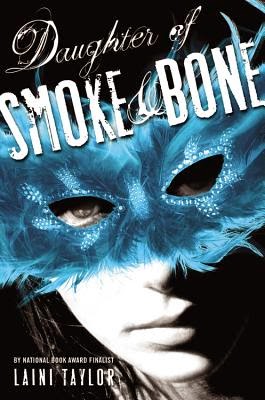
Audio Book: Daughter of Smoke & Bone

by Laini Taylor
read by Khristine Hvam
Support your local independent bookstore: buy it there!
Content: There is some talk about sex (though all the actual sex is off screen), a lot of violence, and some mild swearing. Is in the teen (grades 9 and up) section of the bookstore, though I didn’t have any problems with C (now 14) reading it.

I’ve been wanting to reread this (and Days of Blood & Starlight) in anticipation of Dreams of Gods & Monsters coming out. And so, when I saw that this one is out in audio, I snatched it up. (You should have seen me; I was fangirling all over the place. Kind of like when a customer came in to preorder Gods & Monsters. We were just gushing.) Anyway. I don’t have much to add about the story that I didn’t already say when I first read this.  But the audio was glorious. Hvam captured all the voices perfectly. To a spunky Zuzanna (love her best still) to Akiva and Karou, to the various chimera and seraphim that run throughout the book. (Brimstone is EXACTLY like I heard him in my head.) It was a joy to listen to. And one of those books that made you want to sit in the car, listening for hours on end.

If you haven’t had a chance to experience Taylor in all her awesomeness, you need to. And with the third coming out, take a weekend and splurge and read all three. You won’t regret it.

Mark of the Dragonfly

by Jaleigh Johnson
First sentence: “Micah brought the music box to her on the night of the meteor storm.”
Support your local independent bookstore: buy it there!
Review copy handed to me by one of my bosses, who told me to “get on it”.
Content: There’s some violence (none of it fatal), and a bit of an innocent crush. But no language. The reading level is probably a confident 3rd grader/4th grade level. It’s happily in the middle grade (3-5th grade) section at the bookstore.

Piper is a scrapper. She lives in a scrap town at the edge of the Meteor Fields, and runs out after storms, looking for salvageable items — things that have come through from other worlds to hers — in order to sell for pennies. She wants more from her life, especially after her father’s death in the Dragonfly Terrritories’ factories, but she doesn’t quite know where to start.

Then, after a particularly violent meteor storm in which her best friend, Micah, is seriously injured, Piper finds a girl. She’s not-quite-dead and bears the Mark of the Dragonfly, which means she’s protected by the king. Piper revives her, and when a sinister man (whom the girl, Anna, calls “the wolf”) comes looking for the girl, she and Piper escape. Only to find themselves on the 401, the main train connecting the northern Marrow kingdom with the southern Dragonfly one.

Once on the train, though, Piper’s and Anna’s problems don’t go away. They meet a whole host of characters and are being chased by slavers and raiders (and the wolf) on their quest to figure out who Anna is, and what Piper’s budding powers can do.

I know I didn’t do the book summary justice. I’m not sure, however, if anyone can. There’s a lot going on in this book. It does have things going for it: Piper is a complex heroine, stubborn and intelligent, a combination of drive and pluck that made her very likable. My only complaint is that Johnson chose to introduce a romance element (however slight) with a boy. I felt it was unnecessary to the whole story, and it didn’t add anything. However, I thought the relationship between Piper and Anna was incredibly well-written. It became a sisterly bond and one that was very realistic and interesting. And the world — from the objects falling from the sky, to the cool train — was fascinating. The book did feel incomplete — is it the first of a series? — and there were many threads left hanging, but it was a good, solid contribution to middle grade fantasy.

Five Kingdoms 1: Sky Raiders

by Brandon Mull
First sentence: “Weaving down the hall, Cole avoided a ninja, a witch, a pirate, and a zombie bride.”
Support your local independent bookstore: buy it there!
Review copy downloaded from Net Galley
Content: There’s some intense action, but it’s pretty tame, after the kidnapping scene. And there’s a lot of talk about “liking” girls, but it’s pretty innocent. It’s happily situated with the rest of Brandon Mull’s books in the middle grade (grades 3-5) section of the bookstore.

Cole is your average run-of-the-mill 7th grader in your average run-of-the-mill American suburban town. He has a crush on a girl, he has friends, he gets decent grades. Nothing spectacular. Then on Halloween, he and his friends go to a haunted house and end up slaves on a different planet. (Actually, his friends get kidnapped.. Cole goes down the hole after them, hoping to save them. And ends up as a slave.) The world is the Five Kingdoms, and Cole (and his friends) are on the Outskirts. And once you’re there, they find, it’s practically impossible to leave.

One of the best things about this new series by Brandon Mull is the world. The Outskirts is a fascinating place. Part magic, part dreams, part vicious, part insane; it’s a crazy, wild ride of a world. And while this one is basically your typical first in a series, introduction to the world book, the world that Mull creates is a fantastic one.

Cole finds himself sold to the Sky Raiders: a group of pirates that go out over the Brink — an endless chasm — and raids floating castles for anything they can sell. The thing is: the floating castles are dream-like, filled with semblences — lifelike beings that are somewhat sentient, but not entirely. They’re dangerous, and it’s Cole’s job, as the bottom of the totem pole, to scope out the castle, and make sure that it’s not dangerous before the raiding crew comes in. Their parting words before Cole’s first mission? Die bravely.

Of course it’s a bit more complicated than that; there’s a girl (there always is) who turns out to be something more than you think (again, kind of predictable). And there’s more adventure than you can shake a stick at, even though the plot kind of felt like one vignette after another all strung together. There is an overarching plot, and once we get to the point where the plot of this one begins to advance the overall plot, it loses some of the vignette quality. But the thing that kept me reading was the world. It really is that imaginative and wild.

The rest of it was good, enough that I’ll keep an eye out for the sequel. Which is a good thing, I think.

Lord and Lady Bunny — Almost Royalty

by Polly Horvath
First sentence: “It was summer on Hornby Island.”
Support your local independent bookstore: buy it there!
Others in the series: Mr. and Mrs. Bunny — Detectives Extraordinaire
Content: The only thing I can think of is that some of the vocabulary (like synchronicity or textured soy protein or materialized) might make it challenging for younger readers. It’s in the middle grade (grades 3-5th) section of the bookstore.

Fresh off their last adventure, both Mr. and Mrs. Bunny and their human friend Madeline are finding life a little boring. Madeline’s still stressing about money (thanks to her parents’ — Flo and Mildred — lack of foresight), and most especially about a college fund. Mr. and Mrs. Bunny are back to squabbling and comparing themselves to their uppity neighbor Mrs. Treaclebunny. But never fear: adventure is in the cards. Flo and Mildred discover they’ve inherited a candy shop in a small English village and Mr. and Mrs. Bunny decide to head to England on vacation. Of course they meet up on the cruise ship ride to England from Victoria, Canada (implausible, I know  — but some of the funniest scenes are on the cruise ship), and of course madcap farce ensues.

I don’t know if it was my mood, but I didn’t find this one as funny as the first. Maybe it was because it was very much the same thing over again, and not being New and Fresh, it wasn’t as enjoyable. But I also think it was because there was a lack of a consolidated conflict. In the first book Madelline and the Bunnys had to save Madeline’s parents from the bad foxes. This time, they were just going across the ocean and puttering about England trying to raise money. Not as, well, interesting in my book.

Though there were some brilliant moments. My favorites was the often-repeated aside that went like this:
“American?”
“No. Canadian.” When would they learn to tell the difference?

I laughed every time.

I was also amused at the meta part where Mrs. Bunny ended up at a book signing that the “translator” of the first book was at. Because, well, the humans think the translator is making things up, and Mr. and Mrs. Bunny don’t exist. It was pretty amusing.

But, in the end, it didn’t tickle my funny bone the way the first one did.

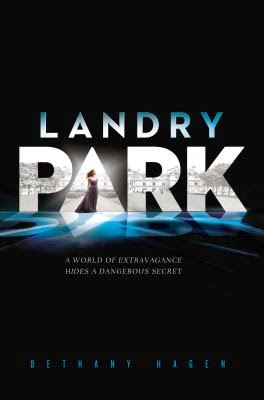
Landry Park

by Bethany Hagen
First sentence: “Two hundred years ago, America found itself at a crossroads.”
Support your local independent bookstore: buy it there!
Review copy snagged from the ARC shelves at work.
Content: There’s some talk of violence, though it’s all offscreen; a few mild swear word; and an illusion to an affair. It’s in the YA section (6-8th grade) of the bookstore, but I’d have no problems giving it to a younger child if they were interested.

Madeline Landry has grown up in a luxurious world: she’s the only child of an elite family and surrounded with opulence. She’s not particularly happy: she has struggles with her father over her education. She wants to got to university; he (and his will, not to mention the law) wants her to stay home, get married, run the estate, and pop out an heir. But she’s not entirely unhappy either: she loves her family and her home and the life. That is, until David Dana — the un-landed son of a gentry — comes into her life. Then, the things that have been skirting around her life — the class issues, the environmental concerns, especially with the lowest class, the Rootless — come front and center. Not to mention that David’s pretty dreamy.

In many ways, Hagen is treading the same ground as every dystopian book before her. America falls to the Eastern Empire, only managing to hang on by a thread. In the aftermath, a class system is formed — not based on race, as Hagen is so careful to point out — based on money and influence. And at the bottom are the Rootless, who handle the nuclear charges the gentry’s energy — and much of the wealth, especially the Landry wealth — comes from. And they’re getting restless. Where Hagen’s dystopian diverges from the pack is in the focus: Madeline is one of the elite, not the underclass. And when she has her eyes opened, she stands to lose everything. And I respected that.

I also really loved the world Hagen built, even though she never really gave us an explanation why the women were corseted and shoved into ball gowns and paraded around like it was Victorian England. I’m sure I could come up with some hypotheses — fancy dresses are synonymous with wealth? the women are as shackled as the Rootless? — but they are just that. No matter: Hagen is tackling issues that aren’t (readily, I think) usually seen in dystopia. Also, she doesn’t have a Romeo & Juliet love story going on here: both Madeline and David are from the gentry, and have to come to terms with their increasingly dissenting opinions.

It’s not a perfect beginning, but it is an intriguing one. I’m going to be curious to see where the rest of this series goes.

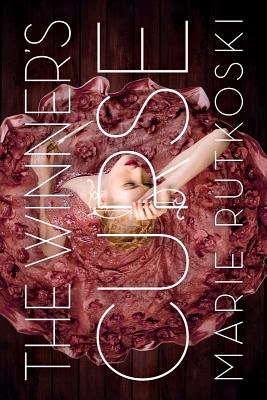
The Winner’s Curse

by Marie Rutkoski
First sentence: “She shouldn’t have been tempted.”
Support your local independent bookstore: buy it there!
Review copy pilfered from the ARC shelves at the bookstore.
Content: There is some violence, an attempted rape scene, some mild swearing, and a lot of politics. It’s in the YA section (grades 6-8th) of the bookstore.

Ever since I finished this book, I’ve been trying to think up a book talk about it. Some 30-second summary that I can give to entice people to want to read it. But I can’t. It’s partially because I’m enthralled with the book and once I start talking about it I just want to keep going and tell everyone ALL the good bits. And it’s partially because this one is REALLY hard to sum up.

I’m going to try, though.

It’s set in the fantasy world of Valoria, an empire of warriors loosely based on ancient Rome. Ten years ago they conquered Haran and enslaved all the people (they didn’t kill, of course). This is the world that Kestrel has grown up in. Her mother died when she was a young girl and her father — the general who led the invasion of Haran — has mostly raised her. He wants her to join the army — one of the two choices a Valorian girl has; it’s either that or get married — but Kestrel has resisted. Partially because she’s devoted to her music (taboo in Valorian society; music is for the slaves) and partially because she’s no good at it. What she is good at, however, is gambling.

I’m going to stop here and say that Kestrel is one of the more interesting characters I’ve read about, and one of the reasons I really liked this book. She wasn’t a “kick butt” heroine in the “traditional” fantasy sense of the word; she sucks at swordplay, is more interested in protecting her hands than learning how to slit a throat. But she is cunning. And observant. And willing to take risks and use what she knows (or deduces) to win a hand, whether that be in her game of choice, or in her life.

In fact, watching her strategize and manipulate the people around her was one of the most enjoyable aspects of this book. She’s not cruel — she’s actually sympathetic to the Haran rebellion that comes up — but she has her priorities, and she will do anything (anything!) to fill them. And even though it’s the first in a trilogy, this story line wraps up quite nicely.

The only weak leak is the Haran slave, Arin, that Kestrel falls in love with. He’s pretty much a one-dimensional character, and the love story felt, well, weak. Thankfully, there’s some nice twists near the end that fill it out much nicer. And maybe Arin will become more complex and fleshed out in later books.

Even with that minor quibble, I more than thoroughly enjoyed reading this one. I’m hooked.

Grasshopper Jungle

by Andrew Smith
First sentence: “I read somewhere that human beings are genetically predisposed to record history.”
Support your local independent bookstore: buy it there!
Review copy highly recommended by our publisher rep.
Content: Weeelll….. sh*t is Austin’s favorite word, and all grasshoppers do is “f**k and eat”. Which gives you a pretty good idea of the language. And Austin and Robby smoke. There is some drinking and one very unsexy sex scene (and talk of masturbating and erections and sex). It’s in the teen section of the bookstore, but I know I’m going to find it difficult to find a parent willing to buy this one for their kid. (That’s not to say the kids won’t like it. They might.)

The short version, the one I’ve been pitching at work (after I realized it was more than “grasshoppers and sex” — though it is that), is that it’s what would happen if Holden Caulfield found himself in a Stephen King novel. Austin — he’s the 16-year-old, sex-obsessed boy whose head we’re living in — is confused and lonely (even though he has a best friend and a girlfriend) and angsty and more than a little self-absorbed, much like Holden. And yet, the setting is so utterly antithetical to our character: a strain of mutant bacteria gets out and starts changing people into six-foot-tall praying mantises whose sole purpose in life is to eat — everything, including each other — and procreate.

Who dreams up these sorts of things? (Well, Stephen King and Andrew Smith, obviously.)

At any rate, it’s nothing like what I expected. I think with all the advance buzz — not just from our rep, but also Publisher’s Weekly, and just the reviews on Goodreads — I expected something, well, amazing. And I got… well, a sex-obsessed, selfish, confused 16-year-old boy. I can deal with that, for the most part (I did make it through Winger after all), and I appreciated Smith for giving us a confused sex-obsessed boy; Austin’s not only confused about life, but also about his own sexuality: how can a person be in love with — and desire — both of his best friends at once?

But, reading through the Goodreads reviews, I stumbled upon one from Kellie at Stacked that made points that I think had been at the back of my mind while reading this book. Nominally, it boils down to this: a woman couldn’t have written a book like this about a girl talking so frankly about sex or her vagina and have it receive the same amount of buzz and acclaim that this one is getting. And secondly: Austin treats girls and women as objects.

The first point, I can see and understand and am a little bit miffed about. It really does go back to this “boy books” and “girl books” thing we (publishers/sellers/parents) have gotten into. We “need” this book because boys “need” this book (because they’re not reading anything else). But that least me to point number two, which is what was bothering me while I read the book. I had chalked it up to being inside a 16-year-old boy’s mind, which is not a comfortable place. But, looking back, it’s really because, to Austin, all women (well, perhaps all people) are a means to an end: sex. He says he “loves” his girlfriend, but honestly, he just wants to jump her. And this — at my very core — bothered me. (In fact, when Robby finally confronts Austin and tells him he’s selfish, I cheered. More of that, please.)

I was talking to a friend at work about this and she pointed out that maybe, just maybe, it was meant to be satirical or ironic. That perhaps we, as readers, were meant to see that Austin is a complete jerk, and find humor in that. Or at the very least, self-reflection.  Perhaps. All I found was discomfort.

There were other things I was disappointed in: Austin’s circular telling of his own personal history, his constant repeating of people’s names (yes, I know Shann’s name is Shann Collins and her stepfather is Johnny McKeon, can you PLEASE stop already?), and just the general uneven pace of the narrative. That said, there were things to admire: actual sentences that made me laugh aloud. Or the fact that Austin’s (and Robby’s for that matter) sexuality was just a thing, and not an “issue”. Or six-foot-tall unstoppable praying mantises.

But I don’t think the positives outweigh the negatives on this one.

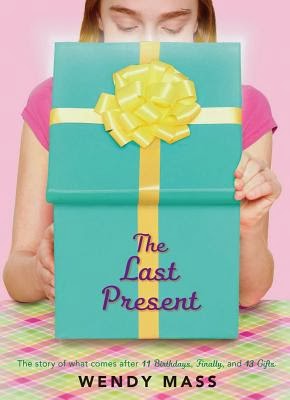
The Last Present

by Wendy Mass
First sentence: “When you’ve drawn breath for nearly a hundred years, not much surprises you.”
Support your local independent bookstore: buy it there!
Others in the series: 11 Birthdays, Finally, 13 Gifts
Content: There some kissing (a first kiss) and a bit of fudging the truth, but other than that, nothing objectionable. Sits quite happily with the rest of the series in the middle grade (3-5th grade) section of the bookstore.

Amanda and Leo have gone without talking for a year. Again. This time, though, it wasn’t a fight that did it: Angelina — the mysterious, magical woman in the town of Willow Falls — asked them to. Because when Amanda and Leo don’t talk, they have the power travel through time.

This time, they’re tasked with going back in time to fix their friend’s sister’s birthday party. See, Angelina bestows a “benediction” of protection on all the children of Willow Falls, something that will keep them safe. But she didn’t make it in time to help Grace (that’s the friend’s sister), and every attempt she made in the intermittent 10 years didn’t work either. And she’s tasked Amanda and Leo with going back and making sure that Grace’s benediction happens. Three times.

It sounds simple, and in many ways it is: Amanda and Leo head back to a different year each day over the course of a week, and all they have to do is fix one little thing at each birthday party. But as they find out, it’s not as easy as it sounds. And then there’s the problem that all this might be more about Angelina than it is about Grace.

While it’s nothing earth-shattering or ground-breaking, it’s a very sweet little book. I liked how Mass brought in all the elements of the whole series, and though this is Amanda and Leo’s follow-up story (they were always my favorite, anyway), Rory and Tara do have parts to play. It’s very much one of those “on the cusp of adulthood” books: Amanda and Leo have their first kiss, and they are beginning to make decisions that will effect their future. But even with that, it’s a simple, sweet (I know: I keep saying that. There really is no better word.) story about moving on and making things right.

And a fitting end to this series.

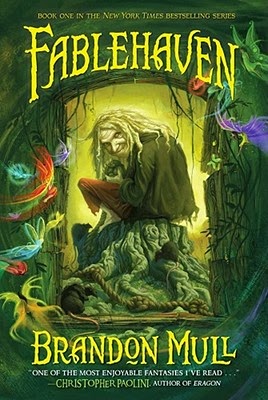
Fablehaven

by Brandon Mull
First sentence: “
Support your local independent bookstore: buy it there!
Review copy sent by the publisher because this is my January book group pick at work.
Content: Some mild fantasy violence, and one intense scene. Resides happily in the middle grade (3-5th grade) section of the store, though the language may be a bit difficult for the younger end of the spectrum.

People have been telling me for YEARS that I need to read Fablehaven. That they LOVE Fablehaven. That it’s brilliant. So I jumped at the chance to pick it for my 3-5th grade book group.

Seth and Kendra are off to spend a couple of weeks at their grandparents’ house while their parents are off on a cruise. The thing is: this is the side of the family they don’t know very well (you know there’s always one). Their grandparents are reclusive, and they’ve hardly seen them. In fact, their mom had to beg and plead in order to get them to let Seth and Kendra to stay there. So no one is really expecting things to go well. This feeling is exacerbated when, upon arriving, Seth and Kendra are shuttled off to the attic and told to stay either there or in the yard.

(Complaint #1: REALLY?  I’ve heard of controlling parents, but controlling grandparents is a first. I wanted to smack Grandpa for this. “It’s for your safety.” BAH. It’s a middle grade fantasy novel. Lighten up. Also: if that’s the way he treats the creatures in Fablehaven, I’m not surprised at the way he treats his grandkids.)

The kids are complete opposites. Kendra follows everything to. the. letter while Seth is the macho end of things and completely disregards Grandpa’s rules. (Complaint #2: why is it that 11-year-old boys are often
 portrayed as brats? I don’t have a son, so I don’t know if it’s typical. But I wanted to smack. the. kid. I also wanted to shake Kendra: lighten up a little, girl.) This not only leads to the discovery that Grandpa’s house (Grandma’s “missing”; she turns up later, just in time to help save the day. Which leads to Complaint #3: while Seth did a grand job creating conflict, the kids did very little in solving it. Sure, they were there, and they helped, but they didn’t DO much of anything.) is full of fairies and mythical creatures, but also to Seth creating a whole bunch of havoc.

And the book is already half done.

(Complaint #4: It seems like authors use series books to be lazy with world building. They take half the book SETTING THINGS UP and then hurry to wrap things up — or not — in the second half. *sigh*)

I wasn’t much interested in Seth or Kendra much after the halfway point. They did some stuff, they got Grandpa into deeper hot water, they rescued Grandma, blah, blah, blah.

I just didn’t care.

Perhaps this was a victim of high expectations. Or maybe it was reading it after reading So Many Cybils books (it wouldn’t have made my shortlist!). Or maybe it was lousy world building, with obnoxious characters, excessively floral language, and an uninteresting plot.

But it could be me.

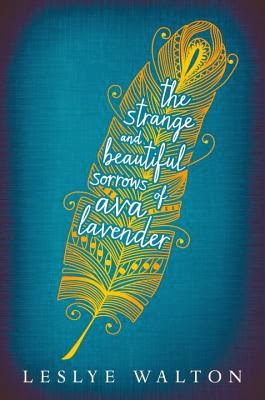
The Strange and Beautiful Sorrows of Ava Lavender

by Leslye Walton
First sentence: “To many, I was myth incarnate, the embodiment of a most superb legend, a fairy tale.”
Support your local independent bookstore: buy it there!
Release date: March 25, 2014
Review copy sent to me by the publisher in exchange for an IndieNext blurb.
Content: There are a few mild swear words, but lots of sex (none of it graphic), including a rape scene. It also reads more like an “adult” book than a “teen” one. I’ll probably shelve it in the Teen (grades 9 and up) section, though it might do better in the general fiction section at the bookstore.

While the title of the book suggests this book is about a girl named Ava Lavender, there is more to this story. In fact, it’s about Ava Lavender only because she’s the granddaughter of Emmaline Roux and daughter of Viviane Lavender. It’s equally their story. And it’s (to be honest) a difficult story to tell.

There’s foolish love, unrequited love, passion, and most of all a magic running through it all. It’s the magic of Like Water for Chocolate: Things happen because of the passion. Not the least of which is that Ava Lavender was born with wings. Not just little wings, either. Full-fledged, huge speckled wings. Her mother, being the person she is, doesn’t allow Ava to leave their hilltop Seattle home. But. Ava longs to be a “normal” teenager. Unfortunately, normality comes at a price.

The magic runs in other places as well: Ava’s twin, Henry, only talks when he needs to, and that’s not very often. Her grandmother sees ghosts. Her mother sense of smell is beyond extraordinary. The man down the road inspires people to confess their sins. Things like that.

The writing is… lyrical. The book… magical. And me? Well, I read it. See, magical realism and I don’t really get along terribly well. I wanted… something more to happen.  It’s not that it was a bad book; it wasn’t. It just wasn’t, well, my cup of tea.