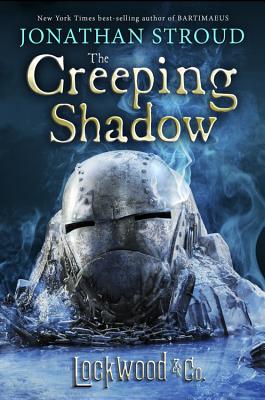
Creeping Shadow

9781484709672by Jonathan Stroud
First sentence: “I knew at once, when I slipped into the moonlit office and eased the door shut behind me, that I was in the presence of the dead.”
Support your local independent bookstore: buy it there!
Others in the series: The Screaming Staircase, The Whispering Skull, The Hollow Boy
Content: This  is not for the faint of heart, but rather for people who like to be scared. Still, lots of action, and if you don’t mind the scary stuff… It’s in the middle grade (grades 3-5) section of the bookstore.

Lucy has left Lockwood and Co.

Let that sit in for a minute.

There was a poltergeist at the end of The Hollow Boy who told Lucy she would be responsible for Lockwood’s death, and that spooked her so much that she couldn’t stay. She didn’t really leave on the best terms, and since then she’s been freelancing for other firms. It’s not ideal. But she (and the Skull, who is really one of my favorite characters) is managing alone.

Until a case — of the ghost of a cannibal — comes that Lockwood needs Lucy’s talents for. She goes to help — as a consultant, only for a night — and they successfully catch and eliminate the ghost. But things go wrong from there. The skull is stolen, there’s a collector who is buying up strong sources, there’s a Creeping Shadow terrorizing a nearby town. And all those things lead up to something Very Big and Very Wrong. And Lockwood and Co are the only ones who are equipped to deal with it.

I feel like a broken record: read these! They’re awesome! The mystery is intriguing, the characters are fantastic, and it’s spooky without being gory. It’s fast-paced, and action-packed, with tons of funny elements. It’s just SO good. The whole series. I love how they’re all inter-connected, but also individual stories. And Stroud just knows how to tell a story.

Just read the series, already. It’s that good.
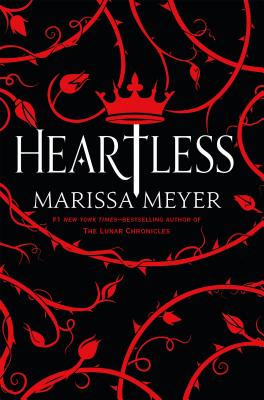
Heartless

heartlessby Marissa Meyer
First sentence: “Three luscious lemon tarts glistened up at Catherine.”
Support your local independent bookstore: buy it there!
Review copy provided by the publisher.
Content: There’s some kissing. And it’s length might turn some readers off. It’ll be in the YA (grades 6-8) section of the bookstore.

All Cath wants to do is bake amazing sweets. It’s something she’s good at, it’s something she enjoys, it’s what makes her happy. She has dreams of opening up a bakery, of selling her goods to everyone in the Kingdom of Hearts. But she’s the daughter of the Marquis of Rock Turtle Cove, and her business partner is her maid, and she’s attracted the attention of the King, and, well, it just isn’t Done.

And then she meets Jest. Dark, brooding, handsome, and the court joker. Not someone she should be paying attention to. And yet, she’s attracted to everything about him. His sense of whimsy, his magic. It’s all… impossible.

And because this is Wonderland, fate has something else entirely in mind for Cath.

This book is to Alice in Wonderland as Wicked is to The Wizard of Oz. Its the backstory of not only the Queen of Hearts, but many of the characters in Alice. In fact, the better you know Alice in Wonderland, the more fun Heartless is. It’s clever the way Meyer weaves in the original story (and Through the Looking Glass as well!) and gives us a wholly new story as well. I liked Cath as a character, I liked that she had a dream and a plan to have a happy life. And yet, she wants to please those people she cares about. And she gets put into an increasingly tight situation. Which leads to heartbreak and some less than ideal choices.

I found it fascinating. I enjoyed the way Meyer played with the original. I liked the chemistry between Cath and Jest. Where it kind of fell apart was the dark ending. It had to be that way — it’s the backstory about the Queen of Hearts, after all — but it kind of came out of left field for me. That said, it wasn’t enough to completely throw my enjoyment of the book. It was a good story, complete, and one that is definitely is worth spending time on.


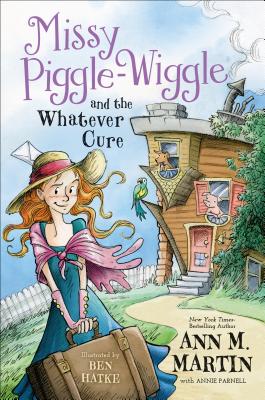
Missy Piggle-Wiggle and the Whatever Cure

missypigglewiggleby Ann M. Martin
First sentence: “The most wonderful thing about the town of Little Spring Valley was not its magic shop, and not the fact that one day a hot-air balloon had appeared as if from nowhere and no one ever knew where it had come from, and not even the fact that the children could play outside and run all up and down the streets willy-nilly without their parents hovering over them.”
Support your local independent bookstore: buy it there!
Review copy snagged off the ARC piles at my place of employment.
Content: There’s nothing to cause concern. Lots of illustrations, short chapters (they’re kind of like connected short stories). It’d made a great read-aloud as well. It’s in the middle grade (grades 3-5) section of the bookstore.

I never read the Mrs Piggle-Wiggle books, but I did have a couple of girls who were into them. C, if I remember right, especially loved them. So, while I was familiar with the whole concept, I hadn’t actually read them before.

In this one, Mrs Piggle-Wiggle is off to find her husband (she had a husband?) who was called away “some years ago” by pirates. Not wanting to leave the children of Little Spring Valley without some sort of positive influence (because heaven knows they need it!), she writes to her niece, Missy, to come and stay at the upside-down house and help guide these wayward children to a much happier life.

(I shouldn’t let sarcasm seep through. The Piggle-Wiggles would disapprove.)

The chapters, after the introduction, go basically like this: there is a child who has a “problem” that needs to be fixed. The parents, at their wits’ end, go to Missy who gives the kid some sort of magical solution, which exacerbates the problem, which, in turn, solves it. As an adult, I found it super didactic, but that’s just me. I’m sure that there are tons of kids who would find the solutions hilarious (I think they were meant to be…) and maybe even a few who could learn from it. (I, personally, got tired of the perfect LaCarte kids and wanted there to be something wrong with them.)

It wasn’t a bad book. Just maybe not one for grown-ups.

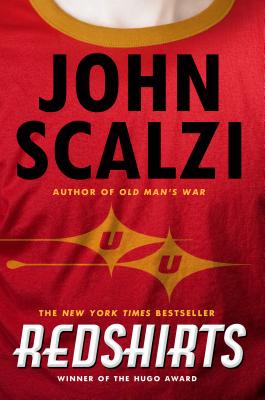
Redshirts

redshirtsby John Scalzi
First sentence: “From the top of the large boulder he sat on, Ensign Tom Davis looked across the expanse of the cave toward Captain Lucius Abertnathy, Science Officer Q’eeng and Chief Engineer Paul West perched on a second, larger boulder, and thought, Well, this sucks.”
Support your local independent bookstore: buy it there!
Content: Aside from the number of deaths (some of which were gruesome) and a bunch of swearing (including a lot of f-bombs), it’s fairly accessible. I’d give it to any nerdy geek (teen and up) who’s interested.  It’s in the Science Fiction/Fantasy section of the bookstore.

Things are a bit weird on the starship Intrepid. Sure, they’re the flagship of the Universal Union, but they’re experiencing a higher than average number of deaths. Mostly of new ensigns. And no one seems to know why it’s happening. Sure, they’ve figured out it’s always the newbies, and that going with certain crew members either ensures your safety (or demise). But there’s really no rhyme or reason to it. When five new ensigns  — Dahl, Duvall, Hester, Hanson, and Finn — get assigned to the Intrepid, they’re thrown into the weirdness of it all. Except that they (especially Dahl) really like their lives and want to continue to live. Thankfully, there’s one person on the Intrepid — a hermit named Jensen — who has things sort of figured out. It’s all just a lot weirder than anyone was expecting.

First: I’m not really a Trekkie. Sure, I watched some of TNG and most of Deep Space 9. I’m fluent in Trek, I know what’s going on, but I’m not a super huge mega fan or anything. All that is to say that even if you’re not a Trekkie, and you only know the basic fringes of the show (especially the original show), you’ll get what Scalzi is parodying here. And that is enough to have enormous amounts of fun with this. No, it’s not side-splitting hilarious, but it is amusing. And entertaining. It’s not deep (though the epilogues are clever and sweet), but it’s fun. The characters are delightful (mostly), and it’s fascinating watching the meta upon meta plot unfold. In short: it’s a well-written romp through a genre that sometimes takes itself way too seriously.

And sometimes that is exactly what you need.

Replica

replicaby Lauren Oliver
Support your local independent bookstore: buy it there!
Release date: October 4, 2016
Review copy provided by the publisher.
Content: There’s some violence, all off screen, and about a dozen f-bombs scattered throughout. It will be in the Teen section (grades 9+) of the bookstore.

Gemma has spent her whole life feeling like a freak: she’s overweight and her parents are over-protective and yet distant, all of which leads others at school to make fun of her. So, when a rock tied around a Frankenstein mask gets thrown through the window of her house, she figures it’s the school bullies picking on her again. But, she overhears her parents arguing late at night and suddenly everything takes on a new meaning: it’s not HER the mask was meant for, but her father.

See, her father was co-owner of this super pharma business, which had some dealings with Haven, a super-secret island off the coast of Florida. No one knows what they do there, but her father had enough complaints that he got out. But that got Gemma curious: what is Haven, and why all the secrecy?

All that leads Gemma to sneaking off to Florida for spring break, to get answers to figure out what is going on with her parents and why this whole Haven thing is so secretive (and somehow, important).  What she finds out will change her life forever.

In some ways, this is a fascinating novel, playing with the ideas of humanity and just how far science will go to justify the ends it wants. I’m not entirely sure it justified the two-part story, however. I read Gemma’s version first, on a whim, and by the time I got to Lyra’s I wasn’t sure how much I cared. And yet, in retrospect, it’s possibly Lyra’s story that’s more important. Imagining that replicas have thoughts and feelings, that they are individuals, is fascinating thing to think about. And yet, I felt like something was lacking. Perhaps the ending was too abrupt? Maybe I hoped for more understanding or perhaps retribution. It all felt so… tidy.

Even so, I was thoroughly engrossed by the book. I wanted to know Gemma’s (and Lyra’s, as well) story, and the horrors of what the characters were going through was enough to keep me turning pages.

The Adventurer’s Guide to Successful Escapes

adventurersguideby Wade Albert White
First sentence: “At Saint Lupin’s Institute for Perpetually Wicked and Hideously Unattractive Children, every orphan is treated with the same amount of disdain and neglect.”
Support your local independent bookstore: buy it there!
Release date: September 13, 2016
Full disclosure: I had dinner with the author at Children’s Institute, and think he’s delightful.
Review copy provided by the publisher. I met the author at Children’s Institute 4
Content: There’s some biggish words, and a wee bit of violence, and maybe some of the humor will go over the heads of the younger kids, but mostly it’s just fine for the middle grade (3-5th) grade set, which is where the book is located at the store.

Anne has spent her whole life at Saint Lupin’s Institute, working and wishing she knew where she came from. She has a plan: when she gets to leave when she turns 13 (everyone is kicked out because the Hierarchy stops supporting them), she’s going to go adventuring and looking for her past. However, when her birthday comes, the Matron denies Anne the right to leave. That starts a chain of events that leads Anne to accidentally stealing a gauntlet (a metal hand thingy) and a prophecy medallion, that starts a Rightful Heir Quest (an unheard of Level 13!), which gives Anne and her friends Penelope and Hiro, four days which to fulfill. It’s not an easy thing: solving riddles, finding weird robots, traveling by fireball, but someone’s got to do it. And maybe save the world (and pass Questing 101) while they’re at it.

I haven’t had this much fun reading a book since The Hero’s Guide to Saving Your Kingdom. It’s got the same sort of off-beat humor, full of puns and plain silliness. It’s different though; the world that Anne is on is one that isn’t fully fleshed out. It feels like an old-fashioned fantasy, but there’s robots and computer screens and elevators… and mention of an Old World. Is it scifi or dystopian?  I wasn’t sure. (Actually, I do have a working theory of the world, but I’m going to keep it to myself, until I figure out whether I’m right or not.) But, in spite of those questions, I enjoyed this one thoroughly. It was fun, it was funny, it was clever, and it was pretty much exactly what I wanted out of a middle grade fantasy.

I’ll definitely be picking up the next one when it comes out.

Monsters of Men

monstersofmenby Patrick Ness
First sentence: “‘War,’ says Mayor Prentiss, his eyes glinting.”
Support your local independent bookstore: buy it there!
Others in the series: The Knife of Never Letting Go, The Ask and the Answer
Content: It’s a violent book — it’s a violent series — and no one is safe. It’s also emotionally difficult. That, and mild swearing, puts it in the Teen (grades 9+) section of the bookstore, but I’d give it to an interested 6th grader.

This is a big, difficult book to get through. Not because of the length (though it is nearly 600 pages), but because of the emotional content of this. I’m incredibly glad I’ve had a book group to read this one with because otherwise it would have been much too difficult to handle.

I don’t want to spoil the book, so let’s just say that everything culminates in this one, and that characters you thought you knew you find out you don’t. That nothing is safe, and that (especially this) war is an awful thing and unless someone takes the higher road, there will be no end to it.

The thing that has surprised me most about this series is how relevant it still is. The best thing speculative fiction does is explore the issues in the world, and this one takes war, terrorism, and power head on. It’s brilliant in its portrayal of colonization, of the way people grab and hold on to power, and the sacrifices it takes to make it all just stop.

I’m usually disappointed with endings, but this one fit the series. Harsh and brutal, and yet hopeful, it didn’t make me cry, but I definitely respected what Ness did.

A very, very good series overall.

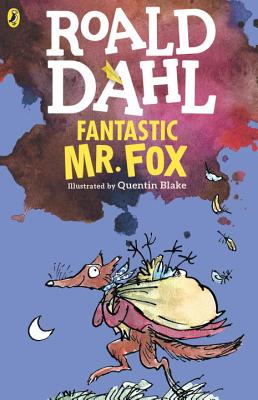
Fantastic Mr. Fox

fantasticmrfoxby Roald Dahl
First sentence: “Down in the valley there were three farms.”
Support your local independent bookstore: buy it there!
Content: It’s short, it’s sweet, and it’s simple. So, even though there are no children as protagonists, it’s in the Middle Grade (grades 3-5) section of the bookstore.

The plot is simple: Mr. Fox steals poultry from the farmers Boggis, Bunce and Bean. Who, according to the book, are awful, ugly (of course), greedy people. So, they decide that they will make it their business to get rid of Mr. Fox. But, he proves too clever by half, the end.

I really don’t have much more to add, since my opinion of it hasn’t changed in six years. But, I do want to mention the book group discussion. It was a LOT of fun. First off, the kids liked it a LOT more than I did, deciding that it was just a lot of silly fun. In the process of prepping for the book group, I came across this website called Teaching Children Philosophy. And they had a module on Fantastic Mr. Fox, which proved to be the jumping ground for a really interesting discussion. Which almost made the meh book worthwhile.

It’s been a LOT of fun doing the Dahl book club this year. The kids were great, and the discussions a ton of fun. Hopefully, I can find something just as grand next year.

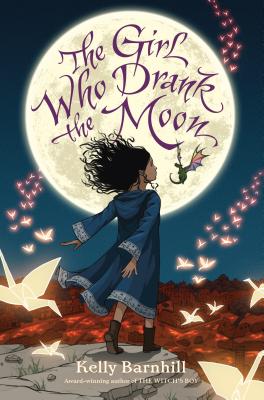
The Girl Who Drank the Moon

girlwhodrankby Kelly Barnhill
First sentence: “Yes.”
Support your local independent bookstore: buy it there!
Review copy provided by the publisher.
Content: Although this is masquerading as a middle grade novel, it’s really an upper-middle-grade/mild YA novel. There’s not much, content-wise, that would be inappropriate for the younger set, I’m just not sure how well they’d follow the plot. It’s either for those contemplative readers who want to immerse themselves in a slow story, or older readers who are looking for something lyrical.  It’s in the middle grade (grades 3-5) section of the bookstore (though it could easily go in our YA — grades 6-8 — section).

It’s hard to know where to begin with this one. There’s a girl — Luna — who was a baby left beside the road by a town that believes unless they sacrifice one baby, the witch will destroy their village. There’s a witch — Xan — who has been rescuing the babies from the village for years, depositing them in homes where they are cared for. She takes Luna, and decides to raise her. There’s a Perpetually Tiny Dragon and a swamp monster. A madwoman in a tower, and a  young man who defies the town council. There’s a lot going on in this novel, and yet, there also isn’t a lot. It’s a very small story about home and family and doing what’s right over what’s convenient. But it’s a larger story, as well: about home and family and doing what’s right over what’s convenient.

I do have to admit that while I found the language beautiful and I thoroughly enjoyed the story, I did keep wondering what sort of kid was going to pick this one up. It’s so different from the standard Middle Grade fare (probably for a good reason): much slower, much more contemplative. I do hope it finds an audience, because it really is a beautiful story.

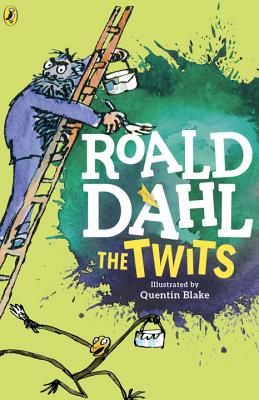
The Twits

thetwitsby Roald Dahl
First sentence: “What a lot of hairy-faced men there are around nowadays.”
Support your local independent bookstore: buy it there!
Content: This one’s slim, with lots of illustrations and simple words. It’s perfect for those younger readers who want an introduction to Dahl and for reluctant readers. It’s in the middle grade (grades 3-5) section of the bookstore.

For the record: I’m beginning to think that Dahl wrote kids books so he could be grumpy about parenting and social trends and disguise it as “humor” for kids.

This time, he’s upset about beards, about cruel adults (he’s always upset about cruel adults; I also think he thinks most adults are cruel), and about the mistreatment of animals (which is a new one).

The plot: the Twits are horrible people. They’re ugly (as are all horrible people in Dahl’s books), they treat each other horribly, they treat their pet monkeys abominably. and then they get their comeuppance. End of story.

And yet, it was funny. The Twits’ pranks on each other were pretty silly and (mostly) harmless. The way the monkeys got back was absolutely brilliant (if implausible), and I admit, I did laugh. (K on the other hand, would HATE this book. She has a real problem with humor at the expense of other people.)

I’ll be interested to see what the kids think of it at book group.