Audio book: The Storyteller

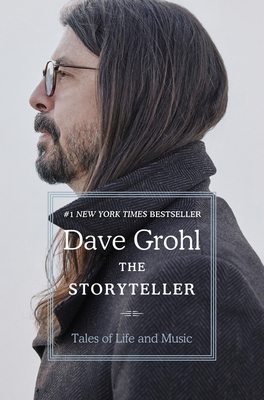
by Dave Grohl
Read by the author
Support your local independent bookstore: buy it there!
Or listen at Libro.fm
Content: It’s very sweary. Very. Sweary. It’s in the Music section of the bookstore.

I listened to this in part because it has been getting lots and lots of good buzz, making end-of-year best-of books. I remember Nirvana (yeah, he’s the guy from Nirvana) getting big when I was in college, and listening to them a lot; I was into anything I could throw my body around on a dance floor too, and Nirvana fit the bill. But I wasn’t into them enough to know who the band members were. And yeah, I know about the Foo Fighters but I didn’t realize that their frontman was the same guy. But there’s also the pull of a celebrity memoir as read by the celebrity. I seriously love those.

This one completely lives up to the hype. Grohl is engaging as a, well, storyteller, giving the book a feeling of him sitting next to you, telling you the remarkable stories of his life. He has often been in the right places at the right times, and willing to take the chances he needs to take in rder to make the most of things. That’s not to say he doesn’t work for it as well: he is completely self-taught, practicing and practicing until he get thing “right” (the story of him playing Blackbird at the Ocsars demonstartes his work ethic really well).

But more than just being an enegaging storyteller, he’s telling really cool stories.It’s roughly chronologial, though it also bounces around, if he’s got a story to underline whatever point he’s trying to make at the time. Therewere many times when I went and watched videos on YouTube, just to see the story he was telling (like how the Come as You Are video was filmed washed out and hazy partially becase Cobain was tripped out on heroin, and how Grohl still can’t watch it to this day becuase it reminds him too much of the dark times and loss; or on a more upbeat note, the hilarious Fresh Pots). Grohl mostly keeps the book upbeat, but he does talk about Nirvana’s metoric rise to fame and how that affected everyone in the band, and the loss of Cobain, as well as Grohl’s best friend Jimmy. But, he recognizes he’s had a good life, and just wants to hare the good tiems and music with you.

In other words: I really quite loved this one.

Audiobook: On Animals

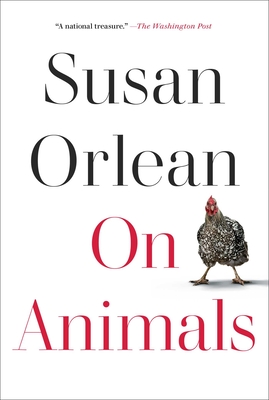
by Susan Orlean
Read by the author
Support your local independent bookstore: buy it there!
Or listen at Libro.fm
Content: There’s nothing objectionable, except maybe some animal violence. It’s in the Science section of the bookstore and is probably good for anyone who loves animals.

I think it’s pretty well-accepted that Orlean is a fabulous non-fiction writer. And so an entire book filled with essays on different animals? Sign me up. She covers a whole range of animals from her adventures in chicken raising to her fascination with donkeys as well as other animals: lions, pigeons, mules, pandas, orca whales.

I learned so much about animals, some of which I knew but much of which I didn’t. Orlean has a dry sense of humor and some of the stories — there’s one about her picking a chicken to go on Marth Stewart as well as the story about her homicidal rooster, Laura — just cracked me up listening. She’s a good narrator, sounding just like I thought someone who has spent much time writing and researching non-fiction subjects (my first exposure to her was The Orchid Thief, which is just amazing) would sound. She takes her subjects seriously, but it doesn’t feel weighty.

An excellent book, highly recommended on audio.

Audiobook: Crying in H Mart

by Michelle Zauner
Support your local independent bookstore: buy it there!
Or listen at Libro.fm
Content: There are some swear words, including a few F-bombs It’s in the biography section of the bookstore.

This is basically Zauner’s homage to her Korean mother, who passed away from cancer in 2014. She goes through her childhood, how her relationship with her mother developed and struggled, and through her mother’s sickness and her death to the year or so afterward. The thing that ties everything together is Korean food. Her mother’s home cooking, the tastes and smells that accompanied Zauner all through her childhood trips to Seoul to see her mother’s family, and through to watching Mangchi on YouTube after her mother’s death, in order to learn the food traditions that she didn’t want to be lost.

It wasn’t a gad book, and Zauner wasn’t a bad narrator. But, I didn’t quite love it either. At times, Zauner felt like a whiny brat, and I just wanted to shake her. I suppose she was just being honest, and so I can admire her for that. The things I liked best were near the end when she starts learning how to cook Korean food. The chapter where she learns to make kimchee was fascinating. And I understood her pain (sort of? I haven’t lost anyone I was incredibly close to, really) or at the least, I understood that this was how she was processing her pain.

I can respect this book, at least, even if I didn’t love it.

Audio book: Taste

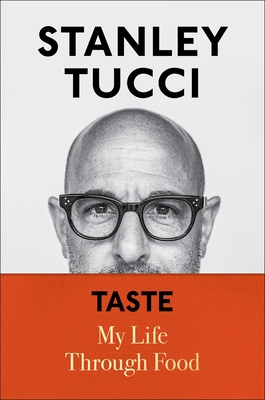
by Stanley Tucci
Read by the author
Support your local independent bookstore: buy it there!
Or listen at Libro.fm
Content: There is some mild swearing, and then a handful of f-bombs that kind of come out of nowhere. It’s in the Cooking Reference and Biography sections of the bookstore.

Ah, Stanley Tucci gave me a wonderful gift: two of my favorite kinds of guilty pleasure books — celebrity memoirs and foody books — in one delightful listen. It really doesn’t get much better than this.

It’s basically a brief overview of Tucci’s life — not really in any depth, but more of an overview — highlighting on the role food played (and it played a big role) in his life. Italian food is his heritage, and the connection he feels to it (and opinions about it) is great and fascinating. It’s interesting to listen to his stories about food and family and meals he remembers, and he doesn’t spend much time dishing about the “business” or his personal life. It really is all about the food for him, which is something I can’t complain about. Plus: there are recipes! (And at least one I want to try.)

He’s a good narrator, too, making the listener feel as if he’s there telling you his story. It was the perfect listen for me right now, and I’m glad I did.

Undefeated

by Steve Sheinkin
First sentence: “Jim Thorpe looked ridiculous and he knew it – like a scarecrow dressed for football, he’d later say.”
Support your local independent bookstore: buy it there!
Content: There are problematic elements regarding Native representation. It’s in the kids biography section of the bookstore.

As part of our Native people unit in this class I am taking, we had to choose a problematic book to read. I was super surprised to see Sheinkin’s work on the list for problematic; I have a hih respect for his work, and assumed that all of his research wa sipeccalbe.

In this instance, he’s looking at the Carlisle Indian School, a residential school — for “civilizing the natives” — run by the government in the late 1800s though the early 1990s. They ended up with a football program, one that went up against the “big” schools of the time — Harvard, Penn, Yale, and Princeton — even though they were a lot smaller and more poorly equipped. It’s also the history of Jim Thorpe, who ended up being the one of Carlisle’s — and possibly the sport’s — greatest athletes. Where Sheinkin ends up being problematic is in the way he talks about the school and about Thorpe’s Native history. As a white person, Sheinkin doesn’t even know what he doesn’t know, and doesn’t know what it is how it is that he needs to write about it. It makes sense that the book would end up being problematic. .

Truthfully, the part of the book I found most fascinating was the history of football. Sheinkin is an excellent writer and was able to write about the games in a way that made them leap off the page. It was interesting to learn about what the game was like in the early days. And it was interesting to learn the role that Carlisle Indian School played in developing and changing the game.

So, yeah: problematic. But still interesting.

Black Girls Rock

by Beverly Bond (editor)
First sentence :”There is a palpable blissfulness in our magic.”
Support your local independent bookstore: buy it there!
Content: It’s marketed to adults but there’s nothing objectionable. It’s in the Sociology section of the bookstore.

Bond put together a series o short personal essays from a bunch of famous Black women: activists, politicians, actors, musicians, and artists. They each told a small slice of their own story and successes. I’m not sure what the purpose was; possibly it was hoping to inspire other Black women to become their best selves. Maybe it was a collection to highlight the diversity in black Black womanhood (which it did well) and the range of experiences and successes Black women have had.

I wanted to like the book more than I actually did. I like the idea of the book. I like that this book exists. But reading it was a bit of a chore. Some of the essays were well, not great. You could tell that many weren’t writers. And while I wanted to care about their stories, I didn’t always.

Is it an important book? Yes. Was it a good one? I’m not entirely sure.

Audio book: Fox and I

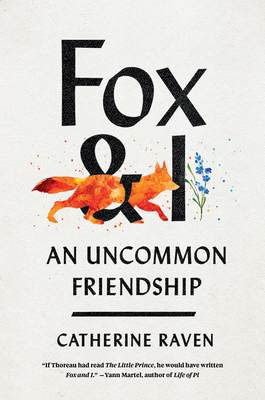
by Catherine Raven
Read by Stacey Glemboski
Support your local independent bookstore: buy it there!
Or listen on Libro.fm
Content: There’s some intense moments. It’s in the biography section of the bookstore.

Catherine is a biologist by education, but mostly she’s a naturalist: she enjoys being in nature, having worked as a park ranger and currently lives mostly off the grid outside of Yellowstone National Park in Montana. The book is basically a memoir of her life, but more its more than that: it’s a reflection on our relationship with nature, and whether or not it’s “appropriate” to befriend a wild animal. In her case, a wild fox.

This is an odd book, reminding me very strongly of Lab Girl. Raven struggles with her feelings of friendship towards something that “supposed to” be an object of her study. It’s most interesting when she”s analyzing literature — most notably Frankenstein, Moby Dick, and The Little Prince — or maybe that’s what I found most interesting. Even with it’s oddness, I found the story compelling possibly because the narrator is really good. She kept the book interesting and entertaining in spite of its oddness.

Not my most favorite book this year, but an interesting one.

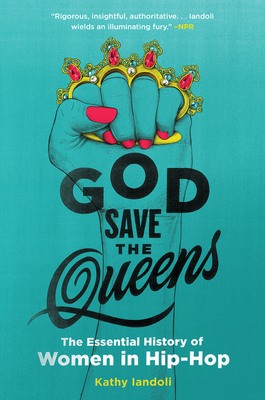
Audio book: God Save the Queens

by Kathy Iandoli
Read by the author and Bahni Turpin
Support your local independent bookstore: buy it there!
Or listen at Libro.fm
Content: There is a lot of swearing, including many f-bombs, and the use of the n-word. It’s in the Music section of the bookstore.

This is what book clubs are good for: I would have never picked this one up without it. I know very little about hip hop (as evidenced by the fact that they kept saying names and I knew very few of them) and I don’t know that I ever really cared enough about hip hop to read a musical history of the women in the business.

That said, this comprehensive history covering women and their role and place in hip hop, was interesting. Even if I couldn’t keep names straight.

Things I took away: the business (still) is not friendly to women.It just isn’t. It’s full of misogyny and promoters who feel like there’s only room for one woman hip hop artist at a time. The business started women super young — like teenager young — in the 80s and early 90s, which couldn’t have been good for their mental health. There’s this unspoken competition in hip hop that I don’t understand — why was everyone “fighting” all the time? I don’t get it. But, I do get that these women had a lot of obstacles to overcome, and that that decks are stacked against them. (For example: being someone who doesn’t really delve deeply into music, I didn’t recognize any of the women’s names until about the late 90s. I can’t say that about the men. That says something, I think.)

I enjoyed Turpins narration (Ianodli only narrated the prologue and epilogue, where she got a bit overly sentimental about the Strength of Black Women. It felt unnecessary, I think.) though it really didn’t give Turpin’s talent for doing voices and accents much to do. That said, I will listen to anything she narrates. Period.

I may have enjoyed this one more in print rather than audio, though: I kept wanting pictures and I would lose track of who was who in the audio version. That said, I didn’t dislike it, even if I probably wasn’t the target audience.

How the Word is Passed

by Clint Smith
First sentence: “The sky above the Mississippi River stretched out like a song.”
Support your local independent bookstore: buy it there!
Content: It talks about violence toward enslaved people, uses the n-word (in context) and some mild swearing. It is in the Biography section of the bookstore.

Clint Smith has written an absolutely beautiful book. It’s not an easy book to read, though the premise is simple: he visits several historical sites that are connected with the slavery in the United States, and recounts his experiences and analyzes the information presented at the sites. He talks to all sorts of people — visitors, tour guides, the people in charge of the sites — in order to get as wide a snapshot as possible.

He recounts his visits to seven sites: Monticello, Whitney Plantation, Angola Prison, Blandford Cemetery, Galveston Island, New York City, and Gorée Island. Some are delving into their history of enslaving people, others not so much. Smith works to understand and critique an inform the reader not just about the history around the sites, but how their interaction and presentation of the past is affecting and informing us today. In short: in order to reckon with the present, we need to reckon with teh past.

It sounds like a difficult read, and it is at times, but Smith’s writing is so beautiful, it doesn’t feel like a chore to read this. He is a poet, and it shows: his descriptions of the places and people, his journalistic interactions, his presentation all draw the reader in and made me, at least, want to read more.

Possibly one of the more important books I’ll read, but also one of the more beautiful ones.

Hola Papi

by John Paul Brammer
First sentence:: “I was warned not to download Grindr.”
Support your local independent bookstore: buy it there!
Review copy provided by the publisher
Content: There’s lots of talk about sex, and lots of swearing including multiple f-bombs and a couple of gay slurs.

This is a book that’s, as the subtitle mentions, Brammer’s memoir loosely framed around the advice columns he’s become somewhat known for. He didn’t have a happy childhood: growing up in a small, rural town in Oklahoma, he was bullied in middle school for his “other”-ness (he wasn’t willing to identify as gay until college).This affected much of the rest of his life, his opinion of himself, the way he approached dating, and even his professional life (which had its fits and starts).

It was an interesting book, learning about Brammer’s childhood, his heritage (which is Mexican, but his family didn’t identify as such, which is an interesting thing to unpack), his experiences being a gay man in America. It’s more introspective and less funny than I expected (I don’t know why I expected it to be funny?), and I didn’t love it at much as I thought I would. That said, it’s always good to read about experiences other than one’s own, and it reinforced the idea that being gay in America still isn’t (or at least wasn’t in the early- to mid-2000s) easy.

I’m not sorry I read it, but it’s also not for everyone.