Audiobook: Let’s Explore Diabetes with Owls

by David Sedaris
read by the author
ages: adult
Support your local independent bookstore: buy it there!

A long, long time ago my frend Wendy dragged me (literally; I had no idea what was going on) to see David Sedaris live. I had a blast; he was hilarious, and I couldn’t wait to read some of his writing.

Except. I didn’t laugh when I read his essays. Which lead me to believe one thing: Sedaris is better when he reads his writing than when I do.

And I was right.

I picked up the audio book of his latest group of essays, and I actually found them funny. Some more so (Obama!!!!! or The Cold Case) than others (the stories on the last disc were pretty weird; though there’s satire about the “slippery slope” of having gay marriage legalized that’s pretty topical). I think I laughed the hardest on the ones where he recorded before a live audience; something about other people laughing made me laugh as well.

I don’t really have much else to say about this one. It’s quintessential Sedaris, with his trademark irony and dead-pan humor. Which means, if you like that kind of thing, you’ll like this. I’d just recommend listening to it.

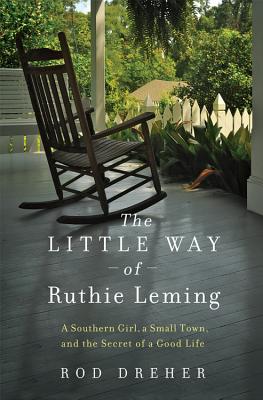
The Little Way of Ruthie Leming

by Rod Dreher
ages: adult
First sentence: “
Support your local independent bookstore: buy it there!
Review copy was sent by the publisher to my husband, who then passed it on to me.

I’ve been hearing for years from my husband about Rod Dreher, with whom he’s had a passing internet “relationship” for quite some time. I’ll be up front: Hubby loved this book. And when he (Hubby, not Rod) passed me this book he said, “You need to read this so you can understand why I want a cow.”

The book, simply, is Rod’s memoir about his growing up in a small Louisiana town, and his relationship with his younger sister as she battled cancer.

Writing that sentence made this book seem really trite, when it actually wasn’t. There are a lot of layers to this — I can see why Hubby enjoyed it — about the the good and bad in individual people, about tension within families, about the tragedy of an early death. Rod has a good story here, and is (thankfully) honest about the good and the bad in all situations. But, mostly what comes through is the love that he has for his sister, Ruthie, and the love that the town had for her.

I was grateful that he showed the tension between the positive and the negative; Ruthie was never deified (even though he considers her a Saint, in the traditional religious sense), and came off as a very good, very human person. I appreciated that he acknowledged the importance of place in a person’s life, and how good it is to belong somewhere. I appreciated, too, that he recognized that living in a small town (especially a small Southern town) is a double-edged sword: there are equal measures of generosity and backbiting involved.

The only drawback was the kind-of clunky writing style. Rod’s a columnist, and many times this read like a really, really long newspaper column or blog post. But, once I got used to that, I could sit back and enjoy the story he had to tell. I don’t know if it was a great one — and I’m still not sure about the whole cow thing — but it was a good one. And I appreciate my husband wanting to share that with me.

What Would Barbara Do?

How Musicals Changed My Life
by Emma Brockes
ages: adult
First sentence: “To give you an idea of the scale of what we are dealing with here, I’d like to begin with an act of superstition.”
Support your local independent bookstore: buy it there!

Emma adores musicals. And that’s not exactly a cool thing for a 20-something English gal. So, she adores them in quiet. (Well, only some of them. The Good ones.) As she’s grown up, she’s discovered that there are two types of people: those who like musicals, and those who don’t Get It.

This little book is basically a memoir framed around musicals. Which wasn’t a bad thing. Brockes has Definite Opinions about musicals (some of which I agreed with; others which I didn’t), and isn’t afraid to own the fact that she adores the whole genre. She’s not an “expert”, but she is an enthusiast, which qualifies her to give her opinion about such things. Right?

Well… actually, that’s kind of what annoyed me about this one. The subtitle gave me the impression that either 1) she really had something new and original to say about musicals, or 2) she had a really crappy life, and somehow musicals pulled her out of it. But, truth be told: it was neither of those things. It was a story about a middle class suburban girl who grew up with a mother who loved musicals and thought they were dorky until she was able to accept the dorkiness and own it. (Oh, and there was actually very little about Barbara Streisand to boot.) And she needed 264 pages to get through that.

In the end, I’m not sure if I disliked this one because of my expectations about it. Or if it was Brockes came off as a pompous twit. And even though I finished it (admittedly skimming the last bits), I don’t think it was worth my time.

Is there any other book about musicals out there that would be a better read than this one?

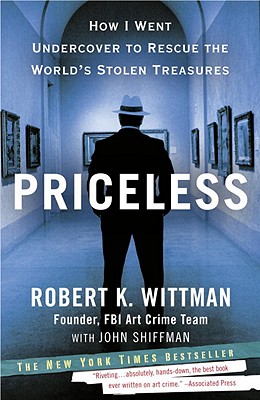
Priceless

by Robert K. Wittman
ages: adult
First sentence: “The platinum Rolls-Royce with bulletproof windows glided east onto the Palmetto Expressway toward Miami Beach, six stolen paintings stashed in its armor-plated trunk.”
Support your local independent bookstore: buy it there!

Robbert Wittman spent 20 years in the FBI doing a mostly thankless job (at least for the bureau): recovering artwork. He didn’t do any of the high-profile stuff that makes the movies; in fact, most of the time, he didn’t even get public credit for his work because he spent most of his time under cover, getting dishonest dealers and art thieves to give up their stolen goods.

He talks about a handful of his cases from 1988 to the Big Case — attempting to recover the stolen paintings from the 1990 Boston Gardner Museum heist — and his role in recovering a handful of priceless art and artifacts, as well as talking about the state of Art Crime Recovery in this country (pitiful, to sum up).

On the one hand, this book was fascinating. I’d never heard of most of the heists, let alone the art that was stolen, and Wittman thoughtfully provides historical context and details surrounding each recovery. That was perhaps my favorite part: I learned quite a bit.

But, I have to admit that by the end, Wittman’s voice — and his “I’m AMAZING, aren’t I?” stance, whether intentional or not — grated on me. So much so, that I was actually glad (mild spoiler here) that the Gardner recovery fell through. I know he’s doing the country (and the world, not to mention History) a service by risking his life to recover these priceless things, but still. It got annoying.

Other than that, it was quite enjoyable.

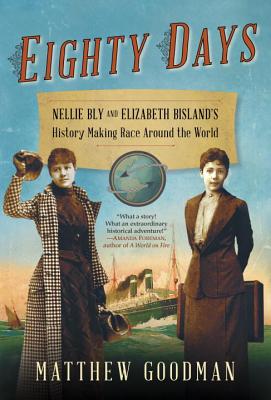
Eighty Days

Nelly Bly and Elizabeth Bisland’s History-Making Race Around the World
by Matthew Goodman
ages: adult
First sentence: “She was a young woman in a plaid coat and cap, neither tall nor short, dark nor fair, not quite pretty enough to turn a head: the sort of woman, who could, if necessary, lose herself in a crowd.”
Support your local independent bookstore: buy it there!
Review copy received from my place of employment.

I think I’d heard of Nelly Bly before reading Matt Phelan’s Around the World, but I’m not sure where or why I knew of her. I do remember that I was interested in her story after finishing that graphic novel, so when I chanced upon this ARC at work, I picked it up, curious to know more about Bly and her trip around the world.

It turns out that Bly wasn’t the only one traveling around the world. A competitor of her sponsoring newspaper sent their own reporter — Elizabeth Bislund, who in many ways was the opposite of Bly: elegant, refined, pretty, literary — on a trip in the opposite direction, making it a race not only against time, but against each other.

The thing I liked most about this book, I think, was that Goodman not only thoroughly examined these two women, and their histories and how they became to be newspaper women, but the history of the time. He gave me, as a reader, a sense of this time of anticipation, sitting on the cusp of the modern world. And the fact that both Bly and Bisland could do something like travel around the world in less than 80 days, by themselves.

I found myself rooting for one or the other (I honestly didn’t know, though I could guess, which one won), finding myself liking one or the other at any given time during the book. Bly was more plucky, for lack of a better world, going around the world with one suitcase, and whole lot more drive than Bisland. She was, on the other hand, extremely patriotic — she viewed the world through a U.S.-colored lens, and found everything else lacking, something which grated on me. Bisland was the more open-minded traveler, less determined to “win” and more willing to look at the world on its own terms (which were, admittedly, decidedly British in the 1880s). For that, I think she was the better off.

Perhaps, most revealing, was the epilogue, where Goodman sketched out the rest of these women’s lives. There is a price for fame, fleeting as it is, and Bly paid it.

It’s an interesting work of history, engaging and well-written, and I thoroughly enjoyed spending time learning about both this remarkable time and these fascinating women.

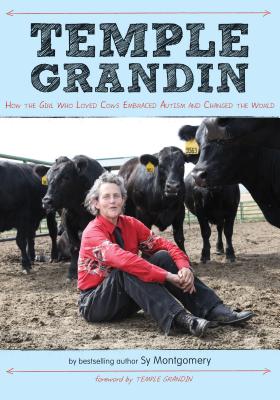
Temple Grandin

How the Girl Who Loved Cows Embraced Autism and Changed the World
by Sy Montgomery
ages: 9+
First sentence: “Throughout my career, I have worked to improve the treatment of farm animals because we owe it to domestic animals to give them a decent life.”
Support your local independent bookstore: buy it there!

I didn’t really know what to expect heading into this one. I knew it was a biography for middle readers, and I knew autism had something to do with it. But, I must have been living under a rock for a while, because I had no idea who Temple Grandin is.

Wow. What an amazing woman. For those of you under the rock with me, she was born in 1947, with autism. She wasn’t like “normal” kids, and her father (per the times) wanted to put her in a mental institution. However, Temple had an AMAZING mother, who advocated for her daughter. She found a school that would accept her and work with her quirkiness, and even though Temple encountered bullying and hardships along the way, her life was so much better than if her father had gotten his way.

And, it’s incredible what she’s done with her life. How she’s channeled her condition (I don’t want to call it a disability, because it’s not. It’s just a different normal) into something amazing, helping change the domestic animal industry little by little. And every little bit counts, especially when the healthy, happy lifestyle of animals we eat are on the line.

My only complaint was one that is inherent in the book: I wanted more detail, more information. I found it too simplistic, but the book was aimed at 9-12 year olds, so it’s appropriate for that age. As for me, Temple Grandin has written her own biography, so I can read that one as well.

Bomb

The Race to Build — and Steal — the World’s Most Dangerous Weapon
by Steve Sheinkin
ages: 10+
First sentence: “He had a few more minutes to destroy seventeen years of evidence.”
Support your local independent bookstore: buy it there!

I picked this one up in an effort to catch up on the books that are getting Newbery buzz. And because “everyone” has been raving about it. And because it was a National Book Award finalist. And because I sold it the other day to a mom looking for a non-fiction book for her 4th grade son by saying “it’s brilliant” and figured I really ought to read it before I say things like that. (Truth in advertising and all that, you know.)

The short review: it really is all that. In fact, I think I need to pick up Sheinkin’s other book, “The Notorious Benedict Arnold,” because I thoroughly admire the way he tells a story.

This one is about the development of the nuclear bomb in the early 1940s. Which, to a non-scientist like myself, is admittedly a pretty dry subject. Yet, in Shienkin’s hands he turns it into a tale of science and spies, of duty and responsibility, of anxiety and choice.

There are three threads running through this story. The first is the American’s race to develop the atomic bomb. I’m going to get into details here (which would probably be wrong, and my phsyics-professor brother will get on my case for), but essentially, Germans figured out how to split atoms, and then everyone (well, Einstein and a couple others brought it to the attention of Roosevelt) panicked because a nuclear weapon in the hands of Hitler would have been a bad thing. Robert Oppenheimer plays a big role in this thread (he’s a fascinating character), but also some other scientists as well.

Thread number two is the effort by the OSS to stop the Germans from developing the bomb. The Germans were using heavy water (argh, more science-y stuff!) from a plant in Norway to keep the uranium from reacting (I think that’s how you put it), and the British sent a team of Norwegians in to destroy the plant. It was all pretty exciting.

The third thread involved Stalin and the Soviets, and was the most fascinating to me. (Well, not entirely true: I did like learning about how the bomb was developed. I had no idea it was a huge round thing. Or that it went off over the city of Hiroshima. I think I always thought it hit the ground before exploding.) Anyway, the Soviets got wind of the American’s development of the bomb, and realized they couldn’t be left out. But because they were fighting the Nazis, they didn’t have the resources to do the research on their own. So, they set out to steal the American’s design. Which they succeeded in doing with the help of Harry Gold (a courier, who got caught in the end), Klaus Fuchs (a scientist who was the first to confess), and Ted Hall (a prodigy who got off; no one knew of his involvement until 1995.) I found it fascinating mostly because of those men’s reasons for getting involved with the Soviets. Especially Hall’s, who said that something this destructive shouldn’t be in one country’s hands.

That said, I did like how Sheinkin pressed upon us the enormity of the whole thing. Oppenheimer’s refusal to build something bigger and “better”. The scientists throwing up once they realized what they’d unleashed upon the world. And the final sentences: “The making of the atomic bomb is one of history’s most amazing examples of teamwork and genius and poise under pressure. But it’s also teh story of how humans created a weapon capable of wiping our species off the planet. It’s a story with no end in sight. And like it or not, you’re in it.”

Brilliant.

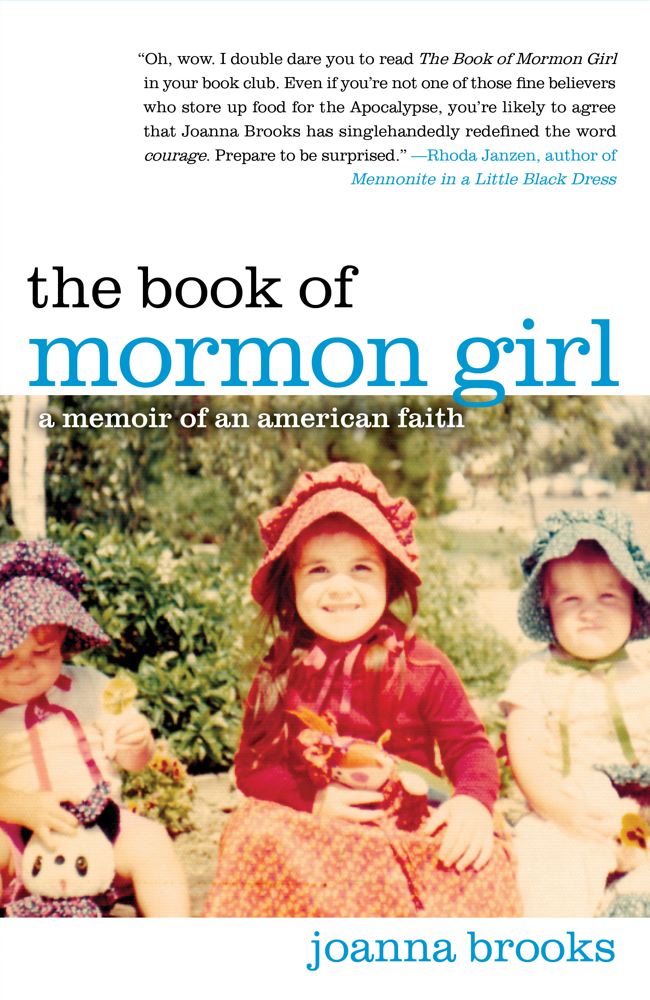
The Book of Mormon Girl

by Joanna Brooks
age: adult
First sentence: “On Monday nights, my father and mother gathered their four children around the kitchen table in our tract house on the edge of the orange groves and taught us how the universe worked.”
Support your local independent bookstore: buy it there!
Disclaimer: while I didn’t know Joanna at BYU, I knew of her. And my husband actually knows her. In fact, as the story goes, he asked her out once and she said no.

I am not Joanna Brooks. And yet, growing up Mormon in the late 1970s and 1980s, there were many elements of Joanna Brooks’ story that I recognized.

This story — which was buzzed about a bit back before the election when Mormons were having our “moment” — is basically that of Joanna’s childhood, growing up in Orange County, California. Her path to BYU, and then her path away from — what shall we call it? — orthodoxy, full activity, your typical Mormon life.

It’s nothing I didn’t know, or haven’t heard. The Monday night family meetings (ours were on Sunday afternoons, actually), the year’s worth food storage in the basement (which fully ruined me for store-bought canned peaches and pears. Not at ALL good.), the end-of-the world paranoia (that was mostly high school, when I was actually noticing it). All of it was instantly familiar to me.

And you can tell that Joanna has a fondness for her childhood, the way she was raised, and even the way the church was — to some extent — in our childhood. But, then we hit BYU.

(It surprised me that she is only a year older than I am. I thought she was older than that.)

I don’t know what BYU is like now, but she reminded me of all the reasons I disliked the place in the early 1990s. I wasn’t in the middle of everything — from the firings and excommunications to the protests — but I caught enough of it through my program — journalism rather than English — that I realized that the Church (the organization, not necessarily the doctrine) could be a not-very-friendly place for people who didn’t toe the line.

And it was this point where Joanna’s and my paths diverged, and where I found the book to dissolve into melodramatics. Yes, she was discriminated against, but I’m going to assert that it’s because she lived in the wrong places. I have often told my daughters — especially when they come home feeling excluded and belittled at church — that not everywhere is like here. That there are places — like my ward growing up in Ann Arbor — where people don’t always expect everyone to tow the conservative Republican line  like they do in, oh, Orange County, California. Or Wichita, Kansas, for that matter.

Maybe it was too personal for me, maybe it was too much like my own story, and maybe that’s why I finished it feeling unsettled. That said, I am glad that Joanna’s story (and mine, to a certain extent) is out there for people to read. Maybe it will make a difference, too.

A Jane Austen Education

How six novels taught me about love, friendship, and the things that really matter
by William Deresiewicz
ages: adult
First sentence: “I was twenty-six, and about as dumb, in all human things, as any twenty-six-year-old has a right to be, when I met the woman who would change my life.”
Support your local independent bookstore: buy it there!

When I saw this one a while back, I knew, as a professed lover of all things Jane, that I had to eventually read it. Thankfully, my delightful gift exchange partner, Holly, made that eventually sooner rather than later.

I didn’t quite know what to expect from a book like this, or who even it’s intended for. Other Janeites? The random public? Guys who should be reading Jane Austen? (Which they should.)

And the answer is: yes, all of the above.

Deresiewicz weaves his personal story of a 26-year-old, single, angsty Jewish male with analyses of all six of Austen’s books, giving each book a theme that helps him through a time period in his life. He doesn’t go chronologically with her works, but rather in the order that he read them, and with what fit with what period. It’s a book about Austen, yes, but it’s also a book about Deresiewicz’s growth as a person, and the role that Austen played in that.

Having read all the novels many times (though not recently; one of the things I realized while reading this is that it’s been a while since I’ve visited with Austen, and “a while” is too long), he didn’t really say much that I didn’t know. I’m not sure I’m going to look at her novels in a new light now, or anything like that. Perhaps, if I were less than an avid fan, I would have (I also want to give this to the guy at work who disdains all “chick fiction”, calling it “fluffy” and beneath his notice). At the very least, Deresiewicz succeeded in reminding me why I adore Austen.

A couple of quotes, because these stood out:

From the Northanger Abbey chapter (“Learning to Learn”): “Real men weren’t afraid to admit that they still had things to learn — not even from a woman.”

From Mansfield Park (“Being Good”): “To listen to a person’s stories, [Edmund] understood, is to learn their feelings and experiences and values and habits of mind, and to learn them all at once and all together. Austen was not a novelist for nothing: she knew that our stories are what make us human, and that listening to someone else’s stores — entering into their feelings, validating their experiences — is the highest way of acknowledging their humanity, the sweetest form of usefulness.”

For me, this was a delightful romp through familiar land: watching someone come to a realization that Austen and her small, domestic dramas and comedies really do hold valuable lessons for the rest of us, even 200 years later.

Cool Dead People

Obituaries of Real Folks We Wish We’d Met a Little Sooner
by  Jane O’Boyle
ages: adult

First sentence: “More than two million people die each year in this country.”
Support your local independent bookstore: buy it there!

There isn’t really much to say about this slim little collection of obituaries. Either you will be fascinated by reading about dead people — most of whom accomplished something, but weren’t really Big News — or you won’t.

Thankfully, I was. There were several people who caught my attention, from the woman who was responsible for publishing George Lucas’s novels, Princess Bride, and Mists of Avalon; to the brother of Jackie Robinson; to a stone mason who helped build Rockefeller Center; to Hitler’s secretary; to the second wife of Anne Frank’s father.

It’s not a really deep or profound collection, but it kind of made me reflect on what  people would say about me. It’s mostly just fascinating. There ought to be more of these out there.