Between the World and Me

betweentheworldby Ta-Nehisi Coates
First sentence: “Son, Last Sunday the host of a popular news show asked me what it meant to lose my body.”
Support your local independent bookstore: buy it there!
Content: There is some swearing, including a couple f-bombs and the use of the n-word. It’s in the Sociology section (I think) of the bookstore.

By now, most of you will have either heard of this or read it, I think. There’s not much to say, summary-wise; it’s a letter from Coates to his son concerning what Coates thinks about being a black man in America. It’s sort of rambling, and kind of disjointed; it feels like a series of random thoughts jotted down on a piece of paper as Coates was musing about his place in this world. Which fits, I think.

What it is, really, is damning. Especially if you, as Coates put it, think you’re white. There’s a complacency that comes with being white, with being privileged (even if you’re “just” middle class), that isn’t afforded to those who are not. And Coates, rightly, forcefully, reminds us of that. Reminds us that to be black — particularly a black male, since he’s writing from his own experience — is to bear the burdens of all our complacency. That our “freedom” isn’t free, and that it’s not the military who are paying for it. That all these shootings that are making the news aren’t new, that they have been going on for hundreds of years, and those that think they are white just throw up their hands and turn a blind eye.

One passage that really struck me:

I am ashamed I made an error, knowing that our errors always cost us more. This is the import of history all around us, though very few people like to think about it. Had I informed this woman that when she pushed my son, she was acting according to a tradition that held black bodies as lesser, her response would likely have been “I am not a racist.” Or maybe not. But my experience in this world has been that the people who believe themselves to be white are obsessed with the politics of personal exoneration.

It’s a difficult read, because he condemns everyone and offers no answers. There’s no solutions, possibly because Coates doesn’t have any, and I found that a difficult thing to swallow. I want to know HOW I can change, what I can do to make a difference. Perhaps reading books like this is a start; it has made me aware that there are black men and women who think this way, who believe that they are lesser because we let police arrest and shoot them. Who are not given the same opportunities because they can’t afford to buy a house in the suburbs. Who are treated differently when they walk into stores just because of the color of their skin.

It does make me feel hopeless, in a way. But, on the other hand, I’ve read this and I’ve been made aware. Maybe that’s a start.
Audio book: Big Magic

Creative Living Beyond Fear
by Elizabeth Gilbert
Read by the author.
Support your local independent bookstore: buy it there!
Content: There are a few f-bombs (around fourish, if I remember right) and other mild swearing. It’s in the Creative Non-Fiction section of the bookstore.

Big Magic is what Elizabeth Gilbert calls the act of creation. Sure, she’s a writer, someone who makes their living off of creativity, and so this book — much like The Art of Asking by Amanda Palmer — is nominally written toward those who want to live an artistic life. But, as Gilbert argues in the book, who wouldn’t want to do that?

It’s not a new message: find time to be creative. Make space in your life to be creative. Be open to creative inspiration and connection You will be a happier person for it. And you can just add Gilbert’s voice to that message. She has no patience for people who say they Can’t (that’s a very limiting word) do that. And she has no patience for people who want to Suffer for their Art. She believes — and I buy into this — that happy people are the most creative, and conversely, creative people are happiest.

(As a side note: I used to be more creative, both cross-stitching as well as decorating the house and other projects. They’ve all fallen by the wayside. I suppose that’s one of the reasons I like doing story time every Saturday: it allows me to have a creative outlet.)

It’s an interesting look at art and is incredibly practical about how it can be a part of your life. And while I enjoyed listening to Gilbert read her work, I think this is one I want to buy, to have on hand to read and to share with the children. For while I don’t think it’s an absolute Recipe for Happiness, it’s a good reminder that I enjoy being creative and that I can, in fact, make time for that sort of thing in my life.

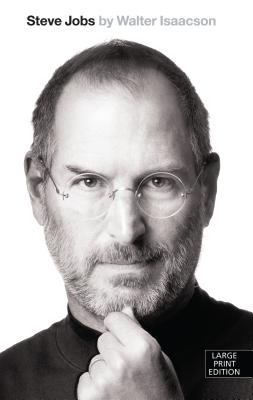
Audiobook: Steve Jobs

by Walter Isaacson
Read by Dylan Baker
Support your local independent bookstore: buy it there!
Content: Steve Jobs had a foul mouth. You are forewarned. Also, it’s a bit on the business-y side. It’s in the biography section at the bookstore.

I don’t know why, really, I picked this up. I’m not a computer person, or even an Apple fan (though I do own an iPhone). I needed something short to listen to while I drove around delivering things one day, and this kind of jumped out at me.

It’s a basic biography of Steve Jobs, the founder and eventual CEO of Apple computers and CEO of Pixar. Isaacson, a reporter, was picked by Jobs before his death in 2011 to write this book, and given access to all sorts of information that Jobs, who was someone who valued complete control, usually didn’t divulge.

I did learn a lot of things about Jobs, computers, the 1970s, business and the intersection between all of them. First and foremost: Jobs wasn’t a nice person. Which got me to wondering: are all people at a high level of business — either CEOs or just high up in the business — generally work-obsessed jerks? If so, what does that say about us as a country, that in order to be “successful” and proclaimed “innovative” and “a genius” we have to treat other people like crap?

The other thing I learned about Jobs was that he was just an Idea Man. He worked, sure, but it was managing and thinking outside the box and demanding things of others, but he never really created anything himself. I don’t know if I had any respect for him to lose, but knowing that he just thought up the ideas rather than actually implementing them changed my perception of him.

Did I like the book? Not really. It was kind of long and a little boring. Part of that may have been the narrator, who wasn’t the most engaging. But part of that was Isaacson’s writing: it was meandering and a bit pandering. Not something (or someone) I would want to read again.

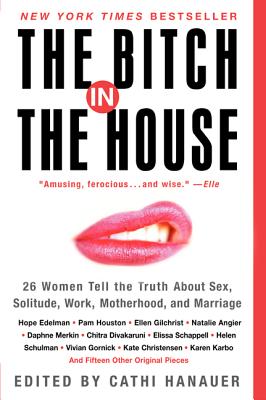
The Bitch in the House

26 Women Tell the Truth About Sex, Solitude, Work, Motherhood, and Marriage
edited by Cathi Hanauer
First sentence: “This book was born out of anger – specifically, my own domestic anger, which stemmed from a combination of guilt, resentment, exhaustion, naivete, and the chaos of my life at the time.”
Support your local independent bookstore: buy it there!
Content: A lot of swearing, including multiple f-bombs. Talking about sex, but no actual sex. Probably not interesting to teens, since most of these women are in their mid- to late-20s and older. It’d be in the sociology section of the bookstore.

I got a text from M a while back, with a picture of this, saying (essentially) that she really needed to talk to someone about this. So, I picked it up, just to see what it was.

It is precisely what the cover said it was: 26 women, all employed, some with families, expressing anger at their life situation. I get some of that anger: a lot of the pressure on women is societal. We were told we could have it all, but no one bothered to tell the men that they needed to help out. (Which, truly, seemed the biggest complaint.)

I did find myself identifying with some of the essays: life is tough, and I can see how it not going the way you think it should would equal anger. But, I can’t just muster that; I’m much too tired. I bailed about 2/3 of the way through; I found that I just didn’t care about upper-middle class women’s whining that they can’t have a job and a family and a relationship and everything else. So what? There are people out there who are trying to make ends meet without the help of a nanny.

That’s a bit harsh.

It’s also 12 years out of date, and I felt that time lapse. Maybe things haven’t changed all that much. Maybe they have changed a bit, and maybe not always for the better. But, I’m tired of anger. (I know it’s useful. I’m just tired of it.)

In the end, it just wasn’t the book I wanted to be reading.

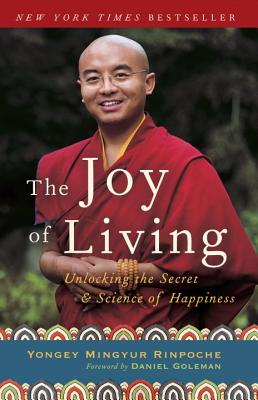
The Joy of Living

by Yongey Mingyur Rinpoche
First sentence: “When you’re trained as a Buddhist, you don’t think of Buddhism as a religion.”
Support your local independent bookstore: buy it there!
Content: It’s pretty complex, and somewhat dull, so it’d probably appeal to those who have the patience for it. It’d be in the religion section of the bookstore.

This was for another bingo square. I initially picked it up to cover “a religion you don’t know about” (hard for me, actually) but ended up using it as “popular psychology” because this was less about Buddhism and more about the scientific benefits of meditation.

And there are many: Rinpoche draws upon Western studies proving that the brain is calmer and that people are healthier when you meditate. And he explores some of the Western preconceptions about meditation: how we’re often intimidated by it because it seems so, well, unattainable.

He gives some practical advice for meditating: shorter times, more frequently during the day. And I’ve tried to take some of what he said to heart. During my last “down” time (I suffer from intermittent depression; it’s not chronic, but it is there and it is real), I worked on being attentive to my feelings and breathing through the sadness. I won’t say it worked well (or even much at all), but I did manage to come out of the funk faster than in the past. I need to get into the habit (again; I used to meditate more often) of stopping and unplugging and just Be longer.

I did find that a lot of this was familiar to me through my experiences with yoga over the years. A truly mindful yoga practice (of which I am not doing right now; I still go to yoga, but it’s more about the physical movement rather than a mindful practice) will incorporate elements of Buddhist meditation, I think.

It has made me curious about Buddhism, though. I think I’m going to hunt down and read more.

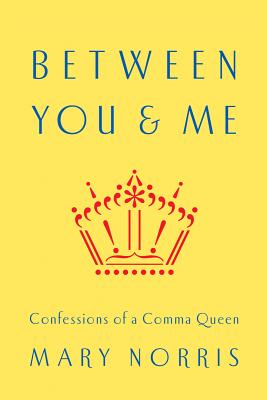
Between You & Me

Confessions of a Comma Queen
by Mary Norris
First sentence: “Let’s get one thing straight right from the beginning: I didn’t set out to be a comma queen.”
Support your local independent bookstore: buy it there!
Content: There’s a passage with about four F-words, and then a whole chapter on swearing. It’s in the Literary Reference section of the bookstore.

I am not an expert grammarian. I didn’t really pay attention in school when it came to the parts of a sentence or how things are ordered, or when to use (or not use) commas (which I use much too abundantly). But, a good book on grammar? I love that. I don’t know what it is, why I adore learning about this obnoxious language of ours, but I do.

And Between You & Me is a great book on grammar. (Which means I adored it.)

Mary Norris has been a copy-editor at the New Yorker magazine for the past thirty years, so she has some credibility. But, what she also has is a terrific voice. It’s not only readable, she has a snarky streak that is just endearing. She recounts a bit of the history of her time at the magazine, their style differences with the New York Times, and a little bit about how she ended up as a copy-editor. All of which is fascinating.

But what I really enjoyed was a refresher on grammar. Her chapter on commas (where she took on both Melville and Dickens). Or a whole one on apostrophes. (Where she came up with this: “If you are going to put a sign with your family’s name on it in front of your house, as if to say ‘Our House,’ then you wan the plural possessive: The Volts’. And if your name ends in an s you still want the plural, even if it looks terrible: The Norrises’. And if you don’t like it, simply refrain from putting a sign with your name on it in front of your house.” I almost stood up and cheered.) And even the chapter on cursing was entertaining.

I could go on, but i won’t. I’ll just say this: read it. You won’t regret it.

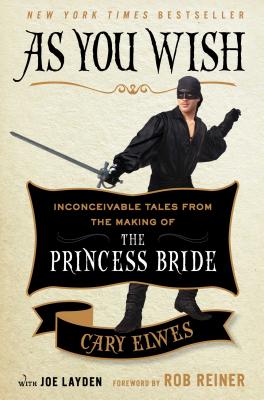
As You Wish

Inconceivable Tales from the Making of The Princess Bride
by Cary Elwes with Joe Layden
read by Cary Elwes (with other actors/directors/etc. reading their contributions)
Support your local independent bookstore: buy it there!
Content: There’s nothing “objectionable”, though the reading level is probably that of high school. It’s in the biography and film sections of the bookstore, but I’d give it to anyone who has a interest in the movie (especially if they are big fans).

I’m late to this party, since this book came out last October. But, I’ve had my eye on it, mostly because I have loved the movie for years (and am constantly surprised how many of my regular daily sayings are actually lines from this movie) and finally got my hands on the audio book.

There’s not much to say about the content: Cary Elwes was asked at the 25th anniversary screening of the movie what he took away from the making of it. He came up with (in his words) a lame answer, and this book was born out of his desire to really detail what the experience meant to him. He got contributions from the actors who are still alive, and a book was born.

It’s not brilliant writing by any stretch of the imagination. But, it is chock-full of fun trivia (yes, I did watch the movie again, spouting out all the wonderful tidbits I’ve learned. My family was patient with me.) and delightful stories.

But, the best thing? (And the reason I’d recommend the audio over the print?) Cary Elwes is a brilliant narrator. Not just his regular voice, but he does a spot-on American accent (several, in fact), and he is just a delightful narrator to spend six hours with.

At the very least, it’ll make you smile. And that, I think, is worth it.

Enchanted Air

by Margarita Engle
First sentence: “When my parents met, it was love at first sight.”
Support your local independent bookstore: buy it there!
Content: It talks indirectly about drugs, sex, and teen pregnancy, as well as the violence of war, but it doesn’t dwell on that. It’ll be in the children’s biography section of the bookstore

I noticed that Abby had read this one and liked it, so I pulled it off my pile to give it a try. I mostly wanted something I could finish in one sitting, and this one — being a memoir in verse — fit the bill.

I didn’t expect to be thoroughly delighted by it.

Margarita is the daughter of a Cuban immigrant and the son of Ukranian holocaust survivors. Needless to say, she had an interesting story to start. Add to that the conflict in the 1950s with the Cuban revolution and the subsequent cold war, she definitely had  a story to tell. But: she chose to tell it through travel, through depictions of the island itself (which she described so lushly) as well as her family’s vacations to Mexico and Europe. She portrayed herself as an awkward child, caught between two countries and then unexpectedly cut off from half of her family. I can only imagine what her mother felt.

Elegantly told, beautifully imagined, it’s a love story to the power of words and images and home. (And I’m glad that her hope in her afterward for more normalized relations between the U.S. and Cuba may slowly be coming to fruition. I would love to visit there someday.)

How to Be a Heroine

by Samantha Eliis
First sentence: “A couple of summers ago, I was on the Yorkshire moors, arguing (over the wuthering) with my best friend about whether we’d rather be Jane Eyre or Cathy Ernshaw.”
Support your local independent bookstore: buy it there!
Review copy provided by the publisher.
Content: There’s a handful — not more than six — of f-bombs and some mentions of sex, but nothing graphic. It’s in the adult creative nonfiction section of the bookstore, but I’d give this to anyone in high school and up.

Somehow, I ended up with a complimentary copy of this book. I really have no idea how it ended up on my pile. I do know the idea of it (and the subtitle: “Or, What I’ve Learned from Reading Too Much”) appealed to me. Any book that is about books or the love of reading has to be good, right?

And it was.

The book is nominally a reflection of Ellis’s life. She’s an Iraqi Jew, living in London, with all the cultural and religious implications you’d think that entails. She struggled against expectations, she struggled with faith, she struggled to find her own path. And, on its own that would be a fascinating story. But she framed the book with an analysis, heavily feminist, of classic heroines. From familiar to me ones like Jo March and Anne Shirley and Jane Eyre to ones I’ve never heard of, like Franny Glass and Esther Greenwood. She explored their narrative arcs, and what she took away from their stories. Both when she was younger and then, as an adult, how she feels the held up. Some did. A lot didn’t. And many she got something different out of the book than what she got when she was younger. She discovered new things along the way, and made me want to revisit books I’d loved when I was younger and read ones I’ve not read before.

And for all the literary criticism, it wasn’t a stuffy book. Ellis has a way of drawing the reader in, of making the characters pop to life. Perhaps that’s because she’s a playwright and has a way with words as it is. But whatever the reason, this one won my heart over.

I Will Always Write Back

by Caitlin Alifirenka, Martin Ganda, and Liz Welch
First sentence: “I’d never heard of Zimbawe.”
Support your local independent bookstore: buy it there!
Content: It’s a non-fiction book that deals with teens, and so there’s some mention of teen drinking and pot smoking, but for the most part it’s pretty harmless. It’ll be in the middle readers biography section, though I’d hesitate giving it to the younger end of the readers. I think it’ll be best for grades 5 and up.

In the fall of 1997, Caitlin Stoicsitz made an impromptu decision that changed multiple lives. She raised her hand to get a pen pal, and her letter was sent to Martin Ganda in Zimbabwe. You wouldn’t think something as simple as that would be life-changing, but it was. Caitlin’s letter got sent to a small, rural school in Mutare, and by chance Martin, who was one of the best students in class, was on the receiving end. He wrote back, and that was the beginning of what became a deep friendship for them. And because of that friendship, Caitlin was able to change Martin’s life, to give him the opportunities — especially educational — that he wouldn’t have had otherwise. For what seems like mere pittance, Caitlin (and eventually her whole family) was able to pay Martin’s fees for school (especially since his father was out of work) and help him get into a U. S. College. That doesn’t sound like a whole lot, but as you get to know both Caitlin and Martin over the course of the book, you realize that it IS.

In return, Martin gave Caitlin something that many Americans desperately need: a view of how everyone else lives. Compassion for the downtrodden, and a knowledge that we really, truly are privileged in America.

Like many memoirs, this one is uneven. It’s chatty, and sometimes Caitlin’s narrative borders on whiny, neither of which might bother the intended audience, but kind of grated on me. I also felt like there was a bit of the “American savior swoops in to save the day” which also kind of grated.

But I do honestly believe that Caitlin and Martin have a bond, and I do believe that writing and responding to the letters, when one truly cares and when one is open to other ideas, can change lives.

And this book is a good reminder of that.