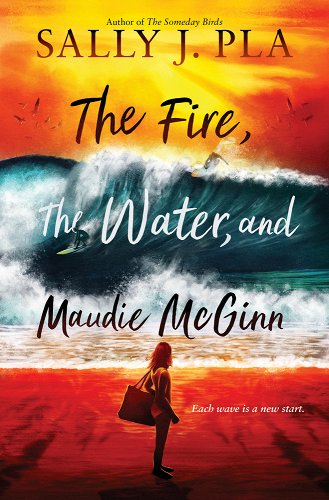
The Fire, the Water, and Maudie McGinn

by Sally J Pla
First sentence: “I learned this great calm-down trick recently.”
Support your local independent bookstore: buy it there!
Content: There is on-page physical abuse by a stepparent as well as neglect and shaming by a parent. It’s in the YA section (grades 6-8) of the bookstore, but I’d give it to some 4th and 5th graders. I read this book for the Cybils, and this is a reflection of my opinion and not that of the whole panel.

For Maudie’s whole life, she has spent summers with her Dad in his cabin in California and the rest of the year with her mom in Texas. But her mom recently go remarried, and her stepdad, Ron, has an explosive temper. So much so that he hurts Maudie, whom he doesn’t seem to want around. And her mother isn’t doing much to help. Especialy since Maudie has autism and needs more time and allowances to get things done. But her mother told her not to tell her dad, so she’s keeping the secret.

This summer, though, there’s a wildfire in the mountains around her dad’s cabin, and they have to flee. They’re left with nothing, so they head south to the beach to stay with one of her dad’s high school friends. There, Maudie discovers surfing, makes friends, and gains confidence. Will she have enough to tell her dad the secret and to tell him what she really wants: not to go back to Texas at all?

I really liked the autism representation in this. I liked the way Pla described what Maudie was feeling, and the sensations that made her anxious and unsettled. She had panic attacks and meltdowns, and the author described them just as if they were parts of life, which they are. I liked that her dad was also neurodivergent. And I liked that Maudie found something she could focus on in the surfing, and that the community was so welcoming.

Things were unsettling though. I disliked Maudie’s mom, who didn’t care about what Maudie needed to thrive, but more on what she (the mom) wanted. I think one could blame it on Maudie’s mom being a teenager when she had Maudie, but maybe not. She was horrible, her new husband was horrible, and Pla leaned into that. I also wondered about the representation. I liked that the town was populated with all sorts of people, but some of it felt stereotypical. Maudie’s dad is half Venezuelan, and his mom died soon after Maudie was born, so he doesn’t really have a connection to that. His friend is Latine, and they meet an Indian/Pakistani (assuming from the name, there’s nothing that gives it context) woman who runs an alternative school for neurodivergent kid. And Maudie’s surving mentor is Etta Kahuna, who is Black? Polynesian? Her only defining feature is her gray “dreadlocks” which is a big red flag.

That said, I did like how the overall message was trusting yourself and believing in (some of) the adults around you. And I did like watching Maudie learn to surf. I’m just not sure it’s that great with representation.
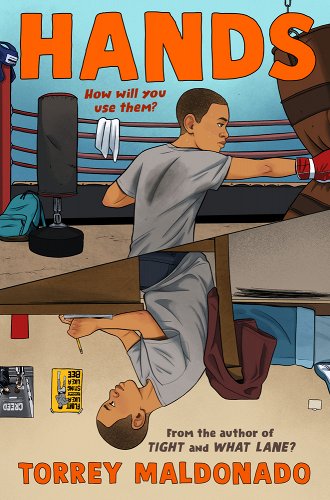
Hands

by Tony Maldonado
First sentence: “You promise?”
Support your local independent bookstore: buy it there!
Content: There is violence, domestic and fist-fights. It’s in the YA section (grades 6-8) of the bookstore, but I’d give it to a 5th grader. I read this book for the Cybils, and this is a reflection of my opinion and not that of the whole panel.

Two years ago, Trevor’s stepdad was arrested and sent to jail for beating Trevor’s mom. On his way, he said that he would come back for her, and Trevor’s been on edge ever since. Now at 12, his stepdad is about to get out of jail, and Trevor is determined to become the sort of person who could protect and defend his mom and sisters. Which means he needs to be stronger, better at fighting.

But, in his quest, he discovers that maybe there is more to, well, everything than he thought. There are other ways of using your hands. There are other ways of confronting the bad things in his life, his neighborhood. And that “promise” means a lot of things.

I really liked this one. Maldonado captures not only what it’s like to be 12, and have to grow up before you’re quite ready, he captures the spirit of a neighborhood and a family. It felt real, and yet it was hopeful at the same time. There was violence and danger, and yet there are Other Ways that may be better. I liked the inner conflict that Trevor had: he wants to be a Man, and protect his family, and yet he really is just a kid and he wants that, too. And a bonus: Maldonado didn’t use extra words: The short book packs a powerful uch.

Quite a remarkable small book.

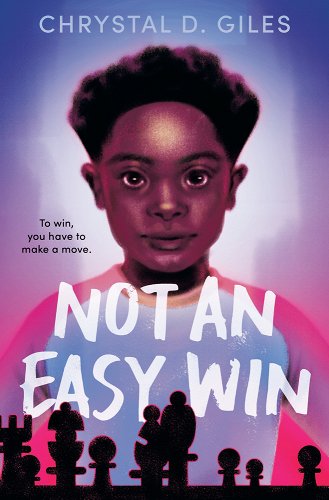
Not an Easy Win

by Chrystal D. Giles
First sentence: “Expelled.”
Support your local independent bookstore: buy it there!
Content: There is some fighting. It’s in the Middle Grade (grades 3-5) section of the bookstore. I read this book for the Cybils, and this is a reflection of my opinion and not that of the whole panel.

Nothing has gone right for Lawrence since his dad left and his mom moved the family from Charlotte to her small hometown in rural North Carolina. He got into Andrew Jackson middle school, where most of the white kids go, but didn’t seem to fit in. That’s an understatement: he gets expelled for getting into fights (which he didn’t start). His grandma says “A man that don’t work, don’t eat”, so Lawrence needs to figure out what to do with his days. Enter neighbor Mr. Dennis, who helps run a rec center in town where the Black kids go after school. He lets Lawrence come along and work (for free), hang out, and eventually, teaches him chess.

I liked this book a lot. I am always in for a good metaphor, and I liked the way Giles used chess not only to teach non-violence, but also how to be patient, think, and connect with people. I liked Lawrence, and his growth arc, from being an angry 11-year-old kid, to learning and being one of the better chess players. I also really like that Giles didn’t give the book a Hollywood ending: while the kids make it to a chess tournament in Charlotte, it doesn’t magically solve Lawrence’s problems, and they don’t come away winning the whole thing (sorry: spoiler there). But it gives the book depth and makes it more realistic. A really solid story.

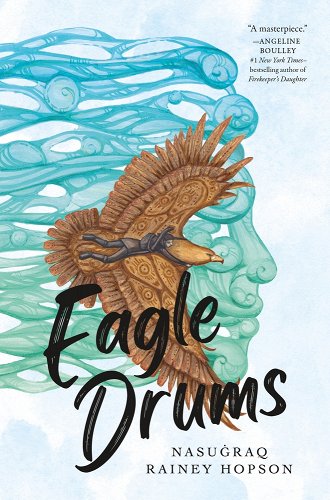
Eagle Drums

by Nasuġraq Rainey Hopson
First sentence: “Sweat trickled down his back.”
Support your local independent bookstore: buy it there!
Content: There are some intense moments and talk of death. It’s in the Middle Grade (grades 3-5) section of the bookstore, but I’d give it to the older end of the age range. I read this book for the Cybils, and this is a reflection of my opinion and not that of the whole panel.

Pina (that “n” isn’t right, but I don’t know how to make the letter on my keyboard) is the son of Iñupiaq people, who live by themselves and work hard to survive each year. His two older brothers went missing, presumed dead, a couple of years ago, and so his parents are loathe to let him leave. And yet, they need obsidian for their spears and knives. So, they send Pina to the mountains. There he meets Savik – one of the Eagle Gods – who tells him: come with me and learn what we have to teach you, or die. So, Pina makes the only choice he can (the one his brothers didn’t make): he goes with Savik. He lives in the mountains, and learns singing, dancing, storytelling, and how to build a gathering place. All because the Eagles want to be remembered, and want their people to gather together.

This is based on a folk legend of how the Iñupiaq Messenger Feast (which is still held) began. It reads like an extended folk tale: often the prose calls the main character “the boy” and while the tasks he is given aren’t impossible, they are daunting and he has to Overcome them to return home. I liked the book, but I am not sure it’s meant for children. Sometimes that happens when a main character is a child’s age, the publisher thinks it’s for kids. But I can’t imagine a 10- or 12-year-old sitting down to this one and actually enjoying it. It lacks action, it lacks conflict (except for the main conflict of getting Pina back to his parents), it lacks humor. That’s not to say it isn’t worthwhile: it is, very much so. I just am not sure it’s a kids’ book.

The Greatest Kid in the World

by John David Anderson
First sentence: “Zeke’s letter informing him that he might be the greatest kid in the world came while his brother was baking in the driveway.”
Support your local independent bookstore: buy it there!
Content: There are a ton of pranks and less-than-stellar behavior, which may or may not give some kids ideas. It’s in the Middle Grade (grades 3-5) section of the bookstore.
I read this book for the Cybils, and this is a reflection of my opinion and not that of the whole panel.

Zeke is one of those kids. You know the ones: they’re smart, but almost too smart for their own good. (He tried to lead a revolution in his fifth-grade class, convincing everyone to go commando, until the teacher stopped him.) So when he got a letter saying he’s been chosen as a finalist in the “world’s greatest kid” competition, he thinks it’s a prank. Seriously: his single mom works hard to barely make ends meet, his older sister who is supposed to be watching Zeke and his younger brother doesn’t care… they’re the picture of a dysfuntional family. 

But they agree to do this competition, and over the days that Zeke is being filmed, he makes some realizations. Like maybe he really likes his family, after all. And maybe expectations for what is “great” aren’t necessarily what people thing they are. 

Oh this one was delighful. The family felt so real, from the struggles of the mom trying to make ends meet, to the exsperation of the older sister, to Zeke just trying to entertain himself for the summer. I also thought the whole competition, while silly and unreal, was handled really well. I think Anderson is exploring what it means to be “great” and the ways in which small things can be great as well. I love the way Zeke develops a relationship with his camaraman, and the way he is with his younger brother. Oh, and the ending made me ugly cry in the best way. 

I really loved this one.

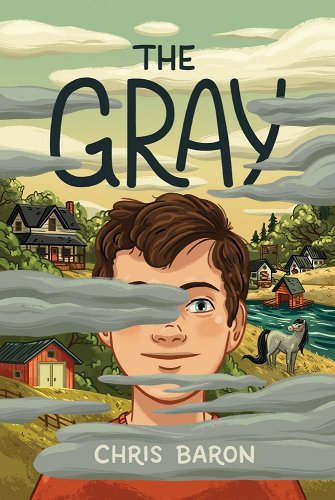
The Gray

by Chris Baron
First sentence: “All my plans for the summer are ruined.”
Support your local independent bookstore: buy it there!
Content: There is bullying, and an inference of sexual assault, as well as descriptions of anxiety. I read this book for the Cybils, and this is a reflection of my opinion and not that of the whole panel.

Sasha has a problem with anxiety. He gets what he calls “the gray” and disassociates. In one of these moments, when he was being bullied, he hit an ex-friend with a book and injured him. As a result, his parents decide to send him to stay with his Aunt Ruthie in the country. He doesn’t want to – there will be no friends, no video games, no Wi-Fi, and hardly any cell service. He figures that it won’t do him any good. But, once he gets there, he finds that there are friends and bullies, just like back home. There is his connection with Aunt Ruthie, who is still grieving over the death of her husband. While his anxiety isn’t cured, Sasha finds a way to handle his anxiety, and that maybe the country isn’t terrible.

I liked this book well enough. I liked the way Baron described someone having a panic attack, and the way anxiety was portrayed. I didn’t care for the bullies, though I thought Sasha did his best to handle them. I liked that nature was a healing place. But I didn’t love it. There was nothing in particular, it just wasn’t my cup of tea. Not a bad portrayal of anxiety, and I’m sure it will help kids recognize and be able to deal with it.

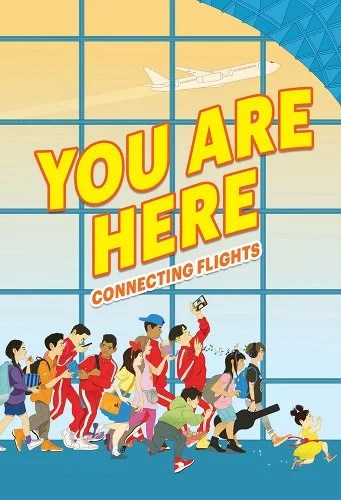
You are Here: Connecting Flights

edited by Ellen Oh
First sentence: “With a line this long, you’d think we were waiting to get into Disney World, or Six Flags, or something cool.”
Support your local independent bookstore: buy it there!
Content: There are instances of racism, and some instances of bullying. It’s in the Middle Grade (grades 3-5) section of the bookstore.
This book is read for the Cybils and reflects my opinion and not the opinion of the panel as a whole.

In this collection of connected short stories, the authors follow a series of Asian American kids in an airport as everyone is delayed due to a rainstorm. There are a myriad of experiences – from being held up in the security line to experiencing racism from security guards to just figuring out family dynamics – and they all take place within the airport.

I usually am not a fan of short stories, but I liked this collection. I liked the different experiences of each of the kids and their families. I liked how the stories interconnected, so it felt like a more cohesive whole than many short story collections. And I liked that they were all immediate, everything taking place in one location over a short period.

A good book.

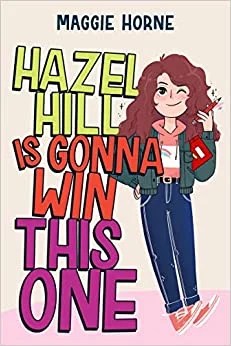
Hazel Hill is Gonna Win This One

by Maggie Horne
First sentence: “I’ve been told that it’s impossible to know everything, but I think I’ve found a loophole.”
Support your local independent bookstore: buy it there!
Content: This talks about sexual harassment and bullying, and has adults who don’t listen to/believe children. That might be triggering for some. It’s in the Middle-Grade section (grades 3-5) of the bookstore but might be more appropriate for the older end.

The only thing Hazel Hill has looked forward to the whole of her seventh-grade year was the speech competition. She lost out in sixth grade to Ella Quinn, but this year Hazel knows she will win. However, she is thrown off her objective one day when Tyler – a dude in her homeroom class – tells her that Ella Quinn, whom he has just broken up with (again), told him that she had a crush on Hazel. Which sends Hazel into a panic: she hasn’t told anyone she was gay! Is this real? What’s going on with Ella?

The answer is that Tyler has been sexually harassing Ella, and she’s trying to deal with it. As Hazel becomes friends with Ella (and her best friend Riley), she decides that Something Needs to Be Done about Tyler. The problem is that no adults are listening to or believing them.

It’s a bit more complex than that, and it has more to do with Hazel learning to have friends again, but that’s the gist. A boy is making girls’ lives difficult and adults don’t believe the girls, because they’re “just kids.”

I really loved this one. I’m always here for books about fierce girls, and this one is a good one. I liked the tone that the book took, and the focus on Hazel learning to be a friend helps ease the hardness of the subject matter. I loved Hazel’s relationship with her parents, as well as her acceptance of her own sexuality (even if she’s not ready to be out, yet). There are funny bits and happy bits, and it’s just an affirming book. Such a good read.

Moning Sun in Wuhan

by Ying Chang Compestine
First sentence: “It feels as though hours have passed since the waitress took my order.”
Support your local independent bookstore: buy it there!
Content: There is talk of the COVID pandemic and the death of a parent. It’s in the Middle Grade (grades 3-5) of the bookstore.

Twelve-year-old Mei and her father are just surviving since her mother died a year ago. They go to work and school, and even though Mei likes to cook, she doesn’t really find any joy in it. Then, in January of 2020, a strange new disease crops up in their town in Wuhan. Suddenly Mei is cut off from her dad and friends. So, she figures out how to put her talent for cooking and organizing to help her neighborhood out in the early days of the lockdown.

So, I wanted to like this one. I appreciate that stories are starting to be told about the pandemic and I appreciate it being told from the perspective of the place where COVID started. But this one was just kind of… blah. It lacked any real conflict, and even the anxiety surrounding those first days of the pandemic. I get that it’s for younger kids, but it just wasn’t great.

That said, it’s good that it’s out there.

Lasagna Means I Love You

by Kate O’Shaughnessy
First sentence: “Dear Nan, You died on a Tuesday.”
Support your local independent bookstore: buy it there!
Content: There is talk of death and dying, and the main character is processing grief. it’s in the middle grade (grades 3-5) section of the bookstore.

Mo has lived with her grandma, Nan, all her life. And since Mo’s mom passed when she was six, Nan has been her guardian and basically only family. So, when Nan suddenly dies, Mo is a bit unmoored. Even more so when her mom’s brother, Billy, refuses to take Mo in, and she ends up in the foster care system. Nan’s last advice to Mo was to get a hobby. By chance, Mo stumbles across a cookbook full of family recipes, which gives her an idea: she’s going to collect family recipes, learn to cook them, and hopefully find a family recipe (and a family) of her own.

I appreciate that this book is aware of its privilege: Mo is a white kid and gets taken into a pretty well-off white home. She does recognize that this gives her privileges she might not have had otherwise (or that her friends from her old neighborhood in Brooklyn don’t have). But, at its heart, it’s a story of found family. And that’s always heart-warming. I thought O’Shaughnessy was good at portraying grief in both a way that seemed accessible as well as believable. And I liked the characters that surrounded Mo. Sure, a kid opening a one-night-only flash restaurant on New Year’s Eve is probably pretty unrealistic, but hey: I liked the thought and the spirit and the community that it built. A solid read.