Clementine, Friend of the Week

by Sarah Pennypacker
ages: 8+
First sentence: “I couldn’t wait for Margaret to get on the bus Monday afternoon.”
Support your local independent bookstore: buy it there!

Dear Clementine,

I will be very sad if you ever decide to grow up. You are what is most wonderful about kids: eager, curious, meaning well, and yet with a stubborn streak that makes me believe that you’ll go places when you get older. I love that you call your brother by vegetable names, in protest for your name (which is quite cheery, by the way; I hope you like it when you get older). I think your boundless creativity — Moisturizer for your cat’s name; Flomax for your friend’s iguana? Priceless! — and energy is amazing. I admire your parents for being as patient and indulging at they are. (They are pretty cool, too.)

As for your adventure this time, I feel your pain. To lose your best friend, due to a fight that you have no idea what it’s about, is a tough thing. And then to lose your cat, too? Ouch. But, you get through it, and I think you realize, at least a little bit, what a great girl — and good friend — you are.

Don’t ever change.

Best,
Melissa

P.S. And Ms. Pennypacker? Keep the books coming! My girls love having someone like Clementine to read about!

(Just for the record: because this is a Cybils nominee, I’ve been asked to make sure y’all know this is my opinion only, and not that of the panel.)
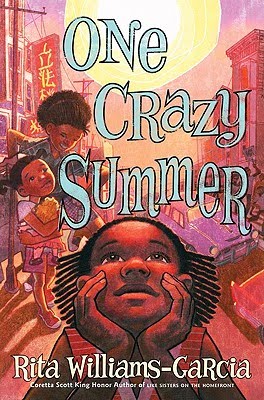
One Crazy Summer

by Rita Williams-Garcia
ages: 10+
First sentence: “Good thing the plane had seat belts and we’d been strapped in tight before takeoff.”
Support your local independent bookstore: buy it there!

This book is many things. It’s a picture of Oakland in 1968, though it’s not as turbulent as I expected it to be. It’s a picture of an independent girl who looks after her younger sisters thrust into a new environment. It’s a picture of a neglectful artist mom (why are all the neglectful moms artists? Are all artists naturally flaky?) learning to accept and love her children again? It’s a picture of the clash between southern African-American mannerisms (pre-civil rights, of course) and more progressive, more earthy west coast sentiments.

It’s all of these things, and which you would think would overwhelm a 215 page book. But, through Williams-Garcia’s writing and plotting, she makes it all work. Delphine, our eleven-year-old main character, has it all together: she keeps an eye on her sisters, Vonetta and Fern; she’s responsible, dependable, if a bit plain. And so when her Pa decides to send them clear across the country to Oakland to see their mother who left when Fern was a baby, she figures it’s more of the same. And, for a while it is. Their mother isn’t terribly happy to see them — though she did pick them up at the airport, which must count for something — and sends them off every morning to a summer camp run by the Black Panthers. It’s there that Delphine — and Vonetta and Fern, to a smaller extent — learn about the horrid things that have been happening to their people, and about how the traditions that Big Ma (who’s from Alabama) have been teaching them, are keeping them from reaching their full potential.

It’s a good, solid book, for the most part. There are some interesting questions raised about place and race and belonging. But I didn’t absolutely love the book. Perhaps it has something to do with my bias against crazy/neglectful mothers (though I didn’t mind the mother in Rocky Road; perhaps that has something to do with her medical diagnosis?). Perhaps it was that I didn’t think there was enough growth portrayed to justify the hopeful ending. That may just be me wanting more from a middle grade book. Or it may be the opposite: there wasn’t enough of a happy ending to suit me; it almost felt like they were spinning in the same place all summer. The growth that does occur is very, very subtle. I sit and think about it, and the pieces fall together… and yet there seems something a bit off. Nothing earth-shattering: it’s definitely a good book,and there’s definitely lots to talk and think about.

It’s just not as great as I was hoping it would be.

(Just for the record: because this is a Cybils nominee, I’ve been asked to make sure y’all know this is my opinion only, and not that of the panel.)
Rocky Road

by Rose Kent
ages: 10+
First sentence: “‘Pleeeez stop singing, Ma.'”
Support your local indie bookstore: buy it there!

Tess is not happy with her mother. Sure, life in San Antonio wasn’t all that terrific: their Pa walked out on them years ago, Ma’s grand ideas for making money kept flopping, and the rent was overdue. But was all that a reason to uproot the family — Ma, Tess and her younger, deaf brother Jordan — to Schenectady, New York? Especially in January, the dead of winter. And the grand plan this time? To open an ice cream shop. Tess is less than pleased, to say the least.

Adjusting to the snow, ice, and a whole new middle school isn’t a piece of cake; it’s cold and she doesn’t quite feel like she fits in. Jordan keeps resisting his new school, he’s not learning new signs, which worries Tess. Ma’s spending all her time (and money) getting the new shop ready, which really worries Tess, since Ma’s prone to high ups and crashing lows, and Tess knows they can’t afford to have that happen.

It’s only as the winter wears on, and Tess finds ways to reach out: in the Senior Center community that they live in, at school with peer mediation, and eventually at the ice cream shop, that Tess finds out what community, friendship and surviving the rocky road of life is really kind of sweet.

It’s a sweet little book; very distinctive in its voice: the clash of Texas and New York is just oozing out of it. The characters, though perhaps a bit stereotypical (deaf younger brother provides challenge, crazy mom, well-meaning neighbors who offer up home-made charm, strange Zen-vegan new friends, crusty ex-Navy man with a heart of gold), still are quite enjoyable and engaging to read about. The conflict is all with Tess and her mother; Tess feels so much older than her twelve years, mostly because her mother — due to an eventual diagnosis of bipolar disorder — is so unreliable. And the whole crazy mother thing is often so overdone. But in this case it worked to make it a true Middle Grade novel: Tess took the initiative, got help from friends, including adults, and worked to make things — like this book — a success.

The ice cream recipes in the back are just an added bonus.

(Just for the record: because this is a Cybils nominee, I’ve been asked to make sure y’all know this is my opinion only, and not that of the panel.)

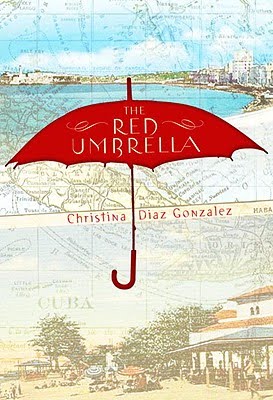
The Red Umbrella

by Christina Diaz Gonzalez
ages: 11+
First sentence: “I watched as a white heron circled the beach and then headed north toward the open waters of the tropics.”
Support your local independent bookstore: buy it there!

Lucia’s life isn’t all that bad. Sure, her mother is a bit overprotective, not letting her wear makeup or cut her hair short like the fashionable girls. Ans sure, her little brother Frankie is annoying. But, she has her best friend to giggle over boys with, her father has a good job, and Castro’s revolution hasn’t reached her home town of Puerto Mejares, Cuba.

Then one day, it does, and Lucia’s world turns upside down. Her father is resistant to participating in the revolution, and Lucia inadvertently sees things she shouldn’t have. After a couple of show-downs with the soldiers, Lucia’s parents do the unthinkable: they choose to send Lucia and Frankie to the U.S. for asylum, by themselves. They can only hope that their parents will be able to join them later.

The first half of the book deals with the situation in Cuba, and it’s a dire one. It reminded me of the books I’ve read about the Iranian revolution: controlling, threatening, and very scary, especially for an American, because we’ve never experienced anything like it. There’s a couple of instances, near brushes with rape and death, that made me wonder if this really is a middle grade book. But it’s all very tasteful — barely brushing the surface — and it adds to the tension in the book.

The second half is about Lucia and Frankie in America — specifically Grand Island, Nebraska. They struggle to fit in at first, but the couple they are placed with, Mr. and Mrs. Baxter, are kind and well-meaning, and eventually they find a place. The struggle then becomes with being in American and keeping themselves Cuba. And for Lucia, desperately missing home and her parents. It’s tough, but they do find a way to balance everything.

It’s an interesting novel, and addresses something I’d not heard of before in the exile of Cuban children during the revolution. Well-written and well-developed, it’s an excellent book.

Touch Blue

by Cynthia Lord
ages: 9+
First sentence: “‘The ferry’s coming!'”
Support your local independent bookstore: buy it there!

This is on my pile for Cybils reading, but Jen’s recent review prompted me to pull it off the pile sooner rather than later. And I’m so glad I did.

Tess lives in Bethsaida, a small fishing island off the coast of Maine. It’s so small, that they only have a one-room school, where her mother is the teacher. And because lobstering is no longer what it used to be, people keep moving off, and the state of Maine is threatening to close the school, which means Tess and her family would have to move.

That is, until Reverend Beal comes up with the idea to take on foster children. If they add as many children as those that have moved out, maybe they could save the school. Tess’s family is one of those who take on a foster child, a 13-year-old boy named Aaron. She hopes, and wishes, that this will be exactly what her family and the island (and maybe even Aaron) needs. But then, sometimes, everything you wish for doesn’t always turn out the way you’ve planned.

It’s a quiet book, one where the characters and setting are forefront, and shine like they should. Lord’s writing captured the quiet homeyness of island living — both the positive and the negative; there were some wonderfully nosy characters. She also captured the idea of finding a place; Aaron is a wonderfully complex character, someone who wants and needs a home, but is reluctant, because of his past, to dive in headfirst and give everything over to Tess and her family. It’s a slow process, one with bumps and hiccups, but because you care about the characters, you want it to succeed.

And with some luck, it will.

(Just for the record: because this is a Cybils nominee, I’ve been asked to make sure y’all know this is my opinion only, and not that of the panel.)
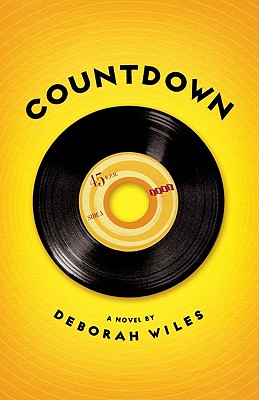
Countdown

by Deborah Wiles
ages: 10+
First sentence: “I am eleven years old and I am invisible.”
Support your local independent bookstore: buy it there!

It’s the fall of 1962, and there’s tension in the air. Fifth-grader Franny Chapman is not quite sure what’s going on with her best friend; her Uncle Otts seems to be not quite there anymore, instead spending more and more time fighting an old war in his head. Her mother is distracted, her father is gone, her older sister is choosing to spend time with her college friends and leaving Franny behind. Even her teacher has skipped her every single time when it’s her turn to read aloud in school.

On top of all that, the president — John F. Kennedy, for those of us who didn’t do well in history — has just informed the country that the Soviet Union is sending missiles to Cuba that have the potential to blow the entire country up. Franny only wants to be worried about going to her first boy-girl party, not whether or not she’s going to live to see tomorrow.

This book is billed as a “documentary novel”; the narrative is interspersed with pictures and quotes and clippings (there’s a Fallout Shelter Instruction Manual!), presumably to give the reader (who, we assume, didn’t do well in history either) some frame of reference. And taken separately, both the non-fiction parts and the fiction parts were interesting. I kind of liked Franny, and her struggles. I wanted to smack her mom, and I kind of felt that Wiles was playing up an early-60s mom stereotype: the bridge-playing, cigarette-smoking, mostly absent mom who was a very strict disciplinarian when she was around, and yet somehow had a soft heart for her children, though her son saw it more. (We’ve come a long way, baby.) And I liked the non-fiction parts as well. The quotes, the bios of notable people, the pictures were all fascinating to look at.

I just think this book tried to do too much in combining both. The narrative felt interrupted to me, and I didn’t get the sense of foreboding about the Cuban Missile Crisis that I think the author wanted us to get. In some ways, I think this would have worked better as a straight-up non-fiction book, like Marching for Freedom or Claudette Colvin. Combined with quotes and interviews, this could have been a compelling book. (I’d love to see one done from a Cuban perspective, personally.) But as it is, the book fell short in many ways for me. It tried to do too much (there’s even a faint subplot about the race issues in the country at the time, but it was never developed enough to do much with), and because of that, it didn’t do enough.

Which is just too bad.

(Just for the record: because this is a Cybils nominee, I’ve been asked to make sure y’all know this is my opinion only, and not that of the panel.)
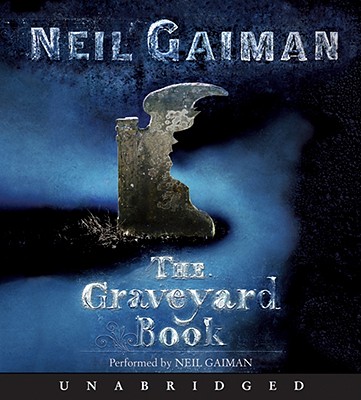
Audio Book: The Graveyard Book

by Neil Gaiman/read by Neil Gaiman
ages: 10+
First sentence: “There was a hand in the darkness and it held a knife.”
Support your local independent bookstore: buy it there!

This is a reread for me — my face-to-face book group is reading it this month, and I needed a brush up — but this time, I decided that I really wanted to hear Gaiman read it. I’d heard that he was a fabulous narrator, and that it’s a singular experience.

I was pretty wishy-washy about the book the first time around; I thought the illustrations didn’t add much, and that it wasn’t always as gripping as I’d have liked.

But listening to it? I kept the CDs in the car, to listen to while I drove around, and I kept finding excuses to go places. Gaiman’s a captivating storyteller. Absolutely, completely captivating. There’s something about his voice, and because he’s the author, he adds subtle nuances here and there that just make the story come alive. It was funnier that I remembered it being. The beginning and ending were still intense, but there was a different sort of intensity to it. And it all — from the Sleer to the Goul chapters — seemed to make more sense as Gaiman was reading it. I loved it so much more this time around.

A very highly recommended way to experience this book.

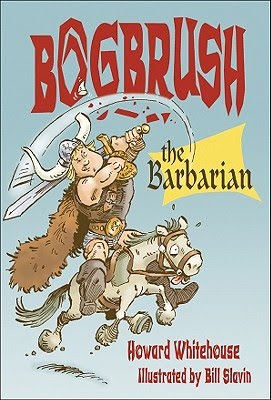
Bogbrush the Barbarian

by Howard Whitehouse (Illus. by Bill Slavin)
ages: 9+
First sentence: “The July snow was blowing sideways across the frozen plain toward the village.”
Support your local independent bookstore: buy it there!
Review copy sent to me by the author

Because I am not a 10-year-old boy, nor have I ever had a 10-year-old boy (or am likely to), I have completely missed out on the whole sub-genre of 10-year-old-boy books. You know them: Captain Underpants and the like. As a result, I’m not that versed in the world of fart and poop jokes. (Probably a good thing…) This book falls into that category (though it’s pretty light on the fart and poop jokes), and much to my surprise (or not, since I’ve loved other books by Howard Whitehouse) I thoroughly enjoyed it.

We follow the (mis)adventures of one Bogbrush (the Barbarian), who’s off to become a Hero. After a quick stop at the Temple of the Great Belch in order to become a Certified Barbarian, he sets off in search of a Quest. He bumps into Diphtheria and Sneaky, who are off to see if they can remove the Great Axe from the Stone and become the true king of Scrofula. Sounds like an adventure Bogbrush — who’s not too bright — can handle. Of course, they will run into a few other obstacles before they get to the Big City, and while things don’t really turn out happily-ever-after, they don’t turn out too badly either.

But, obviously, this book isn’t about the plot. It’s about the gags, the gimmicks, and Whitehouse (with able — and ample — assistance from Slavin’s illustrations) gives us that in abundance. My personal favorite was the parenthetical comments under the chapter headings; the author uses hands and toes to count up from one to twenty (well, chapter 9 reads, “This would be both hands raised if I had lost a finger like Uncle Bob who had that unfortunate accident with the bacon slicer.”); after twenty they become insanely hilarious, counting all over the map (21 gets used a few times, an Chapter 9 makes a reappearance). I found myself looking forward to a new chapter, just so I could see what was going to happen next in the parenthetical comments.

Additionally, the author gives us an “education”, with sidebars in every chapter explaining definitions of words and customs, as well as general “things to know”. And, since this is a humor book, they are (of course) only mostly serious.

Word of the Day: invoke — to call upon a god, as in “O great God of Homework, make that which I did on the bus this morning suffice for a passing grade.”

or

Vocabulary to Learn: Brigands, outlaws, footpads, and bandits are the same thing — groups of unpleasant criminals who hide in the wilds and jump out on honest passersby. And not just to say “Boo!” either.

It’s not deep, it’s not even a particularly compelling story, and it kind of just runs out of steam at the end. But it’s 10-year-old boy funny, and that’s really all that matters.

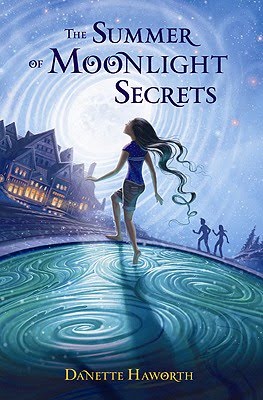
The Summer of Moonlight Secrets

by Danette Haworth
ages: 8+
First sentence: “‘Hey!’ I yell.”
Support your local independent bookstore: buy it there!
Review copy sent to me by the publisher

Sometimes I find a book enjoyable, even though when I finish I have no idea why. This was one of those books. Nice and sweet, but left me wondering at the end just why I thought it was enjoyable. That, and what was it all about, anyway?

Told in alternating chapters, it’s the story of Allie Jo, resident of the Merriweather Hotel in Hope Springs, Florida and Chase, who’s there for a summer with his father while he’s on a travel writing assignment. It’s a little bit of everything: there’s some historical fiction (well, it’s set in the 80s, which calling historical kind of makes me cringe), there’s a splash of fantasy, there’s a bit of a growing up story, and an inkling of romance.

All of which were enjoyable: it was fun visiting the 80s, even though there really wasn’t a whole lot to indicate that it was the 80s; just a few hints and references here and there. The growing up story was mostly Allie Jo’s; she’s an only child, introverted, and a tad bit ashamed of living in a hotel, even while she’s proud of the legacy the Merriweather has. She has to learn, over the course of the book that she is okay with who she is, and that she’s much stronger than she realizes.

The romance belongs to Chase (though he has a — gasp — divorce in his family to deal with), and it’s a very sweet and slightly awkward one, as should be the case when you’re only 13. But it was the fantasy element — in this case, a twist on Irish folklore — that made the book intriguing. There’s a mystery to it as well, as Chase and Allie Jo meet and befriend Tara, they need to unravel just what it is that makes her special.

Even with all that (maybe it was too much?), I ended the book scratching my head. What was it about, really? What was the point? While I enjoyed it, I never really connected with it, never really felt any reason to think about it beyond when I was reading it. It didn’t really capture my fancy.

But it was enjoyable. Maybe that should be enough.

Scumble

by Ingrid Law
ages: 10+
First sentence: “Mom and Dad had known about the wedding at my uncle Autry’s ranch for months.”
Support your local independent bookstore: buy it there!

Ledger Kane — call him Ledge — has a problem. See, his savvy has hit him full force and it’s a doozy: it seems anything mechanical or man-made (from buildings to cars to watches) falls apart when he’s around. And he’s stuck out at his uncle Autry’s ranch in Wyoming until he can learn to scumble — or control — his savvy. Which, at the rate it’s going, may be never.

Of course, watching Ledge learn to scumble his savvy alone wouldn’t make that interesting of a book. Set nine years after Savvy, there’s a bunch of extended family members around to help Ledge with his issues. Rocket Beaumont’s still trying to figure out how to manage his electrical savvy and have a normal life. And Samson and Gypsy are hanging around the ranch, lending a helping hand, as is Grandpa Bomba (though he’s mostly patiently waiting to die). There’s also cousins Marisol and Mesquite, Autry’s twin daughters, and Ledge’s sister, Fedora, to round out the cousin bunch. It’s a motley crew, with personality conflicts and humor and affection. It made me wish for the throw-back days of allowing kids to wander freely, trying to figure out what to do with the day when there’s no computer or TV or scheduled events to go to. In some ways, it’s incredibly boring. But Law makes it sound like a little bit of heaven.

Life wouldn’t be complete for a 13-year-old boy if there weren’t some 13-year-old girl to give him some grief. For Legde, it’s Sarah Jane Cabot, daughter of the local business mogul. She’s an odd duck, a newspaper reporter, and always at odds with her father: she wants his attention, but she’s also afraid of him. There is, of course, a push and pull relationship between Ledge and Sarah Jane: they need each other to figure things out, but, man, does he drive her batty.

It’s another incredibly sweet, heart-warming (but without being overly smushy) book from Law. Creative, well-written, and thoroughly engaging, you can’t help but want to be a part of their family.