10 Questions For Anne Osterlund

I don’t quite remember how I discovered Anne Osterlund, but I do know that I thought Aurelia was a rocking book, and thoroughly loved Academy 7. And interviewing her has been on my wish list for ages now. So, imagine my surprise when she emailed me, and asked if I wanted a copy of Exile (Which is out today! My review here). I jumped at the chance, and thankfully, she was able to take a few moments out from her teaching, writing, imagining, and cat-loving schedule to answer a few questions.

MF: I’ve always been curious how fantasy writers dream up their worlds. And since this book was about Aurelia discovering her country, what was the inspiration/germ for Tyralt?
AO: Tyralt is where Aurelia lives. It has always been very much as it is, in my head, at least since Robert informed me he was from the frontier in chapter 1. A country with a royal court and a frontier. A traditional monarchy and a modern education system. A vast distance between one corner of the kingdom and another. A history of tradition and a push for enlightenment. All of which lead toward . . . conflict. Which is a dynamic element within a story.

MF: Unlike Aurelia, and even though there’s adventure in it, Exile is more about an internal journey on Aurelia’s part. Why did you choose to go that route with this book?
AO: Aurelia’s journey begins in the first book, and all her actions stem from the discoveries she makes about herself and her family at the end of book one. Aurelia is about a defining and traumatic moment within her life, but it’s just that—a moment. The time span of the entire book extends for only the length of about a week and half. Exile covers a much longer period in time, allowing the characters to learn a great deal more about each other, the kingdom, and most importantly, themselves.

MF: Do you have a favorite character or scene in Exile?
AO: I’m not allowed to have favorite characters. It would start a war within my head. As for scenes, …hmm. I’m rather fond of all the frontier scenes. Probably because that is when Aurelia is the most happy. Though I love watching her and Robert fight during the first two chapters, which is rather hypocritical of me.

MF: What is the trickiest part about writing Exile?
AO: The forest. Or rather getting out of the forest. Aurelia, Robert, and I were stuck there forever This is largely Robert’s fault. He was too concerned about looking weak during the early drafts, which led to all kinds of revising, when what he really needed to do was just suck it up and let Aurelia rescue him. Though to be fair, this is also the part of the book where Aurelia has the worst time emotionally, and that is probably what really makes the forest the most difficult.

MF: The easiest?
AO: Again, the frontier scenes always read swiftly for me. I think because Aurelia enjoys herself so much while she’s there.

MF: Since you’ve written in both genres, what are the differences/similarities between writing fantasy and science fiction?
AO: LOL! That is a huge question. There are plenty of differences within writing genres (word choice and research being two of the greatest), but ultimately, in my opinion, any young adult novel comes down to knowing the characters. Aurelia, Academy 7, and Exile are all character driven. The settings and the worlds change, but the depiction of those worlds is always through the characters’ eyes. My books all star two teenagers (one guy/one girl), and those characters undergo the same challenges as any other teens. They have minds of their own. They make their own decisions and their own mistakes. They express an entire range of emotions. They get in trouble and change their minds and have the ability to grow. They don’t know everything. And they don’t know they don’t know everything. And there is always hope.

MF: You teach sixth grade, right? Does your teaching influence your writing? Why or why not?
AO: The greatest influence teaching has had on my writing career is via the school visit and presentation aspect. I have a great deal of experience setting a meaningful objective, getting my audience’s attention, and holding that attention for the duration of a lesson or presentation. Sixth graders do not tolerate boredom.

MF: Since you also have a full-time job, when do you find the time/space to write?
AO: I write all day every day I am not teaching or presenting. With the rare exception of family trips and major holidays.

MF: Do you have any special place you like writing?
AO: On the back of a half-wild stallion sprinting across the Tyralian frontier. Or in an interplanetary plane flipped upside down and scaling the side of a frozen waterfall. No, honestly I write on a couch, surrounded by papers, pencils, a thesaurus, and a dictionary. It doesn’t matter where you are when you write. It’s about where your imagination is.

MF: Who or what inspires you to write?
AO: The characters are the inspiration. Always the characters. I first met Aurelia, the heroine of Aurelia and Exile, several years ago, on a yellow notepad, when she was complaining about being stuck at a boring party with an itching ankle. Aerin from Academy 7 was removing a headband, standing in front of a mirror, and contemplating whether she could scrub away the past five years to become someone completely different. And Salva, the hero of my upcoming fourth book, was checking out the pretty girl at church. All of these characters required change. None of them could remain as they were. And change is the ultimate force within a story.
The first two scenes mentioned above are both posted on my website. Here for Aurelia and here for Aerin.

MF: What’s the last book you read and loved? And why did you love it?
AO: I just finished Rules of Attraction by Simone Elkeles, the second book in her Perfect Chemistry series. I’ve loved both these books because they pull the reader through the story. And also, I admit, because I’m always afraid they will turn out to be too much like my upcoming fourth book. And they never do.

MF: If you don’t mind telling us, what can we expect next from you?(More Aerin and Dane? Or more Aurelia and Robert? Or something completely different?)
AO: Salvation is a young adult contemporary novel scheduled for release next April. Here’s the pitch.

SALVA (Salvador) RESENDEZ is at god a Liberty High School. Quarterback. National Honor Society Member. ASB Vice President. His Mexican immigrant family has high expectations, and Salva is prepared to fulfill them—mostly—but what he really wants is to blend in with his friends and enjoy his senior year. A goal bound for destruction when an asinine requirement forces him into AP English with the teacher from hell. And with walking disaster area, BETH COURANT. Who may be his salvation. But what neither Salva nor Beth knows is that the cost of salvation is mortality.

I would love to write more about Aurelia, Robert, Aerin, and Dane! But Salvation is definitely the priority at them moment. Currently I’m wrestling my way through the first edited draft. And let me tell you, Salva definitely rivals Aurelia for stubbornness. Check out my second blog post if you don’t believe me.

MF: Thanks, Anne, for sharing your time!
AO: Thank you so much, Melissa! I hope you and your readers will come visit my website and my blog. And of course, I hope you all enjoy Aurelia and Robert’s expedition in Exile!

10 Questions for Clare Vanderpool

When I picked up Moon Over Manifest, Hubby took a look at the author bio, and said, “You should interview her.” Of course, I thought, I really should. And then I put it off (sorry!) for various reasons. And then January came around, and Clare Vanderpool won the Newbery. I despaired; I’ve never interviewed anyone who’s won a big award (save Shannon Hale, but she’s awesome enough to let me interview her anyway), would Clare Vanderpool say yes?

Well, yes, busy as she is, Clare did take time out from her busy schedule to answer my questions about her book, her inspiration, and life after winning the Newbery.

MF: What inspired you to tell the stories of small-town Kansas?
CV: I’m a Kansas girl, so of course Kansas would be the first place I would look to set my story. I chose the real town of Frontenac for my fictional town of Manifest because my maternal grandparents are both from that area. What a stroke of luck that was, as Frontenac and other small towns in southeast Kansas have such a rich and colorful history that really drove the story. With the mining, bootlegging, immigrants, orphan trains, and the Spanish influenza, there was no shortage of drama and intrigue going on in southeast Kansas.

MF: Not many people think of drama when they think of Kansas, though there was quite a bit in our history. You tackled not one, but two time periods. What kind of research went into making that work, and making sure each was authentic?
CV: I did a great deal of research and loved every minute of it. I’m a very nostalgic person so poring through old newspapers, yearbooks, and magazines is a great way to while away an afternoon. I also read books on the Great Depression, World War I, the Spanish Influenza, and bootlegging along with the memoirs of a WWI soldier and the experiences of immigrants traveling through Ellis Island. I find it all interesting but the research/writing process is also interesting in figuring out which parts of the research feed the story and which ones don’t. I don’t care for a story that beats the reader over the head with the historical knowledge of the writer. For me, if it doesn’t serve the story it doesn’t go in.

MF: I agree: as a reader, it’s hard when there’s more historical information than plot. Was it hard (or not) to find the voices of your characters? Did you do anything in particular to find them? CV: The voice of the main character, Abilene Tucker, was very clear from the beginning. I knew she was a level-headed girl with her very practical list of universals – even though she does come to question those throughout the book. Some of the other characters evolved as the story went along. Shady’s voice developed quite a bit. He is a soft-spoken character and for his voice and his character to rise to the surface, I had to focus on his actions as much as his words.

MF: I know it’s hard to choose, but do you have a favorite character or scene from the book?
CV: This is a difficult question to answer. I love all the characters, even the prickly ones. I like the fact that some characters who have their flaws, have opportunities to redeem themselves. If I had to choose one favorite scene, it might be the one with Abilene, Lettie, and Ruthanne, out in the woods at night and Lettie has brought gingersnaps to share. It is in this scene that Abilene realizes that Lettie and Ruthanne know things about each other, unspoken things, through shared experience. For the first time, Abilene begins to question some of her long-held list of universals. And it ends with Lettie singing her down and out train song. The sad mixed with the sweet. I like that.

MF: Did you always intend to write for a middle grade audience, or did that just happen?
CV:Yes, I set out to write a middle grade novel. That age group just seems to be the voice and point of view I settle into.

MF: So, congratulations on winning the Newbery! That must have been quite the experience. What went through your mind when you got the call?
CV: When I got the call and realized it was the chairperson of the Newbery Committee, my heart started racing. I thought she was going to say that I had won a Newbery Honor. And I would have been thrilled. Then when she said it was the Newbery Medal, I went from thrilled to stunned and the tears started rolling. My husband happened to be home and he just stared at me wondering what was going on because a)I’m not normally a spontaneous crier and b)he had no idea the Newbery was being announced that day. I sputtered a few words of thanks but couldn’t say much. It was amazing.

MF: Amazing, indeed! How has winning the Newbery changed things (in your life, your writing, etc.)? Or has it?
CV: My professional life has changed quite a bit. I haven’t done much writing lately, but hope to get back into a routine soon. I have done many interviews and have received invitations to speak around the country. That is exciting as I plan to take my children along on a trip or two. As far as home life everything is pretty normal. We have one computer in the house and with a multitude of snow days, sick days, and assorted days off lately, I have had to beg, borrow, and steal to get time on the computer. My husband and I had a little sit down with the kids shortly after the award was announced and said our plan is to enjoy the whole experience, appreciate the gift that it is, and keep things normal at home. In other words we still shop at Target, nobody gets a cell phone until they’re in high school, and you still have to do your jobs – every week! They seem good with that.

MF: Sounds like you’ve got some good kids. Hopefully, they’ll enjoy the trips! Who or what inspires you to write?
CV: My inspiration revolves around stories. The stories I read as a kid, the stories I read now, and the stories that emerge in my head and wrap themselves around my heart. My influences as a young reader were Scott O’Dell, Madeleine L’Engle, Elizabeth George Speare. In fact, I noticed recently that those three authors won consecutive Newberies in the early 1960’s. I guess that makes them some sort of Newbery Triple Crown.

MF: I like that: the Newbery Triple Crown; I love all those authors, as well. Speaking of reading, what’s the most recent book you’ve read and loved and why?
CV: I just finished Turtle in Paradise by Jennifer Holm and loved it. There were parts that made me laugh as well as sweet, tender, and sad parts. Jennifer is a wonderful story teller and I love her sense of humor. I feel like I just spent time with Turtle and the Little Rascals.

MF: If you don’t mind me asking, what can we expect from you next?
CV: The book I’m working on is about a Kansas boy who is uprooted from his home and put in a boys boarding school in Maine. His story involves a journey, a quest really. Fortunately, I was close to finishing a draft of my current work in progress. I say fortunately, because if I hadn’t been that far along, I think it would be very difficult right now to be trying to create and flesh out the storyline. As it is, the story is clear enough in my head that I think I’ll be able to finish the draft before long and then begin the process of tinkering and editing. I would describe it as moving past the “M & M” stage (what I tend to eat when I’m staring off into space trying to figure out where the story is going) and heading into the “Buckle Down” stage which usually involves more concentration and fewer calories.

MF: Thanks, Clare, for your time!

10 Questions for Rob Buyea

Today, I’m spotlighting another amazing Cybils-nominated author (the winners are going to be announced tomorrow! I can’t wait!), this time the author of the amazing Because of Mr. Terupt. Teacher, wrestling coach, father of daughters, and all-around nice guy, Rob Buyea (pronounced Boo-yeah) was kind enough to take time out of his busy schedule and answer a few questions for me.

MF: First off, the blurb on your book by one of my husband’s favorite authors, John Irving, got me wondering. How did that come about?
RB: John and I first met in the wrestling room at Northfield Mount Hermon School. I coach the team there, and at the time, John’s youngest son was attending NMH. We talked whenever was saw each other on campus over the next year. After I started to get serious interest from editors about Mr. Terupt, I told John that I was a writer. He asked to see my story, read it, and loved it. I’m very lucky to have such a great person in my corner.

MF: Very cool! That is amazing. Can you tell us a little bit about the process (from inception to publication) for the novel?
RB: I was working on a different manuscript when some of the voices first began talking to me. Peter, Jessica, and Luke started in on me first. I tried not to listen to them because as I said, I was working on something else. They didn’t leave me alone, so I began to put their voices on paper. I shared the beginning with some writing colleagues, and then I knew I was on to something. I attended a conference hosted by the SCBWI where there was a first pages panel. Peter’s voice was read and critiqued on the spot. Everyone loved it. I worked to finish the story and sent it out.

MF: Did you always mean to write for a middle grade audience, or did it just happen?
RB:I knew I was writing for a middle grade audience. In fact, I imagined being the teacher standing and reading aloud to his classroom as I wrote the story. I used to love to do that. Many teachers that have used Mr. Terupt as a read-aloud have sent me wonderful emails.

MF: I agree: it would make a great read aloud. Why did you decide to write the story of Mr. Terupt and his classroom from the point of view of several different people rather than a single narrator?
RB: I had finished reading Bat 6 by Virginia Wolff not long before I began Mr. Terupt. I think that had an influence, though I didn’t consciously think about it. Imagine saying to a student, “Tell me about school today.” You’d get twenty different responses from a class of twenty. I had seven kids that wanted to tell you about that year with Mr. Terupt. Naturally, they all had something to say.

MF: I think the different narratives added to the story; it was one of my favorite things about the book. Do you have a favorite character or scene in the book?
RB: No and No. I could never pick a favorite character. One week I’m really thinking about Peter, and then the next it’s Anna, etc. And there are a lot of parts I really liked writing. I had a lot of fun with the dollar words and the scene where you see the principal’s underwear. I liked writing the snowball scene, the hospital scene with Lexie and the other girls, and James with Peter. I also really liked writing about Danielle’s grandmother. She’s important to me.

MF: Is there anything you would like (or hope) your readers take away from reading your book?
RB: I hope it prompts thought and brings laughter. I hope my readers realize there’s much more to their classmates than just what they see in the classroom. I hope my readers have many connections—to self, to classmates, and if they’re lucky, to their own “Mr. Terupt.”

MF: It did remind me of my 5th grade teacher; she was absolutely amazing. How do your experiences as a teacher help you with your writing?
RB: I had lots of students and experiences that spark my imagination.

MF: Is there some one or something that inspires you to write?
RB: I was inspired, not by my own “Mr. Terupt,” but rather by the students I taught. They were amazing—in so many ways. I began writing because of them. Turns out that writing has also filled a void in my life. I trained as a very dedicated wrestler all my life. Once I graduated college and was no longer competing, I felt like something was missing because I wasn’t training. Writing has taken that place. The mental toughness and endurance that went into wrestling now goes into my writing. I love it.

MF: What’s the last book you’ve read and loved (and why)?
Hope Was Here, by Joan Bauer. I read it because it was on Jessica’s mind while I was working on the sequel.

MF: If you don’t mind telling us, what can we expect next from you?
RB: Mr. Terupt Falls Again. Scheduled for a Fall 2012 release.

MF: Thanks, Rob, for your time!

10 Questions for Stuart Gibbs

After I finished Belly Up, I wondered a bit about the guy, Stuart Gibbs, who wrote this incredibly funny story. And after it made our Middle Grade Cybils shortlist, I knew I needed to interview him. A few interesting bio tidbits first: he grew up in South Texas, was at one point one of the world’s experts on capybaras (the other two being the Kratt brothers?), and has written shows for TV and movies before venturing into the world of middle grade fiction. And if his first novel is any indication, I, at least, am glad he made the jump.

MF: This is your first novel, yes? Congrats! Can you tell us a little bit about the whole process?
SG: Yes, this is my first novel. I sold it by writing a pitch for Simon & Schuster: A synopsis of the story and the first few chapters. Originally, the story was told in third person, but my first editor at S&S suggested changing it to Teddy’s voice – and gave me a few suggestions as to what to concentrate on in the story. For example, he felt that the interplay between corporate hype and reality would be interesting to kids. I worked at a zoo when I was in college – and I studied biology – so I had a good background of knowledge to draw on. It took me about four months to write the book.

MF: Did you choose to write for middle grade audiences, or did that just “happen”? If you did choose it, why?
SG: It really just happened. I’d always thought about writing an adult novel, but had never given the idea of writing for middle grade any thought until my agent (Jennifer Joel) approached me about it. The moment she did, I realized that was exactly the audience I should be writing for. I had originally thought of Belly Up as a book for adults with an adult protagonist – but then realized the murder of an animal was the perfect crime for a kid to solve. Plus, I have young children, so the idea of writing something that they could read was exciting to me.

MF: How on earth did you come up with a hilariously outlandish idea like a murdered ornery hippo for a book?
SG: I worked at a zoo when I was in college and always knew a zoo was a great setting for a story. At some point, I realized I’d never heard of a murder mystery where the victim was an animal, so that seemed like a fun idea. But then, to create a good mystery, I needed an animal that a lot of people wanted dead. A hippo seemed like a great victim. They’re extremely dangerous and foul-tempered, yet most people seem to think of them as docile and harmless. Just the sort of animal that a corporation might mistakenly turn into their mascot and then regret doing so.

MF: Tell me about writing comedy: humor’s such a personal thing, how did you go about making sure it was funny?
SG: You’re right that humor is personal. Because of that, it’s hard to write something that will be funny to everyone. So I basically just wrote what was funny to me and hoped other people would enjoy it as well. I know that not everyone finds everything in Belly Up as funny as I do – but I’ve also had parents write to me saying that their children were laughing so hard reading the book that they fell off the couch, which is probably the greatest praise I could ever get.

MF: I remember being curious while I was reading: how much of the animal information is fact and how much was fiction?
SG: About 99% the animal information is fact. I really wanted to be as factual as possible in writing this. I’d like to say it’s 100% fact, but it’s possible that I got some things wrong.

MF: The book has a strong (but not overpowering) environmental vibe: what are you hoping, if anything, your readers take away from reading this book?
SG: I certainly want kids to care about the environment, though I think that’s a message they get pounded with through various media these days, so I didn’t want to be overbearing with it. Hopefully, my readers are also learning that zoos are an extremely important part of the conservation movement. They’re not – as some people think – ‘jails’ for wild animals. At one point, I have Teddy voice a very personal thought of mine: That zoos are a compromise. There probably isn’t a zookeeper in the world who wishes we didn’t need zoos, but the fact is, without them, there might never have even been an environmental movement in the first place.

MF: Do you have a favorite character or scene in the book?
SG: I truly love Teddy, though I’m also very pleased with how Summer McCracken turned out. As for my favorite scene, well, it was a banner day when I came up with the sequence at Henry’s funeral. I think that one turned out to be quite funny.

MF: Oh, I agree: that was hilarious! You’ve also written for TV, correct? What are the differences and/or similarities between writing for TV and writing novels?
SG: They are extremely different experiences. Writing for TV is a much more collaborative process. You have producers, studio executives and network executives all giving you notes – and that’s just for the outline. By the time your show gets filmed (and there’s a good chance it won’t), the director, the actors and other writers have all weighed in too. Sometimes, this all works out great – and sometimes it doesn’t. When writing the novel, really the only other person with much input is your editor, so it’s much easier to stay true to your original vision.

Writing a novel is much more exacting work, however. In a book, every single word has to be just right, whereas, when you’re writing for TV, it doesn’t really matter how well you write a scene description; all that really matters is the dialogue.

MF: Are there five books you think everyone should read? (If there aren’t, what’s the last book you read and loved and why?)
SG: Wow. Five books. That’s very hard to narrow down. Can I pick my five favorite humor writers? These are the authors who’ve probably influenced my style the most – and the writers whose books I’ve read over and over again:

Roald Dahl made me laugh out loud all the time as a young reader.
Carl Hiaasen, Gregory McDonald and Donald Westlake are the funniest crime writers there are.
Bill Bryson writes nonfiction, but he does it in an amazingly accessible, incredibly funny way.

MF: Those are amazing writers. If you don’t mind telling us, what can we expect from you next?
SG: My next book, The Last Musketeer, will come out in the fall. It’s about a teenager who goes back in time to medieval France and ends up uniting the Three Musketeers – who are also teenagers — for their first adventure. This book is the first of a trilogy.

And in spring 2012, Spy School will be released. That’s about a kid who is thrilled to learn he’s been accepted to the CIA’s top secret Academy of Espionage – but then discovers he’s only been brought in as bait to catch a mole.

Plus, I’ve just developed the story for a sequel to Belly Up. So, hopefully I can get started on that sometime soon.

MF: Wow, things to look forward to! Thank you so much for your time, Stuart!

10 Questions for Alan Silberberg

Honestly, after I read Milo for the Cybils, I knew I needed to talk to his creator. It’s just fortuitous, and a bit of procrastination, that this comes out after the Cybils shortlists come out, and Milo: Sticky Notes and Brain Freeze
was on the Middle Grade list. Much like his book, Alan was a delight to interview. Do check out his webpage or follow him on Twitter. Milo even has a Facebook page, which I find quite amusing.

MF: I’ve read a lot of books where the parent dies or has passed on, but Milo was different in that it focused on the healing afterward. What made you decide to write about death from that angle?
AS: I wrote Milo from the POV of a 13 year old learning how to finally grieve and move on from his mother’s death. It was a very personal story for me, my mom died when I was nine and it was a major event in my life that I have to admit I was still coping with when I started this book. As I wrote Milo’s story I realized how close to my own emotions it was and I really felt ready for my own healing. Milo coming to terms with his mother’s death really mirrored my own emotional catharsis. Stepping away from that answer, I also knew that I wanted to write a book that could help children and families accept and deal with whatever loss that they might be experiencing and that meant writing not only about the loss and grief – but the potential for healing too.

MF: Wow. I had no idea. That’s probably part of the reason the book resonated so deeply. Given the emotional baggage for you, why did you decide to write about death at all?
AS: When I started the book it was just going to be a silly story about Milo and his tween angst. I knew I was going to add my cartoons to tell the story but it was just going to be a fun little book. As I wrote about his junior high experience I realized I was remembering a lot of my own time back then and slowly began to let that part of me seep into the story. It was at that point I realized I wanted to let Milo’s story be close to my own experience – and that meant telling the story of what it’s like to lose a parent when you’re young.

MF: Aside from your own experiences, how did you come up with the character of Milo?
AS: Milo is a funny kid with a good sense of humor who also has a running monologue in his head about everyone and everything. In that way I guess Milo is a lot of me mixed in with some of the kids I remembered when I was that age.

MF: Is there a favorite character or scene from the book that you particularly like?
AS: I like the scenes where Milo has to be tutored in Math by his bald Math teacher, Mr. Shivnesky. Milo can’t quite figure out of Mr. Shivnesky is really bald, or if he shaves his head, which to Milo – is just not cool. I like the relationship they develop. I also really like Milo’s best friend, Marshall, who is really weird!

MF: Milo’s completely different from your first book, Pond Scum (which I will hunt down and read; it sounds delightful). What did you do differently to prepare/write this book from your first one?
AS: Pond Scum was my first book after years of writing TV for kids. The story is about Oliver, who finds a magic gem that can turn him into any animal he touches. To write the book I had to do lots of research about the different creatures that Oliver became, and that was a lot of fun to work the details into the story. Writing Milo was all about my own emotional research. It was like a form of therapy dealing with the story that so closely mirrored my own life.

MF: You’re also a cartoonist, yes? What are the differences, if there are any, between doing your cartoons and your writing? Do you feel like it’s two separate sides of yourself, or do the artist and the writer compliment each other?
AS: I really feel that the cartoonist and writer work side-by-side as I work on the book. It is like there are two of me, each one making suggestions as the story unfolds. “Ooh, I know a great cartoon that could go here!” Or, “Maybe the story needs some more depth here.”

MF: Who or what inspires you to write?
AS: I am inspired by the books I read and by the kids I meet who like good stories. I think most writers get a certain energy from knowing that an audience is out there devouring the words.

MF: What do you do when you’re not writing?
AS: There’s a time when I’m not writing? Seriously, when I’m wrapped up writing a book I find it hard to not be thinking about it even when I’m away from it. I do try and have a life though, time with my family, going to movies, taking the dog for a walk. But it’s hard to escape my brain!

MF: What’s the last book you’ve read that you really loved?
AS: I totally loved “Cosmic” by Frank Cottrell Boyce. He has such a distinct voice and the story about a 12 year old boy who is mistaken for an adult and is then put in charge of taking a bunch of kids into space was beautifully written, sharp and quite funny. (I was actually asked to contribute a cartoon to the Unshelved site and chose to do my own tribute to Cosmic.)

MF: If you don’t mind telling us, what can we expect next from you?
AS: I can’t tell you the exact premise – it’s a secret. But I can say that I am almost done with a new book about two best friends who find a way to get anything they ever wanted. It’s more like Pond Scum in that it has a certain amount of magic in it – but like Milo, it will feature text and my cartoons.

MF: Sounds interesting! Thanks for your time, Alan.

(Not Quite) 10 Questions for Jackson Pearce

Jackson Pearce is one difficult woman to get a hold of. Seriously. It’s because she has her fingers in so many pies, I think. There’s her blog, and her presence on Twitter and Facebook. And don’t forget her vlog, on which she recently tacked a 30 days of vlogging series. Oh, and she writes books. Her most recent one, Sisters Red, was a captivating take on Red Riding Hood, and the companion book, Sweetly, is out in June 2011. It’s no wonder that I had to beg and plead (and become an annoying email/Twitter presence) to get her to answer a few questions. And it’s a good thing she was gracious enough to squeeze me in.

MF: Which character of yours was easiest/most fun to write?
JP: I think, oddly enough, Scarlett was the most fun to write. She’s so focused, so intense…it was like being on one of those haunted-house-carnival-rides that happened entirely inside her head. Even though it was super dark sometimes, it was always interesting. She was NOT easy, however. I think Jinn, in AS YOU WISH, was actually the easiest to write. He’s so fun and wry and sarcastic, it was always a blast.

MF: How about the most difficult?
JP: The most difficult to write was Gretchen, in my upcoming book SWEETLY. I think I started the first draft of that book before her personality was fully formed in my head, and thus I had to write and rewrite and rewrite. I finally found her voice, but it took a while!

MF:You spend a lot of time with Twitter and Facebook, not to mention your blog and vlogging. How does social media affect your work? (or does it?)
JP: I love twitter/blogging/vlogging/facebook, and did it long before I sold my first book– that said, I do think being able to so easily connect with readers is wonderful. It doesn’t necessarily affect the writing directly, but it certainly affects the “author” side of the job in that I get to have fun, meaningful conversations with readers instead of wondering if anyone out there in the world is reading my work!

MF: Who or what inspires you to write?
JP: Nothing specific inspires me to write– I write because if I don’t write my stories down, no one else is going to! Writing is the only way I can get what’s in my head out into the world.
MF: Since this was going around the interwebs recently, I’m curious: why do you write for a YA audience?
JP: I feel like this is similar to asking “Why do you like ice cream?” Because it’s delicious, and well, I just…DO. It’s simple. I write for YA because it’s awesome and I just DO. It’s not a conscious choice, it’s just the stories in my head are YA. Equally simple.
MF: What are your top five books (at least right now)?
JP: This is always, always, always changing, but:
THE VESPERTINE by Saundra Mitchell
ACROSS THE UNIVERSE by Beth Revis
THE AUTOBIOGRAPHY OF MARK TWAIN by Mark Twain (yep, I’m a nerd)
MOCKINGJAY by Suzanne Collins
Hm, I can’t think of a 5th! I’ve been doing a lot more writing than reading lately, it seems…

MF: Thank you for your time, Jackson!

BBAW: 10 Questions for Teresa

For the interview swap, I got a newbie again this year: Teresa from Teresa’s Reading Corner. From her profile blurb, she writes: “I am a working mom and wife who loves to read in the spare time that life allows. I love discussing books and have gotten so many fantastic book suggestions from the blogs that I’ve read. I decided it was time to take the plunge and share my love of books with others.”

I loved getting to know a new bloggger!

MF: I’ve not been to your blog before — one of the great things about BBAW! Tell us a bit about yourself.
I’m looking forward to visiting a lot of new blogs this week! I have been a reader as far back as I can remember. Both of my parents are avid readers so we know how that got started! I live in Colorado with my husband, my son and our dog. I don’t have a favorite genre that I always default to, but read a little bit of everything.

MF: How long have you been blogging? Why did you start?
I have been blogging for almost 7 months. I love chatting about books and thought that the blog would be an excellent avenue to spark conversation with others about books.

MF: Have you interacted with the book blogging community much? If so, what is it about the community that you like? (Any dislikes?)
I love the book blogging community. As I was starting out I asked a lot of questions and got a lot of support from many different bloggers. I think that it is great that so many were willing to reach out and help a newbie.

MF: What keeps you picking up the next book?
Reading is how I unwind. I love escaping into the story. I don’t know what I’d do if I couldn’t read!

MF: Buyer or borrower? Why?
I tend to be more of a buyer. I love being surrounded by books and the experience of wandering around the bookstore looking at all of the covers.

MF: You work and you’re a mother: when do you find time to read?
I read whenever I can. Usually it is after my little monkey goes to bed or during my lunch hour while at work.

MF: And now for the round of five (if you can, five of each please…):
Foods/beverages you can’t live without?
Coffee, pizza, chocolate, steak, green chiles

Places to you’d love to go (fictional or non)?
Australia, England, Italy, New York, San Diego

Favorite characters?
Jamie and Claire Fraser from the Outlander series by Diana Gabaldon are by far my favorite characters.

Books you think everyone should read?
This one is a tough one. I think people should read whatever makes them happy as long as they are reading. I do think that people should try reading an author or genre before they claim that they don’t like it. Far too many people dismiss things based on assumptions that may or may not be true.

Thanks, Teresa! Be sure to pop by her blog to see what questions she asked me.

10 Questions for Tom Angleberger

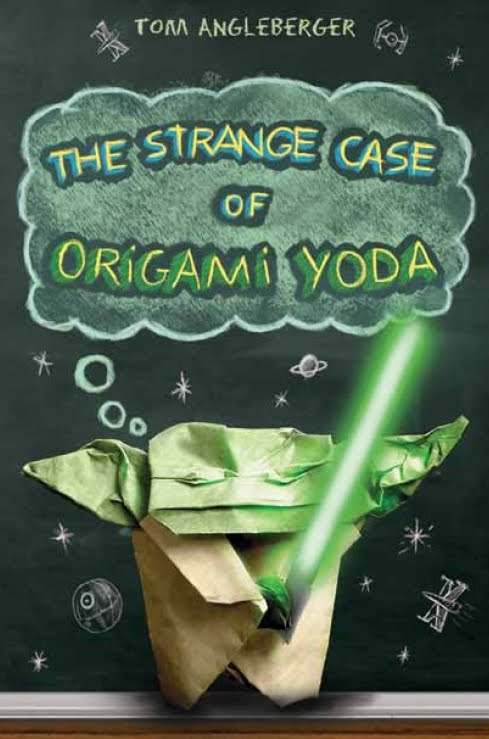
I’d seen buzz about The Strange Case of Origami Yoda, and knew I had to read it. After patiently waiting until I got my hands on a copy (and reading it), I knew I needed to interview the man behind this concept. Enjoy and be sure to visit Tom at his blog.

MF: Tell me how you came up with the idea to write a story about a mystical folded piece of paper that gives advice? TA: Well, after seeing Fukiami Kawahata’s famous origami Yoda I wanted to make my own. But his is for experts only and I’m actually terrible at origami.

But I messed around and came up with a super simple Yoda and by chance it fit right on your finger. It was a finger puppet, so obviously an imaginative kid would walk around and make it talk to people. And the rest of the story just came naturally from there.

MF: Obviously, Yoda is a copyrighted character; I’m assuming you didn’t just get to use that character without permission? How did you get that from Lucasfilm? TA: Lucasfilm is awesome!!! They’ve been great. They said yes to Yoda and to everything else I’ve wanted to do, like having a teacher character that looks a lot like Jabba.

MF: Since the book was a “case” file, each of the chapters were written in a different voice? Did you find it difficult switching between voices?
TA: Yes and no. Tommy really is my natural voice. Some of the others I have to work at.

MF: Why did you decide to write the book in this particular way, rather than from, say, Dwight’s perspective?
TA: If we knew what was going on inside Dwight’s head, the heart of the story would be gone.

MF: Did you set out to write a story for middle grade readers, or is that just the way the story unfolded?
TA: Yes, I love writing for mid-graders because I loved reading so much when I was one.

MF: Fess up: which character were you most like when you were a kid?
TA: Well, this is more of confession than you realize. Although I was a lot like Dwight, I also have a lot in common with Harvey! He’s my dark side!

MF: I loved the drawings in the book; they added just the right touch. I heard that you were responsible for them. True? How did you come up with the ideas for them? TA: Yes, most of the drawings inside are mine. I spent a long time looking at my old yearbook and doodling to get the different characters. For the rest of the doodles, I really tried to draw what Kellen would think was funny.

MF: Is being a writer something you’ve “always” wanted to do? Or is it just something you fell into?
TA: I started a novel in the 7h or 8th grade, but never finished it — thank goodness! Then I wrote comic books in high school and started comic strips in college. Then short stories and a failed novel. Finally I started writing for kids and found my calling.

MF: What are your five favorite books? (At least today.) TA: Newest Favorite: When the Mountain Meets the Moon by Grace Lin
Old school favorite: Lizard Music
Favorite mid-grade fantasy: Lloyd Alexander’s Prydain series
Favorite mid-grade sci-fi: Sword of the Spirits trilogy by John Christopher
Favorite mid-grade comedy: Helen Cresswell’s Bagthorpe books

MF: So, if you don’t mind telling us, what can we look forward to from you next? TA: I am just finishing up a book with a very long title: Horton Halfpott OR the Fiendish Mystery of Smugwick Manor OR the Loosening of M’Lady Luggertuck’s Corset.

MF: Sounds fascinating. Thanks for your time!
TA: THANKS!!!

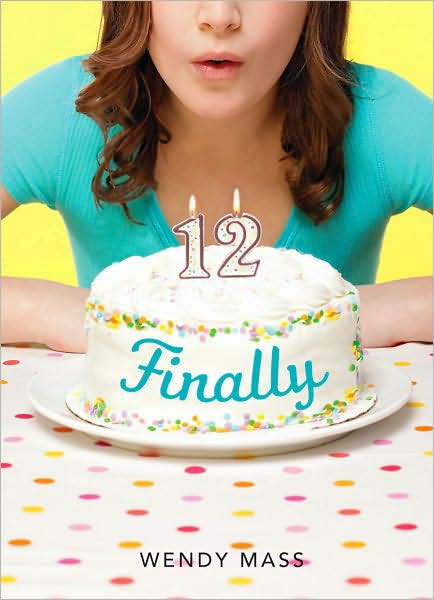
10 Questions for Wendy Mass

This interview I have to credit C for. She adores Wendy Mass, you see: she picked up Every Soul a Star (after M literally pushed it into her hands) and adored it. She’s working her way through Mass’s other books, and when she finished Finally, she came to me and said, “Mom, you do interviews with authors, right? Do you think you could do one with Wendy Mass?”

There was only one way to find out, and the answer was: YES! Hooray for suggestions from daughters!

MF: My daughter and I are curious: how do you come up with the ideas for your stories? WM: Basically I keep my eyes open for a topic that interests me (synesthesia, astronomy, candy!), and then I figure if I find it fun to learn about, then others will, too. Then I build a story around the theme, with characters that wind up leading me through the book.

MF: Who or what inspires you to write?
WM: Writing was just a natural progression from reading for me. At some point as a kid I decided to try writing my own stories, and then just never stopped. Now I think it’s the readers who inspire me to keep writing.

MF: Your most recent book, Finally, is a sequel, of sorts, to 11 Birthdays. Is there any particular reason you put Rory and her story in the same world/place as Leo and Amanda? WM: Writing 11 Birthdays was so much fun that I didn’t want to let the world of Willow Falls end. But I also didn’t want to write a straight sequel, so FINALLY became a “companion” to 11 Birthdays, with some overlapping characters.

MF: How did you come up with the plot for the book? Did it evolve out of 11 Birthdays at all? WM: I knew each of the “Willow Falls” books would focus on a girl’s birthday, and 12 is such a special age. Right on the cusp of being a teen, but still feeling like a kid a lot of the time. I wanted to focus on not only the big “coming of age” events that most girls go through, but some of the smaller ones, too, like getting a key to the house, sitting in the front seat of the car, getting pierced ears. But then I thought it would be fun to have all the things Rory was looking forward to go differently than she’d expected.

MF: Reading about Rory was almost painful; it was one bad thing after another (my daughter said she’s scared to get her ears pierced now!). How did you come up with all the ideas? Was it as painful for you to write as it was for us to read? WM: To come up with the things on Rory’s list, I asked a few hundred 11-year-olds what they were looking forward to being able to do. Then I took the responses I got the most often, and those are the ones that made it into the book. I wanted it to feel real (and be funny), but I wasn’t aiming for painful! Tell your daughter that chances are she won’t wind up with an elephant ear like Rory! :o)

MF: Is there anything you hope your readers take away from Finally? (Or any of your books, for that matter.) WM: I think most kids are in a big hurry to grow up, and if there’s any message in Finally, it’s about taking your time and not rushing. To do things when you’re ready for them, not when a date on the calendar tells you to be.

MF: I know it’s like picking a favorite child, but which of your books is your favorite or means the most to you? WM: A Mango-Shaped Space was my first, so that one holds a special place in my heart. I learned the most while writing Jeremy Fink and the Meaning of Life, and ate the most candy while writing the upcoming book The Candymakers.

MF: Do you have a specific time or place for writing? How do you fit it into your busy schedule
WM: Sometimes I have no idea how the books get written. Juggling family and writing and traveling for school visits is really hard. I recently started renting an office in town, and that has helped a lot. Just having someplace to go where I can focus (with no internet access or Dora the Explorer!), has made it easier to buckle down and focus. I also do a lot of “writing” in my head, so when I get to sit in front of the computer I’ve worked a lot of it out already.

MF: Are there five books you think everyone should read?
WM: Everyone’s taste is so different, and we all take different things away from each book. But I can tell you the five books that I read growing up that had the biggest impact on me. The Lion, the Witch, and the Wardrobe was the first book that I sought out on my own in my elementary school library. The Time Garden by Edward Eager was the first one that I searched the country to find on every family trip for years (this was when finding a book actually required going to a bookstore and pulling books from the shelves!) I’ll never forget finding it in a Waldenbooks in the middle of nowhere, and clutching it to my chest with pure glee. Charlotte’s Web was the first to make me cry, and Harriet the Spy made me a very sneaky kid! Allegra Maud Goldman by Edith Konecky showed me how serious themes can be hidden in really funny books and made me want to be a writer.

MF: So, if you don’t mind telling us, what can we look forward to from you next?
WM: The Candymakers is coming up this fall. It’s about four kids competing to make the world’s best new candy, but things aren’t at all what they seem. After that is a companion book to 11 Birthdays and Finally which I don’t have a title for yet, but will be about a girl’s 13th birthday in Willow Falls. Then after that will be my first foray into science-fiction fantasy. Wacky sci-fi fantasy! Yikes! I better get back to my desk and write! :o)

MF: I can’t wait for all of those; something to look forward to, at least.Thanks for your time, Wendy!
You can find more about Wendy and her books at her website.

10 Questions for: Janette Rallison

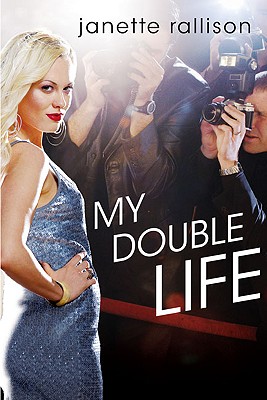
I’ve only recently discovered the happiness that is Janette Rallison’s books, and only because her editor, aka Tim the Bow Tied one, has up and sent them to me out of the blue (most recently, My Double Life), each time with a lovely little letter. I’m telling myself that I need to go read the ones I haven’t read, and I will. As soon as I get a spare moment… In the meantime, enjoy the interview.

MF: I’ve heard this story, but I’m not sure how widely it’s known: how did you come up with the idea for My Double Life? JR: My editor asked me to send him a dozen plot ideas so he could choose the storyline of my next book. The reason Putnam does this is that they don’t want their authors to inadvertently write the same kind of book.

I sent Tim (AKA The Bow Tied One) many well thought out and complete plot ideas. I also sent him a one line premise that I honestly don’t even remember writing: A girl who doubles for someone famous. That was the one he chose. So then I had to go about figuring out who this girl was and why she would want to double for someone famous.

MF: Your book has been accused by some people of being another book that “[seems to encapsulate a formula of romance novel plus high-concept commercial hook plus glamorama cover art.” What do you think makes your book stand out from the others?
JR: This book is definitely teen girl wish fulfillment. Who wouldn’t want to experience the celebrity life of fame, fortune, and a hot rock star boyfriend? But this book is also more than just that. If Alexia had only wanted to be Kari’s double so she could be rich and famous, it would have been a very shallow book. She wants the job because it will allow her to do the one thing she’s always wanted, and that is to find and meet her father. When you come right down to it, this book is really about family and how the choices we make affect others. Alexia isn’t searching for fame and money, she’s trying to figure out who she is.

MF: Very true. And because of that, I found that I adored Alexia throughout the book; she was just such a grounded, yet interesting, character. Do you have a favorite scene or character in the book? JR: I love a lot of scenes in this book. When you have two people who look alike in a story, it’s almost a mandate that you’ve got to have a funny scene where they’re in the same place with people who can’t know there are two of them. But my favorite scene is the one where Alexia finally meets her father. I nearly cried when I wrote it.

MF: How long did this book take from conception to publication?
JR: It took a year for me to write the manuscript and go through three drafts of revisions. Then it was about a year more until it came out in stores. It’s always a long process, but that’s for the best—it gives you more time to catch your mistakes. I’m working on the sequel to My Fair Godmother right now and the publisher is rushing to get it out next winter so it’s only going through one set of revisions—which scares me to death. I know I won’t catch all the problems.

MF: What kind of research did you do for this book (assuming, of course, that you’re not a rock star’s body double)? JR: I’m always amazed at the amount of research it takes to write contemporary novels. For this one I was constantly calling West Virginia (where the novel starts off and finishes) to find out details like: What floor is the housekeeping office located in the Waterfront Park Hotel? And do people in West Virginia have sprinklers in their lawns? But the hardest things to find out were the stuff about celebrities’ schedules, employees, and fees. You can’t call up Hollywood people to ask those kinds of questions. Hollywood is like the homecoming queen of cities and she avoids meeting your gaze in the hallway and ignores you when you say, “Hi.” I had to comb through a lot of reality and entertainment shows to find out the information I needed. Also, Taylor Swift had her schedule on her website. I lifted her schedule and used it for my character.

MF: So, since the book revolves around rock stars, have you put together any kind of playlist? Or picked a theme song for the book? JR: I don’t usually do playlists although there is always a song or two that remind me of the story for some reason. For this one I have two: Taylor Swift’s You Belong With Me—partially because I envisioned Kari as a cross between Taylor Swift and Jessica Simpson—but also because during the music video Taylor puts on a brown wig and it completely changes her looks. I had wondered if just changing Alexia’s hair from brown to blond would be a dramatic enough change—but after watching that music video I stopped worrying. I couldn’t tell she played both the nice girl and the mean cheerleader. I’m sure Taylor did that just to make me feel better about my book. Thanks Taylor!

The second song is Missing Me Crazy by Jonnie and Brookie. It’s a little known, but great song. As soon as I heard it, I knew I wanted it for my book trailer because the words are so perfect. The lyrics say: “You’d be missing me crazy if you only knew my name.” That’s Alexia’s problem. Her rock idol boyfriend doesn’t even know her real name. Can it be true love if your boyfriend thinks you’re someone else—someone rich and famous?

MF: You’re a mom of five kids, correct? How do you juggle writing with being a mom? How to you find time to write? JR: Now that my kids are all in school, it’s a lot easier, but it used to be that I would only write during nap time. I would only get a page or two written every day—but those pages add up and I could get a book published every year.

MF: Who, or what, inspires your writing?
JR: My kids inspire my writing. When I was writing the sequel to My Fair Godmother, every day my daughter came home from school she asked what I’d written on the story. Then she would go read it off the computer and tell me to write faster. I’ve also had moms tell me that their daughters will only read my books, and not too long ago at a signing a girl told me that it was my books that taught her to love reading. You can’t get a better compliment than that.

MF: Are there five books that you think everyone should read?
JR: No, there are ten—all of my books. Oh, you meant besides mine? Some of my all time favorites are: The Princess Bride; The Phantom Tollbooth; Pride and Prejudice; The Amulet of Samarkand; and Hunger Games.

MF: If you don’t mind me asking, what can we expect next from you?
JR: I’ve got a plethora of books I’m working on. (Which is why my house is a mess, weeds are taking over the backyard, and it’s been so long since I got my Westie’s hair cut that she looks like the abominable snow dog.) I’m finishing up the revisions for My Unfair Godmother, then I have to do revisions on a dragon book I’ll be doing under a pen name (Don’t worry, I’ll let everybody know about it when it comes out.) Then I have to finish a paranormal romance that I’m 200 pages into, and I have to write another book for Putnam. (I will not be sending one sentence premises this time!) And I have to get all that done this year. (Sigh, the poor house, yard and dog.)

MF: Thanks, Janette, for your time!