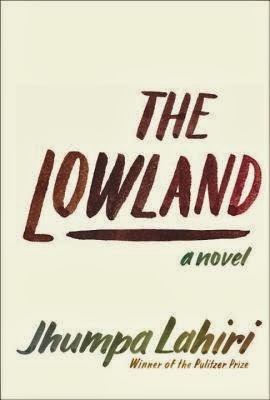
Audiobook: The Lowland

by Jjumpa Lahirir
read by: Sunil Malhotra
Support your local independent bookstore: buy it there!

I admit that I picked this up solely because M is currently in the part of India where this is set. I thought: Kolkata, Bengali… I should see if I could learn a little more of where M is staying for the next school year. Other than that, I really had no expectations.

It’s a much more political work than I was expecting. While, nominally it’s the story of the relationship between two brothers, Shubash and Udayan Mitra, Lahriri uses the background of the political unrest and Communist movement in India as a backdrop. The two brothers, who were close as children, grow apart as Udayan (the younger) gets involved with the Naxalite movement and Shubash heads to Rhode Island to pursue a PhD. Udayan gets married to Gauri (which Malhotra alternately pronounced Godi and Gori, so I had to check on the spelling) and then ends up killed by the police. When Shubash comes back for the funeral, he takes pity on Gauri, mostly because she’s pregnant, and marries her, bringing her back to the US.

That is the first third of the book. At which point, I was left wondering: What on earth is Lahiri going to do with the rest of the novel? Well, much like Khaled Hosseini’s And the Mountains Echoed, Lahiri explores the ramifications of those decisions. We follow Shubash and Gauri, and later Gauri’s biological daughter, through the years to present day (when Shubash is 70, and Gauri s in her mid-60s), and experience the fallout. Because there is fallout, and it’s not pleasant.

As I mentioned to people that I was reading this, their first question was “Do you like it?” Well…. no. And yes. It wasn’t bad enough to abandon. Malhotra was a delightful reader, capturing both Indian and American accents well. Perhaps it was him who kept my interest in the book going, because I was constantly annoyed at the characters. Gauri could never get past her dead love and move on with her life. And right up to the end, she never thought about the consequences for her actions, acting impulsively. But the thing that really infuriated me was Shubash’s insistence that because he wasn’t the sperm donor for Gauri and Udayan’s daughter, that he wasn’t her father. He. Raised. The. Girl. He was there for her when her mother abandons her, and yet he still questions whether or not he’s her father. *grumble* Biology isn’t what being a parent is about.

Maybe that was Lahiri’s point, in the end. Because, after finishing the last disc (a very unsatisfying ending, by the way), that’s what I got out of it. Family is what you make, and loving and caring for other people is the way to happiness.

So maybe it was a good book after all?
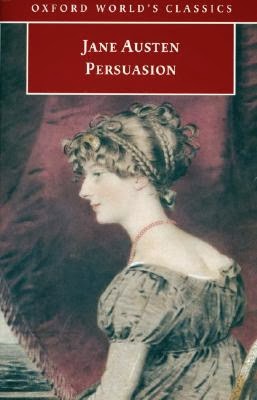
Audiobook: Persuasion

by Jane Austen
read by Greta Scacchi
ages: adult
Support your local independent bookstore: buy it there!

It’s been nearly five years since I last visited Anne Elliott and Captain Wentworth’s story, and I thought, especially after liking Emma so much and because of this article in Slate where they ranked it dead last, that maybe it wouldn’t be nearly as good this time around.

Maybe it was the reader — she was delightful — but I really do think that no matter how much I like to pretend otherwise, Persuasion will always hold a special place in my heart. It’s not funny or witty, though it is poking fun at snobby class-conscious people. No, what I said last time still holds:

This book is the best one of Austen’s because it’s a re-finding of love lost, it’s the rekindling of hope, rather than the blush of first love. Anne and Wentworth were torn apart — by pride, prejudice, situation, class… all of which are Austen themes in her other books — and yet they overcome all in order to be together.

It’s still my favorite.

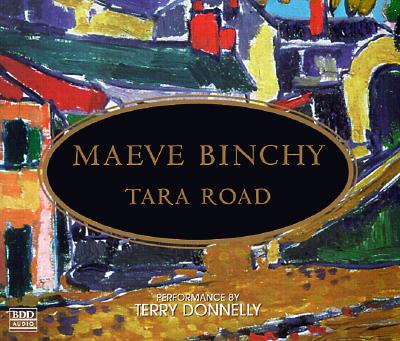
Audiobook: Tara Road

by Maeve Binchy
read by: Terry Donnelly
ages: adult
Support your local independent bookstore: buy it there!

I think I’m going to start with the why on this one. Because, honestly, much like a Jane Austen novel, the plot is really inconsequential to the enjoyment of this book. Earlier this year, Maeve Binchy released A Week in Winter, and people came in to snap it up, raving about her work. After the Northanger Abbey debacle, I was wandering the library looking for something light but good, and I settled on this. I knew nothing about it other than the author’s name.

The jacket flap posed this as a post-divorce/traumatic incident/finding oneself house swap story. And while there was a house swap, it didn’t come until late in the novel. Which leads me to believe: the jacket flap writers didn’t know what to do with this one. See: it’s really just a portrait of a woman, Ria Lynch, and the life she led. She married the first man, Danny Lynch, whom she fell in love with, and thought she had a good life. But, as the reader finds out through the pages, that good life was all in Ria’s head. She was surrounded by friends, by her children, in this lovely home, and her husband was off… being a philandering Irish jerk. (He wasn’t stereotypical, though: the role of Irish drunk was given to one of Ria’s friends’ husbands, who thankfully, got his just deserts in the end.) It’s the portrait of a woman who makes choices and stands by them, and then when life throws her a curveball, she goes on. It’s a testament to the power of community and connection: Marilyn, the American Ria trades houses with at the end, is grieving for a dead son and has been unable to move on. But through the connections she makes by being a part of Ria’s life, she is able to find some healing.

In the end, while “nothing” happened (well, lots happened, but it was everyday stuff) it was a compelling novel. A lot of that is credited to Binchy — she (again, like Austen) is a master of the domestic drama, painting gorgeous portraits of the Everyday — but I do have to admit that Terry Donnelly’s voice had me mesmerized. A light, lilting Irish accent; voices perfect for the characters; she had me staying in the car waiting for an “acceptable” stopping point.

I should read (or listen to) more Binchy. Because my first foray was gold.

Audiobook: Northanger Abbey

by Jane Austen
Read by Donada Peters
Support your local independent bookstore: buy it there!

Next up on my “reading Jane Austen” this year project was Northanger Abbey. It was more of a whim; I haven’t listened to any Austen in a while, and I was at the library, and this one just jumped out at me. I remembered reading it a while ago (2008, it turned out; follow the link if you want a plot summary), but I didn’t remember much else. I was excited to get going.

But… when I put it on, I realized that it was the same reader as Madame Bovary. Remember when I didn’t know if it was the book or the reader?? I’m here to tell you that it was at least 60% the reader. Because, while I plowed through this one (it’s JANE AUSTEN, and I can’t bail on her), I didn’t get much out of it. Peters’ voice grates on me, and I ended up tuning things out and missing huge chunks of the story.

Things I did get: John Thorpe is a complete jerk. Boorish, manipulative, and possibly one of the worst male characters Austen invented. He’s not a cad, or a rake, or even a Bad Guy. No: he thinks he’s Noble and Right, but he’s a bully, and that’s what makes him so terrible.

Along the same lines, General Tilney is shallow and boorish as well. Maybe they needed to exist so that Henry — who is a little on the dull side — would shine.

That said, Catherine herself is a silly, silly girl. Emma is, too, but in a completely different way. Catherine lets her imagination run away with her, but that’s really all she is. (Emma’s a snob, but there’s some growth there by the end of the book.) I didn’t feel like there was any growth, any reason for Henry to fall in love with Catherine other than she was pretty and nice. It was kind of unsatisfying, in the end. Which, by the way, I felt was rushed, a little.

Still not my favorite Jane Austen, but I also have to blame the reader for my lackluster reaction to this. Maybe sometime I’ll see if a different person read another edition of the audiobook and see if I have a different reaction.

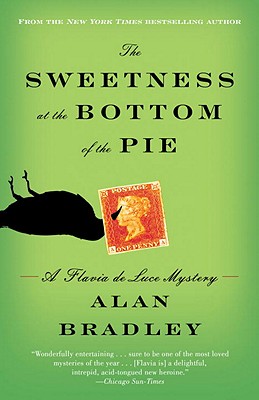
Audiobook: The Sweetness at the Bottom of the Pie

by Alan Bradley
read by Jayne Entwistle
ages: adult
Support your local independent bookstore: buy it there!

Flavia DeLuce is an 11-year-old aspiring chemist in 1950s England. Often at odds with her two older sisters, she mostly tries to stay out of the way. That is, when she’s not researching poisons.

Then one fateful night, her father has an argument with a stranger, who turns up dead in the cucumber patch, uttering one word: “Vale”. Flavia (of course) was there to hear it, and it sets her on a path to figure out who the murderer really is, and free her father.

On the one hand, I was thoroughly entertained by Entwistle’s reading of this book. Her voices were terrific, and she managed to keep my attention, even though I had problems with the book itself. The first one being the number of similes. Oh. My. Heavens. If I drank, I’d make a drinking game of them. And I’d be plastered by the end of chapter 2. I tried counting them, but I lost count after a dozen (within 10 minutes or so). I was complaining about them to Hubby, and he did point out that Flavia — who is a precocious child (I don’t like precocious children in adult fiction; it grates) — is the narrator, which may have something to do with the inordinate number of similes. Even so, I resigned myself to them, rolling my eyes whenever I heard one.

My other problem was that I called the murderer too early. Bradley introduced a random character about halfway through, and even though I didn’t know how or why, I knew he had to be the murderer. Why else introduce a random character. And, in many ways, I find that bad form.

But, it wasn’t a terrible waste of time — I did finish it after all. Even if it wasn’t perfect.

Audiobook: Let’s Explore Diabetes with Owls

by David Sedaris
read by the author
ages: adult
Support your local independent bookstore: buy it there!

A long, long time ago my frend Wendy dragged me (literally; I had no idea what was going on) to see David Sedaris live. I had a blast; he was hilarious, and I couldn’t wait to read some of his writing.

Except. I didn’t laugh when I read his essays. Which lead me to believe one thing: Sedaris is better when he reads his writing than when I do.

And I was right.

I picked up the audio book of his latest group of essays, and I actually found them funny. Some more so (Obama!!!!! or The Cold Case) than others (the stories on the last disc were pretty weird; though there’s satire about the “slippery slope” of having gay marriage legalized that’s pretty topical). I think I laughed the hardest on the ones where he recorded before a live audience; something about other people laughing made me laugh as well.

I don’t really have much else to say about this one. It’s quintessential Sedaris, with his trademark irony and dead-pan humor. Which means, if you like that kind of thing, you’ll like this. I’d just recommend listening to it.

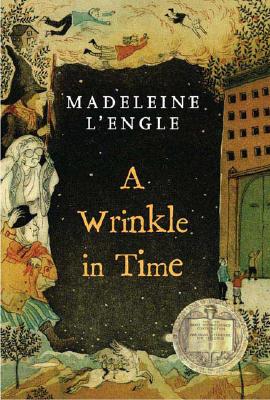
Audiobook: A Wrinkle in Time

by: Madeline L’Engle
read by the author
Ages: 7+ (listening)
Support your local independent bookstore: buy it there!

I threw in a bunch of audiobooks on our recent trip to Michigan, hoping that we’d listen to a couple as we went. Turned out that we only listened to one, and that this was the one everyone seemed most excited for.

I really don’t have much to add with this reread from the last time. I was expecting the religion, and while I sat musing for a while that the idea of sameness as the Great Evil is a very American idea (though I liked this quote — and I paraphrase — “Alike does not mean equal.” True.), I mostly just let the story flow over me and didn’t engage with it very much.

So, I’m going to give you my girls’ reactions:

K, who is 7, spent much of the book wondering what was going on. She did get the basic content of the book, but often said, “The words don’t mean anything to me.” We had to stop frequently to explain things to her.

A, really enjoyed it. In fact, out of all of the girls, she’s the one who was the most interested in the whole story. She really liked Meg, thought Charles Wallace was charming, and may (or may not; she’s not telling) have ended up with a little crush on Calvin (though he is no Percy Jackson).

C, was the most interested in starting the book, but by the end was complaining that Meg was TOO HYSTERICAL. “Can’t she just shut up and do something already?” That is an interesting perspective: the girls in our middle grade fiction have become more confident and more assertive than they used to be. I’m not saying that Meg is a shrinking violet; just that she does burst into hysterics quite often.

M, who had read it before (“Is this the one with the huge brain?”) was charmed again (“Oh be quiet! Awkward kid flirting; it’s so amusing.”), but not really thrilled.

And Hubby kept comparing it to Harry Potter: Cal is Ron, definitely. But we debated whether Meg was Harry or Hermione. We decided that Meg was probably Harry and Charles Wallace was Hermione. Everything relates to Harry Potter these days, doesn’t it.

Oh, a bit on the narration: I loved hearing Madeline L’Engle — pronounced lengle as opposed to la engle; I didn’t know that — narrate her book. While it wasn’t as mesmerizing as Neil Gaiman’s narrations of his books are, it still was quite charming.

Not a bad way to introduce several of my kids to the series, at any rate.

Audiobook: Emma

by Jane Austen
read by Michale Page
ages: adult
Support your local independent bookstore: buy it there!

After I finished listening to this one, I went back and read what I wrote after finishing last time and I pretty much still feel the same way. Mr. Knightly is still practically perfect (and still only Jeremy Northam in my mind), Emma is still silly and snobbish, Harriet is still under-served in this story (and quite silly as well). It’s still quite amusing, and very, very true to life.  Austen really is a master observer, and

The reading was fantastic as well. I had issues with his voices at first — can’t quite seem to let my movie voices go — but as it went on, I fell in love with the way he portrayed everyone. The character that stood out to me the most this time around was Mrs. Elton; Page captured her perfectly in all her snobby pretentious absurdity. Miss Bates was more annoying when listening to the book; I realized that most of the time I just skim what she’s saying, instead of listening to every single detail. I’ve never been worse for it, either.

Do I think it’s Austen’s best work? Possibly. Did I get anything new out of this re-read? Not really. But I thoroughly enjoyed revisiting Emma again.

Audiobook: The Castle of Otranto

by HoraceWalpole
Read by Tony Jay
ages: adult
Support your local independent bookstore: buy it there!

 It starts out on as a happy day for Manfred, the lord of the Castle Otranto. His only son, Conrad, is going to be married to Isabella. However, right before the wedding, Conrad is mysteriously killed by falling helmet. Weird, right? That’s only the beginning: Manfred, distraught, does the only thing possible (huh??) and decides that, to insure his lineage will go on, he will marry Isabella. (Yeah, Manfred does have a living wife. And a daughter.) Isabella (rightfully) escapes (go girl!) with the help of a peasant, Theodore. Whom Manfred locks in the tower. Theodore’s rescued by Matilda, Manfred’s daughter (you’ve gotta love the pluck of these girls. The novel was published in 1764), and sent off to help Isabella. After almost nearly killing her father (who appeared out of nowhere, really), they head back to the castle to confront Manfred and the ghosts that have been haunting him.

It’s a melodramatic, over-the-top novel. But, I really had a great time with it. The best part of this one was the narrator. Jay was fabulous. I found myself gripped in the thralls of what I would have otherwise  found to be a boring, hard to understand novel. I found myself listening in the car because Jay was so captivating.

And that made all the difference for me.

Audiobook: An Abundance of Katherines

by John Green
read by Jeff Woodman
ages: 14+
Support your local independent bookstore: buy it there!

I picked this up on a whim,  partially because Laura (all my good ideas come from her!) suggested the YAckers read another John Green book, and partially because I’ve been trying to get this guy at work to read John Green, and I suggested this one. I figured it was due for a reread. Or listen in this case.

After going back and reading my initial review, I realize I don’t have much to add. It’s still a great mix of nerdiness, humor, and Deep Thoughts, though I think John (I can call him that, right? Being a Nerdfighter and all?) has gotten better at meshing the Deep Thoughts into his books  and they come off less as Deep Thoughts and more as, well, just thoughts. I didn’t remember the bit about the footnotes; I’m assuming Woodman read them, but they just came off more as asides, which I didn’t mind at all.  Speaking of Woodman, I thoroughly enjoyed his narration; he got the voices just right, and the girls — always an issue with me with male readers — weren’t simpery. Hassan was still my favorite character, hands down; it was nice to have a religious character — an Islamic one at that — who wasn’t preachy. Not to mention the fact that he was overweight but not obsessive about it.

I do think, in the end, that although this is John’s funniest book (all the fugs made me laugh), it’s not my favorite anymore. (I’ve remembered it that way for the longest time.) It’s charming, it’s sweet, it’s fun, but it lack the depth that he has in his other novels. Perhaps I should try pushing Paper Towns on the guy at work (he’s one of those literary fiction sorts). He might like that one better.