Rebecca

I saw the Alfred Hitchcock movie years and years ago, and remember thinking that I should probably read the book. I didn’t follow through (don’t know why, it really was that long ago!), but when Cami told me she wasn’t talking to me 🙂 until I read Rebecca, I figured it was time to actually get the book read.

And…

I’m not sure. It was a really good melodrama, full of suspense and tension. I liked the descriptions. I thought Mrs. Danvers was sufficiently horrible and horrifying in her attachment to the dead Rebecca, and her attempts to sabatoge Maxim’s current marriage. I thought the ending, while abrupt, was probably the most fitting way (and I know I should have seen it coming, but it still caught me off guard) to end the book. There were parts when I cringed, there were parts that I wondered how it would all work out, there were parts that really creeped me out, and I understood why it was Hitchcock who put this book on film.

But. The fact that the current Mrs. de Winter never had a name really bothered me. Enormously. I’m still trying to put a finger on why; perhaps it was a feminist thing, but I think it was mostly that I like my characters to have names. I can’t imagine what they look like if they don’t have a name. And I have no idea how to summarize a book if I don’t have a name to give to the main character. I understand the literary motivation behind du Maruier’s choice not to name her main character, it just really bothered me. And — I suppose this is connected to the name thing — her relationship with Maxim bothered me, too. This time I’m sure it’s the 21st-century feminist in me, because I didn’t like how totally and utterly submissive Mrs. de Winter was. If she only had a bit more backbone, she wouldn’t have ended up in the situations she ended up in. But, I guess that was the point. She gained backbone through the course of the book, when all the secrets were out; but why did it take the assurance of Maxim’s love to give her one? Couldn’t she have one on her own?

I am glad I read it, though; it was an interesting and intriguing book. And now I need to go watch the movie again. I’m curious as to how it stands up.

Leave it to Psmith

I have to admit psomething. As much as I thought Right Ho, Jeeves was oojah-cum-pspiff (ha! I used it in a psentance!), I think I love Psmith (the P is silent like phthisis, psychic, ptarmigan, or pshrimp) more. Wodehouse was in fine, fine form here, and he had me rolling. Honestly. I had to be careful about drinking anything while reading for fear of damaging the library copy. Being a visual person, it takes a LOT to get me laughing when I read, but this one… well, it’s hilarious.

The plot — like I’m gathering most Wodehouse plots are — pretty convoluted. (Around and around in circles without ever going anywhere.) And very psilly. (Kind of like this review pso far.) Psmith is the son of a fish mogul, and is wanting out of the business. Can’t stand the pstuff. Pso, he puts an ad in the paper offering his pservices. He gets “hired” by the Honorable Freddy Threepwood (right ho!) to pinch his aunt’s necklace. There’s a good reason for this, but it’s much too complicated for this psimple review… Anyway. Psmith ends up at Blandings Castle, in the guise of a poet McTodd. Along the way he meets, and falls in love with, Eve Halliday, who is also going to Blandings Castle. Much psilliness, misconseptions, and humor enuses (including flower-pot throwing, mistaken identitites, Canadians posing as valets, dead bats, and pinched necklaces, of course).

Really. Just read the book. Right, ho.

The Host

This book has been getting mixed reviews on the book blogs — some people love it, others not so much. I have to admit that I didn’t have much interest in it, aside from reading the jacket flap at the bookstore once. But a friend offered to loan me her copy and I figured if I didn’t have to buy it or wait in a hold line for it, I’d read it.

It sat on my nightstand for two months, until Becky decided to use it as her book for her book group this month. I figured this was my reason for actually getting it read (and getting it back to my friend!). I started it, then about 14 chapters in, I realized I had other books due at the library, so I put this one down and read three other books. And I didn’t miss it. I finally picked it back up a few days ago and have been reading it in snatches ever since. I wasn’t gripped by it — not like Twilight, anyway — and it wasn’t until the last 150 or so pages that I actually really liked the book.

The plot is really convoluted to explain (I tried explaining it to Hubby, but it took a long time and a lot of questions for him to ever make sense of it). From the start, I felt like it was a Star Trek rip-off, and thanks to Natasha at Maw Books, I relized that was because Star Trek: The Next Generation actually did an episode fairly similar this. (I even remember watching that episode.) It also has Invasion of the Body Snatcher overtones, as well as other space drama influences. Given that the story itself is not original, the perspective of the book is: the main character is the alien, Wanderer (I hate the nickname they gave her: Wanda. Bleh.), and the events are from her point of view. Like Twilight, the innovation in Meyer’s work isn’t the plot or the characterization, but rather the method of telling the story. We’re made to sympathize (and sympathize I did… I really liked Wanderer) with what is supposed to be the enemy.

As for the whole “science fiction for those who don’t like science fiction”: this is no more science fiction than, well, Star Trek: TNG, which is more space drama than anything. (For back up here, go read Julie’s post on science fiction movies…. I really need to go see Wall-E.) This isn’t science fiction. Not by a long shot. More… paranormal romance. But then, the romance isn’t really romantic (sweet, nice, interesting, but lacking in, well, romance). More like paranormal contemporary drama with a bit of kissing thrown in. (But, as a publisher, how do you market something like that? Then again, it’s Stephenie Meyer. Her name has probably sold a lot on it’s own.) That didn’t bother me; I didn’t expect much else from Meyer. (Definately not science fiction.) I did like the relationships, though — not so much Jared and Melanie, but the other ones. I liked the relationship Wanderer had with her “host” (even though she wasn’t supposed to have one); I liked the people she met once she got to the caves, and the conflict there. But, I felt like she took too long getting where she needed to go; the pacing was very uneven. This book is a huge rock that takes a really long time to get going, but once it gets going it rolls pretty fast. Except it plateaued for me about two-thirds of the way through, and didn’t pick up again until the very end.

Still, I have to admit that Meyer has branched out (some — I think she’s still writing basically the same story, just a different setting) and is trying to broaden her base. I have to give her credit for that.

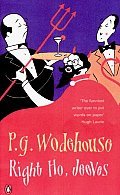
Right Ho, Jeeves

There is something about Jeeves and Wooster that always makes me want to talk like them. Bertie, especially. What ho. Pip pip and all that. I think I did this a bit backward, though. On somebody-or-other’s recommendation a while back, we put Fry and Laurie’s Jeeves and Wooster series on our Netflix queue (that was complicated) and loved it. Well, they did this book over two episodes, pretty much word-for-word (or at least scene-for-chapter). And while it didn’t ruin the book for me (they did an excellent job), it did take… something… away from the reading experience.

For those who haven’t seen the episodes, or read Wodehouse, or even don’t know what the heck I’m talking about…. Bertie Wooster has friends that are in trouble. Specifically, this time, Gussie Fink-Nottle (Wodehouse is brilliant with names). Gussie’s in love with Madeline Bassett and can’t bring himself to propose to her. So, Bertie hatches a plan (which involves sending Gussie to Bertie’s Aunt Dahlia’s house) to get them together. Meanwhile, Bertie’s friend Tuppy Glossop (another great name!) has had his engagement with Angela (who happens to be Bertie’s cousin) broken off over a spat about a shark (don’t ask; too long to explain). Bertie, again, comes up with a plan to save their relationship. After much hilarity, everything (of course) goes awry, and finally Jeeves steps in, makes a bit of a fool out of Bertie, saving the day for everyone.

Confusing? But the plot isn’t the point. I’m sure you could also read some sort of social critique of the idleness of the upper class. For heavens sake, Bertie — nor any of his friends — doesn’t DO anything. Perhaps Wodehouse was trying to say something about this idleness, especially making the servant the useful, brilliant one. It reminds me of this exchange from The Importance of Being Earnest:

Lady Bracknell. I feel bound to tell you that you are not down on my list of eligible young men, although I have the same list as the dear Duchess of Bolton has. We work together, in fact. However, I am quite ready to enter your name, should your answers be what a really affectionate mother requires. Do you smoke?

Jack. Well, yes, I must admit I smoke.

Lady Bracknell. I am glad to hear it. A man should always have an occupation of some kind. There are far too many idle men in London as it is.

Same principle. But as I was saying, that’s not the point either. The point is comedy. It’s silly. It’s slapstick. It’s the complete insanity of it all. Jeeves is the ultimate straight man, always the foil for Bertie’s goofiness. And Bertie is lovably goofy. I do have to say, though, that Jeeves really didn’t come off as brilliant in this book — if I hadn’t had seen the series, I’d be wondering what the big deal is. Most of his brilliance was alluded to. Not that it mattered. (Not the point.)

I enjoyed this. I’m not sure if I’ll go out and read a whole bunch of Wodehouse, but I’m glad I’ve read at least one. It was a lot of fun. (I need to find a use for oojah-cum-spiff — as in “things are not looking to oojah-cum-spiff at the moment” — in a sentence sometime….)

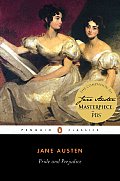
Pride and Prejudice

Ah, the consummate Jane Austen. The Most Popular Jane Austen (thanks, Colin Firth…). The Chick Lit Jane Austen. What is there really to say about Pride and Prejudice??

I used to say that I read it annually, that it was my favorite Jane Austen. Honestly, though: I don’t, and it’s not. But, I do love it for what it is: a genuinely funny, sweet, wonderful romantic comedy. (My mother’s complaint about the A&E version of the book is that they played up the romance too much and short-changed the comedy. It really is a funny book.) Lizzy and Darcy are the perfect romantic leads: the lovers who don’t realize that they’re in love until they’re already most of the way there. (I thought reading this was very appropriate after having seen Much Ado About Nothing. Lizzy and Darcy have much in common with Beatrice and Benedict.) The man who can’t resist the woman, even though he really tries hard. The woman who loathes the man until she realizes that he’s really much more than he appears. They fight the urge to fall in love, for different reasons: there are no star-crossed, obsessed (Bella and Edward!), pining lovers here. And, because of that, because of their wit and banter, and because of the whole tension surrounding their relationship, that final kiss (well… in the movie), their final tumble into and acceptance of their love is that much more sweet and fulfilling. It is truly a perfect book to read on a hot, summer day.

That is what I can say.

Suite Francaise

I’ve spent the past week in France, enjoying the lyrical and evocative writing of Irene Nemirovsky. Amira highly recommended it a (long) while back, and so I was excited that my in person book group (which sometimes does pick really good books!) chose it this month.

It took me a bit to get into the book, but once I realized that there was no real plot, no real character development, but that it was a portrait of a time and a place and how individuals dealt with the time and place, I lost myself in it. And it was easy to do. The first part, Storm in June, dealt with the exodus of Paris in the wake of the German invasion. Nemirovsky followed a dozen or so people in the exodus, how they reacted to the crisis, how they managed to deal with an extreme situation. Some managed admirably, some horribly; some were noble and respectable, some were petulant and miserly. It was fascinating watching it all unfold, interesting to see how each individual person reacted to each individual situation.

The second part, Dolce, was my favorite of the two. It was the portrait of a country village after the German occupation and how the villagers responded to their German occupiers. My heart went out to Lucile, living with a horrible mother-in-law, and falling in love with the German who was living in her house. There was less going on in the second part, but I really thought Nemirovsky perfectly captured the emotions of a human being trapped between two realities.

And, then there’s the note at the end, about Nemirovsky’s history and how this book came to be. It shed a lot of light on how she treated some of her characters, especially wealthy and upper-middle-class women, and it made the whole book much more tragic.

And, because these popped out at me, I’ll include some of my favorite quotes…

From early on in Storm in June:

“I keep telling you, you don’t pay enough attention to the minor characters. A novel should be like a street full of strangers, where no more than two or three people are known to us in depth.”

And from Dolce:

She said “we” out of that sense of propriety which makes us pretend we share other people’s misfortunes when we’re with them (although egotism invairoable distorts our best inetntions so that in all inocencewe say to someone dying of tuberculosis, “I do feel for you, I do understand, I’ve had a cold I can’t shake off for three weeks now”).

Let them go where they want; as for me, I’ll do as I please. I want to be free. I’m not asking for superficial freedom, the freedom to travel, to leave this house (even thought aht would be unimaginably blissful). I’d rather feel free inside — to choose my own path, never to waver, not to follow the swarm. I hate this community spirit they go on and on about. The Germans, the French, teh Gaullists, they all agree on one thing: you have to love, think, live with other people, as part of a state, a country, a political party. Oh, my God! I don’t want to! I’m just a poor useless woman; I don’t know anything but I want to be free!

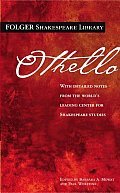
Othello

I decided, since we own the BBC version of this, to attack this play differently than I read Shakespeare last year. I am happy to report that not only did I actually get it this time, I even actually enjoyed it (as much as one can enjoy a Shakespearean tragedy).

Thoughts:
On the movie: the costumes were horrible, and watching Anthony Hopkins in blackface was a bit odd and uncomfortable. That said, the acting was superb. Hopkins does crazy violent, jealous rages excellently.

Othello isn’t a very sympathetic tragic hero. Then again, I’m not sure tragic heroes are supposed to be sympathetic. His tragic “flaw”, if you can call it that, is that he wants to know too much and is willing to listen to (very lousy, superficial) anything to believe what he wants to believe.

Iago is a racist, and an ambitious man who will stop at nothing to get what he wants. He’s also a butt-kissing ass. No, I didn’t like him either. (Though Bob Hoskins performance made me laugh on occasion.)

Desdemona is a victim of the fact that men will always believe other men rather than listen to the sense women talk.

It has one of the more pathetic endings of any Shakespeare play. Save Romeo and Juliet. I think their end is even more pathetic.

I have no tolerance for pathetic characters. (If you haven’t noticed.)

I think there are some interesting things to say about race, stereotypes (both racial and about women and men), jealousy, ambition, curiosity, and jumping to conclusions.

At this rate — one a year (though maybe we can call it two a year, since we saw Much Ado About Nothing last week… and thought that the local company did a fine job with it. We had a very spirited discussion about Claudio and Hero afterward.) — it’ll take me 35 more years to get through all of Shakespeare’s plays…

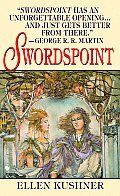
Swordspoint

I have mixed feelings about this one. I’ve been a fan of Ellen Kushner’s Sound and Spirit for years now, and I had high hopes that I’d enjoy her written work as much as I enjoy her PRI program. And I did enjoy this book for the most part, but it fell short in the end.

I won’t — because it’s just not possible — go into the plot here. I tried to come up with a neat and tidy summary, and I just can’t. There’s so many characters — one of the flaws for me; I just couldn’t keep everyone straight — and there’s so much going on. That’s actually one of the things that appealed to me. I liked that this book was a long and involved chess game, people maneuvering other people around to their advantage; characters falling into (and sometimes out of) traps delicately laid for them. I liked the intrigue — there’s one character that you’re left in suspense of for a good portion of the book: who was he, how did he end up where he did, why does he have a death wish? — and the action was well-written. Actually, that’s one thing I can say I really enjoyed: Kusher’s as good a writer as I hoped: descriptive, but not too flowery (well, mostly), and she sketches out characters and situations that were interesting and fun to read.

But….

She fell short with the end. I’m not sure it could have ended any other way, but I felt as if I were watching a game of chess, and then at the end, everyone got up and said “Oh wait! It’s Parcheesi, not chess, that we’re playing.” I was left with a big Huh. Too many threads that she wove were left hanging, and the ending was much too pat for what had been set up during the course of the novel. If only… I don’t know what. I do know that there were several short stories set in the world (which reminds me: this is only fantasy because it’s not historical or contemporary fiction; it has very few of the hallmarks of what I usually consider Fantasy…) and I tried to read them. And either Kushner isn’t a great short-story writer (which she readily admits), or I just wasn’t all that interested in the end.

I’m still trying to make up my mind whether or not to venture into the other two books. Maybe I’ll like them better… or maybe they’ll end up with the same flaws that doomed this one. But then, I won’t know until I read them, will I?

Emma

If you had to choose one leading man from any Jane Austen book as your absolute all-time favorite, which one would you choose? Me, I would choose Mr. Knightly. Sure, I love Mr. Darcy, or Captain Wentworth, and Henry Tilney even managed to make me smile. But Mr. Knightly… he’s just about perfect, in my humble view.

See, he puts up with Emma, who is — by all accounts — a very silly, vain, misguided girl. And not only does he put up with her, but he gently (mostly) corrects her, helps her become the woman she really should be. And he loves her for and in spite of it all. (Throughout the whole book, too. I think that’s one thing that really hit me on this re-read: the evidence for Mr. Knightly’s love was there from very early on, even if neither one of them knew it.) Perhaps that’s why I love this love story best. Because, while I love Lizzy’s wit and perception and assertiveness and Anne’s goodness and long-sufferingness, I think I find Emma — for all her class snobbery (that’s the other thing that stood out on this re-read; it’s a very class-centric book) — the most imperfect, the most accessible, the most real of all of Austen’s heroines.

Which is also probably why I find this one highly entertaining. I know many people find Emma (both the character and the book) grating, but I am constantly amused by her antics, her desire to try and make people’s lives in her own image. (There’s a lot that I could say about silly, sweet Harriet; or even the grating Mrs. Elton; or Mr. Elton who aspires to be a rich snob and only comes off with the snob part; or Jane Fairfax, who comes off much better in the book than she does in the movie; or Frank Churchill, who should be a scoundrel, but in reality is just an immature guy… but I won’t.) And I think that’s why Mr. Knightly, as the counter-balance to Emma’s flightiness, has found a special place in my heart.

That, and this one line: “Men of sense, whatever you may choose to say, do not want silly wives.”

Sigh.

The Last Enchantment

It occurred to me fairly early on in this book that it would make a pretty good stand-alone. There’s a lot of exposition up front, which I found tedious, but which would make The Last Enchantment a book that would hold up pretty well by itself. The only downside is that you’d be reading the least enjoyable of the three books.

That’s not to say that it’s a bad book. It’s not. It’s a good book, but it pales in comparison to the other two in the series. (I’m not even going to bother with the fourth one, having read it years ago and disliked it greatly. I’ll live without the conclusion of Arthur’s story.) I was trying to figure out why I didn’t enjoy this one as much; the writing isn’t lacking, and it deals with the part of Arthur’s story that’s usually ripe for the telling. It comes down to that, compared to the Merlin of the first two books, this Merlin — the aging, dwindling Merlin — isn’t as interesting. He’s likeable, but really boring. It wasn’t until the end when he picks up with Nimue that I really became interested (the part where Arthur breaks it to Merlin that Nimue is really a girl is quite amusing) again. But then, after a few short chapters, Merlin “dies” and is buried in his living death.

And then the book keeps going. This is what really bugged me. Merlin dies, and yet we still have to have a happily-ever after… ta, da! He’s not dead. He was just faking it (a “malady” like unto death). And so he comes back alive, only to fade away (again). It wasn’t bad, just a bit hokey. I think I would have been happier if he’d just left it with the cave part. (But then, I realize as I’m writing this, how on earth could this story come out? If it’s written in Merlin’s hand, it’s his story, and he just dies in the cave, how on earth could it ever be published? Of course he couldn’t be dead; he had to live to tell his story. Then he could die.)

As an aside: I still didn’t like the women, except for Nimue, and she only had a limited role. It did make me want to go back and read Mists again (don’t know if I will, though), if only because I really feel that Marion Zimmer Bradley’s tale is the flip side of Stewart’s. It seems to me, in recollection, that the two books balance each other out. Perhaps that’s as it should be.

At any rate, it’s a fitting conclusion to Merlin’s story. (one can’t expect him to have power the whole time; I did like, on some level, that Stewart made the book fit Merlin’s situation. It didn’t have to be that way, but it was, and it worked.) For Merlin’s story it is. Yes, Arthur plays a role, just as Merlin plays a role in Arthur’s story, but it isn’t the Arthurian legend, at least not as we really know it. Even so, I think it’s an important part of the Arthurian canon, and a good place for someone to start a foray into the Arthurian legend.